Volunteer Opportunities at Chitwan National Park
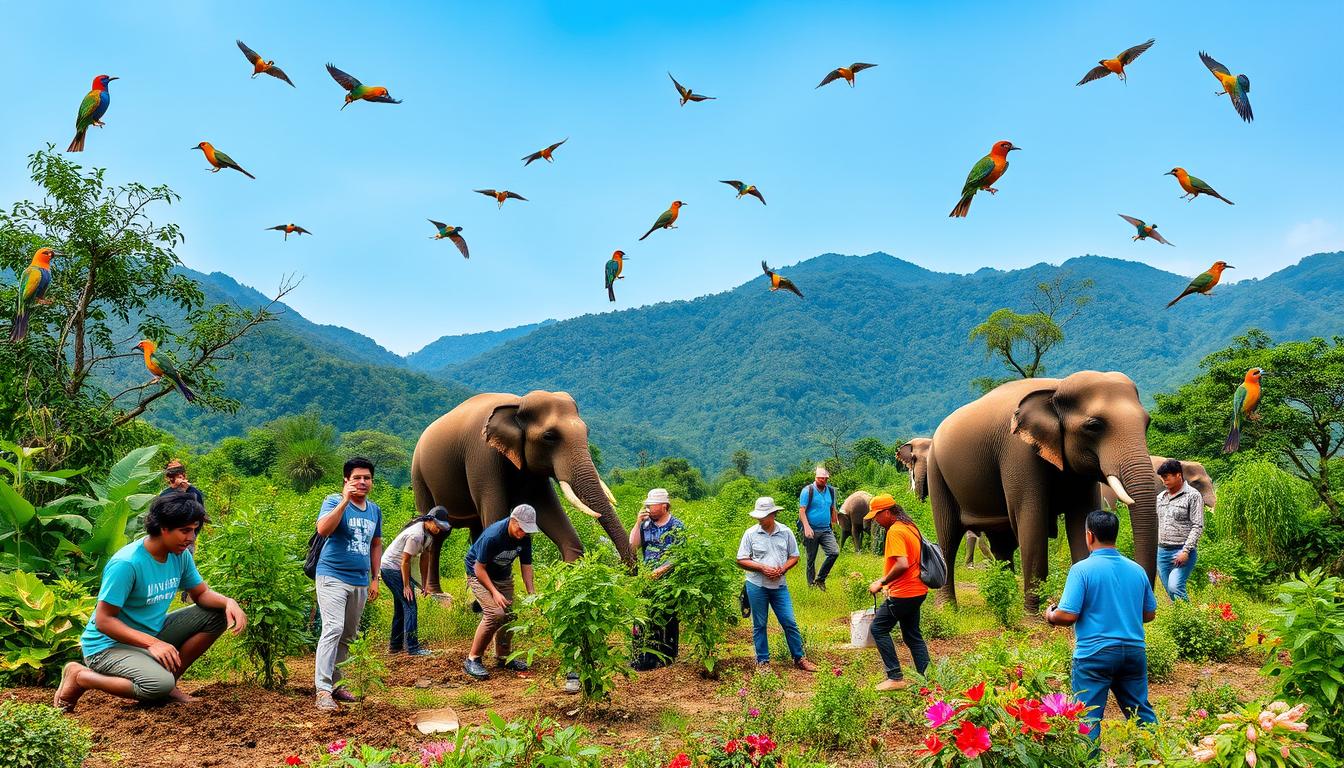
Ever thought about how your love for wildlife could change the world? Volunteering at Chitwan National Park is your chance. It lets you join important conservation efforts in a stunning part of Nepal. You’ll help protect animals like the greater one-horned rhinoceros and Bengal tiger.
By doing this, you also support local communities. It’s a unique way to mix protecting nature with learning about different cultures.
Introduction to Chitwan National Park
Chitwan National Park is a key example of Nepal’s dedication to protecting nature. It was set up in 1973 and covers 932 square kilometers. This makes it one of the biggest wildlife areas in Nepal. It’s also a UNESCO World Heritage Site, known for its wide variety of plants and animals.
Inside the park, you can find many animals, like the greater one-horned rhino and the Bengal tiger. Bird lovers will be amazed by the over 500 bird species here. The park’s different environments, such as grasslands and forests, show the beauty of nature.
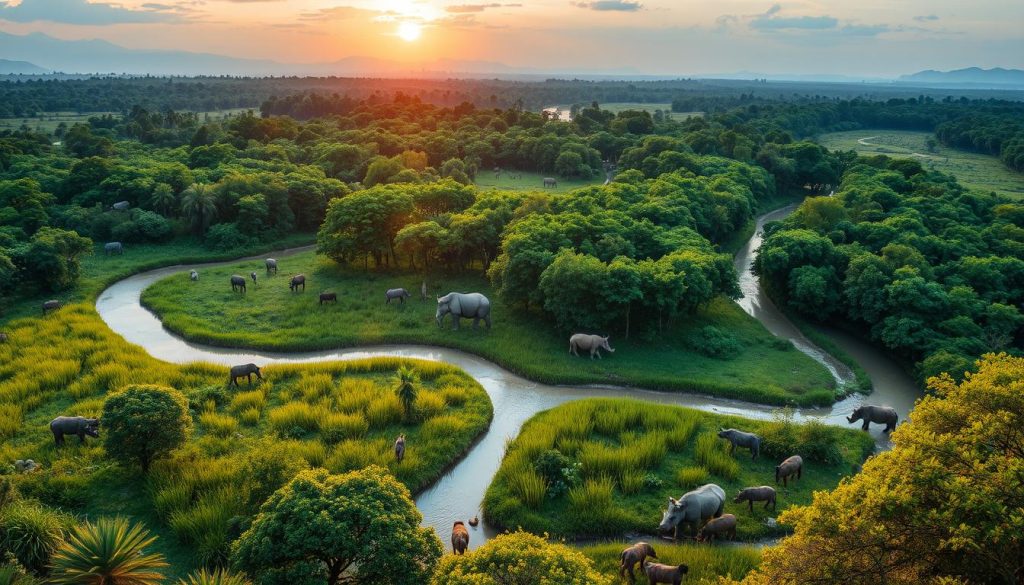
This place in Nepal is great for both tourism and protecting nature. Volunteers help keep the ecosystem balanced and learn a lot. By joining these efforts, you help keep Chitwan National Park beautiful for the future.
| Park Feature | Details |
|---|---|
| Size | 932 square kilometers |
| Established | 1973 |
| UNESCO Status | World Heritage Site |
| Wildlife Species | Greater one-horned rhino, Bengal tiger, various bird species |
| Key Ecosystems | Grasslands, dense forests, riverine landscapes |
The Importance of Volunteering in Conservation
Volunteering plays a big role in conservation, especially in places like Chitwan National Park. This area is known for its rich wildlife. By helping out, you can make a real difference in protecting the environment.
When you get involved, you help protect animals that are in danger. You also help keep their homes safe. This shows how important volunteering is for saving wildlife.
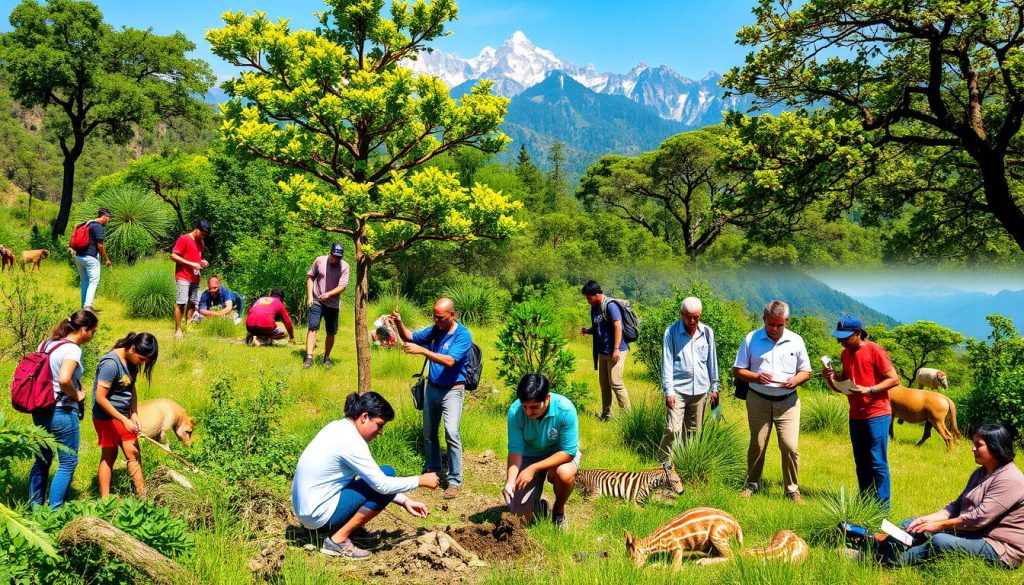
As a volunteer, you learn about local environmental problems. You also help find solutions to these issues. This makes you feel more connected to protecting wildlife and helps communities grow.
| Benefits of Volunteering in Conservation | Examples of Conservation Efforts |
|---|---|
| Hands-on experience in wildlife protection | Habitat restoration projects |
| Increased awareness of environmental issues | Community education programs |
| Development of new skills | Wildlife monitoring and research |
| Opportunity to connect with like-minded individuals | Collaborative restoration initiatives |
Volunteering at Chitwan National Park
Volunteering at Chitwan National Park is a special chance to help wildlife and see the local culture. There are many types of volunteer roles to fit your interests and skills. This way, you can find a role that matches your passions and career goals.
Types of Volunteer Roles Available
As a volunteer, you can help with several important projects. Some common roles include:
- Wildlife monitoring and data collection
- Community education initiatives
- Environmental management tasks
- Greater one-horned rhino protection efforts
- Engagement in local educational programs
These roles help with conservation and also improve your skills in environmental sciences and community work.
Personal Growth and Cultural Exchange
Being part of cultural exchange programs is a great way to grow personally. You’ll live with local communities and learn about their traditions and daily life. This experience lets you:
- Learn the Nepali language
- Understand the cultural challenges faced by rural populations
- Build lasting relationships with locals and fellow volunteers
Combining conservation work with cultural immersion makes your volunteering experience richer. It leads to personal growth and a deeper love for the environment and its people.

Wildlife Conservation Internships
Joining wildlife conservation internships at Chitwan National Park is a great chance to help protect species like the greater one-horned rhinoceros and the Bengal tiger. You’ll get to do hands-on work that really makes a difference in wildlife conservation.
Focus on Greater One-Horned Rhino Protection
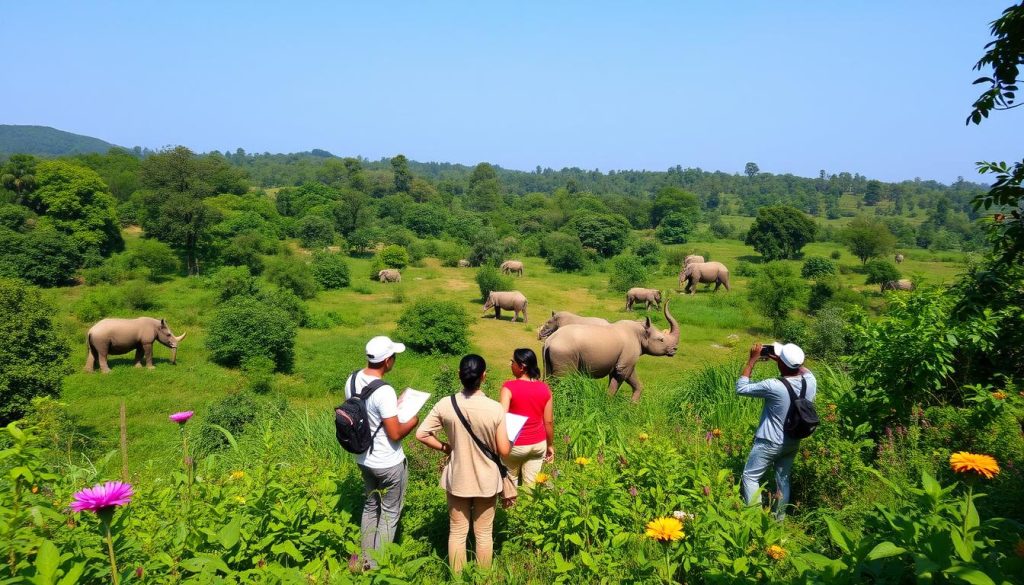
Interns working on rhino protection are key to keeping these amazing animals safe. You’ll help track rhino populations and their movements. You’ll also work on habitat conservation and help teach local communities about the need to protect their environment.
These actions help the rhinos and also build support for conservation among local people.
Bengal Tiger Conservation Initiatives
Bengal tiger conservation internships are another way to make a big impact. You’ll help monitor tiger populations, check their habitat needs, and join anti-poaching patrols. This work is crucial for tigers to survive in the wild.
Your help is a big part of the effort to protect these iconic animals.
Eco-Friendly Volunteer Experiences
Volunteering at Chitwan National Park lets you help with wildlife conservation. It also supports sustainable tourism. You’ll work on projects like waste management and habitat restoration.
Volunteering means doing hands-on work to protect local ecosystems. Here are some activities you might do:
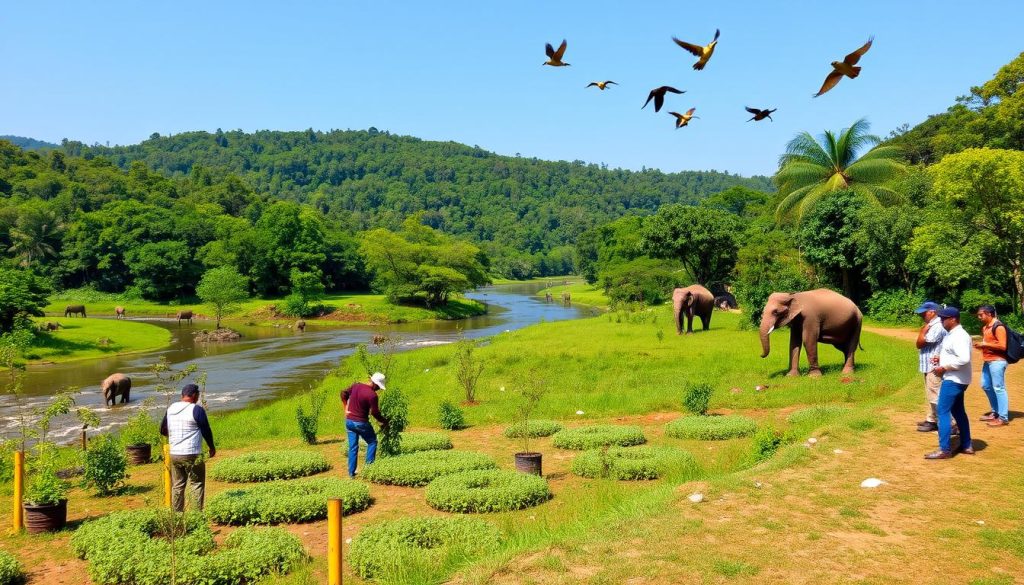
- Tree planting to restore natural habitats
- Educating visitors on responsible wildlife viewing practices
- Promoting sustainable tourism models within the community
Your help keeps Chitwan’s beauty for the future. By joining these eco-friendly efforts, you help nature and visitors coexist well.
Environmental Volunteering in Nepal
Volunteering in Nepal’s environment is a great way to help with important conservation work. You’ll get to work on projects that help keep Chitwan’s natural beauty alive. This includes helping with community forest management and local biodiversity surveys.
Contributing to Community Forest Management
As a volunteer, you can help with community forest management projects. These projects are key to keeping local ecosystems healthy. They also help communities by providing them with resources.
Your help is crucial in protecting wildlife habitats. This ensures the conservation of nature and supports community well-being.
Engaging in Local Biodiversity Surveys
Joining local biodiversity surveys is a great way to support species conservation research. You’ll help gather important data for researchers. This data helps them understand species populations and ecosystem health.
This work deepens your connection with nature. It also strengthens bonds with local communities dedicated to conservation.
Wildlife Volunteer Opportunities with Elephants
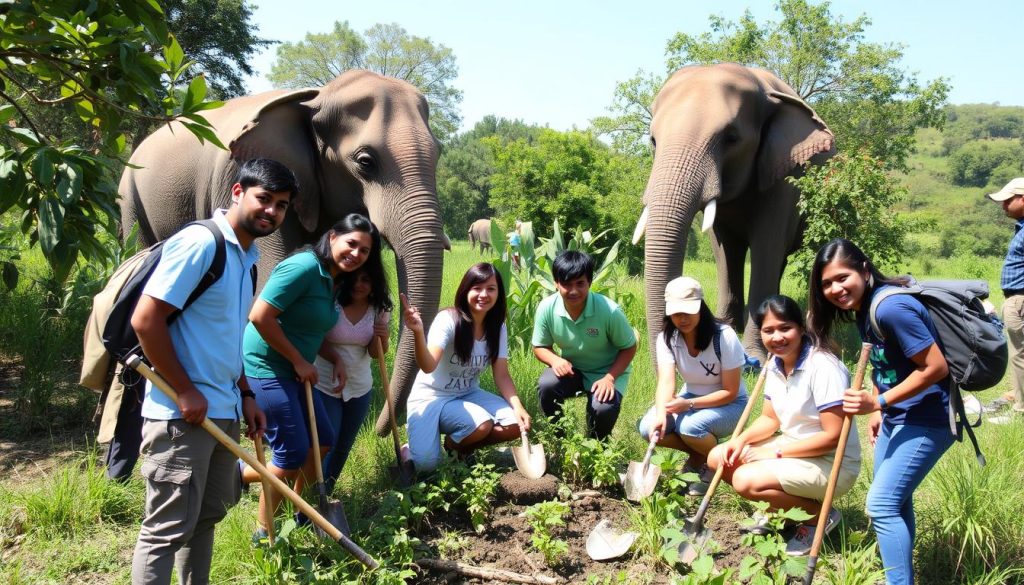
Working with elephants as a wildlife volunteer is a unique experience. It’s both rewarding and educational, especially for those who love animals. As an elephant volunteer, you’ll help improve their lives and learn about their behavior.
Daily Tasks for Elephant Volunteers
As an elephant volunteer, your tasks include:
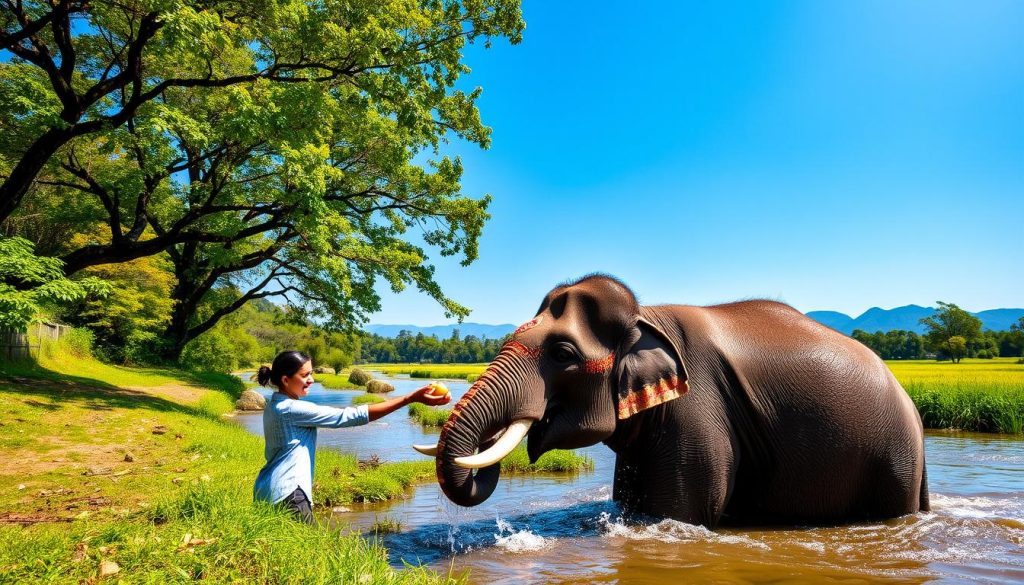
- Feeding the elephants a balanced diet tailored to their needs.
- Cleaning their living spaces to ensure a hygienic environment.
- Bathing the elephants, providing them with essential care and comfort.
- Observing and documenting their natural behaviors and interactions.
These tasks help keep the elephants healthy and happy. They also give you a peek into their natural lives and social habits.
Research Opportunities for Veterinary Students
Veterinary students have great research opportunities with elephants. You can:
- Study common health issues and diseases in captive elephants.
- Help with health assessments to aid conservation efforts.
- Work with vets on medical exams and treatments.
This experience is invaluable. It helps you develop skills while supporting the welfare of elephants. Elephants are very important in Nepal’s culture.
Educational Programs and Community Engagement
Chitwan National Park is all about teaching and learning. It’s where we work together to protect wildlife and our planet. We create fun and educational programs to help local people understand the importance of nature.
Imagine teaching kids about the animals and plants around them. Or taking them on field trips to learn more about nature. These activities help kids and adults alike understand why we need to protect our environment.
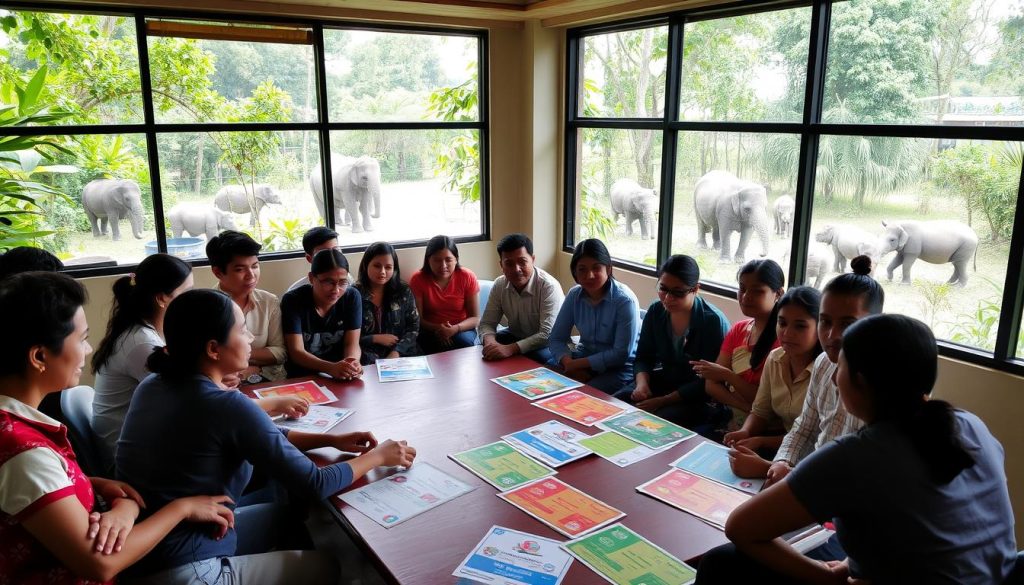
We also make games to teach kids about conservation. These games are fun and help kids learn about important issues. It’s a great way to get them excited about taking care of our planet.
By joining these programs, you help build a community that cares about the environment. This connection between people and nature is key to a sustainable future. It’s a chance to make a real difference in the lives of animals and people.
| Educational Program | Goal | Target Audience | Activities |
|---|---|---|---|
| School Workshops | Enhance knowledge of local wildlife | Students | Interactive presentations, discussions |
| Field Trips | Experience nature firsthand | Students and Teachers | Guided tours in Community Forest |
| Conservation Games | Engage children in wildlife issues | Children | Outdoor activities, team-based games |
Travel Tips for Volunteers in Nepal
Traveling to Nepal for volunteer work is a rewarding experience that needs careful planning. You’ll face different cultures and work conditions. Tasks might include outdoor work, teamwork, and being flexible.
It’s also important to understand local customs and respect traditions. This will make your experience better and your contributions more effective.
What to Expect During Your Stay
You’ll dive into the local culture and do your volunteer work. Community engagement is key, letting you connect with locals and learn about their lives. This experience will enrich your journey and boost your conservation efforts.
Stay open-minded and ready for challenges. Building relationships and working with others is part of the journey.
Preparation for a Meaningful Experience
Getting ready for volunteer work in Nepal means meeting vaccination needs and learning basic Nepali phrases. Having the right clothes and travel items is also crucial. These steps will help you start strong in Chitwan.
With good planning and a willingness to learn, you’re set for a meaningful journey in Nepal.