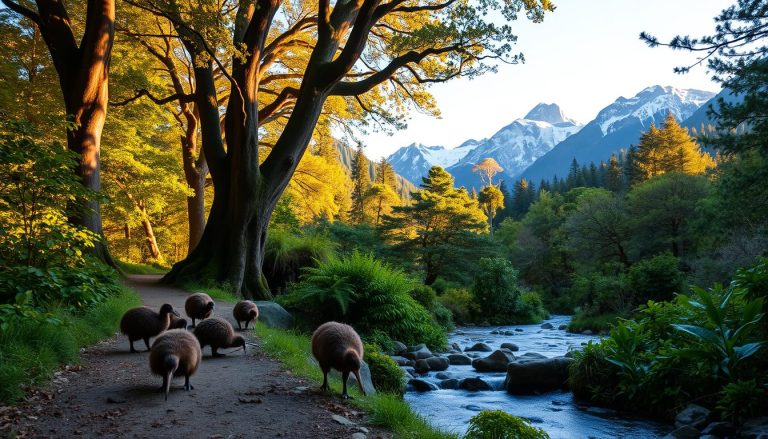
Conservation Efforts at Chitwan National Park
Imagine helping save endangered species while enjoying nature’s beauty. Chitwan National Park in Nepal is a place where conservation is more than policy. It’s a movement to protect wildlife and preserve biodiversity.
Since 1973, this park has become a home for species like the one-horned rhinoceros and the Bengal tiger. It shows how important wildlife conservation and biodiversity preservation are.
Chitwan National Park’s conservation work involves government rules, community help, and green practices. These efforts help the park’s natural resources. By learning about and supporting these efforts, you can help ensure a better future for the park and its people.
Introduction to Chitwan National Park
Chitwan National Park is at the foot of the Himalayas in Nepal’s Terai region. It’s a UNESCO World Heritage Site. The park covers about 93,200 hectares and is one of the last Terai ecosystems left.
It’s home to a wide variety of plants and animals. Chitwan National Park is key in saving endangered species and keeping biodiversity alive.
The park was created to save rhinos and tigers from poaching and habitat loss. It’s a haven for wildlife lovers. You can see over 500 bird species, many mammals, and unique plants here.
Every year, thousands of people come to see its beauty and wildlife. It’s a place where nature and adventure meet.
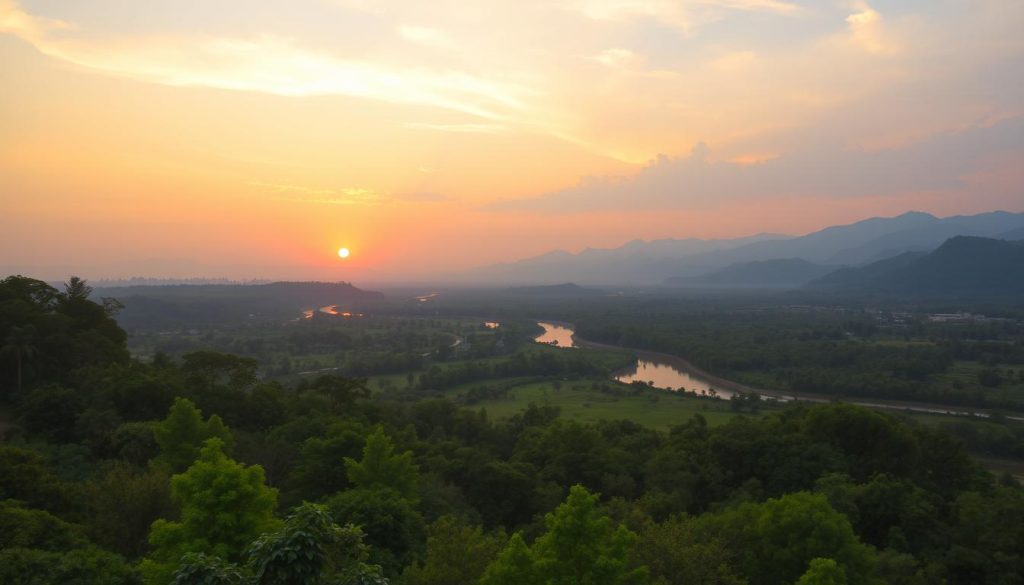
Nepal’s National Parks, like Chitwan, focus on conservation and eco-tourism. The park protects wildlife and teaches us about its ecosystems. Visiting here lets you see why we must protect nature for the future.
Significance of Biodiversity in Chitwan
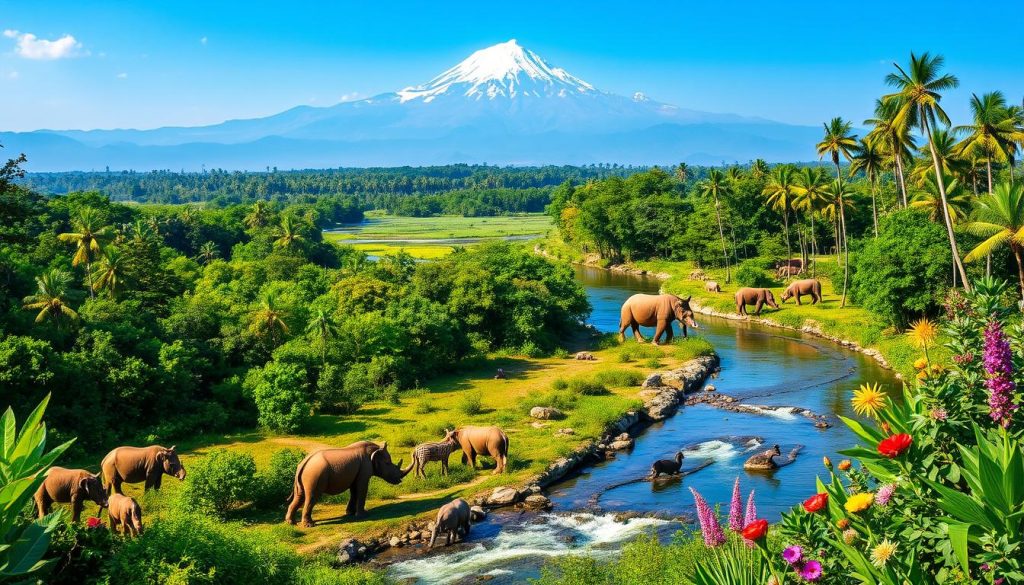
The biodiversity in Chitwan National Park is very important. It shapes the area’s ecological landscape and boosts its economy. The park is a safe home for endangered animals like the single-horned Asiatic rhinoceros and the Bengal tiger.
By protecting these animals, Chitwan helps the world. It also gives a safe place for many plants and animals. This shows how vital it is to keep Chitwan’s wildlife safe.
Chitwan Park has about 31% of all mammals in Nepal. It also has one of the highest bird counts globally. This diversity is key to keeping the environment healthy.
It supports many plant species that need animals to survive. This shows how Chitwan is a living lab for scientists and nature lovers.
The value of biodiversity in Chitwan goes beyond saving animals. It helps local people by supporting eco-tourism. This brings in visitors who want to see the wildlife.
This creates jobs and helps the economy. It also teaches people about taking care of the environment. This education helps protect Chitwan’s natural beauty.
History of Conservation Efforts
The history of conservation Chitwan began in the early 1800s. This was when people first started talking about protecting wildlife. The big change came in 1973 with the creation of Chitwan National Park. It was a key moment in Nepal’s fight to save nature.
At first, the “fortress model” was used. It aimed to keep wildlife safe by limiting people’s access. But, this plan pushed out the Tharu people and others, showing the clash between saving animals and respecting people’s rights.
As time went on, conservation methods changed. People realized that local communities were key to protecting wildlife. In the 1990s, buffer zones were set up around the park. These zones let local people help with conservation and support their own development.
This new approach tries to keep nature safe while also helping people. It’s about working together for the good of both wildlife and communities.
| Year | Event | Impact |
|---|---|---|
| 1800s | Early conservation efforts | Emergence of wildlife protection awareness |
| 1973 | Establishment of Chitwan National Park | Invocation of the fortress model, displacing local communities |
| 1990s | Introduction of buffer zones | Empowered local communities in conservation practices |
Successful Wildlife Conservation Initiatives
Chitwan National Park is a shining example of wildlife conservation success. Thanks to many initiatives, key species are recovering well. This makes the park a top spot for wildlife conservation.
Rhino Population Recovery
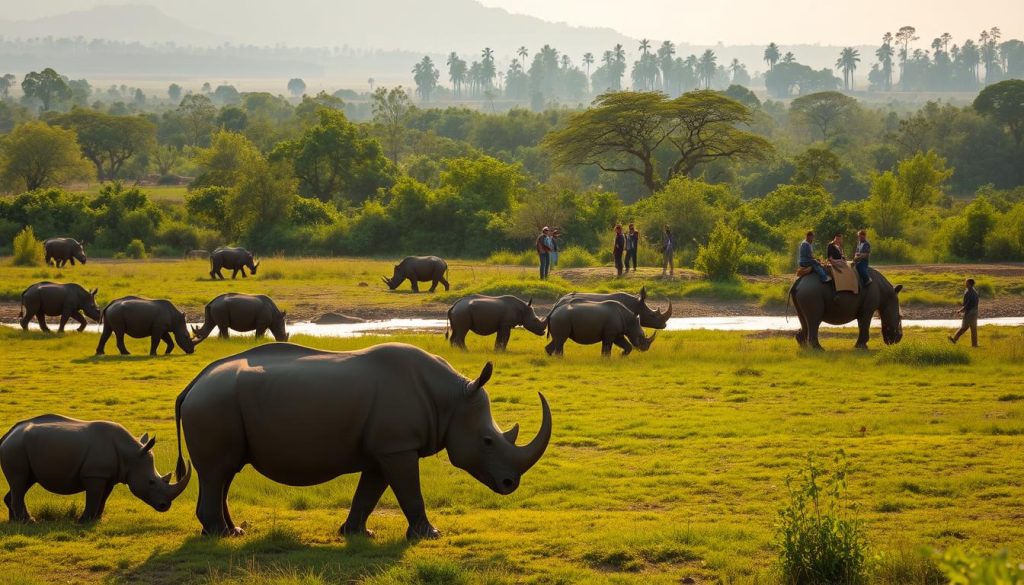
The one-horned rhinoceros is a big win for conservation in Chitwan. Over the years, efforts have paid off, growing the rhino numbers. From just 150 in the 1970s, now there are over 750 rhinos.
This success shows how vital habitat protection and anti-poaching efforts are. It also highlights the role of community involvement in saving this species.
Tiger Population Growth
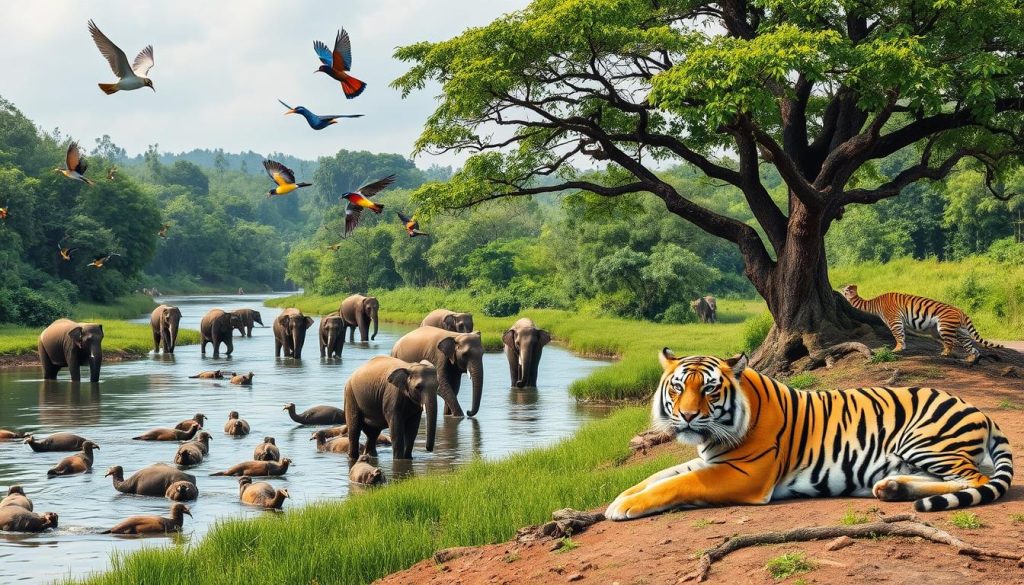
Chitwan National Park has also seen great progress in tiger conservation. The number of tigers has soared from about 40 breeding adults in the 1980s to over 235 today. This growth is thanks to strong anti-poaching laws and good habitat management.
Conservation Efforts at Chitwan National Park
Chitwan National Park focuses on working with local communities to protect the environment. It promotes sustainable living through community involvement. This approach helps both the wildlife and the people living near the park.
Community Engagement in Conservation
Local communities play a big role in Chitwan’s conservation efforts. They are taught to manage their resources in a sustainable way. This helps reduce conflicts between humans and wildlife in shared spaces.
Buffer Zone Community Forests
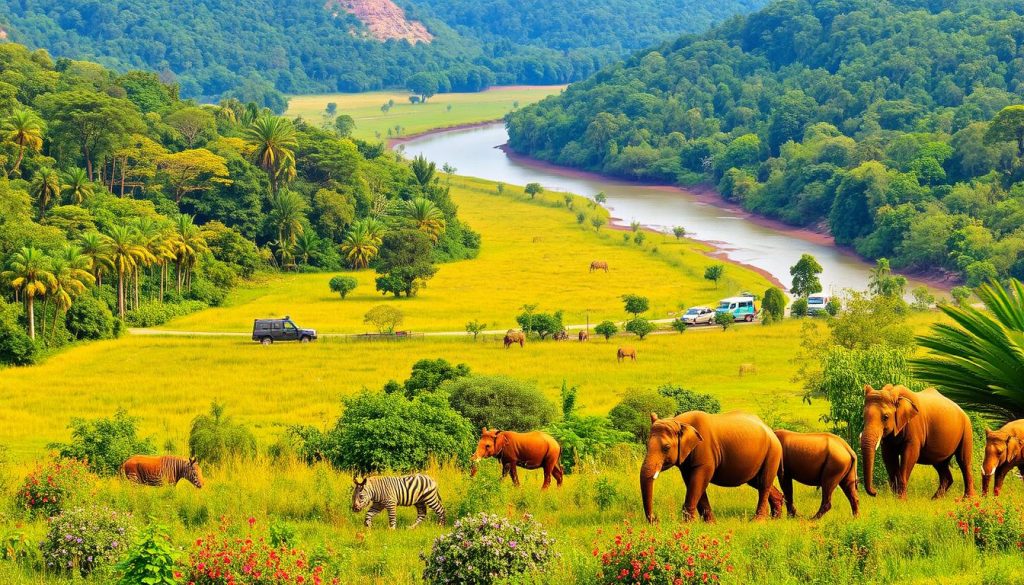
The buffer zone around Chitwan gives over 13,000 hectares to local communities. These areas were once degraded but have been restored. This shows how conservation and community well-being can go hand in hand.
Sustainable Tourism Practices
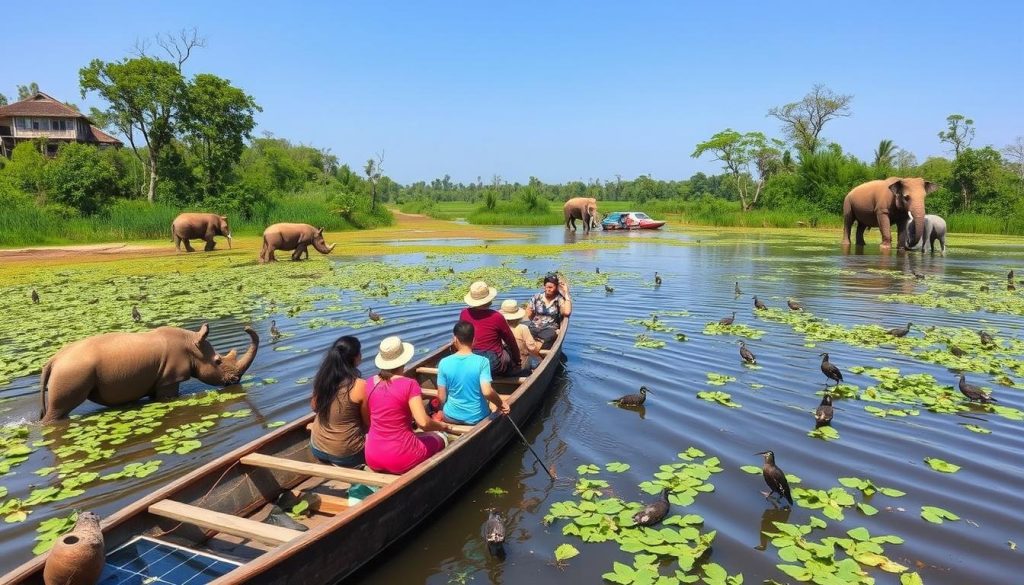
Sustainable tourism in Chitwan aims to protect the environment and support the local economy. It promotes eco-friendly tours that lessen harm to nature. This way, tourism helps fund important conservation efforts, benefiting both visitors and locals.
- Eco-friendly accommodations: Lodges use solar power and save water.
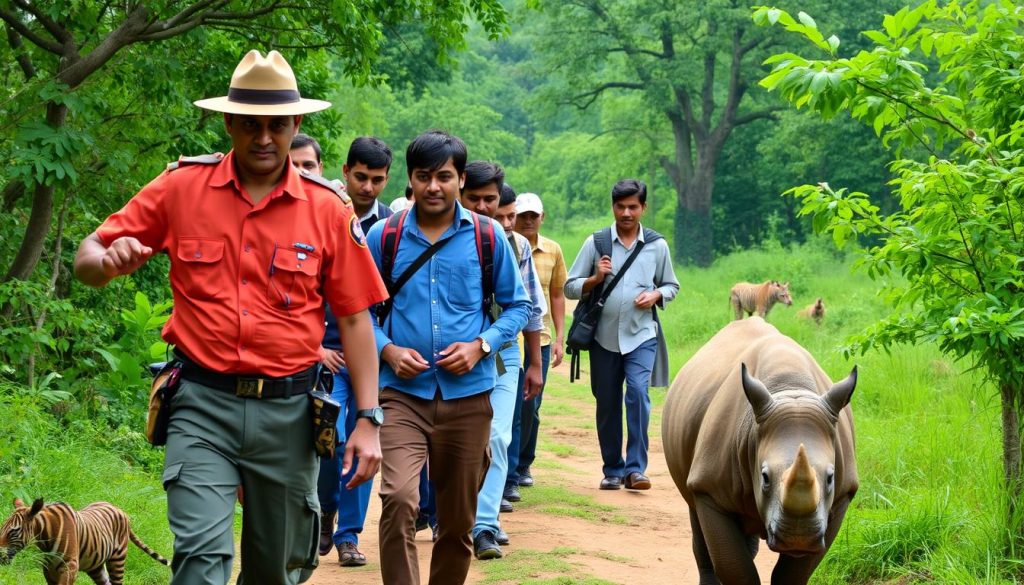
- Guided wildlife tours: Knowledgeable guides teach visitors to respect wildlife.
- Community involvement: Local people share in tourism profits and learn about conservation.
- Waste management: Efforts to cut down on trash and recycle keep the area clean.
- Cultural exchanges: Visitors get to meet locals, building respect and understanding.
These actions safeguard Chitwan’s unique nature and set a good example for the future.
| Aspect | Benefits of Sustainable Tourism |
|---|---|
| Environmental Protection | Reduces ecological footprints and conserves biodiversity. |
| Economic Growth | Boosts local economies through responsible travel funding. |
| Community Support | Empowers local populations through job creation and skill development. |
| Cultural Preservation | Encourages respect for local customs and heritage. |
Eco-tourism Initiatives and Their Impact
Eco-tourism in Chitwan helps protect the environment and empowers local communities. It promotes green practices. This raises awareness about wildlife protection and offers economic benefits to locals.
Benefits of Eco-tourism for Local Communities
Eco-tourism does more than just bring in money. It has many benefits for local communities, including:
- Job Creation: It creates jobs in guiding, hospitality, and making crafts.
- Economic Diversification: It makes local economies less dependent on farming, making them more stable.
- Funding for Conservation: It helps fund projects and infrastructure that protect wildlife.
- Cultural Preservation: It helps keep local traditions and practices alive by engaging with indigenous cultures.
Challenges Faced by Eco-tourism
Eco-tourism offers many chances, but it also faces challenges:
- Profit Distribution: It can be hard to make sure local communities get a fair share of the money, needing good management.
- Wildlife Conflicts: More people and animals meeting can cause problems, needing community solutions.
- Environmental Impacts: Too many visitors can harm nature, so finding a balance is key.
Knowing these challenges helps plan better eco-tourism projects. This ensures Chitwan can grow sustainably.
Endangered Species Protection Efforts
Protecting endangered species is key to keeping our ecosystems balanced. Actions to save species like the gharial crocodile are vital. They face big threats. Saving them helps the whole ecosystem stay healthy.
Focus on the Gharial Crocodile
The gharial’s numbers have dropped a lot. This is mainly because of habitat loss and poaching. Conservation efforts are working hard to fix habitats and teach people why gharials need protection.
Getting local communities involved is a big part of this. It teaches them about gharials and makes them want to help. This teamwork is crucial for saving the gharial.
Community-based Fish Farming Projects
Community fish farms do two important things. They give people jobs and teach them to use resources wisely. This helps reduce the strain on rivers, which is good for gharials.
These projects show how we can live with nature without harming it. They help the economy and protect the environment at the same time.
Biodiversity Preservation Strategies
Effective strategies for preserving biodiversity in Chitwan focus on several key areas. Habitat restoration is a major part, aiming to fix damaged ecosystems. This helps support a wide range of species.
Anti-poaching efforts are also vital. They protect wildlife populations by stopping illegal hunting. This keeps endangered species safe and maintains the balance in their habitats.
Teaching the community about the environment is another important strategy. By educating locals, we encourage them to help protect biodiversity. This teamwork between governments and non-profits makes conservation efforts more effective, leading to a better future.
Habitat Conservation Approaches
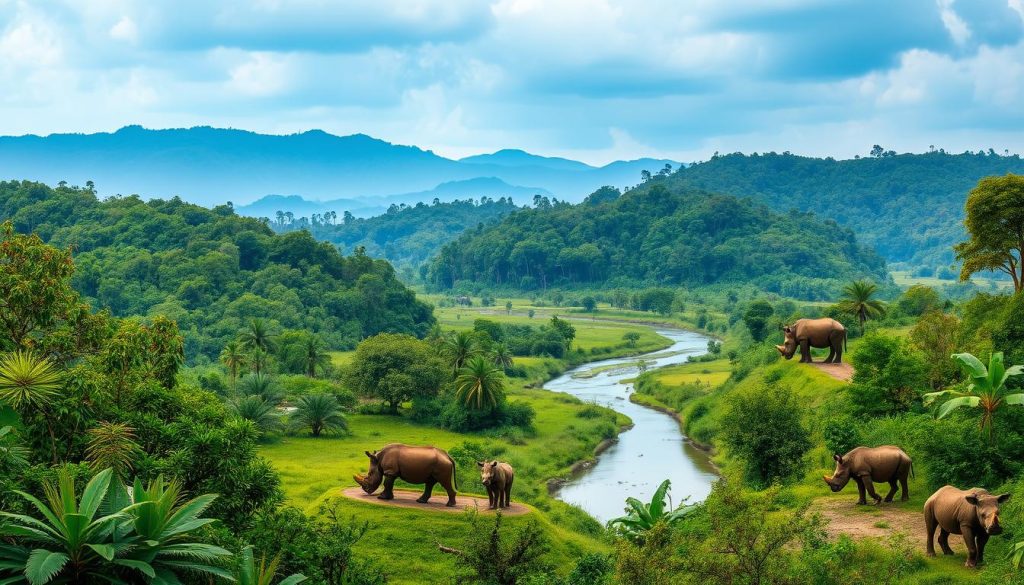
Effective habitat conservation is key to keeping Chitwan National Park’s ecosystem balanced. These methods help connect wildlife, their homes, and local people. By using sustainable ways, park officials set a good example for managing ecosystems.
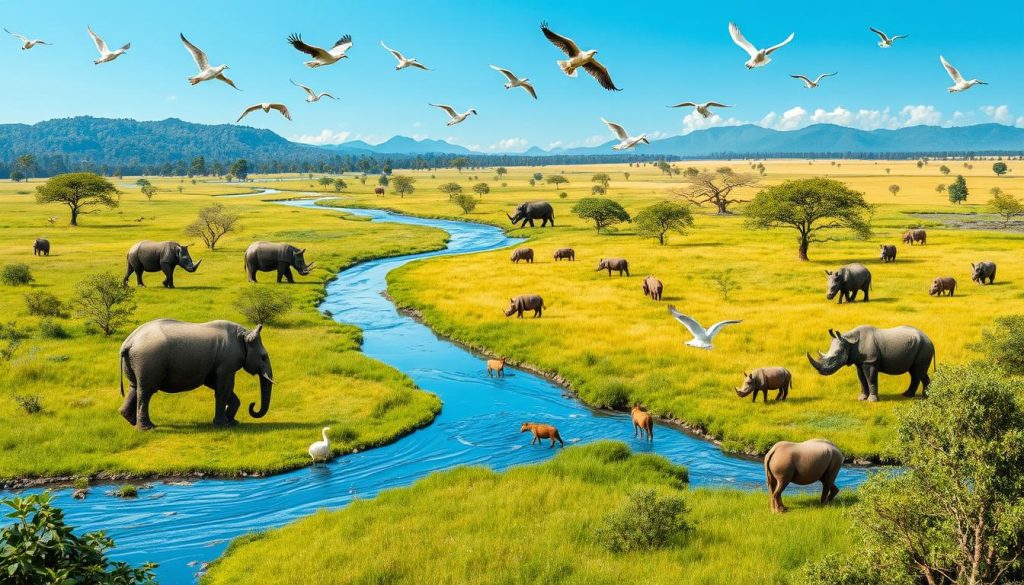
- Monitoring Habitat Conditions: Regular checks spot changes in habitats, leading to quick actions.
- Restoration Projects: Fixing damaged areas helps the ecosystem’s health.
- Biodiversity Corridors: These paths link separated habitats, helping animals move and keeping genetic diversity.
- Community Involvement: Working with local people makes sure their needs and conservation goals match.
These methods make the ecosystem in Chitwan National Park more resilient. They help it thrive against environmental threats. By focusing on ecosystem management, you help ensure a green future for wildlife and habitats.
| Conservation Approach | Description | Impact on Ecosystem |
|---|---|---|
| Monitoring Habitat Conditions | Assessment of wildlife habitats to identify threats | Prevents degradation and loss of biodiversity |
| Restoration Projects | Efforts to rehabilitate damaged ecosystems | Enhances habitat quality and species recovery |
| Biodiversity Corridors | Links between ecosystems to support wildlife movement | Improves genetic diversity and population stability |
| Community Involvement | Empowering local populations to participate in conservation | Ensures sustainable practices and local support |
Conclusion
The work to protect Chitwan National Park shows a bright future for wildlife. It’s important to understand how community involvement, eco-friendly tourism, and strong habitats help. These elements work together to make the ecosystem healthier.
It’s crucial to see how local people and wildlife depend on each other. This helps in improving lives while saving endangered animals.
The future of Chitwan’s wildlife depends on working together and using eco-tourism wisely. This way, Chitwan can stay a safe home for many animals for years to come. Every support you give helps create a model for conservation around the world.
Looking back, we’ve made great progress. But, we need to keep working and finding new ways to keep this progress going. Together, we can make sure Chitwan’s wildlife thrives, showing the success of careful and shared conservation.