

Your Guide to the Best Nature Reserves in Rio de Janeiro
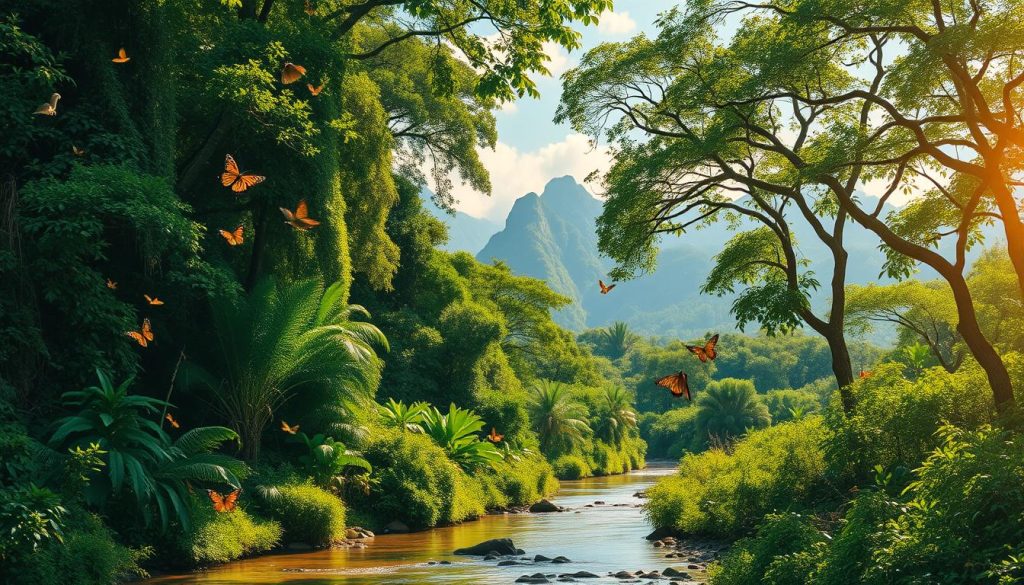
Rio de Janeiro is a special place for nature lovers. It has lush rainforests, tall mountains, and beautiful beaches. You can explore the best nature reserves, like Tijuca National Park and Pedra Bonita.
When planning your trip to Rio, you might wonder about the top nature reserves to see. You’ll want to know how to enjoy the city’s natural wonders. This includes hiking, spotting wildlife, and taking photos at scenic spots.
Rio de Janeiro is known for its amazing nature reserves. Places like Tijuca National Park offer incredible views and a chance to see unique wildlife. By visiting these reserves, you’ll discover Rio’s charm and enjoy its natural beauty. Your trip will be an adventure you’ll never forget.
Discovering Rio de Janeiro Nature Reserves: An Introduction
Rio de Janeiro boasts a variety of ecosystems, like rainforests, mountains, and beaches. Exploring the city’s nature reserves reveals unique landscapes and wildlife. The Ecological Reserve of Guapiaçu and Guanabara Bay showcase the city’s dedication to conservation.
The city’s nature reserves are not just beautiful but also vital for the environment.  stands out as one of the largest urban rainforests globally, spanning 15 square miles. It’s a sanctuary for many species and crucial for the city’s ecosystem.
The Ecological Importance of Rio’s Reserves
Rio’s nature reserves are key to preserving biodiversity. They offer habitats for various species and help regulate the climate. Activities like hiking and bird watching promote conservation and sustainability.
Types of Ecosystems You’ll Encounter
Rio’s reserves feature diverse ecosystems, including:
- Rainforests
- Mountains
- Beaches
- Mangroves
Each ecosystem is unique, offering many opportunities for exploration and discovery.
Best Times to Visit Nature Reserves
The ideal time to visit Rio’s reserves varies based on your interests. For hiking, the dry season (May to October) is best. Bird watchers should visit during the wet season (November to April).
Tijuca National Park: The Urban Rainforest Wonder
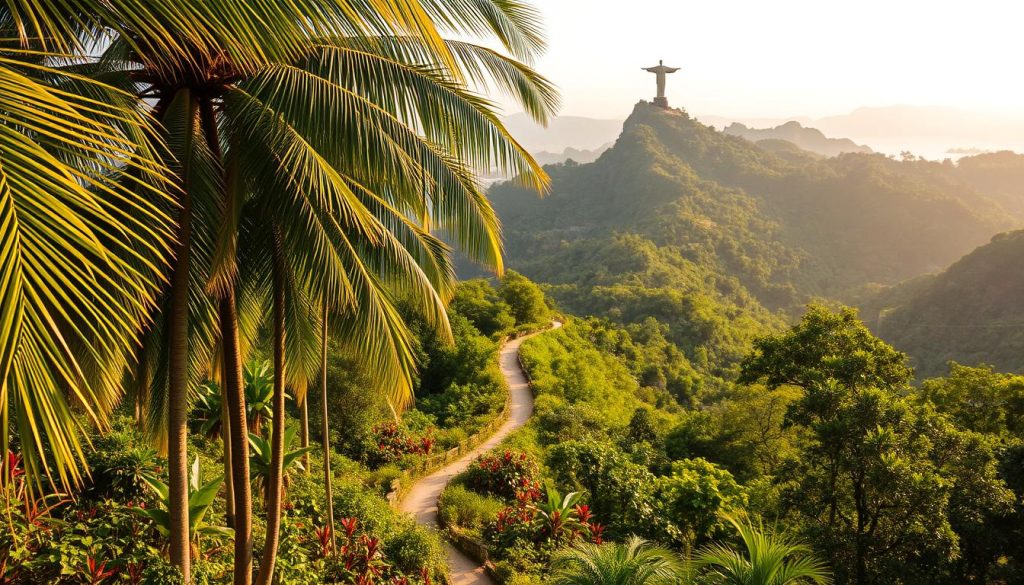
In Rio de Janeiro, you’ll find a special place called Tijuca National Park. It’s a rainforest in the city, covering about 32 square kilometers. It has over 1,600 plant species and many animals, like howler and capuchin monkeys, and the golden lion tamarin.
The park’s highest point, Pico da Tijuca, is 1,021 meters high. From there, you can see the city in all its glory.
The Pedra da Gavea is a famous spot for climbing, reaching 842 meters. There’s also the Cascatinha Taunay waterfall, which is 30 meters tall. Tijuca National Park is a paradise for those who love nature and adventure.
Some of the park’s key features and attractions include:
- Over 1,600 species of plants, including towering trees, orchids, and bromeliads
- Habitat for numerous animal species, including howler monkeys, capuchin monkeys, and the endangered golden lion tamarin
- Pico da Tijuca, the highest peak in the park, standing at 1,021 meters above sea level
- Pedra da Gavea, a prominent climbing spot rising to 842 meters above sea level
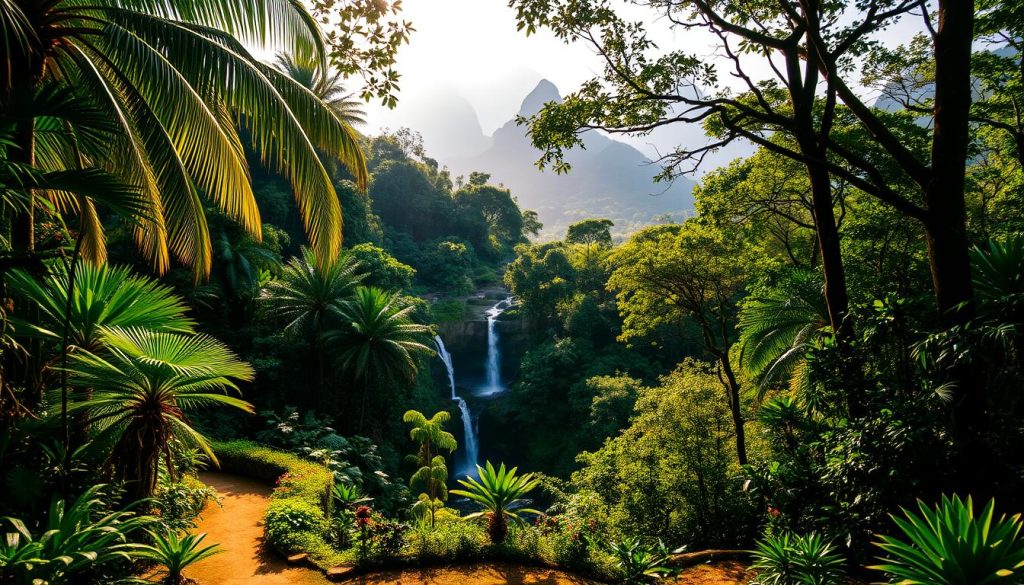
When you visit Tijuca National Park, be sure to respect the environment. This urban rainforest is a true wonder of Rio de Janeiro.
Exploring the Majestic Serra dos Órgãos National Park
When you enter the Serra dos Órgãos National Park, you’ll find a variety of ecosystems. This makes it a key spot for biodiversity. It’s located between Guapimirim and Teresópolis, making it a top choice for nature fans and hikers. It’s known for its rich flora and fauna, similar to the Itatiaia National Park.
The park has many hiking trails, like the Postal Card Trail, which offers stunning views. It’s home to over 300 bird species and 1,500 plant species, many found nowhere else. Thanks to conservation, wildlife sightings have increased, showing some species are recovering.
Notable Hiking Trails
- Postal Card Trail: offers panoramic views of the surrounding landscape
- Dedo de Deus Trail: takes you to the iconic Dedo de Deus rock formation
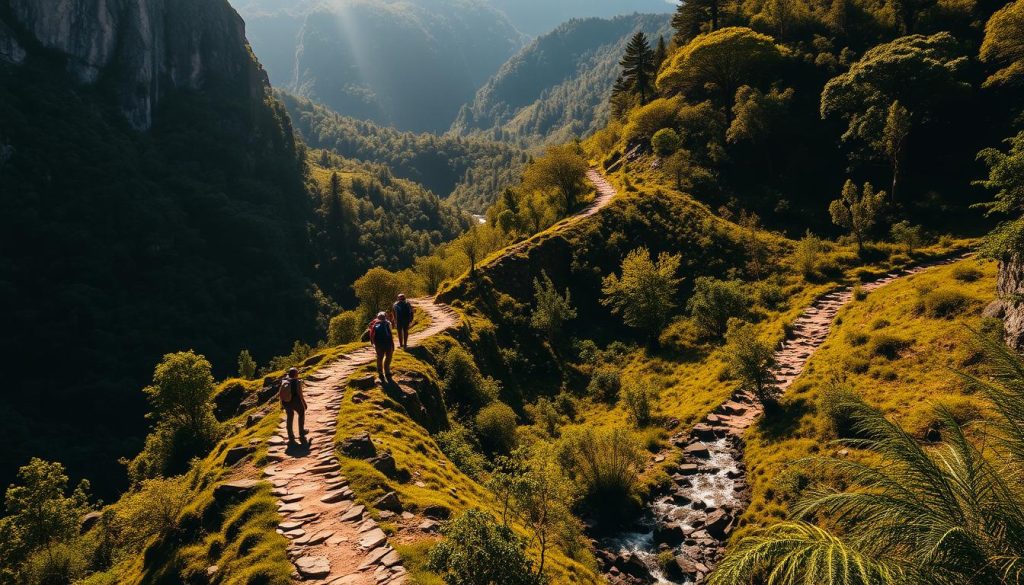
The Serra dos Órgãos National Park and Itatiaia National Park are big draws for ecotourism. They welcome thousands of visitors yearly. With its mix of ecosystems and wildlife, it’s perfect for those wanting to see Brazil’s natural wonders.
The Challenge of Pedra da Gavea
Exploring Rio de Janeiro’s natural wonders might lead you to Pedra da Gavea. This hike offers stunning views of the city and ocean. It’s in the Tijuca National Park and is about 3 miles long, with an elevation gain of 2,500 feet. It’s a moderate to hard hike, best for those in good shape.
The hike takes about 2.5 hours to climb up and 1.5 hours to come down. It’s a total of 5-6 hours, including time to enjoy the view. The trail starts with a 95% incline and has little shade, so bring lots of water and snacks.
Here are some important details for your hike:
- Elevation gain: 2,500 feet
- Hike duration: 2.5 hours to reach the summit
- Rock climbing portion: 15 meters (49 feet)
- Total length: 3.4 km round trip
The tour can have 2 to 12 people. It’s best for those 14 and older. The whole tour, including hiking and summit time, lasts 7 hours. If you’re looking for more, Macaé de Cima Ecological Reserve is another great spot.
Macaé de Cima Ecological Reserve: A Hidden Gem
The Macaé de Cima Ecological Reserve is a treasure trove of biodiversity. It has over 200 species of birds and 1,000 species of flora. Located in the Atlantic Forest biome, it’s part of a bigger conservation effort in Rio de Janeiro.
As you explore, you might see rare birds like the Cherry-throated Tanager. You’ll also experience the unique ecosystem of the Atlantic Forest.
The reserve is a hit with nature lovers and researchers. It has over 30 kilometers of hiking trails. These trails let visitors see different ecosystems and viewpoints, showing off the reserve’s rich biodiversity.
The Macaé de Cima Ecological Reserve is also a key spot for research. Over 50 scientific studies have been done here in the last decade. It’s different from other reserves like the Ecological Reserve of Guapiaçu, with its lush rainforests and diverse wildlife.
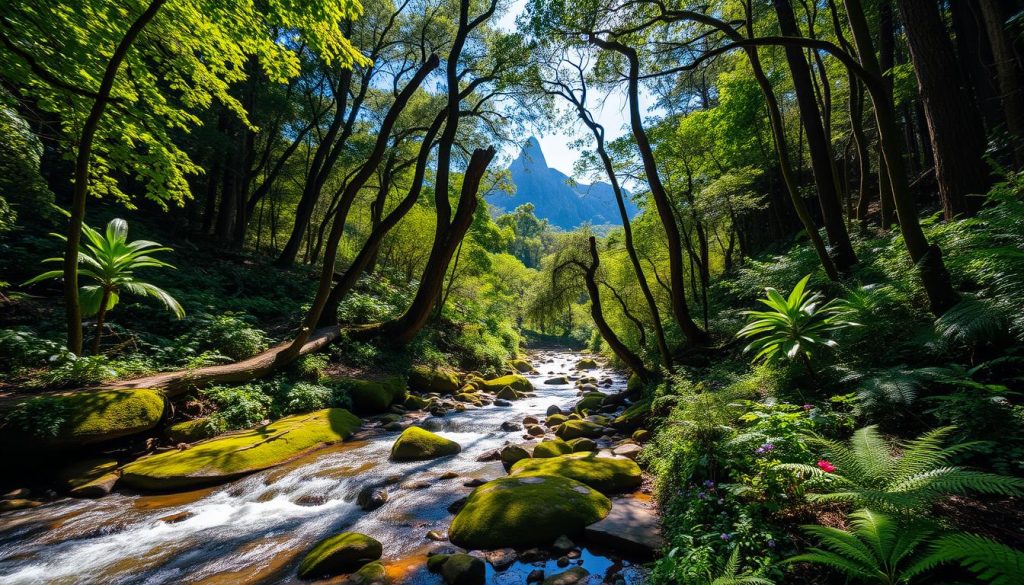
Some of the notable features of the Macaé de Cima Ecological Reserve include:
- Over 200 species of birds
- 1,000 species of flora
- 30 kilometers of hiking trails
- 90% forest cover, contributing to carbon sequestration
- Part of a larger conservation effort, including 22 other protected areas in Rio de Janeiro
When you visit the Macaé de Cima Ecological Reserve, you’ll find unique experiences. You can hike, birdwatch, or learn about research and conservation. With its rich biodiversity and stunning beauty, this hidden gem is a must-see for anyone exploring Rio de Janeiro’s natural wonders.
Itatiaia: Brazil’s First National Park
As you explore Rio de Janeiro’s natural wonders, you’ll find Itatiaia National Park. It’s Brazil’s first national park, opened in 1937. It’s perfect for nature lovers and hikers, with its stunning peaks, diverse wildlife, and beautiful trails.
Itatiaia National Park is near Serra dos Órgãos National Park. It covers about 300 square kilometers. The park has lush Atlantic Forest and high-altitude plants. You can see many bird species, like the Saffron Toucanet and Red-breasted Toucan.
Some of the park’s highlights include:
- 12 significant hydrographic basins
- Pico das Agulhas Negras, the highest peak, standing at 2,791 meters
- A variety of rare species, such as the Blond-crested Woodpecker and Black-and-Gold Cotinga
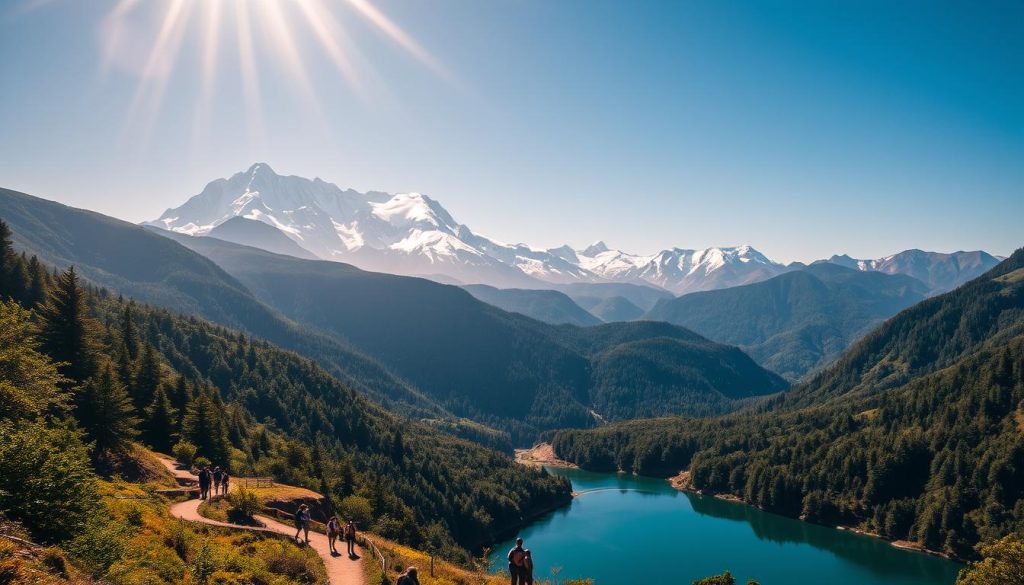
Itatiaia National Park is a special place to see Brazil’s natural beauty. It’s great for hiking, bird watching, and enjoying the outdoors.
The Ecological Reserve of Guapiaçu: Biodiversity Haven
The Ecological Reserve of Guapiaçu is near Guanabara Bay. It’s a top spot for nature fans and bird watchers. The reserve has lush rainforests and many birds, like toucans and macaws.
Some of the reserve’s key features are:
- 12,000 hectares of conserved Atlantic Forest
- Protection of the water supply for 2.5 million people
- Over 750,000 trees planted in the reserve over the past two decades
- 487 types of birds and hundreds of tree species supported by the reserve
Visitors can enjoy bird watching opportunities and guided tour options. It’s perfect for those wanting to see the beauty of the Ecological Reserve of Guapiaçu and Guanabara Bay.
Essential Tips for Visiting Rio’s Nature Reserves
When you visit Rio de Janeiro’s nature reserves, like Tijuca National Park, be ready. Summer in Rio can be very hot, with temperatures over 100°F (43°C). So, wear comfy hiking shoes, carry water, and have snacks. RioDeJaneiro.com suggests getting a guide or joining a tour for a safe and fun trip.
Here are some tips to enjoy your visit:
- Pack light and wear comfortable clothing
- Bring sunscreen, a hat, and sunglasses
- Stay hydrated by drinking plenty of water
Also, know your transport options. The subway is good, but buses can be hard to figure out. Visit in April, May, September, or October to miss the crowds.
Follow these tips for a great time exploring Rio’s nature reserves, including Tijuca National Park.
Conservation and Sustainable Tourism in Rio’s Reserves
Exploring Rio de Janeiro’s nature reserves means thinking about how tourism affects the environment and local people. Conservation is key to protecting these places. Sustainable tourism helps support these efforts. By picking eco-friendly tours and caring for nature, visitors help save Rio’s reserves.
Here are ways to help with conservation in Rio’s nature reserves:
- Choose tour operators that practice sustainable tourism.
- Always respect the environment and wildlife.
- Support local communities and conservation projects.
In Rio de Janeiro, sustainable tourism is growing. Many tour operators and conservation groups work together. They aim to protect the area’s unique wildlife. By supporting these efforts, visitors help preserve Rio’s nature reserves for the future. They also promote conservation and sustainable tourism.
Best Photography Spots in Rio’s Natural Parks
Exploring Rio de Janeiro’s nature reserves is a treat for photographers. You’ll find stunning landscapes and vibrant cityscapes. Rio is a true paradise for those who love to capture moments through the lens.
Timing is key for great photos. Rio’s parks are perfect for sunrise and sunset shots. Mirante Dona Marta is the top spot for sunrise, and Pedra do Arpoador is great for sunset.
Sunrise and Sunset Locations
- Mirante Dona Marta: Top sunrise photography spot in Rio de Janeiro
- Pedra do Arpoador: Popular spot for sunset views
- Vista Chinesa: Located 380 meters above sea level within Tijuca National Park, offering panoramic views
Wildlife photography fans will love Rio’s parks. You can see everything from majestic birds to exotic animals. Always remember to respect the animals and their homes, and follow responsible wildlife photography guidelines.

Wildlife Photography Tips
For a better photography experience, consider a guided tour. These tours visit up to 4 spots in a day. They offer great insights and help you find the best spots and techniques.
Seasonal Wildlife Guide for Nature Enthusiasts
When planning your trip to Rio de Janeiro nature reserves, knowing the Seasonal Guide is key. This guide helps you spot the best wildlife, like exotic birds and small mammals.
The best time to visit depends on the season and the wildlife you want to see. Summer is lively, with many species like monkeys, sloths, and toucans around.
Here’s a quick look at what each season offers:
- Summer: High temperatures and humidity, with plenty of rainfall. Ideal for spotting monkeys, sloths, and toucans.
- Autumn: Mild temperatures, with decreasing rainfall. Good for spotting birds, such as hummingbirds and parrots.
- Winter: Cooler temperatures, with minimal rainfall. Ideal for spotting smaller mammals, such as armadillos and anteaters.
- Spring: Mild temperatures, with increasing rainfall. Good for spotting a variety of species, including monkeys, birds, and reptiles.
Plan your visit based on the Seasonal Guide to enjoy the best wildlife spotting in Rio de Janeiro nature reserves.
Conclusion: Embracing Rio’s Natural Heritage
Exploring Rio de Janeiro’s nature reserves shows their importance. Places like Tijuca National Park and Macaé de Cima Ecological Reserve highlight Brazil’s rich biodiversity. By supporting conservation and sustainable tourism, you help protect these areas for future generations.
Rio’s reserves face challenges like pollution and urban growth. But, there’s hope. New investments aim to clean up Guanabara Bay, which gets 18,000 liters of untreated sewage every second. Choosing eco-friendly tours and respecting nature helps keep Rio’s beauty alive.
Seeing Rio’s wonders, like Mirante Dona Marta or Guapimirim Environmental Protection Area, connects you deeply. It shows the impact of your visit. So, let’s cherish Rio’s nature, explore it, and protect these special places.





