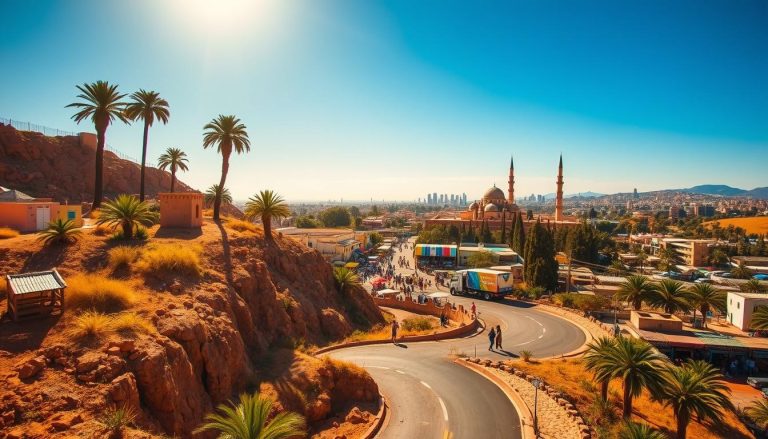
Your Guide to Shopping in Hammamet Medina
Are you ready for a unique shopping experience in Hammamet Medina? Imagine walking through lively streets, finding special souvenirs, and learning about a historic trading hub.
As you visit the local markets, you’ll feel like you’re in a real Middle Eastern bazaar. You’ll see colorful textiles and beautiful handicrafts. Each item has a story of the area’s rich culture. Get ready to find hidden treasures and make memories in this magical place.
Hammamet Medina Shopping: An Unforgettable Experience
Stepping into Hammamet’s Medina is like entering a world full of colors, scents, and sounds. It’s a journey through Tunisia’s rich culture. Here, you can find unique Tunisian crafts and souvenirs at the Medina Shop, a lively spot in Hammamet’s heart.
The Rich History Behind the Marketplace
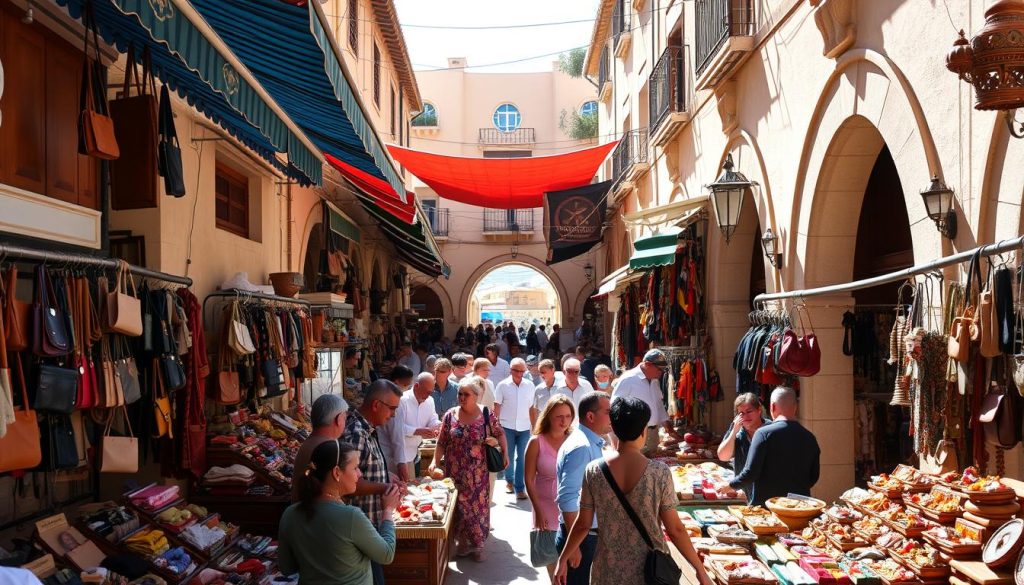
The Medina of Hammamet has a long history, dating back centuries. Its marketplace was key for trade and commerce. Today, it’s a vital part of the local economy, offering goods that show the region’s skills and traditions.
Walking through the narrow streets, you’ll see shops and stalls. They sell handmade crafts and local treats. This history is alive as you explore, with its architecture, lively atmosphere, and friendly locals.
Looking for a shopping guide Medina Hammamet or just to enjoy the vibe? The Medina has something for everyone.
What Sets Hammamet Apart from Other Tunisian Markets
Hammamet’s Medina is special because it mixes old and new. It keeps its historic charm but also has modern shops and workshops. You can find everything from traditional crafts to quality souvenirs, making it a top spot for shopping.
The Medina balances keeping its heritage with modern touches. As you shop, you’ll see the care in the craftsmanship. The vendors’ pride adds to your shopping joy.
Navigating the Labyrinth of Souks
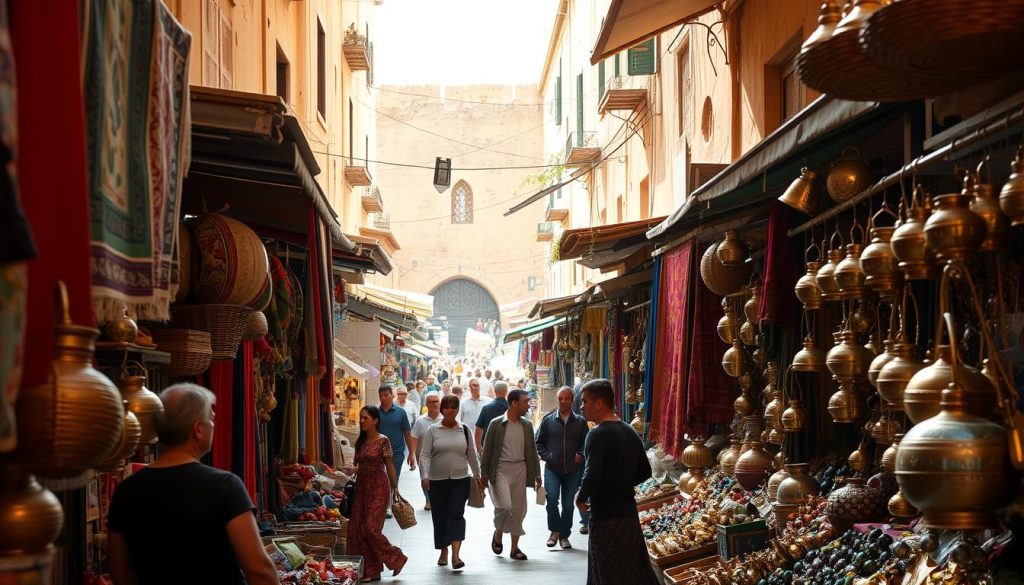
The Hammamet Medina’s souks are a treasure trove for shoppers. They are filled with artisan crafts and local treasures. As you wander through the narrow streets, you’ll find a world of colors, smells, and the warm smiles of vendors.
Main Market Streets and Their Layout
The main market streets in Hammamet Medina offer a variety of shopping experiences. The souks are organized by the type of goods sold. You’ll find areas for spices, textiles, and handicrafts. Knowing the layout helps you plan your shopping and find the best deals.
Key Shopping Areas:
- The central souk, where you’ll find local handicrafts and souvenirs.
- The textile district, known for vibrant fabrics and traditional Tunisian clothing.
- The spice market, where exotic spices fill the air.
Peak Shopping Hours and Seasonal Considerations
Visit the souks during cooler hours for a better shopping experience. Early morning or late evening is best to avoid crowds and heat.
| Time of Day | Shopping Experience |
|---|---|
| Early Morning | Less crowded, more personalized service. |
| Mid-day | Crowded, hot, and potentially overwhelming. |
| Evening | Relaxed atmosphere, vendors may be more willing to negotiate. |
Getting Around: Transportation and Parking Tips
Navigating Hammamet Medina is easy, with main areas close to each other. If you don’t want to walk, taxis and rental cars are available. Parking near the Medina can be tough, so plan ahead.
Tip: Park outside the Medina walls and walk in to avoid parking issues.
Must-Visit Shops in Hammamet Medina
As you explore Hammamet Medina’s historic streets, you’ll find many shops. They showcase Tunisian craftsmanship at its best. The Medina has everything from traditional workshops to fancy boutiques and local food markets.
Traditional Artisan Workshops
Shopping in Hammamet Medina is special because of the traditional workshops. These places let you see the rich artisanal heritage of the area. Skilled craftsmen use old techniques to make their products.
Pottery Studios and Ceramic Galleries
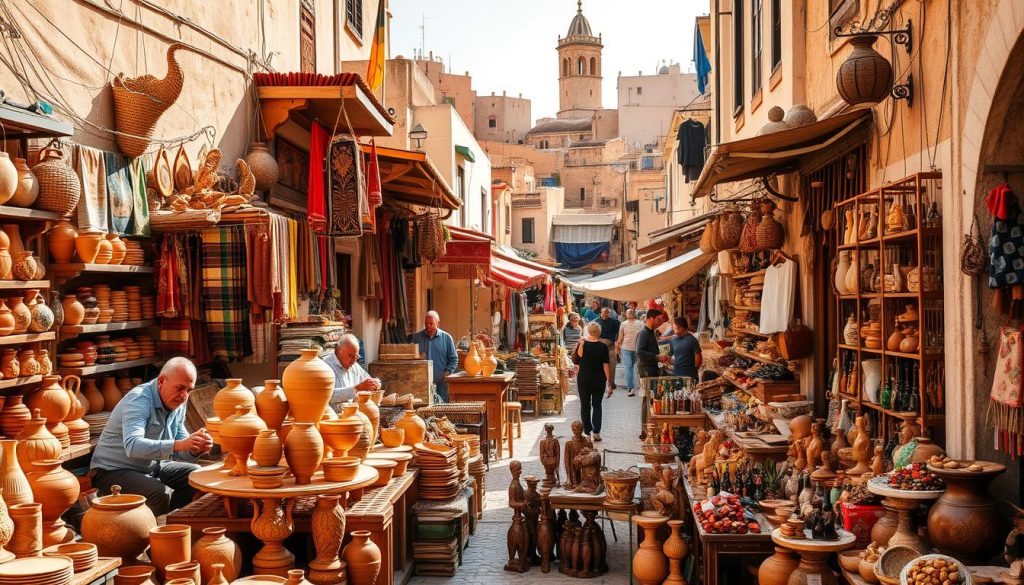
Don’t miss the pottery studios and ceramic galleries. They have beautiful pieces that show off the region’s style. The artisans use old methods, making each item unique.
Textile Workshops and Weaving Demonstrations
Textile workshops are a must-see. They offer weaving demonstrations that show off local artisans’ skills. You can see the making of amazing textiles, like colorful fabrics and intricate carpets.
Upscale Boutiques for Quality Souvenirs
If you want high-quality souvenirs, Hammamet Medina’s upscale boutiques are perfect. They have everything from designer clothes to beautiful jewelry. These stores offer a fancy shopping experience.
Local Food Markets and Spice Vendors
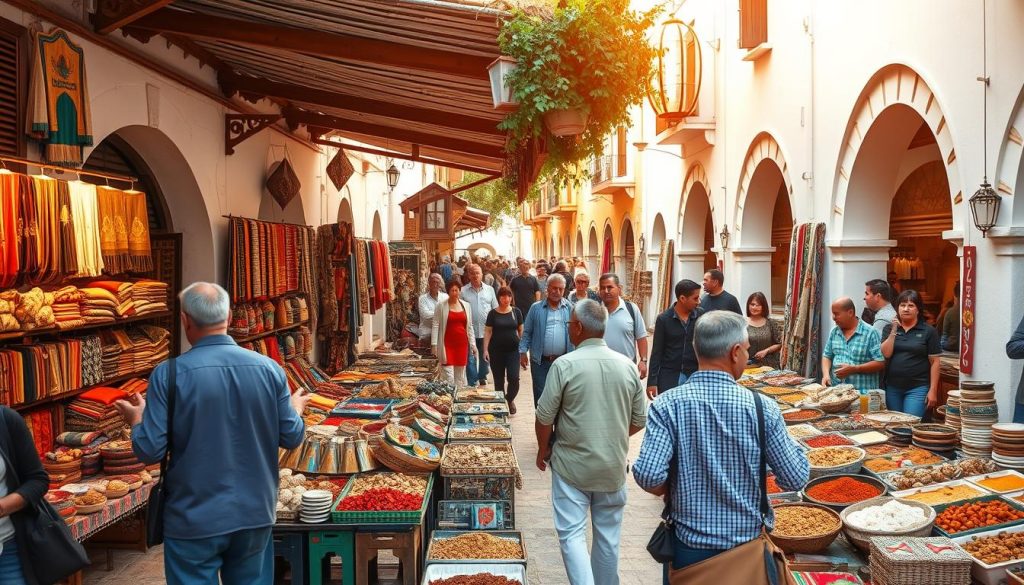
Visiting Hammamet Medina isn’t complete without checking out the local food markets and spice vendors. These places are full of life, with smells of spices and fresh produce everywhere. You can try local foods like dates, olives, and spices, and buy some to take home.
Top Souvenirs to Bring Home from Hammamet Medina
Hammamet Medina is a treasure trove for shoppers. You’ll find everything from beautiful ceramics to luxurious textiles. These items showcase Tunisia’s rich cultural heritage.
Ceramics and Pottery: Signature Tunisian Blues
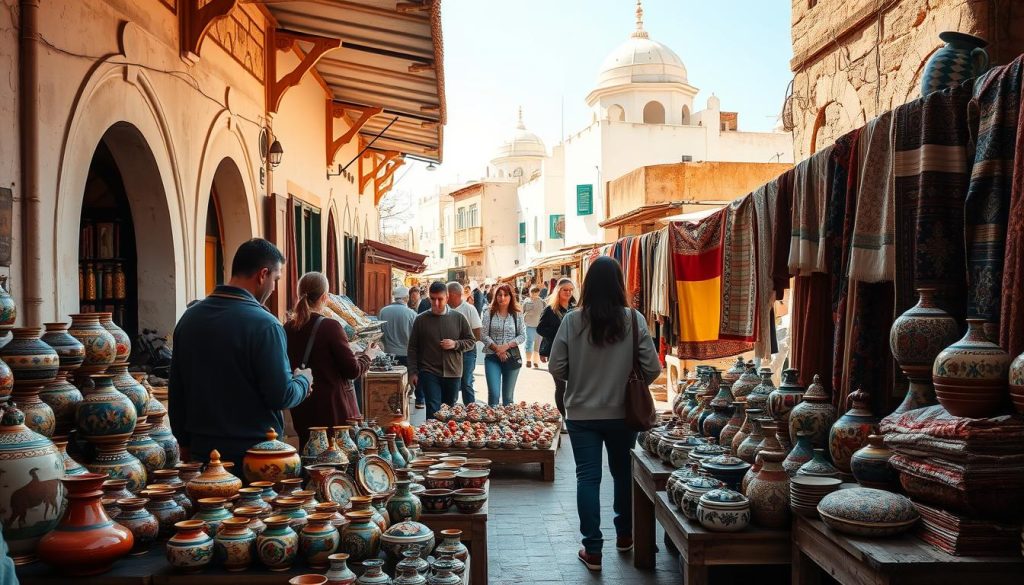
Tunisian ceramics stand out with their bright blues and detailed designs. You can find everything from plates to vases. These pieces add a Mediterranean flair to any home.
Textiles: Carpets, Blankets, and Foutas
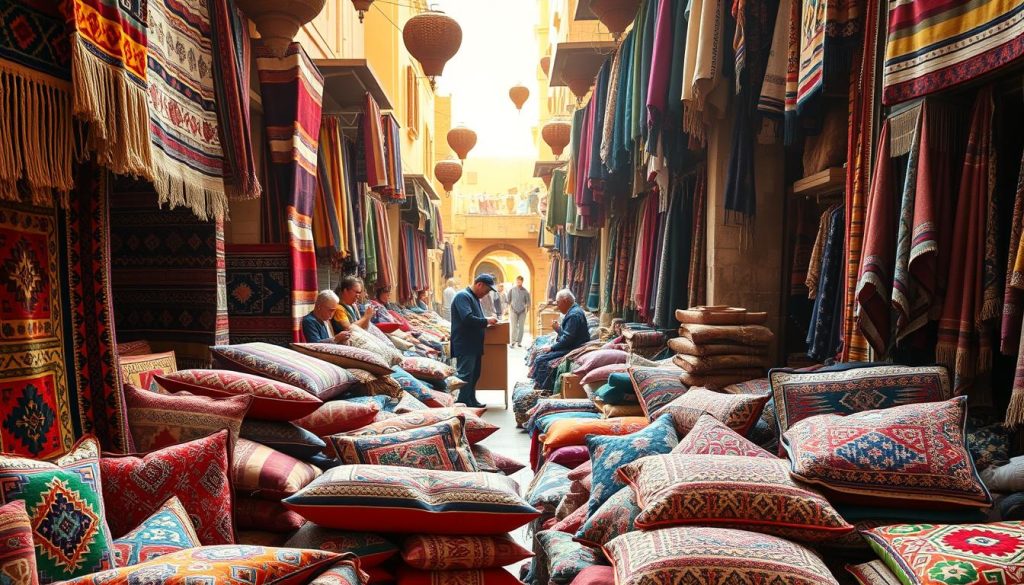
Textiles are a big part of Tunisian culture. The Medina offers high-quality carpets, blankets, and foutas. These items are not just beautiful but also carry Tunisia’s textile history.
Leather Goods: Bags, Shoes, and Accessories
Hammamet Medina is famous for its leather goods. You can find stylish bags, comfy shoes, and accessories. Tunisian leather is known for its quality and durability.
Jewelry and Metalwork: Silver and Brass Treasures
The markets are full of jewelry and metalwork. You’ll see silver and brass pieces that show off Tunisian skill. From necklaces to decorative items, there’s something special for everyone.
| Souvenir Type | Description | Price Range |
|---|---|---|
| Ceramics and Pottery | Intricately designed pieces with signature blue glaze | $20-$100 |
| Textiles | High-quality carpets, blankets, and foutas | $30-$200 |
| Leather Goods | Stylish bags, shoes, and accessories | $50-$300 |
| Jewelry and Metalwork | Silver and brass pieces, including necklaces and decorative items | $40-$500 |
Shopping in Hammamet Medina is a chance to dive into local culture. Whether you’re looking for gifts or personal items, you’ll find something special. The markets have a wide range of treasures.
Mastering the Art of Bargaining
Haggling is a big part of shopping in Hammamet Medina’s markets. With the right strategies, you can get amazing deals on handicrafts. Bargaining is more than just finding a price; it’s a key part of the culture here. Knowing and respecting this can make your shopping trip even better.
Why Haggling is Expected and Respected
In Hammamet Medina, haggling is a long-standing tradition. Vendors expect you to negotiate prices, which shows respect for both the product and the seller. Don’t be shy to haggle for the best prices on handicrafts; it’s a big part of the fun.
Step-by-Step Bargaining Strategies That Work
Good bargaining is more than just making an offer. Here are some tips to help you get the best deals:
- Research the market value of the items you’re interested in.
- Start with a lower offer than you’re willing to pay.
- Be respectful and friendly; a good relationship can lead to better prices.
Opening Offers and Counteroffers
The first offer is key in bargaining. Make it reasonable but lower than your limit. The vendor will likely counteroffer, and then you can work towards a fair price.
When to Walk Away and When to Close the Deal
Knowing when to walk away is important. If the price isn’t right, it’s okay to leave. This might make the vendor rethink their price. But when you agree on a price, be ready to finalize the deal.
Common Bargaining Mistakes Americans Make
Americans often rush to agree on a price or show too much excitement for an item. This can lead to paying too much. Stay calm, be patient, and don’t hesitate to walk away if the deal isn’t good.
Shopping Etiquette for American Visitors
Exploring Hammamet Medina’s markets can be a great experience. Knowing local shopping etiquette makes it even better. Hammamet Medina is rich in culture and has lively souks. It’s important to respect local customs for a smooth shopping trip.
Respectful Interactions with Vendors
Being respectful and courteous is key when talking to vendors in Hammamet Medina. Saying “hello” or “as-salamu alaykum” (peace be upon you) can help. Small talk about products and stories is common and enjoyable.
Building a good relationship with vendors makes shopping more fun for everyone.
Appropriate Dress and Behavior in the Medina
Dressing modestly is a good idea in Hammamet Medina. Men and women should cover their shoulders and knees. This shows respect for the local culture.
Also, be mindful of your behavior. Avoid public displays of affection and don’t take photos of people without asking. Being respectful makes your visit better and earns local respect.
Photography Etiquette and Asking Permission
Always ask permission before taking photos of vendors, their products, or scenes. Some might not want their pictures taken. Asking nicely, like “Is it okay if I take a photo?” or “Maghribi taswira?” (Can I take a picture?), is polite.
This courtesy can make vendors more friendly and open to conversation.
Authentic Crafts vs. Tourist Souvenirs: How to Tell the Difference
Exploring Hammamet Medina’s souks can be exciting. Yet, it’s tricky to spot the real crafts from tourist souvenirs. Knowing what’s truly Tunisian is key to a great shopping trip.
Hallmarks of Genuine Tunisian Craftsmanship
True Tunisian crafts have a deep history, use old techniques, and are made from top-notch materials. When you’re looking for real souvenirs, these signs are important.
Traditional Techniques and Materials
Real Tunisian crafts use time-honored methods like pottery, weaving, and metalwork. They’re crafted from local stuff like clay, wool, and metals.
Certification and Fair Trade Labels
Some crafts have certifications or fair trade labels. These show that the makers are paid fairly. Look for these to know you’re buying ethically and authentically.
Tourist Traps and Imported Knockoffs to Avoid
Not all souks sell genuine, high-quality items. Watch out for:
- Mass-produced items without the personal touch of local artisans.
- Imported goods pretending to be local.
- Overpriced souvenirs that don’t match their worth.
To steer clear of these, talk to local sellers, ask where things come from, and compare prices in different places.

By being smart and informed, you can find genuine Tunisian crafts. These items showcase Hammamet Medina’s rich cultural heritage.
Enhancing Your Shopping Experience
Exploring Hammamet Medina’s souks is exciting. Taking breaks at local cafes or restaurants can recharge you. Enjoy traditional Tunisian dishes like couscous or brik. This makes your shopping trip better and lets you see local life.
Cafés and Restaurants for Shopping Breaks
Many cafes and restaurants are in Hammamet Medina. They offer a break from the markets. Enjoy a mint tea or coffee at a charming café and soak in the local vibe.
Historical Attractions Within the Medina
Hammamet Medina has many historical sites. You can see ancient mosques, fortresses, and traditional buildings. Visiting these places deepens your understanding of local culture and history, making your trip unforgettable.
Shipping Options for Larger Purchases
For big purchases, think about using local shipping services. Many vendors offer this option. Or, you can visit a post office to arrange delivery.