What is the Rapa Nui National Park? Your Essential Guide
Thinking about visiting a very remote place? You might ask, what’s the Rapa Nui National Park? It’s a UNESCO World Heritage Site, located about 2,300 miles west of Chile. It’s known as Easter Island National Park and gives a peek into the Rapa Nui people’s history and culture.
With its breathtaking natural beauty and over 900 moai statues, Rapa Nui NP is a top spot for travelers.
Planning a trip to Rapa Nui National Park? You might have lots of questions. What will you see and do there? How can you enjoy your visit to the fullest? This guide will cover the park’s history, cultural importance, and top sights.
It’s designed to help you plan an amazing trip to Easter Island National Park. You’ll uncover the secrets of Rapa Nui NP.
Understanding Rapa Nui National Park’s Significance
Rapa Nui National Park is on Easter Island and is a UNESCO World Heritage Site. It’s known for its cultural and natural importance. The park has over 900 Moai statues, showing the ancient Rapa Nui people’s creativity and skill. As a Chilean national park, it helps keep Polynesian cultural heritage alive.
The park’s location and features draw many visitors. Its history and beautiful landscapes make it a special place. It’s a chance to see the Polynesian cultural heritage of Easter Island.
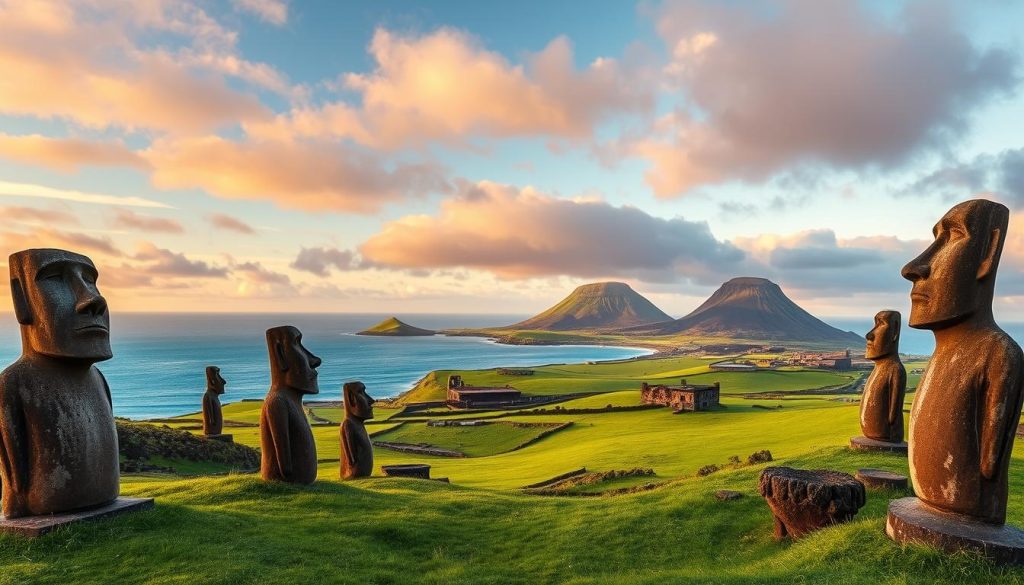
- Over 900 Moai statues, ranging in height from 2 to 20 meters
- A unique geographic location, with the park covering over 16,600 hectares
- A rich cultural heritage, with the park preserving the history and traditions of the Rapa Nui people
Knowing how important Rapa Nui National Park is helps us see why we must protect it. This way, we can ensure it’s there for future generations to enjoy.
The Ancient History of Easter Island
Easter Island, home to the Rapa Nui people, has a rich and fascinating history. It dates back to the 10th century. The island’s unique Polynesian cultural heritage is known for its moai statues, fishing, and agriculture.
The Rapa Nui people settled on Easter Island around 300-400 CE, some say. Others believe it was between 700-800 CE or as recently as 1200 CE. The population was estimated to be between 2,000 to 3,000 inhabitants during the first recorded European contact in 1722.
Here are some key facts about the ancient history of Easter Island:
- The island was home to a complex society that was known for its moai statues, with nearly 1,000 Moai carved by ancient Rapanui carvers.
- The Rano Raraku quarry is the origin of 95 percent of the island’s more than 1,000 Moai.
- The estimated time frame for the raising of the statues from the inner quarry is between A.D. 1510 to A.D. 1645.
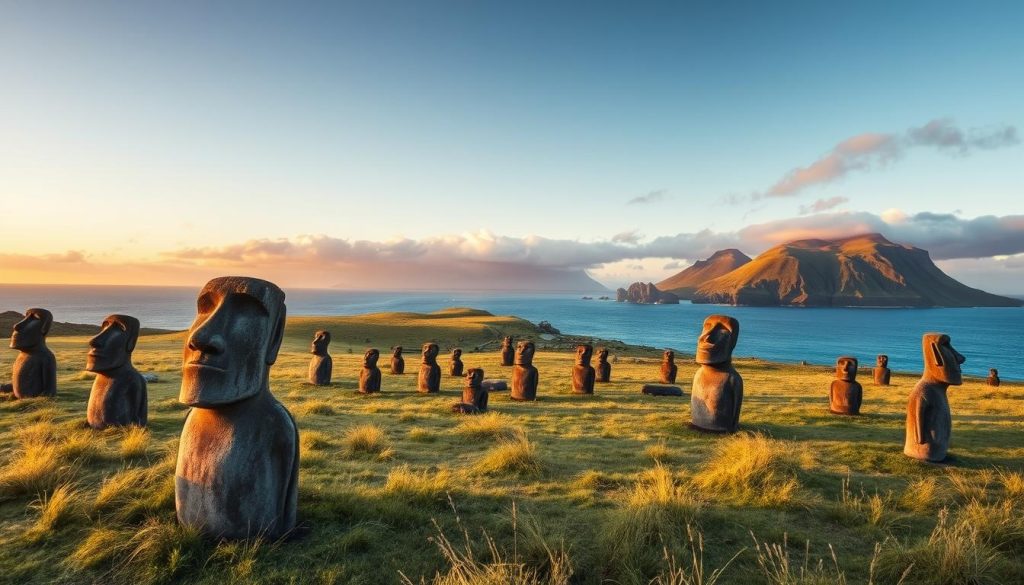
The ancient history of Easter Island is a fascinating topic that continues to capture the imagination of people around the world. The Rapa Nui people’s unique Polynesian cultural heritage is an important part of the island’s history and identity.
What is the Rapa Nui National Park’s Cultural Heritage?
Rapa Nui National Park is a treasure trove of culture. It shows the history and traditions of the Rapa Nui people. The park is famous for its moai statues, customs, and archaeological sites. These all highlight the Polynesian cultural heritage of the island.
The Rapa Nui National Park spans 28 square miles. It boasts over 887 moai statues, showing the ancient Rapa Nui’s skill. The park’s traditions are still alive today, showing the value of Easter Island conservation.
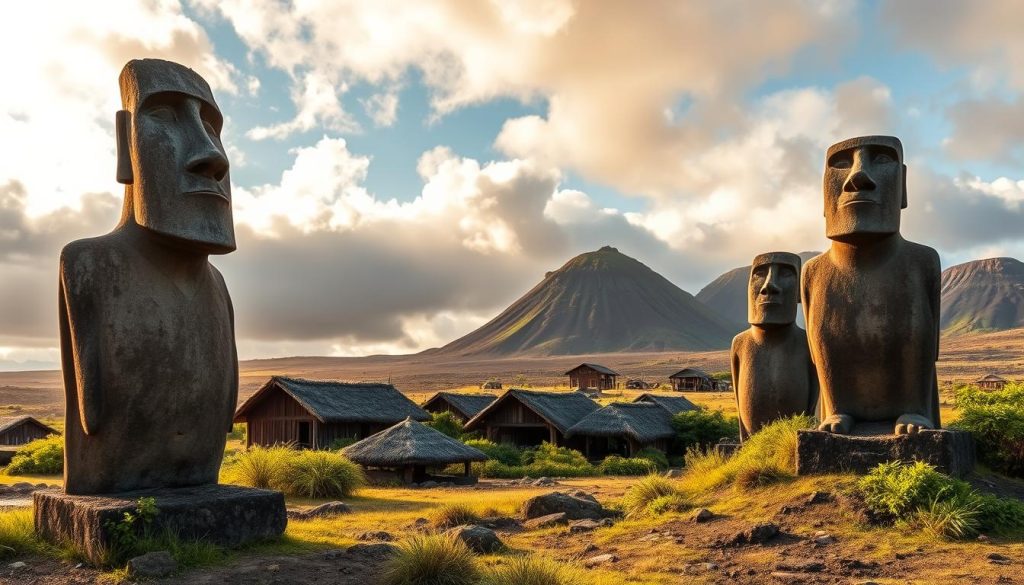
- Polynesian settlement and history
- Traditional customs and practices, such as the Birdman competition
- Archaeological significance, with over 300 ceremonial platforms and numerous moai statues
Understanding the cultural heritage of Rapa Nui National Park helps us protect it. This effort supports Easter Island conservation and celebrates the Polynesian cultural heritage of the island.
The Mysterious Moai Statues
Exploring Rapa Nui National Park, you’ll find the enigmatic Moai statues. These giant human figures were built between 1400 and 1650 A.D. They were used for ceremonies and hold great cultural and historical value.
The Moai statues are truly impressive. Some are up to 10 meters tall and weigh as much as 86 tons. Most were carved from the Rano Raraku volcano. They were made from hawaiite, the hardest rock on Easter Island.
It’s still a mystery how these massive statues were moved. But, experiments show it’s possible with ramps and levers.
Some interesting facts about the Moai statues include:
- Approximately 1000 Moai statues exist on Easter Island.
- The average height of the Moai statues is around 5 meters.
- The Moai hats, called pukao, represent topknots and are tied up like a ball on top of the head.
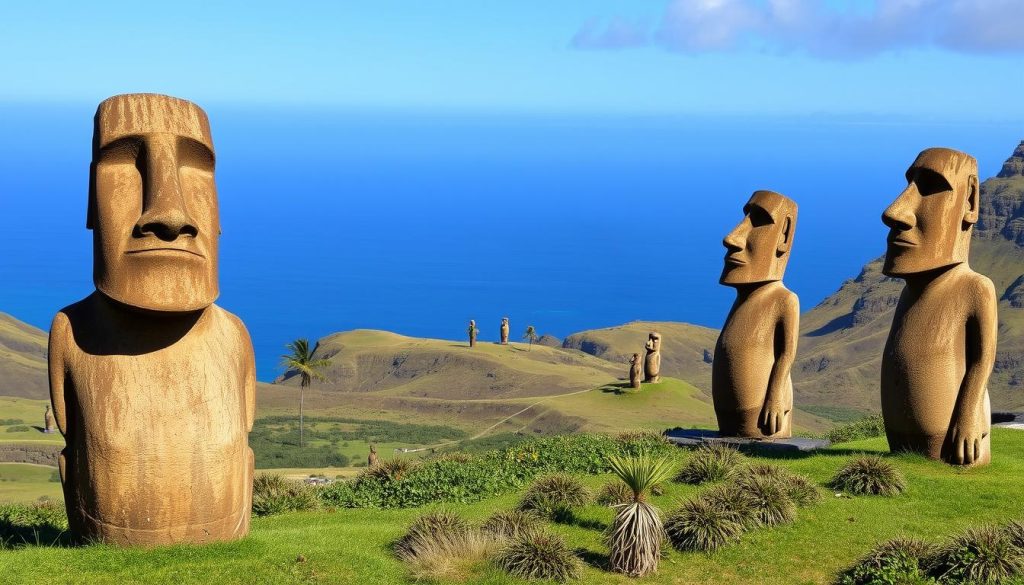
The Moai statues are key to Rapa Nui National Park’s culture. They were built to honor deceased kings. This was to protect the island and ensure fertility.
Visiting Easter Island National Park lets you learn about the Moai statues. You’ll also get to experience Rapa Nui’s unique culture.
Key Archaeological Sites Within the Park
Exploring Rapa Nui National Park reveals many key archaeological sites. These sites give us a peek into the Rapa Nui people’s history and culture. Ahu Tongariki, with its 15 moai statues, is a highlight. It’s a must-see for anyone visiting the park.
Other important sites include Rano Raraku, a volcano over 300,000 years old, and Orongo, a ceremonial village on a crater rim. These places are not just historically important. They also offer stunning views of the area. The Easter Island National Park is filled with these sites, showcasing the island’s rich culture.
Some key sites to see in Rapa Nui National Park are:
- Ahu Tongariki: featuring 15 moai statues
- Rano Raraku: a volcano and significant archaeological site
- Orongo: the Ceremonial Village situated on the rim of a crater
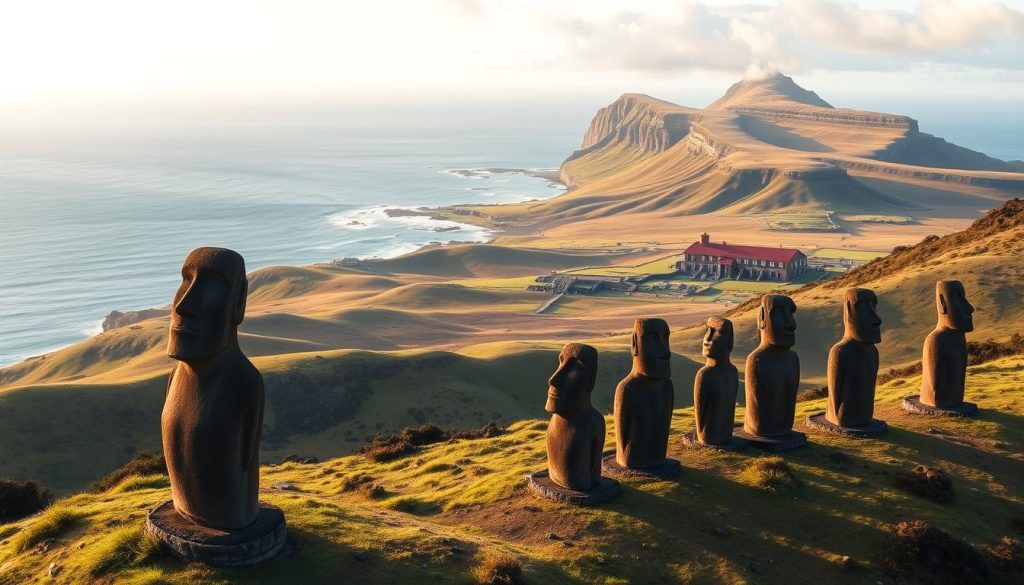
Visiting these sites helps us understand the Rapa Nui people and their history. It also shows the importance of the Rapa Nui National Park and Easter Island National Park in preserving this unique culture.
Natural Landscapes and Biodiversity
Rapa Nui National Park, also known as Easter Island National Park, covers about 40% of the island. It’s a Chilean national park filled with unique landscapes and biodiversity. As you explore, you’ll see the island’s native plants and animals, adapted to the harsh climate.
Native Flora and Fauna
The park has 46 native plant species, with 9 being found only here. You’ll find unique plants and animals, like:
* 4 endemic ferns out of 15 known ferns
* Several endemic micro-moths, pillbugs, and springtail invertebrates
* A variety of seabirds, including albatrosses and petrels
Volcanic Features
The park’s volcanic features come from the island’s geological past. The island has several volcanoes, like Rano Kao and Rano Raraku, which are now extinct.
Coastal Areas
The park’s coastal areas are rich in marine life, including coral reefs and seabirds. In February, a large marine protected area was declared here, covering 724,000 km².
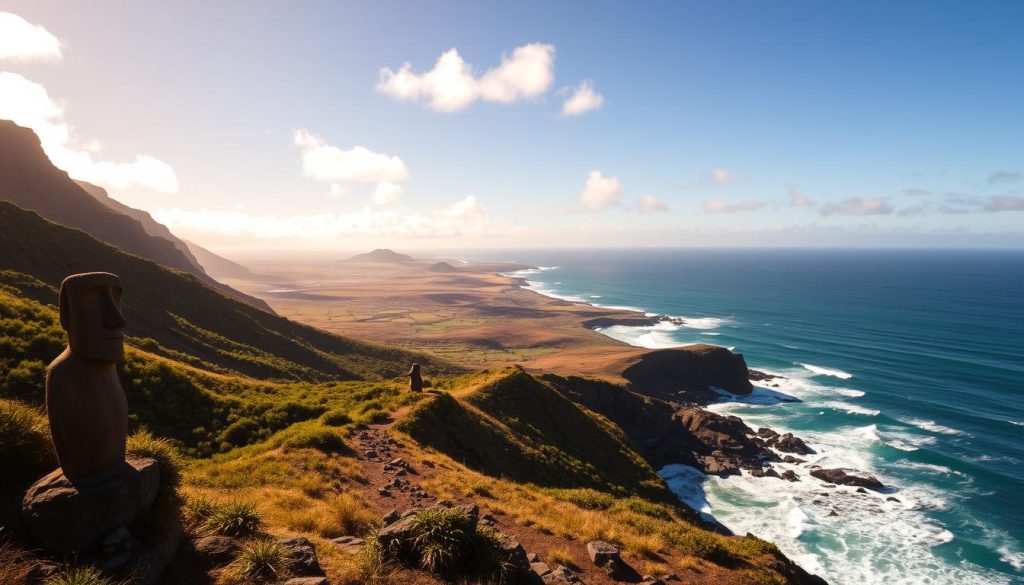
Rapa Nui National Park is a must-see for those who love nature. Its unique landscapes and biodiversity make it a standout destination on Easter Island.
Planning Your Visit to Rapa Nui
Getting ready to visit Rapa Nui National Park on Easter Island? It’s key to plan well. The park covers 43% of the island, with 12 spots to see. Summer is the best time, with warm weather perfect for outdoor fun.
A 10-day pass to the park costs about $80. It lets you explore at your own speed. You can visit each site more than once, except for two special places. The park is open from 09:00 a.m. to 8:00 p.m. in summer and 09:00 a.m. to 6:00 p.m. in winter.
Here’s what to keep in mind for your Easter Island trip:
- Best time to visit: Summer months (December to March)
- Entry requirements: Single Entry Form (FUI) must be completed at least 48 hours before traveling to Rapa Nui
- Guided tours: Mandatory to visit Rapa Nui National Park starting from 2023
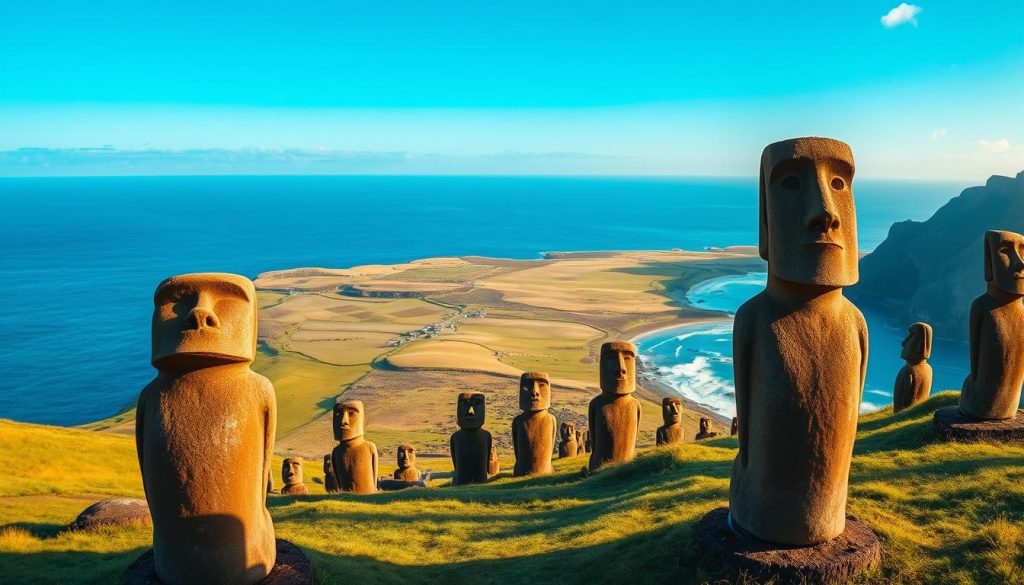
With good planning, your visit to Rapa Nui National Park will be memorable. This Chilean park is famous for its over 900 moai statues and rich culture.
Conservation Efforts and Challenges
Rapa Nui National Park in Chile is facing big challenges. These threats harm its natural and cultural treasures. It’s important to know how tourism and climate change affect Easter Island.
The park works hard to protect its unique life and culture. It welcomes over 100,000 visitors each year. This helps the local economy a lot.
The Rapa Nui people make up about half of the island’s 7,750 residents. The park’s team has taken steps to tackle these issues. They include:
- Protecting the natural habitats and ecosystems
- Promoting sustainable tourism practices
- Supporting the local community’s conservation efforts
But, the park still has big problems. These include too many people, not enough money, and climate change. The Chilean government has put Rapa Nui on a warning list. It’s a sign of serious environmental danger.

Everyone must work together to save Rapa Nui National Park. This includes the local people, the government, and visitors. Together, we can keep this special place safe for the future.
| Conservation Efforts | Challenges |
|---|---|
| Protecting natural habitats and ecosystems | Overpopulation and mismanagement of funds |
| Promoting sustainable tourism practices | Impact of climate change |
| Supporting local community’s conservation efforts | Lack of resources and funding |
Modern Life and Culture on Easter Island
Exploring Rapa Nui National Park reveals a vibrant culture rooted in Polynesian heritage. The island’s communities hold dear their traditional customs and practices. You’ll see the island’s rich cultural heritage through traditional music and dance and local handicrafts.
The island’s cultural events celebrate its history and identity. You can enjoy a Tahitian dance performance or take a traditional cooking class. The park also houses museums and cultural centers, offering insights into the island’s past and significance.
The Tapati Rapa Nui Festival in February is a highlight. It showcases the island’s culture with music, dance, and food. The Rapa Nui National Park’s visitor center is another place to learn about the island’s history and culture.
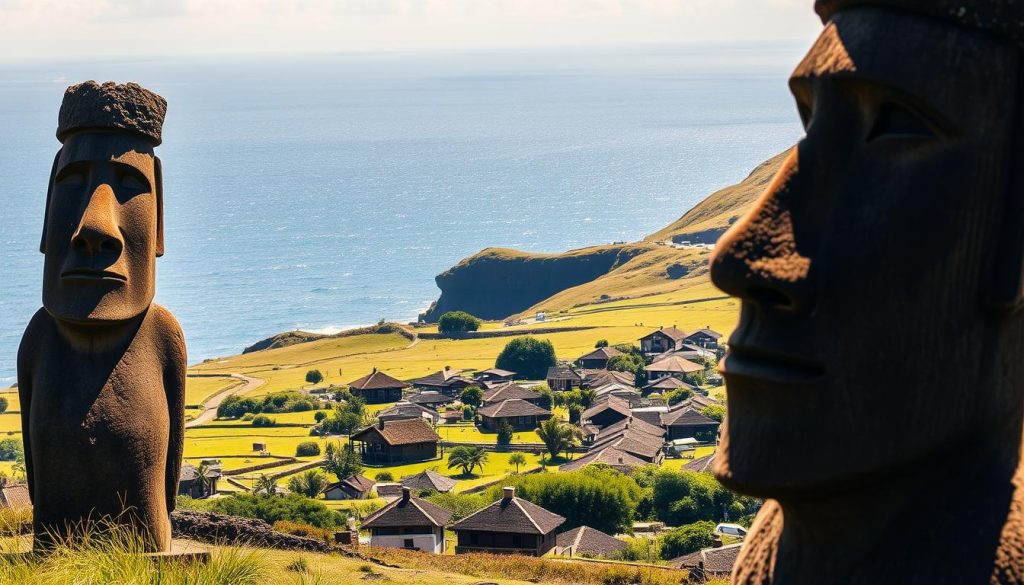
Rapa Nui National Park is crucial to the island’s economy. It draws thousands of visitors each year, boosting the local economy. Many residents work in tourism or sell local handicrafts to visitors.
Modern life on Easter Island blends tradition and modernity. The island’s Polynesian heritage remains a cornerstone of daily life. As you explore, you’ll discover the cultural richness of Easter Island and the Rapa Nui people.
Exploring Rapa Nui National Park
Rapa Nui National Park is a UNESCO World Heritage Site and a must-see for any visitor to Easter Island. This park is home to the famous Moai statues, which are a symbol of the island’s rich history and culture. As you explore the park, you’ll have the opportunity to witness these incredible statues up close and learn about their significance.
But Rapa Nui National Park offers more than just the Moai statues. The park is a treasure trove of natural wonders, including volcanic landscapes, lush forests, and pristine beaches. Take a hike through the park’s trails and immerse yourself in the unique flora and fauna of Easter Island.
One of the highlights of Rapa Nui National Park is the opportunity to witness the sunset over the Pacific Ocean. Find a spot on the beach or on a hill overlooking the ocean, and prepare to be mesmerized by the vibrant colors and breathtaking beauty of the sunset.
As you explore Rapa Nui National Park, be sure to take your time and soak in the tranquility of this natural paradise. The park offers a peaceful escape from the hustle and bustle of everyday life, allowing you to connect with nature and reflect on the wonders of the world.
Plan Your Visit to Rapa Nui National Park
When planning your visit to Rapa Nui National Park, it’s important to consider the best time to go. The park is open year-round, but the dry season from May to September is generally the best time to visit. During this time, the weather is mild and sunny, making it ideal for exploring the park’s trails and enjoying outdoor activities.
It’s also recommended to hire a local guide or join a guided tour to make the most of your visit to Rapa Nui National Park. Guides have in-depth knowledge of the park’s history, culture, and natural wonders, and can provide valuable insights and stories along the way.
Remember to respect the park’s rules and regulations to help preserve its natural beauty for future generations. Stay on designated trails, don’t litter, and avoid disturbing the wildlife and their habitats.
Exploring Rapa Nui National Park is an unforgettable experience that will leave you with a deep appreciation for the natural wonders and cultural heritage of Easter Island. Take your time, immerse yourself in the beauty of the park, and create memories that will last a lifetime.