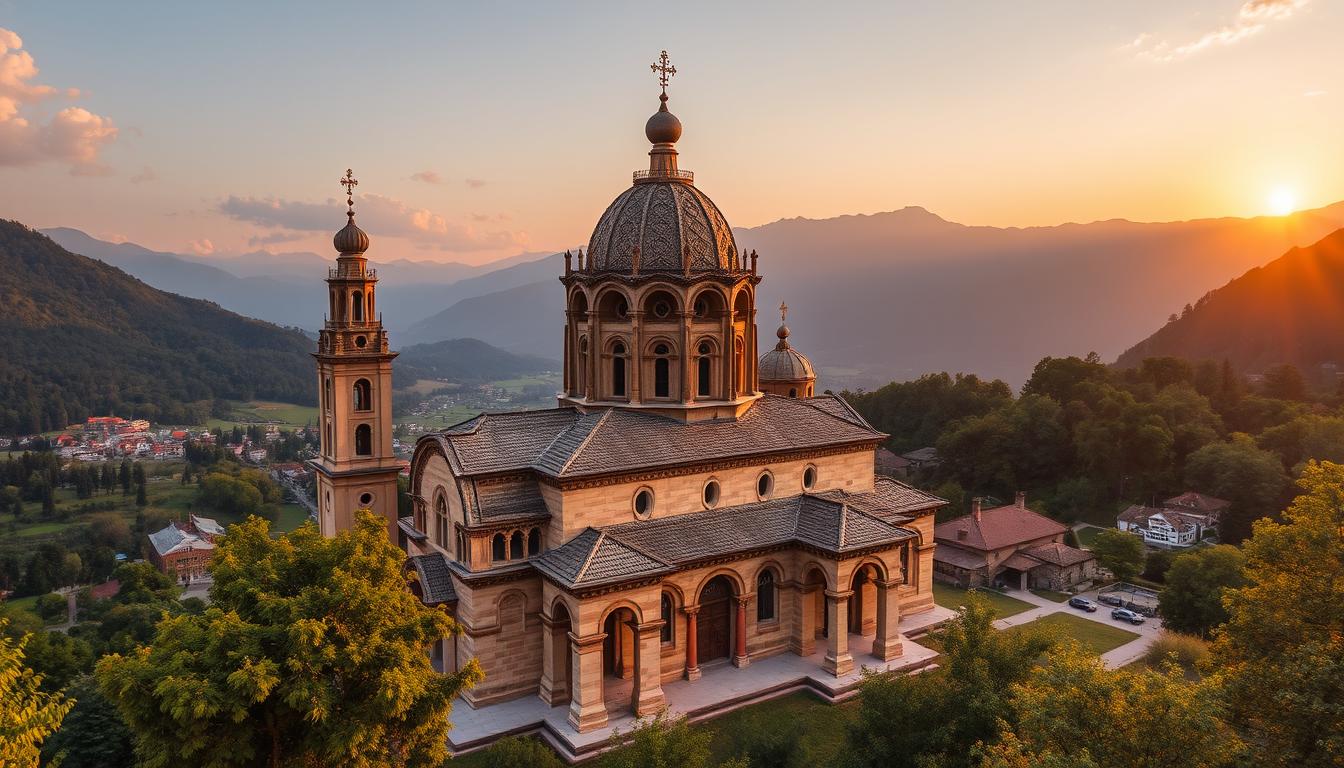
Significance of Svetitskhoveli Cathedral in Georgian History
Ever wondered why some buildings deeply connect with a nation’s identity and faith? The significance of Svetitskhoveli Cathedral in Georgian history is a prime example. Located in Mtskheta, this cathedral is more than just a beautiful building. It’s a key part of Georgia’s culture and faith.
For centuries, it has seen empires rise and fall. Yet, it remains a symbol of Georgian pride and the Orthodox Church. In 1994, it was named a UNESCO World Heritage Site.
This cathedral holds a special place in Georgia’s story. It’s where kings were crowned and where they were buried. Exploring its history reveals why Svetitskhoveli Cathedral is so important to Georgia.
Introduction to Svetitskhoveli Cathedral
Svetitskhoveli Cathedral is a key symbol of the Georgian Orthodox Church and its history. Built in the 11th century, it’s the holiest church in Georgia. It’s in Mtskheta, celebrating King Mirian’s conversion to Christianity.
The cathedral’s design is groundbreaking. It has the first dome and stepped front in Georgian architecture. This shows the skill of its time. It’s also a UNESCO World Heritage Site, showing Georgia’s spiritual and cultural depth.
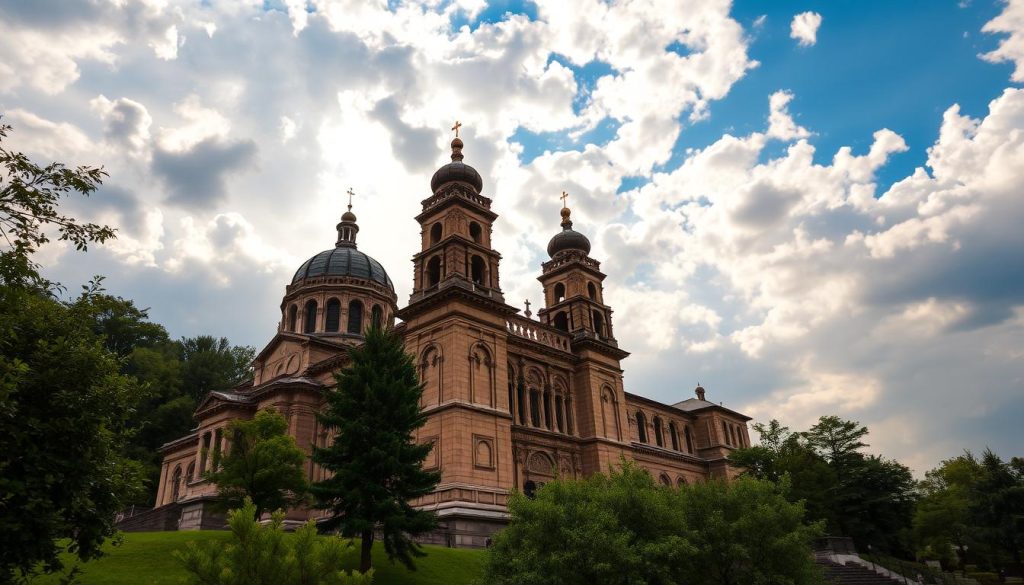
People visiting this site are amazed by its history and spiritual importance. It’s a place of pilgrimage, offering both spiritual comfort and a link to Georgia’s rich past. Its beauty inspires wonder, making it a key spot for those interested in Georgian history.
What is the significance of Svetitskhoveli Cathedral in Georgian history?
The Svetitskhoveli Cathedral is deeply important in Georgian history. It was built in the 4th century and became a symbol of Christianity in Georgia. King Mirian III made Christianity the state religion here.
This cathedral is also where the robe of Jesus Christ is believed to be buried. It’s a key place for the Georgian Orthodox Church.
For centuries, Svetitskhoveli has been a spiritual haven. It has survived many invasions, showing the strength of the Georgian people. Its design has inspired many, both in faith and in art.
The cathedral is 57.7 meters long and 49 meters high. It’s one of the tallest and most famous in medieval Georgia.
Svetitskhoveli is one of the four Great Cathedrals of the Georgian Orthodox world. It stands for both spiritual and national pride. Over the years, it has been rebuilt after damage from wars and natural disasters.
Today, it’s a UNESCO World Heritage Site. It attracts pilgrims and tourists, showing the importance of Georgian heritage.
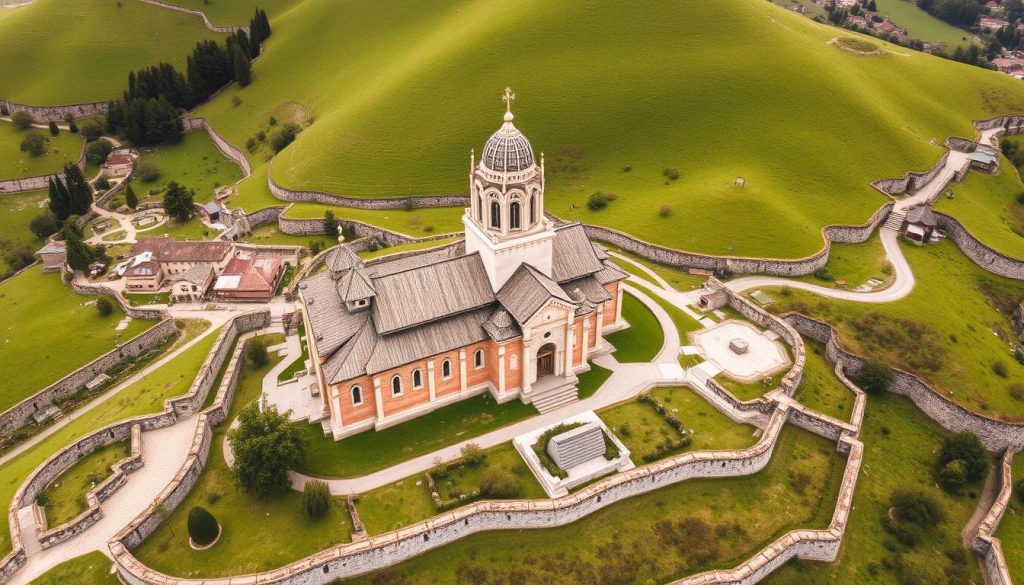
| Aspect | Details |
|---|---|
| Location | Mtskheta, Georgia at 41°50′31″N 44°43′16″E |
| Construction Dates | Originally built in the 4th century, completed in 1029 |
| Architecture Style | Cross-in-square design, notable for its height and decoration |
| Dimensions | 57.7 meters long, 27 meters wide, 49 meters high |
| UNESCO Site | Inscribed in 1994 as a World Heritage Site |
| Cultural Significance | Symbol of Georgian identity, site of royal burials |
Location and Historical Background
Mtskheta is a key part of Georgia’s culture and faith. It was once the royal capital, showing its deep history. The Svetitskhoveli Cathedral is a major religious site here, making Mtskheta even more special.
The town of Mtskheta
Mtskheta is about 20 kilometers northwest of Tbilisi. It’s called the heart of Georgian religious heritage. The Svetitskhoveli Cathedral is where important national events happen, making Mtskheta very important.
Geographic significance
The Svetitskhoveli Cathedral is at the Kura and Aragvi rivers’ meeting point. This spot helped Mtskheta grow through trade. The cathedral was more than a church; it was a center for social and political life. It shows the connection between faith and government in Georgia.
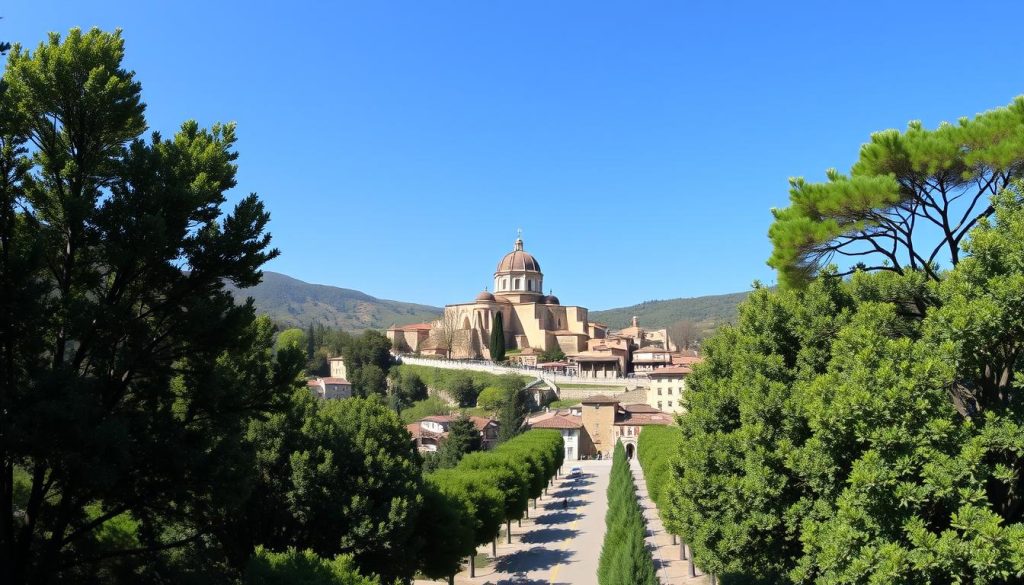
Architectural Marvel of Georgia
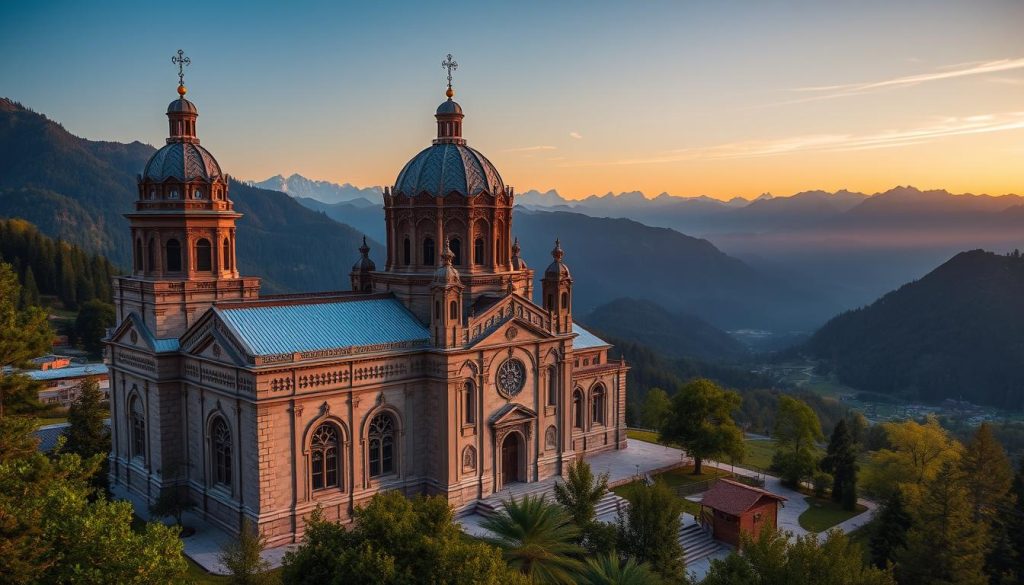
As you approach Svetitskhoveli Cathedral, its beauty and history are clear. Built in the 11th century, it shows the unique style of Svetitskhoveli. This style mixes medieval Georgian, Byzantine, and Oriental influences.
The cathedral is 57.7 meters long and 27 meters wide. It stands as a testament to the skill of its builders.
Style and design of the cathedral
The style of Svetitskhoveli is seen in its cross-in-square layout. This design became common in early medieval Georgia. The cathedral’s decorations show artistic skill and cultural reverence.
Its design includes large windows. These let in natural light, creating a peaceful atmosphere for worship.
Materials and construction techniques
The cathedral was built mainly from local stone. This choice shows both practicality and beauty. The construction techniques used show a deep understanding of sound, enhancing the spiritual experience.
The cathedral’s structure is strong. It has survived many destructions and rebuilds over the years.
| Feature | Details |
|---|---|
| Construction Date | 11th century |
| Dimensions | 57.7 meters long, 27 meters wide |
| Architectural Style | Cross-in-square |
| Influences | Georgian, Byzantine, Oriental |
| Materials Used | Local stone |
| Significance | UNESCO World Heritage Site |
Religious Importance of Svetitskhoveli
Svetitskhoveli Cathedral is very important in the Georgian Orthodox Church. It’s a key spot for pilgrims because it’s said to be where Christ’s robe is buried. This makes it a place of deep worship and reflection for many.
Burial site of Christ’s robe
A legend says a man named Elias brought Christ’s robe to Mtskheta after his death. This led to the building of the cathedral on the grave of Elias’s sister, Sidonia. This story links the site to Christ and adds to its spiritual value.
Role in the Georgian Orthodox Church
Svetitskhoveli is a key religious center. It was home to the Patriarch of the Georgian Orthodox Church for 800 years. Its beauty and history make it a heart of spiritual life in the church.
Every year, thousands celebrate Svetitskhovloba, honoring the Heaton of the Lord. The cathedral is a symbol of Georgia’s rich Christian history. It’s a place of faith and cultural identity.
UNESCO World Heritage Recognition
Svetitskhoveli Cathedral was named a UNESCO World Heritage Site in 1994. It’s known for its cultural importance and stunning architecture. This honor shows its value to the world, helping keep its history alive.
It meets many criteria for this honor. These include being a masterpiece of human creativity and showing important cultural traditions.
Criteria for designation
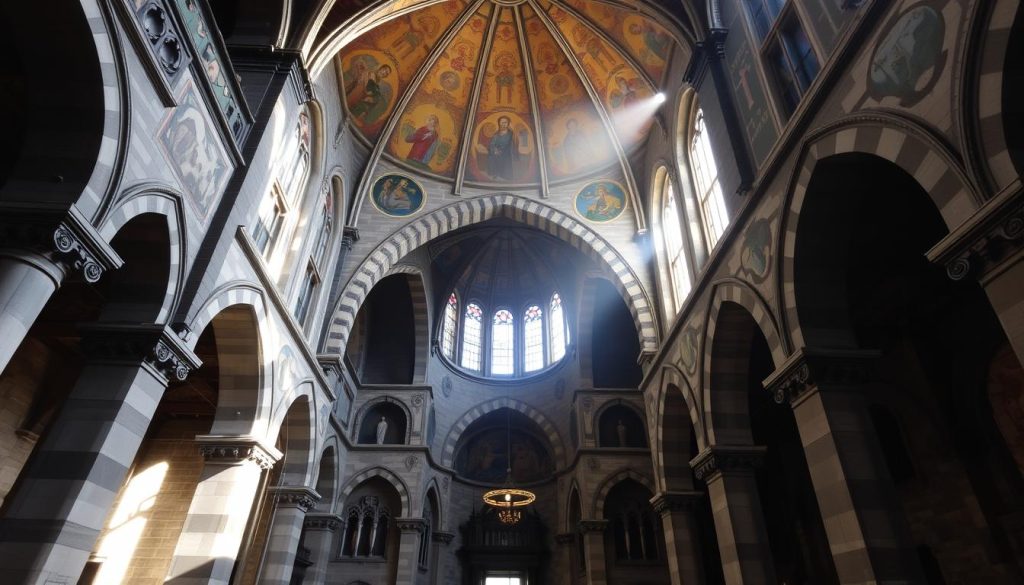
Svetitskhoveli Cathedral is special because of its role in Georgian history. It shows the country’s religious architecture and the mix of cultures over time. You can see Byzantine and Georgian styles in its design.
It’s also where Christianity first came to Georgia. Archaeological finds around the cathedral highlight its significance in the country’s Christian heritage.
Impact on tourism and preservation
Being a UNESCO World Heritage Site has boosted tourism in Mtskheta. People from all over come to see its history. This helps local businesses and increases interest in Georgian culture.
This status also helps protect Svetitskhoveli. It brings in money and support from around the world. A Management Plan is in place to keep the cathedral and its surroundings safe.
Cultural Significance Throughout History
Svetitskhoveli Cathedral has been key in showing what it means to be Georgian. Built in the 11th century, it shows the nation’s lasting traditions and faith. Its beauty and history capture the heart of Georgian culture.
Symbol of Georgian identity
Svetitskhoveli Cathedral is a major religious site in Georgia. It has been a center for important religious events and celebrations. This makes it a symbol of Georgian identity, showing the nation’s growth and values over time.
Role in royal coronations
For centuries, Svetitskhoveli Cathedral has hosted royal coronations. These events have marked key moments in Georgian history. They show the nation’s understanding of leadership and divine favor.
Historical Events and Restoration Efforts
The history of Svetitskhoveli Cathedral is filled with significant events and restoration work. It faced many challenges, including foreign invasions and damage during the Soviet era. These challenges made rebuilding Svetitskhoveli crucial to keep its cultural and historical value.
Destruction and rebuilding
Svetitskhoveli has seen many times of destruction and rebuilding. Architect Arsukidze led the reconstruction from 1010 to 1029. He worked during the time of Catholicos Melchizedek I.
Later, King Erekle II built defensive walls in 1787. This showed the cathedral’s importance as a military and spiritual site.
Modern restoration initiatives
Today, efforts focus on keeping the cathedral’s original look. Excavations in 1963 found an eleventh-century residence and a castle. From 1970 to 1971, restoration uncovered the original St. Nino church and a fifth-century basilica’s foundation.
Now, Svetitskhoveli is a symbol of strength. It boasts restored frescoes and important artifacts. These include a fourth-century baptismal font and parts of the original life-giving pillar.
| Year | Event | Significance |
|---|---|---|
| 1010-1029 | Reconstruction by Arsukidze | Revival of the cathedral under Catholicos Melchizedek I |
| 1787 | Construction of defensive walls | Enhanced protection and military attributes |
| 1963 | Excavation reveals historical structures | Discovery of the eleventh-century patriarchal residence |
| 1970-1971 | Restoration work | Preservation of original features and frescoes |
The Artistic Value of Svetitskhoveli
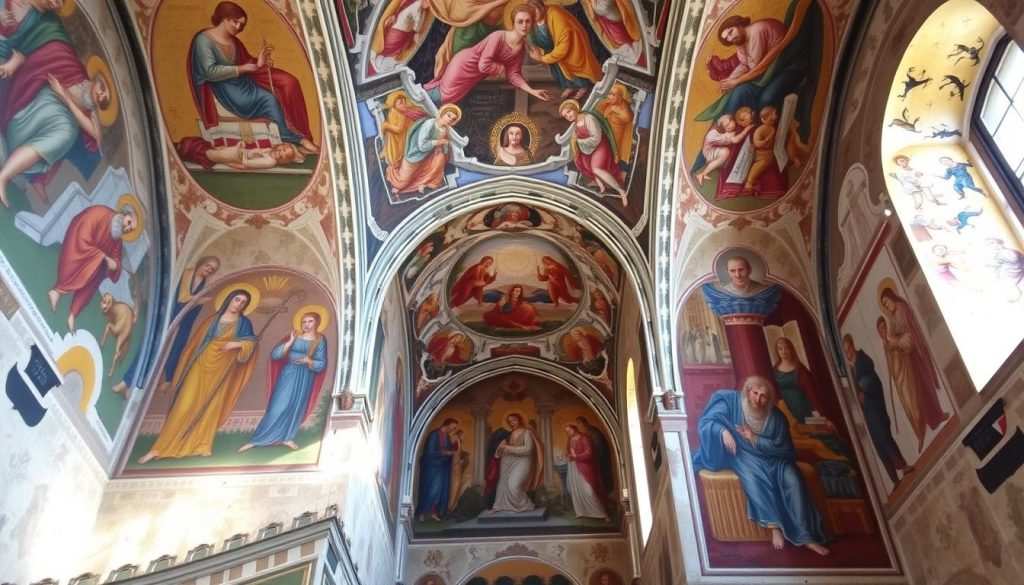
Svetitskhoveli Cathedral is a key part of Georgian culture. Built from 1010 to 1029, it has stunning frescoes and decorations. The frescoes Svetitskhoveli from the 17th century show the area’s rich artistic history.
Though the cathedral has been restored and some art lost, the frescoes left behind are amazing. They prove the skill of artists from long ago.
Frescoes and decorative elements
The frescoes in Svetitskhoveli tell stories of faith and history. They show saints and biblical tales, connecting visitors to the past. The art from these murals has influenced Georgian art for centuries.
Looking at the frescoes, you can see the detail and skill. They make you think about the artistry that has happened here.
Influence on later Georgian art
The influence on Georgian art from Svetitskhoveli is clear. It has inspired many artists over the years. The cathedral’s art legacy lives on in modern Georgian art.
This link to the past makes Svetitskhoveli more than just a church. It’s a key part of Georgian artistic history, guiding artists today.
Legends and Myths Surrounding the Cathedral
The Svetitskhoveli Cathedral is filled with legends and myths. These stories connect us to the culture and faith of the past. One famous tale is about the Living Pillar, believed to have been touched by God.
This pillar, said to have floated during construction, shows God’s role in the cathedral’s creation. It’s a symbol of divine presence and guidance.
The story of the Living Pillar
Builders of the original church saw a miracle. The Living Pillar rose from the ground, seen as a sign from heaven. This event was more than a construction wonder; it was a sign of faith.
The story shows how faith and human effort come together. It leaves a deep impression on those who hear it.
Intriguing historical narratives
There are many stories around Svetitskhoveli Cathedral. These tales talk about sacrifice, devotion, and respect. They highlight important moments in Georgian history, like victories and challenges.
These stories make the cathedral even more fascinating. They invite visitors to explore its history and its importance today.
Visitor Experience at Svetitskhoveli
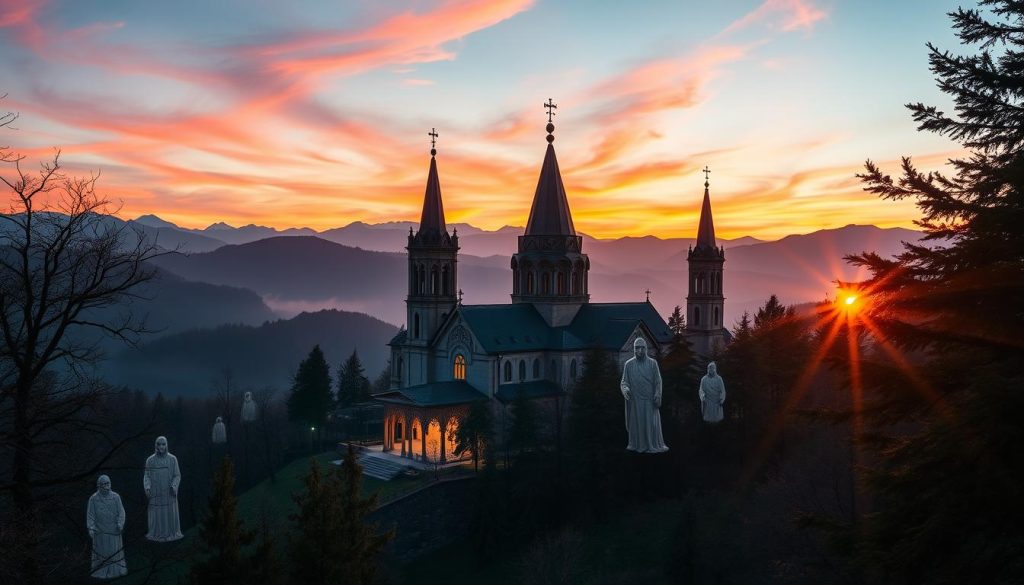
Visiting Svetitskhoveli Cathedral is a journey through history and faith. The stunning architecture and detailed designs take you back in time. Thousands of people visit each year, drawn by its beauty and rich history.
The cathedral is a key part of Georgia’s culture. It shows the deep connection between faith and heritage. This connection has lasted for centuries.
Tourism impact
Mtskheta, where Svetitskhoveli is located, is a top tourist spot. The area has shops, restaurants, and attractions. Visitors enjoy exploring the historic streets, trying Georgian food, and learning about the local culture.
The cathedral’s beauty, combined with the area’s charm, makes it a must-see in Georgia.
Spiritual significance for pilgrims
Svetitskhoveli is more than a landmark; it’s a spiritual haven. It’s one of the oldest Christian sites in the country. Pilgrims come here to find peace and pray.
The cathedral’s atmosphere of devotion is unique. It allows visitors to connect with their spiritual roots. This experience stays with you long after you leave.
| Aspect | Description |
|---|---|
| Architecture | Remarkable 11th-century design showcasing intricate frescoes. |
| Cultural Activities | Local shops and restaurants enhance the tourism experience. |
| Pilgrimage | Serves as a major pilgrimage site for spiritual seekers. |
| Community Events | Local festivals often occur near the cathedral, celebrating Georgian culture. |
Conclusion
Svetitskhoveli Cathedral is more than just a beautiful building. It is a symbol of Georgia’s deep cultural heritage and history. When you visit, you see its beauty and the stories it holds for over a thousand years.
This cathedral is linked to Jesus’s mantle and is key to the Georgian Orthodox Church. It shows the spiritual heart and national identity of Georgia.
As a UNESCO World Heritage Site, Svetitskhoveli draws people from all over. It reminds us of Georgia’s culture and its ability to overcome challenges. Visiting this place is more than a sightseeing trip; it’s a chance to feel Georgia’s soul.
Its stunning architecture, spiritual importance, and rich history make Svetitskhoveli Cathedral special. It stands as a testament to Georgia’s enduring identity and its role in the region’s culture.