Unlocking Sheep Farming Secrets in Bumthang
Have you ever thought about how old farming ways can work with new methods? In Bumthang, Bhutan, sheep farming is a mix of tradition and innovation. It’s key to the local economy and shows how farming can be done in a green way.
Bumthang is called the “spiritual heartland” of Bhutan. It’s not just about stunning views and temples. It’s also where you see the old ways of farming sheep. People use old knowledge to keep their sheep farms going, using new methods to make things better.
Exploring sheep farming in Bumthang reveals its importance. You’ll learn about wool weaving, how sheep help with food, and their role in keeping Bhutan’s traditions alive. Let’s dive into the world of sheep farming in this special valley, where every fleece has a story.
Introduction to Sheep Farming in Bumthang
Sheep farming in Bumthang is deeply rooted in culture and need. This area is home to unique sheep breeds crucial for local farming. The Jakar, Sipsu, Sakten, and Sarpang sheep are key to this practice.
The Jakar sheep is the most common, with 11,000 in number. The Sakten, Sipsu, and Sarpang have 7,000, 6,000, and 1,000 sheep, respectively. These numbers show how vital sheep farming is for local people.
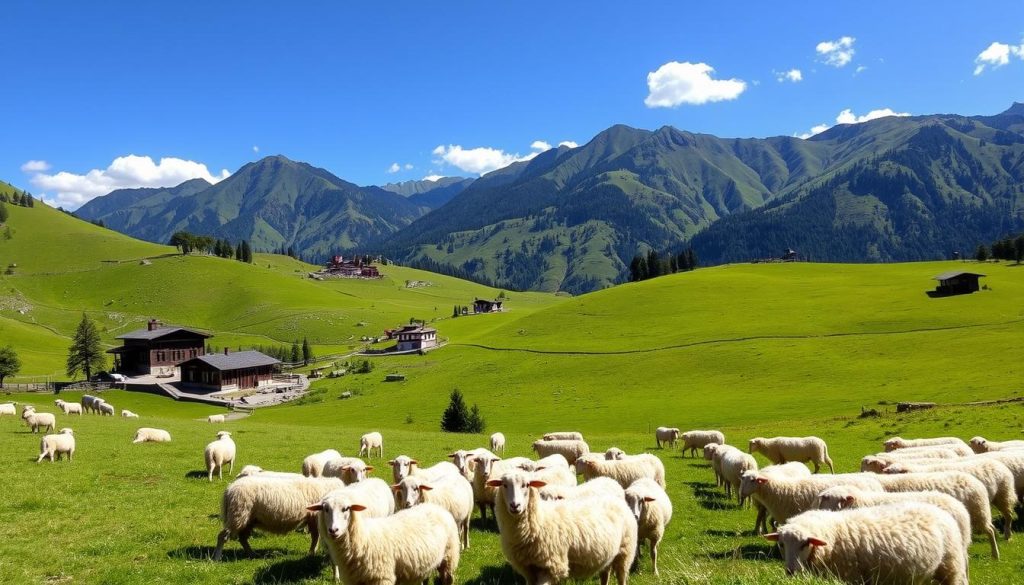
Using sustainable methods is essential in Bumthang sheep farming. Farmers use practices that boost productivity and protect the environment. This mix of old and new makes sheep farming stronger.
| Sheep Type | Estimated Population | Average Height (cm) | Average Body Length (cm) | Average Chest Girth (cm) |
|---|---|---|---|---|
| Jakar | 11,000 | 63.4 | 69.8 | 77.0 |
| Sakten | 7,000 | N/A | N/A | N/A |
| Sipsu | 6,000 | N/A | N/A | N/A |
| Sarpang | 1,000 | N/A | N/A | N/A |
Exploring sheep farming in Bumthang shows the blend of old and new. This balance boosts productivity and keeps the environment healthy. It’s a key part of sustainable farming.
The Rich History of Sheep Farming in Bhutan
Sheep farming in Bhutan has a long history, adding to the local culture. For centuries, sheep have been crucial for Bhutanese communities. They provided wool and meat for food and trade.
This close relationship between sheep and people has made farming a big part of rural life.
Modern changes have shaped sheep farming over the years. The 1960s saw the start of efforts to improve farming. Yet, old traditions still hold a strong place, adapting to new needs.
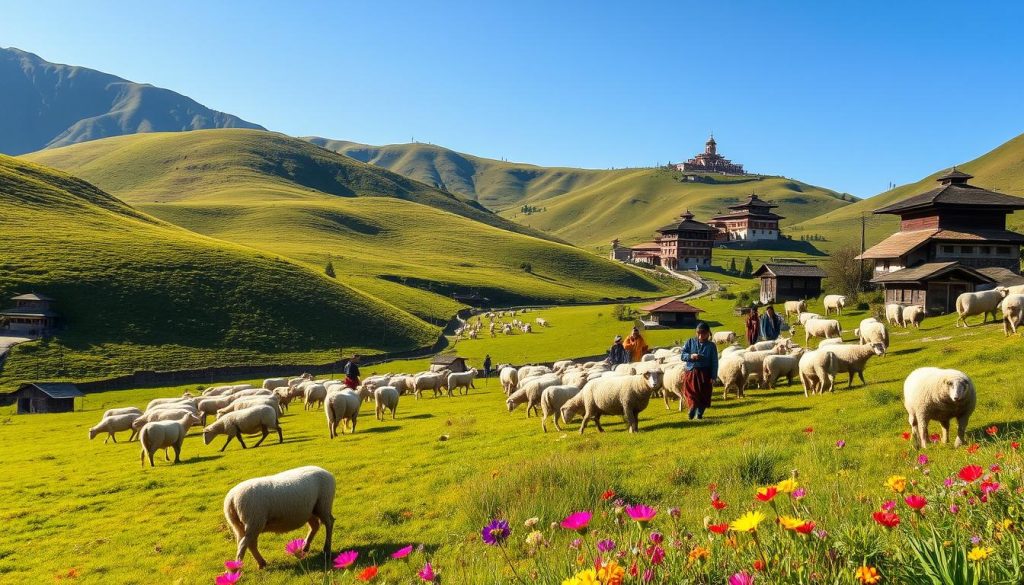
Sheep farming in Bhutan faces big challenges today. The National Sheep Breeding Centre’s flock dropped from 1,500 in 1974 to just 27 last year. Labor shortages and animal attacks have hurt the sheep numbers.
But, efforts are being made to bring back sheep farming in Bumthang. The National Sheep Breeding Centre is working hard, growing the flock to 246. They want to make sheep farming profitable and protect important genetic resources.
This effort also honors the cultural importance of sheep farming. In places like Zhuri and Beum, families are working to bring back old ways. They see the value in wool production.
Benefits of Raising Sheep in Bumthang
Raising sheep in Bumthang has many benefits. It helps the local economy and provides nutritious food. Sheep farming is key to the sustainability of communities and their food systems.
Economic Advantages of Sheep Husbandry
Sheep husbandry brings economic gains to farmers in Bumthang. Selling wool and meat can provide a steady income. With fewer livestock, sheep farming is more important than ever.
In Bhutan, the sheep population has dropped by 15.01%. This makes sheep farming even more vital for local economies. It creates jobs and boosts community development through processing and marketing.
Nutritional Contributions of Sheep Products
Sheep products are crucial for local diets. They offer essential protein and nutrients. This supports food security and health in Bumthang.
By raising sheep, you help your family’s income. You also improve your community’s health with high-quality sheep products.
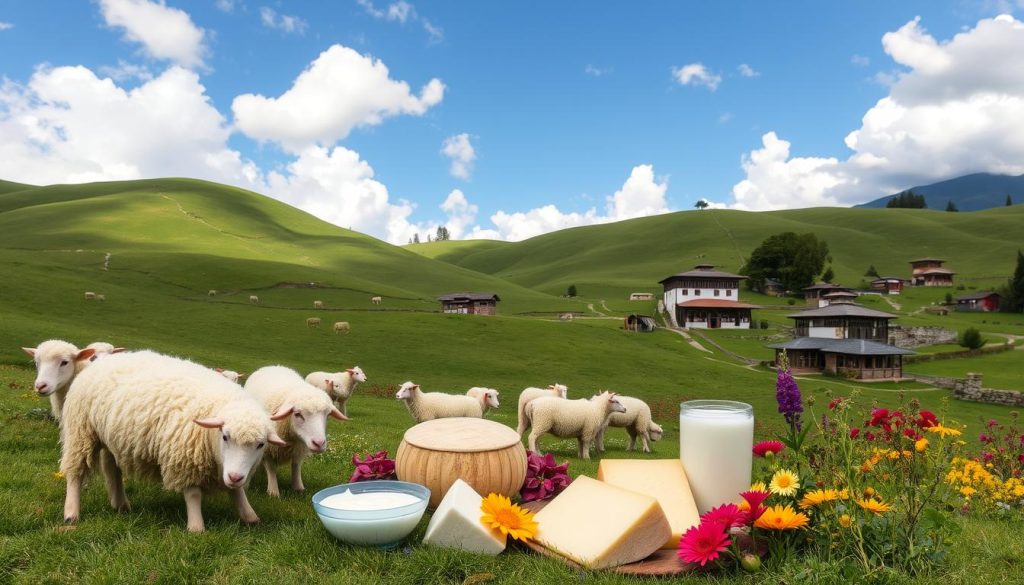
| Sheep Products | Economic Impact | Nutritional Value |
|---|---|---|
| Meat | Source of income from sales | High protein content |
| Dairy | Market demand for cheese and butter | Essential nutrients for diet |
| Wool | Revenue through fiber sales | Natural insulation and clothing material |
Popular Sheep Breeds in Bumthang
Bumthang is known for its unique sheep breeds. These sheep are well-suited to the local climate. They are key to sustainable sheep farming in Bhutan.
The Bumthang Sheep is famous for its hardiness and wool quality. Farmers love it for its ability to thrive in tough conditions. This makes it very productive in Bhutan’s challenging terrains.
The Tara Sheep is also notable. It’s very resilient against local diseases. This breed helps keep sheep farming in Bhutan diverse and sustainable.
Learning about these breeds helps us improve sheep farming in Bhutan. Their numbers have dropped from 39,235 in 1987 to 10,793 in 2020. This shows we need to act to save these breeds.

| Breed Name | Characteristics | Population Status (2020) | Significance in Farming |
|---|---|---|---|
| Bumthang Sheep | Hardy, excellent wool quality, adaptable | 337 at National Sheep Farm | Key for wool production |
| Tara Sheep | Resilient, disease-resistant, good temperament | Data not specified | Contributes to genetic diversity |
| Local Indigenous Breeds | Adaptable to local conditions, varied wool types | Varying numbers, under threat | Support local livelihoods |
It’s crucial to save these sheep breeds for Bhutan’s farming. The National Sheep Farm’s efforts are helping. They provide training to support local farmers.
Effective Grazing Management Techniques
Effective grazing management is key to successful sheep farming in Bumthang. It’s important to know the local grazing patterns and the ecosystem’s dynamics. This knowledge helps optimize pasture use and ensures the health of your sheep. Sustainable farming practices keep the land quality high, promote ecological balance, and support the health of your flock.
Understanding Local Grazing Patterns
Knowing the local grazing patterns is crucial. These patterns are influenced by geography, climate, and seasonal changes. Forest grazing, which makes up 20% to 24% of Bhutan’s livestock needs, shows how vital these areas are for nutrition.
Bhutan, with 72.5% of its land as forest, offers diverse grazing options. Summer grazing happens in coniferous forests, while winter grazing moves to broadleaf regions. This knowledge helps align grazing practices with natural resources.
Utilizing Natural Resources for Grazing
Using natural grazing resources is a smart move for sustainable sheep farming. It reduces the need for artificial feed and improves pasture quality. The carryover of 1987 data shows how effective grazing can lead to diverse vegetation.
Healthy grazing practices lead to healthier sheep and a balanced ecosystem. Creating a sustainable grazing system meets your flock’s needs and preserves your land. This approach boosts biodiversity, improves ecological health, and supports your sheep farming success.

Best Practices for Sustainable Sheep Farming
Starting a sustainable sheep farm means following best practices. These practices help your farm grow and protect the environment. Rotating your sheep’s grazing spots lets pastures rest and recover. This way, your sheep get the best food and your land stays healthy.
Managing pests is key to animal care. Using natural methods to control pests reduces harm to the environment. A mix of biological controls and cultural practices keeps your flock healthy and the ecosystem balanced.
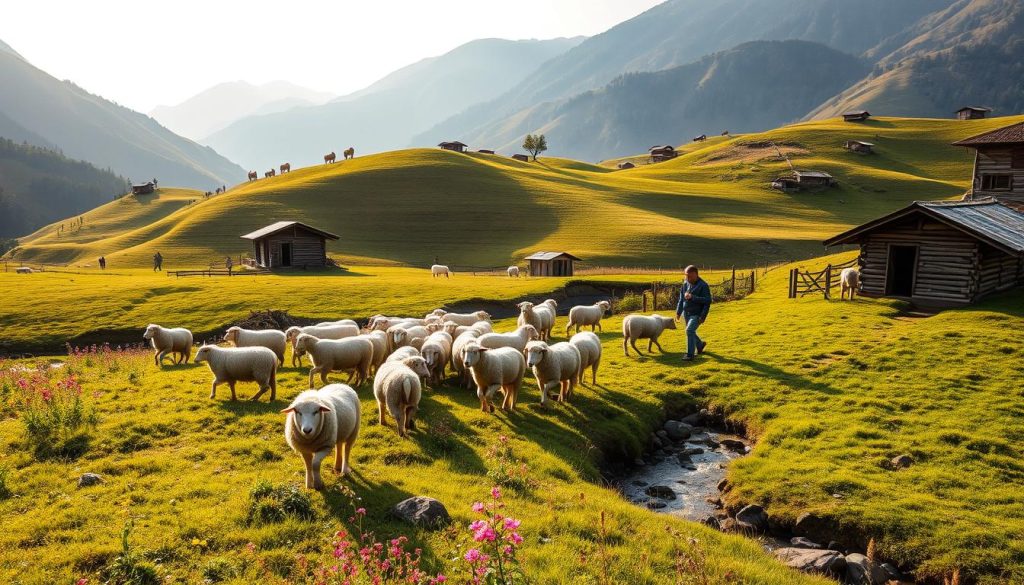
Keeping the soil healthy is crucial. Cover crops, crop rotation, and less tilling improve soil quality. These steps make your farm more resilient to climate change, helping your sheep do well every year.
- Rotational Grazing: Helps maintain pasture health by allowing regrowth time.
- Integrated Pest Management: Reduces reliance on chemicals through natural solutions.
- Soil Conservation: Protects soil quality and enhances productivity.
Choosing these practices improves your sheep care and protects the planet for the future. As you start these methods, you’ll see benefits for your flock and the environment. Your farm will become a model for sustainable farming in Bumthang and elsewhere.
Wool Production Strategies and Insights
Wool production is key in sheep farming in Bumthang. It boosts the local economy and gives farmers a valuable product. To get the best wool, choosing the right sheep breeds is crucial. These breeds should have high-quality wool.
Choosing the Right Sheep for Wool Quality
In sheep farming in Bumthang, picking the right breeds is a top priority. Look for breeds with fine wool and long fleece. Also, make sure the fleece is healthy.
- Fiber Diameter: Fine wool is more sought after. Choose breeds with finer fibers.
- Fleece Length: Longer fleece means more and better wool. Check the fleece length of different breeds.
- Overall Fleece Health: Healthy fleece gives better wool and fights off pests. Make sure your sheep are well cared for.
Good breeding programs can make wool better over time. Breeders in Bumthang should work together and share their knowledge. This helps improve wool production.
| Trait | Ideal Measurement | Common Breeds in Bumthang |
|---|---|---|
| Fiber Diameter | 18-25 microns | Local Crossbreeds |
| Fleece Length | 10-15 cm | Fine Wool Sheep |
| Fleece Health | Minimal disease presence, good nutrition | Indigenous Breeds |
By focusing on these traits, you can improve wool production and care for your sheep. Better sheep quality through breeding helps the economy and makes farming more sustainable. Investing in these strategies can make farming more profitable and rewarding.
Health and Nutrition for Your Sheep
Sheep health and nutrition are key to their well-being and productivity. Knowing what they need helps them grow and stay healthy. A good diet boosts their immune system and fights off diseases.
Farmers should aim for a balanced diet. This includes:
- High-quality forage
- Concentrates for protein
- Minerals and vitamins like calcium, phosphorus, and vitamin E
Regular vet visits are crucial for keeping the flock healthy. Vaccinations and health checks prevent diseases. Using data from sources like “Unlocking Sheep Farming Secrets in Bumthang” can help improve health care.
Here’s a list of important vitamins and minerals for sheep health:
| Nutrient | Function | Deficiency Symptoms |
|---|---|---|
| Calcium | Bone development | Weak bones, poor growth |
| Phosphorus | Energy metabolism | Poor appetite, lethargy |
| Vitamin E | Antioxidant properties | Muscle weakness, reproductive issues |
| B Vitamins | Energy and cellular function | Reduced growth rate, poor coat condition |

Good nutrition practices are key to keeping sheep healthy. By using the best health care strategies, you can improve your flock’s quality and quantity.
Challenges in Sheep Farming and Solutions
Sheep farming in Bumthang faces many challenges that can hurt profits. These include changing weather, diseases, and price changes. Knowing these challenges helps farmers find ways to overcome them.
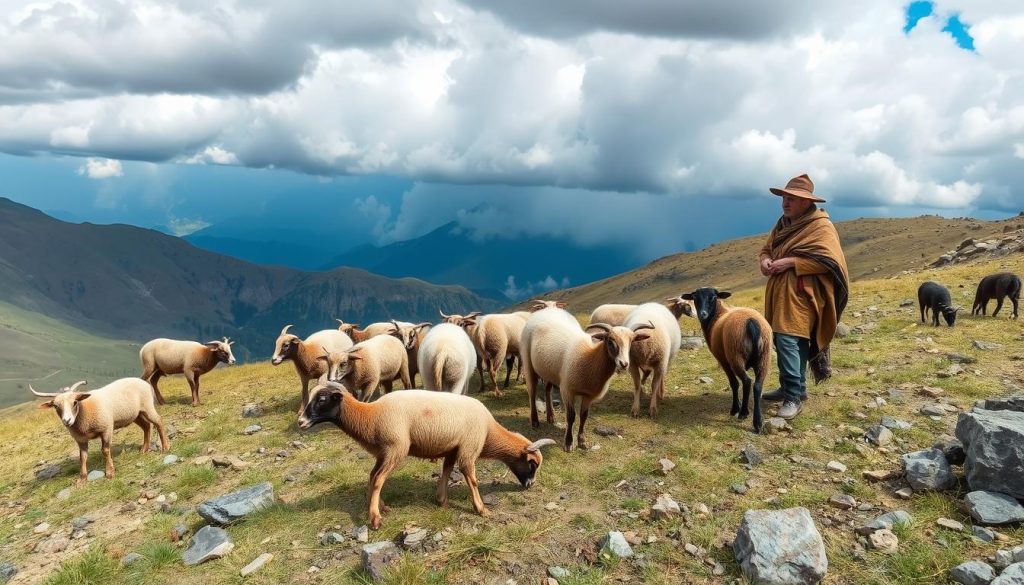
Climate change brings unpredictable weather, affecting grazing and sheep health. Farmers must adapt. Diversifying farming can help reduce risks.
Diseases are a big worry in animal care. Regular vet visits and shots can keep sheep healthy. This helps farmers avoid big losses and keeps farming sustainable.
Price changes are another issue, affecting what farmers get for their sheep and wool. Working together through cooperatives can help get better prices. This way, farmers can stand stronger against market changes.
The 2021 Livestock Census showed fewer sheep, showing the need for better management. The *Samdrup Phuentsho Lug Detshen sheep rearing group* is a good example. They show how teamwork and support from the livestock department can lead to better results.
By working on climate, health, and market strategies, farmers can overcome challenges. Each step not only boosts productivity but also builds a stronger farming community.
Modern Trends in Sheep Farming in Bumthang
Sheep farming in Bumthang is changing fast. Farmers are now using new methods that use technology to work better and produce more. This change is important because old ways are not working as well anymore.
Embracing Technology for Efficiency
New tools and methods are changing how farmers care for their sheep. For example, data management apps help track sheep health and when they need food. These tools give farmers the info they need to make smart choices about their sheep.
GPS tracking helps keep an eye on sheep in big areas. It cuts down the chance of losing sheep to predators or straying. Also, machines that feed sheep automatically save money and reduce waste.
The National Sheep Farm is also helping by promoting new ways of farming. They offer free training and help farmers make more money by selling different sheep products. This includes things like clothes and toys made from wool, which can bring in more money.
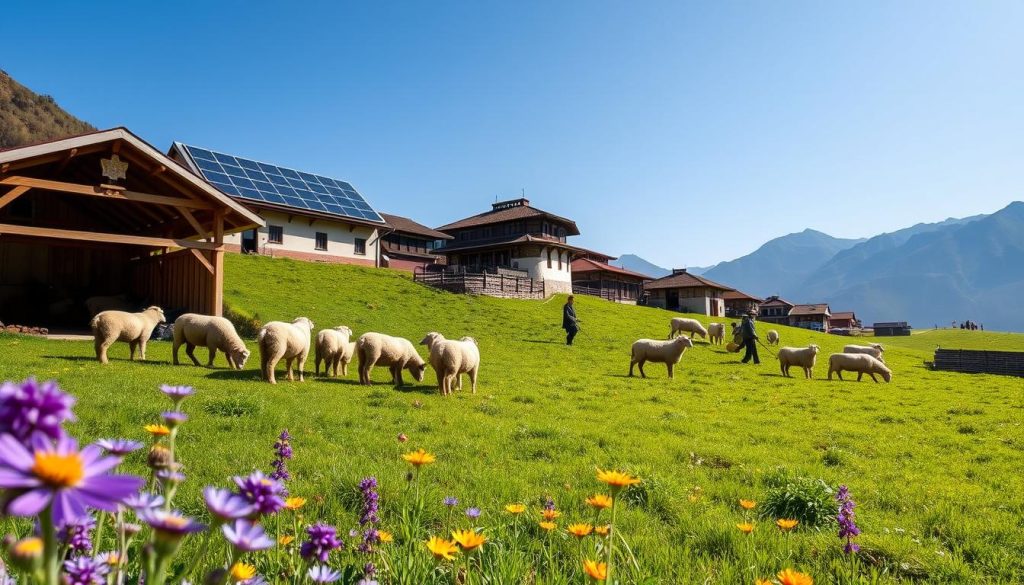
When facing the challenges of modern sheep farming, think about how new tech can help. By using these new tools, you can make your farm more successful in today’s fast-changing world.
Community and Sheep Farming Initiatives in Bumthang
Community programs are key in improving sheep farming in Bumthang. They help farmers get the support and training they need. This ensures they can farm sustainably.
Local groups, NGOs, and government agencies work together. They share knowledge, helping farmers stay updated on sheep farming trends. This includes learning about best practices and market chances.
Workshops and training sessions are part of these efforts. They teach farmers about sheep care. They learn about the value of genetic diversity, with 39 breeds in Bhutan.
With 75% of crop diversity lost in the 20th century, saving native breeds is urgent. This is even more so with a predicted loss in the next decade.
The Yathra weaving craft in Bumthang shows how sheep farming and community efforts meet. This traditional craft, recognized in 2003, boosts the local economy and preserves Chummey village’s culture. Wool prices vary, but high-quality wool can sell for up to Nu 1,200 per kg.
Yathra products, made from local wool, are popular worldwide. They help the local economy through tourism-driven sales.
Here’s a quick look at how these community efforts support farming:
| Initiative Type | Description | Impact |
|---|---|---|
| Training Workshops | Sessions on sustainable farming practices | Increased knowledge among farmers |
| Resource Sharing | Access to genetic and agricultural data | Improved livestock management |
| Market Access | Connecting farmers with buyers | Boosted sales of local products |
| Cultural Revitalization | Promotion of Yathra weaving | Enhanced local craftsmanship and economy |
These efforts not only better sheep farming but also help keep Bumthang’s culture and economy strong.
Conclusion
Sheep farming is key in Bumthang and Bhutan. It helps local economies and keeps cultural traditions alive. By using sustainable methods, farmers can make their work better for the planet and more productive.
Thinking about the future of sheep farming in Bhutan? It’s a chance to mix old ways with new tech. This blend can make farming strong and successful. Supporting the community, teaching new skills, and using technology are crucial for a growing sheep farming culture.
The path ahead for sheep farming in Bumthang is about embracing sustainable practices. By linking farming, community, and nature, you help your own success and the future of Bhutan’s heritage.