Uncover the Value of Visiting Petra – A Must-See Wonder
Ever wondered why people from all over come to the Jordanian desert? They seek the magic of Petra, known as the “Rose City.” It’s not just a place; it’s a journey through history, culture, and stunning architecture. Petra, one of the Seven New Wonders of the World, offers a travel experience unlike any other.
Its amazing rock-cut buildings and deep history make it a UNESCO World Heritage Site since 1985. Exploring Petra connects you to a past that shaped our world. Whether you’re seeing the Treasury or hiking to the Monastery, every moment is filled with wonder. Don’t miss the chance to experience Petra’s unique charm—your adventure is waiting!
Introduction to Petra: The Rose City
Petra, known as the Rose City, is a sight to behold. It’s located in southern Jordan and was the Nabataean capital over 2000 years ago. Its rock-cut architecture and water system show Petra’s importance in ancient engineering.
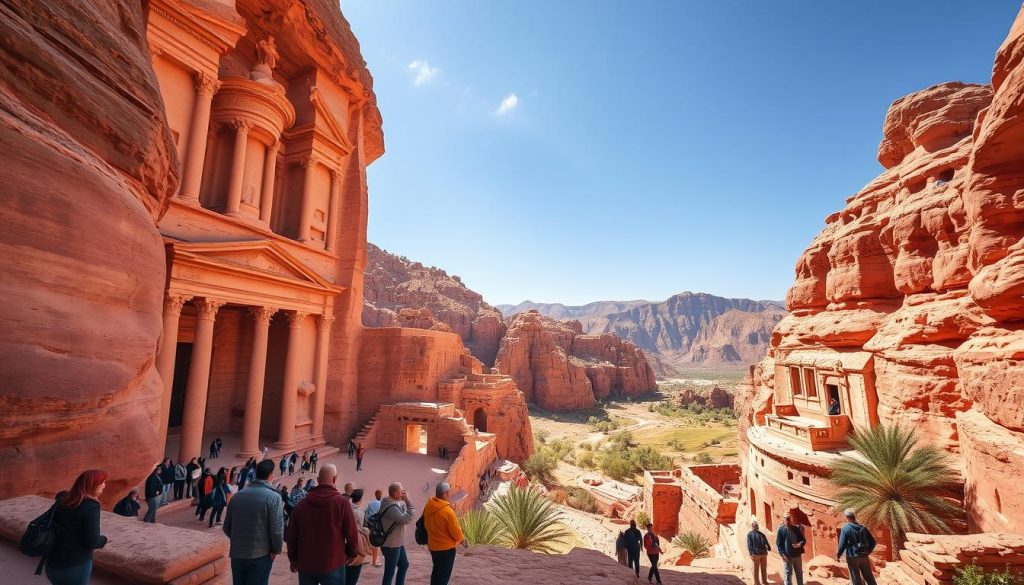
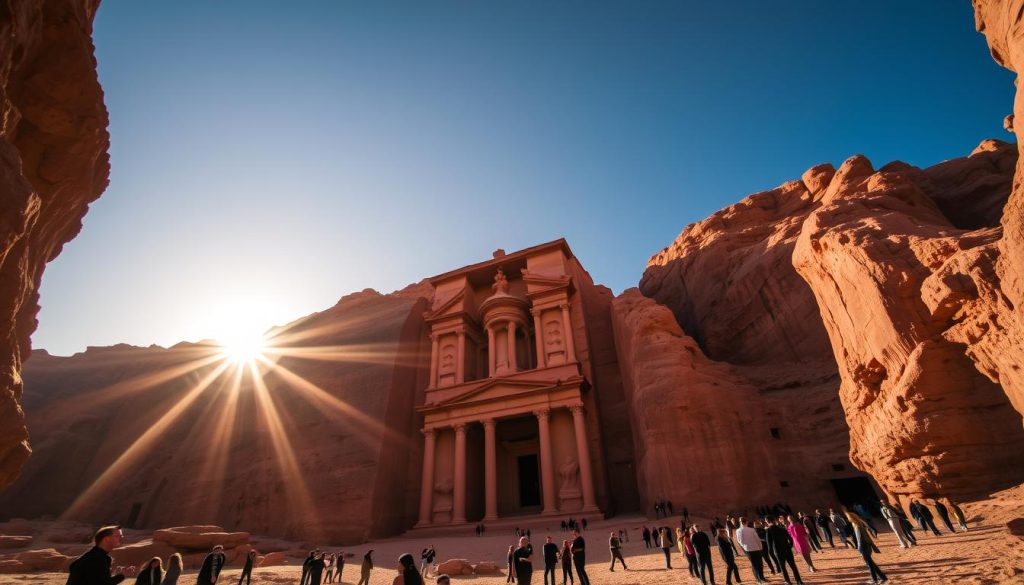
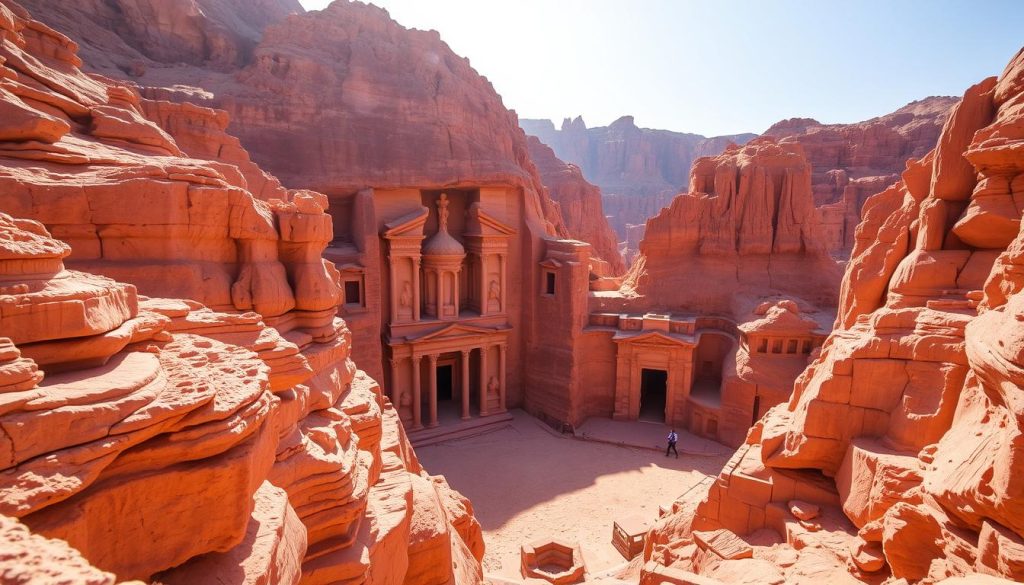
The adventure starts at the Siq, a 1.2 km narrow gorge. It leads to the Treasury, or Al-Khazneh. The cliffs and colors create a magical atmosphere. You’ll feel history as you see the iconic Treasury, a Nabataean king’s tomb.
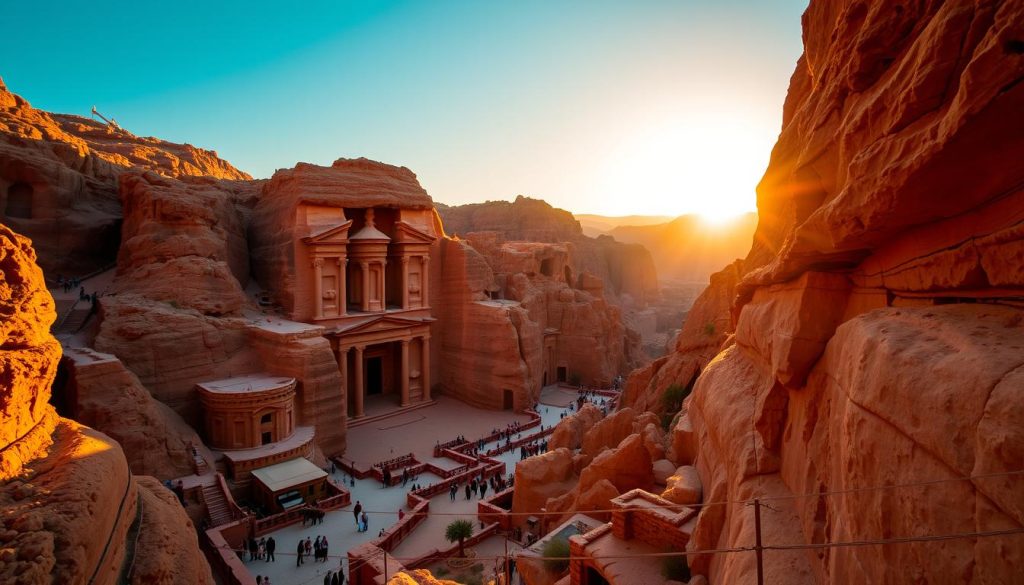
Exploring more, you’ll find royal tombs like the Urn Tomb. It has three chambers and was once a church. The Silk Tomb, Corinthian Tomb, and Palace Tomb mix Hellenistic and Eastern styles.
Visiting the High Place of Sacrifice offers a breathtaking view from 170 meters up. Climbing 800 steps to the Monastery, or Al-Deir, is rewarding. You’ll see the Nabataeans’ artistry and why Petra is a cultural treasure.
The Historical Significance of Petra
Exploring Petra reveals a rich history and ancient charm. The Nabataeans founded Petra, known for their trade routes and water systems. Their skills made Petra a key spot for trade between East and West.
Visitors see how Petra grew through ingenuity and resilience.
Overview of the Nabataeans
The Nabataeans built Petra in prehistoric times. They chose a spot between the Red Sea and the Dead Sea. This location helped Petra thrive.
The Nabataeans were skilled in trade and agriculture. They built structures that showed their power as a trade center.
Key Events in Petra’s History
Key events shaped Petra’s legacy. In 312 B.C., the Nabataeans defended Petra against Greeks. This showed its strategic value.
In 106 A.D., the Romans took Petra and renamed it Arabia Petraea. This period brought architectural growth. An earthquake in the fourth century damaged Petra, starting its decline.
UNESCO World Heritage Status
In 1985, Petra was named a UNESCO World Heritage Site. This recognition highlights its cultural and historical value. It attracts millions each year.
Despite its fame, Petra faces tourism and development challenges. Conservation efforts aim to protect this treasure for the future.
| Event | Year | Significance |
|---|---|---|
| Nabataeans establish Petra | Prehistoric Times | Foundation of a major trading hub |
| Greek invasion repelled | 312 B.C. | Showcased strategic advantages |
| Roman conquest | 106 A.D. | Petra becomes Arabia Petraea |
| UNESCO World Heritage Site designation | 1985 | Recognition of cultural and historical value |
The Unique Rock-Cut Architecture of Petra
Petra’s architecture is a wonder to see, with intricate rock-cut structures. Each facade shows the Nabataeans’ artistic and engineering skills. It leaves a lasting impression on all who visit this ancient city.
The Treasury (Al-Khazneh)
The Treasury is Petra’s most famous site, standing nearly 40 meters high. Its detailed carvings and grand entrance are a testament to Petra’s unique architecture. The intricate details show the Nabataeans’ wealth and artistic talent. This monument attracts visitors worldwide, making it a top attraction.
The Monastery (Ad-Deir)
The Monastery, or Ad-Deir, is 49 meters tall, another stunning example of Petra’s architecture. Its simple yet elegant design is adorned with sophisticated carvings. Climbing to its top offers breathtaking views, perfect for its ancient grandeur.
The Royal Tombs and Colonnaded Street
The Royal Tombs and Colonnaded Street show the Nabataeans’ advanced society. These grand tombs display the elite’s status with intricate designs. Walking the Colonnaded Street, you see how these marvels fit into Petra’s urban planning.

Must-See Attractions in Petra
Exploring Petra is a must, with its stunning attractions. This UNESCO World Heritage Site offers a unique experience. Start your journey through the Siq, the main entrance, leading to the heart of Petra.
Exploring the Siq: The Journey to Petra
The Siq is a narrow gorge that stretches for about 1.2 km. It takes you through dramatic rock formations and vibrant colors. This path enhances your excitement and prepares you for the majestic Treasury at the end. The journey takes around 20 minutes.
As you walk, enjoy the natural beauty and the historical significance of this route.
Other Notable Sites and Attractions
Petra has more than just the Siq and Treasury. Don’t miss:
- The Monastery (Ad-Deir): Larger than the Treasury, it offers breathtaking panoramic views and requires a hike of over 800 steps.
- The Roman Theater: Designed to accommodate 8,500 spectators, this incredible structure showcases Petra’s architectural prowess.
- The Great Temple: This remarkable building, established in 100 BC, emphasizes the grandeur of Nabatean civilization.
- Petra Church: Admire its preserved mosaics, revealing the artistic skills of early inhabitants.
- The Royal Tombs: These tombs feature unique architectural styles and offer insight into the burial practices of the Nabateans.
Exploring Petra fully can take at least two days. This allows you to enjoy the attractions at your own pace. For a deeper understanding, consider joining a guided tour. Knowledgeable guides can reveal the history behind each site.
| Attraction | Description | Time Required |
|---|---|---|
| The Siq | Narrow gorge leading to the Treasury | ~20 mins walk |
| The Treasury (Al-Khazneh) | Iconic facade carved into rocks | 1 hour |
| The Monastery (Ad-Deir) | Grand structure with panoramic views | 2-3 hours including hike |
| Roman Theater | Stunning architecture, accommodates 8,500 | 30 mins |
| The Great Temple | Largest freestanding building in Petra | 1 hour |
| Petra Church | Features beautifully preserved mosaics | 30 mins |
The Beauty of Exploring Petra in Jordan
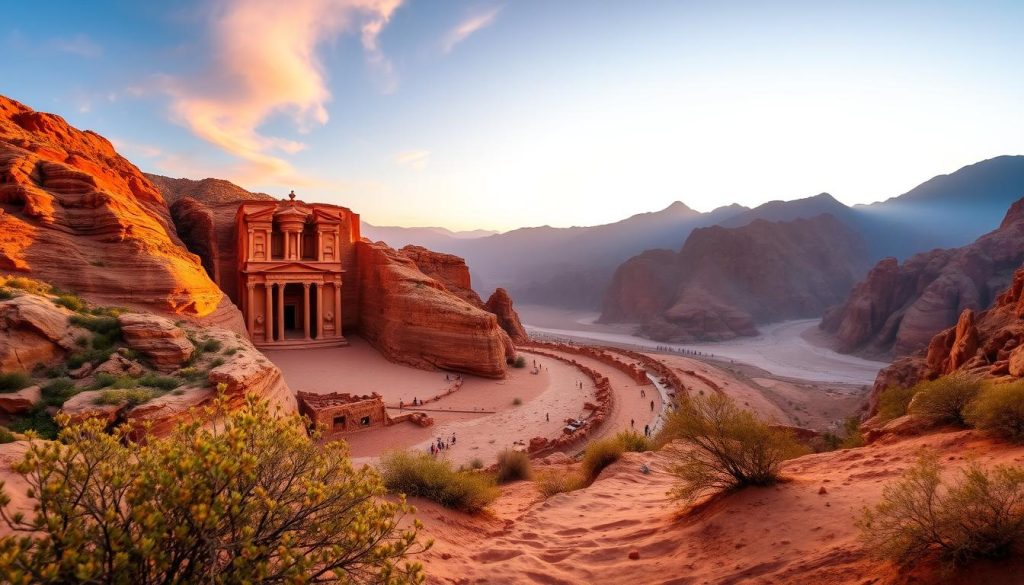
Exploring Petra in Jordan is a mix of natural beauty and ancient history. The area’s landscape is full of rugged terrains and unique rocks. At sunset, the pink sandstone rocks create shadows, making every spot perfect for photos.
Photographers love the way light plays on Petra’s buildings. It adds depth to their photos.
Experience Nature and Tactile History
When you start exploring Petra, you’ll see its natural beauty. The cliffs and rocks make a stunning backdrop. Trails lead to amazing views, like the High Place of Sacrifice.
Every step in Petra lets you feel its history. You can learn about the Nabataeans and their culture.
Photography Opportunities
Petra is not just about old ruins. It’s also a photographer’s dream. You can take pictures of the Monastery and the Petra Church’s mosaics.
The Royal Tombs and Colonnaded Street add to the history. Sunset is the best time to take photos. The warm light makes everything look magical.
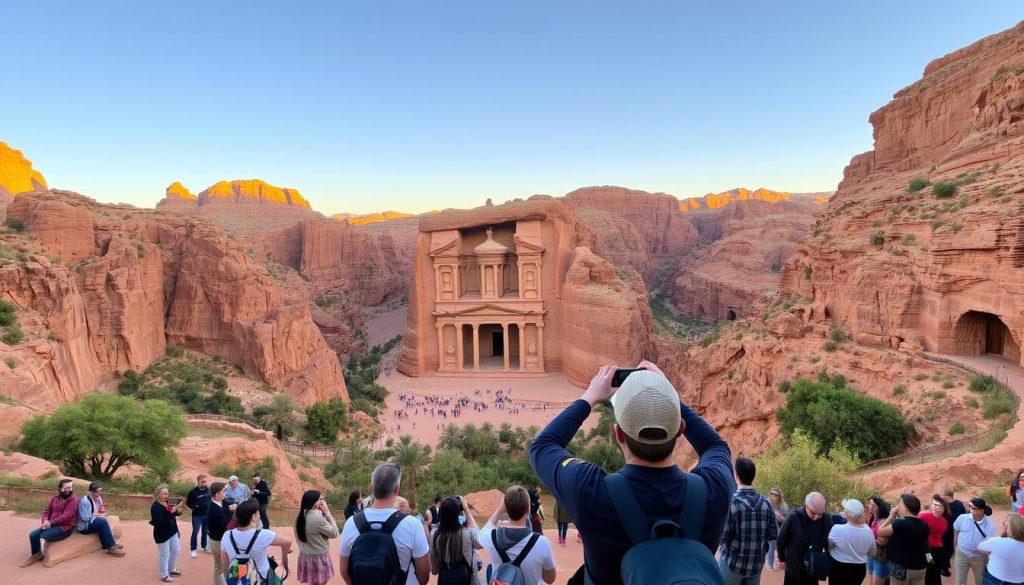
Exploring Petra is a journey of beauty and adventure. It leaves you with memories and photos of this incredible place.
The Value of Visiting Petra: A Cultural Perspective
Petra is more than stunning architecture and landscapes. It offers a rich experience through local culture and community. Interacting with Jordanians lets travelers dive into their traditions and lifestyle. This cultural dive makes Petra’s visit even more valuable.
Interaction with Local Culture and Community
Visiting Petra means more than seeing sights. It’s about connecting with the local community. You can share meals, watch traditional crafts, or explore markets. These moments create lasting memories and a deep connection with Jordanian life.
Visitors often talk about the kindness and laughter they shared. It adds to their understanding of this amazing place.
The Role of Hospitality in Jordan
Jordan’s hospitality is famous and shows the country’s culture. Visitors always talk about the warm welcome they get. This hospitality makes Petra’s beauty even more special.
By joining in local customs, you appreciate Petra’s history more. You also enjoy the lively atmosphere around it.
| Aspect | Description |
|---|---|
| Cultural Interaction | Engage with locals through meals and crafts |
| Hospitality | Experience warmth and kindness from Jordanians |
| Authentic Experiences | Immerse in local traditions and celebrations |
| Community Connection | Build lasting memories through genuine interactions |
Visiting Petra lets you see amazing architecture and learn about local culture. The hospitality in Jordan adds to the journey. It makes your trip to Petra unforgettable and enriching.
Best Times to Visit Petra
Knowing the best times to visit Petra can make your trip better. It’s key to visit during the cooler months to avoid crowds. The best times are from late autumn to early spring, from October to April.
Understanding the Seasonal Changes
During these months, the weather is pleasant, with temperatures between 20°C to 25°C (68°F to 77°F). This makes exploring Petra’s paths and buildings more enjoyable. Winter, from December to February, has fewer visitors, even though it’s cooler and might rain.
The summer, from June to August, is very hot, with temperatures over 30°C (86°F). This makes it hard to explore comfortably.
Tips for Avoiding Crowds
To enjoy Petra without crowds, arrive early, around 5 am. This lets you see the sunrise and avoid the busy times. Spring and autumn are great for hiking and cycling, with better weather.
Visiting during these times lets you see Petra’s beauty and history without the crowds.
Hidden Gems in Petra
Exploring Petra is more than just seeing famous sights. You can find secret spots with amazing views and calm surroundings. These hidden places offer unique experiences, showing the true beauty of Petra.
Less Visited Areas and Secret Spots
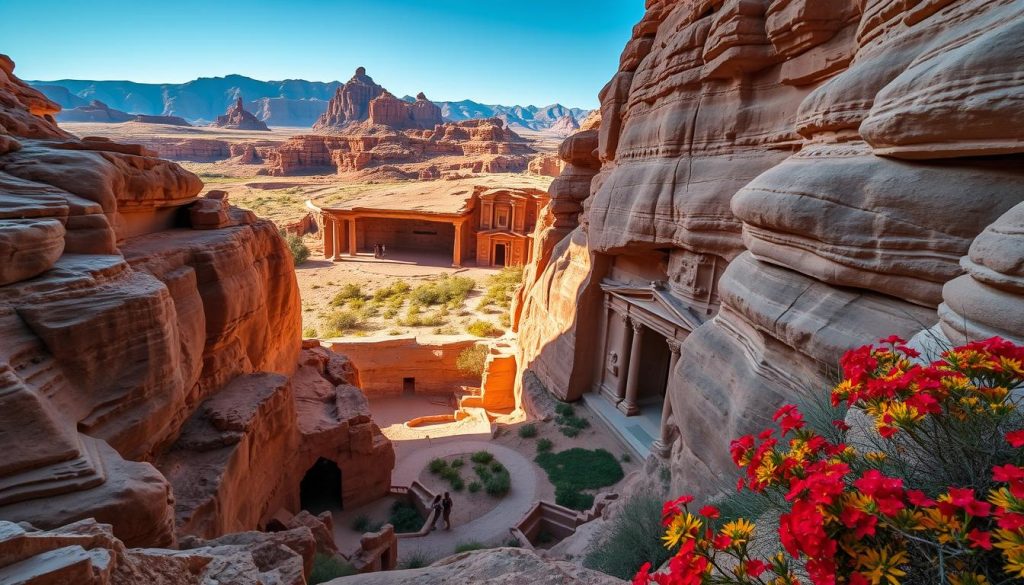
The High Place of Sacrifice is a great adventure for those who like to explore. It’s a thirty-minute hike with incredible views. Nearby, Little Petra has ruins and shows Petra’s vast history. You can get there easily with a free shuttle from the Petra Museum.
Unique Experiences Outside of Main Attractions
Trying new things makes your Petra trip special. The Sabra Trail is a 3½ km hike through beautiful landscapes. For a bigger challenge, try the Al Madras Trail, also known as Indiana Jones Way. After a long day, relax at the Petra Bubble Luxotel for a night under the stars.
Petra Travel Experience: Planning Your Visit
Planning your trip to Petra means knowing how to get there and where to stay. A good plan makes your visit better. It lets you enjoy Petra’s ancient beauty without worries.
Getting to Petra from Major Cities
Getting to Petra is easy, depending on where you start. Here are some common ways:
- From Amman: It takes about 3 to 4 hours by bus, car, or tour.
- From Aqaba: It’s a shorter trip, around 2 to 3 hours, perfect for those from the Red Sea.
Using a bus or a guided tour can make your trip more comfortable. You can enjoy the views without stress.
Accommodation Options Nearby
The town of Wadi Musa offers many places to stay, for all budgets:
| Hotel Name | Price per Night (Euros) | Features |
|---|---|---|
| Rocky Mountain Hotel | 42 | Budget-friendly, great for backpackers |
| Nomads Hotel | 75 | Comfortable, good for those watching their budget |
| Petra Corner Hotel | 115 | Near dining and the Petra entrance |
Staying overnight lets you see Petra more times. Visit in the morning or evening to avoid the crowds. This makes your trip to this ancient wonder even better.
Essential Tips for Exploring Petra
Before you start your Petra adventure, know what to bring and how to get around. These tips will make your visit more enjoyable and comfortable.
What to Bring for a Comfortable Visit
Choose your gear wisely for a great Petra trip. Don’t forget:
- Sturdy walking shoes: They’re a must for the different paths.
- Sunscreen and a hat: Stay safe from the sun, mainly in the afternoon.
- Refillable water bottle: Keep yourself hydrated with water from stations.
- Camera with a tripod: You’ll want to take amazing photos of this ancient place.
- Cash: Handy for snacks or local guides.
Navigating the Site on Foot or with Transportation
There are ways to get around Petra. You can:
- Walk: Many love walking, like to the Treasury, which is 2 kilometers away.
- Hire a private guide: For 50 JOD, a guide can share interesting facts and history.
- Use donkey or camel services: For a softer ride, try these options from local Bedouins.
With these tips, you’re ready to explore Petra’s wonders. Enjoy the stunning views and rich history!

Conclusion
Petra is a true marvel of human creativity, taking you on a journey through time. It’s more than just its stunning architecture; it’s an experience that connects you with Jordan’s history and culture. From the Treasury to the Monastery, each spot tells a story of the Nabataeans’ achievements.
Visiting Petra is more than a tour of an ancient city. It’s a dive into Jordan’s warm hospitality and community. Walking the trails and meeting locals, you’ll see Petra as a living, vibrant experience. The Siq and the Petra by Night event offer a special look into this UNESCO site.
If you’re planning a trip, make sure to plan well. Give yourself enough time to fully enjoy Petra’s beauty and secrets. By exploring both history and culture, your visit will be a memorable part of your Jordanian adventure.