Top Attractions in Thimphu: Discover Bhutan’s Best
Have you ever wondered about the hidden gems in Bhutan’s capital, Thimphu? This city is a blend of culture and modernity that draws in travelers. As you explore Thimphu, you’ll find spots that highlight Bhutanese heritage and offer unique experiences.
From grand dzongs to lively weekend markets, this guide will show you the best of Thimphu. It will make sure your trip is one to remember.
Introduction to Thimphu: The Cultural Heart of Bhutan
Thimphu is the lively capital of Bhutan, sitting at about 7,610 feet high. It was founded in 1961, marking a big change for Bhutan. Here, you’ll see old traditions meet new ways, showing Thimphu’s cultural heart.
The city’s buildings, markets, and sacred places are all part of its charm. These sights show the city’s deep culture and history.
The National Memorial Chorten, built in 1974, is a peaceful place for prayer. The Buddha Dordenma Statue, over 50 meters tall, is a marvel. It holds 125,000 smaller Buddhas inside.
There’s much to do in Thimphu to connect with the local culture. At the Changlimithang Stadium, you can watch archery, Bhutan’s favorite sport. The Spice, Meat, Fish, and Vegetable Market on weekends lets you see how locals live.
What Are the Top Attractions in Thimphu?
Exploring Thimphu reveals a wealth of cultural and historical wonders. Each spot offers a peek into Bhutan’s rich past, making unforgettable memories for visitors. Trashi Chho Dzong stands out, perched on the Wang Chhu river. It’s not just the government’s seat but also a masterpiece of Bhutanese architecture.
The Changangkha Lhakhang temple, from the 12th century, is a spiritual gem. It draws those interested in Thimphu’s history and culture. For art lovers, the National Textile Museum is a must-see. It displays ancient and modern textiles, showcasing Bhutan’s skill.
The Buddha Dordenma statue is a towering presence, standing at 51 meters. It offers panoramic views of the valley. This giant Buddha is among the world’s largest and contains thousands of smaller Buddhas.
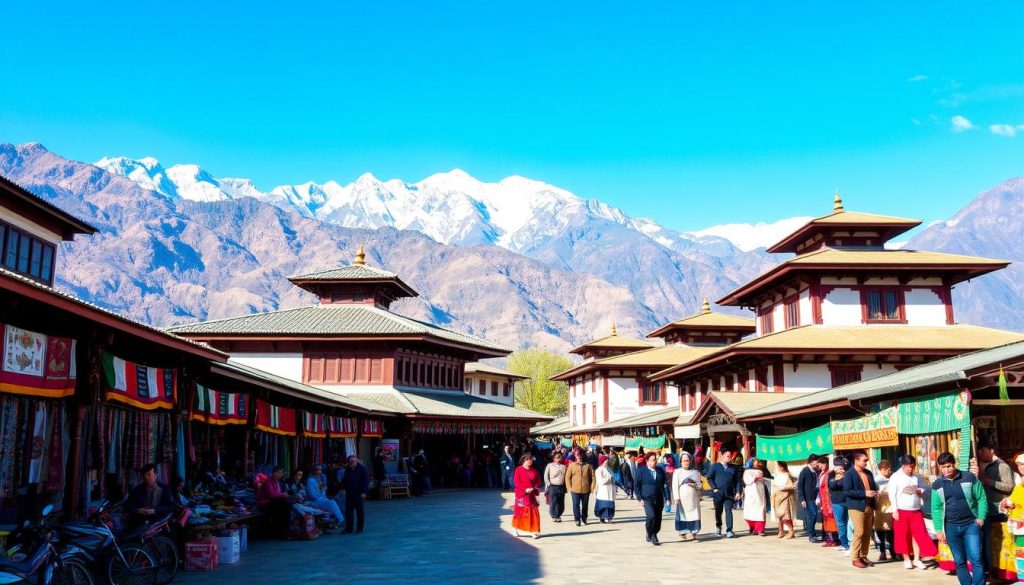
Weekend markets in Thimphu add to the city’s lively atmosphere. They offer a chance to experience local life and tastes. By the river, these markets feature traditional crafts and delicious food, providing a genuine experience.
| Attraction | Description | Location |
|---|---|---|
| Trashi Chho Dzong | Government seat, stunning architecture | North of Thimphu, Wang Chhu river |
| Changangkha Lhakhang | Historic temple, spiritual significance | Central Thimphu |
| National Textile Museum | Displays of traditional textiles | Thimphu |
| Buddha Dordenma | Largest Buddha statue, stunning views | Entry to Thimphu valley |
| Weekend Market | Local crafts and food, vibrant atmosphere | West bank of Wang Chhu river |
Trashi Chho Dzong: A Fortress of History
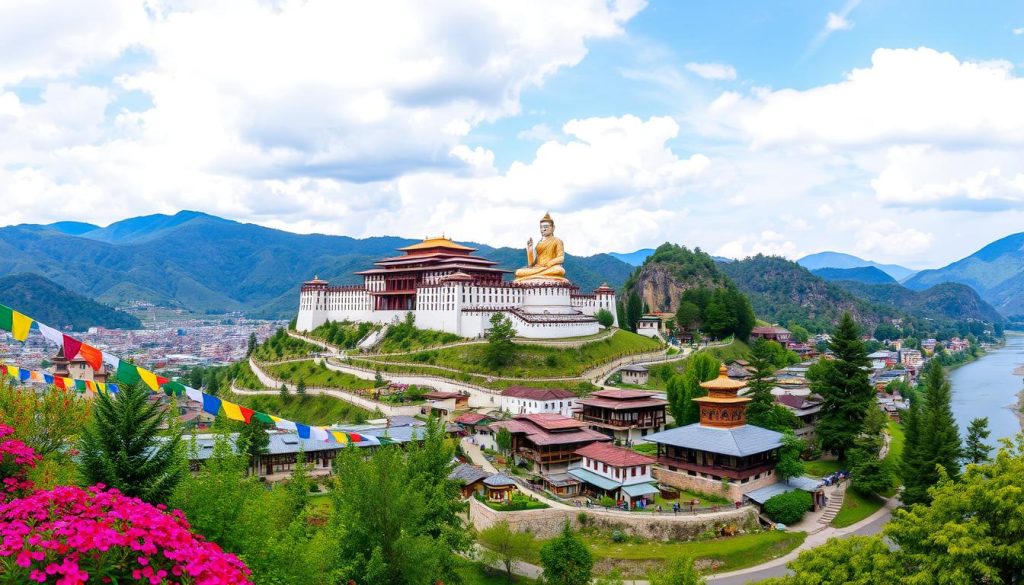
Trashi Chho Dzong is a key spot in Thimphu, showing off Bhutan’s rich culture and architecture. This big fortress is the heart of the national government. It’s also key in Bhutan’s spiritual and political life. Built in 1216, it has grown and changed a lot, with a big update in 1962 under King Jigme Dorji Wangchuck.
Visiting Hours and Entry Fee
You can see Trashi Chho Dzong on weekends from 9 AM to 5 PM. The best part is, there’s no entry fee. This lets you explore this amazing place without worrying about money.
Significance of the Dzong
Dzongs like Trashi Chho Dzong are special because they are both religious and government centers. Inside, you’ll find about 30 temples, chapels, and shrines, each with its own story. The courtyard is where the Thimphu Tshechu festival happens every September. This festival celebrates Bhutan’s culture for three days.
With its white walls and detailed towers, Trashi Chho Dzong is a sight to see. It’s not just beautiful; it’s also a big part of Bhutan’s history and culture.
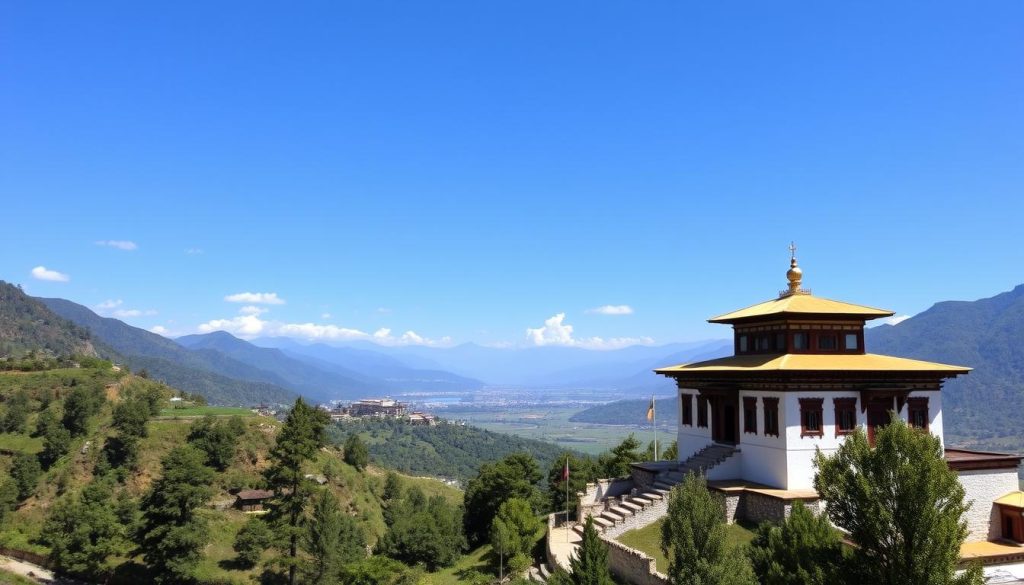
Changangkha Lhakhang: A Spiritual Retreat
Exploring Thimphu means seeing Changangkha Lhakhang, a temple from the 12th century. It’s a peaceful spot for Buddhists looking for solace and blessings. The temple’s design is unique, with murals telling Buddhist stories.
Architecture and Historical Importance
The temple’s architecture is impressive, like ancient fortresses. It shows off Bhutanese culture with detailed art. Changangkha Lhakhang is a key part of Thimphu’s spiritual history and Bhutan’s Buddhist heritage.
Local Practices at the Temple
Locals visit Changangkha Lhakhang for blessings, often for new babies. The temple is filled with the sound of prayer wheels. Your visit here will be a special part of your Thimphu journey.
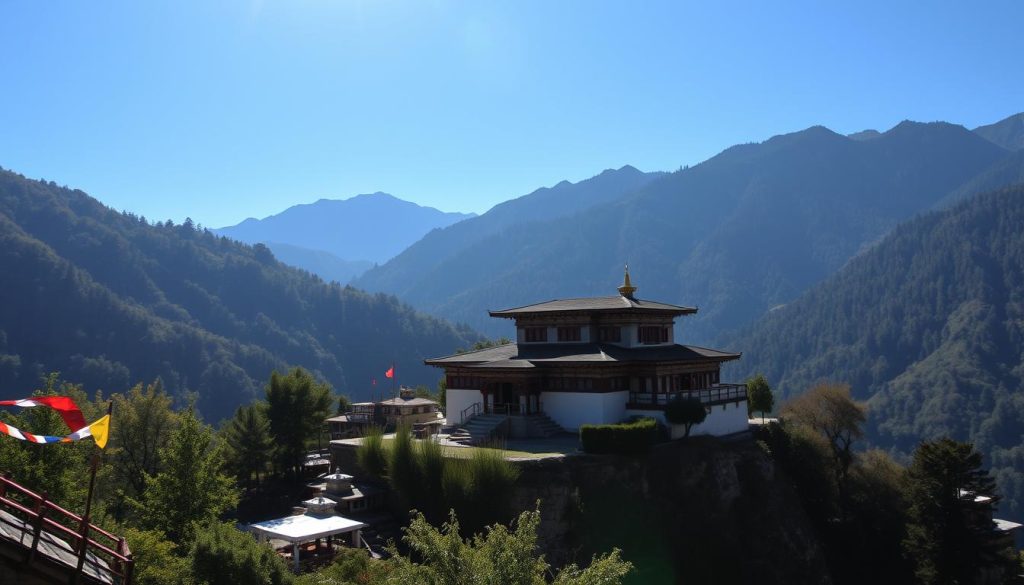
National Memorial Chorten: Meditate and Pray
The National Memorial Chorten is a key spot in Thimphu, welcoming everyone to meditate. It honors King Jigme Dorji Wangchuck with its stunning Tibetan-style design. The building’s whitewashed walls and golden roofs capture the site’s spiritual essence.
Tibetan-Style Architecture and Symbolism
The National Memorial Chorten’s design holds deep meaning. It’s adorned with detailed paintings and symbols that mirror Buddhist teachings. The area’s lively vibe offers a chance to reflect and participate actively. The peaceful setting, with its gardens and prayer flags, adds to the experience.
Daily Activities of Locals
Visitors can see locals taking part in cultural activities around the chorten. Guided meditation sessions let people connect with themselves and explore local spirituality. Lighting butter lamps is a daily ritual, showing devotion and prayer.
- Photography Workshops: Capture the beauty of Bhutanese culture and architecture.
- Culinary Experiences: Delight in traditional dishes such as Ema Datshi and Momos.
- Pilgrimage Route Tours: Discover nearby religious sites, enriching your understanding of Thimphu’s spiritual landscape.
- Buddhism Lecture Series: Attend discussions focused on various aspects of Buddhism.
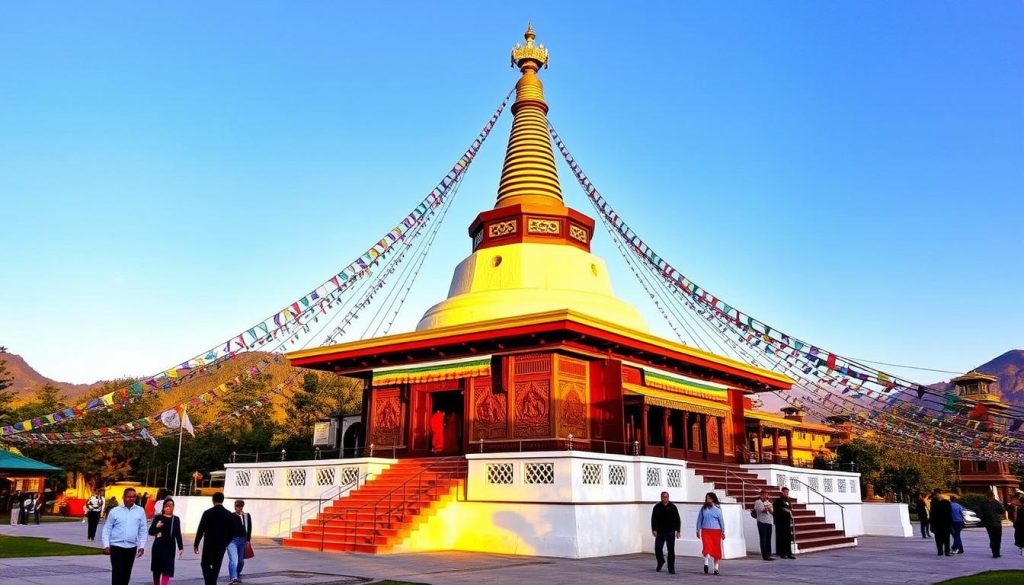
Simply Bhutan: Experiencing Traditional Culture
Simply Bhutan is a unique living museum in Bhutan. It offers a deep dive into the nation’s rich traditions. Here, you can engage with the locals and truly appreciate Bhutan’s heritage.
Interactive Cultural Exhibits
At Simply Bhutan, you’ll find many cultural exhibits in Thimphu. These exhibits showcase Bhutan’s diverse and lively customs. You can try traditional archery, watch local crafts, and even wear traditional clothes.
It’s a chance to see the skill behind Bhutanese textiles, woodwork, and metalwork. This experience is unlike any other.
Importance of the Living Museum
This museum is key to keeping Bhutan’s culture alive. It connects the past with the present, teaching both tourists and local youth. Simply Bhutan helps keep Bhutanese traditions alive for the future.
Visiting this museum is a must when exploring Bhutan’s cultural heart.
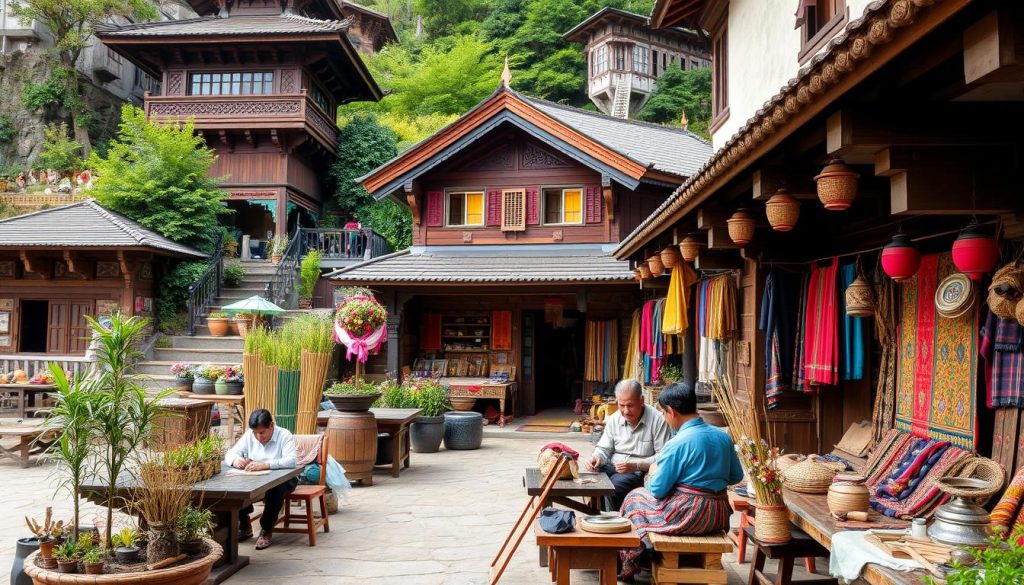
Weekend Market: A Taste of Local Life
The Weekend Market in Thimphu offers a real look at local life. It’s by the Wang Chhu River and open on Saturdays and Sundays. You’ll find stalls with fresh produce, crafts, and tasty street food.
What to Expect at the Market
Walking through, you’ll see a mix of Thimphu’s attractions. Vendors show off Bhutanese culture with fresh fruits and veggies. You can talk to them, learn about their products, and try delicious Bhutanese food.
Unique Products to Find
The Weekend Market has many special items that show off Bhutan’s culture. Some dishes you might try include:
- Ema Datshi (Vegetarian)
- Kewa Datshi (Vegetarian)
- Momo (Vegetarian or Non-Veg)
- Jasha Maru (Non-Veg)
- Phaksha Paa (Non-Veg)
- Vegetable Thukpa (Vegetarian)
- Buckwheat Pancakes (Vegetarian)
- Red Rice (Vegetarian)
- Butter Tea (Vegetarian)
- Suja (Vegetarian)
Places like Zombala and Bhutan Kitchen are must-visits. They serve amazing Vegetable and Chicken Momos, and Ema Datshi and Phaksha Paa. You’ll find something you love in this lively market.
Motithang Takin Preserve: Observing Bhutan’s National Animal
The Motithang Takin Preserve is a key place to see animals in Thimphu, home to Bhutan’s national animal, the Takin. It was once a zoo but now focuses on protecting these special animals in their natural setting. The Takin is known for its unique look and is a big part of Bhutan’s identity.
History of the Preserve
The Motithang Takin Preserve is open from Tuesday to Sunday. You can see the animals from 9:00 AM to 4:00 PM. The cost to enter is about BTN 100 for visitors from abroad and BTN 30 for locals.
This place is not just a home for the Takin. It also shows Bhutan’s dedication to keeping the environment safe.
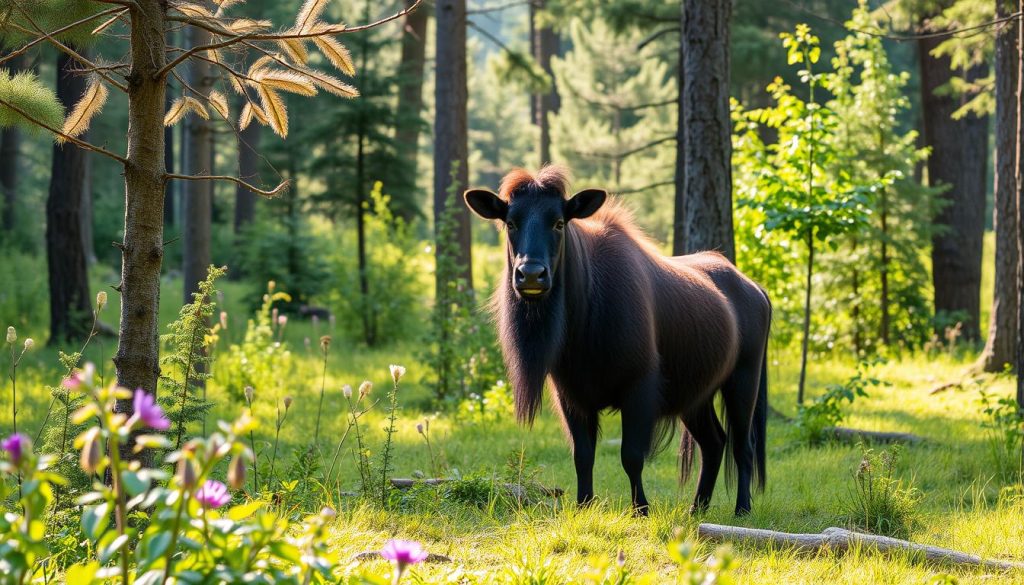
The preserve sits at 8202 ft above sea level. It has a cool climate, ranging from -2°C to 21°C. The best time to visit is from late May to late June, when the Takin are most active.
Getting there is easy, as Thimphu is just 5 kilometers away. You can hike for 40 minutes or drive for 15 minutes to reach it. Nearby, you can also see the Buddha Dordenma Statue and National Memorial Chorten, making your visit even more special.
| Details | Information |
|---|---|
| Entry Fee (Foreigners) | BTN 100 |
| Entry Fee (Locals) | BTN 30 |
| Visiting Days | Tuesday to Sunday |
| Visiting Hours | 9:00 AM to 4:00 PM |
| Best Time to Visit | Late May to Late June |
| Altitude | 8202 ft |
| Distance from Thimphu | 5 kilometers |
| Travel Time | 40 minutes hike / 15 minutes drive |
Buddha Dordenma: The Grand Statue of Peace
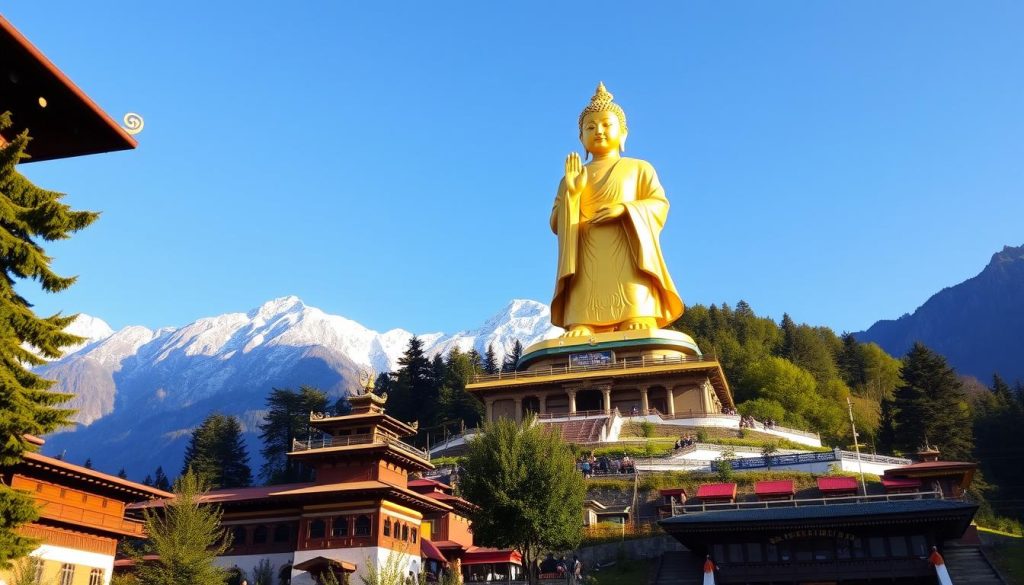
The Buddha Dordenma is a huge symbol of peace, towering at 54 meters (177 feet) in Thimphu Valley. It’s the largest Buddha statue in the world, made from bronze and covered in gold. It was finished in September 2015, after starting in 2006. This statue is a breathtaking sight that shows Bhutan’s spiritual goals.
Visiting the Statue
Visiting the Buddha Dordenma is a special chance to see a place full of cultural meaning. You can get there by hiking or biking, making the trip unforgettable. There’s no cost to enter, so you can enjoy this famous landmark for free. Just remember to take off your shoes when going into the meditation rooms with 125,000 small Buddha statues.
Symbolism of the Buddha Dordenma
This huge statue shows Bhutan’s wish for peace and happiness. Around it is the Kuensel Phodrang nature park, covering 943.4 acres with outdoor gyms. It’s not just a big statue but a symbol of spiritual growth, with a meditation hall full of 100,000 Buddhas.
The statue was built by Aerosun Corporation of Nanjing, China, showing their commitment to creating something peaceful and culturally rich. The Buddha Dordenma is a key statue in Bhutan, welcoming visitors to learn about peace.
Places to Explore in Thimphu: Hidden Gems
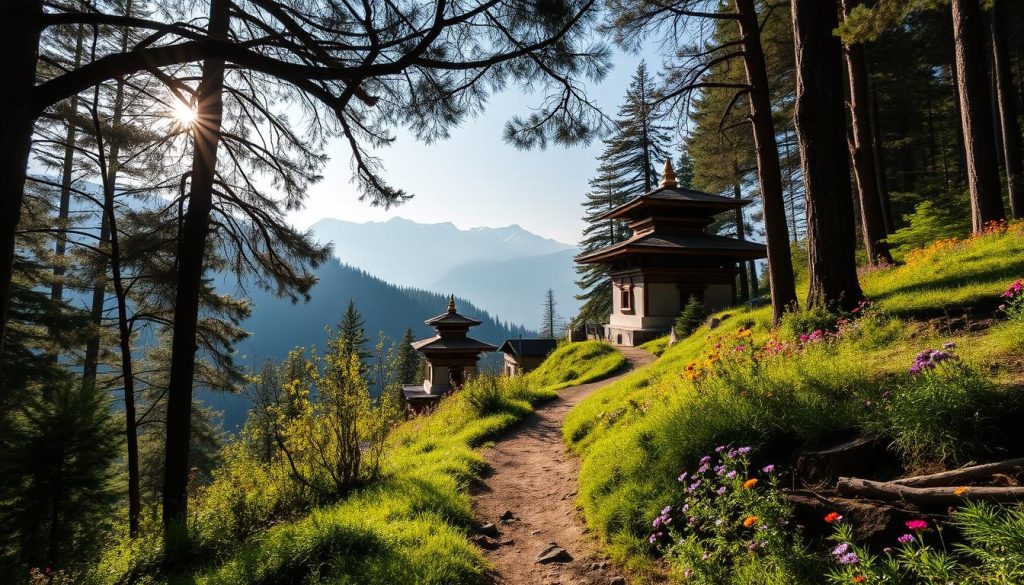
Explore beyond the well-known spots in Thimphu to find hidden gems. These places let you dive into Bhutan’s culture and enjoy its calm beauty.
Thimphu’s streets hide off-the-beaten-path attractions that show the heart of Bhutanese life. The Folk Heritage Museum gives a peek into old rural life. The Royal Textile Academy highlights Bhutan’s textile traditions.
Don’t miss the Dechen Phodrang Monastery, a peaceful spot for young monks. Its old architecture and calm make it a great escape from city life.
The National Library of Bhutan is another gem. It has ancient texts and rare books that show Bhutan’s literary past. Each place lets you connect with Bhutan’s culture more deeply.
| Attraction | Best Time to Visit | Ideal Duration | Nearest Airport |
|---|---|---|---|
| Folk Heritage Museum | March to May, September to November | 1-2 hours | Paro International Airport (48 km) |
| Royal Textile Academy | March to May, September to November | 1-2 hours | Paro International Airport (50 km) |
| Dechen Phodrang Monastery | March to May, September to November | 1-2 hours | Paro International Airport (52 km) |
| National Library of Bhutan | March to May, September to November | 1-2 hours | Paro International Airport (50 km) |
Visiting these hidden spots in Thimphu is a memorable experience. Each place shows off Bhutan’s culture, beauty, and friendly vibe.
Conclusion
Thimphu attractions are a mix of culture, beauty, and spirituality. You can see the grand Trashi Chho Dzong and the peaceful Changangkha Lhakhang. These places show the Bhutanese way of life.
At the Weekend Market, you can feel the local traditions. And at Motithang Takin Preserve, you can see endangered animals. These experiences make your visit special.
Visiting Thimphu is a journey of discovery and connection. You’ll trek through green landscapes and visit spiritual sites. Every moment is real and meaningful.
When planning your trip, think about all the attractions. Each one adds something special to your journey through Bhutan’s capital.
Don’t forget to explore Thimphu’s hidden spots. They offer a glimpse into everyday life that guidebooks can’t show. Visiting both famous and hidden places will make your trip unforgettable.