Best Time to Visit Thimphu? Your Travel Guide
Ever thought about when to visit Thimphu, Bhutan’s captivating capital? To fully enjoy its stunning views and rich culture, you need to know the best time. Thimphu is the world’s fifth highest capital city, known for its cultural festivals. This guide will help you plan your trip, ensuring a memorable experience in this peaceful kingdom.
Introduction to Thimphu
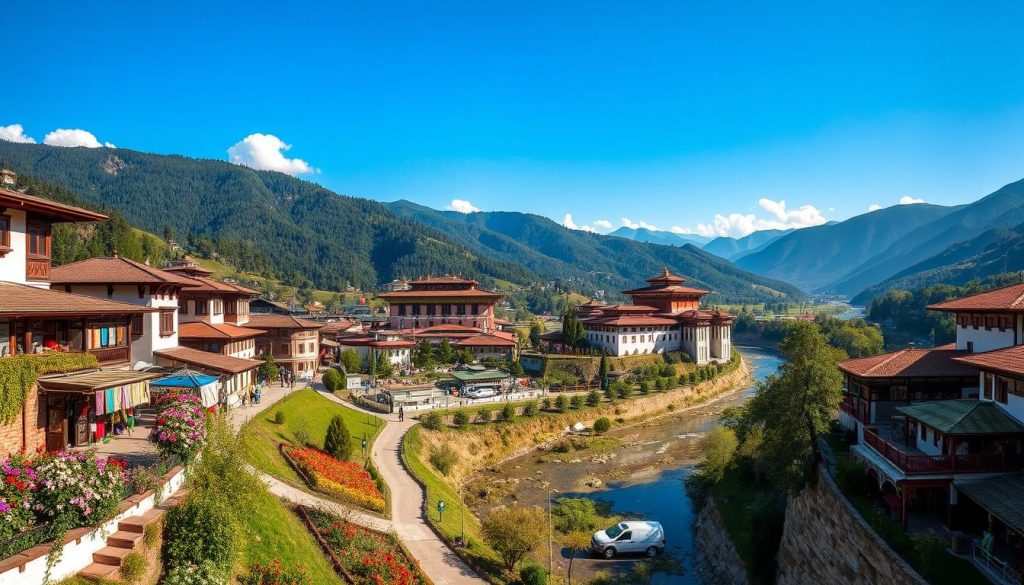
Thimphu is not just the capital but also the largest city of Bhutan. It’s nestled in the majestic Himalayas, over 2,300 meters (7,500 feet) high. This location offers visitors stunning views of the surrounding mountains.
The city is a mix of traditional and modern elements. It has a vibrant cultural scene and a rich history. This makes it a fascinating place to explore.
Your Bhutan travel guide will show you the city’s dzongs. These are traditional fortress-like structures important in the country’s politics and spirituality. The architecture and calm atmosphere make it perfect for both exploration and relaxation.
Visiting Thimphu, you’ll feel a deep connection to the local culture. The city celebrates both its past and present.
When planning your trip, here are some Thimphu travel tips to make your experience better. Try the local cuisine, visit the National Textile Museum, and check out the Institute of Traditional Medicine. These places highlight Bhutan’s commitment to preserving its heritage.
| Feature | Details |
|---|---|
| Population | Approximately 100,000 |
| Area | 712 square miles |
| Altitude | Above 2,300 meters (7,500 feet) |
| Climate | Ranges from -3°C to 28°C |
| Annual Rainfall | 710mm (28 inches) |
| Clear Sky Days | 210 days/year |
| Sunshine Hours | 2,500 hours/year |
Understanding Thimphu’s Climate
Knowing about Thimphu’s climate is key for a great trip. The weather in Thimphu changes with the seasons, offering different activities. Each season brings its own beauty, changing the landscape and what you can do.
Overview of Thimphu Weather
Thimphu’s climate is moderate, thanks to its high altitude. It doesn’t get too hot or too cold. The temperature stays between -3°C and 28°C (26°F and 82°F) all year.
The seasons in Thimphu shape its plants and animals. This makes the area even more interesting. If you want to know more about Thimphu’s climate, understanding the seasons is important.
Temperature Range Throughout the Year
The temperature in Thimphu varies with the seasons. Winters, from December to February, can be as cold as -3°C (26°F). But summers, from June to August, can be up to 25°C (77°F), perfect for outdoor fun.
Knowing this temperature range helps you plan the best time to visit Thimphu. You can enjoy its beautiful nature.
When is the best time to visit Thimphu?
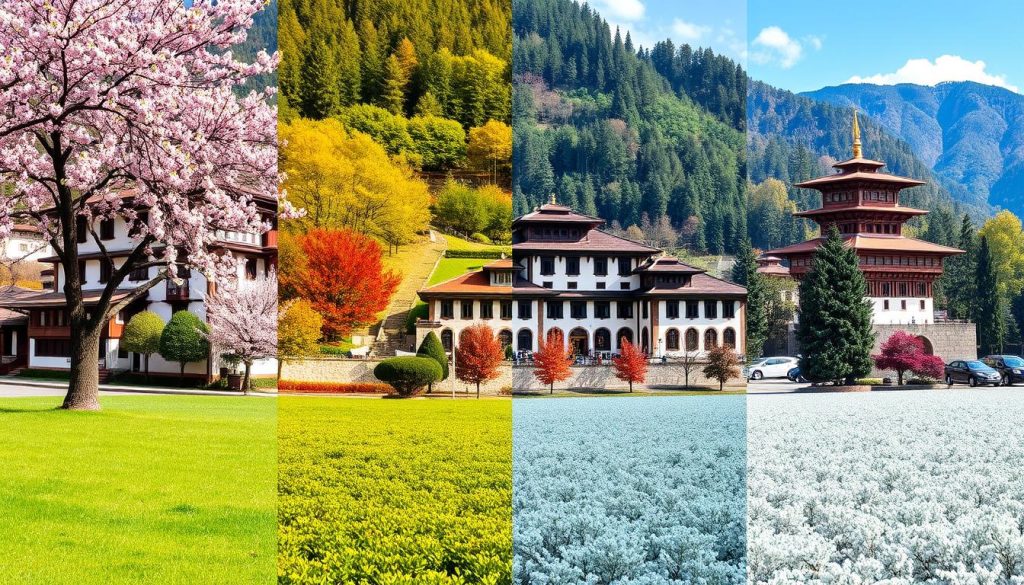
Planning your trip to Thimphu wisely can make your visit unforgettable. The city is stunning in spring and autumn. These seasons are perfect for exploring.
Spring: March to May
Spring is a great time to see Thimphu. The weather is mild and dry, with temperatures between 6°C and 22°C. You’ll see nature’s colors come alive with blooming flowers.
Outdoor activities like hiking are fun in spring. The Paro Tsechu festival in April adds to the cultural charm of your visit.
Autumn: September to November
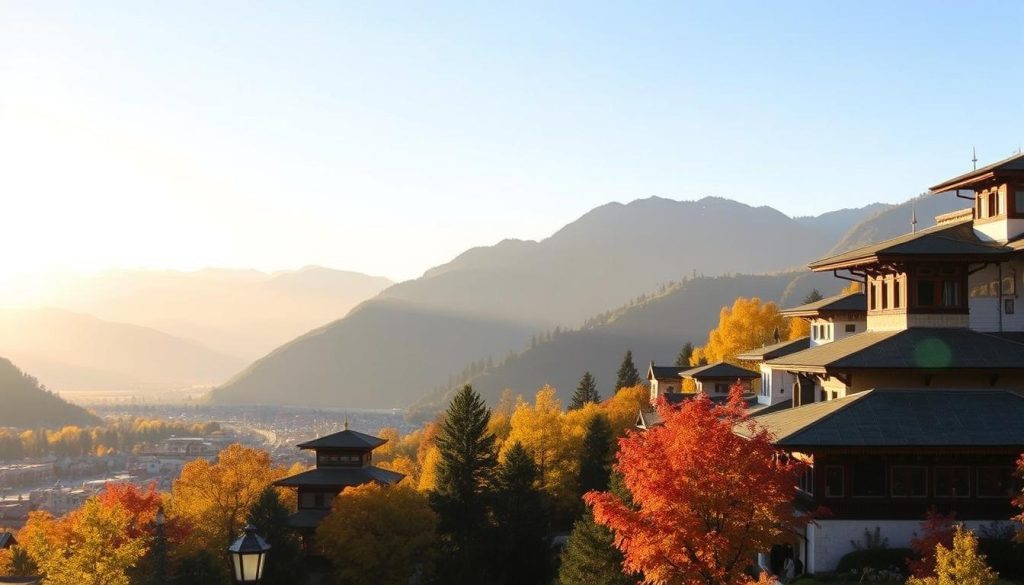
Autumn is another excellent time to visit Thimphu. The weather is pleasant, and the views are amazing. Temperatures range from 4°C to 21°C, making it ideal for outdoor adventures.
The Himalayas look stunning in autumn. The Thimphu Tshechu festival happens then, offering a unique cultural experience. Nature lovers should watch for black-necked cranes in November.
Thimphu Weather Seasons
Knowing the Thimphu weather seasons helps plan your visit. The climate changes a lot between winter and summer. Here’s what you can expect in each season.
Winter: December to February
Winter in Thimphu is special, with daytime highs around 10°C (50°F) and lows of about 2°C (36°F). You’ll see clear skies and lots of sunshine, with around 26 clear days each month. It gets cold at night, so you’ll need warm clothes.
The frosty landscapes and chance of snow make it magical. Visitors can explore the culture without the crowds.
Summer: June to August
Summer in Thimphu is warmer and wetter. Daytime highs are about 23.5°C (74.3°F), and nights are around 14°C (57°F). It’s also very humid, with a lot of rain, mostly in July.
Visitors should be ready for rainy days. But the greenery is beautiful thanks to all the rain. It’s best to plan indoor activities or cultural visits during the rainy days.
| Season | Average Daytime Temp (°C) | Average Nighttime Temp (°C) | Rainfall (mm) | Clear Days/Month |
|---|---|---|---|---|
| Winter (Dec-Feb) | 10 | 2 | 21 | 26 |
| Summer (Jun-Aug) | 23.5 | 14 | 120 | 20 |
Thimphu Travel Tips
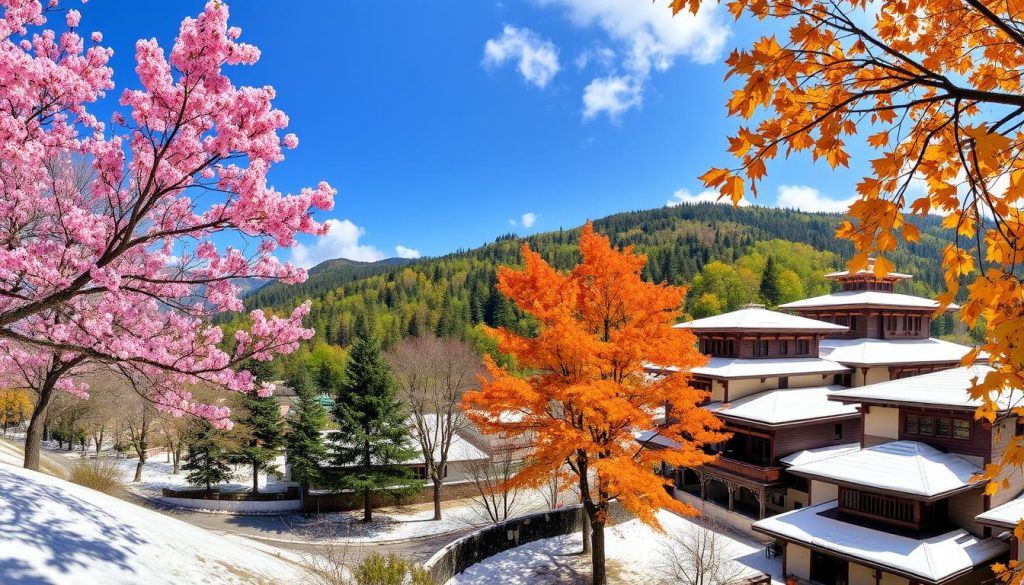
Planning your trip to Thimphu? Here are some Thimphu travel tips to make your journey better. Knowing the best time to go to Thimphu is key for good weather. Spring, from March to May, has temperatures from 4 to 23 degrees Celsius. Autumn brings cooler weather, with temperatures from 4 to 20 degrees Celsius from September to November.
Remember to pack clothes that can be layered for these temperature changes. Summer can get hot, up to 28 degrees Celsius, while winter is cold, from -1 to 15 degrees Celsius. So, bring the right clothes for a comfortable trip. Don’t forget sturdy shoes for walking and rain gear if it’s summer.
It’s important to respect local culture during your visit. Thimphu has sacred sites and lively festivals called tshechus. By being respectful and participating in cultural activities, you’ll make your trip more meaningful.
| Travel Tip | Description |
|---|---|
| Timing | Visit during spring or autumn for the best weather. |
| Clothing | Layered clothing to adapt to temperature changes. |
| Shoes | Wear sturdy walking shoes for excursions. |
| Respect Culture | Be respectful at sacred sites and during festivals. |
| Travel Entry | Prepare for a 6-hour road trip from Phuntsholing to Thimphu. |
Thimphu Tourist Attractions
Thimphu is full of attractions that change with the seasons. This means visitors can enjoy something new every time they visit. Knowing what to see can make your trip even better.
Must-See Sites for Each Season
Thimphu has something special to offer in every season:
- Spring (March to May): The gardens of Tashichho Dzong are a must-see. This ancient fortress is known for its beautiful architecture and peaceful gardens.
- Summer (June to August): Summer brings a green landscape perfect for trekking. The weather is mild, but you might see some rain.
- Autumn (September to November): Autumn is the best time to see the Thimphu Tshechu festival. It’s a great way to dive into local traditions.
- Winter (December to February): Winter offers a quiet beauty with snow-covered views. It’s a great time for a peaceful visit.
Cultural Experiences During Your Visit
Getting to know the local culture is key to your trip. Here are some activities to try:
- Don’t miss the Thimphu Tshechu in autumn. It’s a chance to see traditional dances and learn about Bhutan’s heritage.
- Visit the Folk Heritage Museum any time of year. It shows off Bhutan’s history and culture.
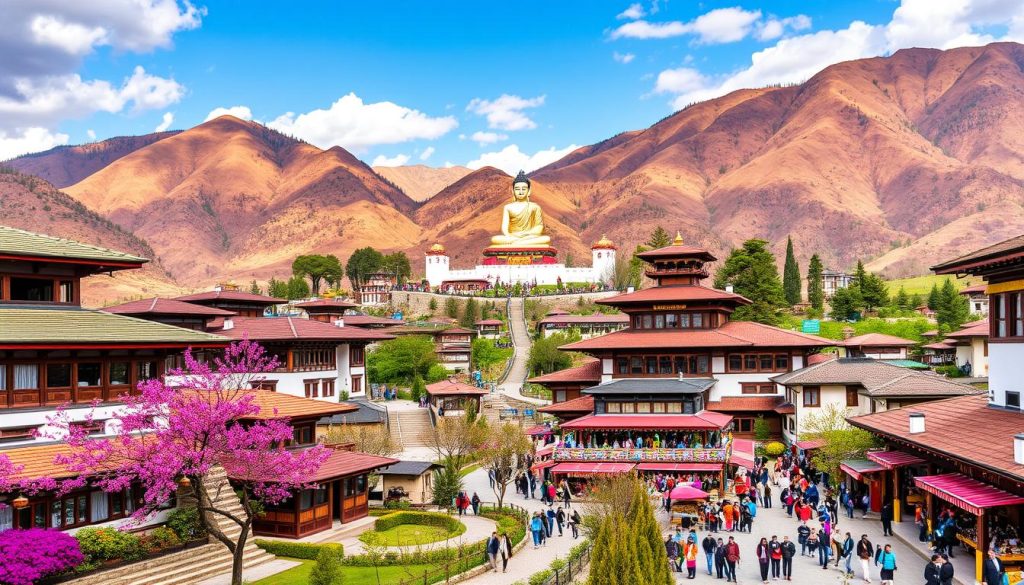
- Go to the local market on Thursday to Sunday. It’s a great place to meet locals and see daily life in Thimphu.
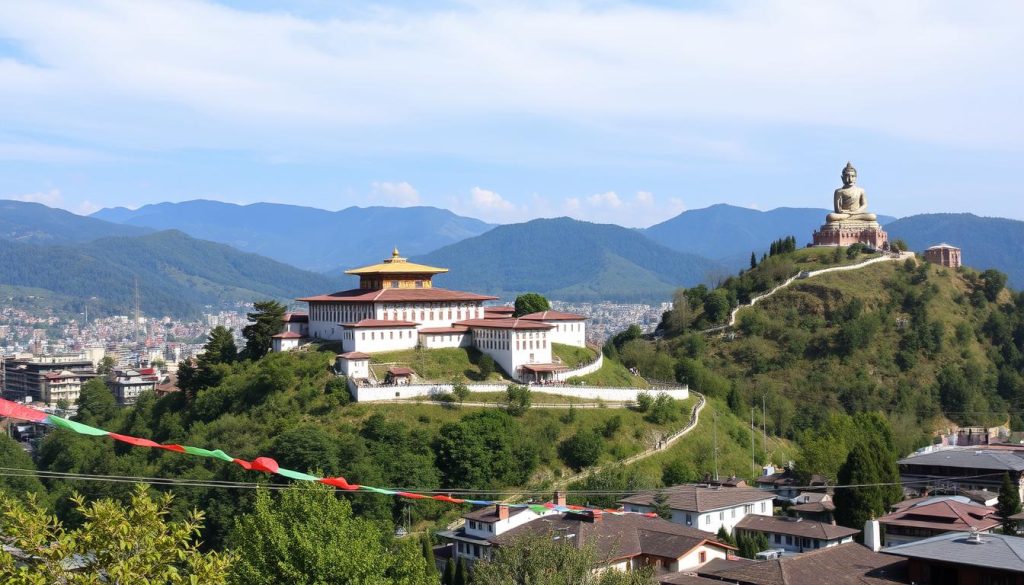
Thimphu offers a mix of stunning landscapes and rich culture. Whether you’re exploring landmarks or visiting markets, there’s always something to do. It’s a city that invites you to explore and discover.
| Season | Highlights | Weather |
|---|---|---|
| Spring | Blooming Tashichho Dzong Gardens | 6-22°C (43-72°F) |
| Summer | Lush trekking landscapes | 15-25°C (59-77°F), some rain |
| Autumn | Thimphu Tshechu Festival | 4-21°C (40-70°F) |
| Winter | Snow-covered tranquility | -3-28°C (26-82°F) |
Thimphu has attractions all year round. Whether you love nature, culture, or quiet moments, there’s something for you. Plan your trip to match your interests.
Thimphu Peak Travel Season
Many travelers want to see Bhutan’s wonders during the Thimphu peak travel season. This season is in spring and autumn. Visitors love the nice weather and colorful festivals that show off Bhutan’s culture.
In spring, from March to May, the weather is mild. Temperatures range from 1°C to 24°C. This time is great for seeing flowers bloom and enjoying festivals.
Autumn, from September to November, has comfortable temperatures. In September, it’s 14°C to 22°C. By November, it cools down to 2°C to 16°C. This is perfect for trekking and learning about the culture.
Because the Thimphu peak travel season is so popular, planning early is key. Prices for places to stay go up, and the markets get busy. Booking early helps you have a smooth trip.
October is special because it’s when most visitors come. Around 80 percent of the year’s visitors come in October. This is because of the festivals and the beautiful autumn views. September is also great for trekking.
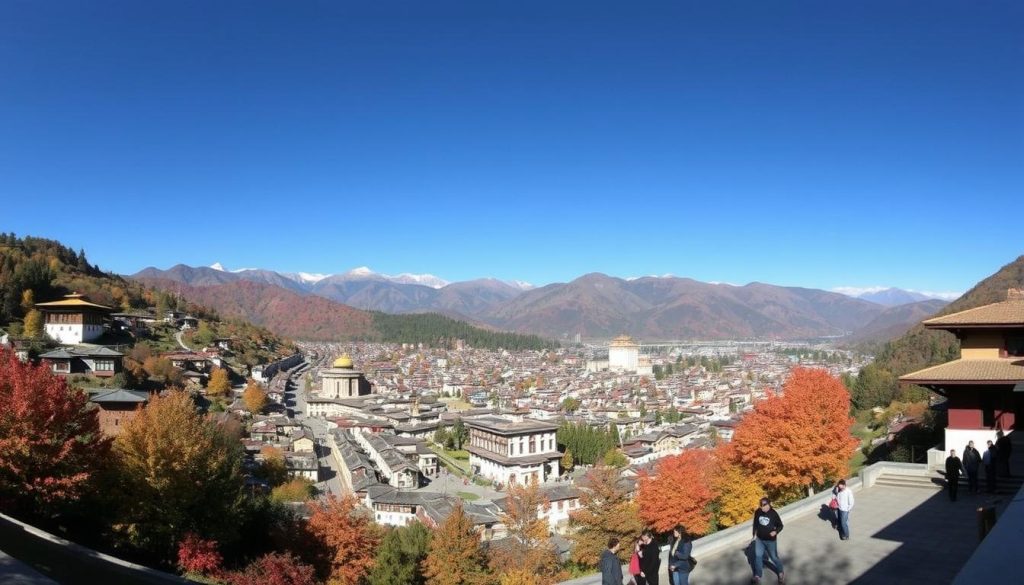
Traveling in these seasons is exciting. You get to see the city’s energy and learn about local traditions. You’ll also see amazing landscapes with other travelers.
| Season | Months | Temperature Range (°C) | Visitor Trend |
|---|---|---|---|
| Spring | March to May | 1°C to 24°C | High |
| Summer | June to August | 15°C to 30°C | Low |
| Autumn | September to November | 14°C to 16°C | High |
| Winter | December to February | -6°C to 15°C | Low |
Thimphu Climate Guide
Thimphu’s climate changes with the seasons, affecting your travel. Knowing the weather can make your trip better. This guide helps plan your trip based on your weather preferences.
What to Expect Weather-Wise
In spring, Thimphu has nice weather with 21 clear-sky days on average. Temperatures are mild, and it rains about 57mm. Wind speeds are around 13km/h.
Summer brings warmth with an average daytime temperature of 23.5°C. It rains almost 120mm each month. Autumn offers a stunning view with temperatures from 4-19°C and 155mm of rain.
Winter is cold, with temperatures between -1.5°C and 12°C. It rains very little during this time.
Packing Essentials for Your Trip
Adjust your packing list based on Thimphu’s climate. For spring and autumn, wear layered clothes. Summer requires rain gear, and winter needs warm jackets and insulated clothes.
Remember to pack sturdy shoes and sunscreen for sunny days. With the right gear, you’ll enjoy Thimphu’s weather.
Conclusion
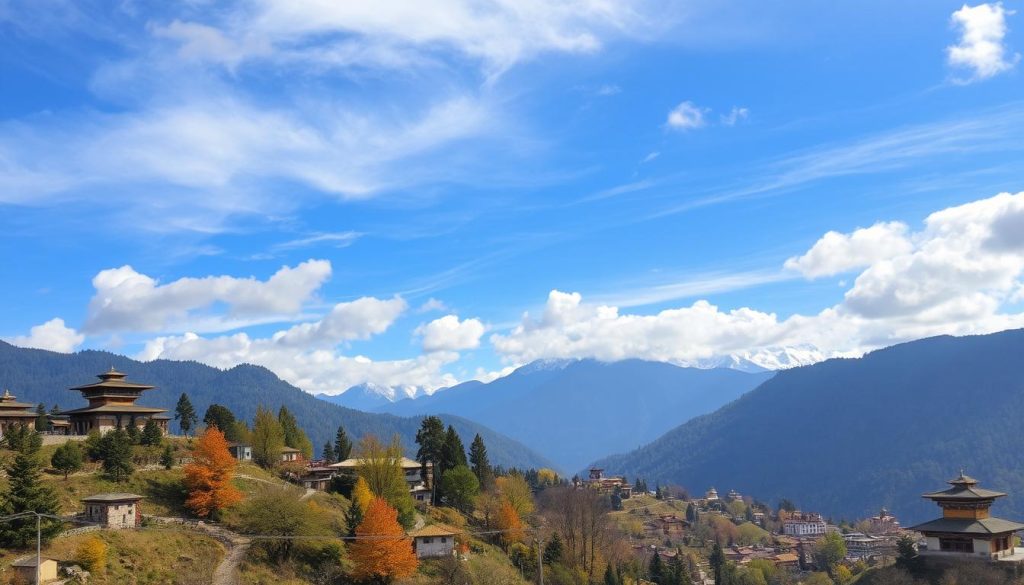
Figuring out the best time to visit Thimphu depends on what you like and what you want to do. Spring, from March to May, is great for seeing flowers and going on sightseeing tours. Autumn, from September to November, is perfect for festivals and trekking, with beautiful fall colors and warm weather.
When planning your trip to Thimphu, keep in mind that winter is quiet and beautiful but can be cold. Summer is green and good for visiting cultural sites, even with some rain. Each season offers something special, so you can plan your trip to fit your interests.
Make sure to book your stay and plans early, no matter when you go. Thimphu’s changing weather and culture all year round make it a magical place. You’ll surely make memories to last a lifetime in this charming city.