The Story Behind Cienfuegos’ Name: Why It’s Called Cienfuegos
As you explore Cienfuegos, you might wonder about its name. Why is it called Cienfuegos? The name’s story is tied to the city’s rich history. It shows the many influences that have shaped it.
Cienfuegos was first named Cacicazgo de Jagua by Spanish conquistadors. Later, French immigrants from Bordeaux and Louisiana settled here. They arrived on 22 April 1819, led by Don Louis de Clouet.
Learning about Cienfuegos’ history reveals its origins and name changes. You’ll find out why it’s called Cienfuegos. This journey into the city’s past makes you curious about its cultural and historical significance.
Cienfuegos is alive with history and culture. It has stunning buildings like the Teatro Tomas Terry and the Cathedral, Catedral de la Purisima Concepcion. The city also thrives with a vibrant cultural scene.
The Historical Origins of Cienfuegos
Exploring Cienfuegos’ history reveals a blend of cultures that have molded the city. The area was first home to the Ciboney people. Later, Spanish conquistadors named it Cacicazgo de Jagua. Its strategic spot and resources drew settlers and traders.
French immigrants from Bordeaux and Louisiana, led by Don Louis de Clouet, founded Cienfuegos on April 22, 1819. Their arrival deeply influenced the city’s name and development. The French settlers’ culture and architecture shaped Cienfuegos. The city’s grid layout shows the modern urban planning of the 19th century in Latin America.
Pre-colonial History of the Region
The Ciboney people were the first to inhabit the area. The Spanish conquistadors’ arrival started a new chapter, naming it Cacicazgo de Jagua.
Spanish Colonial Influence
The Spanish left a lasting mark on Cienfuegos. Their culture, architecture, and traditions are still seen today. The historic center showcases the Spanish colonial era.
Foundation of the City
The city’s founding in 1819 ushered in a new era. It quickly grew into a major urban center. Its location and resources made it a key trade and commerce hub, with a focus on sugar in the 19th century.
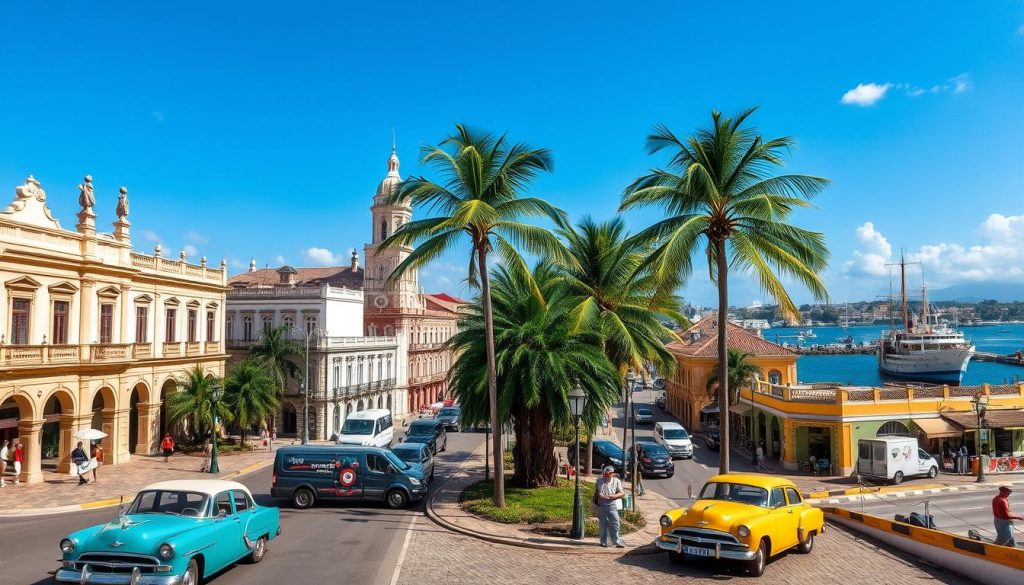
Cienfuegos’ history is complex and rich. Its development was shaped by location, resources, and cultural traditions. Knowing the origins of Cienfuegos name helps us understand its unique identity.
| Year | Population | Population Density |
|---|---|---|
| 2004 | 163,824 | 492.0/km2 |
| 2022 | 178,368 | 540/km2 |
Why is Cienfuegos Called Cienfuegos?
The city of Cienfuegos has a rich history. Its name is a big part of that story. You might ask, why is Cienfuegos called Cienfuegos? The answer is in the city’s past, in 1829.
That year, the settlement was renamed from Fernandina de Jagua to Cienfuegos. This honor was for José Cienfuegos Jovellanos. He was the Captain General of Cuba from 1816 to 1819.
The Cienfuegos naming story is tied to the city’s history and growth. The settlement became a town in 1829 and a city in 1880. Knowing why it was renamed helps us understand the city’s identity and growth.
Some key facts about Cienfuegos include:
- Location: Cienfuegos is over 200 kilometers from Havana.
- Founding: It was founded by French colonists in Latin America under the Spanish crown.
- Population: The city’s population has grown a lot, now over 178,000 people.
The city’s name shows its complex history and cultural heritage. By looking into the why is Cienfuegos called Cienfuegos question, we learn more about the city’s evolution and the people who shaped it.
José Cienfuegos: The Man Behind the Name
Exploring Cienfuegos reveals the importance of José Cienfuegos Jovellanos. He was the Captain General of Cuba from 1816 to 1819. The significance of Cienfuegos name is tied to the city’s history and growth. To grasp the essence of the name, we must look into his life, career, and how he became Captain General.
José Cienfuegos Jovellanos was a key figure in Cuban history. His impact is still seen in the city named after him. The Cienfuegos etymology is intriguing. By studying the city’s past, we can better understand the name’s importance. Some key facts about José Cienfuegos include:
- Served as Captain General of Cuba from 1816 to 1819
- Played a significant role in shaping the city’s early development
- Left a lasting legacy in the city’s history and culture

The founders named the city after José Cienfuegos. This shows the significance of Cienfuegos name in Cuban history. Learning about the man behind the name helps us appreciate the city’s rich history and culture. The Cienfuegos etymology is complex and interesting. Exploring it offers insights into the city’s growth and development.
| Year | Event | Significance |
|---|---|---|
| 1816 | José Cienfuegos appointed Captain General of Cuba | Marked the beginning of his significant role in Cuban history |
| 1819 | Founding of the town of Cienfuegos | Established the city as a major urban center in Cuba |
| 1880 | Cienfuegos became a city | Reflected the city’s accelerated economic development and growth |
The Etymology of Cienfuegos
Exploring Cienfuegos’ history, the Cienfuegos etymology is key. The name “Cienfuegos” means “one hundred fires” (cien, “one hundred”; fuegos, “fires”). This name piques interest in the city’s beginnings and why it was named so.
The meaning behind Cienfuegos varies, based on the city’s past and traits. It might refer to the fires or torches used by locals or early settlers to guide ships. Or, it could tie to the sugar industry, with “fires” symbolizing the furnaces used in sugar making.
Some interesting facts about Cienfuegos include:
- Founded by French immigrants in 1819
- Initially named Fernandina de Jagua, later changed to Cienfuegos in 1829
- Declared a World Heritage Site by UNESCO in 2005
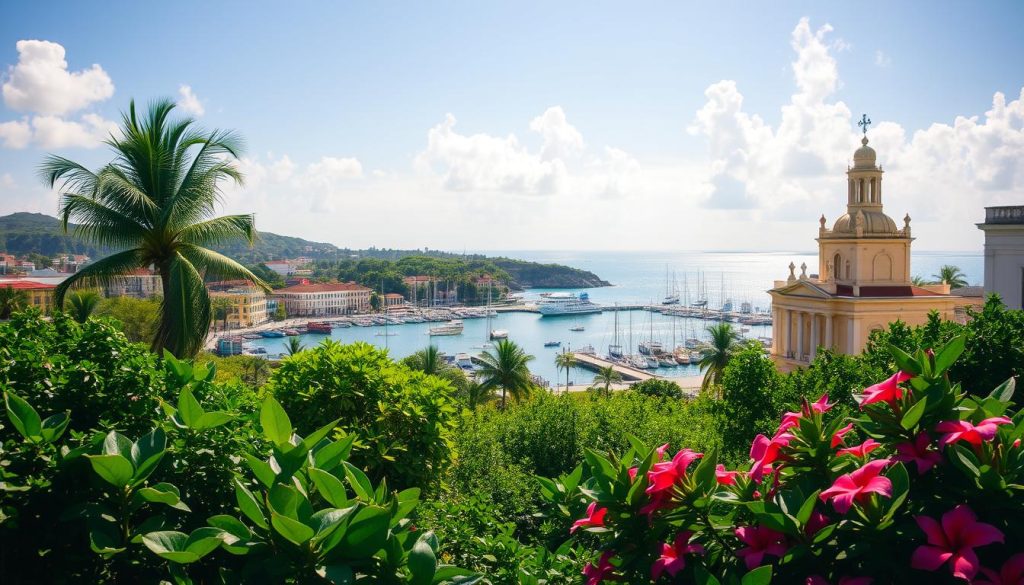
Understanding the Cienfuegos etymology and its meaning deepens our grasp of the city’s rich history and cultural value. The name Cienfuegos mirrors the city’s diverse heritage, shaped by Spanish, French, and indigenous cultures.
| Year | Event | Significance |
|---|---|---|
| 1819 | Founding of Cienfuegos | Establishment of the city by French immigrants |
| 1829 | Rename to Cienfuegos | Honor to Don José Cienfuegos, Captain General of Cuba |
| 2005 | UNESCO World Heritage Site | Recognition of the city’s cultural and historical importance |
The French Connection in Cienfuegos’ History
Cienfuegos, a city in Cuba, has a unique history. It was founded by French immigrants from Bordeaux and Louisiana in 1819. They were led by Don Louis de Clouet. Today, you can still see the French influence in the city’s street names.
Exploring the history of Cienfuegos shows the French settlers’ big role. They shaped the city’s culture and architecture. The historic center is a stunning example of this, with its neoclassical and art nouveau buildings. The origins of Cienfuegos name also reflect its French roots, named after Governor Don José Cienfuegos in 1880.
French Settlers’ Influence
The French settlers brought their language, customs, and traditions. These have had a lasting impact on the city. You can see French architecture in buildings like the Palacio de Valle, which combines different styles.
Cultural Impact on the City
The French influence has shaped the city’s culture. Many festivals and traditions are still celebrated today. The historic center is a UNESCO World Heritage Site, known for its architecture, theaters, and cultural scene.
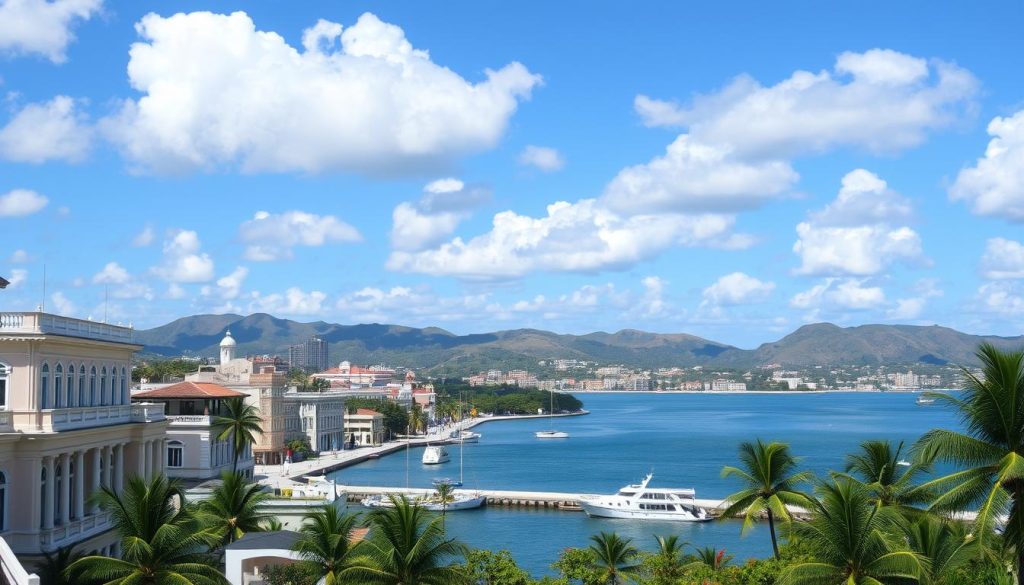
- El Paseo del Prado, the island’s longest tree-lined boulevard
- José Martí Park, a beautiful park in the heart of the city
- The Cathedral of the Immaculate Conception, a stunning example of French-influenced architecture
In conclusion, the French connection in Cienfuegos’ history has had a lasting impact. As you explore the city, you’ll see the unique blend of French and Cuban influences. This makes Cienfuegos a truly special place.
| Attraction | Description |
|---|---|
| El Paseo del Prado | The island’s longest tree-lined boulevard |
| José Martí Park | A beautiful park in the heart of the city |
| The Cathedral of the Immaculate Conception | A stunning example of French-influenced architecture |
Architectural Heritage and the City’s Name
Exploring Cienfuegos reveals its unique architectural heritage. This shows the importance of the city’s name and history. The city’s design and buildings reflect the 19th-century Spanish Enlightenment.
The city’s colonial architecture and quiet streets tell its rich history. The Palacio de Valle, built in 1917, and the Teatro Tomas Terry, opened in 1895, stand out. These landmarks show the city’s dedication to preserving its culture.
The city’s layout is a key part of its history. The Paseo del Prado, the longest street on the island, connects the city’s entrance to Punta Gorda. It’s lined with stunning buildings, highlighting the city’s architectural beauty.
Key aspects of Cienfuegos’ architectural heritage include:
- Well-preserved colonial architecture
- Quiet cobblestone streets
- Notable landmarks like Palacio de Valle and Teatro Tomas Terry
- Urban planning that reflects the city’s history and cultural significance
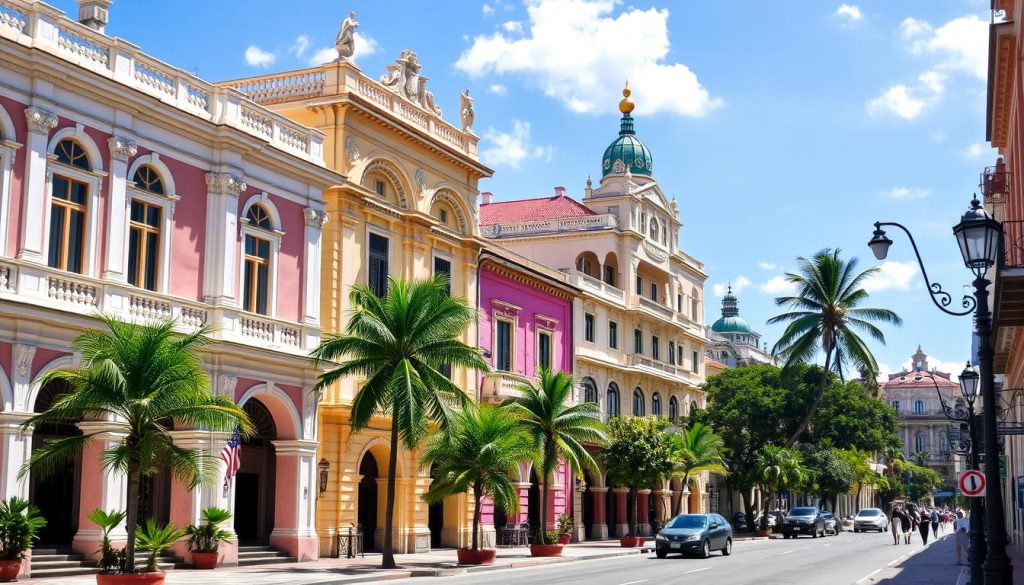
The name Cienfuegos is deeply tied to its architecture and history. Exploring the city deepens your understanding of its role in Cuban and world heritage.
| Landmark | Year Constructed | Significance |
|---|---|---|
| Palacio de Valle | 1917 | Notable example of Cienfuegos’ architectural heritage |
| Teatro Tomas Terry | 1895 | Important cultural landmark in Cienfuegos |
Cultural Significance of the Name Cienfuegos
The city of Cienfuegos is known as La Perla del Sur (Pearl of the South). It holds a special place in Cuban culture. The significance of Cienfuegos name is deeply connected to its history and traditions.
Exploring the city, you’ll see the name Cienfuegos is more than just a label. It’s a key part of the city’s identity.
The Cienfuegos name explanation is tied to the city’s cultural heritage. Its nickname, La Perla del Sur, shows its beauty and rich culture. Places like the Malecón and Palacio de Valle mix tradition and modernity beautifully.
Local Traditions
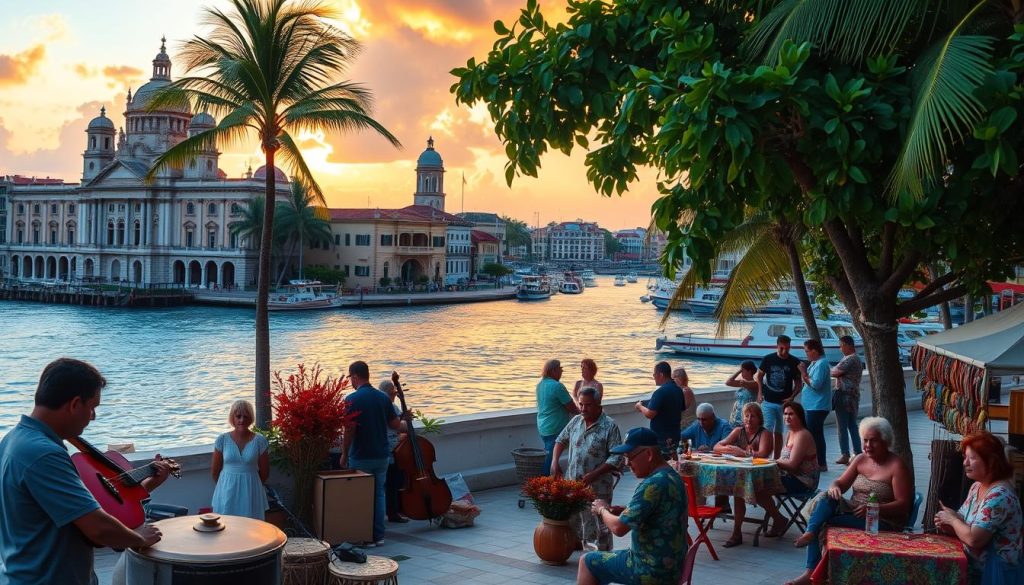
Local traditions are crucial in Cienfuegos’ cultural significance. The city’s festivals, like the Cienfuegos Carnival, show its vibrant culture. The significance of Cienfuegos name is also seen in its music and dance, influenced by Africa and Spain.
Modern Cultural Identity
Today, Cienfuegos is linked with Cuban culture and identity. Its rich heritage inspires artists, musicians, and writers. The Cienfuegos name explanation is alive, not just a historical note.
Exploring Cienfuegos’ cultural significance, you’ll find a city proud of its heritage. It welcomes the world to share in its history, music, and dance. Experience the significance of Cienfuegos name and see why it’s called La Perla del Sur.
| Cultural Aspect | Significance |
|---|---|
| Music and Dance | African and Spanish influences |
| Local Traditions | Annual festivals and celebrations |
| Modern Cultural Identity | Inspiration for artists, musicians, and writers |
UNESCO World Heritage Status and Its Relation to the Name
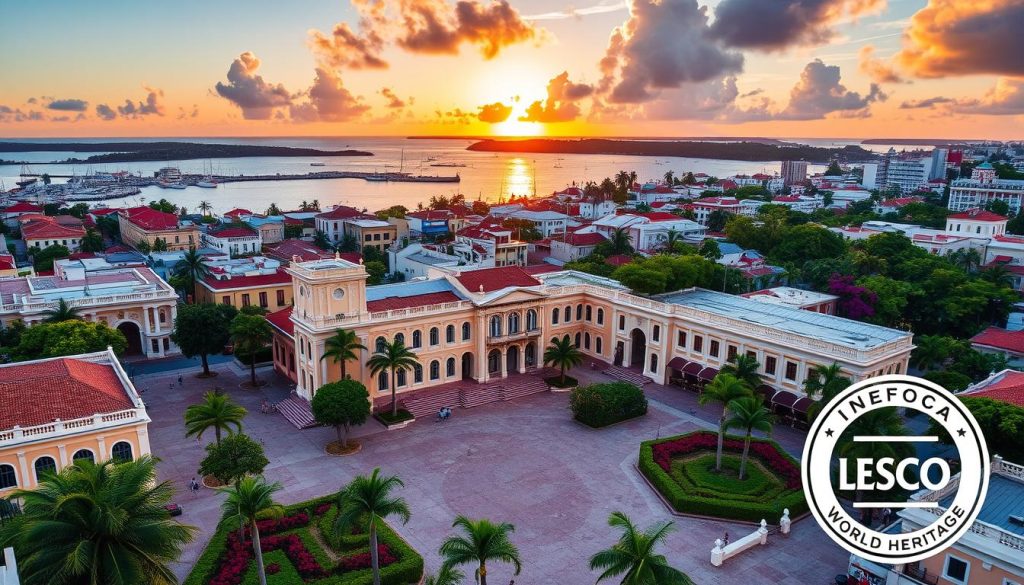
The city of Cienfuegos has a rich history. Its name is deeply connected to its cultural heritage. In 2005, the Urban Historic Centre of Cienfuegos was added to the World Heritage List. This honor recognizes the city’s unique urban planning and architecture.
This status shows the city’s history. It is known for its well-preserved neoclassical buildings. These buildings follow a grid plan inspired by the Spanish Enlightenment.
As you explore the city, you’ll see the extraordinary neoclassical buildings. The old historic center of Cienfuegos is a World Heritage site. It features early 19th-century Spanish Enlightenment urban planning.
The city’s founders, French settlers, shaped its history and culture. They played a big role in the city’s development.
Recognition Process
The process to get Cienfuegos UNESCO World Heritage status was thorough. The city’s mix of French and Spanish influences was key. Its well-preserved architecture also made it a top choice.
Historical Preservation
Keeping Cienfuegos’ history alive is important. The city’s neoclassical buildings, like the Palacio de Valle, show its rich past. By saving these buildings and the historic center, Cienfuegos can share its unique history and culture with the world.
Notable Landmarks Reflecting the Cienfuegos Legacy
Exploring Cienfuegos reveals many landmarks that show the city’s rich history of Cienfuegos and the significance of Cienfuegos name. The Castillo de Jagua, built in 1745, is a key landmark. It was built to protect against pirates. This fortress is a big part of the city’s history of Cienfuegos.
Other landmarks like the Palacio de Valle, Teatro Tomás Terry, and the Catedral de la Purísima Concepción show the city’s architectural and cultural significance of Cienfuegos name. The Urban Historic Center, covering 70 hectares, shows the city’s growth and development.
Some of the key landmarks in Cienfuegos include:
- Castillo de Jagua: a historic fortress built in 1745
- Palacio de Valle: a mix of Gothic, Moorish, and Baroque architectural elements
- Teatro Tomás Terry: a cultural landmark for performing arts since 1889
- Catedral de la Purísima Concepción: a neoclassical and baroque church built in the late 19th century

The city’s landmarks show its rich history of Cienfuegos and cultural heritage. Exploring these landmarks gives you a deeper understanding of the significance of Cienfuegos name and its lasting legacy.
| Landmark | Year Built | Architectural Style |
|---|---|---|
| Castillo de Jagua | 1745 | Fortress |
| Palacio de Valle | Early 20th century | Gothic, Moorish, Baroque |
| Teatro Tomás Terry | 1889 | Neoclassical |
| Catedral de la Purísima Concepción | Late 19th century | Neoclassical, Baroque |
Modern Interpretations of the City’s Name
Exploring Cienfuegos, you might see a mix of its industrial side and the “one hundred fires” name. The Cienfuegos name explanation shows it was named after José Cienfuegos Jovellanos, a Spanish nobleman. This mix of history and industry has sparked interesting views on the city’s name today.
In Cuba now, the meaning behind Cienfuegos ties to its rich culture. Its historic center, with straight streets and grand buildings, is a National Monument. This has made the city’s name a big part of its cultural scene, from art to landmarks.
Contemporary Cultural References
The Maroya Art Gallery is a key example of Cienfuegos’ cultural scene. The Tomas Terry Theater, opened in 1890, won a Conservation Award in 2008. It still hosts cultural events, shaping the city’s identity in Cuban culture.
Popular Usage and Meanings
The name Cienfuegos often brings up the city’s industrial and economic role. Yet, its historic center and cultural spots are big draws for tourists worldwide. This mix of history, culture, and industry has given Cienfuegos a rich, varied set of meanings.
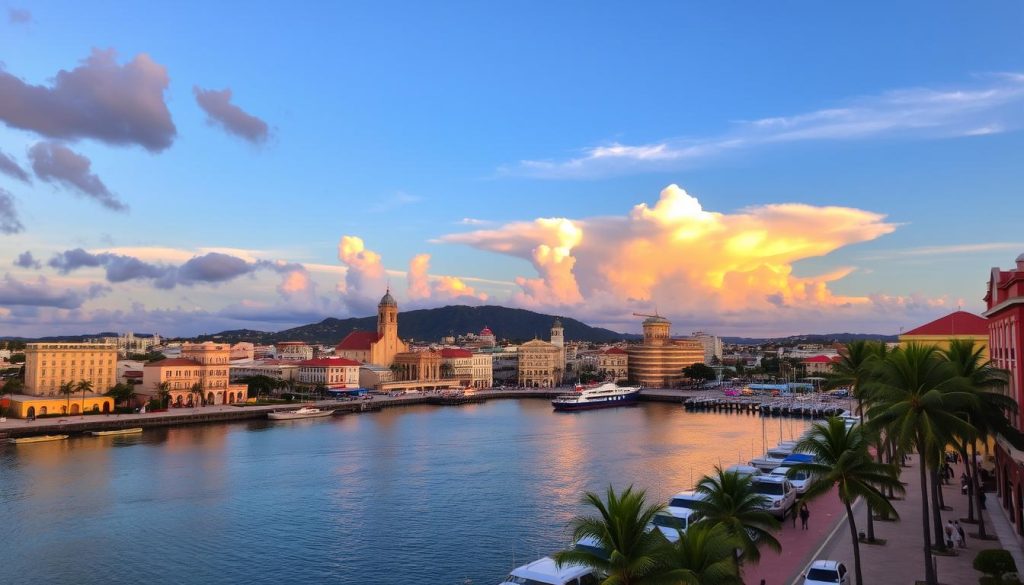
As you learn more about Cienfuegos, you’ll see the Cienfuegos name explanation is just the start. With its mix of industry, culture, and history, Cienfuegos keeps growing and inspiring. It offers many experiences and views for both visitors and locals.
| Landmark | Year Built | Significance |
|---|---|---|
| Tomas Terry Theater | 1890 | Conservation Award winner |
| Maroya Art Gallery | Showcases cultural assets and activities | |
| Ferrer Palace | 1917-1918 | Now serves as the House of Culture |
Local Perspectives on the City’s Name
Exploring Cienfuegos reveals a deep connection to its name. Locals love to share stories about Cienfuegos naming story. With a population of over 100,000, the city thrives on sugar cane, mango, tobacco, and coffee.
Some interesting facts about Cienfuegos include:
- Cienfuegos was founded in 1819 by French settlers from Bordeaux, Louisiana, and Haiti.
- The city handles roughly 30% of Cuba’s sugar exports, making it a significant port.
- Cienfuegos has been named a UNESCO heritage site due to its colonial architecture, including the famous Palacio de Valle, a Moorish structure built in 1917.
Locals say the Cienfuegos naming story highlights the city’s rich history and culture. One resident explained, “The name Cienfuegos reminds us of our city’s founding and the French influence that still shapes our architecture and traditions.” The city’s mix of French, Spanish, and African cultures gives it a unique identity.
Understanding the local views on the city’s name deepens your appreciation for Cienfuegos. Whether you’re visiting historic sites or enjoying the local vibe, the Cienfuegos naming story adds to the city’s charm.
| Year Founded | Founder | Population |
|---|---|---|
| 1819 | French settlers | 100,000+ |
Conclusion: The Enduring Legacy of Cienfuegos’ Name
The name “Cienfuegos” has a deep and varied history that spans centuries. It started with Spanish colonial times and played a key role in the Cuban Revolution. Today, Cienfuegos is a major industrial hub in Cuba, known as “The Pearl of the South.”
The significance of Cienfuegos’ name goes beyond its location. It shows the city’s strong connection to its past. This includes the legacy of José Cienfuegos and the French settlers who shaped its architecture. The Cienfuegos name explanation reminds us of the city’s special place in Cuban history and its ongoing cultural traditions.
Exploring Cienfuegos reveals a city that mixes its rich history with a modern vibe. The lasting impact of the Cienfuegos name shows the city’s strength and ability to evolve. This ensures Cienfuegos will remain important globally for many years.