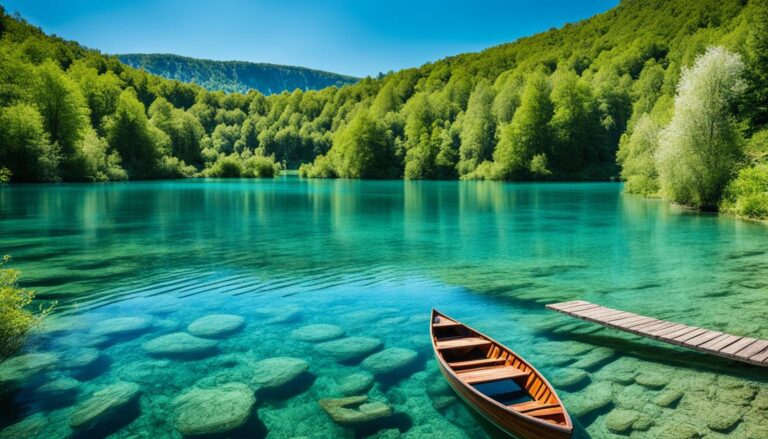
Sundarbans Sustainable Fishing Practices Guide
Have you ever thought about how fishing choices affect an entire ecosystem? The Sundarbans, the world’s largest mangrove forest, is home to many species. It also supports the lives of over 12 million people, with 2.5 million relying heavily on it.
This guide explores the importance of sustainable fishing. We’ll look at eco-friendly fishing methods. These methods help protect biodiversity and support local communities.
In this article, you’ll learn how local fishermen are changing their ways. They’re adapting to a changing world while keeping the Sundarbans healthy. By choosing responsible fishing, we can help this special place thrive for years to come.
Introduction to the Sundarbans Ecosystem
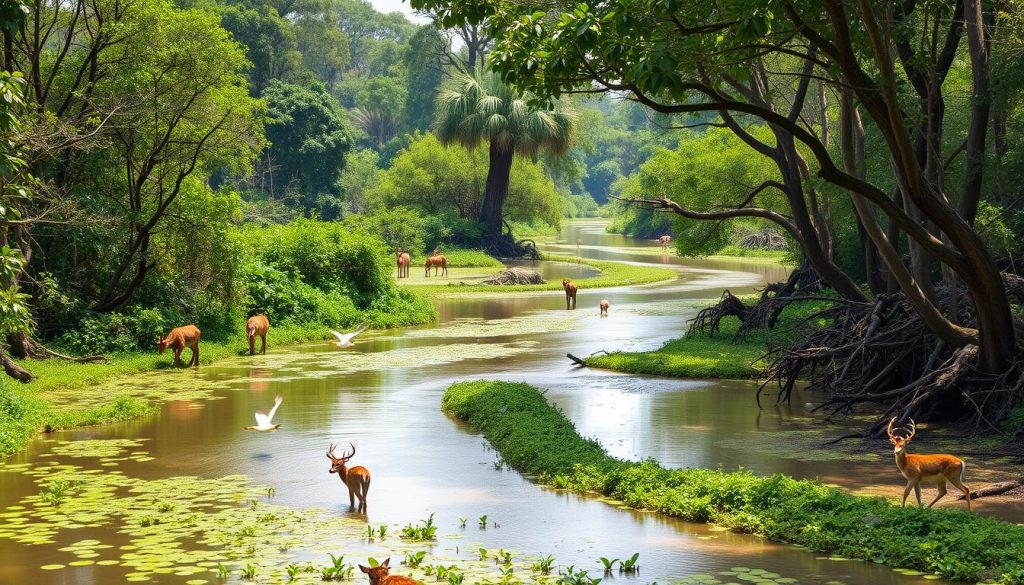
The sundarbans ecosystem is a vital natural habitat. It covers about 10,000 square kilometers in Bangladesh and India. This mangrove forest is crucial for the environment.
Over 334 tree species and 120 fish species live here. The Sundarbans is home to the Royal Bengal Tiger. It’s a key place for marine life and birds.
Threats like rising sea levels and climate change harm the Sundarbans. Protecting this area is vital for sustainable fishing. Working together, we can ensure a future for wildlife and people.
The Importance of Sustainable Fishing Practices
The importance of sustainable fishing in the Sundarbans is huge. This area’s ecosystem is very delicate. Fish like Hilsa, Bhetki, and Tangra are key to its biodiversity.
Overfishing and harmful fishing methods threaten these fish. This could lead to their numbers dropping and harm the whole ecosystem.
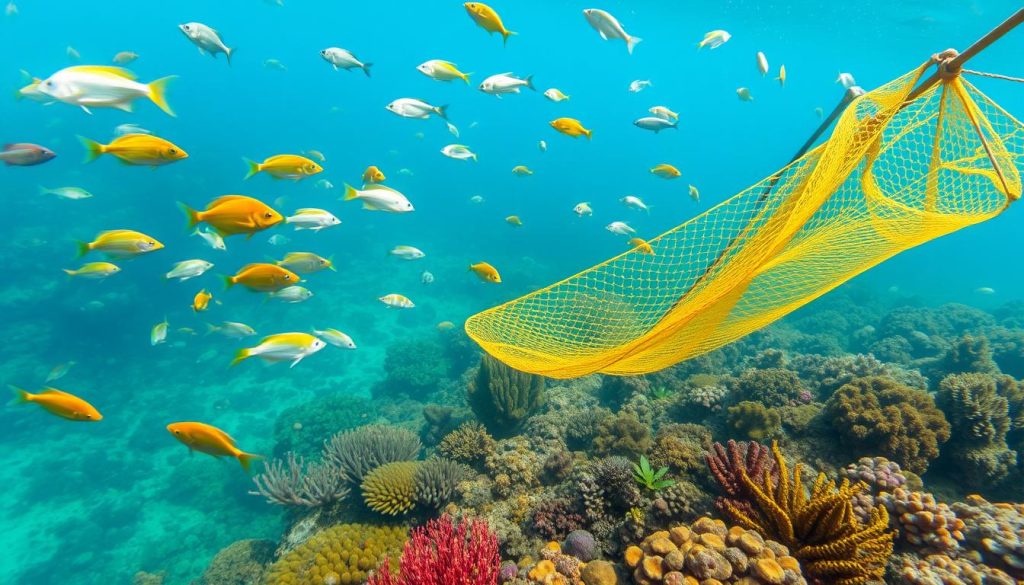
Knowing the benefits of sustainable fishing is crucial. It helps protect the environment and supports local communities. Using nets and rods instead of destructive methods helps fish populations grow.
This ensures a steady food supply for over two million people. They rely on fishing in the Sundarbans.
Fishing seasons are key for local fishermen. The monsoon is best for Hilsa, while prawns and Bhetki are caught later. Tangra and crabs are caught in winter. This shows how fishing is tied to local culture.
Fishing is more than just food for village communities. It’s part of their culture. But, many fishermen struggle financially, trapped in debt.
Supporting local fish trade could help. It could ease financial burdens and support local economies. This would improve life for many families.
Choosing sustainable fishing helps the ecosystem, supports local economies, and preserves a vital tradition. It ensures that future fishermen can fish responsibly.
Sundarbans Sustainable Fishing Practices
The Sundarbans region is leading the way in sustainable fishing. It uses eco-friendly fishing methods and community-led strategies. These approaches help keep the ecosystem balanced and involve local people in conservation efforts.
By focusing on responsible fishing, the community helps keep their fisheries sustainable. This is crucial for the future of their fishing industry.
Overview of Eco-friendly Techniques
In the Sundarbans, eco-friendly fishing is all about protecting the environment. Fishermen use sustainable bait and simple nets to reduce harm to marine life. This helps keep the ecosystem healthy.
Seasonal fishing closures also play a key role. They give fish populations time to recover. This ensures that future generations can enjoy these resources too.
Community Involvement in Sustainable Practices
Community-led fishing is key in the Sundarbans. Local fisherfolk help make decisions about fishing rules. This makes them feel more connected to their resources.
Workshops and events have taught over 800 people about sustainable fishing. Cooperatives of 350 households show how working together can protect natural resources.
Traditional Fishing Techniques in the Sundarbans
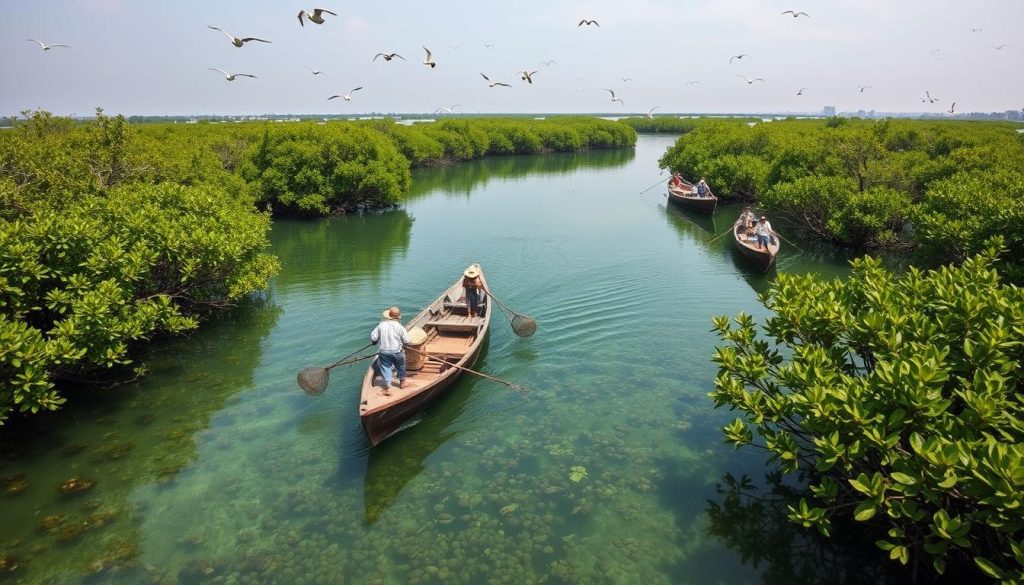
The Sundarbans is the world’s largest mangrove forest. It’s home to many traditional fishing methods. For generations, local fishermen have used these methods, keeping fishing a key part of their lives and economy.
These techniques fit perfectly with the mangrove ecosystem. They help fish populations grow by respecting their natural cycles.
Native Fishing Techniques Employed by Local Fishermen
Fishermen in the Sundarbans use several traditional fishing methods. These include:
- Bamboo traps
- Nets of various types
- Fishing rods
- Bait fishing
- Crab fishing
Each method is designed to be gentle on the environment. They help catch fish like Hilsa, Bhetki, Tangra, and prawns and crabs. This way, fishing in the Sundarbans is done in a way that keeps fish populations healthy.
Role of Community Knowledge in Fishing Practices
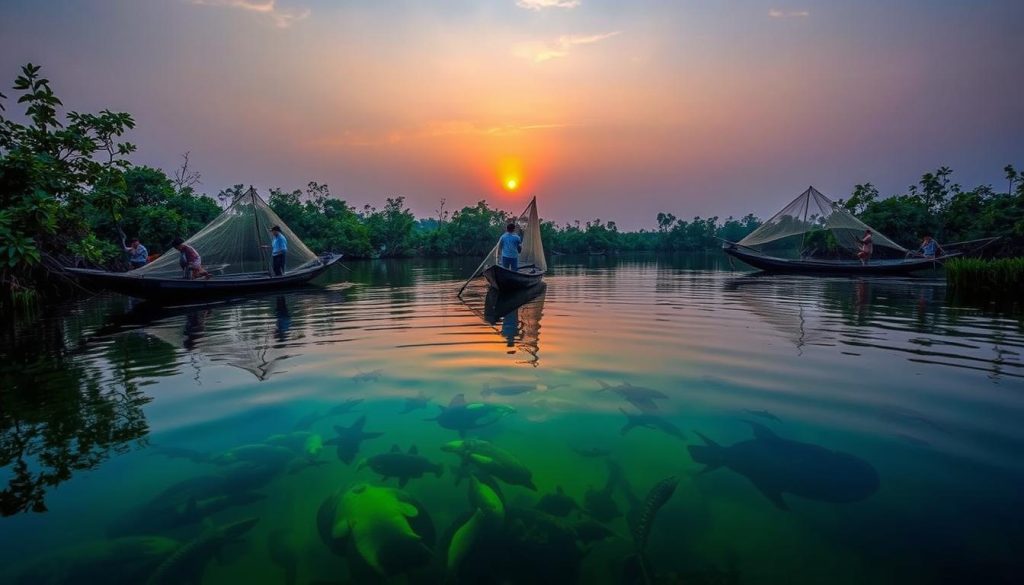
Community knowledge is key to keeping traditional fishing alive. Local fishermen know a lot about the underwater world. They understand fish behavior and the best times to fish.
This knowledge helps them fish well and make smart choices. It’s shared among the community, leading to new ways to fish that are good for both the economy and the environment. With about 10,000 fishermen in the Sundarbans, this knowledge is crucial for facing challenges like climate change.
Environmental Impact of Sundarbans Fishing
The impact of fishing in Sundarbans goes beyond just money. It affects the area’s plants and animals and the health of the ecosystem. Bad fishing methods harm the balance needed for many species to live. We need to find ways to fish that help the environment and the people who live there.
Effects of Unsustainable Fishing on Biodiversity
Bad fishing in Sundarbans hurts the area’s rich variety of life. Too much fishing and harmful methods like poison fishing have cut down fish numbers. This hurts the whole food chain.
Species like Pabda and Kholse have lost a lot of members in the last 30 years. Almost 90% of water animals use Sundarbans as a place to grow up. Losing these fish species harms not just them but also other animals that depend on them.
Impact of Pollution and Industrial Activities
Pollution in Sundarbans makes things even harder for this sensitive place. Waste from farms and factories harms the environment. It makes the water dirty and messes with important natural processes.
Projects like Orion and Rampal power plants could make things worse. They could change the water balance and add more pollution. These actions hurt the Sundarbans, making it hard for both people and animals to live there.
| Aspect | Impact |
|---|---|
| Unsustainable Fishing | Decline of fish populations; disruption of food webs. |
| Biodiversity Loss | Threats to over 400 species of fish; ripple effect on other wildlife. |
| Pollution Sources | Agricultural runoff, industrial discharges, and waste. |
| Industrial Development | Alters water balance and increases the risk of habitat degradation. |
Conservation Efforts in Sundarbans Fishing
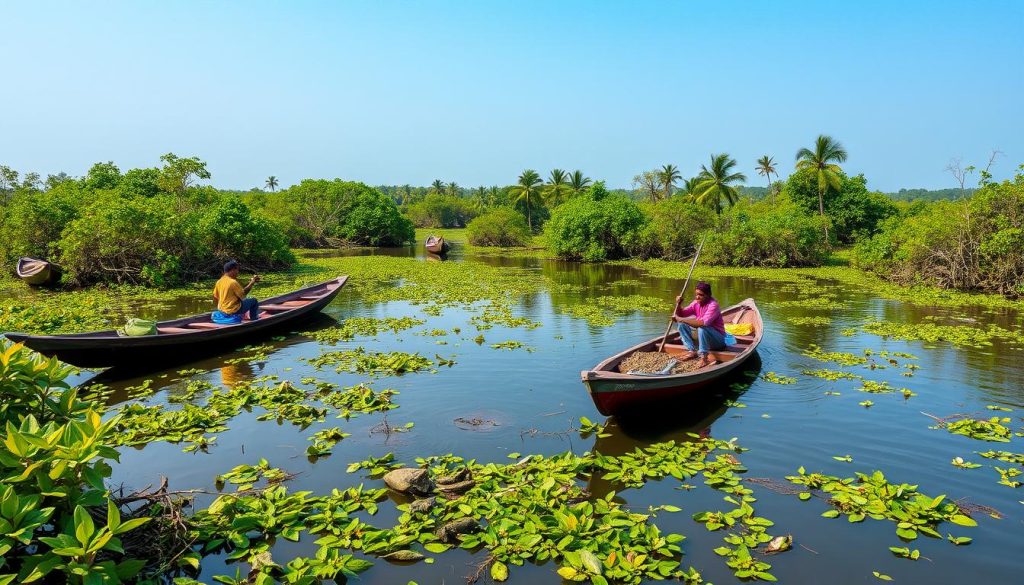
The Sundarbans fishing conservation efforts aim to protect the mangrove ecosystem. They also work to ensure local communities have sustainable livelihoods. These efforts involve both government agencies and local people, aiming to boost biodiversity and eco-friendly practices.
Initiatives by the Bangladesh Forest Department
The Bangladesh Forest Department has launched several projects to protect the Sundarbans. The Support to the Management of the Sundarbans Mangrove Forests project is one example. It focuses on working with local communities to restore mangrove habitats and fight forest loss.
The department also works to educate villagers on sustainable fishing. This approach links conservation with the local economy. It shows how fishing is crucial for many families.
Community-led Conservation Programs
Community-led conservation is a key strategy in the Sundarbans. Local people are involved in programs that teach them about protecting the environment. These efforts improve local skills and build support for managing resources.
By involving communities in decision-making, conservation efforts become more effective and sustainable. Success stories from these programs show the power of community involvement in preserving biodiversity in the Sundarbans.
| Aspect | Details |
|---|---|
| Area Covered | Approximately 10,000 square kilometers |
| Biodiversity | 334 plant species, 120 fish species, 270 bird species |
| Forest Loss | 66 km² loss noted by the 2000s |
| Economic Impact | Fishing supports local livelihoods and economic stability |
| Conservation Benefits | Mangroves provide critical resources and carbon sequestration |
Legislation and Regulations Governing Fishing
The Sundarbans’ fish stocks are managed through strict fishing rules. These rules help keep marine life and local fishermen’s jobs safe. They set rules for when and how to fish, including size limits and methods.
These laws are key to keeping fish populations healthy. They also help fishermen make a living. This balance is crucial for the area’s future.
But, enforcing these rules is tough. Illegal fishing is a big problem. It hurts the chances of sustainable fishing.
Fisheries law is very important. It helps protect the environment and supports the fishing industry. By working together and enforcing these laws, we can make fishing better for everyone.
Challenges Facing Sustainable Fishing in Sundarbans
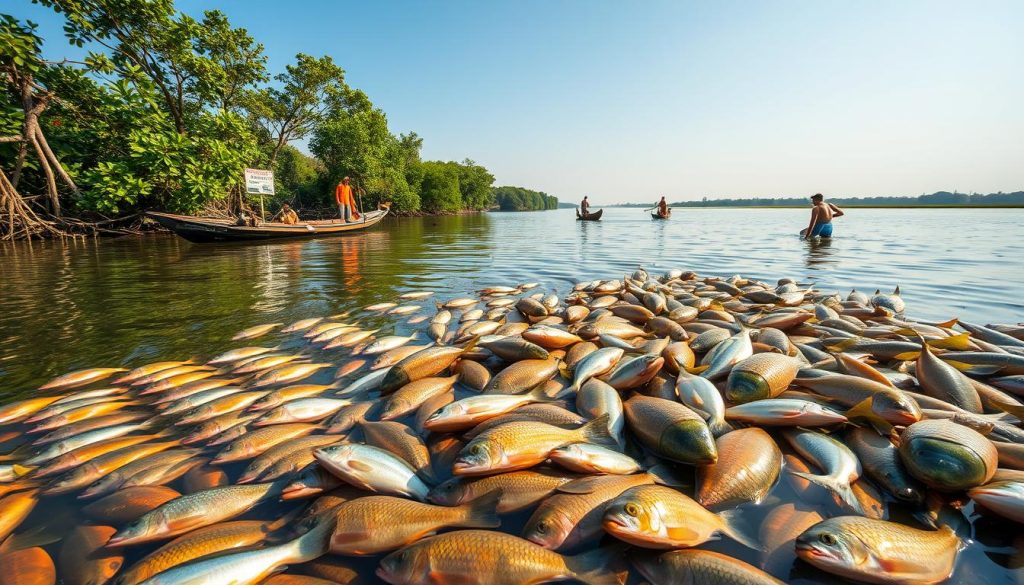
The Sundarbans region faces big challenges in sustainable fishing. Overfishing and illegal fishing are major problems. These issues harm fish populations and upset the local ecosystem’s balance. It’s crucial to tackle these problems for biodiversity and community well-being.
Overfishing and its Consequences
Overfishing is a big challenge in Sundarbans. Fish stocks are being taken too fast, leading to overfishing consequences. This hurts local fishermen’s livelihoods and the ecosystem that needs diverse fish.
The loss of key species can start a chain reaction. It changes food webs and reduces biodiversity.
Illegal Fishing Practices and their Impact
Illegal fishing adds to the problems. Poison fishing kills targeted species and harms other marine life. The illegal fishing impact goes beyond immediate deaths. It reduces fish populations and hurts community fisheries, threatening local economies.
It’s key to strengthen law enforcement and engage communities. This is vital for stopping illegal fishing and managing fisheries sustainably.
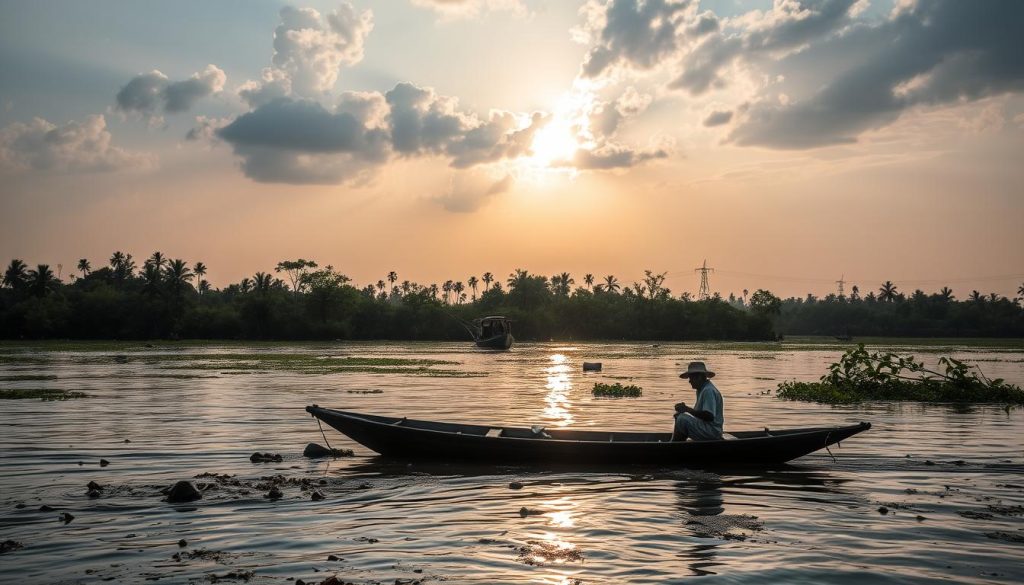
| Challenges | Effects | Solutions |
|---|---|---|
| Overfishing | Depleted fish stocks, biodiversity loss | Enhanced regulation, community education |
| Illegal Fishing | Environmental degradation, economic instability | Stronger enforcement, community involvement |
Case Studies of Successful Fishing Practices
The Sundarbans region has seen a big change in fishing. Many case studies show how successful fishing practices have worked. They show how community involvement and sustainable methods can increase fish stocks and protect marine life.
Examples of Effective Eco-friendly Practices
The “Fish for Future” program is a great example. It teaches eco-friendly fishing and follows fishing rules. It has helped a lot.
Other places like Brazil, India, Palau, and Senegal have also found ways to fish better. They show that different places can use different methods to protect their oceans. Marine protected areas are key in keeping the ocean healthy and full of life.
Community Success Stories in Sustainable Fishing
Many communities in Sundarbans are doing well with sustainable fishing. In Bangladesh, small-scale fishers are helping fish populations grow again. They focus on keeping the ocean healthy for the long term.
Women in small-scale fisheries are also making a big difference. They help the local economy by making dried fish and more. Their stories show how strong and adaptable local communities can be. They face challenges but keep moving forward.
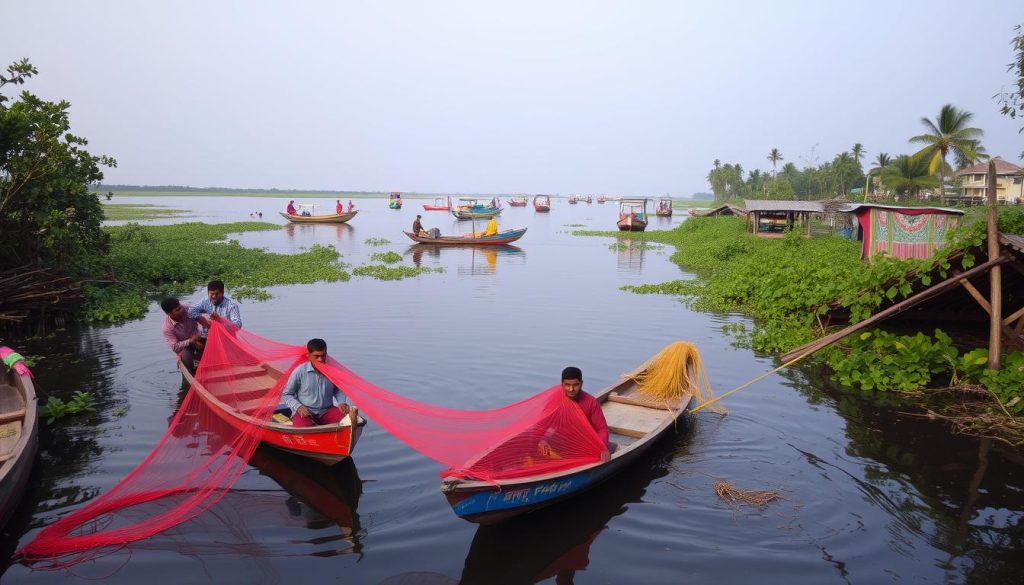
Conclusion
The future of fishing in the Sundarbans depends on sustainable methods. These methods must balance nature and support local people. Using eco-friendly fishing is key to keeping the Sundarbans healthy.
By mixing old fishing ways with new conservation ideas, we can make the Sundarbans stronger. This helps protect its unique beauty and life.
Conservation in Sundarbans fishing is very important. Everyone must work together to help fish come back and share resources fairly. Small fisheries are crucial for millions of people, and we must help them stay strong.
Knowing about these issues helps us all. By supporting sustainable fishing, learning, and speaking out, we can make a difference. Together, we can ensure fishing in the Sundarbans stays good for both people and the planet.