

Sundarbans Local Community Engagement: What to Know
Local communities play a crucial role in preserving fragile ecosystems. The Sundarbans, a vast mangrove forest, showcases this connection between people and nature. This unique area spans the border of India and Bangladesh.
The Sundarbans is a UNESCO World Heritage Site rich in biodiversity. It’s home to Royal Bengal Tigers and numerous tree and fish species. However, climate change and deforestation threaten this ecosystem.
Community engagement and sustainable ecotourism offer hope for the region’s future. These initiatives aim to protect the environment while supporting local communities.
The Sundarbans Eco Village demonstrates how conservation and community can thrive together. It promotes sustainable living, community empowerment, and conservation efforts. Local residents engage in ecotourism, handmade crafts, and organic farming.
These activities boost economic prosperity and appreciation for local culture. They also help preserve the region’s natural wonders. The eco-village’s success lies in its collaborative approach.
Researchers, NGOs, and government bodies work together on conservation projects. Their efforts include mangrove restoration and wildlife protection. This teamwork shows that community involvement leads to a more sustainable future.
The Sundarbans Eco Village offers valuable lessons in community engagement. Its success story provides insights for environmental conservation efforts worldwide. Let’s explore how to apply these principles in our own communities.
Sundarbans Eco Village: Where Conservation Meets Community
The Sundarbans Eco Village is a model of harmony between conservation and community. It’s located in the Sundarbans UNESCO World Heritage Site. The village embraces sustainable living through renewable energy, water management, and waste reduction systems.
Sustainability at the Core
Sustainability is central to the Sundarbans Eco Village. Visitors can see solar energy and rainwater harvesting systems in action. These reduce reliance on traditional energy sources and promote efficient water use.
The eco-village also has strong waste management practices. These efforts keep the local environment clean and unspoiled.
Community Empowerment and Involvement
The Sundarbans Eco Village focuses on community engagement and empowerment. Locals take part in organic farming and handcraft production. These activities support the local economy and foster pride in preserving nature.
The eco-village’s ecotourism programs offer economic opportunities for the community. They also teach visitors about the importance of sustainable practices.
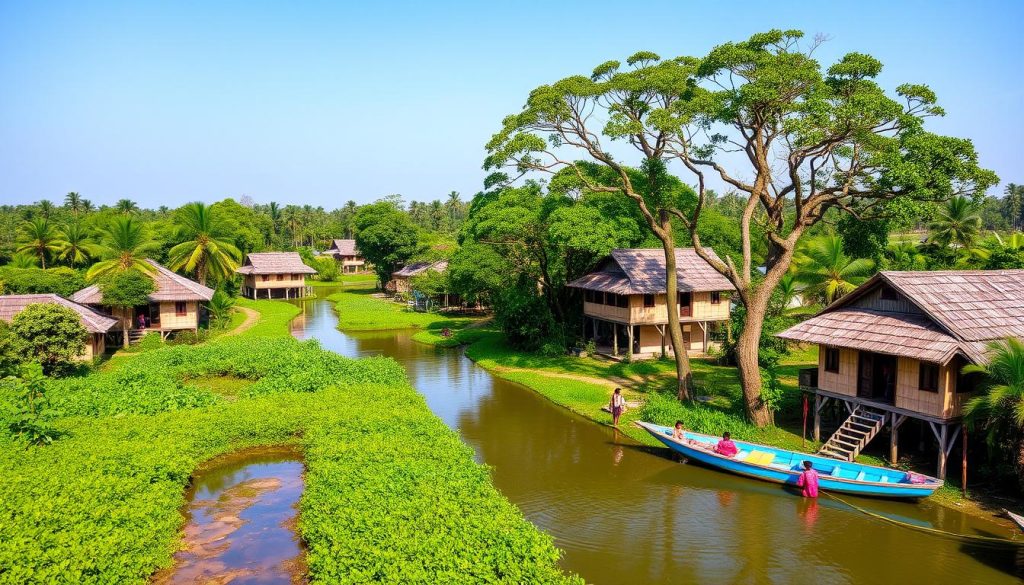
“The Sundarbans Eco Village shows the power of community-driven conservation. It empowers locals and embraces sustainable living, setting an example for the world.”
The Sundarbans’ Rich Biodiversity
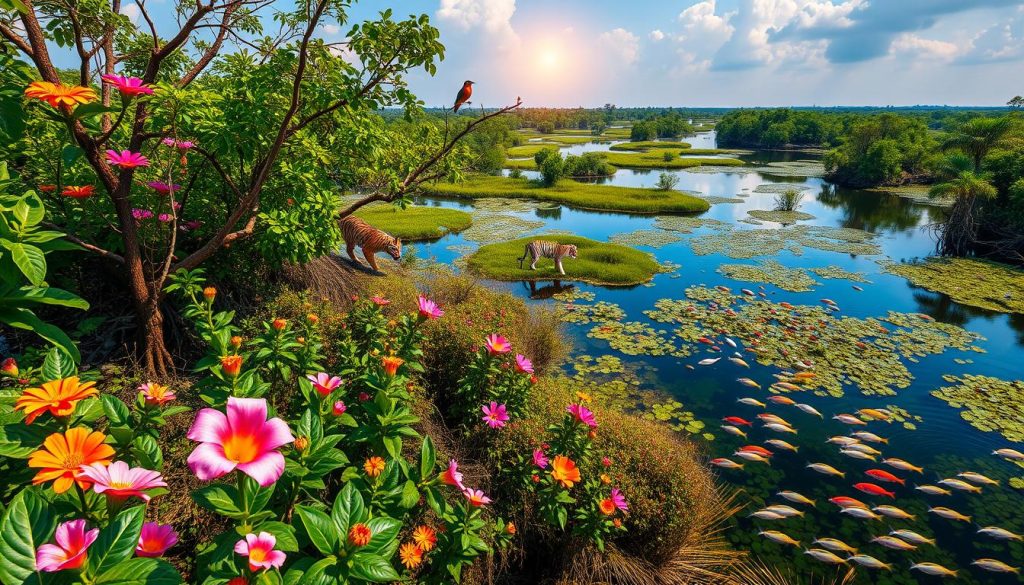
The Sundarbans is a vast mangrove forest spanning over 10,000 km2. This UNESCO World Heritage Site hosts many endangered species. The iconic Royal Bengal Tiger and estuarine crocodile call it home.
The mangrove ecosystem maintains the region’s delicate balance. It provides vital habitats for diverse plant and animal life. This unique environment supports an incredible array of species.
Community-centered conservation efforts have boosted the region’s biodiversity. In 2013, India’s national mangrove cover grew by 616.56 km2. This growth is linked to the Joint Mangrove Management program.
The Sundarbans’ biodiversity is truly amazing. Royal Bengal Tigers roam the mangrove forests. Estuarine crocodiles bask on riverbanks. This ecosystem is brimming with life.
As a UNESCO World Heritage Site, the Sundarbans holds great ecological importance. Protecting this natural treasure for future generations is crucial. Its unique ecosystem deserves our utmost care and attention.
| Key Biodiversity Statistic | Value |
|---|---|
| Increase in national mangrove cover in India (2013) | 616.56 km2 |
| Sundarbans Dependent Extreme Poor Households (SDEPHs) supported by SUNDARI project | 15,000 |
| Increase in average monthly income of project participants (2012-2015) | 93% |
| Increase in women’s access to Social Safety Net Programme (2013-2015) | 11% |
The Sundarbans, a true natural wonder, is a treasure trove of biodiversity that we must protect for generations to come.
Sustainable Living Methods
The Sundarbans Eco Village puts sustainable living first. Residents use eco-friendly methods to protect the local ecosystem. Their approach serves as a model for others to follow.
Solar Energy and Rainwater Harvesting
Solar panels cover rooftops in the Eco Village. They turn sunshine into clean energy for homes and businesses. This reduces dependence on traditional power sources.
The community also collects and stores rainwater. This smart system helps save precious freshwater resources. It’s a key part of their eco-friendly approach.
Waste Management and Recycling
Waste management is a top priority in the Sundarbans Eco Village. Residents carefully sort and dispose of their trash. They make sure recyclables don’t end up in landfills.
This practice shrinks the community’s ecological footprint. It also supports a circular economy. Here, waste becomes a valuable resource instead of a problem.
| Sustainable Living Method | Impact |
|---|---|
| Solar Energy | Reduces reliance on fossil fuels and provides clean, renewable energy |
| Rainwater Harvesting | Conserves freshwater resources and reduces the strain on water supplies |
| Waste Management and Recycling | Diverts waste from landfills, promotes a circular economy, and minimizes the ecological footprint |
The Sundarbans Eco Village shows how communities can live sustainably. Their eco-friendly practices protect the environment. They’re paving the way for a greener future that others can follow.
Community Engagement and Empowerment
The Sundarbans Eco Village focuses on community engagement and empowerment. Locals take part in organic farming and handcraft production. These activities offer sustainable livelihood chances and support ecotourism.
Visitors can enjoy the area’s beauty while helping the local economy. These programs boost residents’ finances and pride in their unique environment.
Organic Farming and Handcrafts
The Eco Village promotes organic farming to help locals grow food sustainably. Residents also make traditional handcrafts like baskets and textiles. This preserves cultural heritage and brings in extra income.
Ecotourism Initiatives
Ecotourism lets visitors explore the Sundarbans while supporting locals. Guided tours and programs teach about the ecosystem. Tourists can interact with locals and learn about conservation efforts.
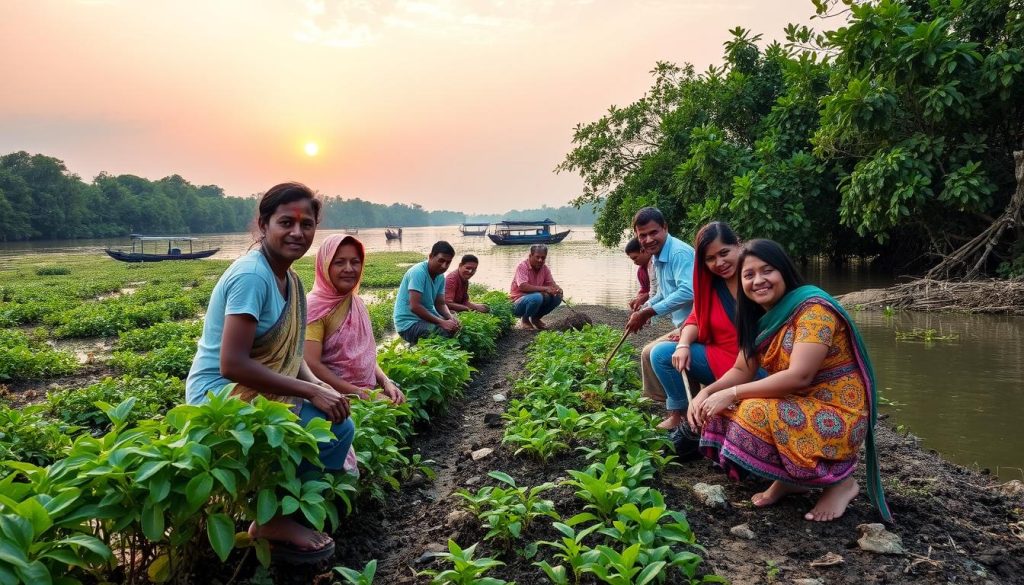
The Sundarbans Eco Village empowers communities through various methods. It promotes sustainable livelihoods and preserves this natural treasure. These efforts ensure the region’s long-term protection.
Conservation Efforts in the Sundarbans
The Sundarbans, a vast mangrove forest, thrives between India and Bangladesh. This unique ecosystem faces threats like rising sea levels and human encroachment. Dedicated conservation efforts aim to protect this UNESCO World Heritage Site.
Mangrove Restoration
Restoring mangrove forests is a key initiative in the Sundarbans. Mangroves defend against coastal erosion and house endangered species. Environmental groups and government agencies work together on planting programs.
Their efforts have shown promising results. Millions of mangrove trees now grow across the region. This restoration strengthens the vital habitat for local wildlife.
Wildlife Protection
The Sundarbans Eco Village protects the region’s diverse wildlife. They focus on iconic species like the Royal Bengal Tiger and estuarine crocodiles. Their initiatives aim to reduce threats and maintain a healthy ecosystem.
Local communities play a crucial role in these efforts. The Eco Village encourages stewardship to ensure long-term sustainability. This approach helps preserve the Sundarbans for future generations.
These conservation efforts showcase the power of teamwork. Environmental groups, government agencies, and locals work together. Their combined efforts safeguard this irreplaceable natural treasure.
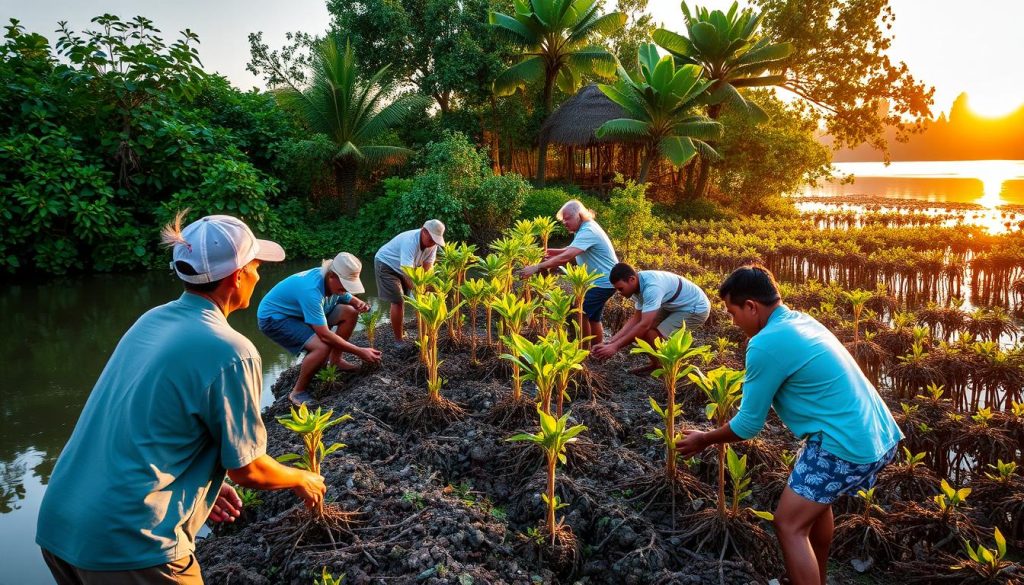
“The Sundarbans is a true jewel of nature, and its preservation is crucial not just for the local community, but for the entire world. We must act now to ensure its future.”
Sundarban local community engagement
The Sundarbans Eco Village is a groundbreaking project in the heart of the Sundarbans. It actively involves local residents in decision-making processes. This initiative fosters environmental stewardship among the community by giving them ownership of natural resources.
The Eco Village’s community-focused approach is vital for protecting the Sundarbans ecosystem. It empowers locals through inclusive decision-making and fair distribution of benefits. This makes them active participants in shaping their homeland’s future.
Sustainable development thrives when the local community is fully engaged. The Eco Village uses residents’ knowledge to create innovative solutions. These solutions address unique needs and boost the region’s resilience.
This project showcases how community involvement enhances sustainable development. It safeguards the delicate ecosystem while empowering those who depend on it. The Eco Village’s approach benefits both the environment and local livelihoods.
| Key Statistics | Value |
|---|---|
| Sundarbans Mangrove Ecosystem Area | Approximately 10,000 square kilometers |
| Net Loss of Forest Lands in Bangladesh Sundarbans | Roughly 66 km² (non-significant decrease) |
| Plant Species in the Sundarbans | Over 334 species |
| Fish Species | Over 120 species |
| Bird Species | 270 species |
| Mammal Species | 42 species |
| Reptile Species | 35 species |
| People Living in and Around the Sundarbans | Over 12 million |
| Individuals Dependent on the Sundarbans for Livelihood | 2.5 million |
| Villagers Relying on the Sundarbans for Sustenance | Approximately 75% |
The Sundarbans Eco Village sets a powerful example for sustainable development. It empowers locals and promotes shared responsibility for natural resources. This innovative project shows how environmental care and community involvement can work together effectively.
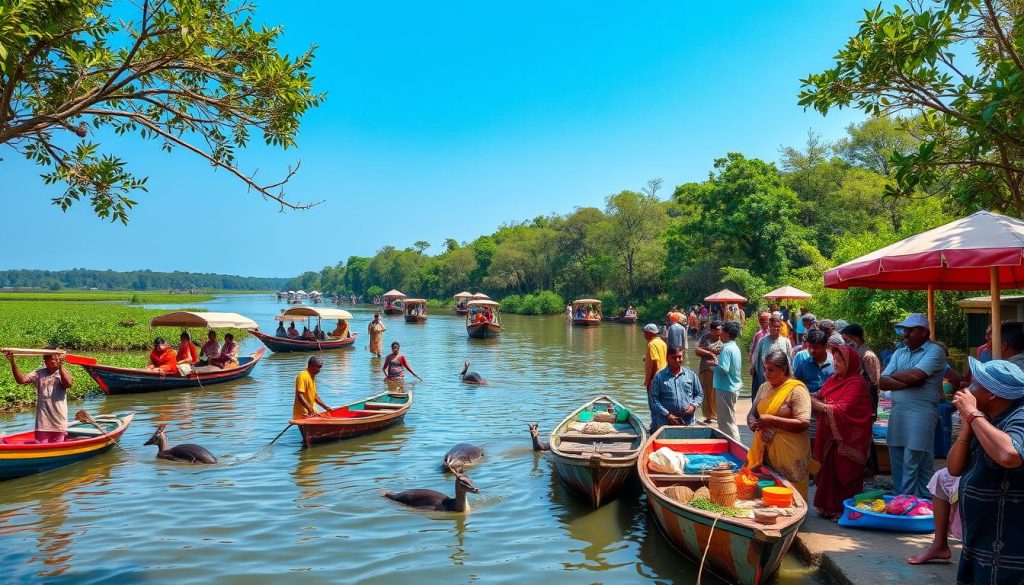
Women’s Empowerment in the Sundarbans
The Sundarbans Eco Village project champions gender equality and women’s empowerment. It offers opportunities in sustainable livelihoods like organic farming and ecotourism. These efforts boost women’s confidence and social status in local communities.
The initiative empowers women through training and support. It enables them to join decision-making processes and achieve economic self-reliance. This approach recognizes women’s crucial role in driving positive change.
| Statistic | Value |
|---|---|
| Women employed in tourism globally | 54% |
| Girls in Bangladesh married before age 18 | 59% |
| Women in tourism earn compared to men | 15% less |
| Farmers benefited in Sundarbans, including women | Over 1,000 |
| Annual production capacity of sheep and goats established | 500 kids/lambs |
The project’s women’s empowerment focus includes the Women in Tourism Club. This club supports female professionals in the tourism sector. The Student Research Placement Program studies food security for Banojibi people, focusing on women’s roles.
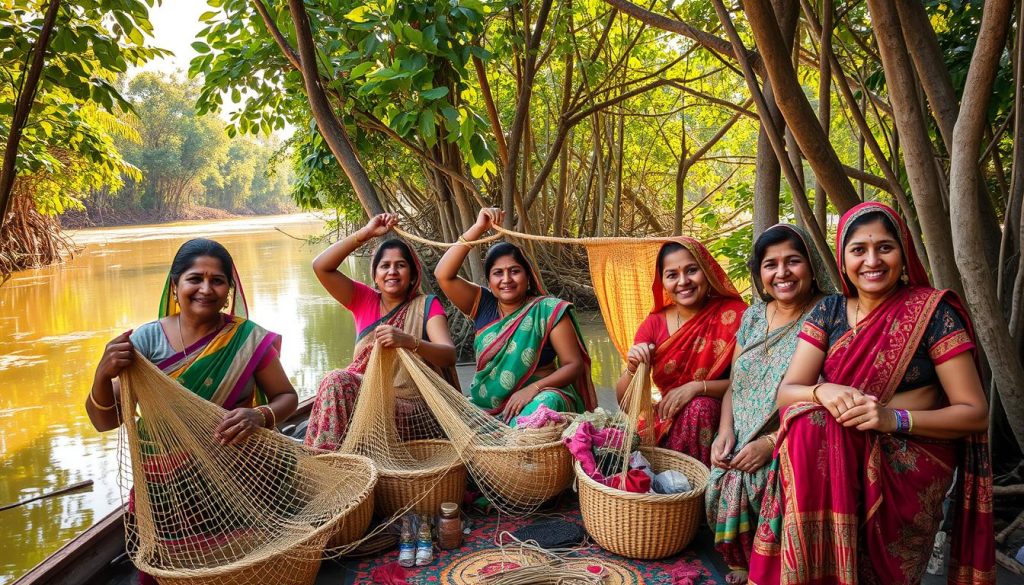
Women in the Sundarbans join programs promoting nature-based income opportunities. These programs support conservation efforts and help women transition from home labor. This shift bridges the gender earnings gap and elevates women’s socioeconomic status.
Health and Sanitation Initiatives
The Sundarbans Eco Village project tackles health and sanitation issues faced by locals. It aims to provide clean water, proper sanitation, and healthcare services. These efforts boost the community’s overall well-being.
Clean Water and Improved Sanitation
The project has improved sanitation and provided hygiene education. Access to clean water during floods has increased from 4% to 75% in Canning-II Block, West Bengal.
Locals contributed 5000 INR (63 CHF) per handpump, covering 5% of the total cost. This helped build flood-resistant plinth-raised handpumps.
The project formed 30 water user committees. These groups received training and tools to maintain handpumps in the Sundarbans region.
Healthcare Access
The project also focuses on improving healthcare access. Swagata Sardar, a local committee secretary, noted the positive change. Before, 150 households shared one handpump. Now, raised handpumps provide safe water even during heavy rains.
By meeting health and sanitation needs, the Eco Village project strengthens the community. This lays the foundation for sustainable growth and better overall well-being.
| Initiative | Impact | Cost |
|---|---|---|
| Flood resilient plinth raised handpumps | Increased access to improved water source from 4% to 75% during floods | Community contribution of 5000 INR or 63 CHF per handpump (5% of total cost) |
| Formation of 30 water user committees | Ensured routine operation and maintenance of handpumps | Total cost for 20 additional handpumps: 32,000 CHF |
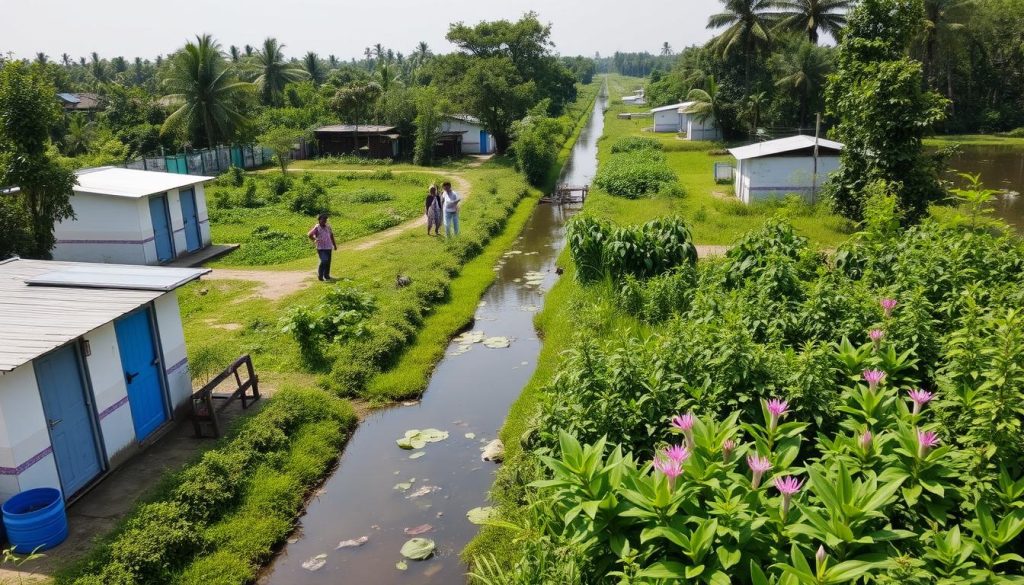
Cultural Heritage Preservation
The Sundarbans Eco Village project focuses on preserving the region’s cultural heritage. It promotes traditional knowledge and practices of indigenous communities. This initiative recognizes their vital role in protecting the Sundarbans ecosystem.
The project organizes cultural events, workshops, and interactions with local artisans. These activities foster understanding and appreciation for the Sundarbans’ rich cultural legacy. They also create opportunities for meaningful exchanges with visitors.
The Sundarbans covers 10,000 km2, with 60% in Bangladesh. This vast region is home to diverse cultural heritage, traditional knowledge, and cultural practices. These have been passed down through generations of indigenous communities.
| Key Facts | Statistics |
|---|---|
| Total Area of Sundarbans | 10,000 km2 |
| Sundarbans Area in Bangladesh | 6,000 km2 |
| Sundarbans Land Area | 414,259 ha (70%) |
| Sundarbans Water Bodies | 187,413 ha (30%) |
| Revenue Contribution to Forestry Sector | More than 50% |
| People Directly Dependent on Sundarbans | 3.5 million |
The Eco Village project fosters cultural exchange, preserving the Sundarbans’ unique identity. It allows visitors to experience the region’s rich cultural heritage. This approach supports the long-term sustainability of the Sundarbans ecosystem.
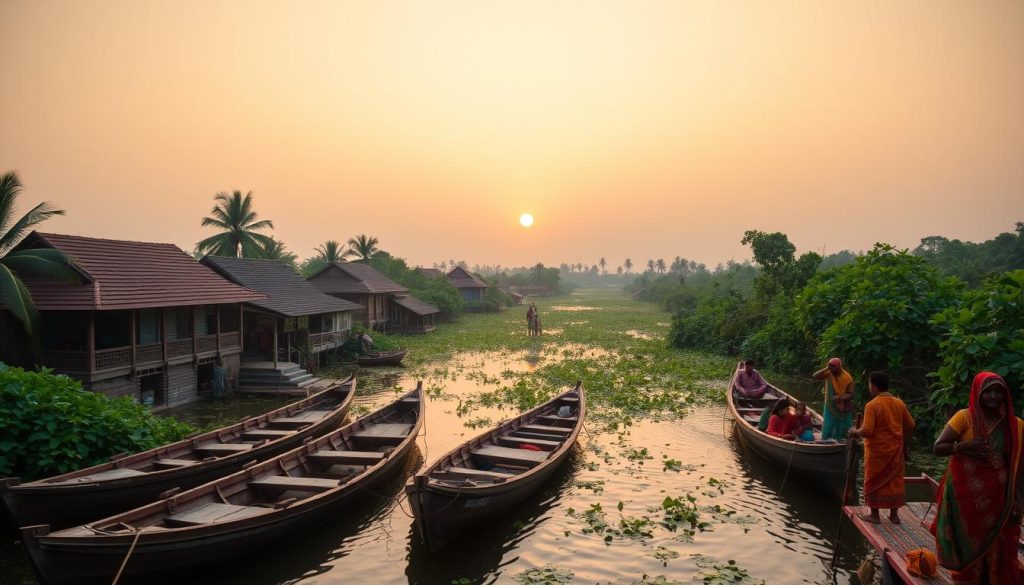
“Preserving the cultural heritage of the Sundarbans is a key focus of the Eco Village project. This initiative promotes the traditional knowledge and cultural practices of the indigenous communities, recognizing their vital role in the stewardship of this remarkable ecosystem.”
Ecotourism in the Sundarbans
Ecotourism boosts conservation and supports local communities in the Sundarbans. It generates revenue for park upkeep, wildlife protection, and conservation efforts. This helps preserve the delicate balance of this unique ecosystem.
Conservation Funding
Ecotourism funds conservation in the Sundarbans. 87.5% of interviewees in ecotourism agreed that mangrove conservation increased their professional opportunities. This money helps restore mangrove forests and protect endangered species.
Economic Opportunities for Local Communities
Ecotourism creates jobs for Sundarbans locals. Before BEDS intervened, 50% were domestic and day laborers, with 37.5% being women. After BEDS, 100% reported their primary income from ecotourism.
This improves living standards and fosters pride in the region’s heritage. Over 71% believed extended community partnerships could boost ecotourism. 50% noted village lifestyle experiences would increase ecotourism value.
Ecotourism benefits both the environment and local people. It’s increased income for women and improved access to drinking water. It’s also enhanced ecological stability and land use practices.

The Sundarbans’ UNESCO status, wildlife, and culture make it perfect for ecotourism. It supports conservation and creates economic opportunities. Ecotourism also raises environmental awareness and promotes responsible tourist behavior.
Conclusion
The Sundarbans Eco Village proves that conservation and community can thrive together. It shows how sustainable living and local involvement can protect unique ecosystems. The Eco Village empowers communities and preserves nature effectively.
This project tackles climate change, deforestation, and harmful practices head-on. It creates a sustainable future benefiting both the environment and local people. The Eco Village inspires others to protect natural resources while improving lives.
The Sundarbans, our planet’s largest mangrove forest, faces serious threats. Human activity and environmental damage endanger its delicate balance. Authorities must work with locals to protect this natural wonder.
The Eco Village’s success highlights the power of community-driven initiatives. It shows how grassroots efforts can make a real difference. This model offers hope for preserving precious ecosystems worldwide.





