

Sufi Music and Performances in Islamabad: Experience
Imagine diving into the captivating world of Sufi music in Islamabad. The capital of Pakistan offers a vibrant hub where Sufism meets rich culture. This creates an unforgettable experience for visitors.
Islamabad stands out as a destination for Sufi enthusiasts. The city’s enchanting atmosphere blends Qawwali melodies and whirling dervishes. Here, traditional and modern Sufi influences merge seamlessly.
This unique combination invites you on a transformative spiritual journey. Explore the secrets of Islamabad’s Sufi scene and immerse yourself in its mystical essence.
Unveiling the Mystical Essence of Sufism
Sufism is a spiritual branch of Islam that focuses on personal divine experiences. It emphasizes love, tolerance, and the search for inner truth. Sufis cherish their direct connection with God through spiritual practices.
What is Sufism?
Sufism, also called Tasawwuf, is a mystical Islamic tradition with a global following. Sufis, or Dervishes, embark on a journey of self-discovery and spiritual growth.
They explore their spiritual identity and the essence of the divine. Through meditation, recitation, and ritual dance, Sufis seek inner peace and enlightenment.
The Origins of Sufi Music
Sufi music roots trace back to the first mystics in the Indian subcontinent about 1,000 years ago. Qawwali, a key Sufi music genre, has evolved over centuries.
It blends Sufi saints’ poetry with various regional musical traditions. Qawwali has become central to Sufi culture as a form of spiritual expression.
“Sufi music is the language of the soul, a bridge between the earthly and the divine.”
Sufi music’s complex rhythms and soulful melodies can transport listeners to spiritual realms. The daf drum’s rhythms and Qawwals’ vocals create a transformative journey.
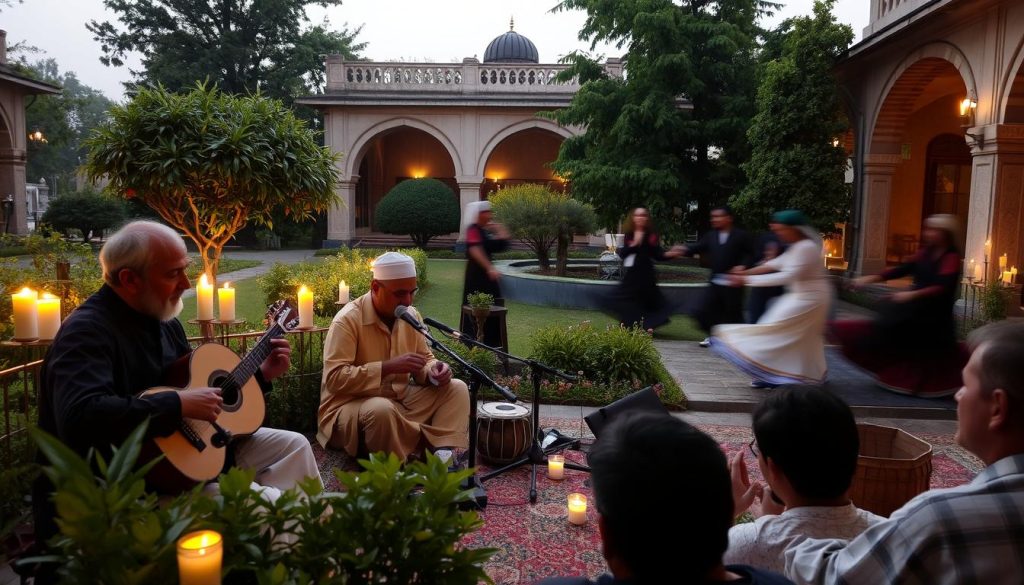
Sufi music traditions in South Asia reflect the region’s diverse cultural and religious influences. Persian, Arabic, and local styles blend to create a unique, captivating soundscape.
Qawwali: The Soul of Sufi Music
Qawwali is a passionate form of Sufi devotional music. It has captivated audiences for centuries. This art form blends poetic verses of Sufi saints with dynamic rhythms and soulful melodies.
Exploring the Captivating Rhythms and Melodies
Qawwali features mesmerizing rhythms and melodies. These elements elevate the listener’s spirit. They also foster a deeper connection with the divine.
The ensemble uses Qawwali instruments like the harmonium, tabla, and dholak. These create a hypnotic musical tapestry. This backdrop carries the emotive vocals of the Qawwali performers.
Tahir Qawwal is a captivating artist in this genre. He has performed over 1,500 concerts globally with his ensemble, Fanna-fi-Allah. Their Qawwali performances have enthralled audiences across multiple continents.
In 2019, Tahir and his wife established the world’s first female Qawwali ensemble. They named it Ilahi Sufi Qawwali. This expanded the reach of this captivating art form.
Tahir has released more than 20 albums under his label, Tabaruq Records. This solidifies his legacy as a master of Qawwali music.
“Qawwali is not just a musical performance, but a spiritual journey that invites the listener to transcend the boundaries of the physical world and connect with the divine.”
Islamabad offers a vibrant Sufi culture to explore. Don’t miss the chance to experience the mesmerizing Qawwali performances. They truly embody the soul of Sufi devotional music.
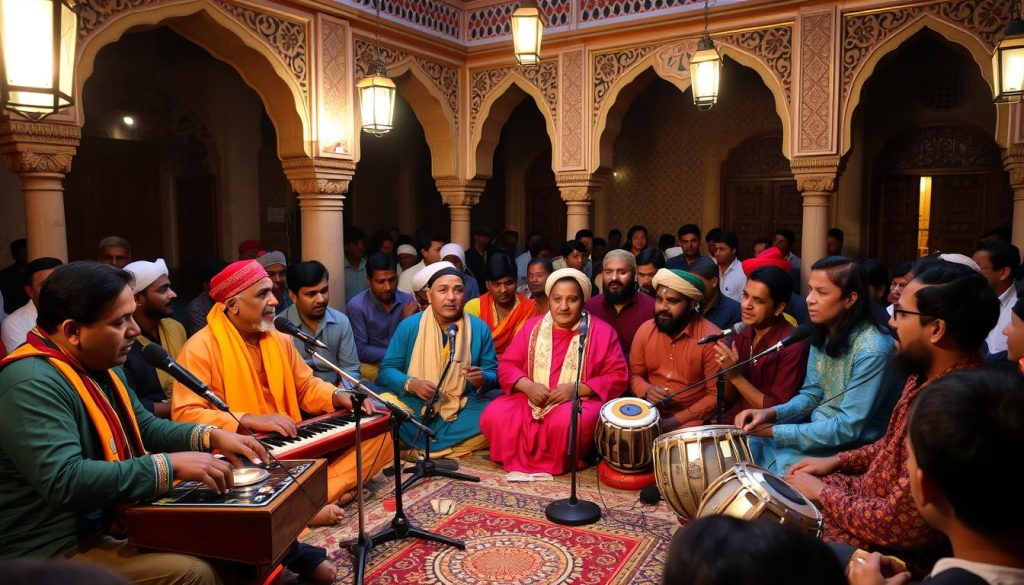
Sufi Music and Performances in Islamabad
Islamabad pulses with Sufi music performances and Sufi cultural events. The city hosts festivals showcasing Qawwali, the traditional Sufi devotional music. These celebrations highlight the region’s rich musical heritage.
Visitors can dive into Sufism’s spiritual essence at these events. They witness captivating Sufi music performances that connect them with the divine. The mystical tradition’s transformative power comes alive through these experiences.
The World Performing Arts Festival in Lahore features artists like Arieb Azhar. He performs fusion, world music, and devotional pieces. Azhar collaborates with directors and designers to boost his work’s visibility through music videos.
Sufi tourism attracts spiritual seekers to Pakistan. They come for experiences blending music, culture, and history. The country boasts many Sufi shrines, like Lal Shahbaz Qalandar in Sehwan, Sindh.
Thousands of pilgrims flock to these shrines annually. They participate in devotional music, dancing, and communal prayers during Urs festivals. These Sufi cultural events offer a unique glimpse into Pakistan’s deep-rooted traditions.
Iconic Sufi Shrines in Islamabad
Islamabad boasts several revered Sufi shrines, attracting devotees and spiritual seekers. The Bari Imam Shrine and Golra Sharif Shrine stand out as iconic landmarks. Each shrine has its own unique history and significance.
Bari Imam Shrine
The Bari Imam Shrine sits in Islamabad’s heart, a hub of Sufi activity. It honors Hazrat Sakhi Sultan Bari Imam, a revered Sufi saint. The shrine hosts Qawwali performances and religious gatherings regularly.
Visitors can enjoy captivating rhythms and soulful melodies of Sufi music here. They connect with the divine through the power of sacred sound.
Golra Sharif Shrine
The Golra Sharif Shrine honors Ghulam Moinuddin Chishti, another Sufi saint. This stunning architectural marvel features intricate design and a serene atmosphere. Pilgrims seek spiritual guidance and blessings at this shrine.
Devotees often join Sufi rituals and attend Qawwali performances at Golra Sharif. These activities deepen their spiritual connection.
These Sufi shrines are hubs of spiritual and cultural activity in Islamabad. They attract visitors from all walks of life. The shrines offer a profound experience, connecting people to the region’s rich Sufi heritage.
Attending a Sufi Music Performance
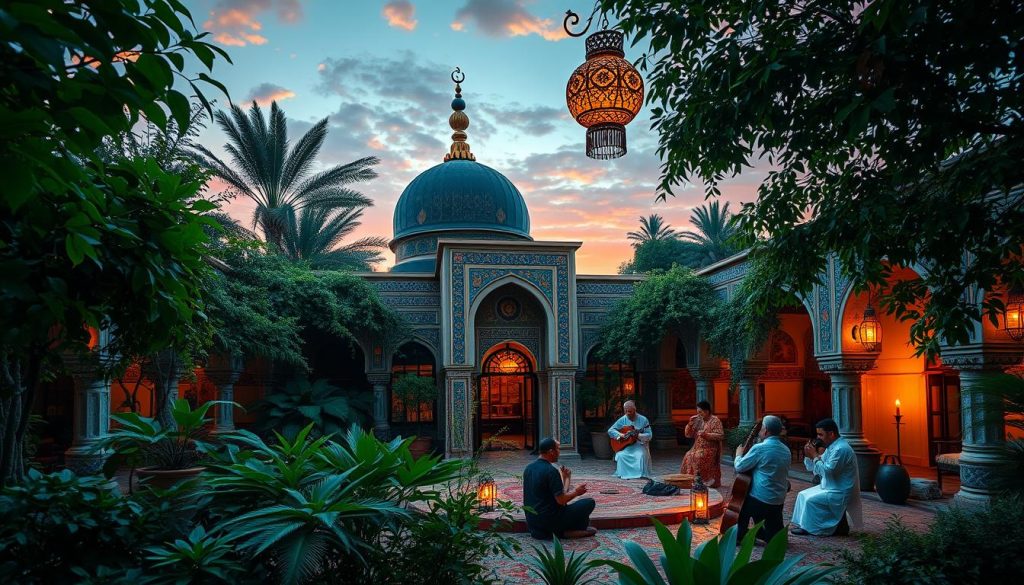
Sufi music performances in Islamabad offer a transformative journey into spiritual ambiance. Qawwali performers create an atmosphere of devotion through captivating rhythms and soulful melodies. Attendees can connect with the divine and transcend physical boundaries.
The spiritual energy of the performers resonates deeply with the audience. This creates a profound experience that leaves a lasting impact on those present.
Connecting with the Divine
Qawwali is more than just music; it’s a spiritual practice. It brings devotees closer to the divine through powerful lyrics from Sufi poetry.
The emotive delivery creates a profound connection between audience and divine. Many report feelings of inner peace and spiritual enlightenment after these performances.
“The transformative power of Sufi music is truly remarkable. It has the ability to transport you to a higher plane of consciousness, where the boundaries between the physical and the divine seem to dissolve.”
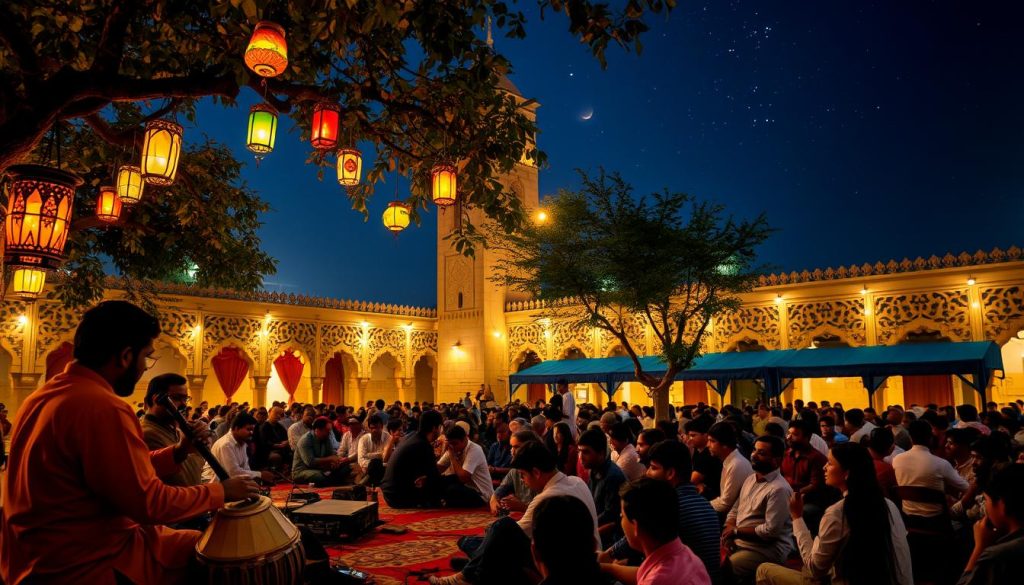
Spiritual experiences at Sufi music performances in Islamabad are cherished by all. These enchanting displays of devotion offer a unique and unforgettable experience.
Embracing the Whirling Dervishes
The Sufi experience in Islamabad features captivating whirling dervishes performing the Sema ritual. This spiritual dance symbolizes the soul’s journey towards the divine. Dervishes spin gracefully to Sufi music, creating a visually striking display.
The Sema allows attendees to immerse themselves in the whirling dervishes in Sufi performances. It offers insight into the Sufi dance and ritual central to spiritual practices of Sufism. Dervishes in deep meditation embody the pursuit of inner peace and enlightenment.
“The Sema is not just a dance, but a journey of the soul, a physical expression of the Sufi’s devotion to the divine.” – Rumi, renowned Sufi poet
Sufi music performances in Islamabad offer a chance to see whirling dervishes in Sufi performances up close. Their spinning becomes a meditation in motion. It invites the audience to connect with Sufi spirituality’s essence.
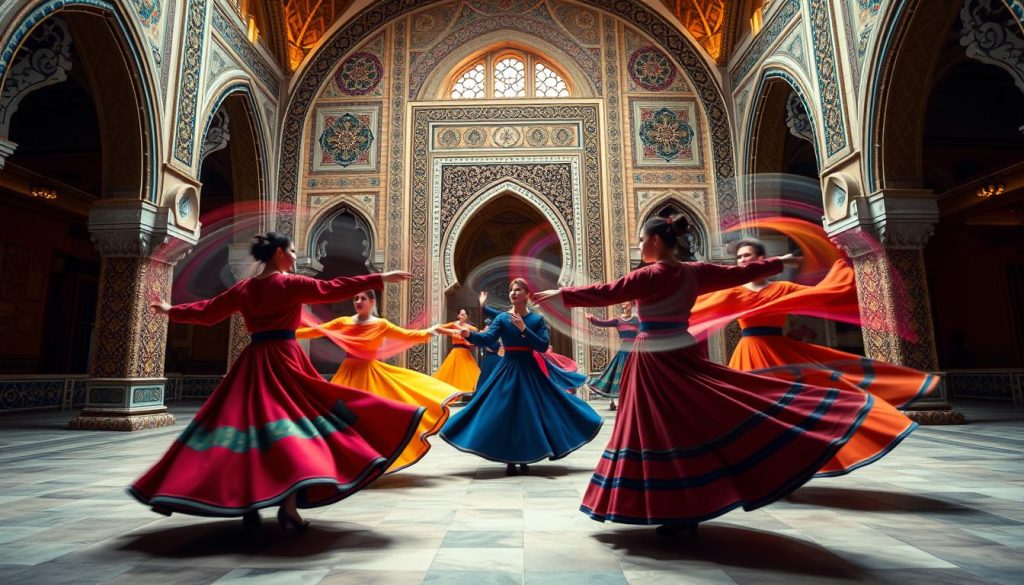
Witnessing whirling dervishes in Islamabad is a transformative experience. It leaves a lasting impression on both Sufi enthusiasts and newcomers alike. The spiritual practices of Sufism come alive through this mesmerizing ritual.
The Legacy of Nusrat Fateh Ali Khan
Nusrat Fateh Ali Khan, the “King of Qawwali,” transformed Sufi music in Pakistan. His powerful vocals and spiritual performances brought Qawwali to a global stage. Khan’s influence on the genre remains unmatched.
Khan passed away in August 1997 at 48. His emotive performances and deep Sufi understanding continue to inspire Qawwali artists worldwide. The Legendary Qawwali artist‘s legacy shapes the Sufi music legacy in Pakistan.
Khan left behind hundreds of recordings and concert performances. DJs worldwide have sampled his voice in their creations since his passing. His death sparked nationwide mourning in Pakistan.
Khan introduced a new generation of Pakistanis to their traditional music. He performed in New York and Houston to rave reviews. His music featured in the film “Dead Man Walking”.
Khan collaborated with artists like Eddie Vedder and Peter Gabriel. He shattered traditional views on Muslim singers. His songs are considered anthems of Pakistani life.
Khan’s extraordinary vocal range in Qawwali music is celebrated worldwide. His music has religious connotations as a Sufi musician. The upcoming “Ustad” documentary about his life is eagerly awaited.
“Nusrat Fateh Ali Khan’s music has international appeal, reflected by his presence in Spotify’s top 10 most listened to artists. According to Spotify Analytics, 37% of Nusrat’s listeners are between 18 and 22 years old, with the next significant group being 23 to 27-year-olds at 24%.”
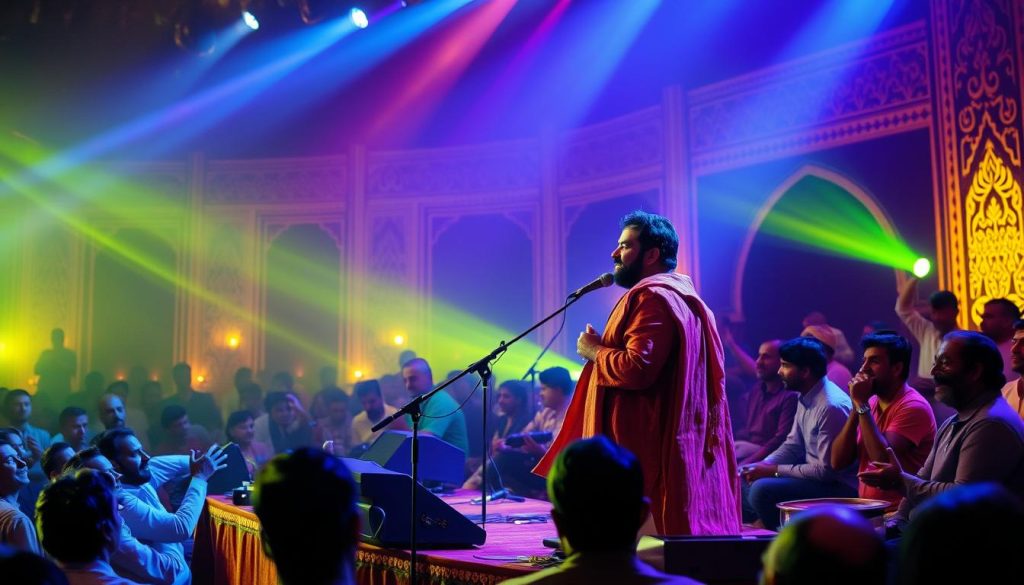
The legacy of Nusrat Fateh Ali Khan, the Legendary Qawwali artist, endures. He continues to inspire generations of artists. His music captivates audiences worldwide, shaping the Sufi music legacy in Pakistan.
Contemporary Qawwali Artists in Islamabad
Islamabad boasts a thriving community of contemporary Qawwali artists. They keep the rich Sufi musical tradition alive and evolving. Talented performers like Abrar Hussain, Dildar Hussain, and Tahir Qawwal have mastered this art form.
These artists share Sufism’s spiritual essence with audiences in Pakistan and worldwide. Their captivating performances inspire and enthrall listeners. They preserve and innovate within the Qawwali form, nurturing Islamabad’s vibrant Sufi music scene.
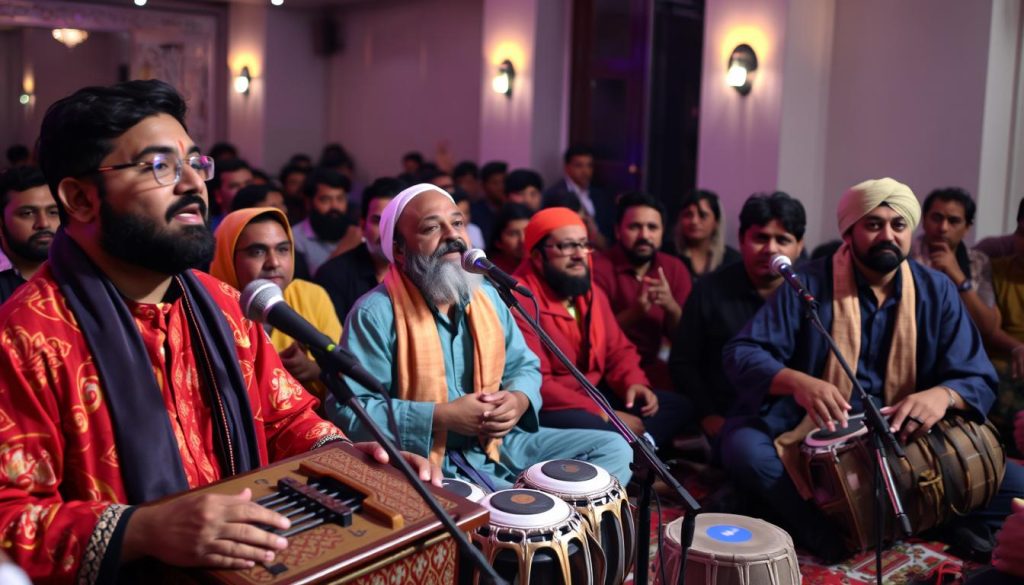
Zain Zohaib Qawwali Singer is the youngest Qawwali band on the subcontinent. They gained fame after performing on Nescafé Basement’s fifth season. Since then, they’ve performed at prestigious events like Norway’s Oslo Mela.
Their popular songs include “Hoon Khara,” “Mehboob,” and “Oh Sahib.” Zain Zohaib’s grandfather, Ustad Haji Rehmat Ali Khan, performed with Ustad Nusrat Fateh Ali Khan for 40 years.
Ustad Asif Ali Khan Santoo is another acclaimed Qawwali artist from Islamabad. His musical lineage spans over 350 years. Born in 1973 in Lahore, he’s known for his linguistic diversity in performances.
Other artists like Fareed Ayaz and Abu Muhammad Qawwal and Brothers contribute to Islamabad’s Sufi music scene. They ensure the art form continues to thrive and evolve. Their performances captivate audiences both locally and internationally.
Best Time to Experience Sufi Music in Islamabad
Urs festivals offer the best chance to enjoy Sufi music in Islamabad. These events celebrate Sufi saints’ death anniversaries at iconic shrines. They feature mesmerizing Qawwali performances, devotional music, and spiritual rituals.
Festivals in Islamabad, Golra Sharif, and Bari Imam draw local and international visitors. These events showcase the rich traditions of Sufism. Dates may vary, but they’re always eagerly anticipated.
| Event | Location | Dates |
|---|---|---|
| Urs Festival at Bari Imam Shrine | Bari Imam, Islamabad | May/June |
| Urs Festival at Golra Sharif Shrine | Golra Sharif, Islamabad | September/October |
Islamabad hosts various Sufi music events throughout the year. The annual Music Mela Conference is a notable example. It showcases folk, fusion, and Qawwali performances.
“The Sufi music festivals in Islamabad are a truly transformative experience, transporting you to a realm of profound spirituality and connection with the divine.”

Immersing in the Sufi Culture
Islamabad offers more than just Sufi music and spiritual practices. Visitors can enjoy local cuisine and handicrafts influenced by Sufi traditions. This cultural immersion connects you with Sufism’s essence in Islamabad.
Local Sufi-inspired Cuisine
Islamabad’s culinary scene reflects the region’s spiritual heritage. Try the fragrant Sufi-inspired biryani, a spiced rice dish with meat or vegetables. Savor haleem, a creamy lentil and meat stew that comforts the soul.
Indulge in flaky samosas stuffed with spiced potatoes or minced meat. Pair these dishes with refreshing rose-infused sharbat or yogurt-based doogh for a complete Sufi experience.
Sufi-inspired Handicrafts and Art
Islamabad’s markets showcase Sufi-inspired handicrafts and artwork. Explore intricate Sufi-themed calligraphy that blends spiritual symbolism with beautiful writing. Discover colorful textiles like Ajrak prints and Suzani embroidery.
Admire Sufi-inspired pottery that reflects harmony and balance. These crafts represent Sufi culture, allowing you to take home a piece of Islamabad’s spiritual essence.
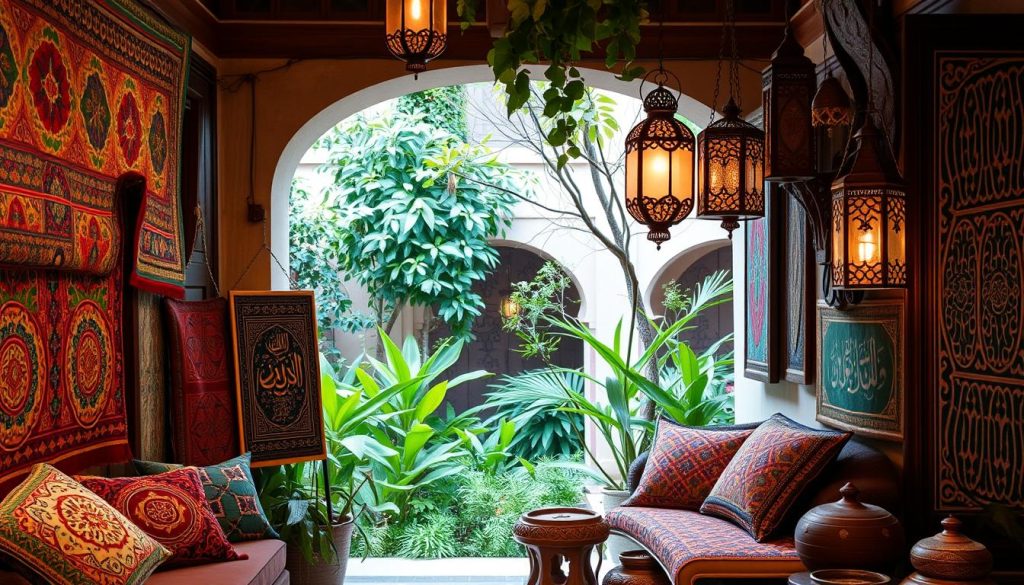
Dive into Sufi-inspired cuisine and vibrant handicrafts to truly appreciate Islamabad’s Sufi culture. This exploration will connect you to Sufism’s mystical essence. You’ll create lasting memories of your journey through Pakistan’s spiritual heart.
Conclusion
Islamabad’s Sufi music and performances offer a transformative spiritual experience. The city blends cultural traditions with Sufism’s mystical essence. Immerse yourself in Sufi music and rituals for self-discovery and divine connection.
Islamabad’s Sufi heritage showcases the power of music, faith, and human spirit. The city’s vibrant Sufi culture invites exploration of this enchanting world. Visit iconic shrines like Bari Imam and Golra Sharif for profound spiritual experiences.
Sufi music in Islamabad transports you to a realm beyond physical boundaries. It connects you with the soul’s universal language. This journey through Sufi culture demonstrates the power of human expression.
Explore Islamabad’s Sufi traditions for an unforgettable spiritual adventure. Experience the transformative potential of faith through music and cultural immersion. Let the city’s rich Sufi heritage guide you to new depths of understanding.





