Speak Basic German Like a Local in Berlin Guide
If you are planning to visit Berlin or have already arrived, learning to speak basic German like a local in Berlin is an excellent way to immerse yourself in the culture and connect with the people. Not only will it make your travel experience more enjoyable, but it will also open doors to new opportunities. In this guide, we will provide you with essential tips and tricks to learn the German language while exploring Berlin, and give you the tools to communicate effectively.
Whether you are a beginner or have some prior knowledge of German, this guide will help you learn German in Berlin, and guide you through the various challenges that come with speaking German like a local. Throughout the guide, we will provide you with useful phrases for everyday life, explain the importance of immersion, and provide you with resources to practice and level up your language skills.
If you’re ready to take your language skills to the next level, let’s dive in and explore how to speak basic German like a local in Berlin!
Getting Started with German Language Learning
Before diving into the vibrant German culture of Berlin, it’s essential to have a grasp of the basics. Familiarizing yourself with the key elements of the German language is the first step towards speaking German like a local. Discover resources and German language tips for language learning in Berlin. You might want to brush up on the following:
| Vocabulary | Grammar | Pronunciation |
|---|---|---|
| A great way to start building vocabulary is by learning common phrases used in everyday conversation. Check out apps like Duolingo, Babbel, or Memrise for beginner-friendly German phrases. | German grammar is known for its complexity, but don’t let that intimidate you. Start with the basics, like verb conjugations and noun genders, and build your way up. There are several resources online, like the Goethe Institute or Deutsche Welle, that offer interactive exercises and quizzes to improve your grammar. | Pronunciation is key to being understood when speaking German. Listen to native speakers, practice speaking aloud, and use apps like Speechling or HelloTalk to improve your pronunciation skills. |

Resources for Language Learning in Berlin
Luckily, Berlin offers a variety of resources to help you learn German. Here are a few options to get you started:
- The Goethe Institute offers German language courses for all levels, including intensive courses and exam prep classes.
- DeutschAkademie offers both traditional classroom and online German courses.
- Join a language exchange group. Meetup.com has several active language exchange groups in Berlin, where you can practice your German skills with native speakers.
- The Volkshochschule Berlin offers affordable German language courses for all levels, including conversation and grammar courses.
By starting with the basics and utilizing available resources for language learning in Berlin, you’ll be well on your way to mastering the German language.
The Importance of Immersion in Berlin
Learning a new language like German requires more than just memorizing vocabulary and grammar rules. To truly master the language, you need to immerse yourself in it. And what better place to do that than in Berlin?
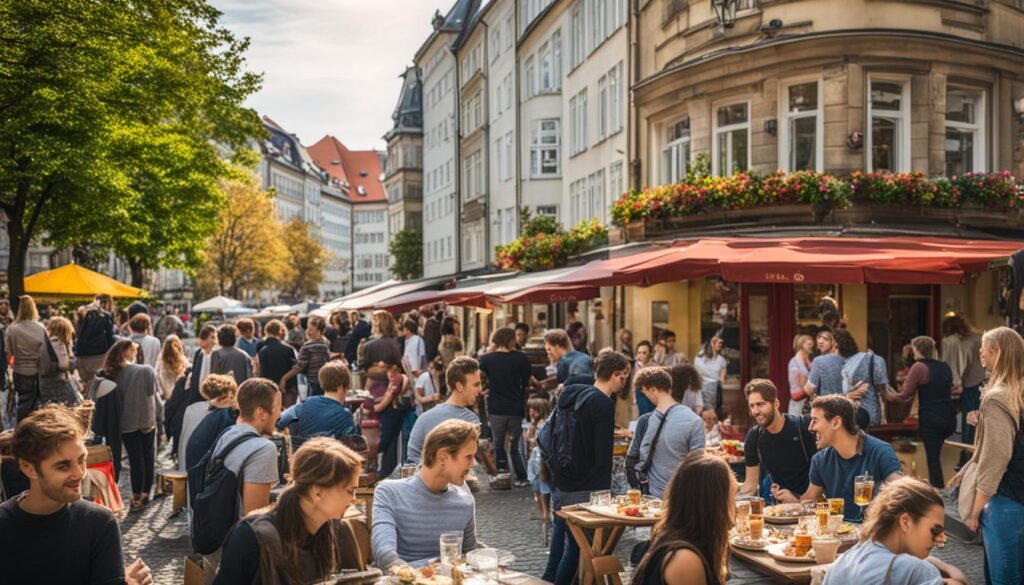
Immersion allows you to experience German language and culture firsthand, giving you a deeper understanding of the language and its nuances. By using German in everyday life situations, such as ordering food at a restaurant or asking for directions, you can improve your conversational skills and build confidence in speaking.
There are several ways to create an immersive experience while in Berlin. One way is to participate in language exchange programs, where you can practice speaking German with native speakers and help them learn your language in return. You can also join social clubs or attend cultural events to meet new people and practice German in a relaxed, informal setting.
Remember, immersion is key to achieving fluency in any language, and Berlin provides the perfect environment to learn German through experience.
Benefits of Immersion in Berlin
| Benefits | Explanation |
|---|---|
| Better Pronunciation | By hearing and mimicking correct pronunciation from native speakers, you can improve your own speaking abilities. |
| Increased Vocabulary | Being exposed to new words and phrases in everyday situations can help you build your vocabulary faster than solely relying on textbooks or apps. |
| Progress in Skills | Regular practice in real-life situations can accelerate your language learning journey and help you develop your skills in listening, speaking, reading, and writing. |
| Cultural Understanding | Through immersion, you can gain a deeper understanding of German culture, customs, and traditions, allowing you to communicate more effectively with locals and connect with the community on a deeper level. |
Take advantage of Berlin’s unique cultural, social, and language-learning opportunities to immerse yourself in German and accelerate your progress in speaking the language like a local.
Essential German Phrases for Beginners
Whether you’re ordering food at a restaurant, asking for directions, or simply greeting a local, speaking a few basic German phrases can go a long way in making your trip to Berlin a success. Here are some essential German phrases for beginners:
| Phrase | Translation |
|---|---|
| Hallo | Hello |
| Guten Morgen | Good morning |
| Guten Tag | Good afternoon |
| Guten Abend | Good evening |
| Danke | Thank you |
| Bitte | Please |
| Entschuldigung | Excuse me / Sorry |
| Ja | Yes |
| Nein | No |
| Ich heiße… | My name is… |
| Ich spreche kein Deutsch. | I don’t speak German. |
| Sprechen Sie Englisch? | Do you speak English? |
| Wo ist…? | Where is…? |
| Wie viel kostet das? | How much is that? |
| Ich hätte gerne… | I would like… |
Practice these phrases before your trip to help you communicate effectively in daily situations in Berlin. And if you need extra help, there are plenty of language learning resources available, including German language apps and language exchange programs.
Leveling Up Your German Skills in Berlin
Are you ready to take your German language skills to the next level while exploring Berlin? Here are some tips to help you improve your fluency:
Discover Language Exchange Opportunities
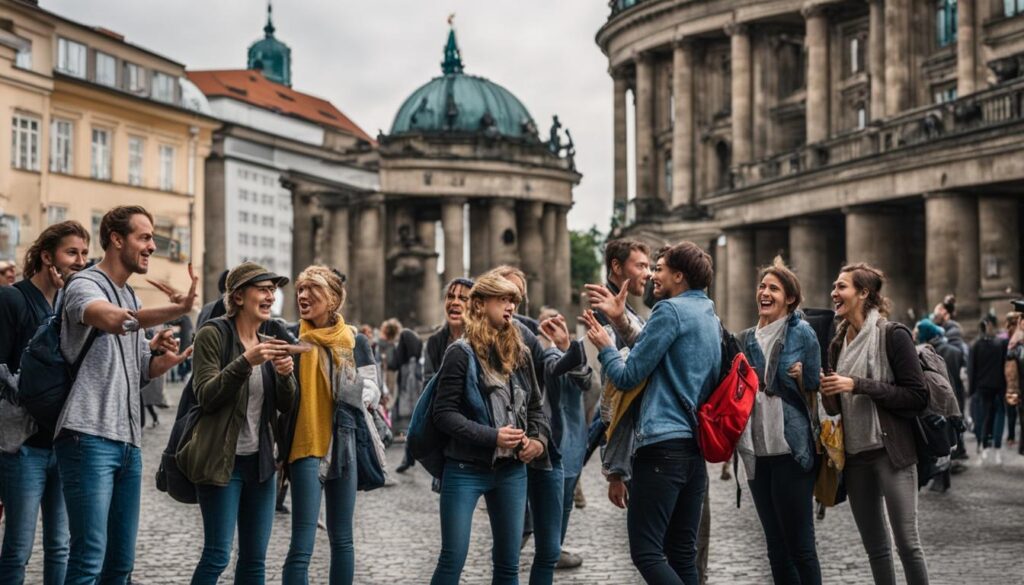
Improve your language skills while mingling with locals by joining a language exchange program. Meet new people and practice your German in a relaxed and comfortable setting. Check out websites such as Meetup or Eventbrite for language exchange events, or enroll in a language exchange program at a local university.
Enroll in Language Courses
If you prefer a more structured learning environment, consider enrolling in a language course. Berlin has numerous language schools that cater to different learning styles and levels. Some of the popular schools include:
| School Name | Location | Language Courses Offered |
|---|---|---|
| Goethe-Institut | Varies | General German, Business German, German Exam Preparation |
| Berlin School of German | Kreuzberg | Standard German Course, Intensive German Course, One-on-One German Course |
| Sprachenatelier Berlin | Prenzlauer Berg | German Intensive Course, German Semi-Intensive Course, German Evening Course |
Note: Prices and course offerings may vary.
Practice Conversational German with Locals
Interacting with locals is a great way to practice conversational German and improve your fluency. Strike up conversations with Germans in cafes, restaurants, or bars. Attend cultural events or exhibitions, and join group tours to engage in German conversations naturally.
Take Advantage of Online Resources
There are several online resources that can help you improve your German skills. Some popular options include:
- Duolingo – A language learning app that offers courses in many languages, including German.
- Babbel – A language learning app that focuses on conversation skills.
- Deutsche Welle – A German international broadcaster that offers free online courses, podcasts, and news articles.
Remember, the key to fluency is practice and immersion. By taking advantage of the language learning resources and opportunities in Berlin, you can improve your German skills and communicate like a local in no time.
Navigating Everyday Situations in German
Being able to communicate in German is vital for navigating everyday situations in Berlin. Whether shopping, taking public transportation, ordering at a restaurant, or visiting tourist attractions, knowing some local phrases can help you communicate more effectively and enhance your experience.
Shopping in Berlin
Shopping in Berlin can be a fun and unique experience. When greeting a shopkeeper, a simple “Guten Tag” (Good Day) or “Hallo” (Hello) will suffice. To ask if something is available in your size, you can say “Haben Sie das in meiner Größe?” (Do you have this in my size?) or “Ich suche nach einer Größe [insert size here]” (I am looking for a size [insert size here]). When ready to make a purchase, you can say “Ich möchte das bitte kaufen” (I would like to buy this please) or “Können Sie das einpacken?” (Can you wrap this up?).
Public Transportation
Berlin has an extensive public transportation system, including buses, trams, and trains. To ask for directions, you can say “Wo ist der nächste Bahnhof/Busbahnhof?” (Where is the nearest train station/bus station?). To purchase a ticket, you can say “Ich möchte ein [insert type of ticket] kaufen, bitte” (I would like to buy a [insert type of ticket], please). When on the bus, you can say “Bitte den nächsten Halt aussteigen” (Please stop at the next stop) or “Ist das der richtige Bus, um nach [insert destination] zu kommen?” (Is this the right bus to get to [insert destination]?).
Ordering at a Restaurant
Food is an essential part of German culture, and trying local cuisine is a must when visiting Berlin. When entering a restaurant, you can say “Guten Tag, einen Tisch für [insert number of people here], bitte” (Good Day, a table for [insert number of people here], please). To order food and drinks, you can say “Ich möchte [insert dish/drink here], bitte” (I would like [insert dish/drink here], please). When finished eating, you can ask for the bill by saying “Die Rechnung, bitte” (The bill, please).
Visiting Tourist Attractions
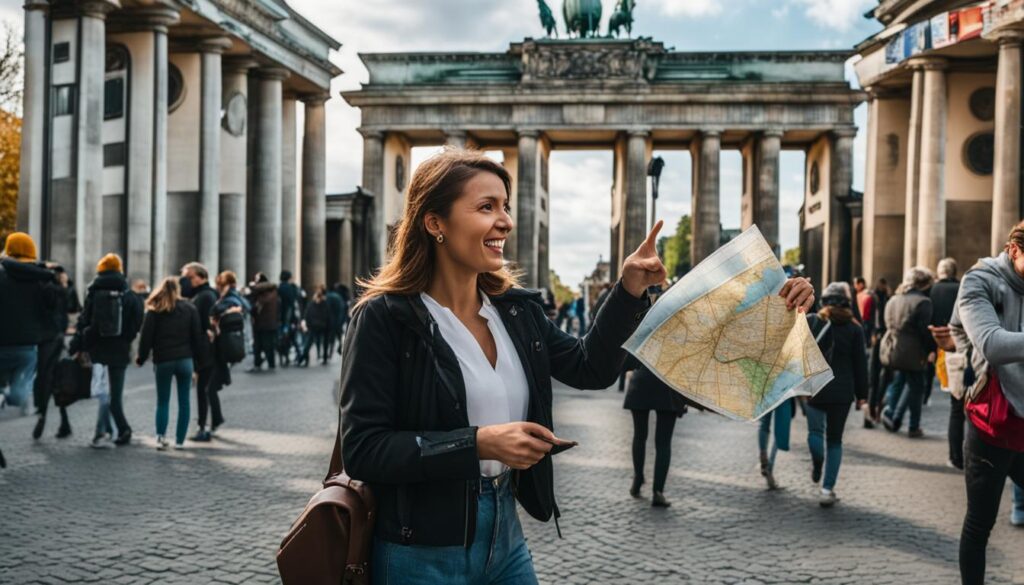
Berlin is home to numerous must-see tourist attractions, including the Brandenburg Gate, the Berlin Wall Memorial, and the Berlin Cathedral. When purchasing tickets or asking for information, you can say “Ich möchte ein Ticket kaufen” (I would like to buy a ticket) or “Wo ist [insert attraction here]?” (Where is [insert attraction here]?). To ask for directions, you can say “Wo ist die nächste U-Bahn-Station?” (Where is the nearest subway station?) or “Wie komme ich zur [insert attraction here]?” (How do I get to [insert attraction here]?).
Understanding Berlin’s Dialect and Slang
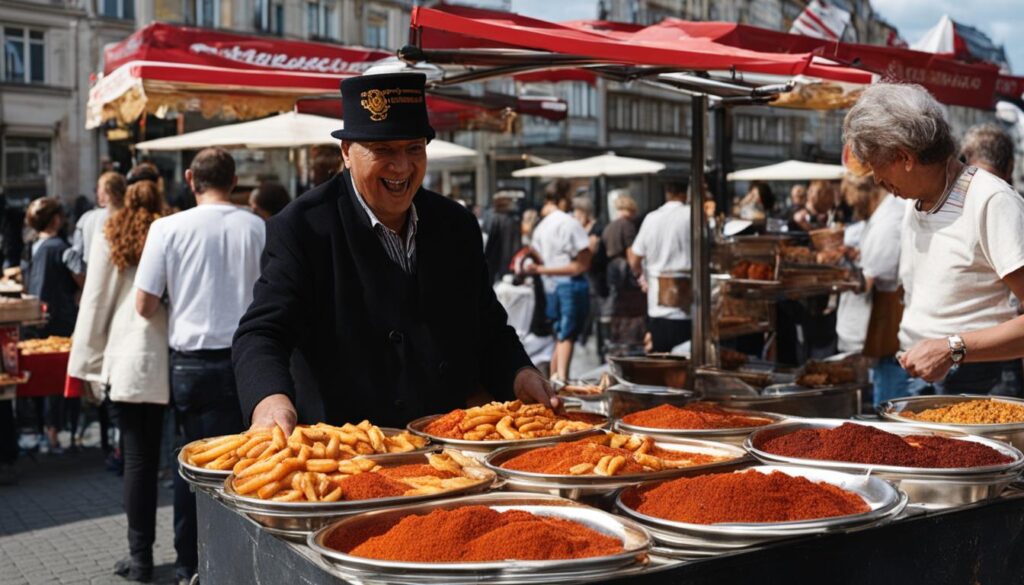
German is the official language in Berlin but the dialect spoken in the city is unique. Understanding Berlin’s dialect and slang will make it easier for you to communicate with locals and immerse in the culture more effectively. Many locals speak a mixture of dialect, slang, and standard German, so don’t be discouraged if you can’t understand them at first, it takes some time to get used to.
The Berlin dialect is a variation of the German language known for its distinctive pronunciation, vocabulary, and grammatical structures. Some of the unique features of the Berlin dialect include:
| Feature | Description |
|---|---|
| “ick” instead of “ich” | In Berlin dialect, “ich” is pronounced as “ick”. |
| “eene” instead of “eine” | The word “eine” meaning “a” or “an” is pronounced as “eene” in Berlin dialect. |
| “juten” instead of “guten” | The word “guten” meaning “good” is pronounced as “juten” in Berlin dialect. |
When it comes to slang, Berlin has a rich selection of words and phrases that locals use in daily conversation. Some of the most popular Berlin slang terms include:
- Jeile Ziege – translates to “cool goat” but is used to describe something or someone as really cool or awesome.
- Janz schön feddich – translates to “pretty tired” but is used to describe a person who is exhausted or worn out.
- Kiezkultur – describes the local culture and way of life in a specific neighborhood, or “kiez”, in Berlin.
- Schnauze voll haben – translates to “having a full mouth” but is used to describe being fed up or having had enough.
To better understand Berlin’s dialect and slang, it’s best to practice with locals or enroll in a language course that focuses on dialect and slang. Listening to local music or watching German movies and TV shows set in Berlin can also help you get more accustomed to the language.
Wrap Up
With a unique dialect and slang, Berlin is a city full of character and charm that can take some time to get used to. But with practice and patience, you’ll be able to communicate like a local and fully immerse yourself in the vibrant culture of the city. Keep these unique features in mind and have fun exploring all that Berlin has to offer!
Embracing Cultural Differences in Berlin
While learning to speak German like a local in Berlin, it’s important to understand and respect cultural differences. Cultural etiquette, customs, and traditions are prevalent in Berlin, and being aware of them can enhance your language experience and help you connect with locals. Here are some key aspects of German cultural etiquette to keep in mind:
Directness in Communication
In German culture, directness in communication is highly valued and expected. Germans tend to speak their minds frankly and openly, and it may come across as blunt or rude to those from other cultures. However, it’s important to understand that this is not intended to be offensive, but rather a sign of honesty and transparency. When communicating with Germans, be prepared for direct responses and don’t take them personally.
Personal Space
Germans value their personal space and tend to keep a greater distance between themselves and others. Hugging and other forms of physical contact are less common in German culture, especially with strangers or in professional settings. When interacting with Germans, be mindful of personal space and keep a respectful distance.
Punctuality
Punctuality is highly valued in German culture, and being late is considered rude. If you have plans to meet with a German friend or colleague, make sure to arrive on time or even a few minutes early. This shows respect for their time and demonstrates responsibility and reliability.
Paying for Your Round
In social settings, it’s common for Germans to take turns buying rounds of drinks or food. When it’s your turn to pay, make sure to cover the entire bill without expecting others to chip in. This is an essential part of German cultural etiquette, and failing to pay for your round can be seen as disrespectful.
By embracing cultural differences in Berlin, you can deepen your cultural immersion experience and build stronger connections with locals. Keep these cultural aspects in mind as you learn to speak German like a local, and you’ll find that your language skills improve and your experiences in Berlin are more meaningful.
Overcoming Challenges and Building Confidence
Learning a new language is never easy, and German is no exception. But with determination and a positive mindset, you can overcome the challenges and build your confidence in speaking German fluently, especially in Berlin where you can immerse yourself in the language and culture.
Here are some tips to help you stay motivated and improve your language skills:
Set Realistic Goals
Set achievable language goals to keep yourself motivated and track your progress. Whether it’s learning a new phrase, speaking with a native German speaker at a language meet-up, or completing a grammar exercise, setting goals helps you focus and measure your accomplishments.
Practice Makes Perfect
The key to language learning is practice. Try to speak German every day, even if it’s just a few words or phrases. Practice with native speakers, friends, or fellow language learners. Don’t be afraid to make mistakes, they are an essential part of the learning process and help you improve.
Stay Positive
Learning a language can be frustrating at times, but it’s important to stay positive. Focus on your accomplishments, no matter how small, and celebrate them. Don’t compare yourself to others, everyone learns at their own pace. Be proud of your progress and keep going.
Utilize Technology
Technology can help you learn German faster and more efficiently. Use language learning apps like Duolingo or Babbel to supplement your studies. Watch German TV shows or movies to practice your listening skills. And, most importantly, don’t forget to take breaks to avoid burnout.
“The limits of my language means the limits of my world.” – Ludwig Wittgenstein
By utilizing these tips, you can overcome the challenges of learning German and build your confidence in speaking fluently, especially in the immersive environment of Berlin. Remember to stay motivated, practice consistently, and stay positive. Soon enough, you’ll be on your way to speaking like a local.
Practicing German in Social Settings
Learning a language isn’t just about studying vocabulary and grammar rules – it’s also about practicing your skills in real-life situations. In Berlin, there are many opportunities to engage in social activities and events where you can practice your German in a relaxed and informal setting. By socializing in German, you’ll improve your language skills and gain confidence in speaking with locals.
One great way to practice German is to join a language meet-up group. These groups typically meet at cafes or bars and provide a casual environment for language learners to practice speaking with each other. You can find language meet-ups on websites like Meetup.com or through social media groups.
Another way to practice your German is to participate in cultural events, such as concerts, festivals, and museum tours. Not only will you be immersed in the German language, but you’ll also learn more about the culture and history of Berlin. This is a great way to expand your vocabulary and practice your listening and comprehension skills.
Finally, don’t be afraid to make new friends who speak German. Whether you meet locals or other language learners, having regular conversations with native speakers is one of the best ways to improve your fluency. Remember, everyone makes mistakes when learning a new language, so don’t be too hard on yourself if you don’t understand everything right away.
Tips for Socializing in German:
- Don’t be afraid to make mistakes – native speakers will appreciate your efforts to speak their language.
- Ask for clarification if you don’t understand something.
- Listen carefully to the language patterns and intonation used by native speakers.
- Try to use new vocabulary words and phrases that you’ve learned recently.
- Be respectful of cultural differences and customs when interacting with locals.
Using Technology to Enhance Your Language Learning
Thanks to modern technology, learning a new language has become easier and more accessible than ever before. German language apps and online resources can complement your language classes and enhance your learning experience. Here are some popular German language apps and resources that you can use to accelerate your language learning journey:
| App/Resource | Description |
|---|---|
| Duolingo | A popular language-learning app that offers bite-sized exercises to help you practice listening, speaking, and writing German. |
| Babbel | An app that offers interactive courses that are customized to your learning goals and needs. Babbel teaches you the language through real-life dialogues and scenarios. |
| Deutsche Welle | An online resource that provides news and entertainment content in German for language learners of all levels. Deutsche Welle also offers language courses, grammar lessons, and cultural insights. |
| Memrise | An app that uses gamification and spaced repetition to help you memorize German vocabulary and phrases. Memrise offers a wide variety of courses and topics, from beginner to advanced levels. |
| Lang-8 | An online community where you can practice your writing skills in German and receive correction and feedback from native speakers. Lang-8 allows you to connect with language learners and experts from around the world. |
These apps and resources are just a few examples of what’s available to you. They can help you build your language skills and stay motivated in your learning journey. However, it’s important to note that language learning requires extensive practice and dedication, so make sure to use these tools as supplements to your regular studies.
Final Thoughts
Learning how to speak basic German like a local in Berlin is an exciting and rewarding experience. By immersing yourself in the language and culture, practicing regularly, and utilizing the resources available, you can quickly improve your skills and confidence in speaking German.
Remember that language learning is a lifelong journey, and it takes time and practice to achieve fluency. Don’t get discouraged by setbacks or challenges, but instead, stay motivated and committed to your goals.
Whether you’re a frequent traveler to Berlin or a new resident, speaking German like a local can enhance your experience and open up new opportunities for personal and professional growth. So, take the first step today and start your German language learning journey in Berlin.