Secluded Shores: Off-Peak Beach Destinations for September
September is one of the most undervalued months for beach travel in the United States. Labor Day weekend marks the technical end of summer, and in the two to three weeks that follow, beach destinations see visitor counts drop by 30 to 50 percent while water temperatures remain at their annual warmest. Hotel rates fall 20 to 40 percent from August peaks. The crowds that make July and August beaches feel overcrowded simply evaporate.
This guide covers specific September beach destinations across the East Coast, Gulf Coast, West Coast, and Caribbean, with verified details on what each destination offers and what to expect from September conditions.
Why September works so well for beach travel
Ocean water temperature peaks in late August and holds through most of September on both US coasts. On the Atlantic seaboard from Florida to New England, surface temperatures range from 65 to 82 degrees Fahrenheit depending on latitude, with the warmest water occurring precisely when the crowds are smallest. The Pacific is similar: California water temperatures peak in late summer and September, making it the best swimming month at beaches that are cold or foggy most of the year.
The post-Labor Day crowd reduction is consistent and significant. Beach towns that host hundreds of thousands of summer visitors drop to a fraction of those numbers within two weeks of Labor Day. Restaurants that require reservations weeks in advance in August become walkable in September. Parking is available. The beach itself has space.
The trade-off: hurricane season runs through September on the Atlantic and Gulf coasts. Monitoring forecasts and having flexible booking with refundable rates is the practical response. Most September weeks pass without any hurricane threat affecting any specific destination.

September savings: what to expect on prices
| Expense category | Typical September discount vs. August | Notes |
|---|---|---|
| Beach hotels and resorts | 20 to 40 percent lower | Sharpest drops after Labor Day; mid-week rates lower than weekends |
| Vacation rentals | 25 to 45 percent lower | Weekly rates drop faster than nightly rates in September |
| Domestic flights to beach destinations | 15 to 30 percent lower | Tuesday/Wednesday departures consistently cheapest |
| Paid beach activities (surfing lessons, boat tours) | 10 to 25 percent lower | Some operators offer shoulder-season discounts on request |

East Coast hidden gems for September
The East Coast’s 3,000 miles of Atlantic shoreline include dozens of beach towns that operate at very different scales. Choosing a smaller town over a major resort destination delivers a more significant crowd reduction in September, since smaller towns see a proportionally larger share of their visitors leave after Labor Day.
The Carolinas: Outer Banks, Emerald Isle, and Nags Head
The Outer Banks is a 200-mile chain of barrier islands off the coast of North Carolina, accessible only by bridge or ferry. Nags Head, one of the main beach communities within the Outer Banks, offers 12 miles of continuous sandy shoreline without the high-rise hotel density of typical beach resorts. The Cape Hatteras National Seashore within the Outer Banks protects 70 miles of undeveloped coastline. September water temperatures in the Outer Banks average 76 to 78 degrees Fahrenheit, among the warmest of the year.
Emerald Isle, on the Crystal Coast of North Carolina roughly 90 miles south of the Outer Banks, has fewer than 4,000 permanent residents and sees an even sharper seasonal crowd drop after Labor Day. The beach is wide, flat, and mostly residential in character, making it quieter than resort-style Outer Banks communities.
Florida’s less-visited coastlines
St. George Island is a barrier island in the Florida Panhandle, accessible via a causeway from Eastpoint. Apalachicola National Estuarine Research Reserve surrounds the island, protecting the surrounding waters and limiting development. The beach runs 28 miles, and the island has no chain hotels or resorts. St. George Island State Park at the east end of the island contains some of the most undeveloped Gulf Coast beach in Florida.
Amelia Island, in the northeastern corner of Florida at the Georgia border, combines a historic downtown district with Atlantic beaches. The island is 13 miles long and home to established resorts like the Omni Amelia Island Resort (from approximately $250/night as of 2026) alongside vacation rentals at all price points. September is statistically the driest month of the year on Amelia Island.
Vero Beach, on Florida’s Treasure Coast roughly 100 miles north of Miami, maintains a residential character that keeps summer crowds lower than most Florida beach towns. Ocean Drive is the main beach corridor; the Kimpton Vero Beach Hotel (from approximately $200/night as of 2026) anchors the beachfront hotel inventory.
New England’s September coast
New England offers a different kind of September beach: cooler air temperatures in the 60s and 70s, brisk Atlantic water ranging from 58 to 68 degrees Fahrenheit, and landscapes beginning the transition to fall color. Sand Beach at Acadia National Park in Bar Harbor, Maine, is one of the rare sandy beaches in a region dominated by rock and pebble coastline. September is ideal: the August crowds ease, fall foliage on Acadia’s carriage roads begins in late September, and the park remains fully open. Ocean Path connects Sand Beach to Thunder Hole and Otter Cliff, offering the best shoreline hiking in the Northeast.
Crane Beach in Ipswich, Massachusetts, covers four miles of barrier beach operated by the Trustees of Reservations. It requires advance parking passes on peak summer days; in September, passes are almost always available day-of.
Gulf Coast September destinations
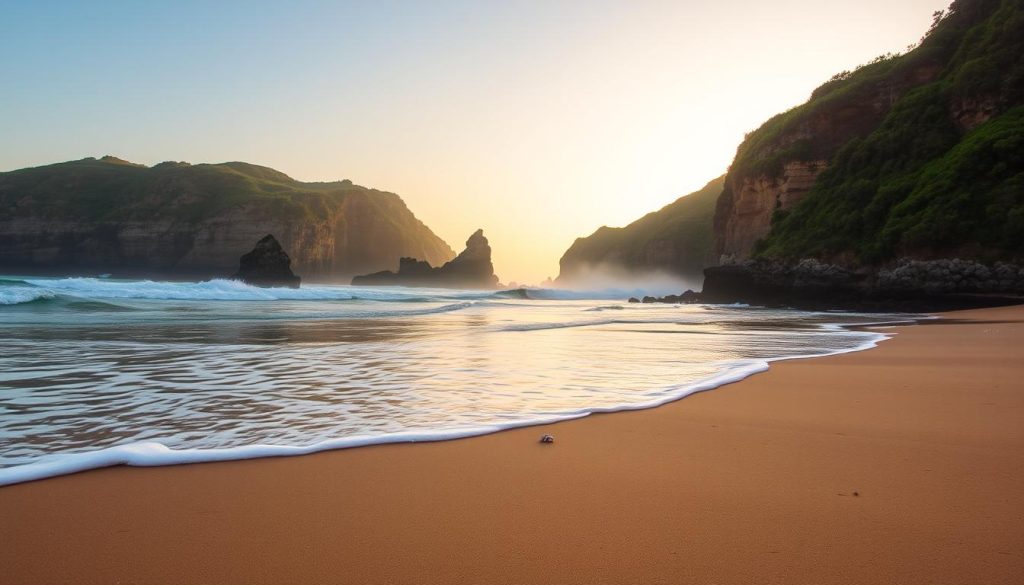
Gulf Coast water temperatures hit their annual peak in September, topping 83 to 86 degrees Fahrenheit. But September is also statistically the peak of Atlantic hurricane season. The ABC islands (Aruba, Bonaire, Curacao) are outside the hurricane belt; Gulf Coast destinations are not. Travel insurance and refundable bookings are worth the cost here more than anywhere else in this guide.
Gulf Shores, Alabama, is a family-oriented beach town with Gulf State Park at its eastern end. The park contains a 6,150-acre protected area with an interpretive center, a fishing pier, and 28 miles of trails in addition to 2.5 miles of Gulf beach. September temperatures average 78 to 84 degrees Fahrenheit, the water is calm, and hotel rates fall 25 to 35 percent from peak as of 2026.
South Padre Island, Texas, sits at the southern tip of Texas, 30 miles north of Brownsville. Sea Turtle Inc. at 6617 Padre Boulevard is open to visitors and conducts sea turtle releases open to the public. September water temperatures average 83 degrees Fahrenheit. Crowds are a fraction of spring break numbers, and hotel rates reflect it.
Galveston, Texas, is 50 miles southeast of Houston with 32 miles of Gulf shoreline. Stewart Beach and East Beach are the two main municipal beaches with facilities. The Hotel Galvez and Spa, a Wyndham Grand Hotel that opened in 1911, anchors the beachfront hotel inventory at approximately $180 to $280 per night as of 2026. Galveston’s downtown Strand historic district and the 1892 Bishop’s Palace give the city more cultural depth than most Gulf beach towns.
West Coast September escapes
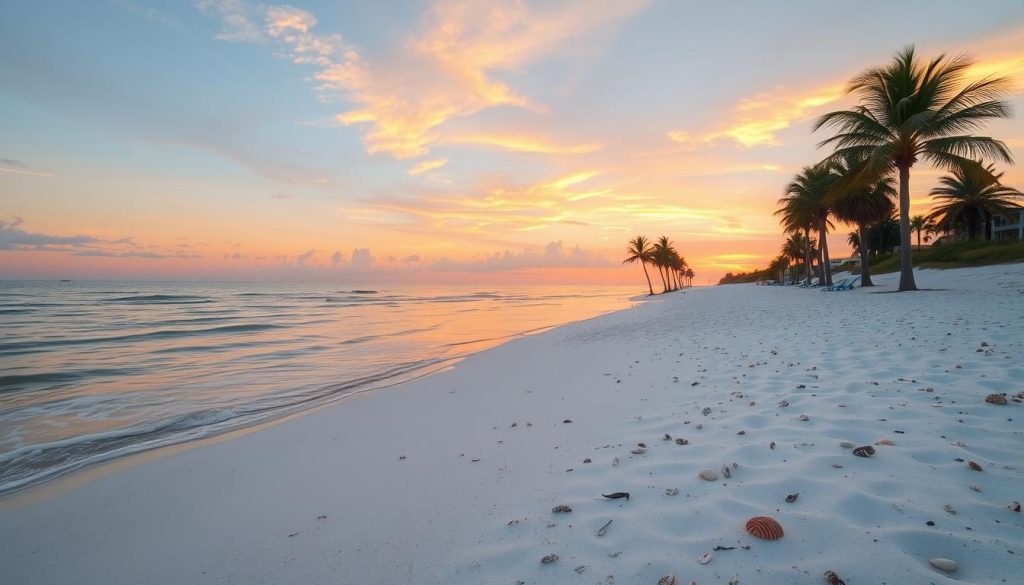
September is when the coastal marine layer that causes June Gloom (heavy morning fog from San Diego to San Francisco) typically clears, creating the clearest and warmest coastal weather of the year. This makes California a genuinely excellent September beach destination, particularly for visitors who assumed California beaches would be warm in June and July and were disappointed.
California coastal destinations
Santa Cruz is 75 miles south of San Francisco on Monterey Bay. Water temperatures in September average 58 to 62 degrees Fahrenheit, warmer than most of the California year, and the Santa Cruz Beach Boardwalk operates a 1924 Giant Dipper wooden roller coaster on the National Register of Historic Places. September rates at the Dream Inn Santa Cruz (from approximately $250/night as of 2026, directly above the beach) are typically 20 to 30 percent lower than July.
Laguna Beach, 50 miles south of Los Angeles in Orange County, is a small artist colony with 7 miles of rocky coastline broken into 30 separate coves. The Pageant of the Masters, Laguna’s signature summer art festival, runs through early September. September water temperatures average 68 to 72 degrees Fahrenheit. The main commercial corridor on Coast Highway contains more than 80 independent art galleries.
Oregon: Cannon Beach
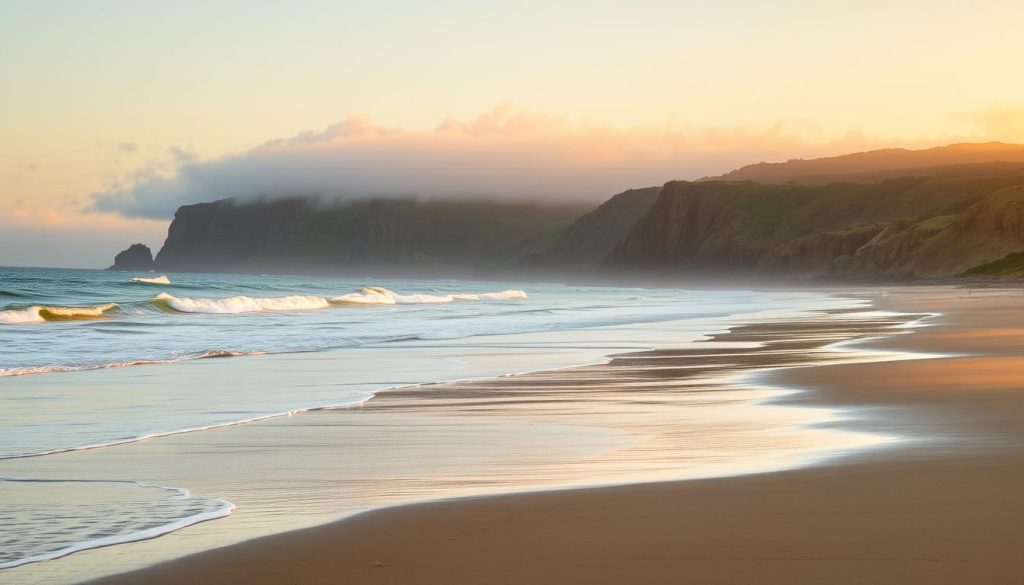
Cannon Beach is on the northern Oregon coast, 80 miles west of Portland. Haystack Rock is a 235-foot sea stack sitting 100 yards offshore, accessible on foot at low tide and protected as a marine garden. September crowds ease significantly from the summer peak. Water temperatures are around 55 degrees Fahrenheit, limiting swimming, but the volcanic rock formations, tidal pools, and coastal hiking at Ecola State Park make Cannon Beach one of the most scenically compelling spots on the West Coast.
Island destinations for September
The ABC islands, Aruba, Bonaire, and Curacao, sit in the southern Caribbean between 50 and 80 miles north of Venezuela, placing them south of the hurricane belt. This is the single most important fact about September Caribbean travel: these three islands do not experience hurricanes and are safe to book without the flexibility concern that applies to most Caribbean and Gulf destinations in September.
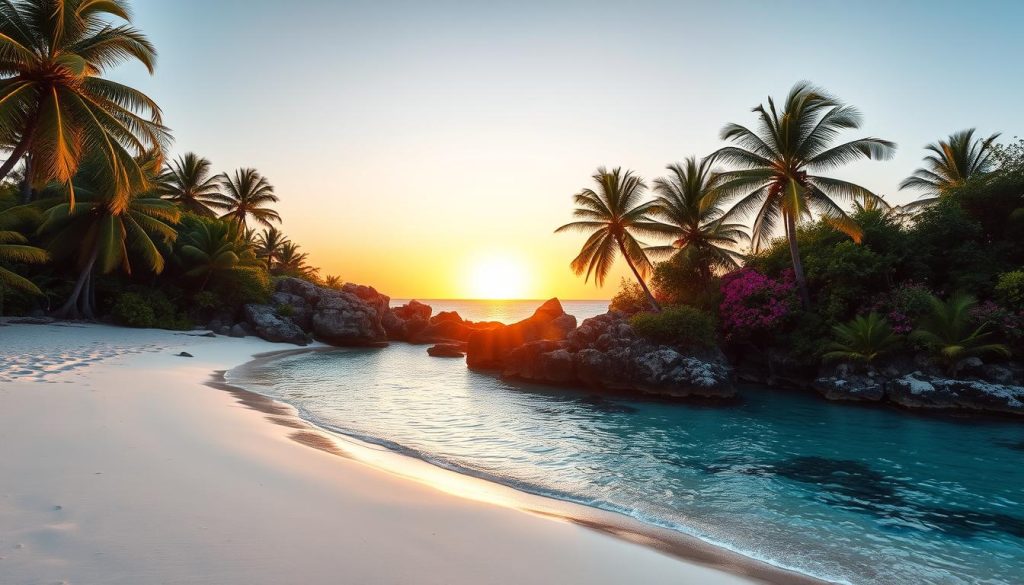
Aruba is the most developed of the three for resort tourism. Eagle Beach is a two-mile stretch of white sand on the island’s leeward western coast. September is technically Aruba’s low season, and hotel rates at resorts like the Manchebo Beach Resort drop from peak. Water temperature averages 82 degrees Fahrenheit. Trade winds blow consistently throughout the year, keeping air temperatures manageable at 85 to 88 degrees Fahrenheit.
Bonaire’s primary draw is diving. The Bonaire National Marine Park protects all waters around the island, and 65 identified dive sites are accessible by shore from the island’s main road with a single park entry fee. September water visibility in Bonaire averages 60 to 100 feet.
Curacao’s Willemstad, the capital, is a UNESCO World Heritage Site for its 18th-century Dutch colonial architecture. The Mambo Beach resort area and Caracasbaai are the main beach concentrations. September visitor numbers are among the year’s lowest, making it easier to access the island’s museums, restaurants, and historic sites without crowds.
Where to stay: September beach hotels by region
| Hotel | Location | September rate (2026) | Best for |
|---|---|---|---|
| Omni Amelia Island Resort | Amelia Island, FL | From ~$250/night | Golf, spa, Atlantic beach, close to historic Fernandina Beach downtown |
| Hotel Galvez and Spa (Wyndham Grand) | Galveston, TX | From ~$180/night | Gulf Coast landmark opened 1911, steps from Seawall Boulevard |
| Dream Inn Santa Cruz | Santa Cruz, CA | From ~$250/night | Directly above Cowell Beach, Pacific views, walkable to Boardwalk |
| Kimpton Vero Beach Hotel | Vero Beach, FL | From ~$200/night | Quieter Atlantic coast, oceanfront, relaxed Treasure Coast atmosphere |
| Manchebo Beach Resort | Aruba | From ~$225/night | Hurricane-free Caribbean, adults-only, on widest beach in Aruba |
Booking strategies for September beach travel
September beach bookings benefit from a different approach than peak summer reservations. In peak summer, booking 3 to 6 months out is standard practice. In September, the advantage shifts: last-minute availability improves significantly, and hotels often discount unsold inventory in the week before arrival. A reliable strategy is booking a refundable rate 4 to 6 weeks before the trip, then checking for lower prices in the 7 to 14 days before arrival and rebooking if a better rate appears.
Midweek check-in consistently yields lower rates than weekend check-in at beach destinations. A Tuesday to Saturday stay at a September beach hotel typically costs 15 to 25 percent less than a Friday to Monday stay covering the same number of nights.
What to pack for a September beach trip
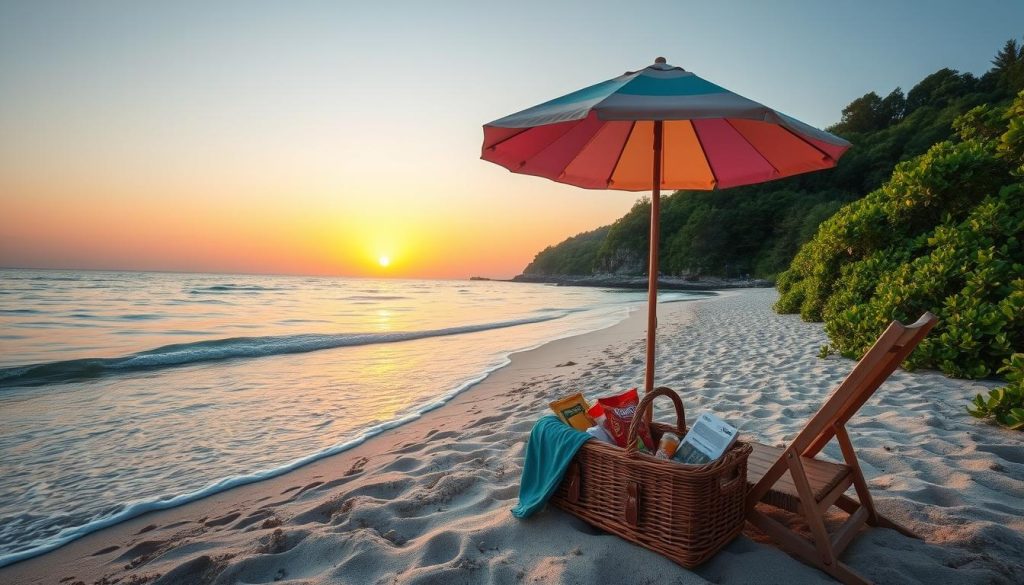
September packing is more variable than summer packing because the temperature spread between a warm afternoon and an evening near the water can be 15 to 25 degrees Fahrenheit, especially in New England and the Pacific Northwest. The core principle is layers: a light jacket or fleece that fits in a day bag handles the range from an 85-degree beach afternoon to a 62-degree harbor cruise that evening.
Reef-safe sunscreen is required for Bonaire’s national marine park and recommended at any coral reef destination. Standard chemical sunscreens containing oxybenzone and octinoxate are banned in several Caribbean jurisdictions. Mineral-based sunscreens (zinc oxide, titanium dioxide) comply with reef-safe requirements at all currently restricted destinations.

Frequently asked questions
Is September a good time to go to the beach?
September is one of the best months for beach travel if you prioritize low crowds and affordable rates over peak-season atmosphere. Ocean temperatures are at or near their annual warmest on both US coasts. Hotel rates are 20 to 40 percent lower than August. The main trade-off is hurricane risk on the Atlantic and Gulf Coasts, which can be managed by choosing refundable bookings, monitoring forecasts, and considering hurricane-safe alternatives like the ABC islands.
Which US beach is best in September?
St. George Island, Florida, Amelia Island, Florida, and Gulf Shores, Alabama, are the strongest domestic September beach destinations for warm water, low crowds, and lower prices. On the West Coast, Santa Cruz and Laguna Beach in California reach their warmest and clearest conditions in September. For New England’s coastal hiking and seafood culture without swimming, Sand Beach at Acadia National Park in Maine is the most distinctive option.
Is it safe to go to the Caribbean in September?
The ABC islands (Aruba, Bonaire, and Curacao) sit south of the hurricane belt and are safe to book in September without hurricane-related concerns. Other Caribbean destinations including Puerto Rico, the US Virgin Islands, and most of the Lesser Antilles are within the hurricane zone and carry moderate to high risk in September. Travel insurance with “cancel for any reason” coverage and refundable hotel bookings are the standard approach for hurricane-zone Caribbean travel in September.
Do beaches close after Labor Day?
No, but some facilities reduce hours or close seasonally. Lifeguard staffing is reduced or eliminated at many municipal beaches in the Northeast after Labor Day, shifting swimming to “swim at your own risk” status. Most beach towns in Florida, the Gulf Coast, and California operate year-round with full services through September. State and national park beaches typically maintain services through October. Check lifeguard status before swimming at unfamiliar beaches.
What is the water temperature at East Coast beaches in September?
East Coast water temperatures in September range from roughly 76 to 80 degrees Fahrenheit from the Mid-Atlantic through Florida’s Atlantic coast, and from 60 to 68 degrees in New England. This makes September one of the warmest swimming months of the year for mid-Atlantic beaches. Gulf Coast water is 83 to 86 degrees Fahrenheit in September, the warmest of any US coast.
What is the hurricane risk at September beach destinations?
September 10 is historically the statistical peak of Atlantic hurricane season. The risk is real but not constant: most September weeks pass without a hurricane affecting any specific destination. The Gulf of Mexico and the Bahamas-to-Carolinas corridor carry the highest September risk. The ABC islands (Aruba, Bonaire, Curacao), the Pacific Coast, and the Pacific Northwest carry no hurricane risk. Booking refundable rates and purchasing travel insurance reduces the financial exposure to weather disruption.