Protect Luggage from Tampering: Best Tips Revealed
Los Angeles and New York have the most reports of missing items from baggage in the U.S. For those who travel a lot, keeping your things safe is a big worry. We’ll show you how to keep your luggage safe from tampering, so your next trip is worry-free.
There are many ways to keep your luggage safe, from TSA-approved locks to unique cable ties. But while TSA locks are needed in North America, they can make your bags vulnerable. It’s important to know which methods will keep your luggage safe.
If you want to know the best way to keep your luggage safe or need tips on doing it, continue reading. We’ll share important advice and strategies. This way, your travel will be easy and your belongings safer.
Use TSA Locks for North American Travel
When you travel in North America, make sure to use TSA locks on your luggage. TSA locks keep your stuff safe and let TSA agents check your bags without breaking them. If you don’t use these locks, your belongings could be at risk of theft and damage.

Benefits of TSA Locks
TSA locks are great for keeping your travel gear secure. They can be opened by TSA with a universal key, so your lock won’t break during inspections. This solves most security worries. Plus, they help keep your bags safe from thieves and nosy baggage handlers in North America.
- Prevents damage during inspections
- Locks deter casual theft attempts
- Enhances overall travel confidence
Risks of Not Using TSA Locks
Skipping TSA locks can mean more risk for your luggage. Every year, around 25 million bags get lost in North America. And there’s a theft from checked bags on 1 in every 1,200 flights. If TSA needs to open your bag and it’s not locked with a TSA lock, they might have to break the lock. This could hurt your belongings.
- Higher risk of theft and tampering
- Potential for permanent lock damage
- Decreased chances of luggage recovery
What’s the best way to safeguard my luggage from tampering?
Wondering how to keep your luggage safe? It’s about using several smart strategies together. This keeps your stuff protected.
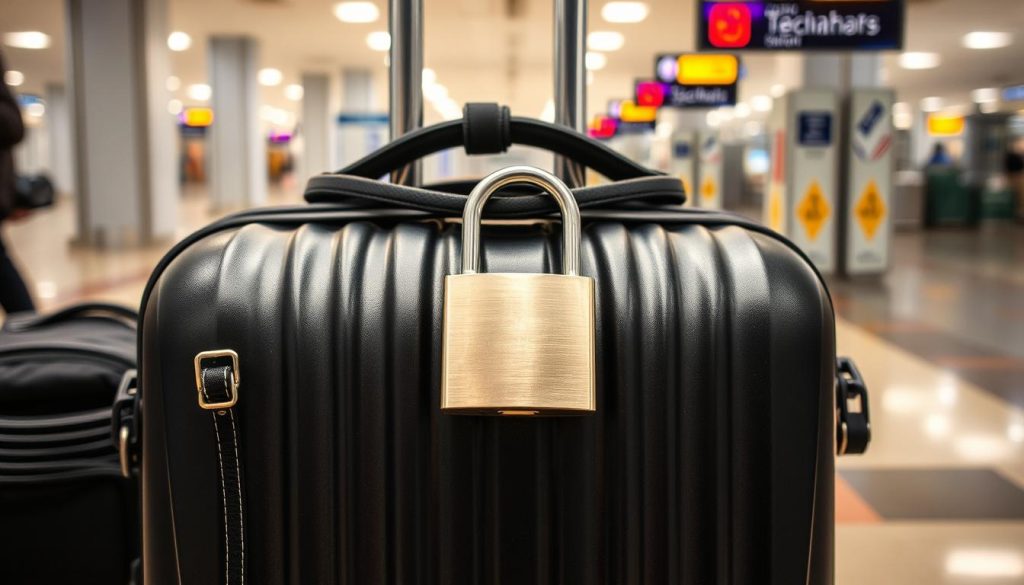
Firstly, secure your bags with TSA-approved locks. This is a must for travel in North America. These allow TSA agents to check your bag without breaking the lock.
Moreover, you can add extra protection for your luggage by:
- Hiding valuables inside your bag. Thieves often grab items from the top first.
- Using plastic wrap at airports. It’s hard for thieves to remove, which protects your suitcase.
- Carrying high-value items with you instead. Baggage handlers could see valuables through x-ray scanners.
- Attaching tough ID tags. It makes sure your bag stays identified.
- Putting ribbons on the zippers. This shows if someone tried to open your bag.
Also, hard shell suitcases with multiple latches are a good move. They give better protection than bags made of fabric. Picking a suitcase in a bright or unusual color helps too. It makes yours easy to spot and less likely to be taken by mistake.
Thinking about how to protect your luggage? Getting to the airport early helps too. Being early, like an hour or 90 minutes before your flight, means fewer chances for tampering. It’s when your bags are more watched during check-in.
Using all these tips together can lessen theft risk. It ensures your luggage stays secure while you travel.
Secure Your Luggage with Numbered Cable Ties
Boost your travel security easily with numbered cable ties for luggage security. These budget-friendly, yet strong, luggage ties keep your things safe while you travel. They close your bags in a special way that shows if someone tried to open them.
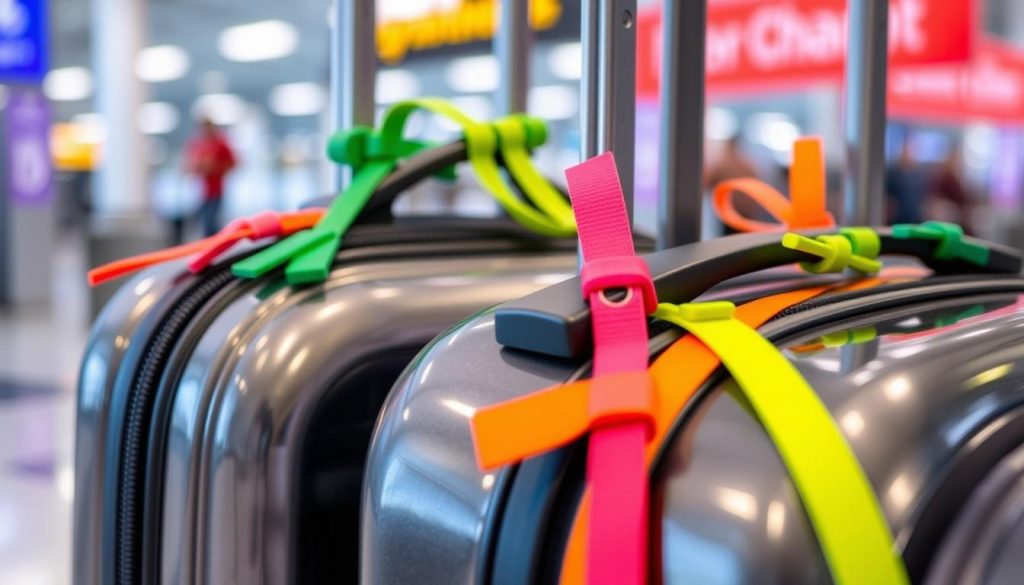
It’s hard to mess with numbered cable ties without getting caught, making them great for keeping your luggage safe. They work even better when used with TSA locks or the wrapping services airports offer. This combination is a powerful way to keep your stuff safe.
These ties are not only tough but also cheap, costing less than $5 for a hundred on Amazon. Adding them to your travel gear won’t break the bank. Plus, they help you spot if anyone tried to open your luggage, which is often too late to figure out otherwise.
Taking steps like using numbered cable ties and hiding valuable items in your luggage can greatly lower the chance of theft. Adding more safety measures, like splitting valuables across bags or using ribbons on zippers, makes stealing even tougher.
Here’s a comparison of numbered cable ties with other luggage safety methods:
| Security Measure | Effectiveness | Cost | Ease of Use |
|---|---|---|---|
| Numbered Cable Ties | High | Low | Easy |
| TSA Locks | Moderate | Moderate | Easy |
| Plastic Wrapping | High | Moderate | Moderate |
No single security method is perfect, but combining numbered cable ties for luggage security with other steps makes a big difference. Being prepared, whether your trip is in the country or abroad, helps keep your belongings secure.
Advantages of Fixed Locks on Zippered Bags
Choosing fixed luggage locks for zippered bags boosts travel security greatly. These locks prevent theft and heighten security on your trips.
Preventing the ‘Pen Trick’
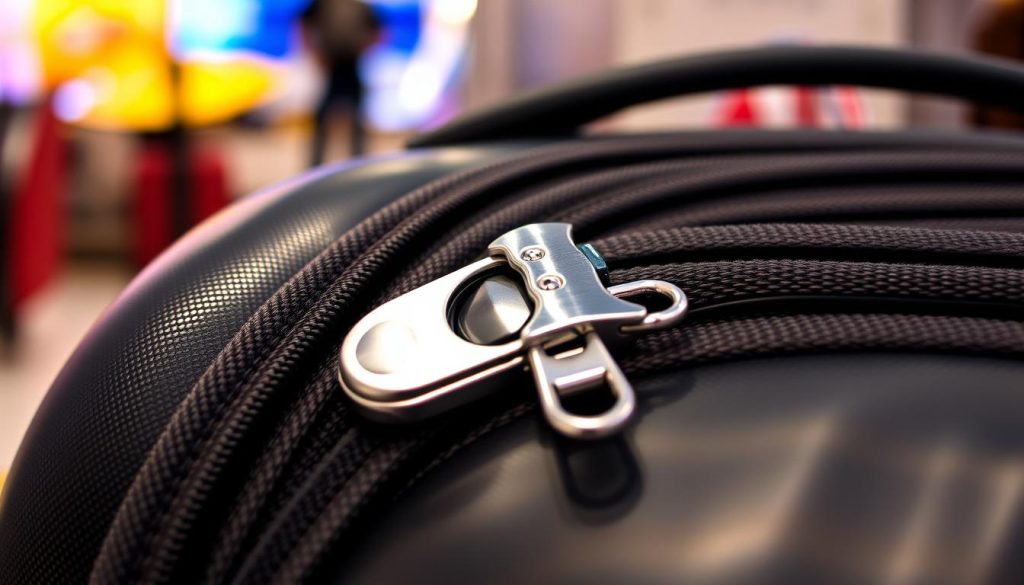
Fixing locks on zippered bags stops the ‘pen trick,’ a common way thieves open bags. With these locks, this trick won’t work well. The locks secure the bags and show if someone tried to tamper with them, keeping thieves away.
Why Fixed Locks Matter
Fixed locks are essential for extra security. They blend with the bag’s design, making it tough for intruders to get inside without leaving marks. With travel thefts rising, they ensure your bag’s safety, offering peace of mind.
The security from fixed locks lessens the chance of losing valuable items. They keep your belongings safe, reducing worries on trips, helping you to enjoy your journey more.
Implementing Tamperlock for Extra Security
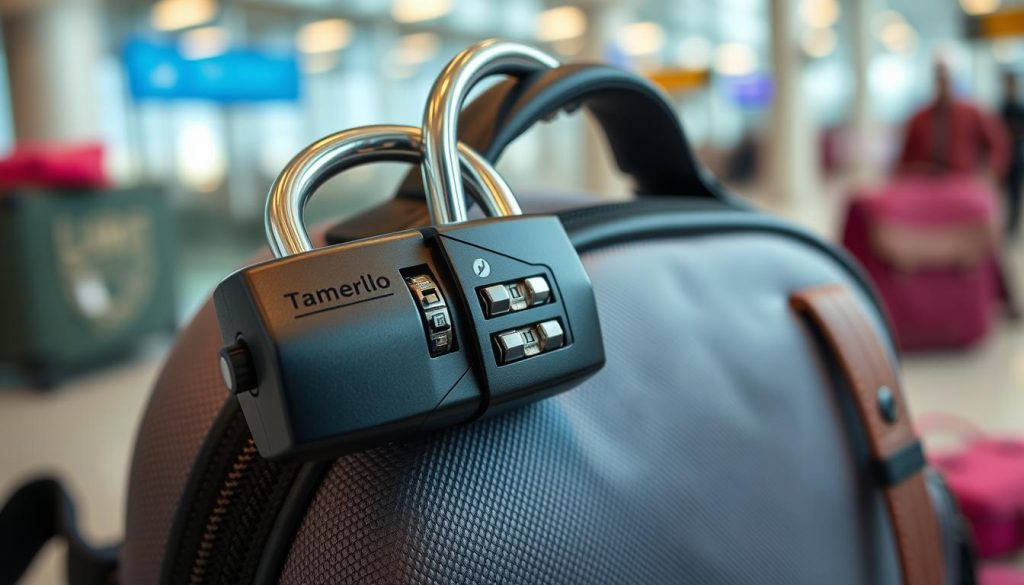
Traveling with peace of mind is key. Extra luggage security is vital to keep your belongings safe. The Tamperlock for bags is a great option. It combines advanced tech with tamper evidence, offering a solid layer of protection.
The Tamperlock system is strong, borrowed from tech used in the banking sector. It uses tamper-evident labels with serial numbers. This lets you spot if someone tries to open your luggage, reducing the risk of tampering while you travel.
How Tamperlock Works
The Tamperlock for bags uses plastic ties and numbered tags. These tags keep the zipper secure, preventing it from opening without breaking the seal. Every label’s unique number adds to safety and traceability, not allowing for unnoticed replacements.
- High-security technology: Comes from the banking world, ensures solid protection.
- Clear tamper evidence: Labels show clear signs if tampered with, boosting security.
- Accountability: Unique numbers on labels stop unauthorized changes.
Potential Drawbacks of Tamperlock
The Tamperlock for bags improves security but has limits. The plastic ties can be broken by persistent thieves. So, it’s wise to use Tamperlock with other extra luggage security measures for full protection of your items.
| Feature | Benefit |
|---|---|
| Unique Serial Numbers | Prevents label replacement and boosts accountability |
| Clear Tamper Evidence | Shows if someone tried to get in, stopping thieves |
| High-Security Technology | Brings strong tech from the cash transfer world |
| Use with Other Security Measures | Makes your stuff even safer by adding more protection layers |
To get the most out of the Tamperlock for bags, mix it with other security steps. This ensures your luggage stays secure all trip long.
Shrink Wrap Your Suitcase for Added Protection
If you’re looking to protect your luggage, consider shrink wrapping it. This method adds an extra security layer. It helps keep your stuff safe from theft and damage like scratches or stains. Many travelers find shrink-wrapping their suitcases highly effective.

Why Shrink Wrapping is Effective
Shrink wrapping luggage works well for stopping theft, especially in places where it’s common. It not only protects your bags from damage but also makes it hard for thieves to get inside. If your suitcase is too full, shrink wrap keeps it from bursting open.
It’s also a great solution for holding together damaged luggage until you can fix or replace it. This method is practical and efficient.
Where to Find Luggage Wrapping Services
You can find luggage wrapping at most major airports worldwide. It’s easy for travelers to access. In the US, companies like Secure Wrap and Seal & Go do suitcase wrapping.
Prices range from $15 to $35, based on how big and what shape your suitcase is. Also, Secure Wrap offers a free re-wrap after TSA checks. This helps keep your luggage safe, even if it’s opened for inspection.
Plan Ahead with the Right Gear
Getting ready with the right gear can greatly reduce the chances of luggage issues while traveling. It’s crucial to think about secure luggage strategies and look for ways to prevent tampering.
Choosing luggage with extra security features is key. The Pelican Case costs between $100 to $300 and is great for safeguarding valuable items. On the other hand, the Pacsafe security system is more budget-friendly, ranging from $30 to $70, and still boosts luggage safety.
Adding anti-theft luggage zipper straps, which cost about $10 to $25, can offer more security. They help protect your suitcase from getting tampered with, especially from the pen trick. Zippered suitcases are more at risk, so these straps are a clever choice.
Using shrink wrap services is another way to keep your luggage safe. These services, costing $15 to $30 per bag, make it tough for thieves to get to your stuff. The clear wrap also stops them because it’s hard to remove without being noticed. Wrapped luggage is less attractive to thieves, as it’s harder to open.
If you’re carrying firearms or other expensive items, choosing the right storage is vital. TSA rules require firearms to be in locked containers. In-Car Gun Lockers cost between $50 and $150 and offer good security options for following these rules and keeping your items safe while on the move.
Remember all the secure luggage advice as you plan your trip. Picking the right security gear, expensive or not, plays a big part in keeping your items safe while you travel.
Practical Tips for Safe Luggage Handling During Travel
Being careful with your luggage can lower the chance of theft and damage. Here are useful tips to keep your luggage safe during trips.
Never Leave Your Bag Unattended
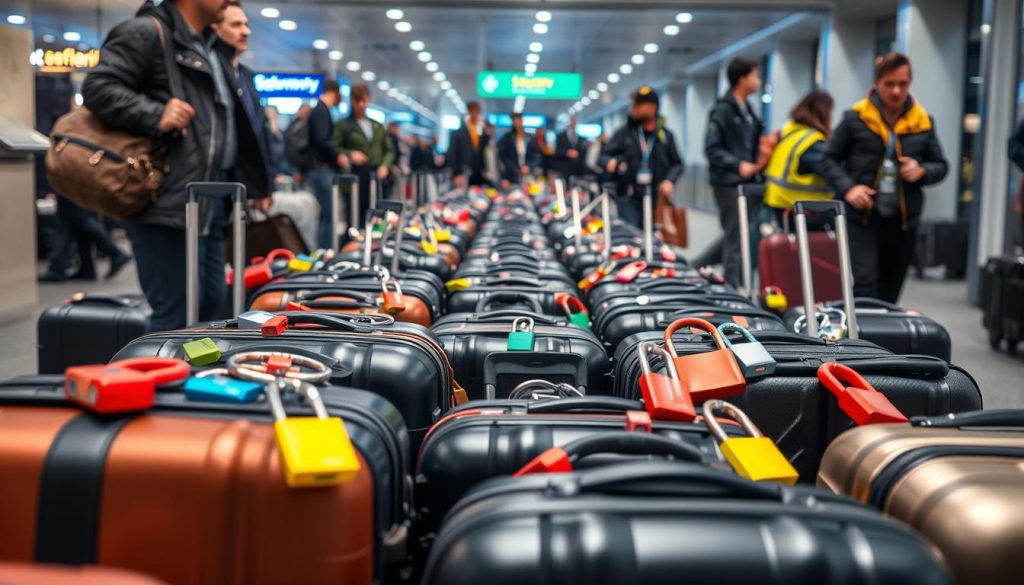
It’s key to always watch your bags in public places. Airports and train stations attract thieves looking for a quick steal. Keeping your bags close helps avoid them being taken.
Keep Valuables with You
Always carry important items like electronics and money in your hand luggage. This keeps them safe and under your watch. Valuables can attract thieves, especially at airports, so keep them close.
Take more steps to boost your luggage’s security:
- Use TSA-approved locks to deter thieves and facilitate TSA inspections.
- Wrap your suitcase in plastic to add an extra layer of security.
- Label your luggage with distinctive markers to make it easily identifiable.
- Divide your valuables among multiple bags to minimize loss in case of theft.
| Tip | Effectiveness |
|---|---|
| Never leave bags unattended | High |
| Keep valuables in carry-on | High |
| Use TSA-approved locks | Moderate |
| Plastic wrapping | Moderate |
| Label with markers | Low |
| Divide valuables | High |
Mixing these tips can help keep your luggage safe during travel. Always be alert and ready to protect your things, ensuring they arrive safely with you.
Insurance and Loss Prevention Strategies
As travel bounces back, protecting your luggage matters more than ever. Getting travel insurance for your bags is key. It pays you back for lost, stolen, or damaged items. This peace of mind is priceless when you’re on the move.
Choosing the Right Travel Insurance
Start by figuring out what your trip needs. Find policies that cover pricey items like gadgets and jewelry. These items might not be covered by airlines if they’re lost. With the rise in luggage theft, a good policy is essential.
Think about how much the insurance costs. Checking bags costs about $30 each. The right coverage can save you money in the long run. Use tracking devices on your bags to lower the chance of loss.
Being Prepared for Loss
Even with precautions, bags can get lost or messed with. Know how to deal with this includes knowing how to get money back from airlines. They pay a set amount for lost bags. Knowing how to claim can make things faster. Keep copies of important papers to help you deal quickly with loss.
Also, using credit cards that protect against fraud and VPNs on public Wi-Fi boosts your security. About 60% of people now do this. It shows how vital these steps are today.
| Preventive Measure | Percentage of Travelers Using It |
|---|---|
| Travel Insurance | 30% |
| Credit Cards with Fraud Protection | 70% |
| VPN Usage | 25% Increase |
| Digital and Physical Document Copies | 60% |
| Tracking Devices (e.g., AirTag) | 20% Reduction in Loss |
Conclusion
To protect your luggage, you should use several approved security steps, handle your baggage carefully, and plan well. Using luggage security measures like TSA locks, numbered cable ties, and fixed locks helps a lot. Also, wrapping your suitcase in plastic or using Tamperlock can make your bags safer.
Planning ahead by picking the right tools and being alert is key. Always keep valuable items with you and never leave your luggage alone. Knowing about thefts at big airports and how different locks work can help you protect your bags better.
It’s important to be ready for anything by choosing good travel insurance and knowing what to do if your luggage gets lost or stolen. Airlines, such as Delta Air Lines, have paid passengers back for lost bags, showing why it’s crucial to report issues fast. By using these safeguarding baggage tips and being mindful of risks, you can travel more safely and with less worry.