10 Days in Bosnia and Herzegovina: A Complete Itinerary
Bosnia and Herzegovina fits a surprising amount of variety into a small footprint. The country is roughly the size of West Virginia, but within that space you get Ottoman old towns, Austro-Hungarian architecture, one of Europe’s last primeval forests, Mediterranean-climate vineyards, ski mountains that hosted the 1984 Olympics, and rivers so clear they look artificial. It’s also one of the cheapest countries in Europe, which helps when you’re stretching a trip to 10 days.
This itinerary moves through the country roughly in a loop, starting and ending in Sarajevo. A rental car gives the most flexibility, but bus connections between major cities are reliable and cheap. Budget roughly 60-90 BAM ($33-50 USD) per day for accommodation, food, and local transport outside of Sarajevo.
Day 1: Sarajevo
Sarajevo earns a full day. Start in Baščaršija, the Ottoman-era old bazaar. The Sebilj fountain at the center is the visual anchor, but the real experience is wandering the surrounding copper-working, leather, and jewelry lanes. The transition from Ottoman architecture to Austro-Hungarian buildings happens within a few blocks along Ferhadija Street, a visible timeline of the city’s layered history.
Visit the Latin Bridge, where the assassination of Archduke Franz Ferdinand triggered World War I. The spot is marked but understated. Nearby, the Sarajevo War Tunnel Museum (Tunel Spasa) is essential. Located at the former airport, this tunnel was Sarajevo’s only connection to the outside world during the 1992-1995 siege. You can walk through a preserved section of the original tunnel. Admission is about 10 BAM.
For lunch, try ćevapi at Željo or Petica in Baščaršija. A full portion with bread, onions, and kajmak costs 8-12 BAM ($4-7 USD). Bosnian coffee (not Turkish coffee, locals will correct you) is served in a džezva and should be drunk slowly.
In the afternoon, take the cable car up Trebević mountain for panoramic views of the city and the abandoned 1984 Olympic bobsled track.

Day 2: Mostar
The bus from Sarajevo to Mostar takes about 2.5 hours and costs around 20 BAM. The route itself is scenic, following the Neretva River valley through dramatic gorges.
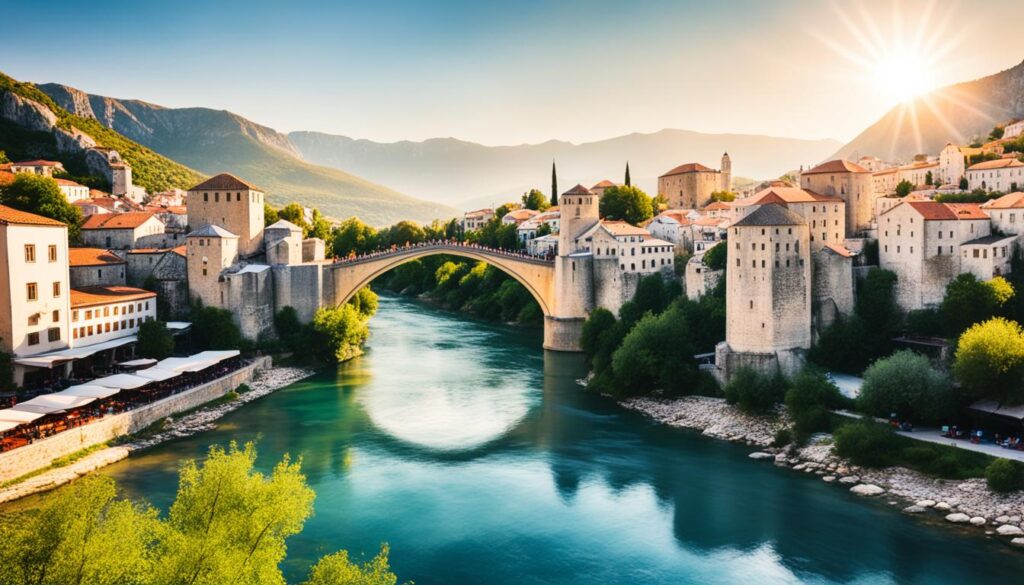
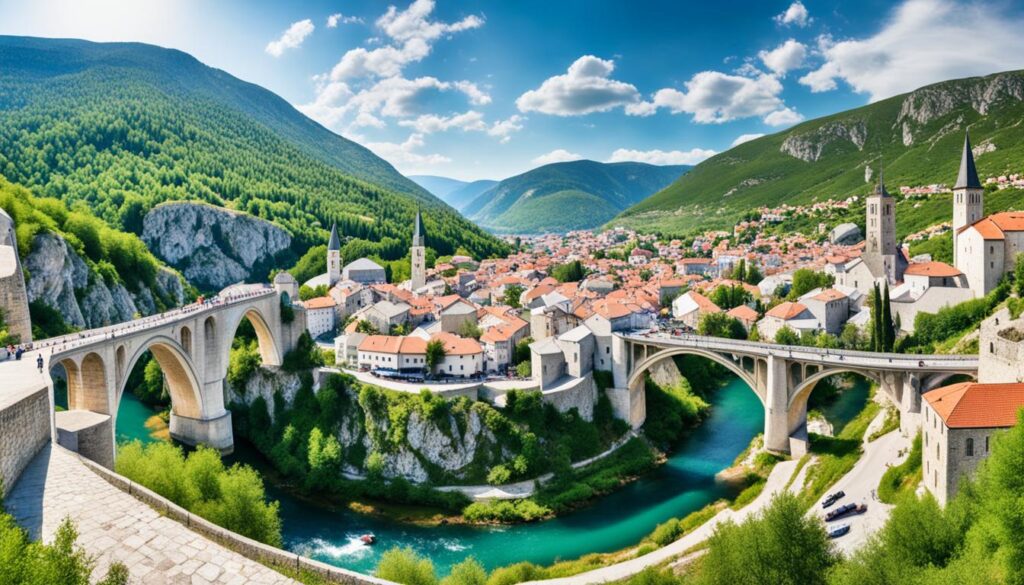
Mostar’s Stari Most (Old Bridge) is the defining image of Bosnia and Herzegovina. The original 16th-century Ottoman bridge was destroyed in 1993 during the war and rebuilt using the same stone and techniques, reopening in 2004. The bridge and surrounding old town are a UNESCO World Heritage Site.
Walk across the bridge, explore the old town bazaar, and if you’re there in summer, watch the bridge divers who jump from the 24-meter height into the Neretva below (a tradition dating back centuries, now part of an annual competition each July).
Visit the Muslibegović House, a beautifully restored Ottoman-era home that functions as both a museum and a hotel. Rooms start around 100 BAM ($55 USD) per night and include a traditional Bosnian breakfast.
Mostar is small enough to see in a day, but spending the night lets you experience the old town after the day-trippers leave, when the atmosphere shifts entirely.
Day 3: Kravice Waterfalls and Blagaj
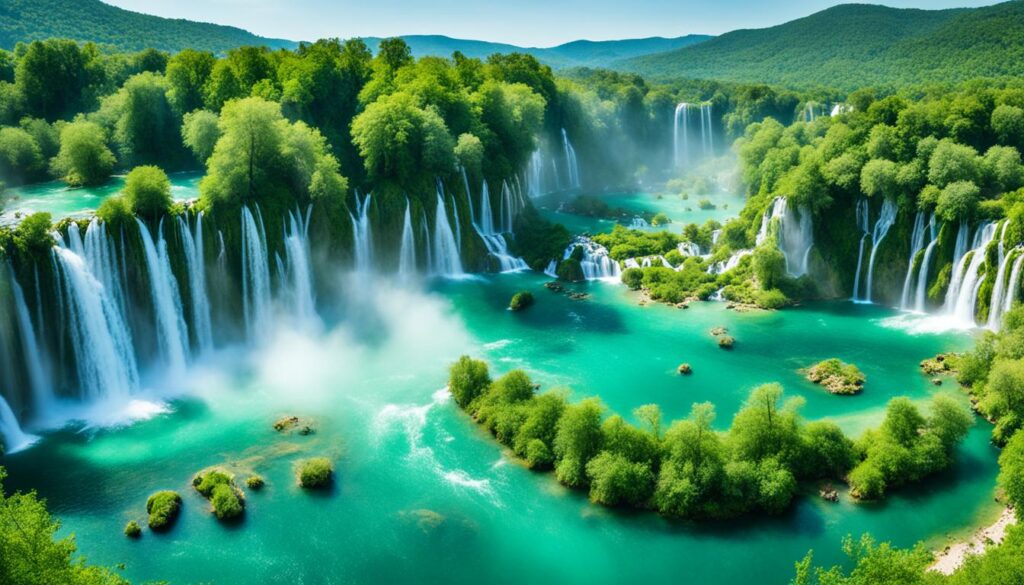
From Mostar, Kravice Waterfalls are about 40 minutes south by car (or accessible by organized day trip). The falls are a wide, horseshoe-shaped cascade on the Trebižat River, about 25 meters high. In summer, the pool below is warm enough to swim in. Entrance is about 10 BAM. Arrive early to beat the crowds, especially in July and August.
On the way back, stop at Blagaj, about 12 km southeast of Mostar. The Blagaj Tekke (Dervish monastery) is built directly into a cliff face at the source of the Buna River, where the water emerges from a cave in full force. The setting is extraordinary and genuinely unusual. Entry to the tekke is about 6 BAM. The restaurants along the river serve fresh trout pulled from the Buna, and it’s one of the best-value meals in the country.
Day 4: Trebinje and Počitelj
Drive south to Trebinje (about 2.5 hours from Mostar), the southernmost city in Bosnia and Herzegovina. Trebinje has a Mediterranean microclimate, a pretty old town along the Trebišnjica River, and Herzegovina’s best wine production. Visit the Tvrdoš Monastery, a working Orthodox monastery that produces its own wine and cheese. Tastings are available and extremely affordable.
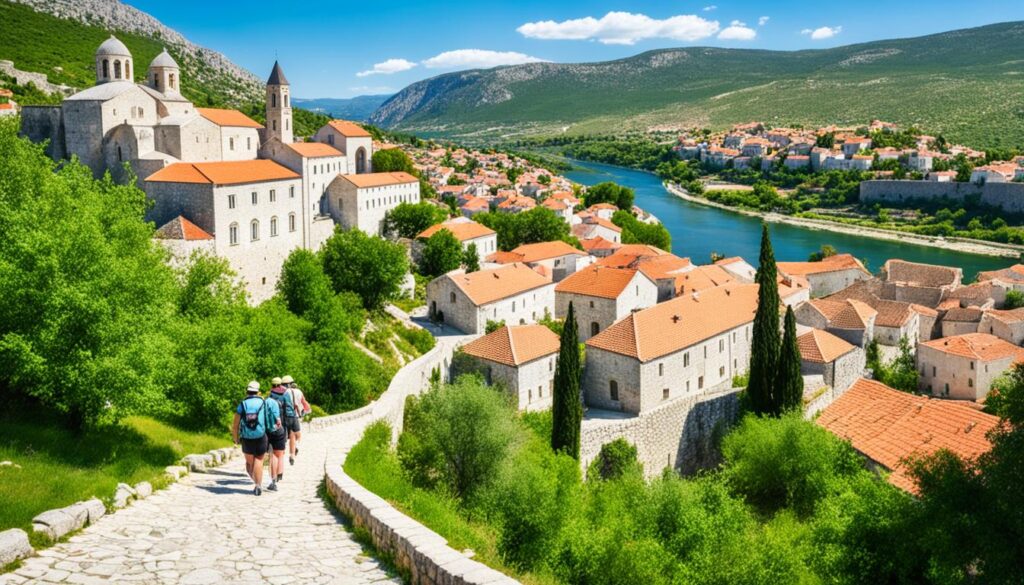
On the drive between Mostar and Trebinje (or on the return), stop at Počitelj, a medieval fortified village stacked up a hillside above the Neretva. Climb the stone steps to the fortress tower for views across the river valley. The village is small but photogenic, and the pomegranate trees growing among the stone walls give it a distinctly Mediterranean character.
Day 5: Sutjeska National Park
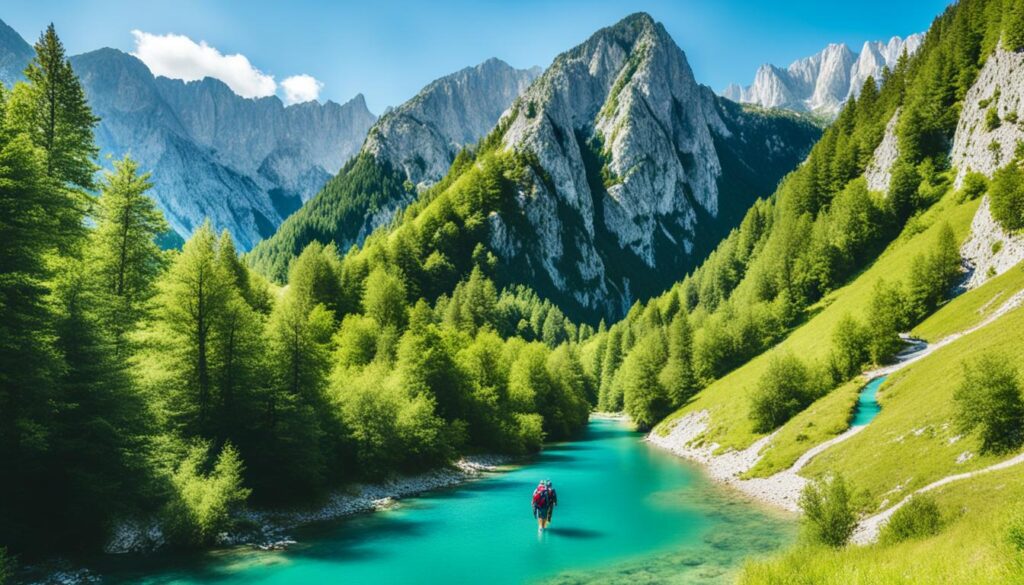
Sutjeska is Bosnia’s oldest national park and contains Perućica, one of the last two remaining primeval forests in Europe. Getting there requires a car (about 2.5 hours from Trebinje or 3.5 hours from Mostar). The park is remote and infrastructure is basic, but that’s the appeal.
Perućica is strictly protected and can only be entered with a park guide. The forest contains trees over 300 years old and the 75-meter Skakavac Waterfall. Arrange a guided visit through the park entrance at Tjentište. Maglić, at 2,386 meters, is the highest peak in Bosnia and Herzegovina and can be summited as a long day hike from the park.
Accommodation near the park is limited. The Hotel Mladost at Tjentište is the main option, basic but functional. Alternatively, stay in Foča (about 30 minutes north) for more choices.
Day 6: Jajce
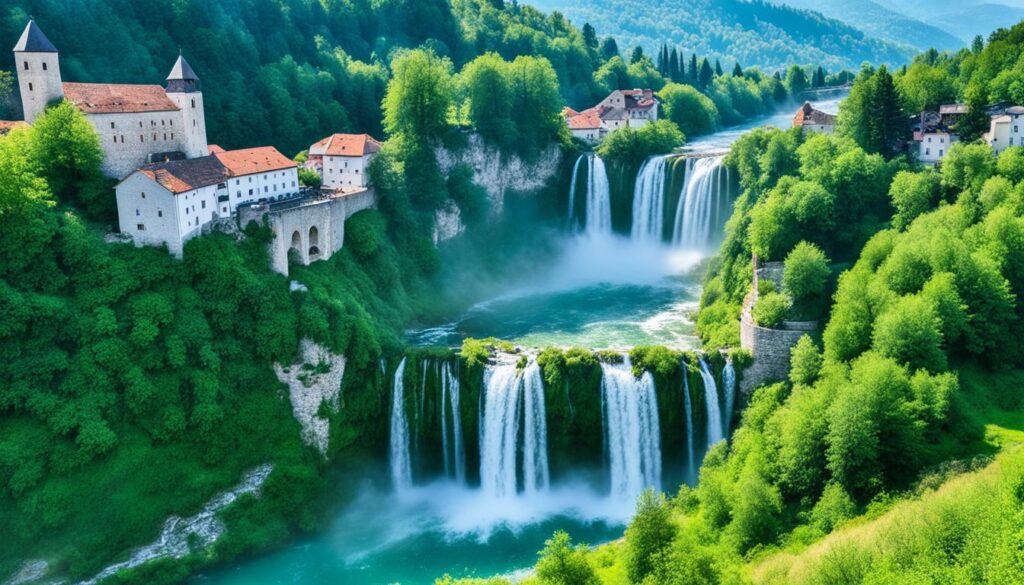
Drive north to Jajce (about 4 hours from Sutjeska via Sarajevo, or plan the route to minimize backtracking). Jajce’s main attraction is a 17-meter waterfall right in the town center where the Pliva River drops into the Vrbas. It’s one of the few waterfalls in the world located in the middle of a town.
Above the waterfall, explore the medieval fortress and the catacombs beneath the town. The Pliva Lakes, a short drive north of town, are connected by a series of small wooden watermills that are still standing and photogenic. The lakes are also a good swimming spot in summer.
Day 7: Una National Park
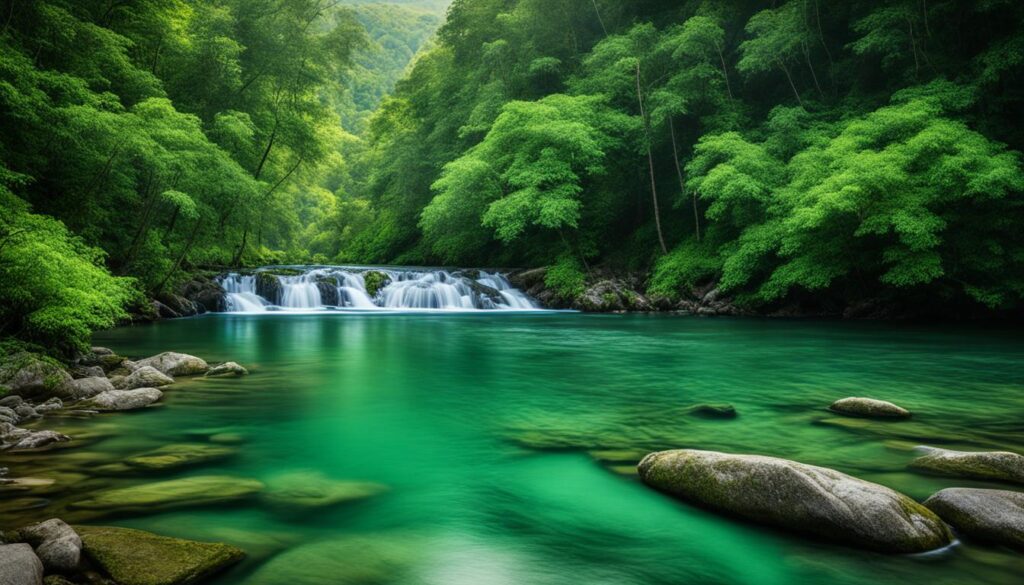
From Jajce, drive northwest to the Una River area (about 2 hours). Una National Park protects a stretch of the Una and Unac rivers known for exceptionally clear water and a series of travertine cascades. The Štrbački Buk waterfall (25 meters) and Martin Brod village are the two main areas to explore.
Rafting on the Una is one of the best outdoor activities in Bosnia. Outfitters in Bihać and Martin Brod run half-day and full-day trips. The river is mostly Class II-III rapids, accessible for beginners. Expect to pay around 60-80 BAM for a guided rafting trip.
The town of Bihać, on the Una’s banks, makes a good base for the area. It has more accommodation and restaurant options than the park itself.
Day 8: Travnik
Head east from Bihać toward central Bosnia (about 3 hours to Travnik). Travnik was the seat of Ottoman viziers for over 150 years and served as Bosnia’s capital before Sarajevo. Ivo Andrić, the Nobel Prize-winning author, was born here.
Visit the Travnik Fortress overlooking the town, walk down to the Plava Voda spring (a natural karst spring with turquoise water, surrounded by restaurants), and explore the old town’s mosques and Ottoman clock tower. Travnik is also known for its distinctive white cheese (travnički sir), available at shops and market stalls throughout town.
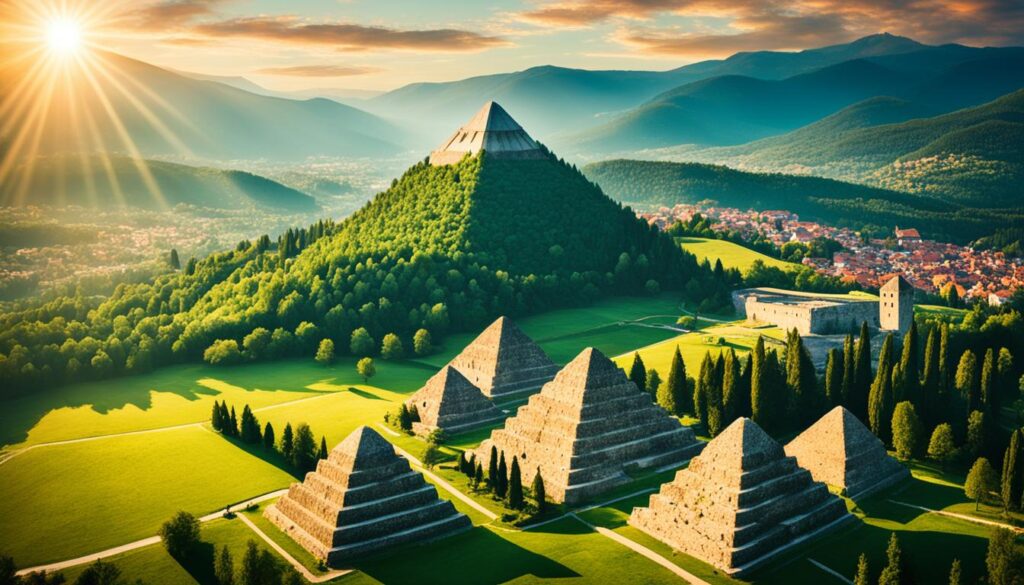
If the Bosnian Pyramids near Visoko interest you, the site is about an hour east of Travnik (or 30 minutes northwest of Sarajevo). The scientific consensus does not support claims that these are man-made pyramids, but the site draws visitors who want to judge for themselves. Tunnels and walking paths are open to visitors.
Day 9: Bjelašnica and Jahorina
Return toward Sarajevo and spend the day on one or both of the Olympic mountains. Bjelašnica (2,067 m) and Jahorina (1,913 m) hosted alpine and cross-country skiing events during the 1984 Winter Olympics, and both still operate as ski resorts in winter.
In summer, both mountains offer hiking with excellent views. Bjelašnica has the more dramatic landscape, including the Lukomir highland village (the highest permanently inhabited village in Bosnia at 1,469 m), accessible via a dirt road or a moderate hike. The villagers maintain traditional stone houses and a pastoral lifestyle that feels disconnected from the 21st century.
Jahorina has better-developed resort infrastructure and is easier to reach from Sarajevo (about 40 minutes). A day here can combine hiking with lunch at a mountain lodge.

Day 10: Sarajevo (Return)
Use the final day to fill in what you missed on Day 1, or revisit favorites. The Gallery 11/07/95 is a powerful memorial exhibition documenting the Srebrenica genocide through photography and testimony. The Sarajevo City Hall (Vijećnica), rebuilt after its destruction during the siege, is worth seeing for its elaborate Moorish Revival interior.
For a final meal, try Ćevabdžinica Hodžić or Dveri for something more upscale. Pick up Bosnian coffee sets, copper crafts, or handmade jewelry from the Baščaršija workshops as souvenirs.
If your flight is in the evening, the Sarajevo airport is only about 6 km from the city center (15-20 minutes by taxi, approximately 15-20 BAM).
Practical Information
Currency
The Bosnian Convertible Mark (BAM or KM) is pegged to the Euro at approximately 1.96 BAM = 1 EUR. ATMs are available in all cities. Credit cards are accepted at hotels and larger restaurants but carry cash for smaller towns, rural areas, and market vendors.
Getting around
Renting a car is the best option for this itinerary, especially for Sutjeska, Una, and the mountain days. Roads are generally adequate but mountain routes can be narrow and winding. Bus connections work well between Sarajevo, Mostar, Jajce, Bihać, and Travnik but are less useful for national parks and rural areas.
Budget
Bosnia is remarkably affordable. A double room in a good guesthouse (pansion) costs 60-100 BAM ($33-55 USD). A full restaurant meal with drinks runs 15-25 BAM ($8-14). Coffee is 2-3 BAM. Museum entries are typically 5-10 BAM. A comfortable 10-day trip can be done for $500-700 USD per person excluding flights and car rental.
Language
Bosnian, Croatian, and Serbian are the official languages (mutually intelligible). English is spoken in tourism-facing businesses in Sarajevo, Mostar, and Trebinje but less reliably elsewhere. A few phrases in the local language are appreciated.
War history
The 1992-1995 Bosnian War is visible in bullet-scarred buildings, war memorials, and the landscape itself. Treat these sites with respect. The Tunnel Museum in Sarajevo, Gallery 11/07/95, and the destroyed villages along some routes are important context for understanding the country. Landmines remain in some areas outside of marked paths, particularly near former front lines. Stick to paved roads, marked trails, and cleared areas.
Frequently Asked Questions
Is 10 days enough for Bosnia and Herzegovina?
Yes. Ten days covers the essential circuit: Sarajevo, Mostar, Herzegovina wine country, one or two national parks, and the central Bosnian towns. With more time, you could add Tuzla, Višegrad (the Mehmed Paša Sokolović Bridge, another UNESCO site), or spend longer in the Una river valley.
Is Bosnia safe for tourists?
Yes. Bosnia is generally very safe for visitors. Petty crime rates are low, and locals are famously hospitable. The one genuine safety concern is landmines in rural areas outside of marked paths, a legacy of the 1990s war. Stay on paved roads and established trails, especially in mountainous or formerly contested areas.
Do I need a visa for Bosnia?
Citizens of the EU, US, Canada, Australia, and most Western countries can enter visa-free for up to 90 days. Check the Bosnian Ministry of Foreign Affairs for the current list.
What is the best time to visit Bosnia?
May through June and September through October offer the best weather and manageable crowds. July and August are hot in Mostar and Herzegovina (35°C+) but comfortable in the mountains. Winter is ideal for skiing on Bjelašnica and Jahorina.
Can I get by with English in Bosnia?
In Sarajevo, Mostar, and Trebinje, English is widely spoken in hotels, restaurants, and tourist services. In smaller towns and rural areas, it’s less common. Google Translate works well for the local languages, and people are patient and willing to communicate through gestures and goodwill.
How does Bosnia compare to Croatia for a Balkans trip?
Bosnia is significantly cheaper, less crowded, and rougher around the edges. Croatia has more developed coastal tourism infrastructure and is easier to navigate for first-time Balkans visitors. Bosnia offers deeper cultural immersion, more dramatic natural landscapes away from the coast, and a sense of discovery that Croatia’s popular destinations have largely lost. Many travelers combine both countries in a single trip, since Mostar is only 2.5 hours from Dubrovnik.