Paro Highlights Beyond Tiger’s Nest: Discover More!
Ever wondered what’s beyond Tiger’s Nest Monastery? This iconic spot in Bhutan draws many visitors. But Paro has much more to offer, from hidden temples to lush valleys.
Paro is a treasure trove of history, outdoor fun, and lively traditions. It’s a key part of understanding Paro tourism. Let’s explore the hidden gems that make Paro special.
Introduction to Paro’s Rich Heritage
Paro is a treasure trove of Bhutanese heritage, blending history and culture. It’s known as the summer capital of Bhutan. This area was a key trading post, connecting Tibetans and Bhutanese.
The history of Paro is rich and diverse. It’s told through its temples, fortresses, and festivals. Each one shows the values and beliefs of ancient dynasties.
Overview of Paro’s Historical Significance
The essence of Paro’s cultural sites is its reflection of Bhutanese history. You’ll see ancient architectural styles that show the legacy of the past. These styles preserve age-old traditions.
The landscapes around Paro add to its historical charm. They show the harmony between nature and human craftsmanship. Festivals in Paro celebrate this history, with locals participating in rituals and events that go back centuries.
Exploring Paro reveals its stunning views and the significance of Bhutanese heritage. This journey through Paro offers insights into the values that have shaped this remarkable region for generations.
Must-see attractions in Paro beside the Tiger’s Nest?
Many visitors are drawn to Tiger’s Nest, but Paro has much more to offer. Exploring the top sights in Paro beyond this famous monastery gives a deeper look at Bhutan’s culture and history.
Overview of Alternative Attractions
Rinpung Dzong is a must-see in Paro, known for its beautiful architecture and history. Built in the 17th century, it’s a prime example of Bhutanese building style. The National Museum of Bhutan, in a 1649 watchtower, displays over 3,000 cultural items. It’s a key thing to do in Paro.
Other important sites include Kyichu Lhakhang, a 7th-century temple, and Zuri Dzong, from 1352. Each adds to Paro’s rich history. The Dilgo Khyentse Rinpoche Memorial House also offers a glimpse into the life of a revered spiritual leader.
Importance of Exploring Beyond the Iconic
While Tiger’s Nest is amazing, exploring other spots reveals more of Bhutan’s life. The old suspension bridge connects Tachog Temple with the valley, offering stunning views. Chele Pass, at 3,810 meters, links Paro Valley with Haa Valley, providing breathtaking views and experiences.
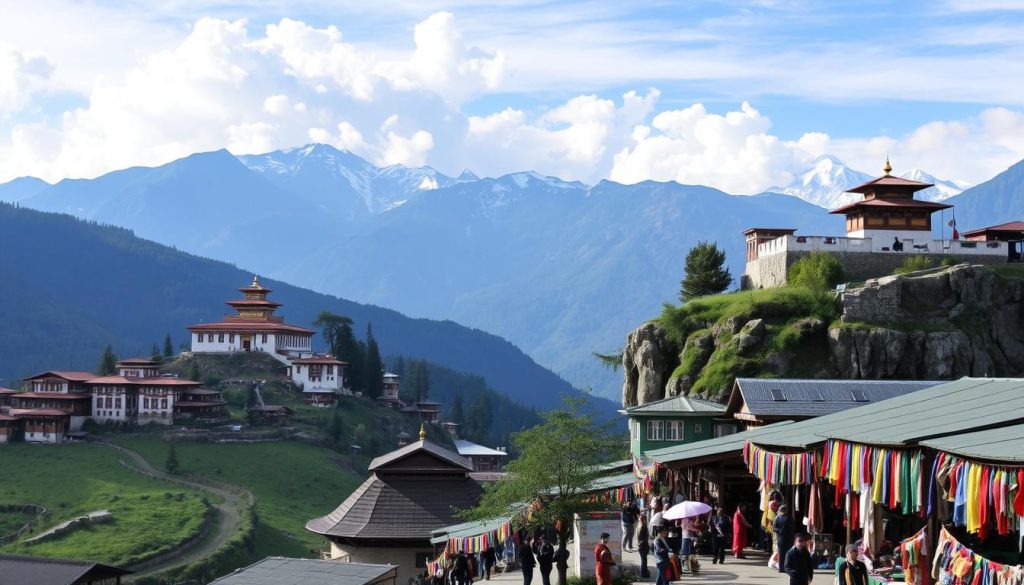
Exploring these attractions deepens your understanding of Bhutan’s spirituality and culture. This journey through the top sights in Paro lets you connect with the country’s legacy, enriching your visit beyond Tiger’s Nest.
The Cultural Significance of Paro
Paro is a key part of Bhutan’s spiritual heritage. It’s a town filled with history and culture. To understand Paro, we must look at its past and how it affects today’s life.
Historical Background and Legacy
Paro’s history is rich and fascinating. Places like Rinpung Dzong, built in 1646, show Bhutan’s journey to today. These sites blend power and faith, making Paro a spiritual haven.
The restoration of Drukgyel Dzong in 1914 is a testament to preserving history. It shows Bhutan’s dedication to its past.
Key Cultural Influences in Paro
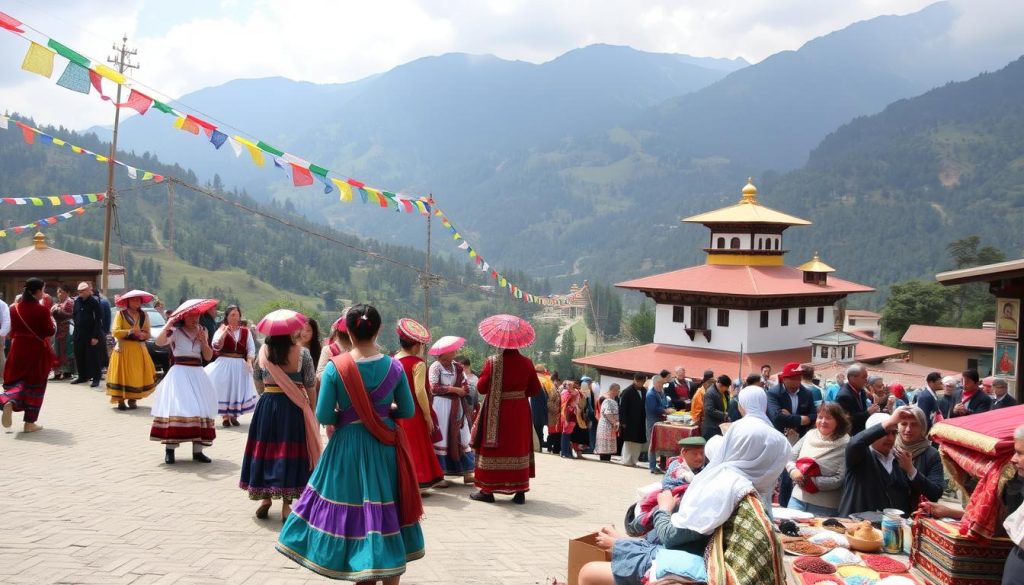
Paro is shaped by Tibetan Buddhism. Local traditions are a big part of everyday life. The Paro Tsechu festival in April is a highlight, with traditional dances and community spirit.
Visitors can see how Paro’s culture and spirituality are connected. Every festival and building in Paro celebrates Bhutan’s identity.
Exploring Paro Dzong: A Landmark of Beauty
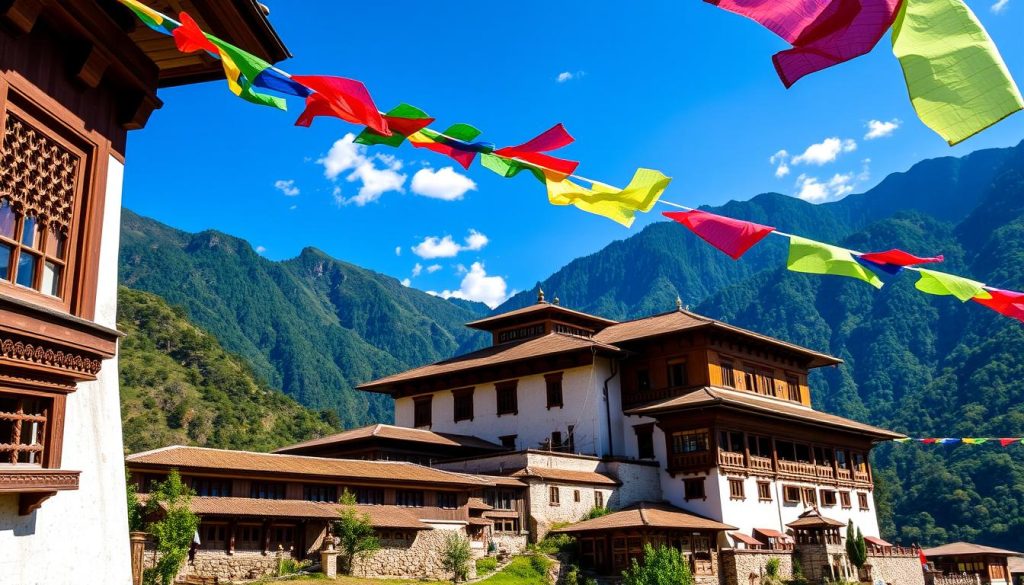
Paro Dzong, also known as Rinpung Dzong, is a stunning example of Bhutanese architecture. It was built in 1644 and is both a key administrative center and a place for monastic activities. It offers a unique mix of history and art.
Architectural Features of Rinpung Dzong
The architecture of Rinpung Dzong is amazing, with detailed woodwork and colorful murals. It shows the unique style of Bhutanese buildings, with its tall, white walls. The dzong is known for:
- Massive structure with multiple stories: The dzong’s tall design makes it stand out in the Paro Valley.
- Intricate wood carvings: The carvings on windows and doors show the skill of local craftsmen.
- Colorful murals: These murals tell stories of Buddhism and Bhutanese folklore, helping visitors understand local culture.
Historical Events Associated with the Dzong
Rinpung Dzong is important in history, having seen many key events. It was crucial in military and administrative actions. Some major moments include:
- Defensive stronghold: The dzong was a key defense against Tibetan forces.
- Religious significance: It hosts the Paro Tsechu festival, attracting thousands with its dance and music.
- Cultural preservation: The dzong’s monks work to keep Bhutanese culture alive, making it relevant today.
Discovering the National Museum of Bhutan
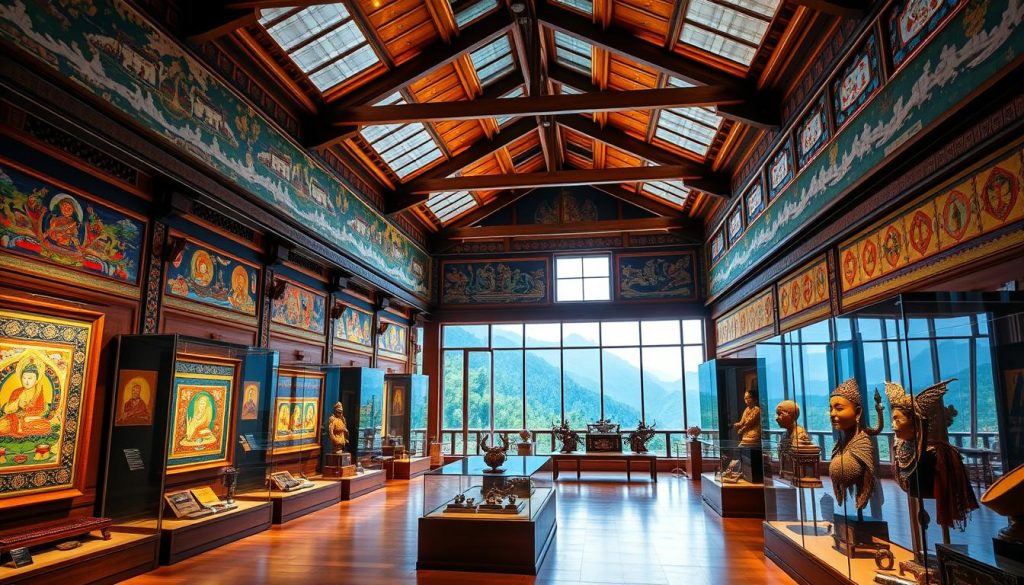
The National Museum of Bhutan is in the ancient watchtower Ta Dzong. It’s a treasure trove of Bhutanese artifacts and cultural heritage. As you explore, you’ll see a wide range of items, from traditional costumes to intricate religious art. Each piece tells a story, showing how Bhutanese culture has evolved over centuries.
Artifacts and Exhibits Showcase
This museum has over 3,000 masterpieces in 11 galleries. It gives visitors a deep look into Bhutan’s rich artistic traditions. Some highlights include:
- Regional costumes showing the unique styles from different Bhutanese regions.
- Religious art that shows the importance of Buddhism in Bhutanese life.
- Historical items that tell the story of Bhutan’s past.
Each exhibit is carefully chosen to help you understand Bhutan’s artistic and cultural identity.
Significance of the Museum in Bhutanese Tourism
The National Museum of Bhutan is key to Bhutan’s tourism. It lets visitors connect with Bhutan’s heritage and traditions. It attracts many tourists each year, making Paro more interesting to explore.
The museum’s focus on Bhutanese artifacts gives insight into the country’s history and society. It’s a must-see for anyone wanting to learn about Bhutan’s story.
Visiting the National Museum is a chance to dive into a world where art and culture meet. It’s a memorable part of your journey through Bhutan.
Adventure Awaits: Outdoor Activities in Paro
Paro is a place where adventure meets stunning landscapes. It’s perfect for thrill-seekers, with mountains and rivers to explore. Trekking and mountain biking here are unforgettable experiences.
Thrilling Trekking Opportunities
Trekking in Paro offers something for everyone. The famous Snowman Trek is a challenge for adventurers. You’ll see beautiful views, wildlife, and local culture along the way.
Mountain Biking Trails and Their Appeal
Mountain biking in Bhutan is exciting. Trails like the one from Ta Dzong to Khasadrapchu offer breathtaking views. It’s a mix of biking fun and seeing Bhutan’s beauty.
Unearthing Paro’s Hidden Temples
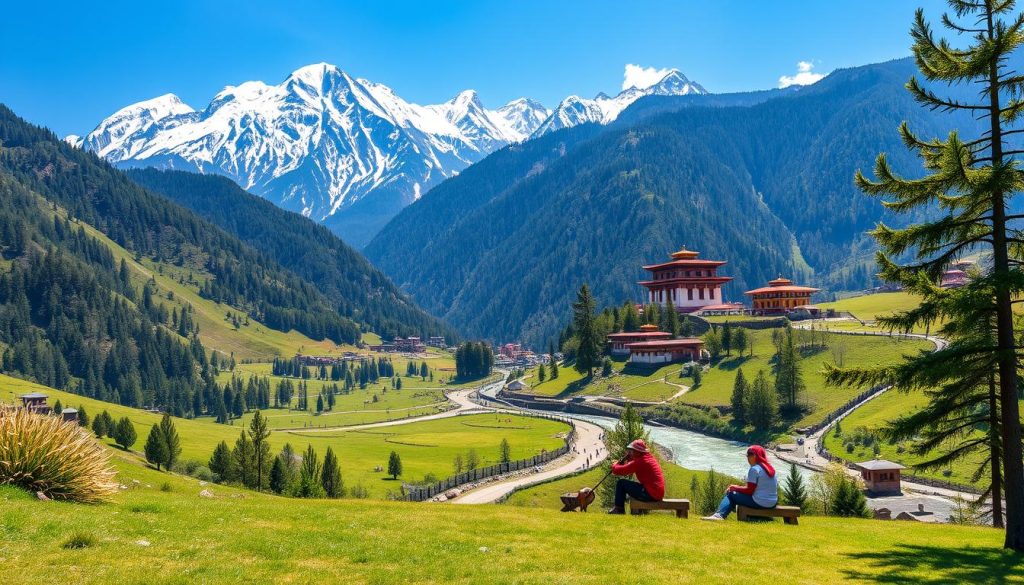
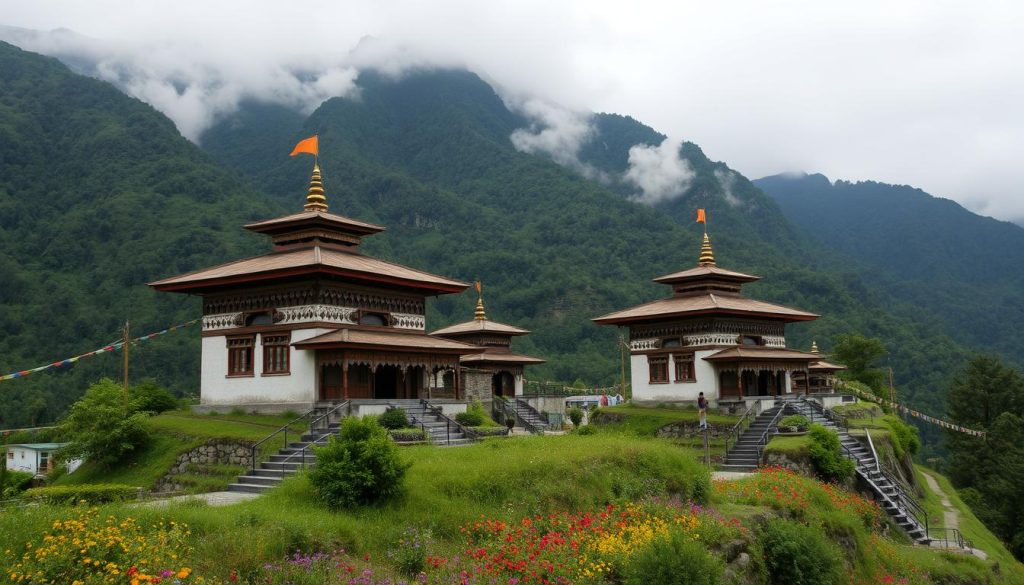
Paro is a treasure trove of spiritual and architectural wonders. It has hidden temples that show off Bhutan’s rich culture. These sacred sites offer a peaceful escape and a look into the nation’s history and beliefs.
Among the most significant are Kyichu Lhakhang and Drukgyel Dzong. Both are important for visitors wanting to learn more about Bhutanese heritage.
Kyichu Lhakhang: The First Temple of Bhutan
Kyichu Lhakhang is one of Bhutan’s oldest structures, built in the 7th century. Its Yoga Lhakhang significance goes beyond its beauty. This temple is famous for its role in Buddhist history.
The intricate murals and serene gardens invite reflection. It’s a must-see when exploring Paro’s hidden temples.
Drukgyel Dzong: History and Ruins
The Drukgyel Dzong ruins stand in quiet decay, telling a story of strength and resilience. Built in the 17th century, it once defended Paro against invasions. Today, its remnants remind visitors of Bhutan’s historical struggles.
Exploring these ruins offers insight into the nation’s past. It also provides breathtaking mountain views.
Cultural Festivals: Experience Local Traditions
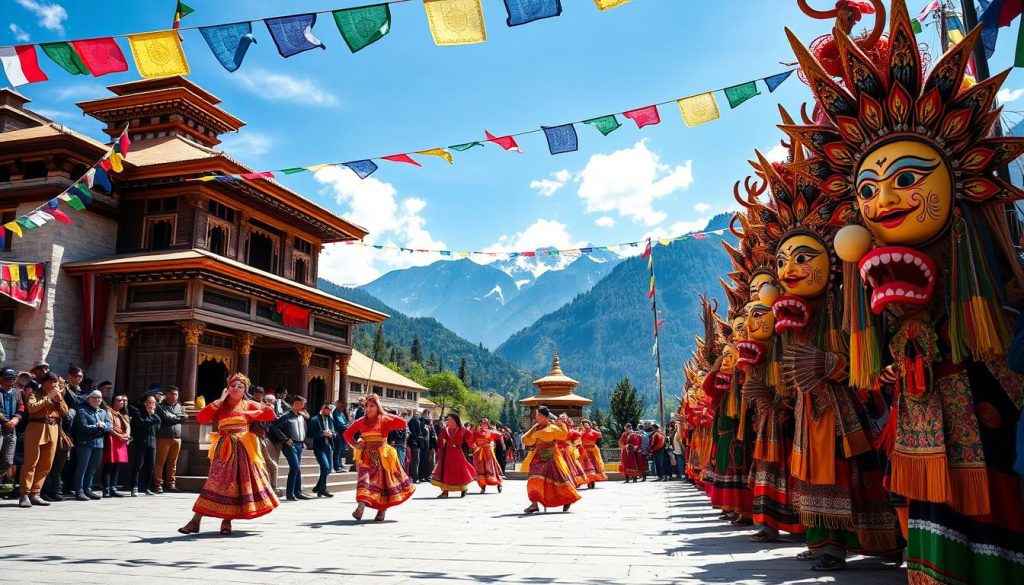
Paro is known for its stunning landscapes and rich history. It also hosts vibrant cultural celebrations in Bhutan. The Tshechus in Paro are special, offering a peek into Bhutanese customs and spirituality. These festivals are not just religious events but also bring the community together to celebrate their heritage.
Tshechus: A Celebration of Buddhism
The Tshechus in Paro honor Guru Rinpoche, the saint who brought Buddhism to Bhutan. You’ll see colorful masked dances by monks, each telling a Buddhist story. The festival is filled with spirituality, and people come together to celebrate their culture.
Unique Traditions and Practices
Joining Paro festivals lets you dive into unique traditions that make Bhutan special. You’ll see local customs like food offerings and traditional games like archery. Visitors can enjoy:
- Exquisite cham dances that tell Buddhist stories.
- Art stalls with hand-crafted items by local artisans.
- Delicious local food that combines different flavors and traditions.
Attending the Paro festivals gives you a unique look at the community’s commitment to its culture. It’s a chance to see the richness of Bhutanese traditions up close.
The Charm of Local Markets and Cuisine
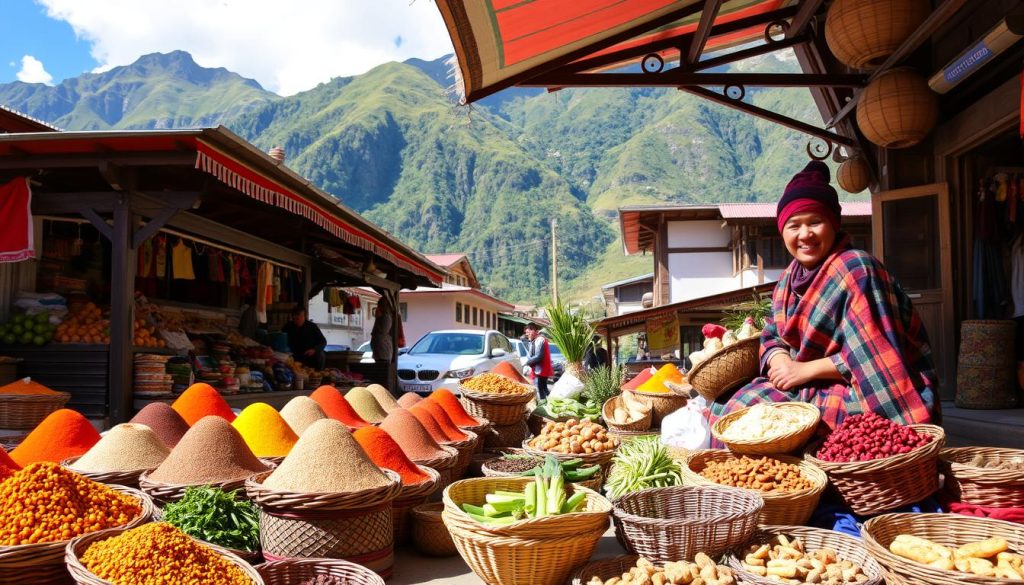
Exploring Paro’s local cuisine is like diving into Bhutan’s rich culture. The lively Paro markets are the best place to find unique flavors and ingredients. Here, you can discover traditional foods and fresh produce that showcase the region’s culinary heritage.
Must-Try Dishes in Paro
Visiting Paro means trying its traditional Bhutanese dishes. Some must-try dishes include:
- Ema Datshi: A dish that mixes green chilies and cheese, capturing Bhutan’s flavors.
- Phaksha Paa: A spicy pork dish with radishes and chili, great for spice lovers.
- Jasha Maru: A chicken dish with tomatoes and spices, showing Bhutan’s bold flavors.
Where to Find Authentic Local Ingredients
The Paro markets are full of fresh produce, spices, and crafts. For authentic ingredients, check out these places:
- Paro Weekend Market: A bustling spot for fresh veggies, fruits, and local crafts.
- Farmers’ Stalls: Talking to local farmers gives you a real taste of the ingredients.
- Traditional Spice Shops: Find unique spices here, adding a special flavor to any dish.
| Dish Name | Main Ingredients | Flavor Profile |
|---|---|---|
| Ema Datshi | Green chilies, cheese | Spicy and savory |
| Phaksha Paa | Pork, radishes, chili | Rich and spicy |
| Jasha Maru | Chicken, tomatoes, spices | Spicy and tangy |
Visiting the local markets is a treat for your taste buds and a way to connect with the community. Each visit deepens your understanding of Bhutanese culture.
Scenic Beauty: Nature Spots to Visit
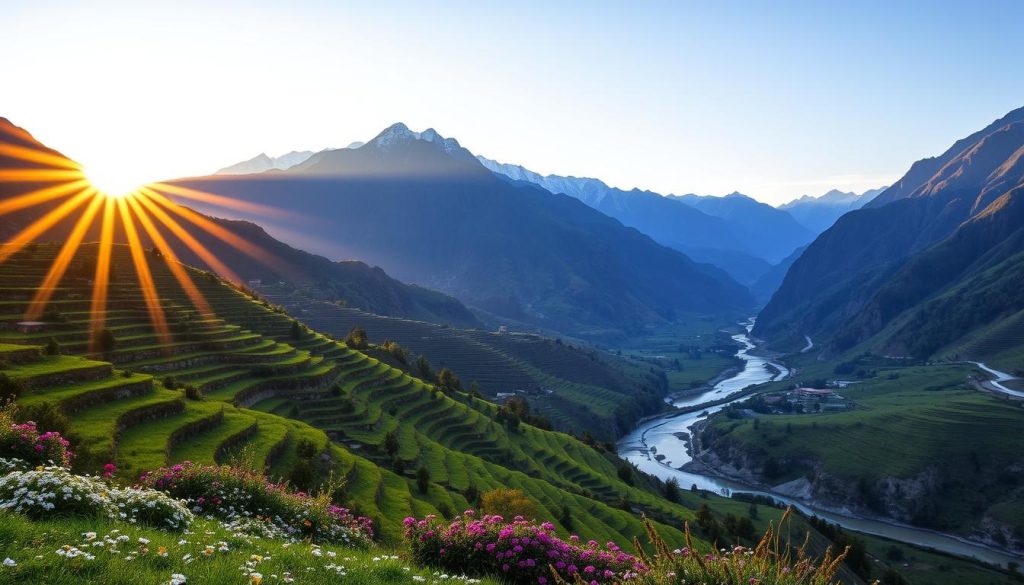
Paro Valley is a stunning place with beautiful landscapes. It offers many chances for outdoor fun. From mountain hikes to river activities, it’s perfect for nature lovers.
Whether you want peace or excitement, Paro has it all. It’s a place where everyone can find something special.
Hiking in the Paro Valley
Hiking in Paro is a must for trekkers. Famous trails, like the one to Tiger’s Nest Monastery, are both challenging and rewarding. You’ll see amazing views from over 3,000 meters up.
Other great hikes include Chele La Pass and Drukgyel Dzong. These are great for sightseeing and bird watching.
River Rafting and Kayaking Adventures
River activities in Paro, like rafting and kayaking, are thrilling. The Paro Chhu River winds through beautiful valleys. It offers exciting experiences for those who love adventure.
Whether you paddle calm waters or tackle rapids, you’ll see Paro’s beauty up close. These activities are a great way to explore Paro’s landscapes.
Visitor Tips: Navigating Paro Tourism
Visiting Paro can be a memorable experience. To make the most of it, consider some key Paro tourism tips. The timing of your visit greatly affects your enjoyment of the landscapes and culture. Spring (March to May) and autumn (September to November) are the best times to visit.
During these seasons, the weather is mild. This allows you to explore comfortably. You’ll also see the local flora in full color.
Best Times to Visit Paro
The best visiting times match Bhutan’s climate. Spring is perfect for blooming flowers and clear skies. Autumn offers stunning foliage and clearer skies.
Here are some tips:
- Spring is colorful and lively.
- Autumn has clearer skies and festivals.
- Summer is hot and rainy.
- Winter is cold but peaceful.
Suggested Itineraries for a Complete Experience
Creating efficient travel itineraries is key. It ensures you enjoy Paro to the fullest. Here are some suggestions:
| Day | Activities | Highlights |
|---|---|---|
| 1 | Visit Tiger’s Nest | Experience breathtaking views and spiritual ambiance |
| 2 | Explore Paro Dzong | Admire architectural beauty and historical significance |
| 3 | National Museum Tour | Learn about Bhutanese history and culture through artifacts |
| 4 | Cultural Festival | Engage in local traditions and enjoy vibrant performances |
| 5 | Outdoor Activities | Go hiking, biking, or river rafting for adventure |
A well-organized itinerary helps you explore Paro’s history, culture, and nature. It ensures you experience the essence of this remarkable place.
Conclusion
In this Paro travel recap, it’s clear that Paro is more than just Tiger’s Nest Monastery. This valley is full of attractions, making it a top spot in Bhutan. The calm landscapes, like Drukgyel Dzong and Chele La Pass, offer both peace and adventure.
Visiting places like the National Museum, Kyichu Lhakhang, and local markets, you learn a lot about Bhutan’s culture. Each spot adds to your understanding of this peaceful area. It makes your holiday even more special.
By taking part in local traditions and festivals, and exploring Paro’s natural beauty, you’ll get to know Bhutan’s charm. Whether hiking to a sacred site or seeing beautiful crafts at Chencho Weaving House, your trip will be memorable. Don’t miss out on visiting this amazing place.