Hiking to Tiger’s Nest from Paro: A Guide
Ever imagined standing at a cliff’s edge, 900 meters high, looking at an ancient monastery? The Tiger’s Nest trek is more than a hike. It’s a journey that mixes stunning views with deep history. Here, you’ll learn if you can hike to Tiger’s Nest from Paro, how to get ready, and what awaits you.
Introduction to Tiger’s Nest
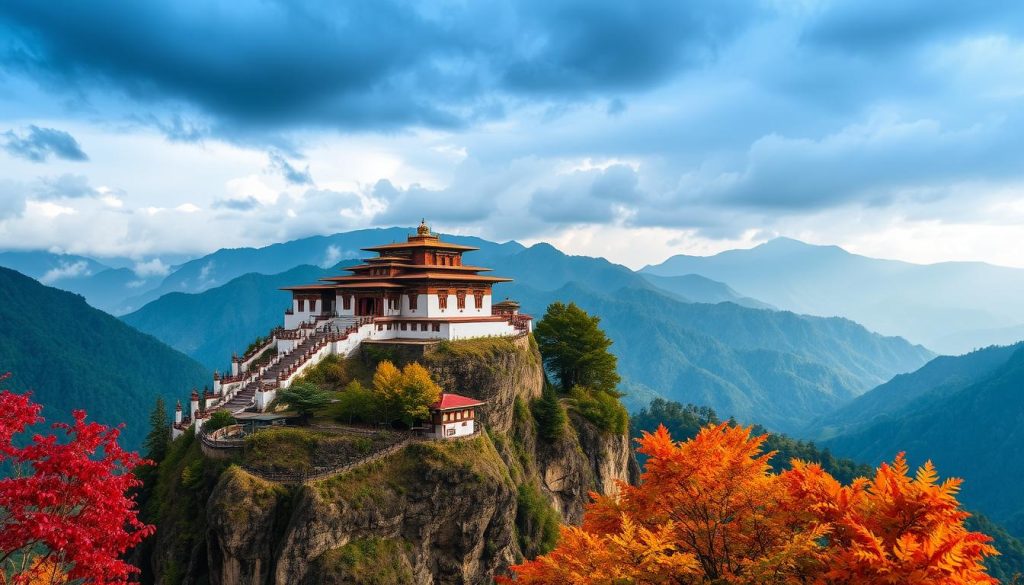
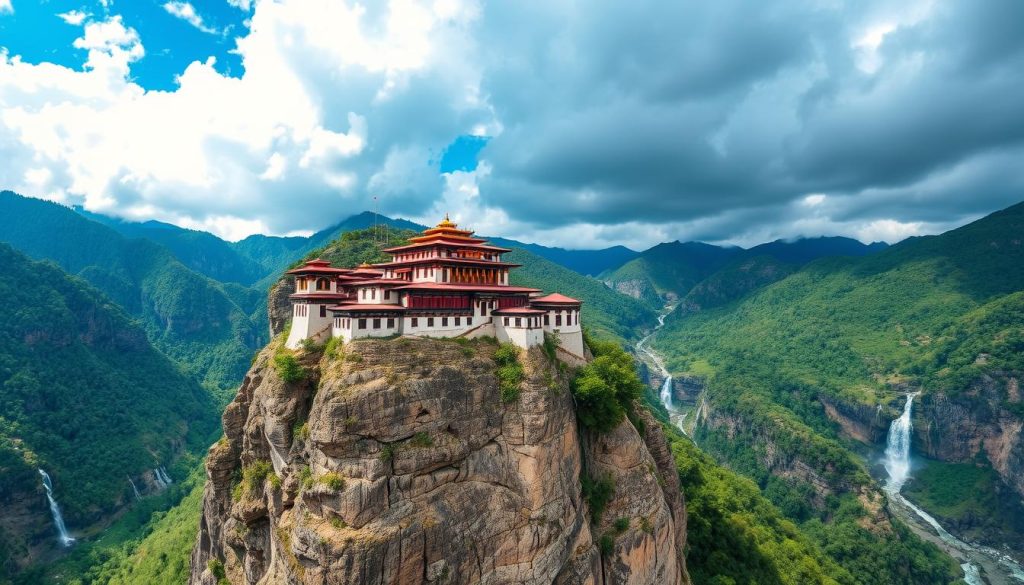
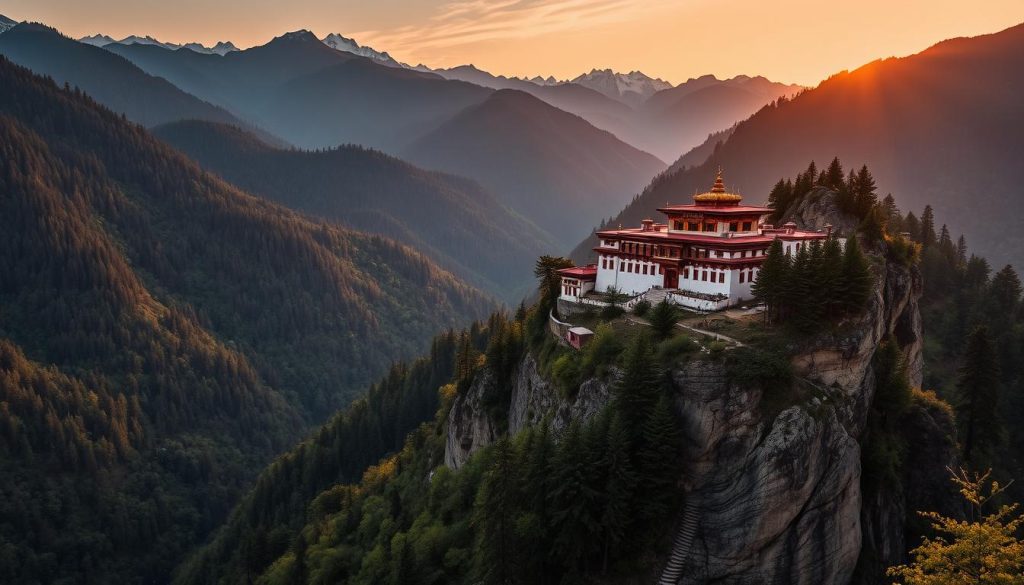
The Tiger’s Nest Monastery, also known as Paro Taktsang, is a famous landmark in Bhutan. It sits high on a cliff in the Paro Valley, offering stunning views. Many see it as a spiritual place where nature and Buddhist history meet.
Planning a trip to this site? Getting good Bhutan travel tips can make your journey better. The hike is 4 miles round trip, with a 1,700-foot elevation gain. You’ll spend about 5 to 7 hours there. Remember, you can only get there by hiking, as there’s no car access.
The hike is challenging but rewarding. It takes about two hours to reach the monastery. Along the way, you’ll see prayer flags, adding to the journey’s spiritual feel.
The best times to visit are from March to June and September to December. The weather is perfect for outdoor adventures then. Visiting the Tiger’s Nest Monastery can deepen your appreciation for Bhutan.
What is Tiger’s Nest Monastery?
Tiger’s Nest Monastery, also known as Paro Taktsang, is a key part of Bhutan’s culture and spirituality. It sits on a cliff over 900 meters above the Paro Valley, offering stunning views. Built in 1692, it was made around a cave where Guru Rinpoche meditated after arriving in Bhutan on a tigress.
The Tiger’s Nest history is fascinating. It tells how Guru Rinpoche’s legend makes the monastery a global attraction.
Historical Significance of the Monastery
The monastery’s history goes back to the 8th century. Guru Rinpoche brought Buddhism to the region at that time. His journey to this location was a turning point in Bhutan’s spiritual journey.
Today, Tiger’s Nest Monastery is a symbol of Buddhism’s lasting impact in Bhutan. It has been a peaceful place for monks and pilgrims for years, solidifying its importance as a religious center.
Architecture of Tiger’s Nest
The architecture of Tiger’s Nest Monastery is a mix of traditional Bhutanese and modern designs. It has four main temples connected by narrow paths and staircases. The monastery’s woodwork and colorful prayer flags add to its beauty.
The structure blends perfectly with the cliff, showing the deep bond between spirituality and nature.
Can you hike to Tiger’s Nest from Paro?
The journey from Paro to Tiger’s Nest Monastery is an amazing adventure. It’s perfect for those who love the outdoors. The Paro to Tiger’s Nest hike is about 10-11 km long, taking around 6-7 hours to complete.
The hike has a total elevation gain of about 1,700 feet. This makes it challenging but rewarding for both beginners and experienced hikers.
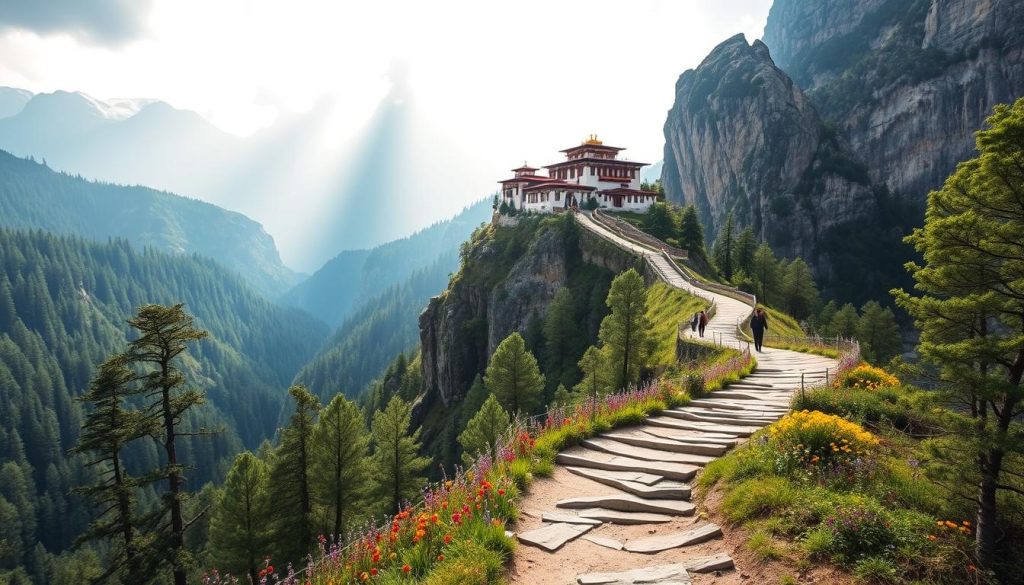
Your journey starts at the parking area at the base. You’ll walk through beautiful forests. As you go, the views get more stunning, with the monastery appearing on the cliffs.
The official hiking times are from 8:00 AM to 5:00 PM. It’s important to plan your visit to finish the hike before dark.
If you want to make the hike easier, you can hire a mule. It costs about 600-800 Nu. You can also rent a hiking stick for 50 Nu to help with the climb.
Visitors need to pay an entry fee of 500 Nu, which is required for Indian nationals.
When you reach the top, you’ll spend about an hour at Tiger’s Nest Monastery. Remember, cameras are not allowed inside. But, you can store your belongings in a free locker. The meditation cave is open for a special day each year, adding to the monastery’s charm.
Get ready for a memorable hike to Tiger’s Nest Monastery!
Getting to the Trailhead
Starting your journey to Tiger’s Nest means taking scenic routes from Paro. The trip to the trailhead is easy and offers beautiful views. It makes the journey exciting from the very beginning.
Directions from Paro
The trailhead is about 10 km from Paro, a 20-minute drive. Follow the road north out of the city. As you get closer to the parking area, you’ll see the stunning landscapes of Bhutan. This will make you even more excited for the hike.
Transportation Options
Most people choose to get to Tiger’s Nest with help from tour operators. This makes planning easier, as getting around on your own can be hard in Bhutan. At the parking area, you’ll find shops, horse rentals, restrooms, and places to sit. These amenities help you get ready for your adventure.
- Souvenir shops for local crafts
- Horse rental services for portions of the hike
- Restrooms and seating areas to prepare for your trek
Make sure to pack everything you need. The hike is full of amazing sights and spiritual moments. It’s a journey you won’t forget.
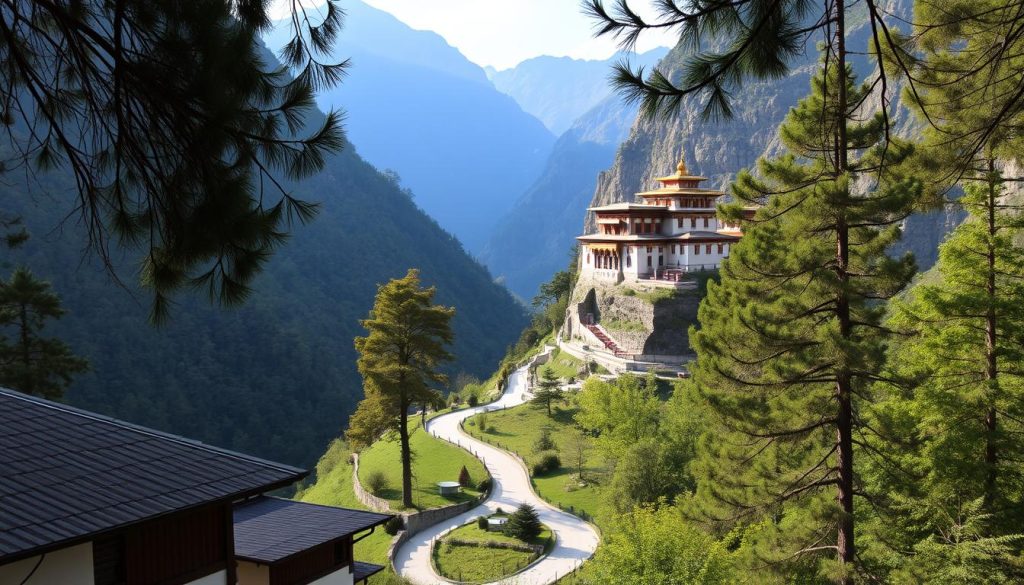
| Feature | Details |
|---|---|
| Total Distance | 6.5 km Round Trip |
| Total Ascent | 520 Meters |
| Highest Elevation | Approximately 3120 Meters |
| Time to Hike | 4 to 6 Hours |
| Opening Hours of Monastery | 8 AM |
| Entrance Fee | 2000 BTN for Adults, 50% discount for Teenagers Under 18, Free for Children Under 5 |
Preparation for the Hike
Getting ready is key for a great Tiger’s Nest hike. Knowing what to pack can make your trip better. It ensures you’re comfy and ready for the adventure. Pack the right things to handle the hike’s challenges and enjoy the stunning views.
What to Bring
Here are the must-haves for your Tiger’s Nest trek:
- Hiking shoes: Good shoes are essential for the varied terrain.
- Water: Drink plenty to stay hydrated throughout your hike.
- Snacks: Carry energy-boosting snacks like granola bars, fruits, or nuts.
- Light lunch: There’s a cafeteria halfway up where you can buy food.
- First aid kit: A small kit is handy for minor injuries.
Clothing Recommendations
Choosing the right clothes is important for your Tiger’s Nest hike. Comfort and fitting are crucial, given the hike’s unique setting:
- Moisture-wicking fabrics: Choose breathable, lightweight clothes to stay dry.
- Layering options: Bring layers to adjust to the cooler mountain air.
- Modest attire: Wear clothes that cover shoulders and knees to respect the monastery.
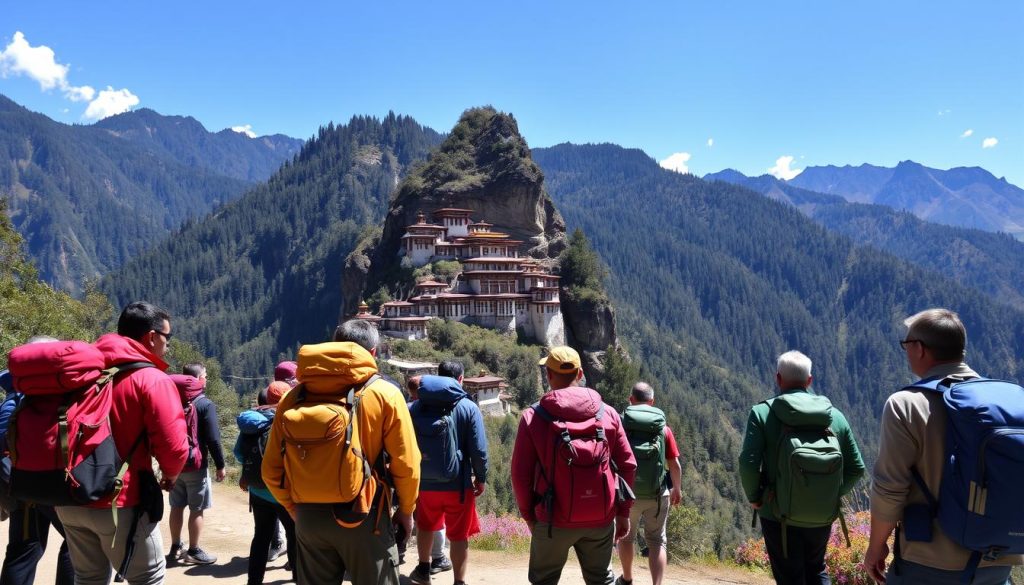
These simple steps can greatly improve your trek. Be well-prepared, and you’re set for this unforgettable journey to Bhutan’s sacred site.
Understanding the Tiger’s Nest Trek
The Tiger’s Nest trek is a journey through stunning landscapes. It also gives a peek into Bhutan’s spiritual heritage. It’s not just about reaching a place; it’s an experience filled with culture and beauty.
Trekking Route Overview
The Tiger’s Nest trek is about 7.5 kilometers (4.7 miles) from the base to the monastery. It has three parts, each with its own views and experiences:
| Section | Distance | Time |
|---|---|---|
| Section 1 | 1.6 kilometers | 1-1.5 hours |
| Section 2 | 1.1 kilometers | 40 minutes |
| Section 3 | 0.5 kilometers | 30 minutes |
At the monastery, you can spend about an hour inside. It’s a chance to soak in the calm and spiritual feel. The whole trek takes 3 to 4 hours, giving you time to enjoy the Paro Valley views.
Trail Conditions and Difficulty Level
The Tiger’s Nest hike’s difficulty varies. It’s mostly a dirt trail with gentle to moderate slopes. Some parts are steep, but you don’t need to climb technically. You’ll find uneven paths and steep stairs near the monastery. It’s best to take breaks to enjoy the views, making it doable for most people.
Knowing the Tiger’s Nest trek helps you prepare for its beauty and rewards. It’s a special spiritual site.
Best Time to Hike Tiger’s Nest
Choosing the right time for your adventure to Tiger’s Nest can greatly enhance your experience. The weather for hiking Tiger’s Nest is key to a comfortable and enjoyable journey. The best times to hike are in the fall and spring. These seasons offer clear skies and pleasant temperatures.
Seasonal Weather Considerations
In spring, from March to May, you’ll find mild temperatures between 50°F to 70°F (10°C to 21°C). The fall, from October to December, also has similar weather. These are the best times to hike Tiger’s Nest because the trek is easier in these temperatures.
Summer is hot and humid, while winter is very cold. So, planning your hike in these recommended windows makes for a better experience.
Peak Visiting Times
Expect more people during major festivals and school holidays. To avoid crowds, start your hike early, around 7 AM. This way, you miss the crowds and the harsh sun.
While some times are busier, the hike’s charm stays the same in fall and spring.
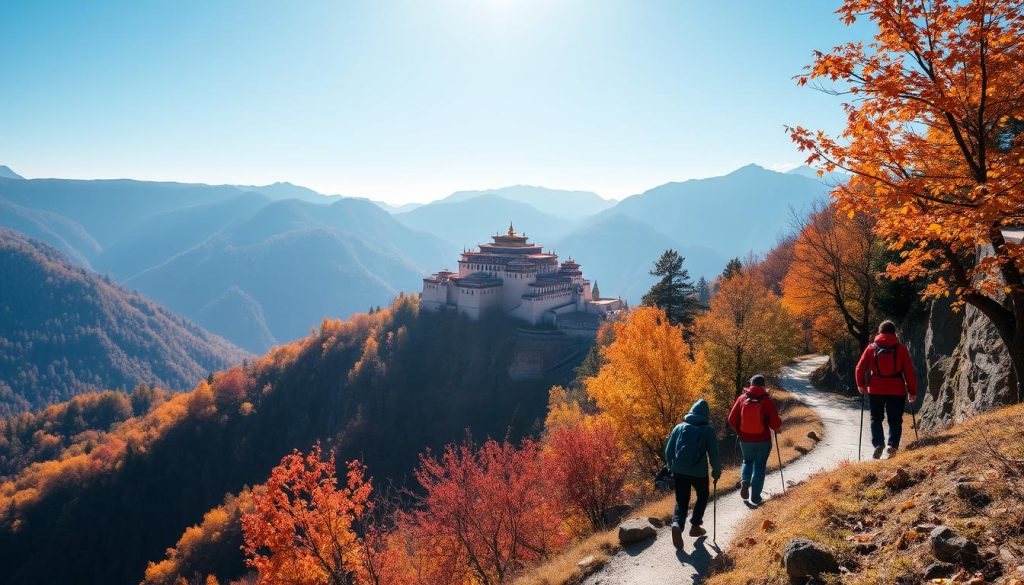
| Season | Temperature Range | Best Time to Visit | Comments |
|---|---|---|---|
| Spring (March-May) | 50°F – 70°F (10°C – 21°C) | Ideal | Mild weather, blooming flowers. |
| Summer (June-August) | 70°F – 90°F (21°C – 32°C) | Less Ideal | High humidity, potential rain. |
| Fall (September-November) | 50°F – 70°F (10°C – 21°C) | Ideal | Clear skies, beautiful foliage. |
| Winter (December-February) | 20°F – 50°F (-6°C – 10°C) | Not Recommended | Cold temperatures, snowy conditions. |
Fitness Level for Tiger’s Nest Hike
The journey to Tiger’s Nest Monastery is rewarding but requires knowing your fitness level. The hike reaches over 3,120 meters (10,000 feet), where altitude affects hiking. This is more noticeable for those not used to such heights.
Altitude and Its Effects
High-altitude hiking can cause shortness of breath, headaches, or dizziness. These symptoms can greatly impact your hike. Your fitness level affects how well you adapt to these conditions.
Those in average shape can prepare for the trek. But, those with health issues should talk to their doctor first. Spending a few days at lower elevations in Bhutan can help acclimate.
Recommendations for Different Fitness Levels
Here are tips for different fitness levels:
- Average Fitness: Most people in good shape can handle the hike. But, remember stamina and wind conditions.
- Older Adults: Older hikers might need breaks. Stopping at the cafeteria or viewpoint is a good idea.
- Beginner Hikers: New hikers should start early. This way, you have time to enjoy the trail without rushing.
- High Fitness: Fit hikers might finish faster. But, still watch out for altitude effects.
Knowing your fitness level and the altitude’s impact makes your hike safer and more enjoyable. Always listen to your body and make smart choices during your trek.
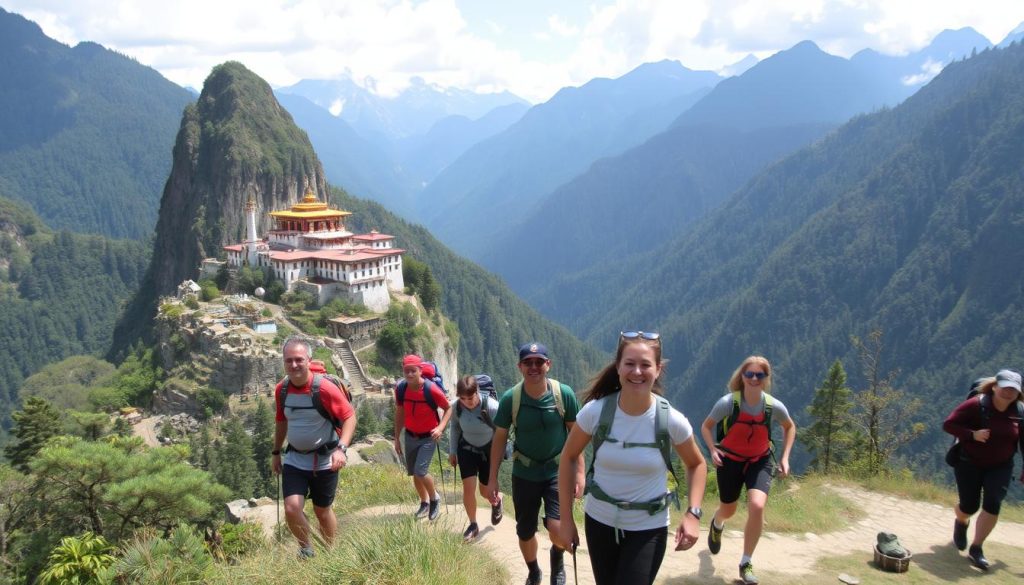
| Fitness Level | Recommended Actions |
|---|---|
| Average Fitness | Manageable trek; prepare for breaks. |
| Older Adults | Consider stopping at cafeteria; take it slow. |
| Beginner Hikers | Start early to avoid rush; acclimatize before hike. |
| High Fitness | Complete the trek faster; monitor body reactions. |
Highlights Along the Trail
The journey to Tiger’s Nest is filled with amazing moments. As you walk, you’ll see scenic views that show off Bhutan’s beauty. You’ll also see colorful prayer flags that add to the hike’s spiritual feel.
Scenic Viewpoints
On your way, you’ll find spots with stunning views of the monastery. These are great for photos and thinking. Key spots include:
- First viewpoint about 30 minutes into the hike
- Halfway stop at the Taktsang Cafeteria
- Final viewpoint offering a panoramic view of the entire monastery
Monastic Prayer Flags
Look out for colorful prayer flags along the path. They carry Buddhist prayers and meditations. Seeing these flags adds to the hike’s beauty and connects you to the culture.
| Highlight | Description | Location |
|---|---|---|
| First Viewpoint | Offers stunning views of the Paro Valley. | Approximately 30 minutes in |
| Taktsang Cafeteria | A popular rest stop with panoramic views. | Midway on the trail |
| Final Viewpoint | Ultimate vantage point to capture the Tiger’s Nest. | Just before the final ascent |
What to Expect at the Monastery
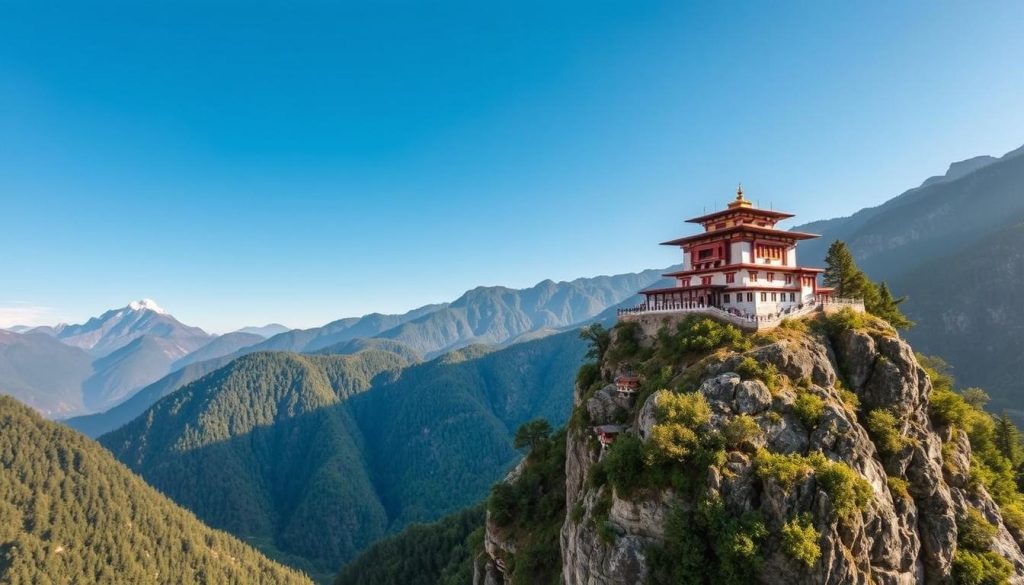
Visiting Tiger’s Nest Monastery is a deep spiritual journey. It’s a beautiful place with four main temples, high up on a cliff. It’s about 10,233 feet high. Before you go, check the hours to make sure you can get in.
Guided tours Tiger’s Nest can make your visit better. They share the monastery’s history and spiritual importance.
Visiting Times and Access
Getting to the monastery follows Bhutan’s rules and hours. It’s best to go early in the morning for a peaceful visit. The hike takes two to three hours, based on your fitness.
Once there, you’ll feel the calm. Remember, no photos in sacred areas.
Guided Tours Inside the Monastery
Guided tours Tiger’s Nest help you understand this special place. Guides tell you about the monastery’s history, starting in the 9th century. They share stories that make the site come alive.
Helpful Tips for Your Hike
Planning a hike to Tiger’s Nest Monastery needs careful thought. Focus on staying hydrated and use hiking poles for better support. These tips will make your journey more enjoyable.
Staying Hydrated
It’s crucial to drink plenty of water, as the Paro valley is over 2000 meters high. Bring enough water, as the altitude can make you thirstier than usual. Drink water often, even if you’re not thirsty, to keep your energy up.
Using Hiking Poles
Hiking poles are great for stability, which is important on the descent. The 600-meter climb can be tough on your knees, but poles help. Adjust your pace, take breaks, and enjoy the views to make the hike rewarding.
Conclusion
Hiking to Tiger’s Nest is an unforgettable adventure. It combines nature’s beauty with deep cultural heritage. As you climb about 700 meters to the monastery, you’ll see stunning views and feel the Bhutanese spirit.
The hike takes 2 to 3 hours, covering 4 km one way. With the right gear and mindset, every step is memorable. Start early to avoid crowds and enjoy the hike fully. Remember, the monastery has strict rules on photos and requires respect.
Take your time and enjoy the breathtaking views and calm surroundings. This hike is perfect for those seeking adventure, reflection, or a deeper connection to Bhutanese culture. It’s a journey that promises to enrich your soul.