Optimize Your Planning Days in Petra for Adventure
Ever thought about diving deep into Petra’s wonders? The legendary Rose City is full of excitement and history. Planning your days here can be both fun and stress-free.
Petra’s amazing rock-cut buildings and long history make it a special place. Since 1985, it’s been a UNESCO World Heritage Site. It’s also one of the New Seven Wonders of the World. To see it all, you need a good plan. This guide will show you how to explore Petra’s wonders fully.
Introduction to Petra: The Rose City
Petra, known as the Rose City, is a marvel of ancient engineering and art. It was home to the Nabataean Bedouin people around the 4th century B.C. The city boasts over 800 carved structures that merge with the pink and reddish sandstone cliffs.
The history of Petra is as captivating as its buildings. It was a key trading center, linking Egypt, Arabia, and Syria. Under the Romans for 250 years, Petra faced disasters that weakened it. By the 8th century, it was mostly forgotten, except for a few nomads.
In 1812, Swiss explorer Johann Ludwig Burckhardt rediscovered Petra. This sparked global interest in this ancient site. Now, it’s a UNESCO World Heritage Site and one of the Seven Wonders of the World. Visitors flock to see the remnants of this ancient city.
Why You Should Visit Petra
Petra is a huge sign of human creativity and growth. It was an ancient city known for its amazing buildings carved into rocks and its water system. For years, scholars and travelers have been drawn to it. Every stone and path has a story of trade, change, and cultural sharing.
The Historic Significance of Petra
Petra was a key place for traders moving between the East and West. At its peak, about 25,000 people lived there, making it a hub of commerce. The Nabataeans controlled these routes, making Petra a must-visit for merchants. Their influence is still seen in the buildings around, showing a mix of cultures.
A UNESCO World Heritage Site
In 1985, Petra was named a UNESCO World Heritage Site. This honor recognizes its unique cultural value and beauty. The Monastery, over 150 feet tall, shows the Nabataeans’ skill in building. The Colonnaded Street and the Roman Theater, which could hold 4,000 people, highlight its importance.
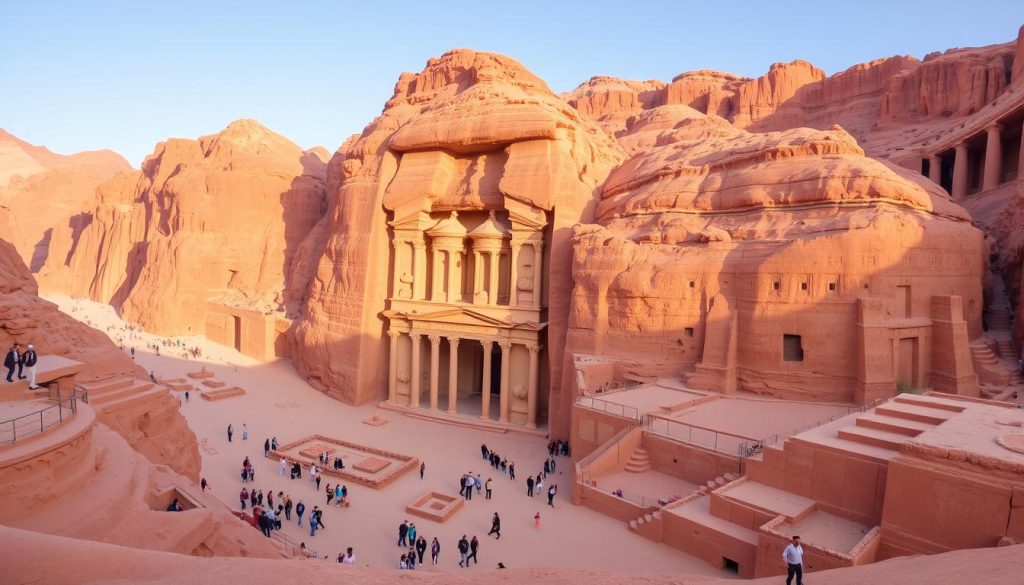
Petra was named one of the New Seven Wonders of the World in 2007. It still fascinates people all over. Walking through Petra, you step back in time and discover its ancient wonders.
How to Get to Petra
Getting to Petra is fun with many ways to travel. You can rent a car, join a guided tour, or take a taxi. The drive from Amman is about 250 kilometers and takes 2.5 hours. Buses are cheaper but take longer.
Transportation Options from Amman
Here are the main ways to get to Petra:
- Rental Cars: Offers freedom to explore at your pace.
- Guided Tours: Local companies provide a knowledgeable experience.
- Taxi Services: Costs around 90 JOD (~$120) for a one-way trip.
- Bus Options: A budget-friendly choice but takes longer.
Border Crossing Considerations for Day Trips from Israel
For day trips from Israel, remember the border crossing. The Wadi Araba crossing is quicker than the King Hussein Bridge. Tours often start early, around 3 AM, to make the most of your day.
Spending at least two days in Petra is best. This lets you see all the attractions. If you want to see Wadi Rum too, plan a separate day for its beauty.

| Transport Method | Average Duration | Cost (One-Way) |
|---|---|---|
| Rental Car | 2.5 hours | Variable |
| Guided Tour | Full day | Variable |
| Taxi | 2.5 hours | 90 JOD (~$120) |
| Bus Service | 3-4 hours | 20-30 JOD (~$30-$45) |
Knowing how to travel to Petra makes your visit better. It ensures you enjoy this ancient city carved into the rock.
Best Time to Visit Petra
Choosing the right time to visit Petra can make your trip better. The best months are from late autumn to early spring, from October to April. During this time, seasonal temperatures are around 20°C to 25°C (68°F to 77°F) during the day. This makes it perfect for exploring.
Understanding Seasonal Temperatures
Winter months, from December to February, can get very cold, even dropping to 2°C at night. But, visiting during this time can still be great if you’re ready for the cool nights. Summer, from June to August, is very hot, with temperatures over 30°C (86°F). This makes it hard to explore during the day.
January is the coldest month, while July and August are the hottest. If you like milder weather, visit early in the morning.
Crowd Management Tips
To avoid the crowds, start your visit at 6 AM when Petra opens. Early mornings are cooler and less crowded, making your visit more enjoyable. Weekdays are less busy than weekends, offering a more personal experience.
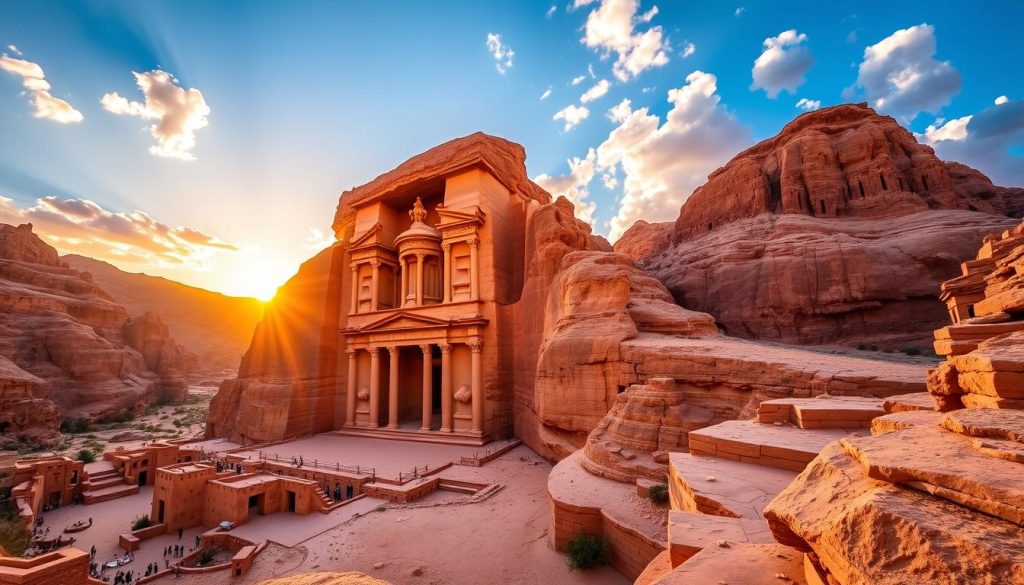
Following these crowd management tips will make your visit better. You’ll get to see Petra’s stunning sandstone architecture in peace. Plan well to fully enjoy your adventure.
Planning Days in Petra for Adventure
Planning your visit to Petra is key for a memorable trip. A two-day itinerary lets you fully enjoy Petra’s stunning views and rich history. With a good Petra trip planner, you can see all the famous spots and hidden treasures.
Creating a Two-Day Itinerary for Petra
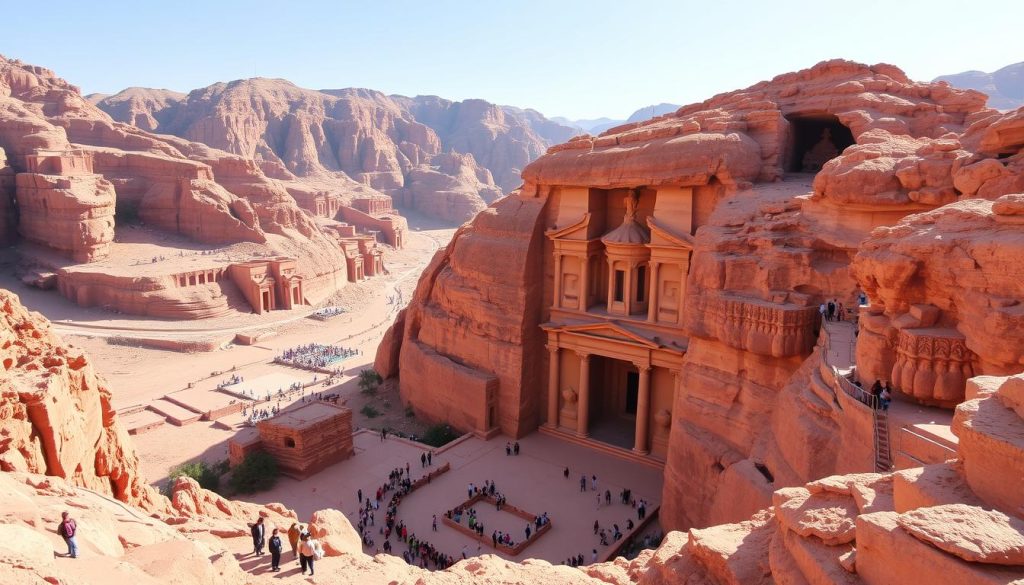
Start your first day with Al Khazneh (the Treasury), a must-see. Then, walk through The Siq, a breathtaking gorge. Next, check out the Royal Tombs with their detailed designs. This plan helps you see Petra’s amazing buildings.
On your second day, head to the Monastery, a less-known but equally impressive site. Also, visit Little Petra for a peaceful experience. It shows the vastness of Petra’s ancient ruins.
How to Prioritize Top Attractions
Think about what you love most in Petra. If you’re into ancient buildings, see Al Khazneh and the Monastery. Hiking fans should go to the High Place of Sacrifice for great views and fewer crowds.
Here’s a suggested two-day plan with the main sights and best times to see them:
| Day | Morning | Afternoon |
|---|---|---|
| Day 1 | Al Khazneh (The Treasury) | Royal Tombs |
| Day 2 | The Monastery | Little Petra |
Where to Stay in Petra
Finding the right place to stay in Petra is key for a great trip. There are many options to choose from. Think about what matters most to you, like how close it is to the entrance, what amenities it has, and how much it costs.
Best Hotels Near Petra Entrance
Hotels near the Petra entrance are super convenient. They let you get to the site quickly. The Mövenpick Resort Petra is a top pick, just a minute from the entrance. It offers amazing views and lots of amenities.
Other good choices include:
- Petra Plaza Hotel: It’s over a mile from the entrance but has comfy rooms.
- Petra Guest House: It’s in a former Nabataean tomb, adding a special touch to your stay.
Choosing Between Luxury and Budget Accommodations
Petra has many places to stay, from luxury to budget-friendly. Think about what you want from your stay. Luxury hotels offer top-notch service and fancy facilities. Budget options like hostels or guesthouses are cheaper but still offer a good experience.
Consider these when choosing:
- Amenities like Wi-Fi, breakfast, and pools
- What other guests have said
- How close it is to the site and entrance

Essential Petra Travel Tips
Getting ready for Petra means thinking about what to bring and how to stay safe. Knowing what to pack for Petra makes your trip better. It ensures you’re ready for anything and the weather. Also, staying safe in Petra lets you enjoy this amazing UNESCO site without worry.
What to Pack for Your Petra Adventure
Your packing list for Petra should have a few key items for a great visit:
- Light hiking shoes for rugged terrains
- Sunscreen to protect from the sun
- Hats for shade
- Water to stay hydrated
- Comfortable clothing for the warm weather
- Snacks, as food options may be limited
- A good camera to capture stunning views
Health and Safety Considerations
Must-See Attractions in Petra
Exploring Petra, you’ll find many iconic landmarks that show the city’s ancient grandeur. Each attraction gives a special look into the Nabataeans’ art and ingenuity.
The Iconic Treasury (Al Khazneh)
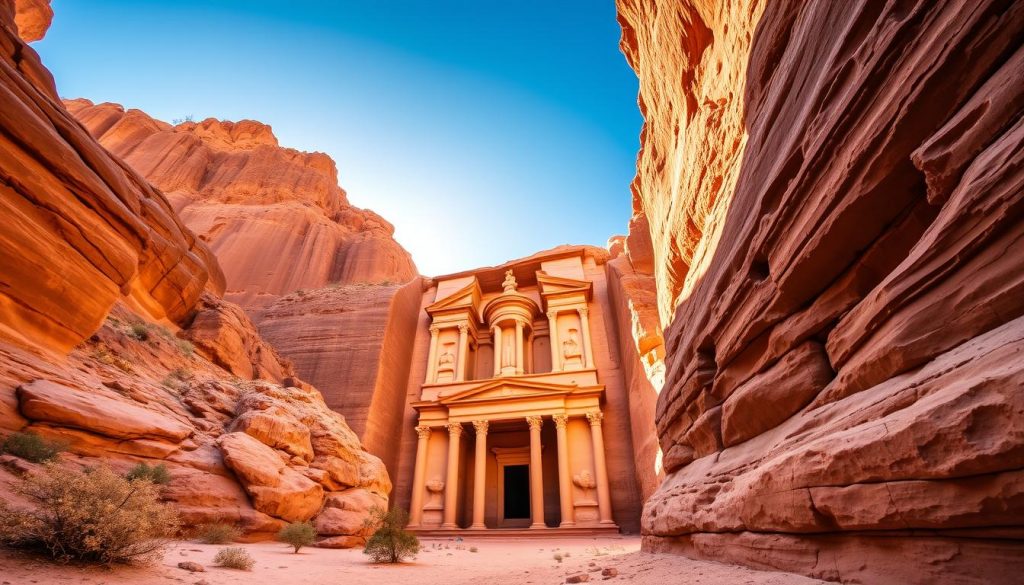
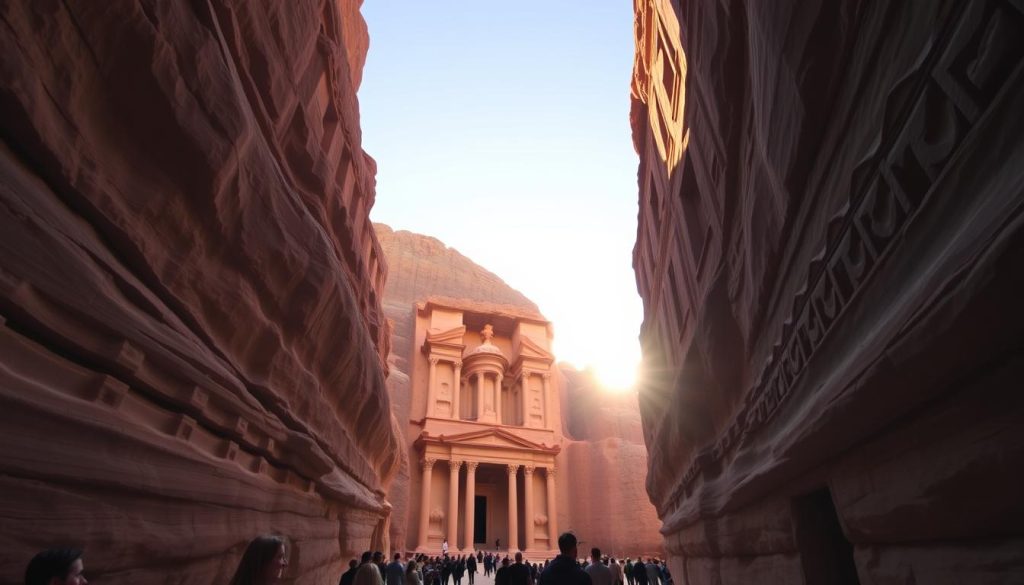
The Treasury, or Al Khazneh, is a celebrated structure in Petra. Its intricate facade is carved into the cliffs, amazing visitors. It looks stunning in morning light or at dusk, with its architecture and history.
Exploring the Monastery
The Monastery, or Deir, is a memorable trek with over 800 steps. It takes about 20 minutes to hike. The views are breathtaking, and it’s a great sense of achievement.
It’s larger than the Treasury and less crowded. It’s a key tomb to see in Petra for those who want a quieter experience.
Uncovering the Royal Tombs
The Royal Tombs in Petra are stunning mausoleums carved into the mountains. They show unique designs that reflect Nabataean burial practices. The Urn Tomb and the Silk Tomb are highlights for their artistry and history.
| Attraction | Description | Highlights |
|---|---|---|
| Al Khazneh | The iconic Treasury carved into the rock | Outstanding architectural details |
| The Monastery (Deir) | A larger structure accessed by climbing 800 steps | Stunning views and less crowded than other spots |
| Royal Tombs | A collection of intricately designed tombs | Unique expressions of Nabataean funerary practices |
Experiences Beyond Daylight: Petra by Night
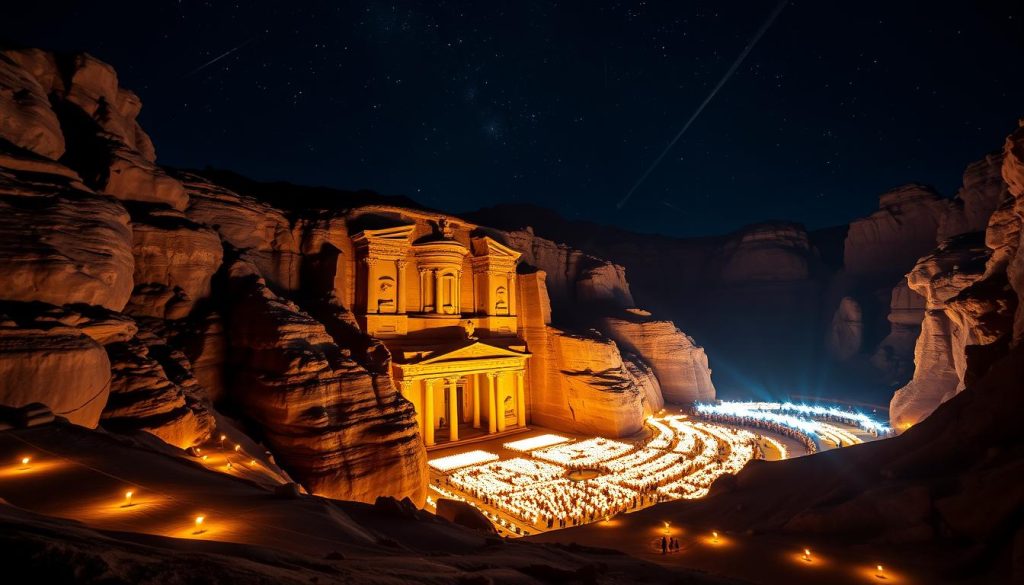
The Petra by Night experience offers a unique view of one of the world’s most remarkable sites. It happens on select evenings, allowing you to walk through the Siq, a narrow gorge. The Siq leads to the Treasury, lit up by thousands of candles.
This magical setting creates an unforgettable atmosphere. It captivates visitors. Knowing the night event schedule helps you make the most of this incredible venture.
Understanding the Night Event Schedule
The Petra by Night event happens three evenings a week. It takes place on Mondays, Wednesdays, and Thursdays. It runs from 8:30 p.m. to 10:30 p.m.
To fully enjoy the experience, arrive before 9:15 p.m. Tickets are available at the visitor center, even after the event starts. But arriving early ensures a great spot. Admission costs about 17 JOD (~$24 USD) per person, separate from regular Petra access.
What to Expect from the Petra by Night Experience
During the Petra by Night experience, you’ll enjoy a storytelling session with hot tea. It brings the site’s rich history to life. Many visitors feel wonder as they walk through the gorge under candlelight.
The atmosphere has mixed reviews. Some find it crowded because of no attendee caps. Arriving early and finding a good spot will greatly improve your experience.
Hiking and Outdoor Activities in Petra
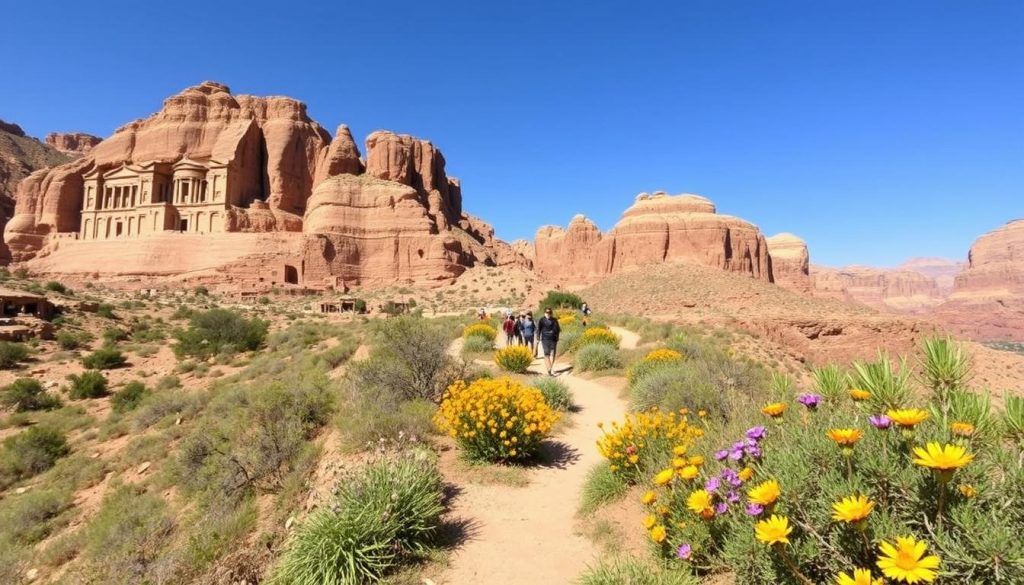
Petra has many hiking trails for all levels. You can explore stunning landscapes and rich history. The trails lead to hidden ruins and offer amazing views, showing Petra’s beauty.
Trail Options for Adventurous Travelers
Petra’s hiking trails have something for everyone. Two top trails are:
- High Place of Sacrifice: This trail offers a unique view of Petra’s architecture and stunning valley views.
- The Monastery Trail: A longer hike, it takes you to Al Deir, famous for its large facade and calm atmosphere.
Both trails are rewarding, filled with natural beauty and cultural sites. Exploring these trails in Petra is a great way to stay active and learn about the area’s history.
Preparing for the Hiking Experience
Before you start hiking in Petra, prepare well. Here are some tips for a better adventure:
- Wear comfy shoes with good grip for rocky paths.
- Carry enough water to stay hydrated.
- Use sun protection like hats and sunscreen against the sun.
- Begin your hike early to avoid heat and crowds.
Petra Vacation Planning: A Summary of Key Information
Planning your visit to Petra means knowing the costs and using resources to make it special. Spend enough time exploring this amazing site. The costs can change based on where you stay, eat, and travel. A detailed budget for your Petra trip will make your journey smooth.
Walk-through of Important Costs for Visiting Petra
When planning your Petra adventure, remember these costs:
| Expense | Estimated Cost (JOD) | Notes |
|---|---|---|
| Entrance Fee | 50 | Free with Jordan Pass |
| Jordan Pass (includes multiple attractions) | 70-90 | Best for multiple site visits |
| Accommodation (per night) | 30-150 | Options range from budget to luxury |
| Meals (per day) | 15-50 | Varies by dining choices |
| Transport (from Amman) | 10-30 | Public buses are affordable |
Utilizing Resources for an Efficient Trip
Enjoy Petra more by using trip planning resources. Booking.com helps find great places to stay. Google Maps makes getting to and around Petra easy. Travel blogs and forums offer tips and experiences from others, helping you prepare.
Important Historical Context of Petra
The history of Petra is rich and complex. It was founded by the Nabataeans, who built this amazing city. They were known for their architecture and trade skills. Their work in water conservation helped them thrive in the desert.
The Nabataeans and Their Legacy
The Nabataeans were expert traders. They controlled key routes between Arabia, Egypt, and Syria-Phoenicia. Petra became a major trading center, thanks to its location and the spice trade boom in the late first century BCE.
The city’s buildings, half-carved into the rock, show a mix of Hellenistic and Eastern styles. Their water systems made Petra sustainable, despite the desert.
Rediscovery of Petra in the 19th Century
In 1812, Petra was rediscovered by Swiss explorer Johann Ludwig Burckhardt. His work brought Petra to the attention of the Western world. This marked the start of serious study and exploration of Petra.
Even today, only one percent of Petra has been fully explored. This shows there’s still much to learn about this ancient city.
| Period | Key Events |
|---|---|
| Prehistoric Times | Continuous habitation, setting the stage for future development. |
| 1st Century BCE | Peak of the spice trade, urbanization of Petra. |
| 106 CE | Petra becomes part of the Roman province Arabia Petraea under Emperor Trajan. |
| 363 CE | Significant earthquake impacts Petra, affecting urban vitality. |
| 551 CE | Major earthquake nearly destroys Petra, coinciding with the rise of Islam. |
| 1812 | Rediscovery by Johann Ludwig Burckhardt, reigniting interest in Petra. |
| 1958 | Modern excavations begin, enhancing understanding of Petra’s history. |
Conclusion
Visiting Petra is like stepping into the past, into the heart of an ancient civilization. This UNESCO World Heritage Site is more than just monuments. It shows the creativity and skill of the Nabataeans, sparking your sense of adventure.
From the Treasury’s stunning architecture to the hike to the Monastery, Petra is full of secrets. Every corner invites you to explore and uncover its mysteries.
Plan to spend at least two to three days to fully explore Petra’s vast 263 square kilometers. The entrance fee is 50 JOD for a day and 55 JOD for two days. This way, you can enjoy Petra without breaking the bank.
By planning well, you can soak in the iconic spots and make unforgettable memories. Maybe even catch the magical Petra by Night event.
In conclusion, visiting Petra with respect and intention creates lasting memories. Your journey promises not just breathtaking views but also a deep connection to history.