Navigating Vietnam: Overcome Language Barrier Easily
Are you planning a trip to Vietnam but concerned about overcoming language barriers? Do not let a language barrier stop you from experiencing the rich culture and beauty of Vietnam. In this article, we will provide practical tips and language barrier solutions for travelers that will make communicating with locals effortless.
Discover essential communication insights, how to connect with locals, and ways to improve your overall experience while traveling in Vietnam. By the end of this article, you will have all the information you need to make communication easy during your visit to Vietnam.
Importance of Language When Traveling in Vietnam
One of the biggest challenges travelers face in Vietnam is the language barrier. However, understanding the significance of language when traveling can greatly enhance your experience in this vibrant country.
Learning a few basic Vietnamese phrases can help you connect with locals, show respect for the culture, and navigate daily activities with ease. Here are some essential Vietnamese language tips to help you communicate effectively during your trip:
- Learn the basics: Start with the basics, such as “hello,” “thank you,” and “goodbye.” This will show locals that you respect their culture and are making an effort to communicate.
- Listen carefully: When engaging in conversation, listen carefully to the tone and inflection of the speaker, as this can provide important context and meaning.
- Use non-verbal communication: In addition to spoken words, non-verbal cues such as gestures and facial expressions can help bridge the language gap and convey your message.
- Be patient: Don’t get discouraged if you don’t understand everything right away. Be patient and take your time, and don’t be afraid to ask for clarification.
- Use translation tools: If you’re struggling to communicate, consider using translation tools such as apps or phrasebooks to help bridge the language gap.
| Vietnamese Language Tips for Travelers |
|---|
| Learn basic phrases like “hello,” “thank you,” and “goodbye.” |
| Listen to tone and inflection when speaking with locals. |
| Use non-verbal communication, such as gestures and facial expressions. |
| Be patient and don’t get discouraged if you don’t understand everything. |
| Use translation tools, such as apps or phrasebooks, to help with communication. |
By understanding the importance of language when traveling in Vietnam and taking the time to learn a few basic phrases, you can greatly enhance your experience and connect with locals on a deeper level.
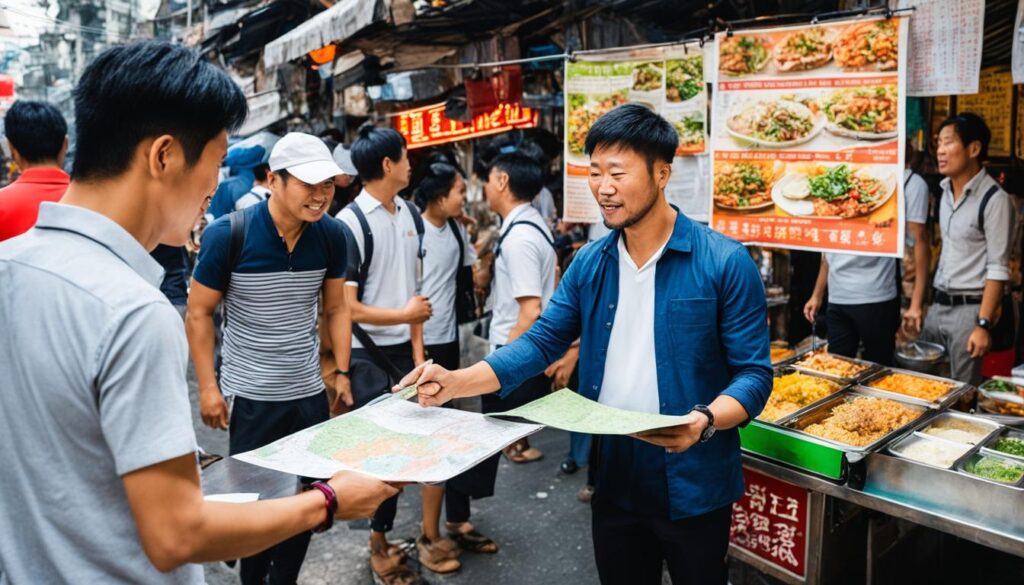
Common Language Barriers in Vietnam
When traveling in Vietnam, you may encounter several language barriers that can inhibit effective communication. Understanding these challenges is the first step in overcoming them. Here are some of the most common language barriers you may face:
| Language Barrier | Example | Solution |
|---|---|---|
| Language difference | Speaking a language that locals might not understand | Learn Vietnamese phrases or hire an English-speaking guide |
| Local dialects | Vietnamese spoken differently in different regions of the country | Use standard Vietnamese or learn dialect-specific phrases |
| Limited English proficiency | Locals struggling to comprehend English phrases | Speak slowly and simplify the vocabulary, use non-verbal cues or hire an English-speaking guide |
By recognizing and preparing for these language barriers, you can better navigate through them and enjoy a comfortable and fulfilling trip. An English-Vietnamese phrasebook or translation app can be helpful for quick reference when faced with unfamiliar situations. Additionally, actively immersing yourself in the local culture can improve your overall communication skills. Remember, attempting to communicate in the local language can demonstrate respect and lead to more positive interactions with locals.

Language Learning Resources for Vietnam
If you’re planning a trip to Vietnam, it’s essential to familiarize yourself with the Vietnamese language to improve your communication skills. Thankfully, there are many language learning resources available to help you achieve this goal.
Vietnamese Language Learning Apps
- Duolingo – This popular language learning app offers Vietnamese lessons for free.
- Memrise – With a range of courses, Memrise is ideal for beginners and those looking for a quick refresher.
- Babbel – Their Vietnamese course helps learners develop practical communication skills.
Online Vietnamese Language Courses
- Rosetta Stone – This well-known language learning platform offers an immersive Vietnamese course with speech recognition technology.
- Learn Vietnamese With Annie – YouTube-based course designed for beginners, created by a Vietnamese language teacher.
- Live Lingua – This online language school offers personalized tutoring to help you learn Vietnamese.
Other Vietnamese Language Learning Resources
| Resource | Description |
|---|---|
| Talk To Me In Vietnamese | A popular YouTube channel with hundreds of videos on Vietnam’s language and culture. |
| Vietnamese Phrasebook | Lonely Planet’s Vietnamese Phrasebook is a useful reference guide for travelers. |
 |
Travel Guide Vietnam – This compact book includes a section on Vietnamese language and culture that can help you learn essential phrases. |
With numerous language learning resources available for Vietnam, you can learn Vietnamese at your own pace and prepare for an unforgettable journey.
Essential Phrases for Travelers in Vietnam
When traveling in Vietnam, it’s helpful to know some common phrases in Vietnamese to make your communication with locals smoother. Below is a list of essential phrases to assist you in basic conversations and everyday situations you may encounter during your travels.
| Vietnamese | English |
|---|---|
| Xin chào | Hello |
| Cảm ơn | Thank you |
| Xin lỗi | Sorry/ Excuse me |
| Tôi không hiểu | I don’t understand |
| Bao nhiêu tiền? | How much? |
| Đi đâu? | Where are you going? |
| Tôi muốn mua… | I want to buy… |
| Bạn tên là gì? | What is your name? |
Using these phrases will help you communicate effectively and confidently in various situations. Remember to speak slowly, politely, and with a smile to show respect to the locals.
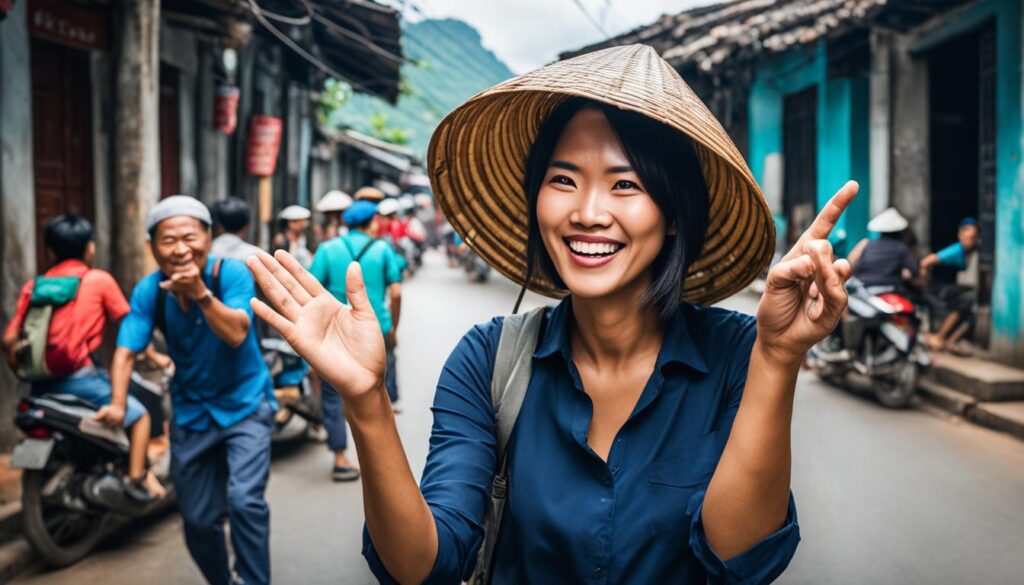
Language Translation Apps for Vietnam
If you’re traveling to Vietnam and don’t speak the local language, language translation apps can be a lifesaver. These handy apps can translate words, phrases, and even entire conversations in real-time, allowing you to communicate with locals effortlessly.
| App Name | Features |
|---|---|
| Google Translate | One of the most popular translation apps, Google Translate can translate over 100 languages, including Vietnamese. It also offers a camera feature that can instantly translate text in images or signs. |
| iTranslate | This app offers translation for over 100 languages, with voice-to-voice options, text translation, and a dictionary. It also features a “Phrasebook” with commonly used phrases and can save translations for offline use. |
| Waygo | Designed specifically for Asian languages, including Vietnamese, Waygo translates text in real-time using your phone’s camera. It works even without an internet connection, making it a great option for travelers on the go. |
| Microsoft Translator | This app can translate over 70 languages, including Vietnamese, and offers speech and camera translation modes. It also includes a “Phrasebook” feature and can translate entire documents. |
Download one or more of these language translation apps and enjoy a more seamless and stress-free travel experience in Vietnam.
Hiring an English-speaking Guide in Vietnam
If you want to make the most of your travels in Vietnam but are concerned about language barriers, hiring an English-speaking guide can be a wise decision. An experienced and knowledgeable guide can not only assist with translation but also offer valuable cultural insights and enhance your overall experience.
When searching for an English-speaking guide in Vietnam, consider using reputable travel agencies or websites that offer vetted and certified guides. You can also ask for recommendations from fellow travelers who have already visited the country.
Having an English-speaking guide can make it easier to communicate with locals and gain a deeper understanding of their way of life. Additionally, a guide can take you to hidden spots that you might otherwise miss and provide historical and cultural context to the places you visit.
The Benefits of Hiring an English-speaking Guide
Here are some benefits of hiring an English-speaking guide in Vietnam:
| BENEFITS | DESCRIPTION |
|---|---|
| Effective communication | Having a fluent guide can help you communicate effectively with locals, negotiate prices, and order food. |
| Insider knowledge | A knowledgeable guide can share insider tips and little-known facts about the places you visit. |
| Cultural immersion | By having a guide that shares cultural insights, you can get a deeper immersion into the local culture and customs. |
| Finding hidden gems | An English-speaking guide can take you off the beaten track and show you hidden spots, making your trip even more memorable. |
Whether you’re a first-time traveler or a seasoned adventurer, hiring an English-speaking guide in Vietnam can greatly enhance your journey. By providing translation, cultural insights, and local knowledge, a guide can help you create unforgettable memories and build connections with locals.
Non-Verbal Communication Tips in Vietnam
Communicating effectively in Vietnam doesn’t always require spoken language. Non-verbal cues such as gestures and body language can also facilitate understanding. However, it’s crucial to understand and use them appropriately to avoid misunderstandings.
Understanding Non-Verbal Cues
Vietnamese people place high importance on respect and politeness. Non-verbal cues are used to convey both respect and hierarchy in social interactions. For instance, making eye contact and bowing slightly signifies respect towards someone of higher social status. Greeting with hands clasped together and a slight bow, known as nhấn mặt, is a common non-verbal greeting. Additionally, Vietnamese people use facial expressions, posture, and tone of voice to indicate their emotions.
Using Non-Verbal Cues
To avoid confusion or offense, it’s essential to learn how to properly use non-verbal cues in Vietnam. For example, pointing with a finger is considered impolite, so pointing with the entire hand is more appropriate. It’s also important to note that some gestures that are acceptable in Western cultures may carry different meanings in Vietnam. For instance, a smile can indicate embarrassment or nervousness rather than happiness.
The Role of Body Language
Body language can also be an effective form of communication in Vietnam. For example, nodding the head slightly or raising the eyebrows can signify agreement or acknowledgment. Bowing the head slightly while placing your palms together and saying cảm ơn (thank you) shows appreciation and respect. Additionally, maintaining an appropriate physical distance, especially during the first meeting, demonstrates respect for personal space and is considered polite.
“Understanding and utilizing non-verbal communication is crucial when navigating through different cultures. In Vietnam, non-verbal cues are heavily relied upon to convey respect and hierarchy.”
Cultural Sensitivity and Respectful Communication
Communicating effectively in Vietnam goes beyond simply speaking the language. Cultivating cultural sensitivity and respectful communication will greatly enhance your interactions with locals and make your trip more enjoyable.
Important Cultural Norms
In Vietnam, people place a high value on respect for elders, authority figures, and family. Greetings are an important part of Vietnamese culture, so it is customary to greet people with a smile and a nod, and to address them by the appropriate title.
It is also important to dress modestly, especially when visiting religious sites or attending formal events. You should avoid showing too much skin or wearing revealing clothing.
Etiquette and Practices
When interacting with locals, it is respectful to address them by their formal title or last name unless they specify otherwise. Using hand gestures and body language during conversation is common in Vietnam, so try to mimic your conversation partner’s movements to establish a connection.
When eating, wait for the oldest or most senior person to start eating before you begin. Also, be sure to use chopsticks properly and avoid leaving them sticking up out of your bowl, as this is considered bad luck.
Example of Respectful Communication
When addressing someone in Vietnam, it is proper to use their formal title or last name. For example, if you meet a woman named Nguyen Thi Anh, you should address her as “Ms. Nguyen” or “Ms. Anh” until she tells you otherwise.
Dos and Don’ts of Communicating in Vietnam
| Do | Don’t |
|---|---|
| Address people by their formal title or last name. | Use first names or nicknames without permission. |
| Dress modestly, especially when visiting religious sites or formal events. | Wear revealing clothing or show too much skin. |
| Use hand gestures and body language to establish a connection during conversation. | Mimic Western gestures or body language that may be considered offensive in Vietnam. |
| Wait for the oldest or most senior person to start eating before you begin. | Start eating before anyone else. |
By following these tips for cultural sensitivity and respectful communication, you can navigate social situations with ease and show respect for Vietnamese culture.
Conclusion
Overcoming the language barrier while traveling in Vietnam may seem daunting at first, but with the right approach and preparation, it can be a rewarding experience. By utilizing the practical tips and solutions provided in this article, you can connect with locals, immerse yourself in the local culture, and create lasting memories.
Whether you opt to learn essential phrases, use language translation apps, or hire an English-speaking guide, there are various language barrier solutions in Vietnam that you can consider. Additionally, understanding non-verbal cues and cultivating cultural sensitivity can further enhance your communication skills.
Remember to keep an open mind and be respectful when communicating with locals. By doing so, you can forge meaningful connections and gain a deeper appreciation for the beauty and diversity of Vietnam.