Master Layered Packing for Various Climates
Have you ever had to pack for a trip with both hot and cold weather? It’s tough, isn’t it?
Packing for different climates in one trip can seem tough. But, knowing how to pack smart can make your trip smooth. Layering is a top travel tip. It lets you bring clothes for hot and cold weather without taking up too much space. Imagine fitting everything you need into a 40L backpack. This approach saves space and lets you adjust to temperature changes easily.
Layering works for any trip, from a week-long hike to a simple change from cold to warm weather. Key to this method is choosing the right materials. For cold weather, think cashmere and merino wool. For hot days, cotton and linen are best. Using layers means you’re ready for any weather, making it a great travel strategy.
Stay with us as we share more tips on how to use layers. We’ll show you how to pack better and make traveling easier.
The Importance of Layering Clothing for Travel
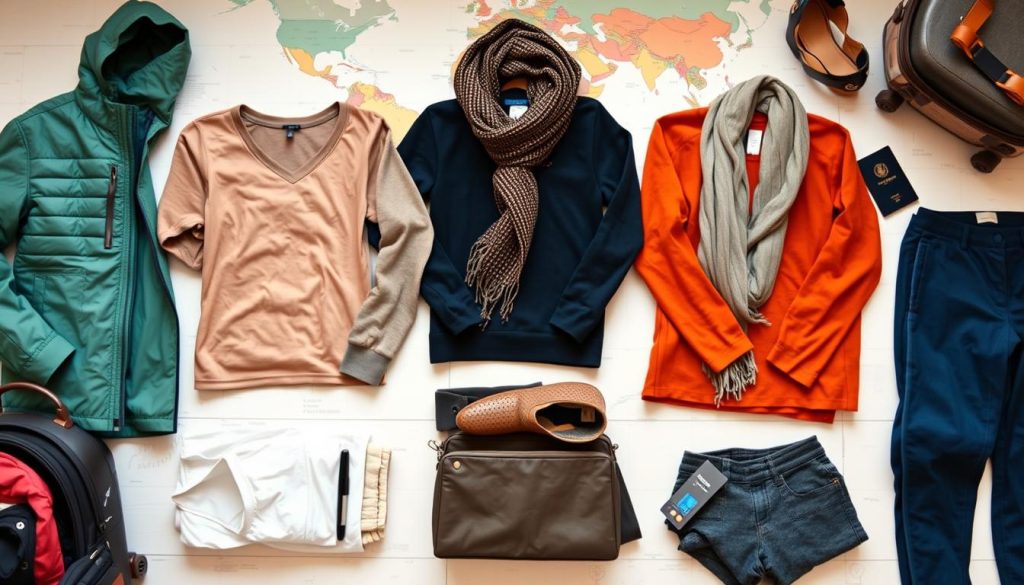
It gives you flexibility and keeps you comfy in different climates. Plus, it helps you save space in your bag. Let’s talk about why layering is a must for travelers.
Versatility and Adaptability
Layering lets you easily adjust to changing weather. You can switch up base layers, mid-layers, and outer layers. This way, you’re ready for cool mornings and warm afternoons. And you won’t pack too much.
You can mix and match your clothes. This means you’re always prepared, no matter the weather.
Comfort Across Different Temperatures
Layering keeps you comfortable in any temperature. Start with 3 to 5 t-shirts that dry fast. They help you stay dry when it’s hot or cold. Then, add a fleece jacket for warmth.
A waterproof jacket keeps out wind and rain. For example, the Patagonia R1 Air Full-Zip Hoody is a great choice. It’s often 30% off.
Space-Saving Benefits
With layering, you can pack smarter, especially if you’re only bringing a carry-on. Choose light and versatile items over bulky ones. You might pack two pairs of pants, one pair of shorts, and a few pairs of socks. This covers all your bases.
The Tortuga Travel Backpack is perfect for this. It’s got a 4.7 out of 5 rating. It fits in overhead bins, making travel easier and more efficient.
Choosing the Right Fabrics for Layering
Choosing the best fabrics for layering is key to stay comfortable, adjust easily, and pack smart. Using merino wool, cashmere, cotton, technical fabrics, nylon, and polyester helps you deal with any weather. These materials are must-haves for your wardrobe to face varied climates.
Merino Wool and Cashmere
Merino wool and cashmere are great for base layers. They are light, keep you warm, and don’t hold odors. Merino wool is softer than human hair, which makes it super comfortable. It works well in different temperatures by moving moisture away and keeping you warm. Cashmere adds luxury and warmth to your travel gear.

Cotton and Technical Fabrics
Cotton feels good and lets your skin breathe but isn’t great for wet conditions. But, when you mix cotton with technical fabrics, you get clothes that dry fast and wick away sweat. Advanced materials like Polartec NeoShell and eVent have changed the game, especially for outdoor adventures. These innovations are key for packing right and staying comfortable in varied temperatures.
Nylon and Polyester for Outer Layers
Nylon and polyester lead the way for outer layers because they’re tough and protect against weather. Coats that use these fabrics, with tech like Futurelight, are essential for facing unpredictable conditions. They keep you dry by balancing warmth and air flow. Mixing them with wool can also work well, making your travel wardrobe more versatile.
| Fabric Type | Properties | Ideal Layer |
|---|---|---|
| Merino Wool | Lightweight, Warm, Odor-Resistant | Base Layer |
| Cashmere | Soft, Insulating | Base Layer |
| Cotton | Comfortable, Breathable | Mid-Layer |
| Technical Fabrics | Moisture-Wicking, Quick-Drying | Mid-Layer |
| Nylon | Durable, Weather-Resistant | Outer Layer |
| Polyester | Weather-Resistant, Breathable | Outer Layer |
Knowing these fabric features helps you pack thoughtfully. It enhances your travels by ensuring you’re ready for any weather.
How to Mix and Match Layers for Different Weather Conditions
Traveling across various climates can pose a challenge. Yet, packing efficiently for different temps is key. It involves using layers to adjust comfortably to any weather scenario. Success hinges on smartly combining warm base layers, insulating mid-layers, and protective outer layers. Such versatility in packing lets you adapt with ease and stay comfy in any climate.

Base Layers for Warmth
Base layers keep you warm and manage moisture. Materials like merino wool and synthetic blends are top picks. They move sweat away and keep you insulated. When figuring out what to pack, mixing short and long-sleeved base layers offers flexibility for hot and cold weather.
Mid Layers for Insulation
Mid layers are your main insulation, keeping you warm. Choices include fleece jackets, puffer vests, or light sweaters. Pick layers you can easily add or take off. This is key for comfort while avoiding overpacking on trips with changing weather.
Outer Layers for Protection
Outer layers shield you from wind, rain, and cold. Look for waterproof and windproof jackets. Many solo travelers recommend packable rain jackets for unexpected showers. Having adaptable outer layers like these prepares you for any weather, perfecting your versatile packing strategy.
With smart layer planning, you can adjust to diverse weather conditions, enhancing your travel experience. This strategy not only frees up space in your luggage but allows creative mixing and matching of outfits. It extends the wearability of each piece in your wardrobe.
Using Layers to Pack for Multiple Climates
Packing for trips with varying weather means being smart and light. You can adapt to changing temperatures easily by layering. Here are some tips to make packing more efficient.
Creating a Capsule Wardrobe
For packing smart, create a capsule wardrobe. This includes clothes that work in many ways. You should pack items like:
- 5-7 long-sleeve shirts adaptable for temperature control
- 3-5 pairs of bottoms to mix and match with tops
- At least 5 assorted undergarments, such as cotton/wool mixes
- 5 pairs of socks, mainly wool with one cotton pair for relaxing
- 1 lightweight wool or capilene-type quarter zip top for layering
- 1 primaloft-filled light jacket with a hood for staying warm
- 1 light Gore-Tex rain jacket for staying dry
A capsule wardrobe makes packing for any weather simpler. You’ll be ready for any climate changes.
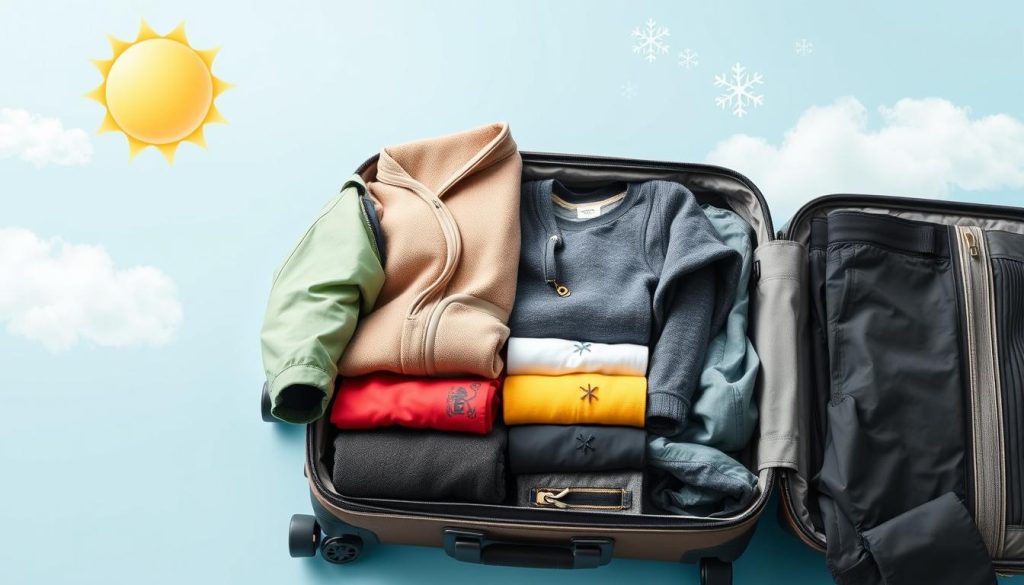
Plan for Mixed Weather Destinations
When heading to places with mixed weather, planning is crucial. Always check the weather before you pack and right before leaving. This way, you can pack what you really need. Don’t forget essentials like:
- 1 set of thermal tops and bottoms in wool or capilene
- 1 warm sweater or hoodie, better if wool or cashmere
- 1 down or primaloft-like vest for extra warmth
- Winter must-haves like hat, mittens, and buff
- A waterproof/windproof jacket with a hood
Packing smart for different places is easier when you plan for the weather. This ensures you pack the right clothes for your journey.
Strategies for Efficient Packing
Keeping your luggage light and compact is important for traveling through different climates. Use layers to lower your bag’s weight by 30%. Other great tips include:
- Packing cubes: Increase your packing space by about 20%
- Wear your bulky items like jackets and boots to save space
- Pick light fabrics like silk, merino wool, and cashmere for less weight
Packing 3 to 5 versatile items can majorly cut down on the space you use. Aim for essentials and skip the “just in case” stuff. Studies say we hardly use those extras.
Essential Windblock Gear for Unpredictable Weather
Having the right travel clothes is key when facing different weather. Windblock gear like jackets, pants, and hats keep you comfy and protected. They’re vital for handling the wind and other elements well.
Types of Windblock Gear
There are many kinds of windblock gear for all kinds of weather. For something light, check out the Black Diamond Distance Wind Shell and the Patagonia Houdini Jacket. The Patagonia Houdini, for example, is super light at 3.9 oz and does a great job at blocking wind while still letting your skin breathe.
If you need something tougher, the Mountain Hardwear Stretch Ozonic Jacket is more about keeping water out, even if it’s a bit heavier. For those who run, windblock pants like the Janji Rainrunner Pack Jacket and the ON Zero Jacket keep you both warm and dry without making you sweaty.
| Jacket | Weight (oz) | Price ($) | Temperature Range (degrees) | Overall Score |
|---|---|---|---|---|
| Patagonia Houdini Jacket | 3.9 | 109 | 25-45 | 81 |
| Black Diamond Distance Wind Shell | 2.9 | 140 | 35-55 | 75 |
| Rab Vital Hoody | 4.8 | 95 | 30-55 | 73 |
| Outdoor Research Helium Wind Hoodie | 4.0 | 129 | 30-50 | 74 |
| Arc’teryx Squamish Hoody | 5.1 | 180 | 25-45 | 72 |
Benefits and Uses
Windblock gear does more than just block wind. It also insulates you. The Brooks Canopy Jacket, for example, keeps you cool and dry, even in hot, humid weather. And both the ON Weather Jacket and Gore-Tex R7 Shakedry Hooded Jacket protect you in rain and wind.
For those who love the outdoors, the Outdoor Research Shadow Wind Hoodie and the Salomon Bonatti Aero Wind Jacket are light but tough. They work well for many activities. The Brooks Reflective Convertible Jacket is also great for keeping you seen at night.
Using windblock gear helps in all sorts of situations, from trips in Africa to climbing in Mexico. The right wind-resistant clothing will keep you ready for any weather, using smart layering for comfort.
Packing Tips for Managing Weight and Space
When you plan a trip to many places, it’s key to pack smart. Here’s how to pack for different weather and use your luggage space well.
Choosing the Right Luggage
Picking the right luggage can make your trip better. The Delsey Paris Cruise 3.0 set has three bags: two for checking in and one carry-on. Priced at $630 USD, they have a TSA lock, more room if needed, a weight reminder, and a spot for a USB and power bank in the carry-on. This kind of luggage is great for trips to many places because it’s soo flexible.
Organizing with Packing Cubes
Packing Cubes are a smart way to organize. They help you keep your clothes and stuff sorted. Choose 3-4 main colors to make mixing outfits easy and keep your luggage tidy. This way, you’ll need fewer items for any weather.
Rolling vs. Folding Techniques
Rolling or folding clothes affects how much you can fit. Rolling is good for lighter items because it saves space and avoids wrinkles. Folding works for heavier items. Layering with materials like merino wool is smart because they’re breathable and warm.
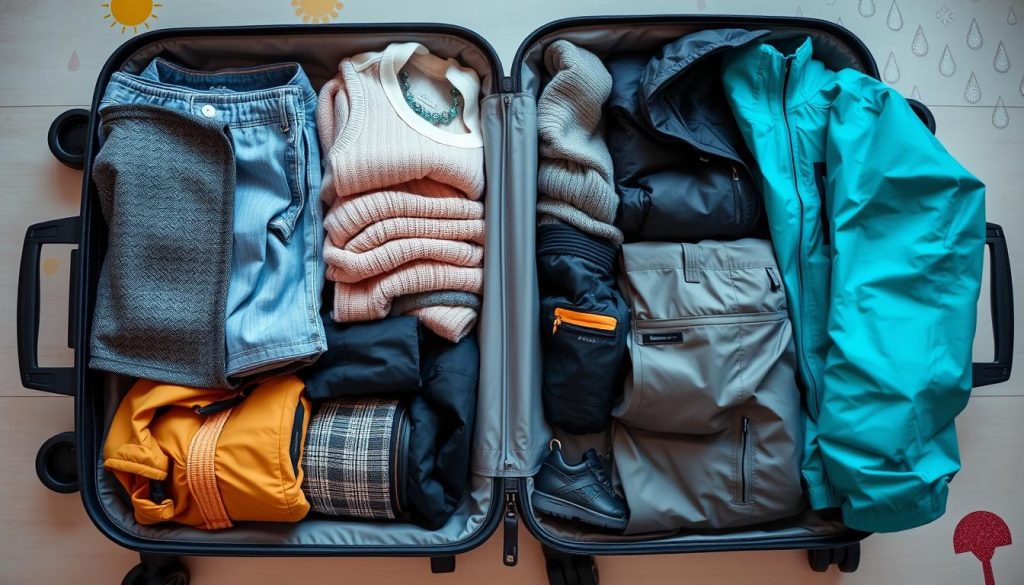
| Technique | Benefits | Best for | Considerations |
|---|---|---|---|
| Rolling | Space-saving, minimizes wrinkles | Lightweight clothes, undergarments | May not be ideal for bulkier items |
| Folding | Maintains garment shape | Jackets, bulkier items | Can take up more space |
| Using Packing Cubes | Organized, easy to access | All clothing types | Additional weight from cubes |
To pack well, bring just three pairs of shoes: sneakers, sandals, and formal shoes. By choosing clothes you can wear in layers and planning your packing, you can keep your luggage light and organized. This makes traveling easier.
Layering Tops for Versatile Outfits
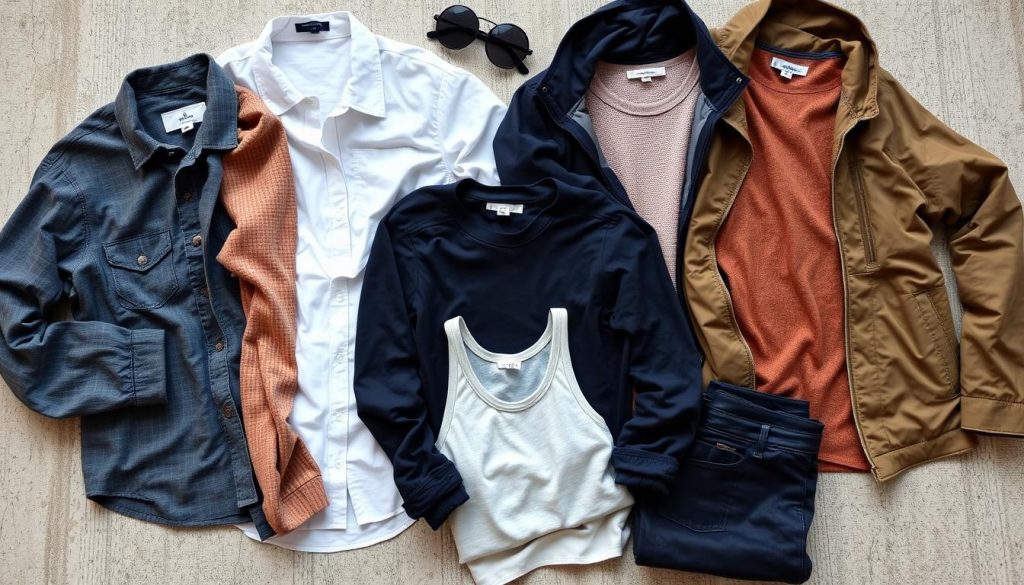
Getting good at layering tops can make your travel wardrobe better. This skill lets you adjust to different weather and gives you many outfit options. By mixing various tops with accessories, you create stylish looks for any climate you face on your trip.
Lightweight Shirts and Blouses
Light shirts and blouses are key for travel. They’re great base layers, offering comfort and letting your skin breathe. Choose cotton or technical fabrics that keep you dry. These tops can switch from casual to fancy, perfect for dealing with changing weather.
Long Sleeve Tees and Sweaters
Add long sleeve tees and sweaters for extra warmth and fashion. Merino wool and cashmere keep you cozy without being bulky. These pieces are easy to layer over lighter shirts. They go well with many bottoms, helpful for layering when you travel.
Adding Scarves and Wraps
Scarves and wraps are key travel accessories. They not only keep you warm but also enhance your outfits. A scarf can be a shawl or a blanket on a cold flight. Owning versatile accessories like these prepares you for any weather, following the layering idea.
Layering Bottoms for Warm and Cold Climates
Packing for places with varying temperatures can feel overwhelming. But, with the right layering techniques, you’ll be ready for any weather. Here are some key tips for layering your bottoms, so you’re cozy and comfortable, no matter the climate.
Pants and Skirts for Different Weather
Choosing the right bottoms is crucial for your packing list for changing weather. Go for pants in breathable fabrics like nylon or polyester; they’re great at wicking away moisture. For hot weather, pick light skirts or pants made of linen or cotton to stay cool. In cold weather, wear your favorite jeans over thermal leggings to keep warm.
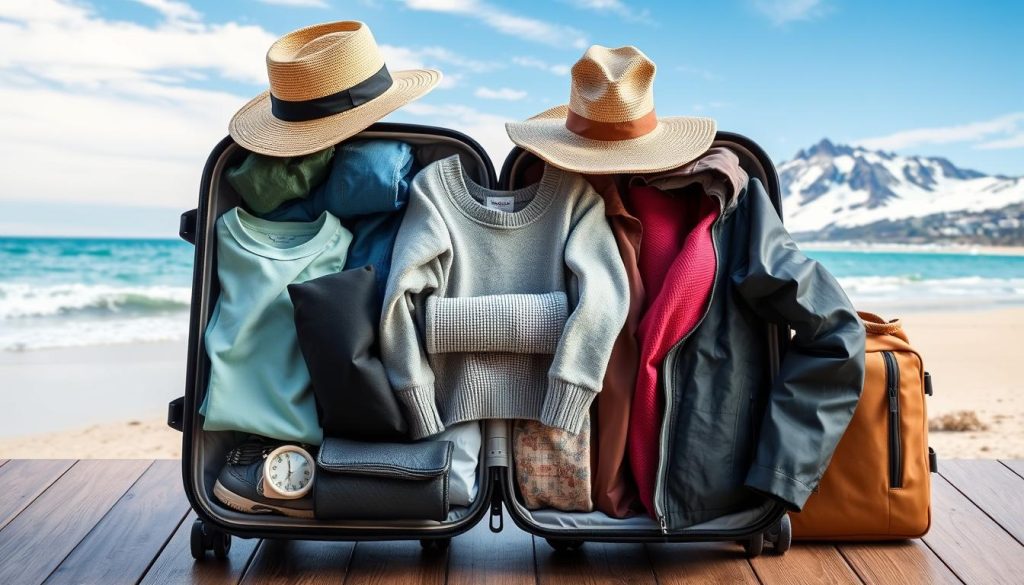
Using Tights and Leggings as Layers
Tights and leggings are perfect for using layers to pack for multiple climates. Wear them under skirts for extra warmth, or under pants for additional insulation. Choose thermal leggings or wool tights for cold places, and opt for lighter ones in milder weather. This way, you easily adjust to temperature changes without packing too much.
Versatile Shoes and Footwear
Shoes take up a lot of space, so it’s important to choose versatile ones. When making your packing list for changing weather, pick shoes that are comfy and can handle various climates. Waterproof hiking boots are best for cold and unpredictable weather. Light sneakers or sandals are ideal for hot climates. Remember to bring quick-dry socks for more comfort.
Layering your bottoms the right way can make your travels much better. It gives you comfort and flexibility in different weather. Here’s a guide to layering options for various temperatures:
| Temperature Range (°F) | Recommended Bottom Base Layers | Shoes |
|---|---|---|
| 35°F to 50°F | Thermal Leggings + Jeans | Waterproof Hiking Boots |
| 20°F to 35°F | Fleece-Lined Long Underwear + Pants | Insulated Boots |
| 5°F to 20°F | Wool Tights + Thermal Leggings + Outer Pants | Heated Boots |
With these clothing layering tips, you’ll be well-prepared for any weather during your travels. Whether it’s extreme heat or cold, knowing how to layer will keep you comfy and ready for anything.
Preparing for Cold Weather with the Right Layers
Knowing how to pack for different temperatures is key. A smart layering approach keeps you warm and dry no matter the weather. Let’s look at the top layering tips for cold places.
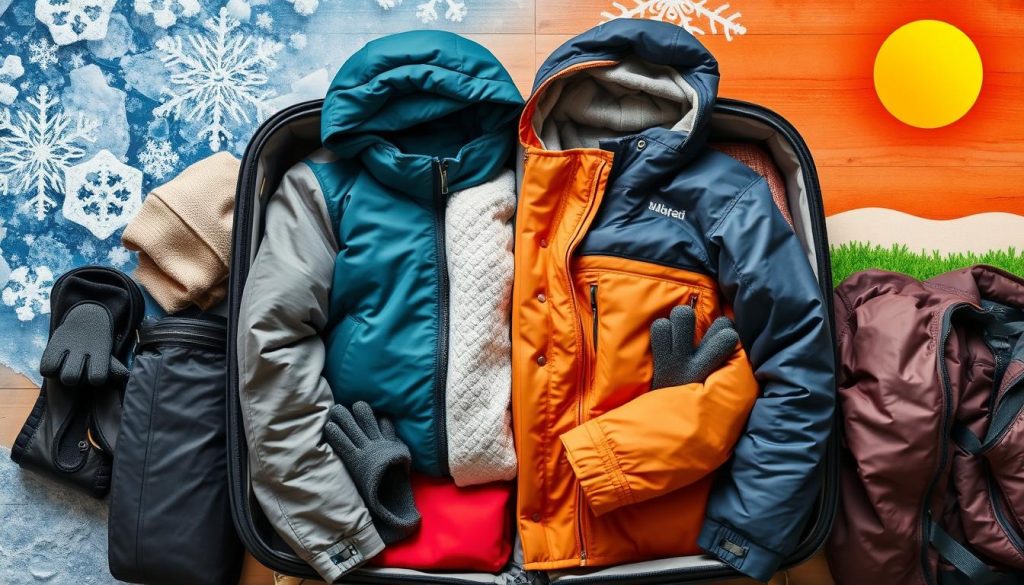
Base Layers: Merino Wool and Thermal Wear
Base layers are key to staying warm. Choose materials that keep you insulated and dry. Merino wool is ideal for this. Check out Woolx for heavyweight to lightweight Merino options.
Merino wool is great because it keeps you dry and warm, even when active. Stay away from cotton as it can make you colder.
Mid Layers: Fleeces and Insulating Jackets
Mid layers link base and outer layers. Fleeces are great for insulation and come in different weights. A fleece jacket, for example, is a key mid-layer for warmth and breathability.
For top warmth without bulk, consider a down jacket like the Patagonia Nano Puff Hoody. It’s made of recycled polyester. Outdoor Research’s Helium Down Hoodie is another great option for severe cold.
Outer Layers: Down and Waterproof Shells
The outer layer protects against weather. Down jackets and waterproof shells are essential. The Arc’teryx Beta SL Jacket works in any season. The North Face Women’s Arrowood Triclimate Jacket is waterproof and windproof.
Look for waterproof and breathable features in your outer layer. The Rab Microlight Down Jacket covers you well against the cold.
- Base layer: Moisture-wicking Merino wool.
- Mid layer: Fleece jacket or insulated down jacket.
- Outer layer: Waterproof shell or heavy down jacket.
- Additional layer: Thermal wear for extreme conditions.
Following these layering tips simplifies packing and prepares you for the cold. With these essentials, you can enjoy your adventures in comfort and safety.
Packing for Hot Climates: Staying Cool and Covered
When you pack for hot places, you need a smart plan. This ensures you’re comfy no matter the weather or what you’re doing. Focus on items that work well in different settings. In hot areas, choose airy clothes, light jackets, and things to protect you from the sun.
Choosing Breathable Fabrics
For hot weather, cotton, linen, and rayon are top choices. They let air move freely, so you stay cool. Merino wool is another great option. It keeps your body temp just right and doesn’t hold bad smells, even in the damp.
- Silk camisole or tank: 1
- T-shirt: 2
- Long sleeve: 1
- Blouse: 1
- Colorful dressy top: 1
Lightweight Outerwear Options
Light layers are key for protecting against the sun and the chill. Think about packing a light jacket or a cardigan. These can be easily taken off or put on as needed. Plus, they make your outfits more flexible, ready for any situation.
- Pullover: 1
- Cardigan: 1
- Jacket: 1
Protective Accessories: Hats and Sunglasses
With high temps often comes strong sun. Hats and sunglasses are must-haves. A wide-brimmed hat offers shade and protects your face. Polarized sunglasses cut down on shine and keep your eyes safe, especially near water.
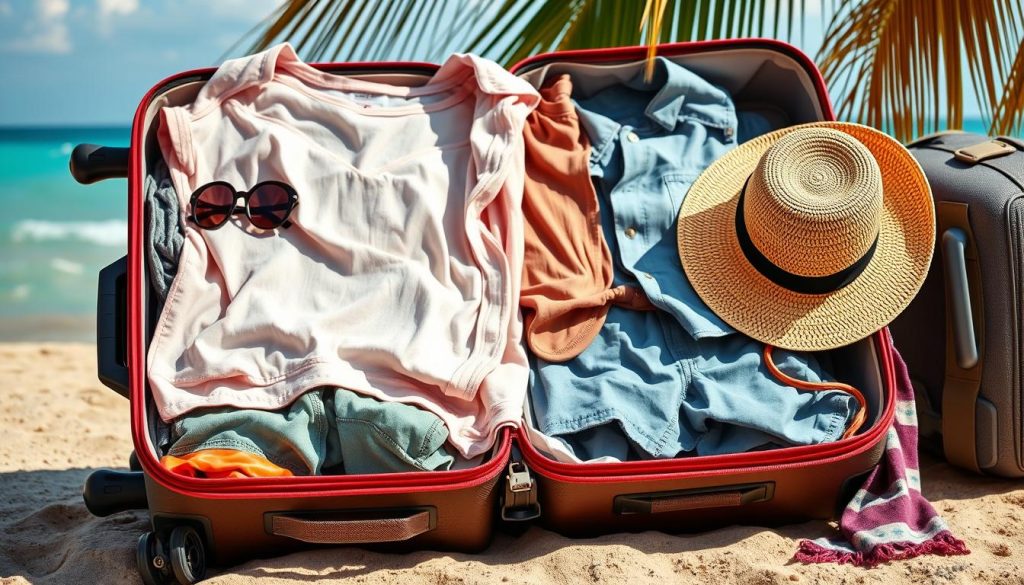
Adding these items to your bag means you’re set for comfort and safety. Packing like this makes any trip better and keeps you healthy.
| Items | Quantity |
|---|---|
| Underwear | 4-6 pairs |
| Pants/Shorts | 1-2 pairs |
| Dresses/Jumpsuits (Rayon) | 2-3 |
| Shoes (sneakers/sandals/flats/boots) | 3 pairs |
| Hats | 1 |
| Sunglasses | 1 pair (polarized) |
| T-shirts (short-sleeved) | 7 |
| Layering items | 3 |
Remember, it’s best to pack light but smart. Choose versatile pieces that add to your travel ease in hot climates. Always think about your comfort and what’s practical.
Conclusion
Packing smart for different weather means learning how to layer. In this article, we talked about how layering can help you move easily between hot and cold places. Choosing the right materials like merino wool and durable jackets makes travel comfy and warm.
Layering is very important for travel. It keeps you ready for both icy and sunny weather, making your trip smoother. Packing right, with layers for all temperatures, prepares you for anywhere from the cold Himalayas to hot Puerto Rico.
Knowing how to layer and what to pack changes how you travel. Essential items, like a good jacket and versatile shoes, make a big difference. Following these tips means less worry about the weather, lighter bags, and a better travel experience. It’s all about planning and making smart choices for worry-free adventures.