Find Your Ideal Hiking Backpack – Key Tips
Have you ever wondered why finding the ideal hiking backpack is so tough?
When going hiking, picking right gear is crucial. Especially your backpack. It’s key to know about the different kinds of backpacks. These include ultralight, framed, and frameless ones. Also, think about size, how it distributes weight, and comfort. These factors make your hike better.
Most hikers today pick internal frame backpacks for long hikes. The ideal pack weight is between 15-20lbs for carrying everything you need. For short trips, a frameless pack around 1lb is perfect. Framed packs, weighing 2-3lbs, work well for almost any hike.
Backpack size depends on how long your trip is. A 45-liter pack works for a weekend getaway. For a week-long adventure, go for a 60-liter pack. The design of the frame and hip belt helps carry the load comfortably.
Now that you know a bit more, picking the right hiking backpack will be easier. Choose wisely to make sure you’re ready for any journey.
Understanding Different Types of Hiking Backpacks
Choosing the right hiking backpack is essential. There are different types for every kind of hike. You might go for a short day trip or a long wilderness adventure. Your choice between ultralight, framed, and frameless backpacks affects your journey.
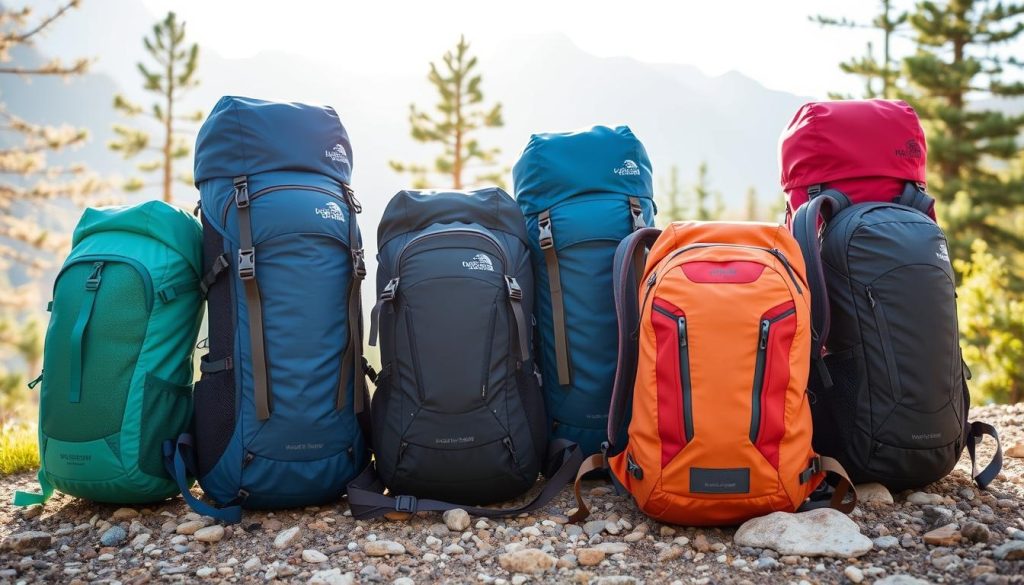
Ultralight Backpacks are great for those who like to pack light. They’re best for minimalists who choose compact, light gear. For example, the Hyperlite Mountain Gear Southwest 40 is about 30 ounces. It’s perfect for short, light trips.
Framed Backpacks provide needed support for heavier loads on long hikes. They have internal or external frames to spread weight evenly. Take the Deuter AirContact 65 + 10, for example. It handles up to 90 pounds on long trips.
Frameless Backpacks are lighter and more flexible than framed ones. They’re good for quick, light adventures. Often, they hold up to 40 liters and weigh as little as 600 grams. But, they require savvy packing and are for experienced hikers.
| Backpack Type | Ideal Use | Weight Capacity | Example |
|---|---|---|---|
| Ultralight Backpacks | Minimalist, short trips | 30 – 45 liters | Hyperlite Mountain Gear Southwest 40 |
| Framed Backpacks | Multi-day, heavy loads | 45 – 70 liters and above | Deuter AirContact 65 + 10 |
| Frameless Backpacks | Short, fast trips | Less than 40 liters | Various 600g models |
Knowing the differences in backpack types helps you pick the right one. Let’s look at how to choose the best one for your hike. We’ll also consider features for the best comfort and performance.
Choosing the Right Backpack for Hiking Trips
Choosing the right hiking backpack involves many factors for comfort and use. It’s crucial to pick a backpack that fits your hiking needs.
First, think about your hike length. A short day trip needs a smaller bag than a week-long journey. A 45-liter backpack works great for weekend hikes. A bigger 60-liter pack fits longer trips better. Keep the total pack weight, with all your stuff, between 15-20 lbs.
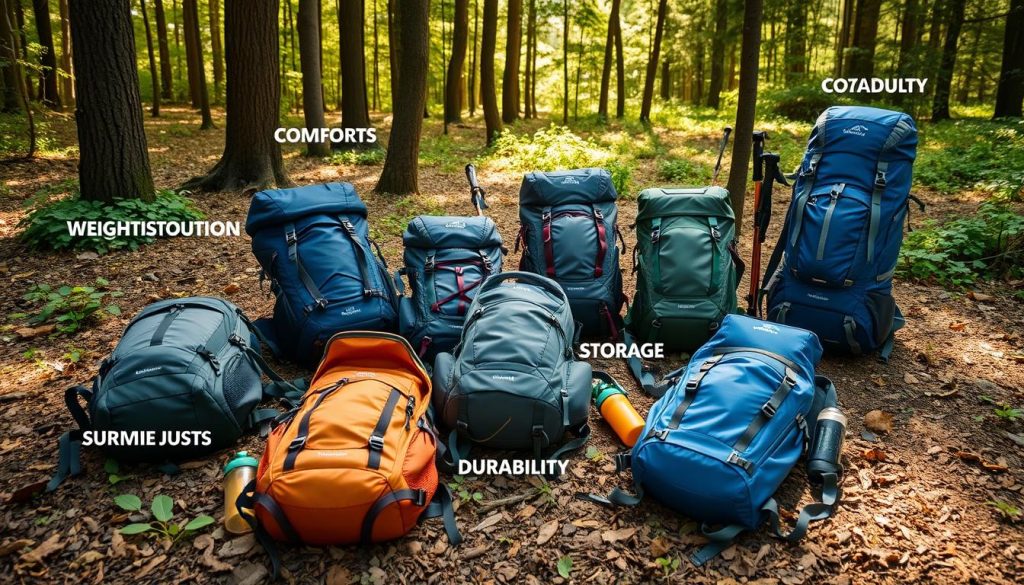
Fit and comfort are key when picking a backpack. Your torso length, not your height, determines the right fit. A well-adjusted backpack should feel comfortable most of the time. Also, look for bags with many compartments. They help organize gear and are preferred by 65% of hikers.
- Look at how long your trips will be.
- Check the weight and size of the backpack:
- Choose 2-3 lbs for usual framed packs
- Pick 1 lb for light frameless packs for quick trips
Many hikers are happier with specialized backpacks, 75% report better experiences. Stay away from too large backpacks. Over 50% of hikers make this mistake, leading to extra weight and discomfort. Ultralight backpacks are liked by 60% of hikers for brief trips. Adjustable straps also cut back pain by 40%.
To wrap up, focussing on trip length, bag size, and fit improves your hike. Your pack should be no more than 20-25% of your body weight. This makes sure hikes are fun and not painful.
Hiking Backpack Features You Should Look For
When you head out for a hike, picking the right gear is key. Your backpack is a main part of this. Let’s look at the hiking backpack features that’ll make your trip better.
A top-notch hiking backpack has several compartments for neat storage. This way, you can grab what you need quickly, without messing up everything else. Take the REI Co-op Flash 45 Backpack as an example. It’s designed with about 2750 cubic inches (45 liters) of space, perfect for weekend adventures.
- Hydration Compatibility: It’s important to drink water while hiking. A pack that has a system for water or can hold a water bladder lets you drink easily.
- Padded Shoulder Straps and Hip Belts: For a comfort hike, these features spread out the load. This reduces stress on your shoulders and back. Even packs without a frame are more comfortable with a hip belt.
- Ventilation Systems: To avoid getting too hot, look for backpacks that allow good airflow between you and the bag.
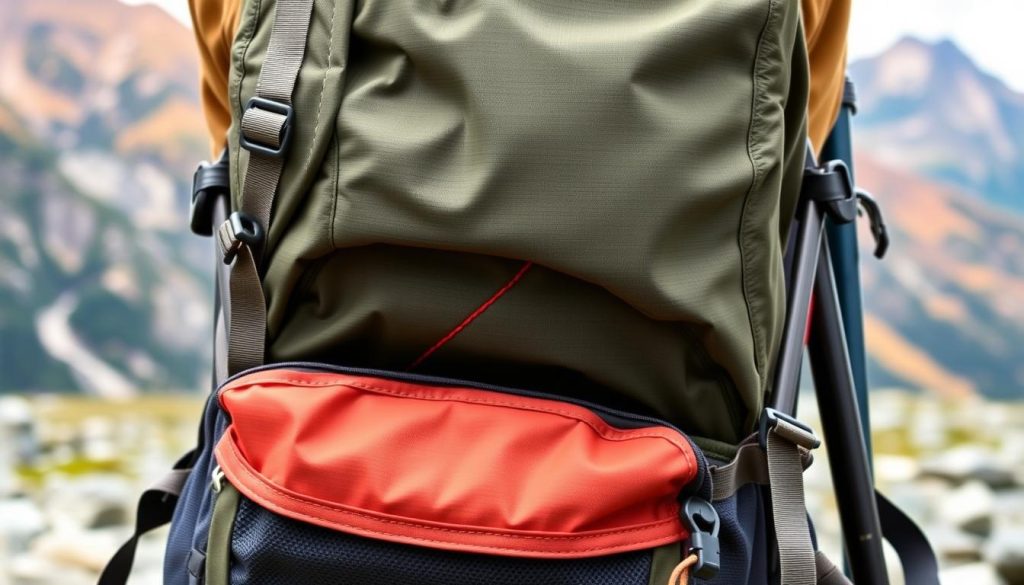
A durable hiking backpack is a must. It should be made of strong, water-resistant stuff like Ripstop nylon or polyester. This helps your backpack last longer and work well, no matter the weather.
Getting the right fit for your backpack is also crucial. Use the manufacturer’s size chart to find one that matches your body. This ensures your backpack can comfortably carry all your stuff, especially the heaviest items.
Lastly, think about straps and a padded back panel. They add to the support and comfort of your backpack. Most of the well-reviewed packs weigh between 3 and 5.5 pounds. This means they are strong yet light.
To sum up, look for a hiking backpack that is practical, comfy, lasting, and well-organized. This will make your hiking better.
Backpack Capacity for Different Hiking Durations
Choosing the right backpack size is key for the hike you plan. For *day hikes* and simple trips, a small backpack (0-10 liters) called the *Essentialist* works well. It’s good for your water, snacks, and a light jacket.
If you’re doing overnight or longer *day hikes*, you’ll need a 10-30 liter backpack. This is for the *Transient Traveler*. It has space for extra clothes, basic camping gear, and toiletries but stays comfy.
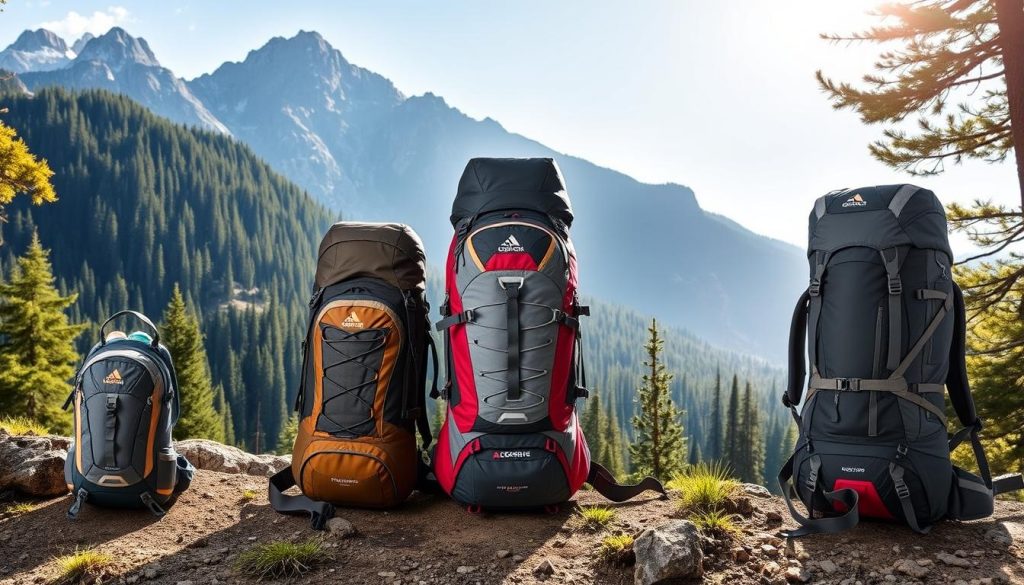
For weekend getaways or *ultra-light thru-hikes*, choose a pack that holds 30-50 liters. Called the *Expedition Edition*, it fits your sleeping bag, cookware, and extra food, keeping weight in check.
On trips that last several days, a bigger backpack (50-70 liters), or *Going Off The Grid*, is necessary. It can hold everything you need, like food, water, and personal stuff, for longer adventures in nature.
Sometimes, like on winter hikes or when you’re a guide carrying extra, you’ll need over 70 liters, the *Pathfinder*. This big pack carries more gear and luxury items, ready for tough challenges.
| Hiking Duration | Backpack Capacity (Liters) | Common Usage |
|---|---|---|
| Day Hikes | 0-10 L | Essentials like water bottles and snacks |
| Overnight Trips | 10-30 L | Additional layers, basic camping gear |
| Weekend Trips | 30-50 L | Sleeping bag, cooking gear, extra food |
| Multi-Day Backpacking | 50-70 L | All necessary provisions, personal items |
| Winter Hike/Guide | 70+ L | Extra equipment and luxury items |
Think of the usual Nalgene bottle as 1 liter to picture backpack size. For instance, a 50L pack holds about 50 Nalgene bottles. This comparison helps you grasp what you can carry, whether on a *day hike* or a long journey.
Picking a backpack with the right size makes your hike better and ensures you’re ready for what comes ahead.
Top Hiking Backpack Brands You Can Trust
Choosing the right hiking backpack is all about trust and quality. Some leading names are REI Co-op, Mystery Ranch, and Deuter. They’re known for their strong, reliable backpacks for all kinds of outdoor activities.
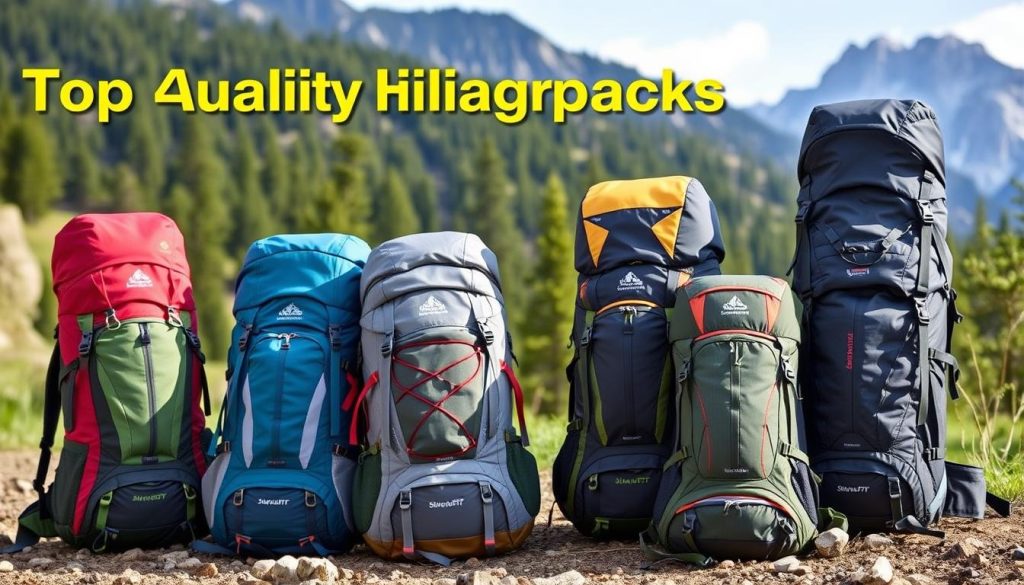
REI Co-op is a hit with hikers for its affordable, high-quality backpacks. The REI Co-op Trailmade 60 only weighs 3 lb. 6.0 oz. and costs $179. It’s a best buy for those on a budget, with its 60L space and adjustable hipbelt fitting sizes S to 4XL.
Mystery Ranch is top-notch for sturdy, adaptive packs. Meanwhile, Deuter shines with its ergonomic, long-distance hiking designs.
Osprey is also a top pick among hikers. The Osprey Atmos AG 65, with its anti-gravity suspension, makes carrying heavy loads easier. It costs $340, comes in 50L and 65L sizes, and weighs 4 lb. 9.8 oz. This pack is known for its convenience features and eco-friendly materials.
For an ultralight choice, consider the Hyperlite Mountain Gear Southwest 55. Thanks to its Dyneema fabric, it’s sturdy and water-resistant. It weighs only 1 lb. 15.7 oz., comes in sizes up to 70L, and sells for $379.
Gregory’s Baltoro 75 is perfect for carrying heavier gear. It costs $360, weighs 4 lb. 15.7 oz., and can handle 40 pounds or more. You can get it in 65L or 75L sizes. With nine outside pockets and easy access, it’s great for organizing your stuff.
| Brand | Model | Price | Weight | Capacity |
|---|---|---|---|---|
| Osprey | Atmos AG 65 | $340 | 4 lb. 9.8 oz. | 50L, 65L |
| REI Co-op | Trailmade 60 | $179 | 3 lb. 6.0 oz. | 60L |
| Hyperlite Mountain Gear | Southwest 55 | $379 | 1 lb. 15.7 oz. | 40L, 55L, 70L |
| Gregory | Baltoro 75 | $360 | 4 lb. 15.7 oz. | 65L, 75L |
Choosing a backpack from these trusted brands means you’re ready for any adventure. No matter your needs—lightweight, heavy-duty, or affordable—you’ll find your perfect match here.
The Importance of Backpack Weight Distribution
Knowing how to choose a hiking backpack isn’t complete without weight distribution knowledge. Proper weight placement in a backpack is key for a strain-free hike. It makes the backpack fit better, reducing back and shoulder strain. Also, if the weight leans more on the hips rather than the shoulders, hikers can walk farther with more ease.
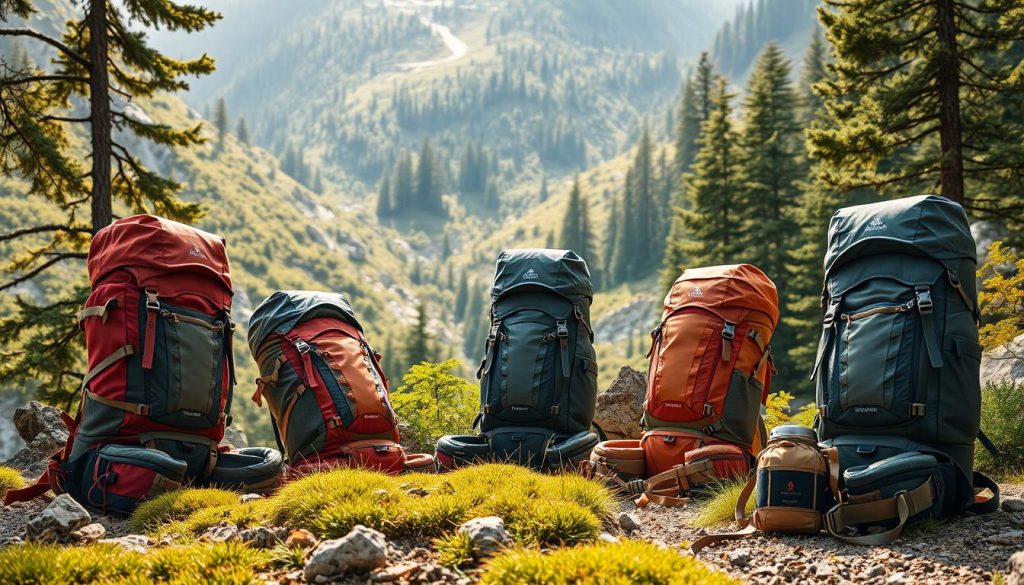
There are four main areas inside a backpack for your stuff: Bottom (for your sleeping system), Middle (for the heavy items), Front (for lighter items), and Top (for things you need quick access to). Keep heavy items near your middle back to stay balanced. This way, your body stays centered, important for moving over tough ground.
A backpack for several overnight trips should hold 50-70 liters. A well-made hip belt can take some of the load off your shoulders by resting it on your hips. S-shaped shoulder straps are even better since they fit your body’s curves and make long treks comfy.
Osprey makes comfortable hiking backpacks that weigh about 4 to 6 lbs. The CTUG Ultralight Hiking Backpack, for instance, weighs under 2 lbs. It’s perfect for those who like their pack to stay around 20-25 lbs. But, carrying over 32 lbs can get tough, especially if you’re going far.
Getting the right fit with a backpack depends on your body size and the hip belt. This helps lessen the pressure. Wearing sternum straps or chest straps also helps keep your pack stable on longer hikes.
To wrap up, getting the weight right in your backpack is crucial when picking the best one for you. Keeping these tips in mind will help you pick a how to choose a hiking backpack that keeps you comfy and performs well on your trails.
Material and Durability Considerations
Choosing the right backpack for hiking means looking at the material and how long it lasts. The life of your backpack depends much on what it’s made from, like Ripstop nylon and polyester. These fabrics are super strong for their weight, designed to stop tears.
How thick and tough the fabric is can be judged by the Denier Ratings. Fabrics with higher numbers are usually thicker and stronger, ready for the rough outdoors. High Denier Ratings in materials mean your backpack can take on challenging trips better.
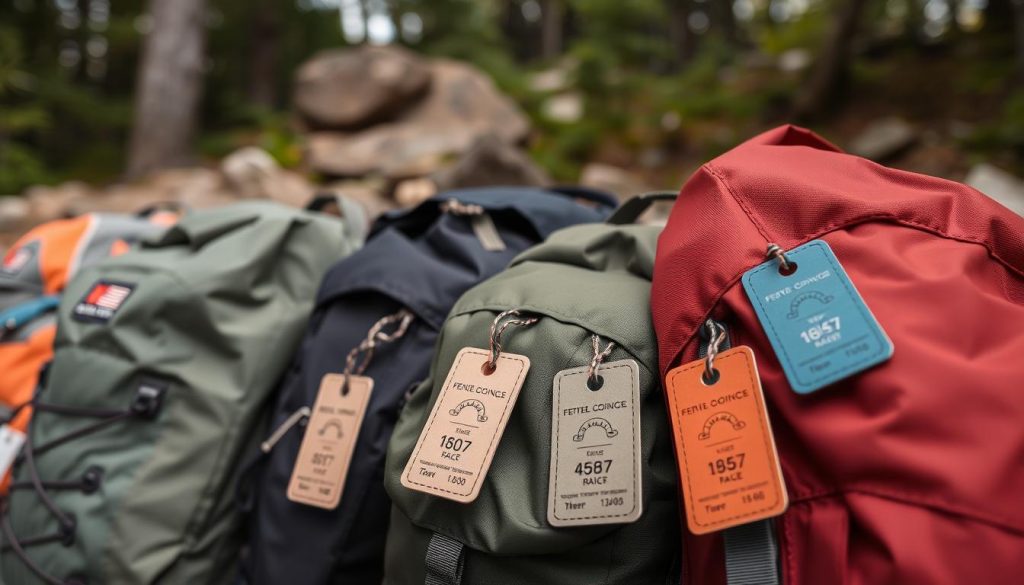
It’s also key to check the zippers and buckles quality. Brands like YKK make top-notch zippers that add a lot to a backpack’s strength. Strong buckles and zippers mean your pack can deal with heavy loads and frequent use.
Think about these main points:
| Material | Denier Rating | Purpose |
|---|---|---|
| Ripstop Nylon | 200D – 420D | Lightweight yet tear-resistant |
| Polyester | 600D – 1000D | Durability for heavy use |
Materials matter but so does design, like how internal frames are used. Internal frames in backpacks help spread the weight, especially with loads over 15-20 lbs. This is important for backpacks meant for several days of hiking.
To wrap up, to get a tough, lasting backpack, focus on the fabric’s Denier Ratings, the materials used, and reliable zippers and buckles. These elements truly change how you experience the outdoors.
Comfort and Fit: Getting the Right Measurements
Finding the perfect fit is key for comfort while hiking with a backpack. Start by measuring your torso and hips. This helps you pick the right size backpack for your hikes.
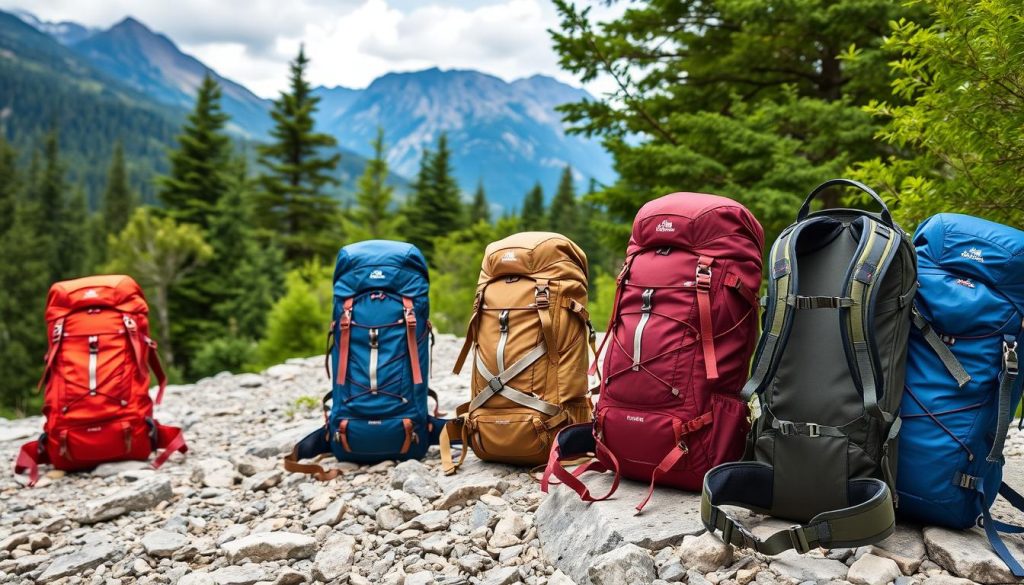
Choosing the right backpack size is vital for a great hiking experience:
- Mini and small backpacks: 6 to 10 liters, perfect for short trips.
- Daypacks: 10 to 30 liters for just a day out.
- Medium backpacks: 35 to 50 liters, good for several days.
- Large backpacks: 65 liters or more, for the long journeys.
The right fit isn’t all about size. It’s also about where the pack’s weight sits. Your hips should carry about 70% of the weight, and your shoulders about 20%. Customizable hip belts and torso adjustment systems help prevent strain and improve your walking posture.
Many modern backpacks come with internal frames. These frames help balance the load and make moving easier. Using adjustable straps for your back, shoulders, chest, and hips is crucial, especially with bigger backpacks. Aim for a weight load of about 15 kg or 15 to 20 pounds to check for comfort.
Getting the right fit helps avoid the hassle of returns or exchanges. While some brands like Hyperlite focus on lightweight packs, they might not offer much adjustability. However, knowing your measurements ensures a comfortable, enjoyable hike.
Conclusion
Choosing the right hiking backpack makes your outdoor trips better by enhancing comfort, efficiency, and functionality. Understanding which backpack to select ensures your gear fits perfectly with your adventure needs. It’s important to look at different backpack types, like daypacks or expedition packs, based on how long you’ll be gone and how much you need to carry.
Materials and durability are key. Backpacks made from strong fabrics like ripstop nylon or Cordura last a long time, even with frequent use. Brands such as Osprey provide durable packs designed for carrying heavier loads without sacrificing comfort. Features like padded shoulder straps and adjustable waist belts help reduce pressure and improve support during long hikes.
The best hiking backpacks help organize your trip and make it more enjoyable. They ensure your load is balanced and have pockets placed just where you need them. To pick the most suitable backpack, apply the 80-20 rule for the majority of your adventures. Also, always check your gear after each trip. Considering the weather, brand reputation, and customer reviews helps you choose wisely, leading to many memorable outdoor experiences.