

Master Body Language While Traveling Abroad
Using body language while traveling can be a powerful tool in enhancing communication and overall travel experience. When traveling to another country, it’s essential to learn how to navigate cultural nuances and connect with locals without words. Understanding nonverbal cues in international travel is key to effective communication while traveling.
In this section, we will explore body language skills for travelers, nonverbal communication techniques abroad, and body language tips for travelers. You’ll learn how to use body language effectively when traveling and interpreting nonverbal cues from locals. An understanding of nonverbal cues for international travel is crucial in building rapport and connection.
Whether you’re a seasoned traveler or planning your first travel adventure, our travel communication tips will help you communicate effectively and navigate cultural differences with ease. Let’s dive into the world of body language and discover how to use it to enhance your travel experience.
Understanding Nonverbal Communication in Different Cultures
When traveling abroad, nonverbal communication can be a key tool to connect with locals. However, different cultures have unique nonverbal cues and communication styles, which can be tricky to navigate. Acquiring an understanding of these differences is crucial when utilizing nonverbal cues in international travel, particularly when using body language to communicate.
Common nonverbal communication techniques vary across cultures, reflecting cultural norms and values. For example, in some cultures, it is common to maintain eye contact during a conversation as a sign of respect and engagement, while others may interpret direct eye contact as an assertive or confrontational behavior.
Similarly, facial expressions, postures, hand gestures, and the use of personal space all have different meanings and nuances across cultures. It is essential to recognize these differences and adapt to different cultural norms to ensure effective communication, build rapport, and avoid misunderstandings.
Here are some nonverbal communication techniques abroad:
| Culture | Nonverbal Cues |
|---|---|
| Japan | Bowing: A sign of respect used when greeting, showing gratitude, or apologizing. The deeper the bow, the greater the respect conveyed. |
| India | Namaste: Used as a greeting, often accompanied by placing hands together at the heart level. Depending on the context, individuals may bow their head slightly while saying “namaste.” |
| France | Cheek kissing: Common in social situations, the number of kisses varies based on location- two on the cheek can be standard for men and women in Paris, while in Provence, three are typical for men. |
| Italy | Gesticulation: Italians use hand gestures often to emphasize a message and maintain engagement. |

Being aware of nonverbal communication techniques abroad and adapting to cultural norms can make a significant difference in the effectiveness of your communication while traveling. In the next section, we will explore the power of facial expressions and gestures and how to use them effectively while traveling.
The Power of Facial Expressions and Gestures
When traveling abroad, nonverbal communication is essential. Your facial expressions and gestures can speak volumes, even in the absence of language. Understanding how to use them is critical in conveying your ideas and bridging the cultural divide.
Facial expressions are versatile and can be easily understood across cultures. A smile can signify friendliness and warmth, and a frown can illustrate disapproval or sadness. By understanding nonverbal communication cues, you can use your facial expressions to convey your message effectively.
Gestures, such as hand movements, are also powerful communicators. They can be used to supplement your words, emphasize key points, and facilitate understanding. However, different cultures associate different meanings to certain gestures. For instance, a thumbs-up may signify approval in western countries, but in some Middle Eastern or Asian countries it may be considered rude.
Therefore, before using gestures, it’s crucial to research the local customs. One way to avoid misunderstandings is to learn how to use gestures that have universal meaning, such as pointing or waving hello.
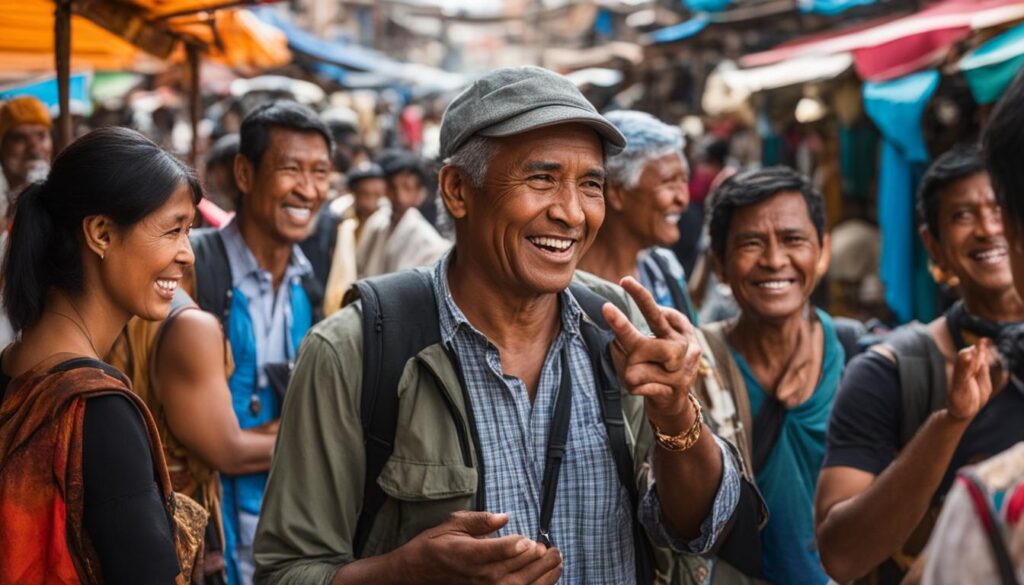
Mastering facial expressions and gestures can help you avoid cultural blunders and enhance your travel experience. Use them to connect with locals, convey your message, and build meaningful connections that transcend language barriers.
Using Eye Contact to Connect
Eye contact is a powerful way of communicating respect and connecting with people, even when verbal communication is not possible. When you’re traveling, using eye contact appropriately can help you form meaningful connections with the locals in different cultures.
However, different cultures have different norms when it comes to eye contact, so it’s crucial to understand these differences to avoid cultural misunderstandings. For example, in some cultures, prolonged eye contact is deemed disrespectful or even aggressive, while in others, it’s a sign of trust and engagement.
To avoid cultural confusion, observe the locals and pay attention to their eye contact behaviors. This way, you can adapt your own eye contact accordingly.
When meeting new people, use eye contact as a way of showing interest and respect. Make sure to hold eye contact for a prolonged period, but not so long that it becomes uncomfortable or awkward. Remember to smile genuinely to convey warmth and friendliness.
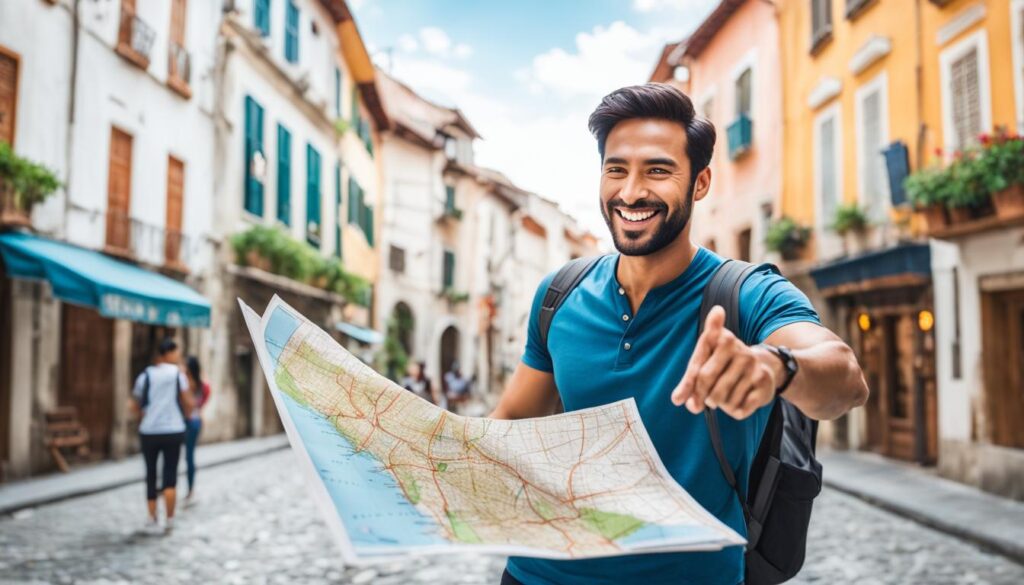
Using eye contact effectively is all about striking a balance and understanding cultural nuances. By using these body language tips for travelers, you can build connections and enhance your communication while traveling abroad.
Posture and Body Movement
While verbal communication is restricted in foreign countries, body language is a universal tool that can help break down communication barriers. Your posture and body movements can convey a lot about your personality, confidence level, and openness to others. By using proper posture and body movement, you can enhance your communication skills, connect with locals, and feel more comfortable and confident in unfamiliar surroundings.
When communicating with locals, ensure your posture is open, and your stance is stable. Keep your feet shoulder-width apart and distribute your weight evenly between them.
Additionally, paying attention to your body language while sitting is essential. Slouching and crossing your arms can come off as being defensive or closed off, which can lead to a breakdown in communication. Sitting with a straight back and unfolding your arms will help to convey that you are open to communication.
You can also use body movements to convey your interest in conversation. When listening to someone talk, face them squarely, lean toward them slightly, and nod your head to show your engagement.
However, be mindful of not overdoing it with your body movements. Overpowering or invasive body gestures can make some people feel uncomfortable. Instead, focus on subtle nonverbal cues that convey openness, confidence, and respect.
Understanding Personal Space
When traveling abroad, it’s important to be aware of personal space boundaries. Personal space refers to the physical distance people feel comfortable keeping between themselves and others. These boundaries vary across cultures and failing to respect them can lead to misunderstandings or even disrespect.
For example, in some cultures, people stand closer together while conversing, while in others, they maintain more distance. In Japan, for instance, it’s common to maintain a larger personal space to avoid coming off as intrusive or aggressive.
To navigate personal space differences, begin by observing the locals’ behaviors and emulating them. If you notice that people maintain a large personal space, try to avoid standing too close to them. Conversely, if you sense that they’re comfortable with closer proximity, take that as a cue to move in a bit closer.
Remember to always respect personal space, as it’s an essential aspect of communication and cultural norms. Be aware of the cues and always strive to ensure that you’re not coming off as intrusive.

Tip: Watching locals interact with one another can help you identify personal space boundaries for a specific culture. You can then mirror their behavior to avoid any misunderstandings.
Enhancing Communication with Hand Gestures
Hand gestures can be a powerful tool when it comes to communicating with locals while traveling abroad. They are universally understood and can help you convey your message even when language barriers exist. However, it’s important to remember that different cultures may interpret hand gestures differently.
To avoid any misunderstandings, it’s crucial to learn which hand gestures are considered appropriate and respectful in the culture you’re visiting. Here are a few hand gestures that are commonly used and accepted around the world:
| Gestures | Meanings |
|---|---|
 |
Indicates approval or agreement |
| Okay sign (thumb and forefinger forming a circle) | Indicates approval or agreement in most countries, but can be considered offensive in some cultures |
| Pointing with index finger | Can be considered rude or aggressive in some cultures. Point using an open hand instead. |
| Bowing | Indicates respect or gratitude in many Asian cultures |
Remember, hand gestures should always be used in moderation. Using too many hand gestures can be perceived as rude or aggressive. Also, try to avoid using any gestures that are offensive or inappropriate in the culture you’re visiting.
Interpreting Nonverbal Cues from Locals
Observing nonverbal cues while interacting with locals can provide valuable insights into their culture. Since nonverbal communication techniques vary across different parts of the world, interpreting these cues correctly is fundamental to ensure effective communication in international travel.
If you’re unfamiliar with the meaning of a particular nonverbal cue, observe how the locals use it. For instance, in some countries, nodding of the head might mean agreement, while in other countries, it means that the person is listening attentively.
Pay close attention to a person’s gestures. A person’s hand gestures or facial expressions can help you gauge their emotions or convey messages that words cannot. For instance, a simple smile can break the ice, showing friendliness and welcoming for the conversation to develop.
If you’re unsure about the meaning of a nonverbal cue, do not assume it means the same thing in every culture. Always ask politely to clarify the meaning of a certain cue. Remember, it’s better to ask questions than to misunderstand and cause an offense.
Nonverbal cues add significant value to communication. By correctly interpreting nonverbal cues, you can enhance your travel experience and deepen your connection with locals.
Adapting to Social Customs and Etiquette
Social customs and etiquette vary widely from one country to another. To ensure effective communication while traveling, it’s crucial to adapt to the local social customs and etiquette. Failure to navigate social norms can lead to cultural misunderstandings and put a damper on your travel experience.
One effective way to adapt to social customs is to observe and learn from locals. Watch how they interact with one another, paying attention to what is considered acceptable and what is not. This can help you avoid unintentional offenses and create a positive impression.
Another way to adapt to social customs is to research before your trip. Learn about the cultural norms, traditions, and practices of the country you plan to visit. This can provide insight into how to behave appropriately and avoid cultural faux pas.
Body language also plays a role in adapting to social customs and etiquette. Different cultures have different norms for body language, such as the amount of physical contact considered appropriate. Understanding these differences and adapting to them can help you communicate effectively and build connections with locals.
Finally, it’s important to approach cultural differences with an open mind and a willingness to learn. Embrace the opportunity to experience new customs and traditions, and be respectful of the local way of life. Adapting to social customs and etiquette can enhance your travel experience, allowing you to connect with locals, learn about new cultures, and create lasting memories.
Building Rapport and Connection through Body Language
Building rapport and connections with locals while traveling is essential for an enriching experience. Body language is a powerful tool that can help you achieve this. Here are some communication tips and body language skills for travelers to make meaningful connections.
Firstly, always maintain eye contact with the person you’re interacting with. Eye contact, when done appropriately, conveys respect, attentiveness, and interest. It is important to note that different cultures may have different norms regarding eye contact, so observe and adapt accordingly.
Secondly, be mindful of your posture and body movements. Standing or sitting up straight can showcase confidence and openness, while slouching may convey disinterest. Similarly, fidgeting or making exaggerated movements can be distracting to others. A relaxed and natural posture is best.
Thirdly, use hand gestures to emphasize certain points or convey emotions. For instance, a thumbs-up can signal agreement or approval, while nodding your head can indicate understanding. Beware of using gestures that may be offensive or inappropriate in certain cultures.
Lastly, observe and emulate the body language of the locals. This can help you blend in and establish a connection with them. For example, if the locals greet each other by bowing or shaking hands, replicate their actions. This shows that you respect their customs and are willing to adapt to their culture.
Using body language effectively can help you connect deeply with the locals and create unforgettable travel memories. Try incorporating these communication tips and body language skills for travelers on your next trip!
Conclusion: Mastering Body Language While Traveling Abroad
Using body language while traveling can greatly enhance your communication and overall travel experience. By understanding nonverbal cues, adapting to cultural differences, and respecting social customs, you can connect with locals on a deeper level.
Remember to pay attention to facial expressions, gestures, eye contact, posture, and body movement – these can convey important messages in different cultures. Respect personal space boundaries, interpret nonverbal cues from locals, and utilize hand gestures appropriately to enhance your communication.
Building rapport and connection through body language can lead to meaningful interactions and cultural exchange. So, next time you travel, use these body language tips and techniques to communicate effectively, connect with locals, and make unforgettable memories.
Keywords: using body language while traveling.


