Malaria Risk in Yangon – Essential Travel Health Tips
Did you know that the biggest health risk in Yangon might not be the crowded streets? It could be a mosquito bite. Knowing about malaria risk in Yangon is key to staying safe. This article will share important health tips for Myanmar, focusing on malaria prevention.
With recent trends showing malaria risk in Myanmar, including Yangon, having the right knowledge is crucial. It can help you avoid serious health problems.
Understanding Malaria: Overview and Symptoms
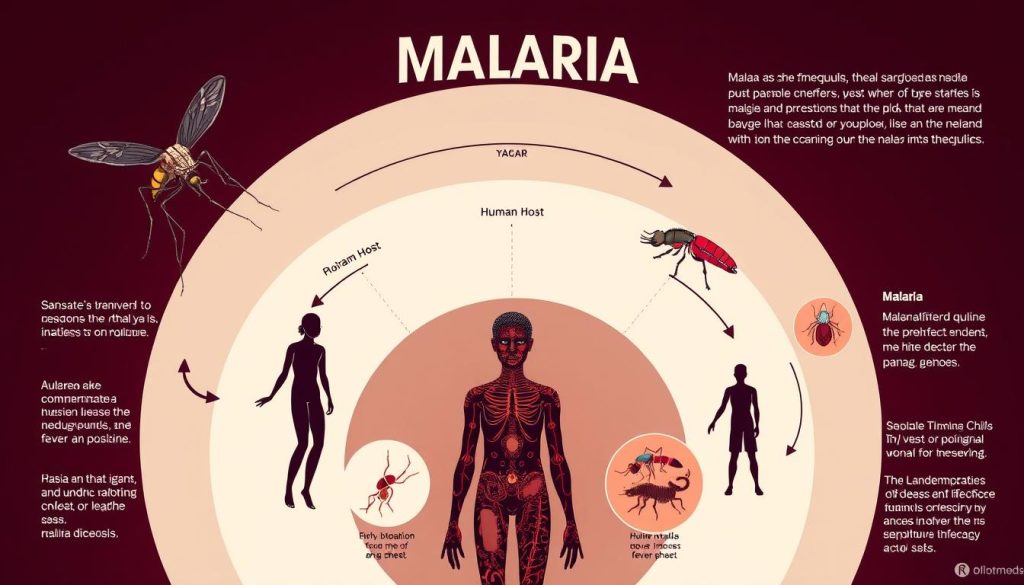
Malaria is a big health problem worldwide. It’s caused by parasites spread by infected mosquitoes. The World Health Organization says in 2018, there were 228 million cases and 405,000 deaths.
Knowing the malaria symptoms is key. Symptoms start like the flu: fever, chills, and feeling tired. If not treated, it can cause serious problems like kidney issues and breathing trouble.
- High fever
- Severe chills
- Sweating
- Fatigue
- Headaches
- Nausea and vomiting
Learning about the malaria parasite helps us understand how it spreads. It starts when a mosquito bites a person. Quick diagnosis and treatment are crucial to fight this disease.
The table below shows important facts about malaria:
| Aspect | Description |
|---|---|
| Transmission | Through bites of infected female Anopheles mosquitoes |
| Common Symptoms | Fever, chills, sweating, fatigue, headaches, nausea |
| Global Impact (2018) | 228 million infections, 405,000 deaths |
| US Cases (2016) | 2,078 cases reported, 85% acquired in Africa |
| Diagnosis Methods | Blood smear microscopy, RDT, PCR analysis |
Knowing malaria symptoms and the parasite’s lifecycle helps prevent it. Quick diagnosis and treatment can greatly reduce its risks.
Is there a risk of malaria in Yangon?
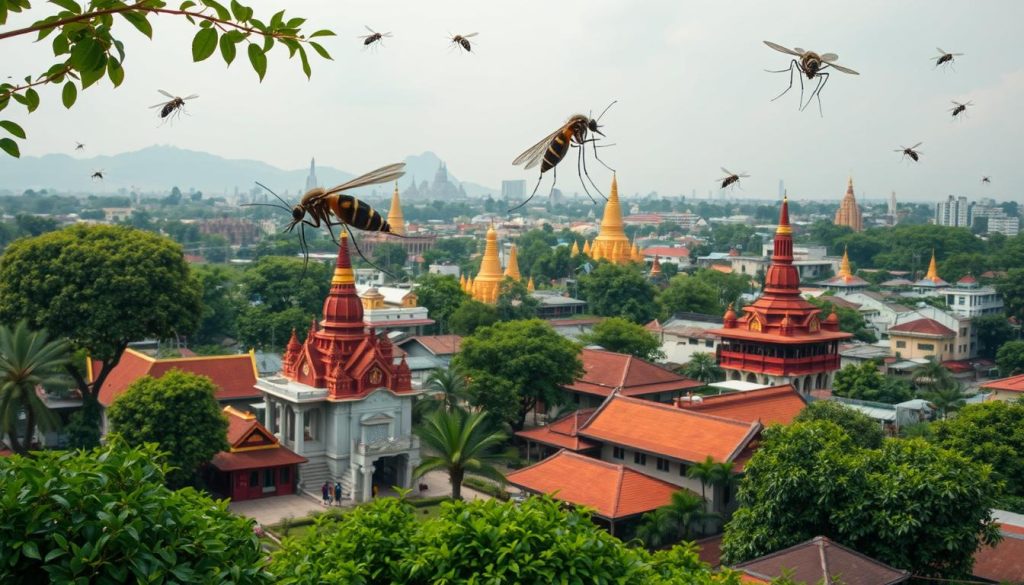
Knowing the malaria risk in Yangon is key for your trip. The city has a lower risk than rural areas, but some spots are still dangerous. Learning about malaria trends and hotspots in Myanmar helps you stay safe.
Current Malaria Transmission Trends in Yangon
Myanmar’s malaria cases have changed over time. Kayin State saw a big jump in cases, from 8,707 in 2020 to 36,691 in 2022. This is a big worry.
Yangon has fewer cases than rural areas. But, places like Kayah State face big health challenges. Knowing these trends helps you understand the risk in Yangon.
Malaria Hotspots in Myanmar
Knowing where malaria is common in Myanmar is important. Kayin State, for example, had 79,001 cases in 2021. Other areas like Kayah State and Thaundauggyi Township also saw big increases.
- Kayin State: 8,707 cases in 2020, rising to 36,691 cases in 2022.
- Kayah State: Significant challenges in healthcare led to increased malaria case numbers.
- Thaundauggyi Township: Test positivity rates spiked from 20% in 2021 to 65% in 2022.
Even though Yangon has a lower risk, it’s important to watch the areas around it. This detailed Yangon malaria risk assessment helps you travel safely.
| Region | 2020 Cases | 2021 Cases | 2022 Cases |
|---|---|---|---|
| Kayin State | 8,707 | 79,001 | 36,691 |
| Kayah State | N/A | N/A | 300+ |
| Thaundauggyi Township | N/A | N/A | 65% |
Factors Contributing to Malaria Risk in Yangon
Understanding what makes malaria risk high in Yangon is key to stopping it. The mix of geography, climate, and human actions creates a perfect storm for malaria. Let’s dive into how these factors work together to raise the risk.
Geographical and Climatic Considerations
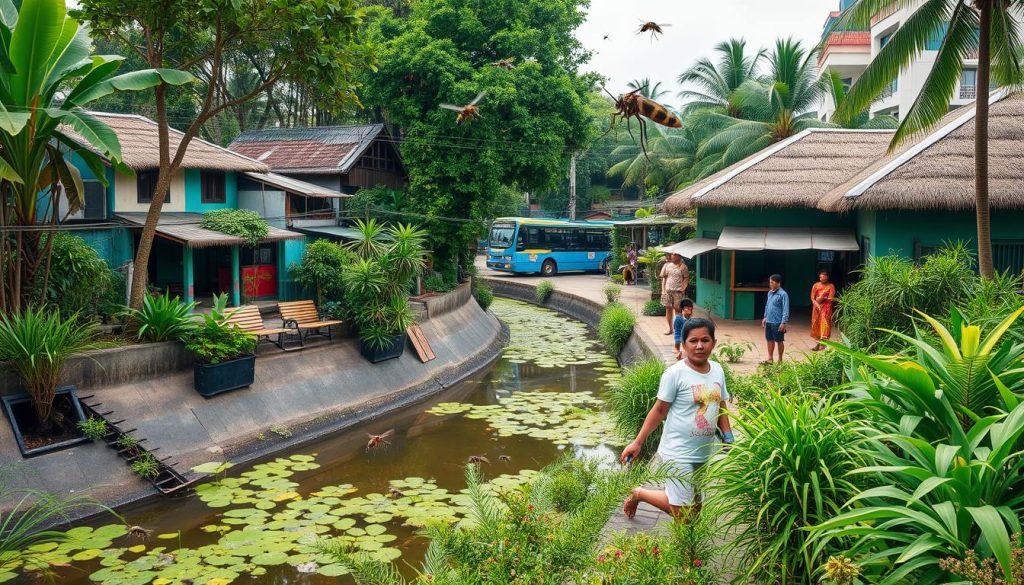
Yangon’s landscape, with its many still waters, is a haven for mosquitoes. This makes malaria risk much higher. The climate doesn’t help, with lots of rain and warm temperatures. These conditions are perfect for the mosquitoes that spread malaria.
Table 1 shows how climate affects malaria:
| Climatic Factor | Impact on Malaria Transmission |
|---|---|
| High Rainfall | Increases stagnant water, promoting mosquito breeding |
| Warm Temperatures | Enhances mosquito activity and lifespan |
| Humidity | Supports mosquito survival and reproduction |
Population Movement Patterns
People moving around in Yangon play a big role in malaria spread. Workers in jobs like logging face more risk because of their work. Staying in forests for long periods increases the chance of getting malaria.
Here are some risks from moving around:
- Males are at a greater risk, with an odds ratio of 1.8 for malaria infection.
- Jobs like lumber work or rubber plantations raise risk, with odds ratios of 2.7 and 3.0 respectively.
- Travelers who sleep in forests or stay on the move for 3 to 14 days face higher risks, with odds ratios from 8.4 to 8.6.
Yangon Malaria Risk Assessment and Recommendations
Before you travel to Yangon, it’s important to do a Yangon malaria risk assessment. This step helps you figure out your risk based on several factors. Knowing your travel plans, how long you’ll stay, and what you’ll do can guide your prevention efforts.
Assessing Your Personal Risk
To assess personal malaria risk, look at a few key things. These include:
- Your travel destinations in Myanmar, focusing on areas with high malaria rates.
- The activities you plan, like hiking or visiting rural areas where malaria is common.
- How long you’ll be in malaria-prone areas.
- Your health history, including past malaria infections or health conditions.
By considering these factors, you can choose the right precautions for your trip.
Consulting a Travel Health Professional
Getting advice from a travel health professional is a smart move. They can give you advice that fits your health and travel plans. A travel health expert can help you with:
- Vaccinations you might need before your trip.
- The best malaria prevention options based on where you’re going.
- Other preventive steps like what to wear and what insect repellent to use.
This detailed approach helps you be ready to reduce your malaria risk in Yangon.
Malaria Prevention in Yangon: Essential Strategies
Travelers to Yangon need to know how to avoid malaria. Learning how to protect yourself is key. This section will cover using protective clothing and picking the right insect repellents.
Protective Clothing and Habits
Wearing the right clothes is important for staying safe from malaria in Yangon. Choose long-sleeved shirts and pants to keep your skin covered. Using permethrin-treated clothes adds extra protection.
Here are some tips for picking the right clothes:
- Wear light-colored clothes to avoid attracting mosquitoes.
- Choose tight-weave fabrics to block bites better.
- Use hats and scarves to cover more skin.
Choosing Effective Insect Repellents
Using the right insect repellents is also crucial. Look for products with DEET or Picaridin for long-lasting protection. Here’s how to use them:
- Put repellent on all skin and clothes before going outside.
- Reapply after sweating or swimming.
- Higher concentration means longer protection.
- Don’t use on cuts, wounds, or irritated skin.
By wearing protective clothes and using effective repellents, you can lower your malaria risk. Enjoy your time in Yangon safely.

Understanding Malaria Transmission in Yangon
Malaria is a big problem in Yangon, and knowing how it spreads is key to stopping it. When an infected mosquito bites a person, it gives them the Plasmodium parasite. Things like the area’s terrain and weather affect this process. Knowing these details helps fight malaria in this area.
Transmission Cycle of Malaria
Understanding how malaria spreads shows us how important mosquitoes are. Anopheles mosquitoes, the main carriers, are most active at dusk and dawn. Places with still water are perfect for them to breed. In Yangon, where malaria is common, knowing how urban changes affect it is vital.
Preventive Measures Against Mosquito Bites
To stay safe from malaria, taking steps to avoid mosquito bites is crucial. Here are some tips:
- Wear long-sleeved clothes and pants to cover your skin.
- Use insect repellents with DEET on your skin.
- Stay indoors when mosquitoes are most active.
- Put screens on windows and use bed nets at night.
- Get rid of standing water to stop mosquitoes from breeding.
Following these steps can greatly lower your chance of getting malaria in Yangon. It makes traveling there safer and more enjoyable.
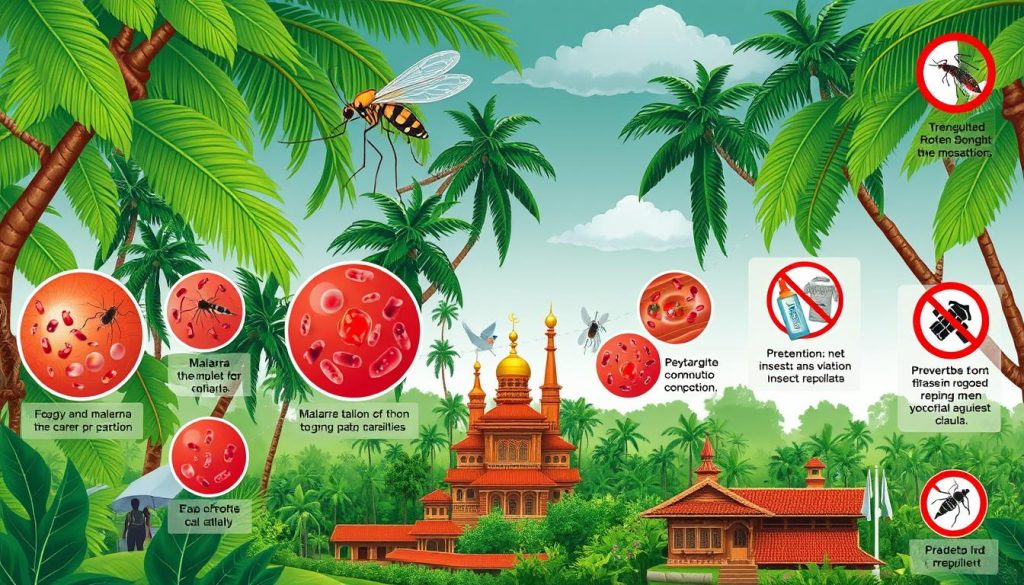
Medical Options for Malaria Prevention
Travelers going to places like Yangon need to know about malaria prevention. It’s important to look at different antimalarial drugs to protect against malaria. This part talks about common drugs and when to take them for the best results.
Antimalarial Medications: What You Need to Know
There are many antimalarial drugs for travelers to malaria areas. Each drug works differently, has its own side effects, and is taken at various times. Here’s a detailed look at some popular drugs:
| Medication | Administration Frequency | Side Effects | Pregnancy Safety |
|---|---|---|---|
| Atovaquone/Proguanil (Malarone) | Daily | Nausea, abdominal pain, headache | Safe during pregnancy |
| Doxycycline | Daily | Sun sensitivity, gastrointestinal discomfort | Safe during pregnancy |
| Mefloquine | Weekly | Dizziness, nausea, vivid dreams | Safe in second and third trimesters |
| Chloroquine (Aralen) | Weekly | Itching, gastrointestinal issues | Safe in all trimesters |
| Primaquine | Daily | Gastrointestinal upset | Safe for children of all ages |
When to Start Taking Antimalarial Prophylaxis
Knowing when to start malaria prevention is crucial. You should start your chosen medication:
- 1-2 days before entering a malaria area for daily drugs.
- 1-2 weeks before for weekly drugs like mefloquine or chloroquine.
- Primaquine should start right when you enter the area.
Talking to your doctor is key. Your health and current meds can affect what you should take. It’s smart to talk to a travel health expert at least four to six weeks before your trip. They can give you advice on the best malaria prevention.
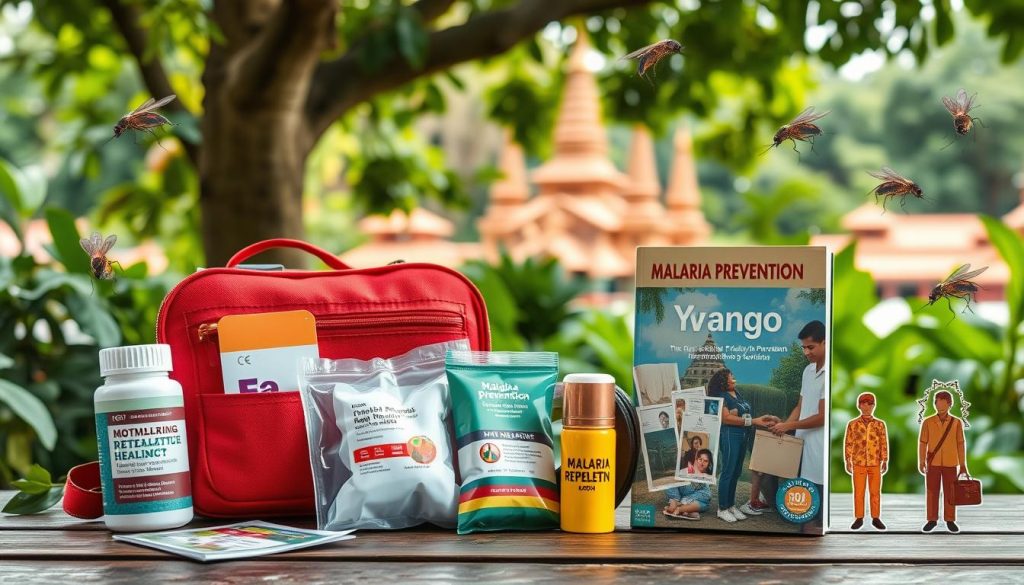
Best Practices for Staying Safe While Traveling in Yangon
Traveling safely in Yangon means more than just avoiding mosquitoes. It’s about preventing malaria, staying safe with food and water, and keeping clean. Knowing how to handle food and water and keeping clean can lower your risks in this lively city.
Handling Food and Water Safely
Food and water safety in Yangon is key. Here are some tips for safe eating and drinking:
- Avoid street vendors, where food safety standards may not meet reliable levels.
- Opt for bottled water and check seals for safety before consumption.
- Choose fully cooked foods, steering clear of raw or undercooked items.
- Prefer reputable restaurants that prioritize food safety and hygiene.
- Wash fruits and vegetables with clean water before consumption or peel them yourself.
Maintaining Hygiene to Reduce Infection Risk
Keeping clean while traveling is vital for your health. Here are some hygiene tips to stay safe:
- Practice regular hand washing, before meals and after using the restroom.
- Carry hand sanitizer containing at least 60% alcohol for situations where soap and water are unavailable.
- Avoid sharing utensils, cups, or personal items to reduce the risk of contamination.
- Be cautious with personal hygiene items, ensuring they are from sealed packages.

By following these tips, you can have a safer and healthier trip to Yangon. These precautions can help you avoid infections and enjoy the city’s culture and sights.
Access to Healthcare and Emergency Services in Yangon
Getting reliable healthcare is key when traveling in Yangon. It’s vital to know about the public health sector, given Myanmar’s ongoing crisis. Many local healthcare facilities struggle, losing over 70% of their workers due to attacks.
Infectious diseases, like malaria, are a big worry. Knowing where to find healthcare and the importance of travel insurance for Myanmar can help you in emergencies.
Finding Local Healthcare Facilities
In Yangon, many healthcare facilities exist, but their quality varies. Here are tips to help you:
- Find clinics and hospitals with emergency services. Call 192 for an ambulance.
- Look for places that treat malaria, as drug-resistant cases are on the rise.
- Choose facilities with English-speaking staff to help with communication.
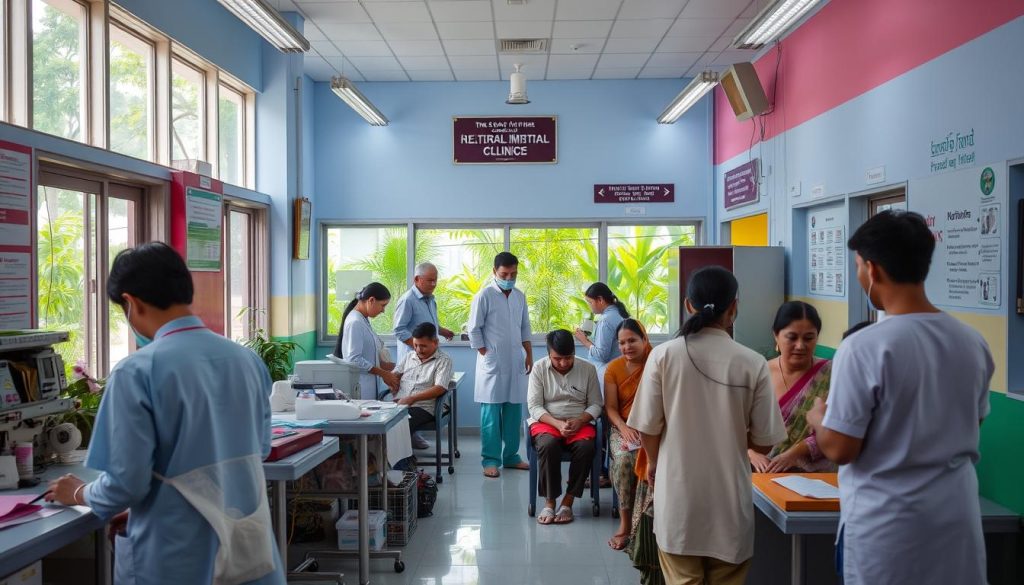
Be ready for cash payments upfront for medical care. Outside big cities, finding good medical services gets harder. Research healthcare options before you go to know where to get help.
Travel Health Insurance Considerations
Before you travel, get good travel health insurance for Myanmar. Think about these points when choosing a plan:
- Make sure your insurance covers emergency evacuations, as healthcare access can be limited.
- Check if it covers infectious diseases, like malaria, which is a risk in Myanmar.
- Look at policy details on cash payment compensation, as you might need to pay upfront at local clinics.
With the complex healthcare situation and travel risks in Yangon, having insurance is crucial. It’s a key step for a safe trip. Take steps to ensure you have access to healthcare during your visit.
Traveler Experiences: Stories and Precautions
Learning from others’ experiences is key when dealing with malaria risks in Yangon. Reading about their malaria prevention tips and precautions can prepare you. This part shares stories from those who traveled safely and warns about common mistakes.
Personal Testimonials and Advice
Many travelers say knowing the facts is essential. They suggest checking health advisories and talking to recent visitors. For example, one traveler stressed the need for antimalarial meds before leaving. They also talked about the importance of being careful and taking preventive steps.
Common Mistakes to Avoid
Even experienced travelers can make mistakes that raise their malaria risk. Here are some common errors to steer clear of:
- Neglecting mosquito repellents, mainly during dusk and dawn.
- Traveling without enough knowledge of local healthcare.
- Forgetting to pack meds for mild stomach issues, common among visitors.
- Ignoring health warnings for specific areas, like those with conflicts.
- Exploring rural areas at night, which is risky for more than just malaria.
By learning from others and avoiding these mistakes, you can lower your malaria risk. This knowledge helps you understand the precautions needed and the realities of traveling in risky areas. Make smart choices for a safe and enjoyable trip.
Conclusion
Understanding malaria risk in Yangon is key to a safe trip. You’ve learned how Myanmar has seen a big drop in malaria cases. From 333,871 in 2013 to 85,019 in 2017, it’s a 75% decrease. This shows the hard work in preventing malaria is paying off.
Before you travel, know your risk and take steps to stay safe. Talk to travel medicine experts and use insect repellents. Wearing the right clothes and using repellents can help avoid malaria.
Being careful and informed makes your trip to Yangon better and safer. Know where to find healthcare, malaria meds, and keep up with prevention tips. This way, you can enjoy Yangon’s culture and beauty without worrying about health issues.