Living in Dhaka: Pros and Cons Revealed
Imagine living in a city ranked as the seventh least liveable in the world. Dhaka, Bangladesh’s bustling capital, is a place of debate. It’s important to know the pros and cons before deciding to live there.
Dhaka offers a unique experience. It has a cost of living index of 56, similar to Toronto and Calgary. Yet, it faces challenges like rapid urban growth and slum conditions affecting nearly 20% of people. High inflation and health issues in slums add to the complexity. Can the city’s growth and cultural richness make up for these challenges? Let’s find out what it’s like to live in Dhaka.
Overview of Dhaka and Its Urban Landscape
Dhaka, the capital of Bangladesh, spans 306 km² and has grown into a megacity. By 2022, it had over 10 million people, with the metropolitan area home to 23.9 million. This rapid growth poses significant challenges for those thinking of moving to Dhaka Bangladesh, with a density of 34,000 persons/km².
The city’s landscape has changed a lot in recent years. Dhaka is now the 2nd largest in South Asia and 3rd in Asia. It’s also a key economic hub, making up 35% of Bangladesh’s economy and ranking 39th globally in GDP.
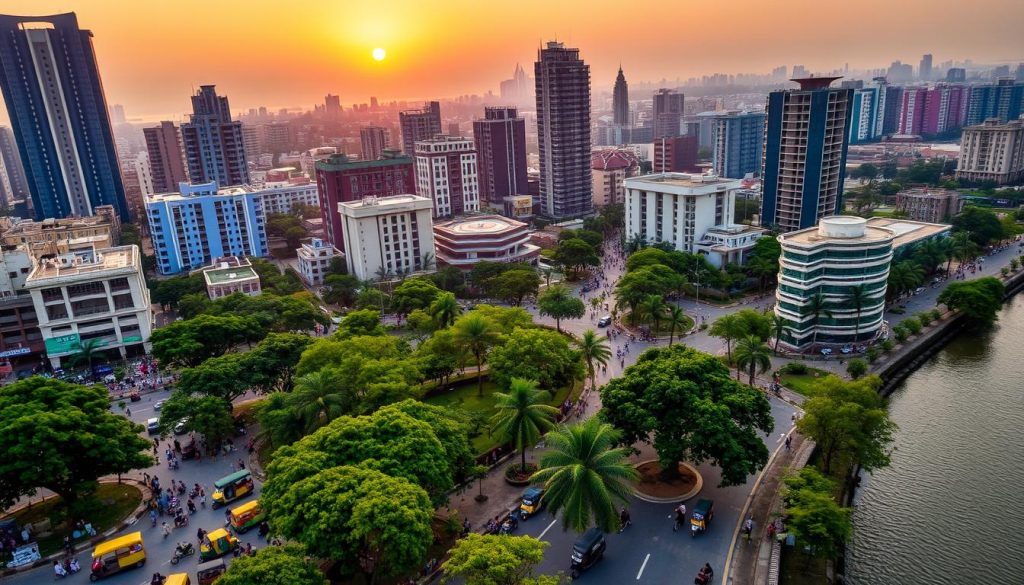
Despite its achievements, Dhaka faces many urban challenges. The city’s infrastructure can’t keep up with its growing population, leading to poor public services and terrible traffic. Water and waste management are also big issues, with only two-thirds of the city having piped water and 60% of waste collected.
Dhaka has waterways and open spaces, but these can cause flooding during the monsoon. The city’s geography and fast industrial growth make it a complex place. Knowing these aspects is key to understanding the city’s challenges and daily life in Dhaka Bangladesh.
Understanding the Cost of Living in Dhaka
Dhaka’s cost of living is quite surprising for newcomers. It has a cost of living index of 56, similar to Toronto and Lisbon. Many factors affect living costs in Dhaka, impacting both locals and expats.
Housing costs are a big part of living in Dhaka. Rent for a one-bedroom apartment in the city center ranges from 8,000.00 to 20,000.00 ৳. Buying an apartment in the city center can cost between 7,699.94 to 15,999.87 ৳ per square foot. The real estate market in Dhaka offers choices in areas like Gulshan, Banani, and Baridhara.
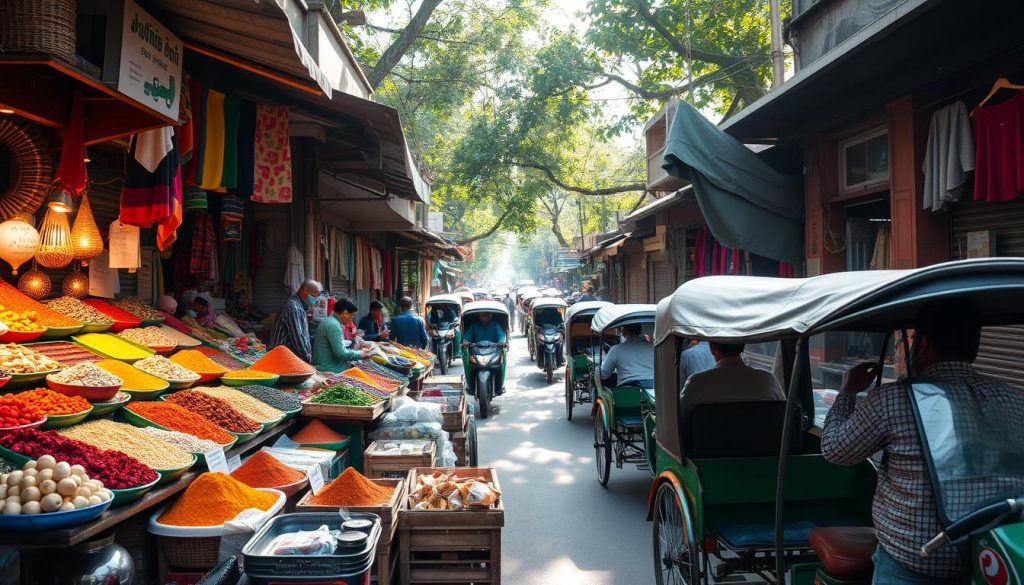
Grocery shopping is also important. A loaf of fresh white bread costs between 45.36 and 99.79 ৳. Eggs cost 120.00 to 180.00 ৳ for a dozen. Dining out can cost around 250.00 ৳ at an inexpensive restaurant, and 800.00 to 2,500.00 ৳ at a mid-range place.
Transportation costs are also significant. A monthly public transportation pass can cost 1,500.00 to 5,000.00 ৳. Basic utilities like electricity, heating, and water cost 2,000.00 to 7,437.50 ৳ for a 915 sq ft apartment.
The healthcare system in Dhaka is worth noting. There are affordable healthcare options, but understanding public and private healthcare is key.
Expats moving to Dhaka need to understand daily expenses. The average monthly net salary after tax is about 33,259.80 ৳. Remember, inflation and local market trends can affect your living costs in Dhaka.
Dhaka Quality of Life: What You Need to Know
Living in Dhaka comes with many challenges that affect the Dhaka quality of life. It’s ranked as the world’s least liveable city by a survey of 140 cities. The daily life here is quite tough, with a low livability index score.
The Economist Intelligence Unit found Dhaka scores just 29.2 for healthcare. This is compared to Melbourne’s perfect score of 100. This big gap shows Dhaka’s healthcare services are lacking.
Most areas studied in the report are rated as ‘undesirable’, ‘uncomfortable’, or ‘intolerable’. This shows the hard life people face in Dhaka.
Studies look at thirty factors across five categories: stability, healthcare, culture, education, and infrastructure. The city’s poor public transport and roads make commuting hard. This adds to the urban life challenges.
- Overcrowded urban spaces lead to high pollution.
- Income gaps cause social divides that affect quality of life.
- There’s not enough housing for the growing population.
- Little green space means fewer places for fun activities.
The livability index in Dhaka shows a need for improvement in many areas. Plans for over $20 billion in investments for MRT and BRT systems aim to fix the transport problem.
Dhaka, being a very crowded megacity, faces many challenges. The Bangladesh Delta Plan 2100 aims to improve flood protection and water management. These efforts might lead to better living conditions and urban planning.
Housing and Best Neighborhoods in Dhaka
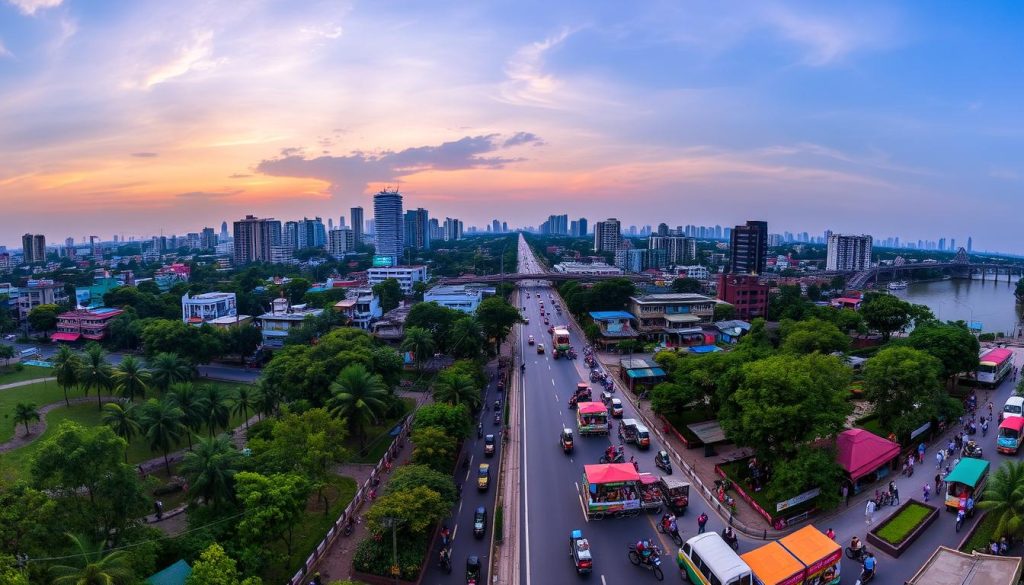
Finding housing in Dhaka can be tough, thanks to the city’s size. The city has both rich and poor areas. For expats, Gulshan, Baridhara, and Dhanmondi are top picks for their good life and amenities.
Gulshan is a standout. It’s home to embassies and great schools like Chittagong Grammar School Dhaka. It also has mosques and churches for different cultures.
Baridhara is great for its safety. It has police checks and 24/7 watch. It’s also near the United Hospital and American International School of Dhaka, perfect for families.
Dhanmondi, from the 1950s, is rich in culture. It has schools, malls, and restaurants. Plus, it’s near Lake of Dhanmondi with parks and medical facilities like Labaid Specialized Hospital.
Uttara is also worth mentioning. It has good schools and hospitals like Kuwait Bangladesh Friendship Hospital. It’s easy to get around thanks to Mirpur Road.
But, Dhaka also has poor areas with slums. Many struggle to find affordable, safe housing near work.

| Neighborhood | Amenities | Notable Institutions | Security |
|---|---|---|---|
| Gulshan | Embassies, Schools, Parks | Chittagong Grammar School, Green Dale International School | High with police checkpoints |
| Baridhara | Diplomatic zone, Hospitals | United Hospital, American International School | 24/7 Surveillance |
| Dhanmondi | Restaurants, Hospitals, Recreational areas | Labaid Hospital, Abahani Sporting Club | Moderate |
| Uttara | Schools, Hospitals | Scholastica, Kuwait Bangladesh Friendship Hospital | High |
Is Dhaka a nice city to live in?
When we ask if Dhaka is a nice city to live in, we look at many things. These include the environment, housing, and public services. All these factors play a big role in how good life is in the city.
Factors That Influence Livability in Dhaka
There are many things that make Dhaka livable or not. Here are some key ones:
- Cost of Living: Dhaka is cheap, making it easy for people to live well.
- Cultural Diversity: The city is full of different cultures, offering a rich experience.
- Air Pollution: Bad air from cars and factories is a big health risk.
- Traffic Congestion: The traffic is very bad, making it hard to get around.
- Poverty: Many people live in poor conditions, lacking basic services.
- Internet Connectivity: The internet is often slow and unreliable, a problem for digital nomads.
- Language Barrier: Not everyone speaks English, making it hard for expats to communicate.
- Safety Concerns: There is petty crime and sometimes political unrest, making people feel unsafe.
Comparing Dhaka to Other Major Cities
Looking at Dhaka compared to other big cities shows its strengths and weaknesses. Dhaka is cheaper, but it lacks good urban planning and easy access to things. Studies often point out:
| City | Livability Index | Average Cost of Living | Traffic Congestion |
|---|---|---|---|
| Dhaka | Low | Low | Severe |
| Calgary | High | Moderate | Minimal |
| Hong Kong | High | High | Moderate |
Even though Dhaka is affordable, it faces big challenges like bad traffic and pollution. These issues make daily life hard and lower the city’s livability score. These findings make us wonder how Dhaka can improve in the future.
Jobs in Dhaka: Opportunities and Challenges
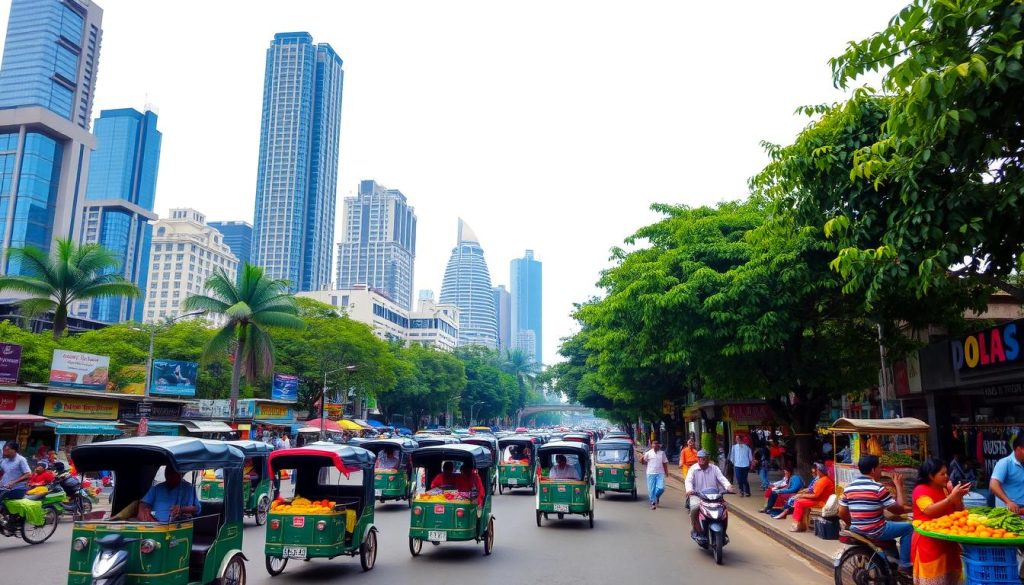
Dhaka is a bustling city with a growing economy. It’s one of the most crowded places in the world. Jobs are available in many fields like textiles, tech, and finance.
Many small and medium businesses are also creating jobs. This shows the city’s entrepreneurial spirit.
As an expat, Dhaka offers different experiences based on your job. The garment industry hires both locals and foreigners. Big companies are also setting up here, offering more jobs.
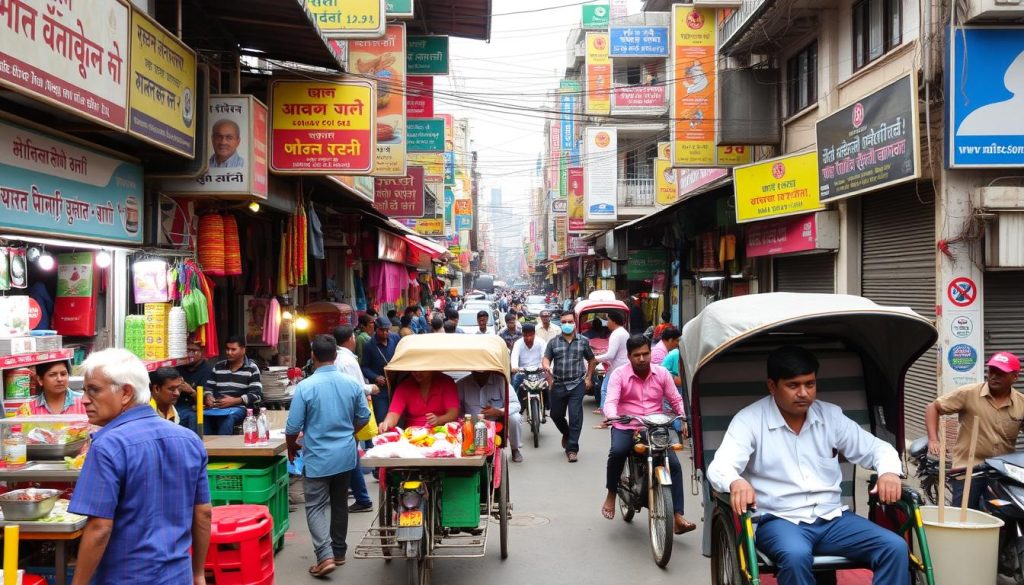
Working in Dhaka has its ups and downs. The cost of living, including housing, is high. Traffic, pollution, and infrastructure issues make daily life tough.
Job security is also a worry. With so many people looking for work, finding stable jobs is hard. Many workers, including women, often don’t get paid for their work.
In summary, Dhaka offers great career chances but faces economic challenges. Knowing the local job market is key for success in this vibrant city.
| Sector | Description | Opportunities |
|---|---|---|
| Textiles | Largest employment sector, producing garments for global brands | High demand for skilled and unskilled labor |
| IT | Rapidly growing with tech startups and BPO services | Increasing jobs for developers, analysts, and IT specialists |
| Finance | Various banks and financial institutions expanding services | Opportunities in banking, investment, and insurance sectors |
| Education | Growing need for quality education and international schools | Demand for teachers, administrators, and educational consultants |
Dhaka City Safety: Analyzing the Risks
Understanding Dhaka city safety means knowing the urban risks we face every day. The city’s population has grown fast, reaching about 23 million by 2023. This rapid growth has made areas very crowded, with 30,093 people per square kilometer.
This density raises safety concerns, mainly in slums. Here, nearly 20% of people live in conditions that increase health risks. The slums are home to over 18 lakh people, or nearly 20% of the city’s population.
Living in slums comes with big health risks. Studies show 34% of slum residents have infectious diseases due to bad sanitation and tight living. Only 27.9% of households have good toilets, making health issues worse. Children in these areas face more respiratory problems and stress, affecting their schoolwork.
The air quality in Dhaka is also a major concern. Bangladesh has some of the worst air in cities, affecting nearly seven million people with asthma. Poor air quality causes about 15,000 early deaths in Dhaka each year.
The government is working to make Dhaka safer. They aim to improve governance and basic services to tackle urban challenges. But, more is needed to address the growing population’s needs for housing, sanitation, and healthcare.
Dhaka Lifestyle: Cultural and Social Aspects
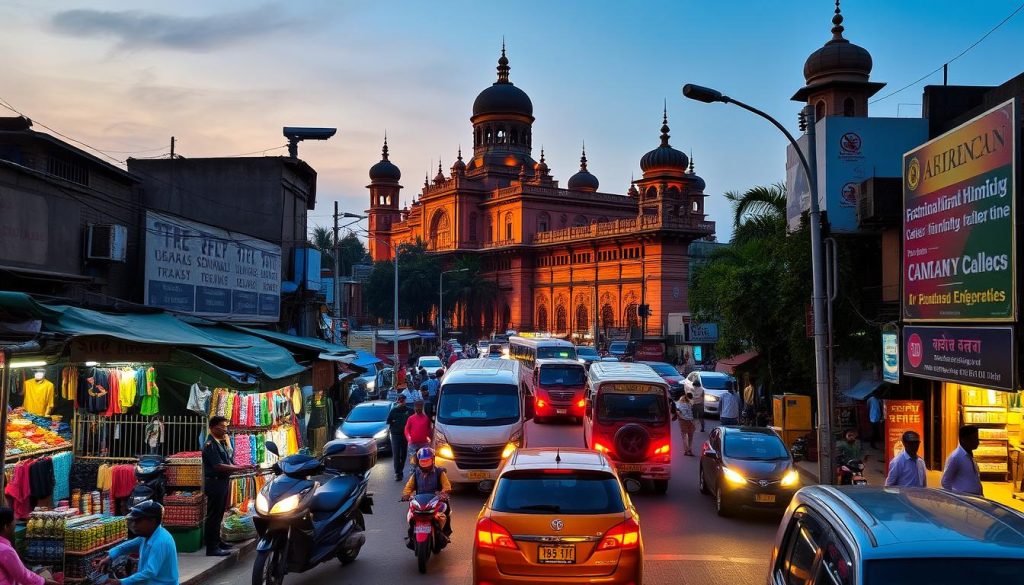
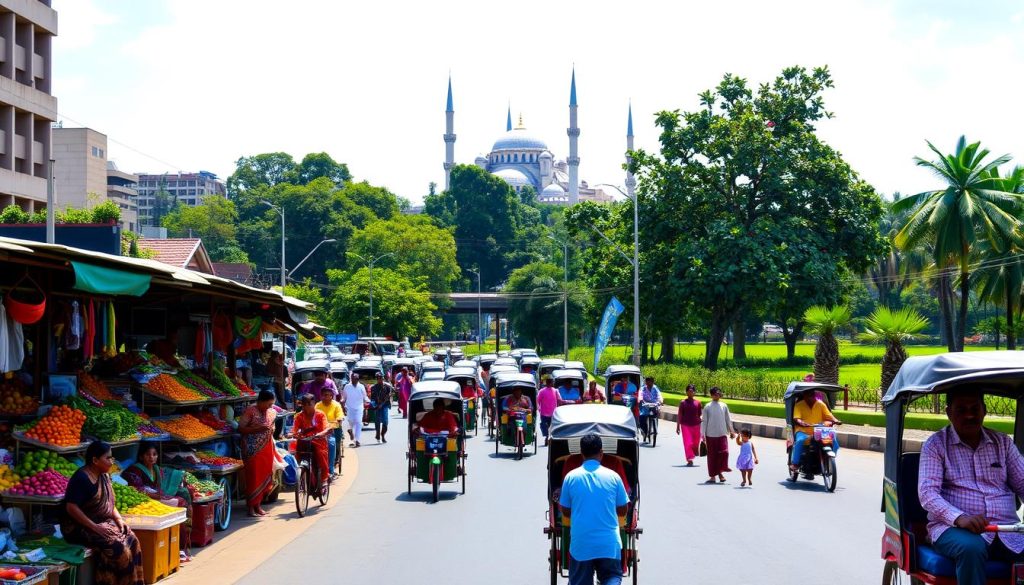
Living in Dhaka is exciting and diverse. It’s filled with rich traditions and social life. The city, being the most populous in Bangladesh, is a mix of many cultures. This makes Dhaka’s culture unique.
Festivals like Pohela Boishakh and Durga Puja are celebrated all year. They show the community’s beliefs and heritage.
The social life in Dhaka is always buzzing. Markets and street gatherings are lively. The food scene is amazing, with local dishes like kachchi biryani and khichuri. You can also find international brands like KFC and Starbucks.
The arts scene is thriving, with theater, music, and cinema. Bangladesh made 80–100 films a year in the 2000s. There are many newspapers and TV networks, offering news and entertainment.
But, Dhaka also faces challenges. Marginalized groups, like the Dalits, struggle with healthcare and sanitation. About 58% of Dalits lack proper toilets, affecting their health.
Despite these challenges, Dhaka’s markets and malls keep the city lively. The mix of old and new makes Dhaka’s lifestyle special. The city’s culture and community are always changing, offering a unique view of life.
| Aspect | Description |
|---|---|
| Cultural Festivals | Pohela Boishakh, Durga Puja, and Eid celebrations |
| Culinary Diversity | Kachchi biryani, chicken biryani, polao, and international chains |
| Media Exposure | 200 newspapers, 20+ TV networks enriching public knowledge |
| Social Inequality | Difficulties faced by Dalits in healthcare and sanitation access |
| Shopping Scene | Markets and malls like Dhaka New Market and Basundhara City |
Conclusion
Living in Dhaka is a mix of good and bad. The city is home to nearly 20 million people, making it very lively. It has many cultures and job chances, but also safety and infrastructure issues.
Modern improvements have helped, but resources are still limited. The city’s size and many people make things tough.
Thinking about moving to Dhaka? It’s important to consider what you value most. The city has great schools, food, and healthcare. It also has a good transport system.
But, it’s not all easy. You’ll face challenges. Your decision should be based on what Dhaka offers. The culture, economy, and people can make it a great place to live.
But, you must be ready for its complexities. Think about these things carefully. They will affect your life in this vibrant city.