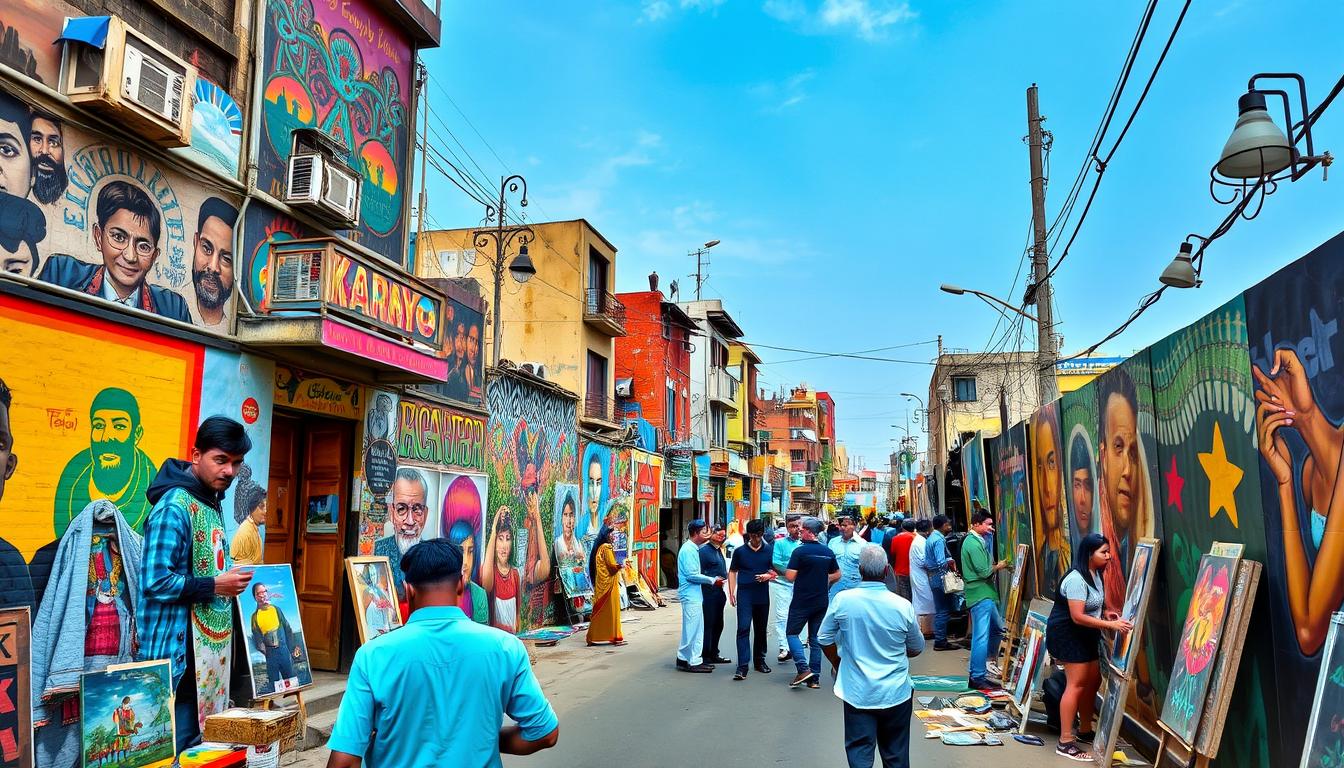
Karachi Biennale: Art Scene & Hidden Galleries
Karachi’s art scene is bursting with creativity at the Karachi Biennale. This premier event showcases Pakistan’s diverse artistic talents. Visitors can explore hidden galleries and experience the city’s thriving creative landscape.
The Biennale features thought-provoking video installations, striking sculptures, and captivating paintings. Both emerging and established Pakistani artists display their innovative works. This event offers a unique glimpse into Karachi’s artistic expression.
Introduction to Karachi’s Art Scene
Karachi, Pakistan’s largest city, boasts a rich art history. Its cultural heritage shines through influential modernist artists like Abdur Rahman Chughtai and Shakir Ali. The 1940s saw the birth of art galleries and salons, including one by Atiya Fyzee Rahamin.
Karachi’s artistic journey continued with the rise of contemporary art practices. The Indus Valley School of Art and Architecture further enriched the city’s creative landscape. These developments cemented Karachi’s role in modern art movements in Pakistan.
The City’s Rich Cultural Heritage
Karachi’s artistic narratives are deeply rooted in its vibrant cultural heritage. The city has become a thriving hub for creative expression. Its diverse influences continue to shape the local art scene.
Emergence of Contemporary Art Exhibitions
The contemporary art scene in Karachi has flourished with events like the Karachi Biennale. This exhibition showcases works from national and international artists. It provides a platform for exploring diverse artistic narratives in Karachi.
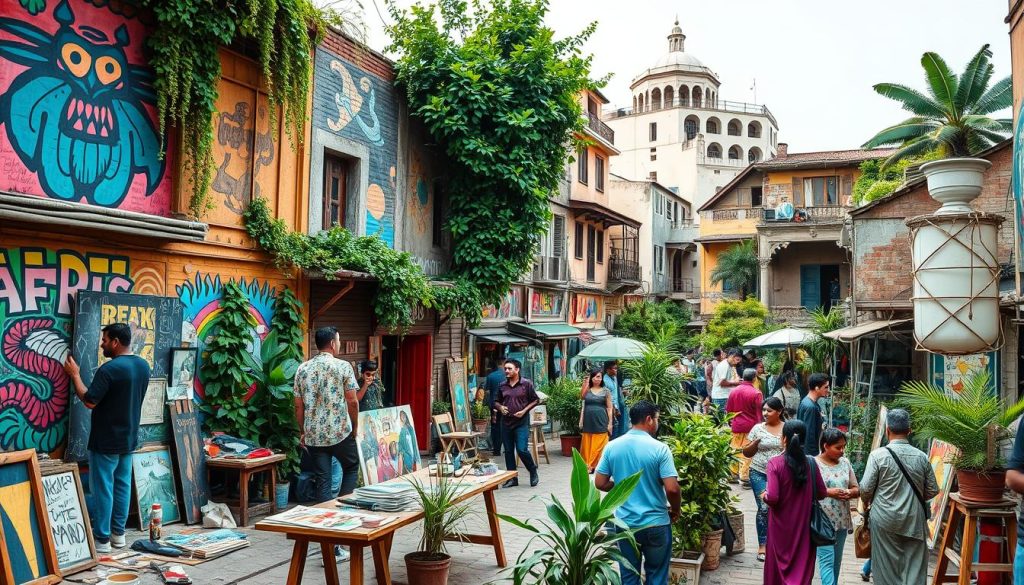
“Karachi has always been a hub for artistic expression, with a rich tapestry of cultural influences shaping its creative landscape. The city’s art scene continues to thrive, with exciting contemporary exhibitions and a vibrant community of artists.”
Karachi Biennale: Witnessing the Times
Vision and Themes of KB17
KB17 aimed to showcase Karachi’s vibrant art scene. It offered a platform for artists to reflect on the city’s complexities. The biennale brought contemporary art to public spaces in Karachi.
The theme “Witness” encouraged artists to explore Karachi’s realities. Visitors experienced diverse artworks capturing the city’s essence. KB17 engaged both local and international communities with Pakistani art.
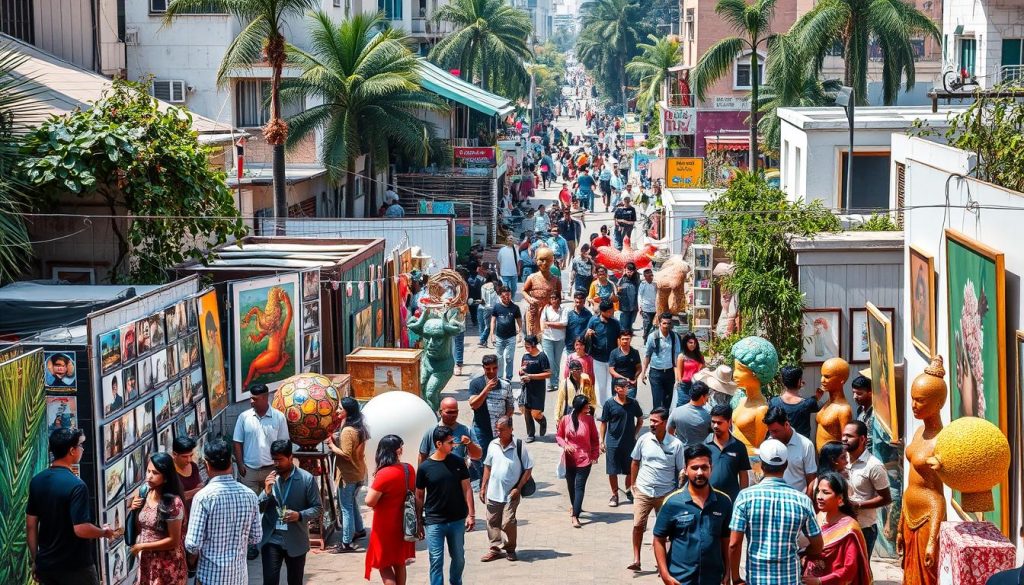
KB17 focused on Karachi’s evolving identity and cultural heritage. It highlighted the resilience of its people. The biennale invited visitors to explore the city’s urban landscape and history.
“The Karachi Biennale (KB17) was conceived as a platform for the city’s artists to ‘bear witness to our times,’ as stated by the biennale’s chief curator, Amin Gulgee.”
KB17 featured various contemporary art forms. These included installations, sculptures, and multimedia works. The biennale provided a dynamic platform for artists to share their unique perspectives.
Karachi’s Historical Artistic Narratives
Karachi’s art history brims with pivotal moments and influential figures. The city nurtured renowned modernist artists like Zubeida Agha and Sadequain. Agha’s 1949 exhibition sparked modernism in Pakistan’s art scene.
The 1990s saw contemporary art practices flourish in Karachi. Artists like Durriya Kazi, David Alesworth, Iftikhar Dadi, and Elizabeth Dadi used the city as their canvas. They explored urban spaces, vernacular themes, and collaborative approaches.
This artistic legacy fuels Karachi’s vibrant contemporary art scene. The Indus Valley School of Art and Architecture, founded in 1989, nurtures local talent. It plays a crucial role in supporting Karachi’s artists.
“Karachi’s art history is marked by significant moments and influential figures.”
Karachi’s artists face challenges like limited public display spaces and social unrest. Yet, they persevere, creating a dynamic artistic landscape. From modernists to contemporary creators, Karachi’s artistic narratives evolve constantly.
These narratives reflect the city’s unique cultural identity and resilience. They showcase Karachi’s rich artistic heritage and its ongoing creative spirit.
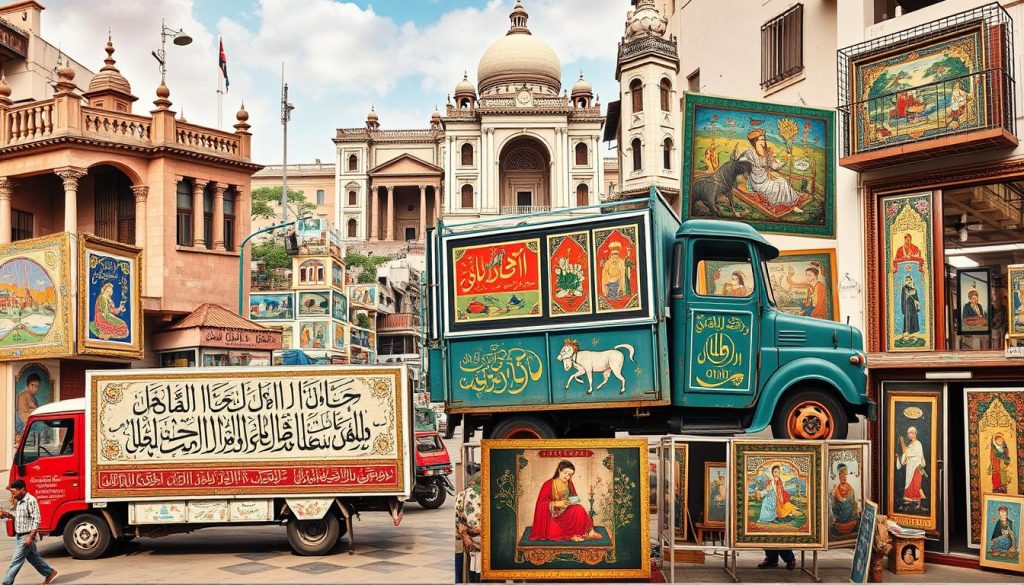
Karachi Biennale: Art Scene & Hidden Galleries
The Karachi Biennale showcases Pakistan’s vibrant art scene. It highlights hidden galleries and innovative artists, drawing local and international attention. This event transforms the city into a creative hub.
Visitors can explore diverse exhibitions, installations, and performances. The Biennale uses iconic venues like the National College of Arts and Lahore Fort as artistic platforms.
Established and emerging artists share the spotlight. Bani Abidi’s video installation, for example, has received widespread praise. It showcases the depth of Pakistani art.
Collateral art events have popped up alongside the main Biennale. These initiatives engage the local community and foster art appreciation. They create pride in Karachi’s creative spirit.
The Biennale’s impact reaches beyond Karachi’s borders. It attracts global visitors and earns international recognition. This event celebrates the city’s thriving art scene and exceptional Pakistani talents.
| Artist | Artwork | Auction Record |
|---|---|---|
| Zubeida Agha | Canvas | $35,560 (Sotheby’s New York, 2024) |
| Ione Saldanha | “Bambus” Sculpture | $34,856 (Bolsa de Arte, 2022) |
| Esther Mahlangu | “Ndebele Abstract” | $112,642 (Artcurial, 2014) |
| Fadjar Sidik | “Space Dynamics” | $21,047 (Bonhams Hong Kong, 2020) |
| Fahrelnissa Zeid | “Break of the Atom and Vegetal Life” | $2,741,000 (Christie’s Dubai, 2013) |
| Fahrelnissa Zeid | “Le Rouge et le Noir” | $162,686 (Bonhams London, 2024) |
The Karachi Biennale has become a game-changer for the city’s art world. It showcases hidden galleries and emerging talents, capturing both local and international attention. The event firmly establishes Karachi as a thriving center for artistic expression and innovation.
Biennale Venues and Exhibits
The Karachi Biennale transformed various city venues into dynamic art spaces. Visitors experienced captivating installations and exhibits. This biennial celebration showcased a wide range of artistic talent.
National College of Arts Display
At the National College of Arts, Rasheed Araeen showcased vibrant, geometric installations. His work explored identity and immigrant artists’ struggles. Araeen’s art provided a thought-provoking experience for attendees.
Lahore Fort and Museum Installations
The Lahore Fort and Museum hosted mesmerizing art installations during the Biennale. Khadim Ali’s colorful tapestries depicted mythological characters in modern settings. Wael Shawky’s documentary presented the Crusades through unique puppet performances.
These exhibits demonstrated Karachi’s vibrant and diverse art scene. The Karachi Biennale venues offered a platform for artists to share their visions. From National College of Arts exhibits to Lahore Fort and Museum art displays, creativity flourished.
The art installations Karachi Biennale engaged the public with both established and emerging artists. This event highlighted the city’s artistic talent and cultural significance.
Emerging Contemporary Artists
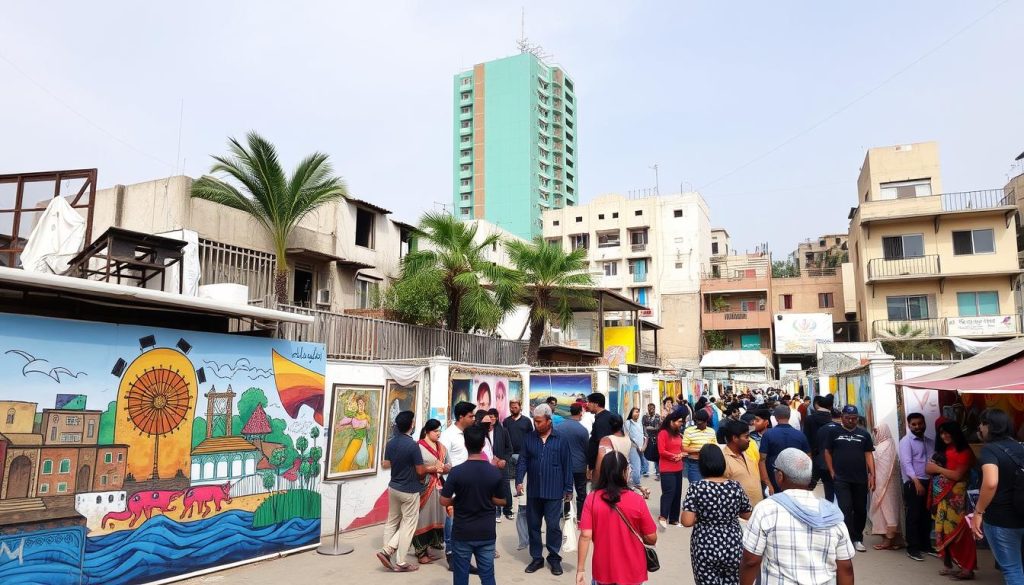
The Karachi Biennale showcased innovative work from rising Pakistani contemporary artists. Bani Abidi, known for her thought-provoking video installations, stood out among the exhibitors. Her unique style exemplifies the caliber of Karachi Biennale artworks.
Abidi’s piece at KB17 depicted the city’s stillness during a state dignitary’s arrival. It offered a humorous take on anxious bureaucracy and flag-waving schoolchildren. Her work sparked deeper social conversations and challenged traditional artistic notions.
The Karachi Biennale emerging artists displayed Pakistan’s diverse contemporary art scene. Their creations ranged from figurative paintings to mixed-media sculptures. These artists pushed boundaries, offering insights into the nation’s creative landscape.
“Bani Abidi’s video installation at KB17 captured the city’s stillness as it came to a halt for the arrival of a state dignitary, highlighting the anxious bureaucracy and the waiting schoolchildren waving paper flags.”
The Biennale’s focus on emerging talent highlights its dedication to nurturing artistic growth. By featuring these visionaries, the event celebrated Pakistan’s current art scene. It also hinted at the promising future of the country’s artistic community.
Collateral Art Events and Exhibitions
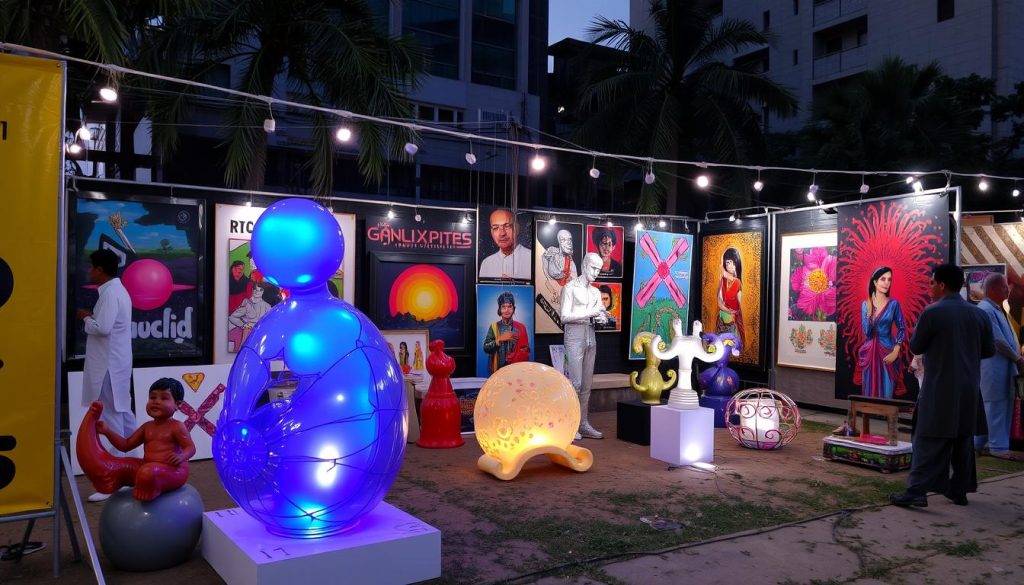
The Karachi Biennale was enhanced by a series of “collateral” art events and exhibitions. These satellite shows displayed a variety of contemporary Pakistani art. Visitors enjoyed photography, painting, and installation pieces across the city.
One collateral event featured works by artists with South Asian roots. It included Mahtab Hussain’s thought-provoking photography and Mathew Krishanu’s captivating paintings. Farwa Moledina and Osman Yousefzada contributed immersive installations to the exhibition.
These events provided a platform for emerging and established Pakistani contemporary art shows. They shone alongside the main Karachi Biennale collateral events, enriching the city’s art scene.
Acclaimed artists like Imran Qureshi and Ali Kazim created site-specific works during the biennale. Their installations and performances complemented the main program. They also showcased the city’s artistic heritage and parallel art exhibitions Karachi.
The Karachi Biennale collateral events highlighted the city’s growing art scene. Local and international artists came together to display their diverse practices. These parallel art exhibitions Karachi reinforced the city’s status as a contemporary art hub.
Lahore Biennale: A Parallel Event
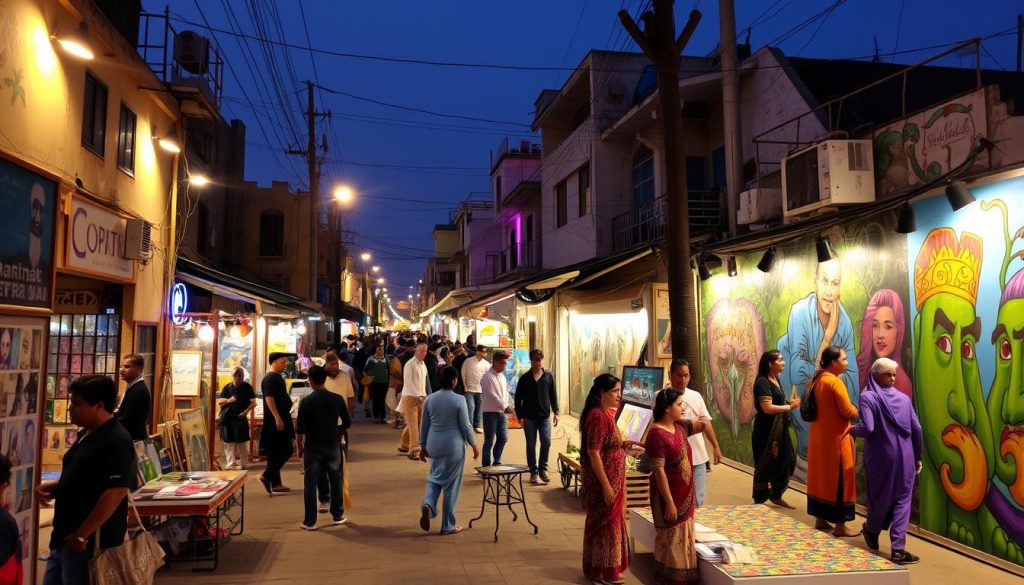
The city of Lahore hosted its own biennial art event, the Lahore Biennale (LB02). It ran alongside the Karachi Biennale. Hoor Al Qasimi, President of the Sharjah Art Foundation, curated the event.
The Lahore Biennale brought international artists to the city. It challenged them to create works that interacted with Lahore’s rich cultural heritage.
Curator Hoor Al Qasimi’s Vision
Hoor Al Qasimi drew inspiration from curator Okwui Enwezor’s approach. She aimed to bring the global South’s perspective to international art events. The Lahore Biennale showcased both local and international artists’ work.
This approach aimed to spark a dynamic exchange of ideas. It also highlighted Pakistan’s vibrant artistic landscape.
“The Lahore Biennale sought to position itself as a game-changer for Pakistan’s engagement with the global art world.”
The Lahore Biennale 2022 offered a range of exhibitions and installations. Visitors could explore the city’s heritage through contemporary art. The event featured site-specific works in historic sites.
It also included thought-provoking installations in public spaces. The biennale provided a platform for artists to engage with the local community. It sparked dialogue around important social and cultural issues.
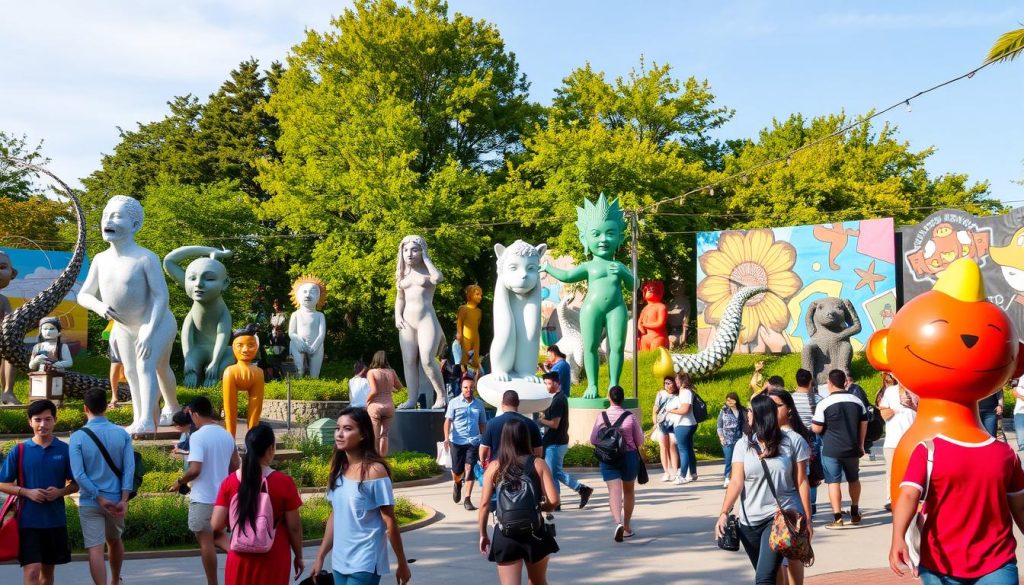
The Lahore Biennale ran parallel to the Karachi Biennale. This amplified the impact of international art events in Pakistan. The two events showcased the country’s diverse artistic landscape.
Together, they strengthened Pakistan’s place on the global art map. Each biennale had its own unique curatorial approach and themes.
Biennales: Globalization vs Social Dialogue
Biennales are international art events sparking ongoing debates. Scholars view them differently: some as globalization tools, others as social dialogue platforms. The Lahore Biennale bridges these perspectives, offering global exchange and local engagement.
Biennales in developing countries balance global art demands with local community needs. A recent study shows over half of global biennials occur in the Global South. This shift responds to new economic patterns in emerging art centers.
| Perspective | Description |
|---|---|
| Biennales as Globalization Tool | Some scholars categorize biennales as an extension of globalization and neoliberalism, where they serve as platforms for international artistic exchange and the promotion of a global art market. |
| Biennales as Social Dialogue | Others view biennales as “sites for social dialogue and cross-disciplinary exchange,” where they can foster meaningful engagement with local communities and cultural narratives. |
The Lahore Biennale’s approach reflects the debate on international art events in developing countries. Biennales face the challenge of balancing global aspirations with community engagement. The art world continues to evolve, reshaping the role of these events.
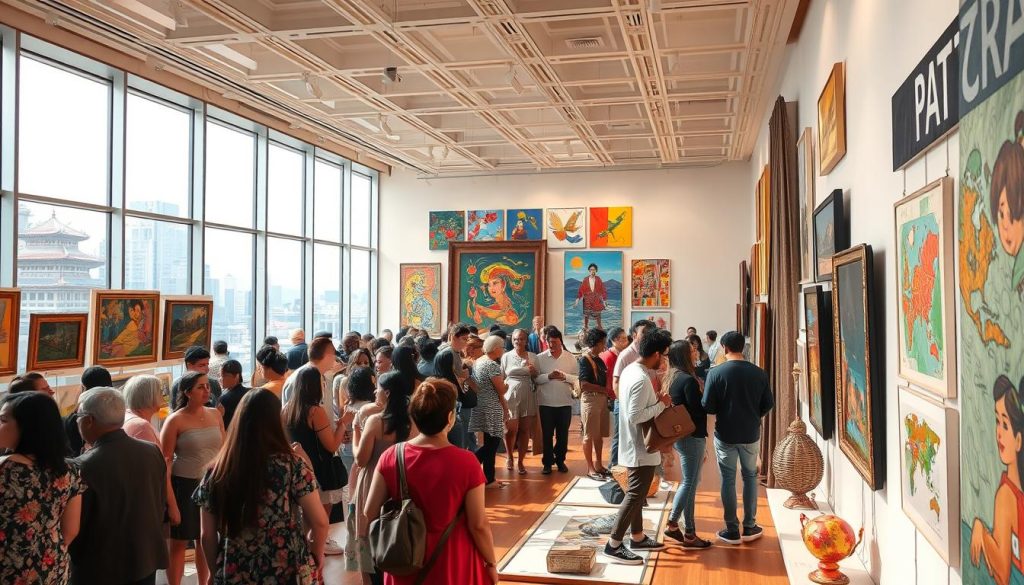
“The discussion around ‘not-another-biennial’ in South Africa prompts a reconsideration of traditional measures of success and failure within the contemporary art world.”
Engaging the Local Community
Biennales are gaining popularity in developing countries like Pakistan. The Karachi Biennale aims to make art more accessible to everyone. They want to reach beyond exclusive art circles.
The organizers chose venues that connect with Karachi’s cultural heritage. They created site-specific works to bridge the gap between international and local art. This new approach fosters social dialogue and cross-cultural exchange.
The Karachi Biennale’s community efforts have made a big impact. Here are some key statistics:
- Over 40 scholars, critics, curators, and artists contributed to the inaugural issue of the e-journal “The And: An Expanded Questionnaire on The Contemporary,” which documented the Biennale’s impact on the local art scene.
- The Biennale’s long-standing monthly newsletter, “Dialogue,” has been replaced by the tri-annual bilingual e-journal, “Field Notes,” further expanding the reach and engagement with the local community.
- The Expanded Questionnaire on The Contemporary received 44 responses, representing diverse perspectives and shedding light on multiple layers of understanding contemporary art in Asia.
These projects show the Biennale’s dedication to involving the local community. They aim to deepen understanding of contemporary art in Karachi’s cultural landscape.
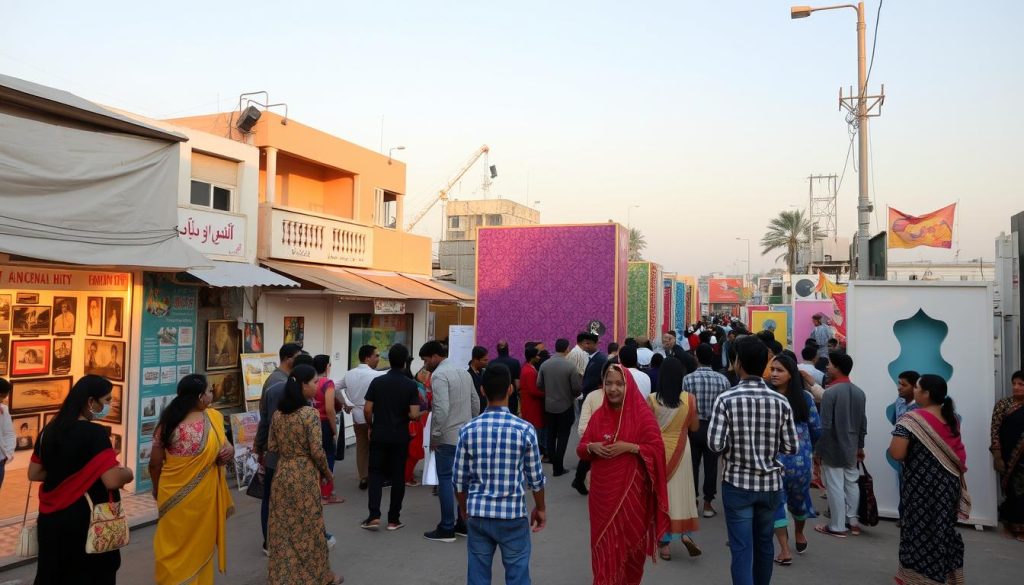
“The Karachi Biennale’s approach to community engagement reflects a shift in the role of biennales, which are now seen as opportunities to foster social dialogue and cross-cultural exchange, rather than solely as vehicles for global exposure.”
The Karachi Biennale aligns its events with local interests and culture. It sets an example for other art events to follow. This approach showcases the power of biennale community engagement.
The Biennale creates a lasting Karachi Biennale local impact. It connects art events and local audience in meaningful ways.
Conclusion
The Karachi Biennale showcases the city’s vibrant contemporary art scene. It highlights work from established and emerging Pakistani artists. The event transforms Karachi’s spaces into dynamic art venues, offering visitors a unique experience.
Biennales continue to gain prominence in developing countries. The Karachi and Lahore events demonstrate the power of international art gatherings. They foster social dialogue, cross-cultural exchange, and community engagement.
The Karachi Biennale underscores the importance of contemporary art in shaping Pakistan’s cultural narrative. It elevates the country’s presence on the global stage. The event attracts diverse local and international artists.
The biennale focuses on socially relevant themes. This positions it as a key player in developing Pakistan’s art scene. As Pakistan embraces contemporary art, such initiatives will foster cultural exchange and empower artists.