Houmt Souk Shopping Guide: What to Buy
Are you ready to dive into Tunisia’s rich culture in Houmt Souk, Djerba’s lively souk? You’ll find treasures waiting for you.
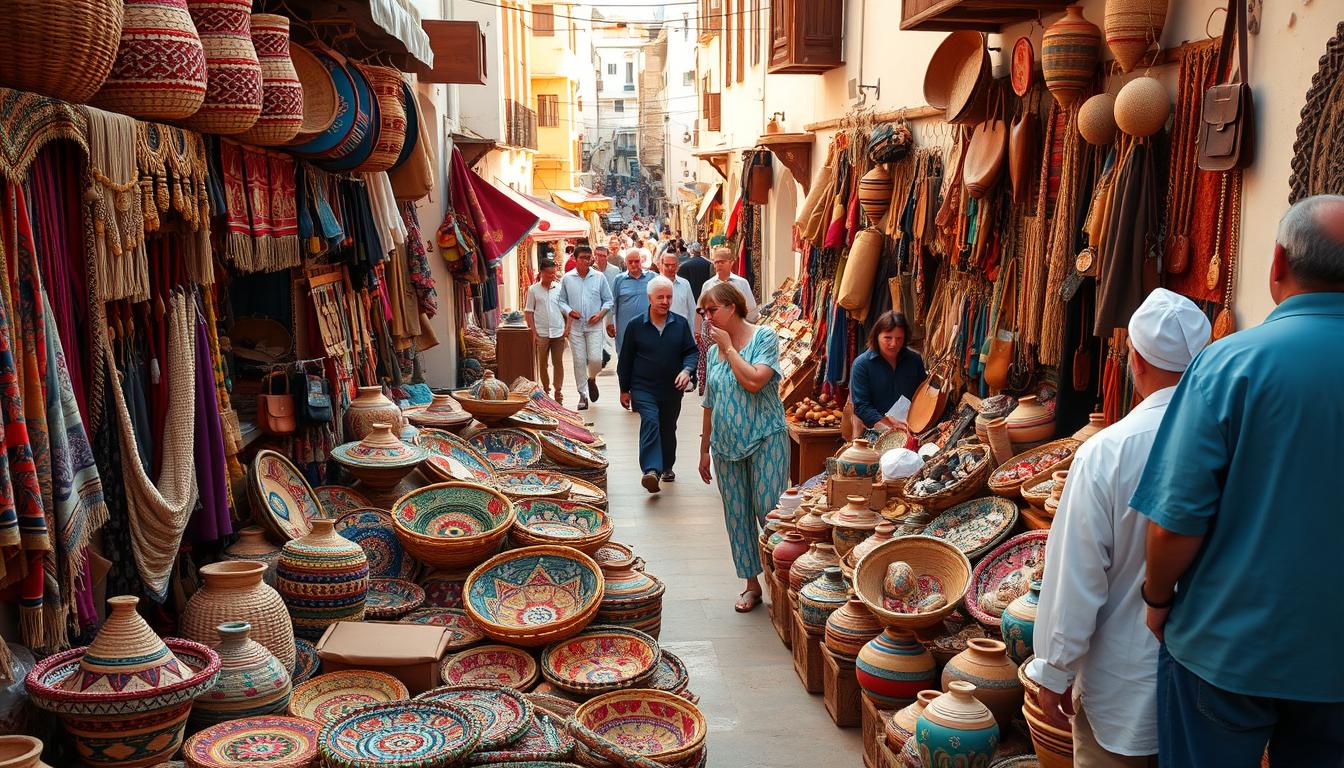
Houmt Souk is in Djerba’s heart, a shopper’s dream. It offers a true Tunisian experience. Walking through its souks, you’ll smell local foods and feel the market’s energy. Here, you can find unique crafts and local treats.
Looking for the best local items or just enjoying the vibe? This guide will show you the top shops and what to buy in Houmt Souk.
Discovering the Charm of Houmt Souk Markets
When you enter Houmt Souk, the lively center of Djerba Island, you find a shopping haven. It mixes old traditions with modern flair. In the main town, known as “the market neighbourhood,” you can spend hours exploring.

The Historical Significance of Houmt Souk as a Trading Hub
Houmt Souk has a long history as a key trading spot. It drew merchants from all over the Mediterranean. Today, you can still feel the past as you walk through the markets.
Overview of Market Areas and Shopping Districts
The market is split into different zones, each with its own vibe. From the lively Souk Central to the cozy artisan workshops, there’s a lot to see. You’ll find everything from traditional crafts to trendy boutiques.
What Makes Houmt Souk Different from Other Tunisian Markets
Houmt Souk is special because it combines old and new shopping. It’s not just about buying things; it’s a dive into local culture. You can talk to artisans, try local foods, and enjoy the lively atmosphere.
Exploring Houmt Souk is more than shopping. It’s a trip through Djerba’s history and culture. Whether you’re after unique gifts or want to see how locals live, Houmt Souk will make a memorable visit.
Essential Houmt Souk Shopping Guide for First-Time Visitors
First-time visitors to Houmt Souk should know a few key tips. Knowing the local culture, market hours, and basic Arabic can make your shopping better.
Best Times to Visit the Markets
It’s best to go to the markets early in the morning. This way, you can avoid the crowds and enjoy your shopping more. The morning is also cooler, making it easier to walk around.
Market Etiquette and Cultural Considerations
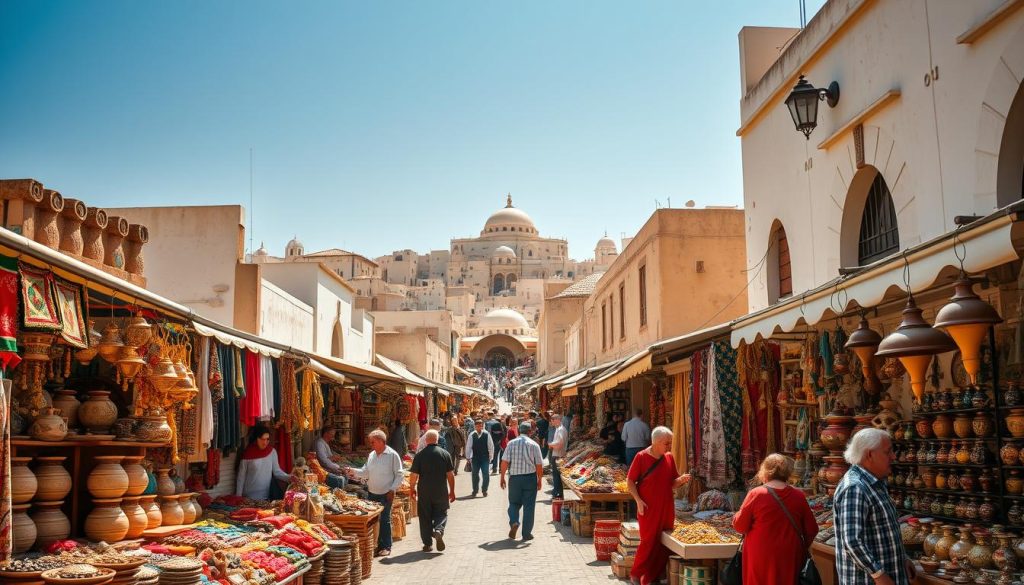
Bargaining is common in Houmt Souk. Don’t be shy to negotiate prices. Also, remember to dress modestly and be respectful of the local customs.
Payment Methods and Currency Tips
Most vendors take cash, but some bigger stores might accept credit cards. It’s smart to have some Tunisian Dinars for small buys. ATMs might not be easy to find, so plan your money needs ahead.
Language Basics for Shopping Interactions
Knowing basic Arabic phrases like “hello” and “how much?” can make your shopping better. Many vendors will appreciate your effort to speak their language.
| Language | Greeting | Price Inquiry |
|---|---|---|
| Arabic | Marhaba (مرحبا) | Kam al-sعر? (كم السعر؟) |
| English | Hello | How much? |
Being prepared and understanding local customs can make your shopping in Houmt Souk more enjoyable. Don’t miss out on the chance to find unique souvenirs and local crafts.
Must-Visit Markets and Shops in Houmt Souk
Houmt Souk is a shopper’s paradise, blending traditional souks with modern malls. As you wander the lively streets, you’ll discover a wide range of markets and shops. They cater to every taste and need.
The Central Market (Souk Central)
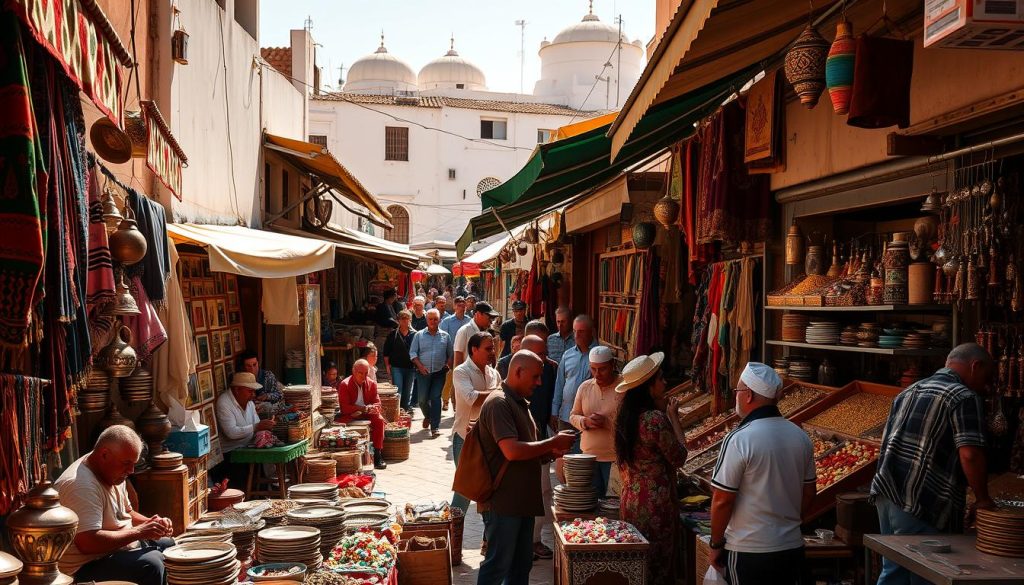
The Central Market is a key spot for experiencing Houmt Souk’s true charm. It offers a variety of items, from local crafts to fresh food. Don’t miss the traditional Tunisian clothes and beautiful silver jewelry.
The Fish Market Experience
The Fish Market is a unique spot where you can see local fishermen selling their catch. While it’s mainly for seafood, the area also has shops with souvenirs and snacks.
Artisan Workshops and Galleries
Houmt Souk is famous for its talented artisans. Visiting a workshop or gallery lets you see the skill behind traditional Tunisian crafts. You can find everything from pottery to carpets.
Modern Boutiques Worth Exploring
Houmt Souk also boasts modern boutiques with stylish clothes, accessories, and home goods. These shops offer a modern twist to the traditional shopping scene. They let you buy contemporary items alongside traditional ones.
Looking for unique souvenirs, traditional clothes, or just want to enjoy the atmosphere? Houmt Souk’s markets and shops have it all. By checking out these top spots, you’ll get to see the best of Houmt Souk.
Traditional Tunisian Textiles and Carpets
As you explore Houmt Souk’s markets, you’ll find a wealth of traditional Tunisian textiles and carpets. These items are not just souvenirs but also carry the history and skill of Tunisia.
Margoum Carpets: Patterns and Significance
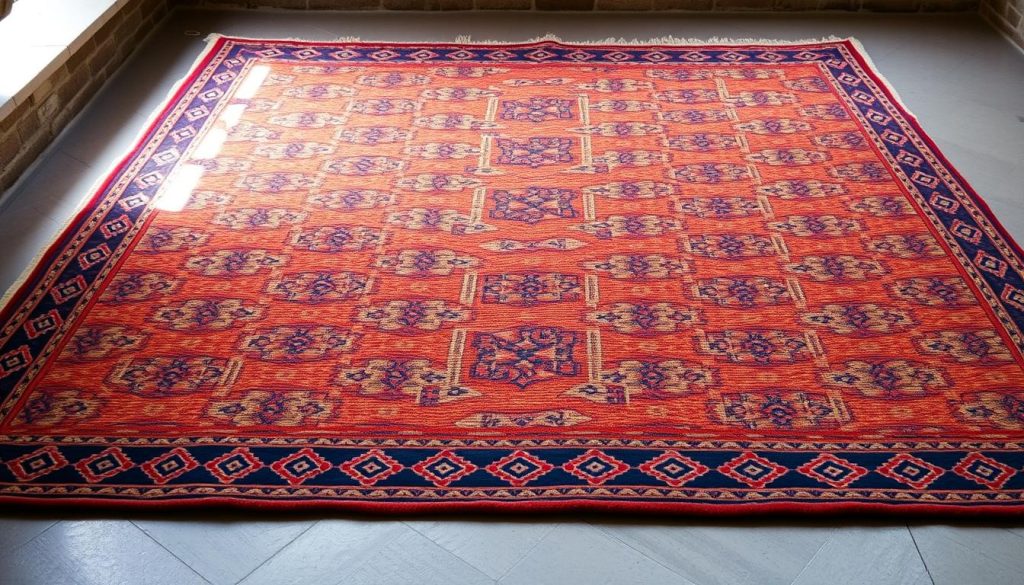
Margoum carpets stand out for their unique patterns and deep cultural meaning. Berber women traditionally weave these carpets, each piece showing the weaver’s creativity and tribe’s history. The designs often represent life, nature, and spiritual beliefs.
Handwoven Blankets and Kilims
Handwoven blankets and kilims showcase Tunisian textile art. Kilims are flat-woven, used as wall hangings or floor coverings. Blankets are warm, durable, and tell stories of Tunisia’s history and myths through their patterns.
Fouta Towels and Table Linens
Fouta towels and table linens are elegant and practical Tunisian textiles. Foutas are absorbent and light, used daily. Table linens, with intricate patterns, add elegance to any meal.
How to Identify Authentic Handmade Textiles
Finding authentic handmade textiles requires knowing what to look for. Real handmade items have unique imperfections and high-quality materials. Talking to local artisans in Houmt Souk can help you understand the value and authenticity of these textiles.
| Textile Type | Characteristics | Typical Use |
|---|---|---|
| Margoum Carpets | Intricate patterns, handwoven, symbolic designs | Floor covering, decorative wall hanging |
| Handwoven Blankets | Warm, durable, varied patterns | Bedding, decorative throw |
| Fouta Towels | Absorbent, lightweight, simple designs | Bath, beach, or sauna |
| Kilims | Flat-woven, geometric patterns, durable | Floor covering, decorative wall hanging |
Pottery and Ceramics from Djerba
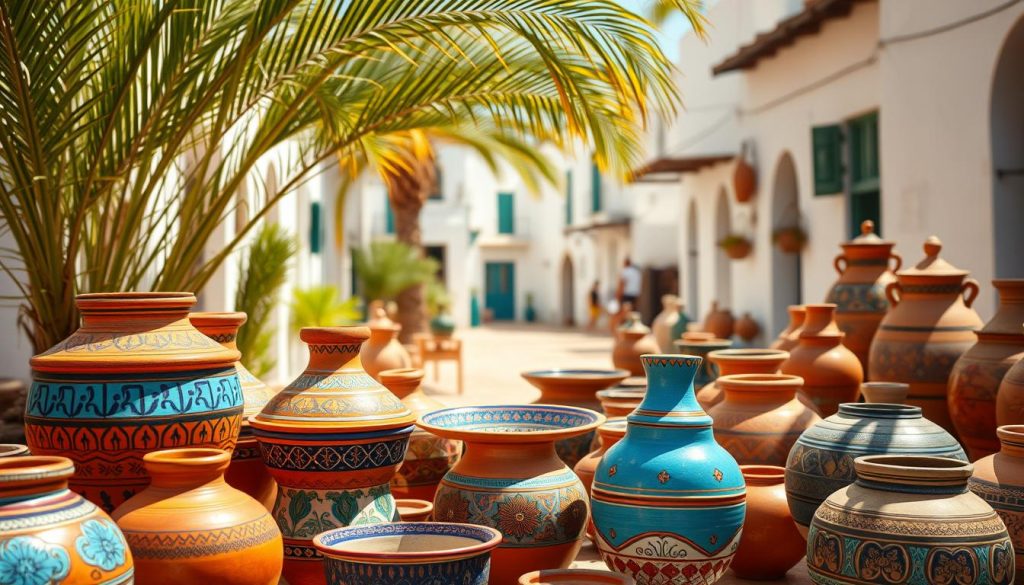
The charming town of Guellala on Djerba Island is famous for its pottery. It’s a must-see for anyone visiting Houmt Souk. Djerban pottery shows the island’s rich culture and skilled craftsmanship.
Distinctive Features of Djerban Pottery
Djerban pottery stands out with its earthy colors and traditional designs. Each piece tells a story of the island’s cultural influences, making them truly unique.
Guellala Village: The Pottery Capital
Guellala Village is the heart of Djerba’s pottery scene. Visitors can see artisans creating beautiful ceramics in workshops.
Practical and Decorative Ceramic Pieces
Houmt Souk offers a wide range of ceramics. You can find everything from useful items like cookware to beautiful vases and ornaments.
Packing Tips for Fragile Purchases
When buying pottery or ceramics, pack them carefully to avoid damage. Use bubble wrap or cloth to protect your items.
| Type of Ceramic | Characteristics | Price Range |
|---|---|---|
| Traditional Djerban Pottery | Earthy tones, unique designs | $20-$100 |
| Decorative Vases | Intricate designs, colorful | $30-$150 |
| Ceramic Cookware | Practical, durable | $15-$80 |
Jewelry and Silverwork in Houmt Souk
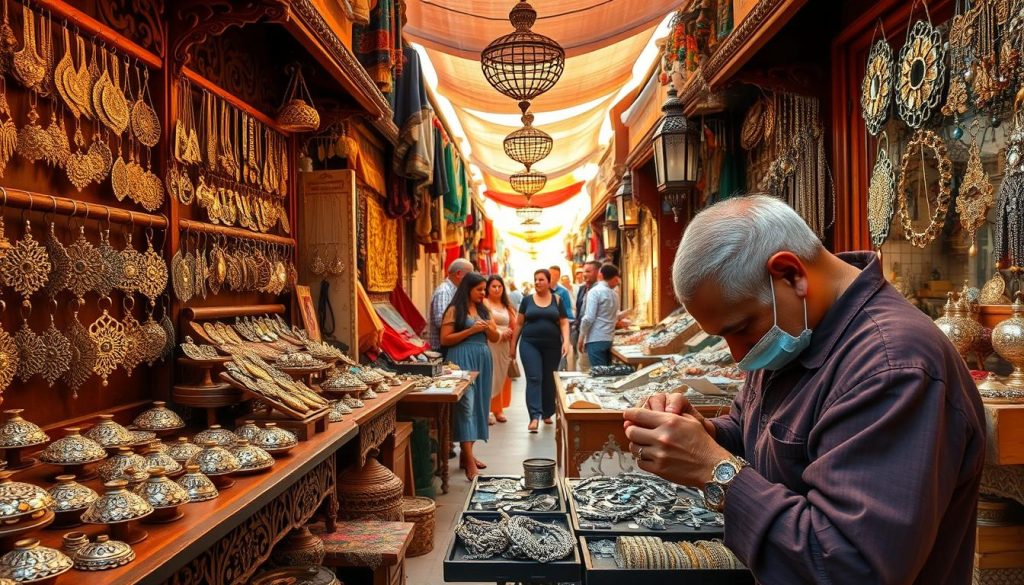
As you explore Houmt Souk’s lively markets, you’ll find amazing jewelry and silverwork. These pieces show off Tunisia’s rich culture. Local silversmiths create stunning items that are both beautiful and meaningful.
Berber-Inspired Silver Jewelry
Houmt Souk is known for its Berber-inspired silver jewelry. These items have traditional Berber designs and patterns. The intricate designs and silver reflect the Berber culture’s rich history and symbolism. Some pieces are made in Tunisia, while the most exquisite ones often come from Morocco.
Filigree Work and Traditional Designs
Filigree work is a key feature of Houmt Souk’s jewelry. This technique involves twisting and shaping silver threads into intricate patterns. The result is a lacy, ornate design that adds elegance to any piece. Traditional designs blend Tunisian and Islamic art, making each item unique.
The Hand of Fatima and Other Symbolic Pieces
The Hand of Fatima is a standout symbol in Houmt Souk. It’s believed to ward off evil and bring good fortune. Other symbolic pieces may include geometric patterns, zodiac signs, and nature-inspired motifs. Each item is not just beautiful but also carries deep meaning.
Buying Tips for Precious Metal Items
When buying jewelry and silverwork in Houmt Souk, know what to look for. Check the quality of the craftsmanship, the purity of the silver, and the uniqueness of the design. Tips include negotiating prices, asking about the item’s origin and materials, and ensuring a fair deal. This way, you can enjoy your shopping and take home a piece that showcases Tunisian craftsmanship.
Leather Goods and Traditional Footwear
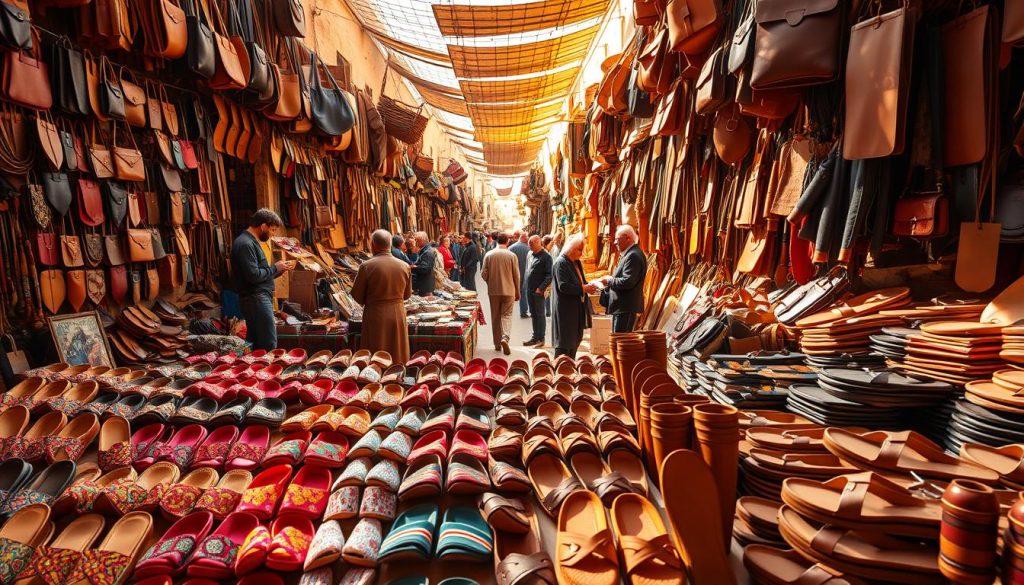
In Houmt Souk’s busy markets, leather goods and traditional footwear are more than items. They show a cultural heritage that’s kept alive and updated with each piece. You’ll see many leather products that highlight the skills of local craftsmen.
Handcrafted Leather Bags and Accessories
Shopping in Houmt Souk is special because of the beautifully made leather bags and accessories. You’ll find everything from elegant satchels to cool wallets. Each piece shows the artisan’s skill and use of old techniques.
When you’re looking at leather goods, check for the rich texture and smooth finish. These signs show the item is well-made.
Traditional Balgha Slippers
Balgha slippers are a big part of North African footwear, and Houmt Souk has some of the best. These slippers are not only comfy but also stylish. You can find them in many colors and designs, each showing the area’s rich culture.
Camel Leather Products
Camel leather products are something special. Camel leather is tough and has a unique texture, making it loved by leather fans. In Houmt Souk, you can find camel leather bags, belts, and more. These items are both useful and fancy.
Quality Assessment for Leather Products
When buying leather goods, checking the quality is key. Look for even stitching, rich colors, and a smooth finish. Also, ask the seller about the materials and how they were made. This helps ensure you get a real, high-quality item.
Shopping for leather goods and traditional footwear in Houmt Souk is exciting. Make sure to visit the best stores and follow local tips. With these suggestions, you’ll be a smart shopper in this lively market. You’ll know how to find the best items in Houmt Souk, thanks to this guide.
Culinary Souvenirs: Food Products and Spices
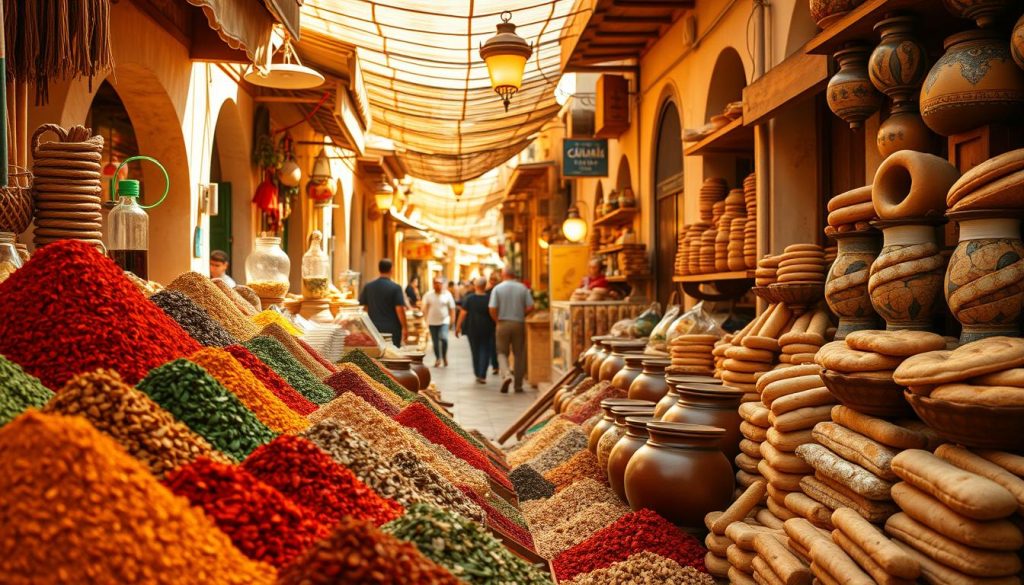
As you explore Houmt Souk’s vibrant markets, you’ll find a treasure trove of culinary delights. These markets are filled with local food products and spices that make perfect souvenirs.
Local Olive Oil and Preserved Olives
Tunisian olive oil is renowned for its rich flavor and quality. You’ll find various olive oils and preserved olives in the markets. These make great souvenirs. Always check the authenticity and quality before buying.
Dates, Nuts, and Dried Fruits
Dates, nuts, and dried fruits are plentiful in Houmt Souk. They’re not only tasty but also healthy. You can find them in different packaging, making them easy to take home.
Spice Blends and Harissa
Tunisian cuisine is famous for its bold flavors, thanks to spice blends and harissa. You can find these in the markets. They’re perfect for adding a Tunisian twist to your cooking.
Customs Considerations for Food Items
When buying food souvenirs, know the customs rules for edible goods. Check the allowed amounts and any special requirements before you buy.
Navigating Prices: Bargaining Tips and Fair Trade Practices
Shopping in Houmt Souk means learning to bargain. The markets here have prices that can change a lot. The first price you hear is usually higher than what the seller wants.
The Art of Haggling in Tunisian Markets
Bargaining in Houmt Souk is an art. It needs patience, respect, and strategy. First, know the market value of what you want. Be ready to leave if the price is not good.
Vendors expect you to negotiate. Try to find a middle ground. The goal is to agree on a price that works for both sides.
Recognizing Fair Prices for Quality Goods
To get a fair deal, check the product well. For example, look at the weaving and material of handmade textiles. Fair prices show the quality and work put into the item. Here’s a guide for fair prices on some items:
| Item | Average Price Range |
|---|---|
| Margoum Carpets | $50-$200 |
| Handwoven Blankets | $30-$100 |
| Fouta Towels | $10-$30 |
Supporting Ethical Shopping and Artisan Communities
Buying directly from artisans helps local communities. It also supports sustainable tourism. Look for certifications or ask about the product’s origin.
Tax Refunds and Documentation for Valuable Purchases
For big buys, you might get a tax refund. Make sure you get the right papers from the seller. Know how to get your refund before you leave Tunisia.
Conclusion: Making the Most of Your Houmt Souk Shopping Experience
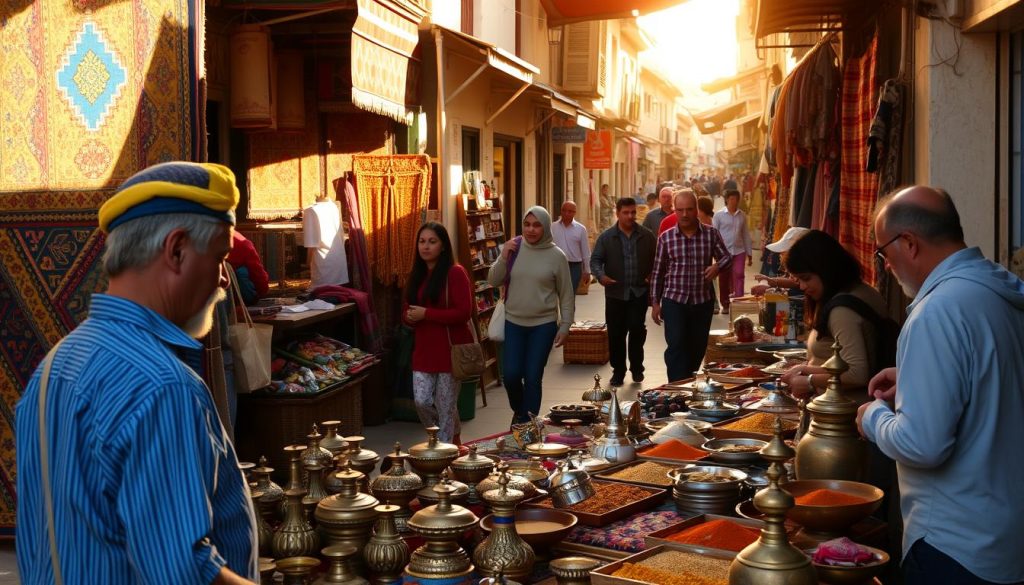
Exploring Houmt Souk’s markets can be amazing with a good Houmt Souk shopping guide. It lets you see the area’s rich culture and unique shopping finds. This Tunisian hub is full of surprises.
Knowing Houmt Souk’s history and local customs makes your visit better. It helps you dive into the local culture. You’ll enjoy your time in the markets more.
Houmt Souk offers a wide range of products like textiles, pottery, jewelry, and leather goods. These items show the area’s long tradition of craftsmanship. As you wander the markets, talk to vendors, try to bargain, and soak in the lively vibe of shopping in Houmt Souk.
Approaching the Houmt Souk shopping experience with an open mind is key. You’ll get unique souvenirs and unforgettable memories. This destination is truly captivating.