Exploring Haa Valley’s Unique Festivals and Ceremonies
Imagine stepping into a world where vibrant festivals and ceremonies await you. Haa Valley in Bhutan is a hidden gem filled with these special events. It’s a place where you can dive deep into Bhutan’s rich heritage.
In Haa Valley, you’ll find festivals like the Haa Summer Festival. These events are more than just celebrations. They bring the community together through music, dance, and food. It’s a true taste of Bhutan’s culture.
Introduction to Haa Valley
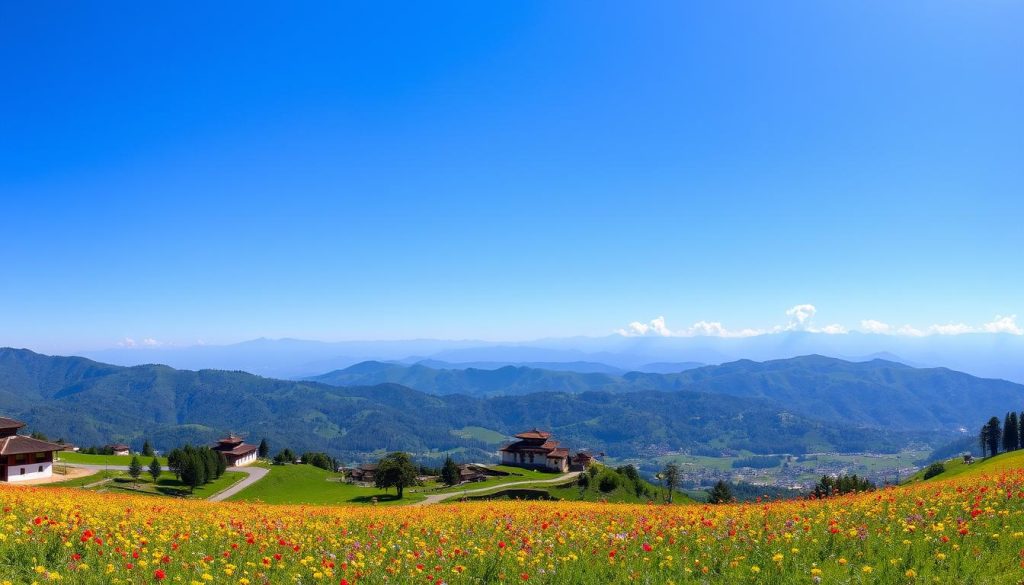
Haa Valley is a hidden gem in southwestern Bhutan. It offers breathtaking landscapes and a rich cultural tapestry. Travelers can explore its pristine environment and spiritual significance. The journey starts from Paro International Airport, about 65 kilometers away.
While visiting, you’ll see stunning natural beauty. The valley has vibrant green fields and majestic mountains. Key historical sites like Lhakhang Karpo and Lhakhang Nagpo show the area’s rich history and tradition.
The community welcomes you to join local festivities, like the Haa Summer Festival in July. This event celebrates traditional culture with performances, local food, and crafts. It’s a great way to learn about this remarkable region.
| Location | Altitude (meters) | Distance from Thimphu (km) | Driving Time (hrs) |
|---|---|---|---|
| Paro | 2,250 | 65 | 1.5 |
| Thimphu | 2,350 | 112 | 1.5 |
| Punakha | 1,250 | approx. 130 | 2.5 |
| Taktshang Goemba | 3,120 | – | 4-hour trek |
Your adventure in Haa Valley connects you with Bhutan’s essence. Discover unique traditions and untouched landscapes. It’s a remarkable experience in your journey through Bhutan.
Discovering the Rich Cultural Heritage of Haa Valley
Haa Valley is a treasure in Bhutan, filled with rich culture and traditions. It’s a hidden spot, about 65 kilometers from Paro. The area boasts beautiful landscapes, from rolling hills to dense forests.
The valley is surrounded by Mount Jomolhari and Mount Jitchu Drake. These mountains offer stunning views that match the valley’s beauty.
The Haa Summer Festival is a highlight of the valley’s culture. It’s a time of fun and learning about local customs. Visitors can try local food and join in activities that show off Haa Valley’s spirit.
The Lhakhang Karpo and Lhakhang Nagpo temples are key to understanding the valley’s beliefs. These temples hold stories and traditions that show the valley’s spiritual heart. Visiting these sites gives a close look at the community’s values.
Outdoor fun like hiking and biking are also big draws. Activities like the Meri Puensum Nature Trail and the Chele La Pass Challenge are thrilling. They let you see the valley’s beauty and meet friendly locals.
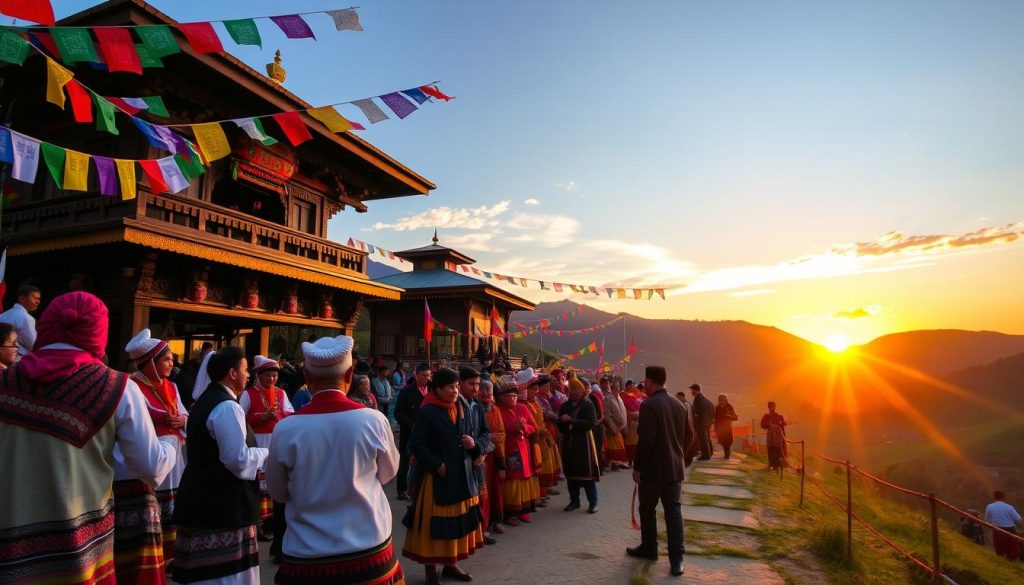
Visitors are encouraged to join in local customs. This follows Bhutan’s “High Value, Low Volume” tourism policy. Remember to stay hydrated and pack for the weather to enjoy your stay.
| Best Time to Visit | Activities | Accommodations |
|---|---|---|
| Spring (March-May) and Autumn (August-November) | Hiking, attending festivals, and exploring local villages | Cozy guesthouses, homestays, and boutique hotels |
| Cool climate year-round | Participating in local crafts and cultural experiences | Lechuna Heritage Lodge amidst apple orchards |
Unique Festivals and Ceremonies Specific to Haa Valley Villages
Haa Valley is known for its lively culture. It hosts festivals that show off the area’s traditions and community spirit. The Haa Summer Festival in July is a big event. It features traditional music, food, and more.
The Haa Summer Festival and Its Significance
The Haa Summer Festival lets visitors see the valley’s nomadic way of life. They can watch archery and yak riding. They also get to try local foods.
The festival is a chance for people to share stories and keep traditions alive. It lets everyone feel the true spirit of Haa Valley.
Traditional Bhutanese Dance and Music During Festivals
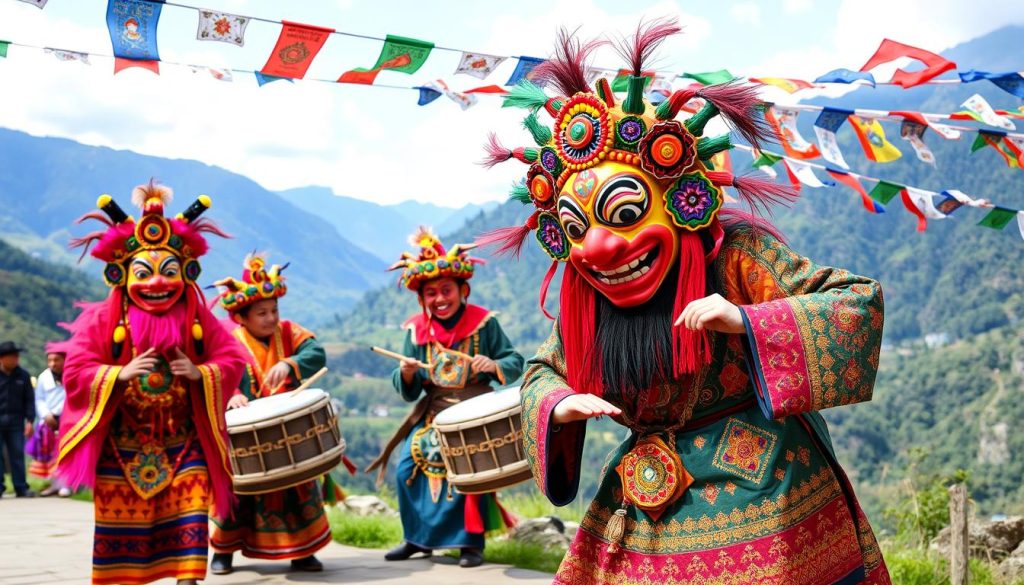
Traditional music is key at Haa Valley festivals. Local dances, with drums and cymbals, tell the valley’s stories. These performances entertain and teach about cultural importance.
The music adds to the festival’s joy. It invites everyone to join in the fun.
Religious Ceremonies and Their Importance
Religious ceremonies are vital in Haa Valley festivals. They strengthen spiritual bonds within the community. These rituals mix with celebrations, making them more meaningful.

| Festival | Date | Main Activities |
|---|---|---|
| Haa Summer Festival | July | Traditional sports, music, culinary delights |
| Punakha Drubchen | February | Reenactments, martial arts showcases |
| Paro Tshechu | March | Masked dances, religious ceremonies |
| Sakteng Festival | June | Dances, archery competitions |
| Thimphu Tshechu | September | Large gatherings, sacred Thongdrol |
The Essence of Haa Summer Festival
The Haa Summer Festival is a lively event in the beautiful Haa Valley. It happens in July, when the valley is full of greenery and colorful flowers. It’s a chance for locals and visitors to dive into Bhutan’s traditions and arts.
Overview of Activities and Attractions
At the festival, you can join in many activities that show off Haa Valley’s culture. These include:
- Archery competitions that celebrate this important traditional sport
- Cultural performances featuring traditional Bhutanese music and dance
- Hands-on workshops to learn about local crafts, including the making of yak hair tents
- Exhibitions of unique customs and practices of the Haa Valley residents
The festival gives a peek into the lives of Haa Valley’s yak herders and farmers. It also supports community engagement and sustainable tourism. It’s a big deal for locals and visitors who love cultural exchange.
Culinary Delights at the Festival
The festival is also a food lover’s dream. You can try traditional Bhutanese dishes like:
- Ema datshi, a famous spicy cheese dish
- Momos, delicious dumplings filled with meat or vegetables
- Local specialties made from products grown by Haa Valley farmers
These dishes are a big part of the festival. They not only taste great but also show off the local culture and traditions. Visitors can really feel the spirit of Haa Valley as they enjoy the food and the festive vibe.
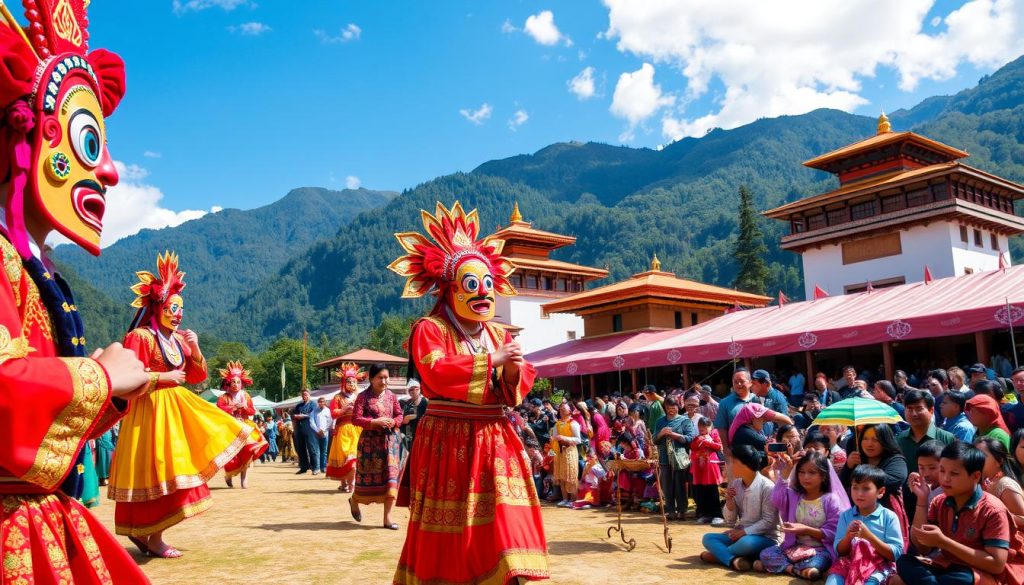
Religious Ceremonies and Indigenous Rituals
Religious ceremonies and indigenous rituals in the Haa Valley add to the area’s cultural richness. Throughout the year, monasteries and temples host various events. These show the spiritual practices that locals cherish deeply.
During festivals, people come together to celebrate these spiritual moments. They create a sense of unity and connection. Activities include recitations, prayers, and offerings to deities, highlighting the spiritual importance of these times.
You might see masked dances by monks and traditional music. This shows the deep spiritual meaning of these events. The locals’ respect for these ceremonies shows their dedication to their cultural heritage.
By joining in these traditions, you get to see the unique spiritual practices of the Haa Valley. The mix of community involvement and spiritual devotion makes for a truly enriching experience.
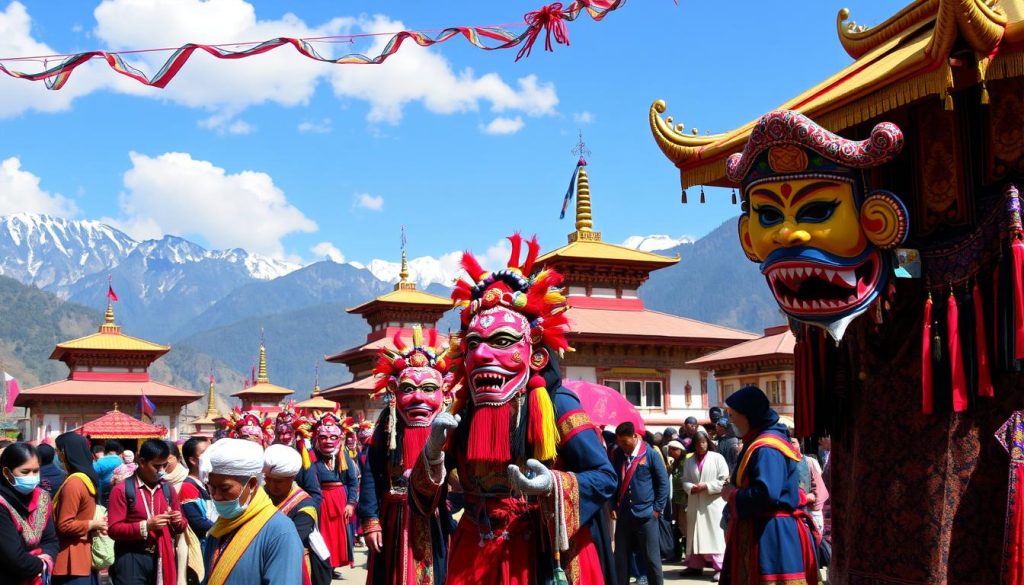
Local Customs and Practices During Haa Valley Festivals
Exploring the local customs in Haa Valley during festivals can make your visit more meaningful. Traditional clothing is a big part of these celebrations. The community plays a key role, showing off their traditions to visitors.
Clothing and Attire at Festivities
At festivals, traditional clothing from Bhutan is on full display. Men wear the Gho, a long robe that shows their cultural pride. Women wear the Kira, a colorful dress that represents grace and heritage. These outfits add to the festival’s beauty, showing off the local customs of Haa Valley.
Community Involvement and Participation
In Haa Valley, festivals bring people together. Communities work together to plan events, showing their hospitality. By joining in traditional rituals, visitors can learn about local life.
Festivals are a chance for bonding and strengthening community ties. They also help visitors understand the local culture better. Every dance, song, and craft display shows the vibrancy and strength of local traditions.
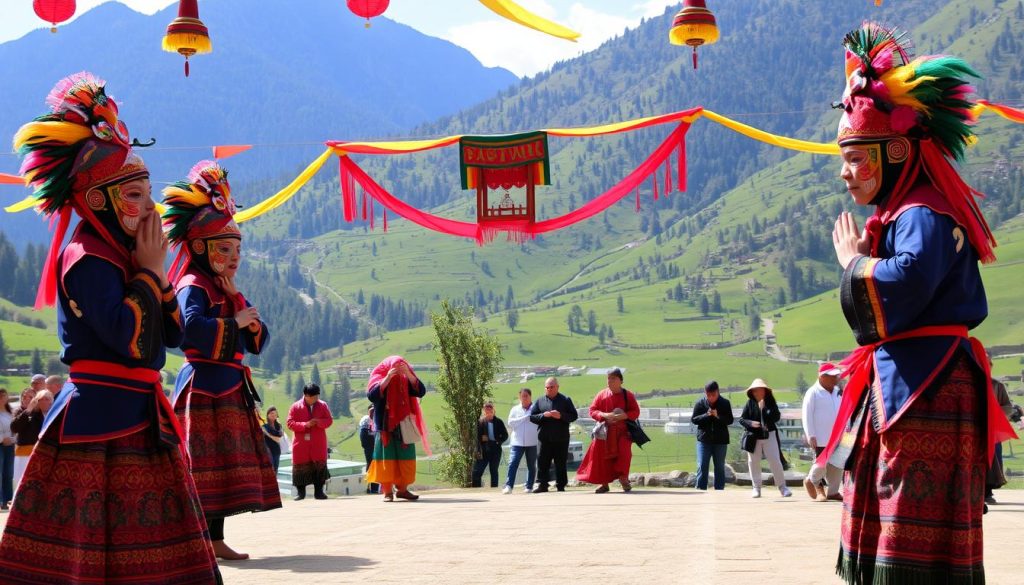
Annual Festivities Celebrated in Haa Valley
Annual festivals in Haa Valley are vibrant displays of the region’s rich culture and traditions. These events strengthen community bonds and attract visitors eager to see Bhutan’s unique customs. The Wangdue Tshechu Festival and Ura Yakchoe festival are notable for their celebration of local heritage and spirituality.
The Wangdue Tshechu Festival
The Wangdue Tshechu Festival is a significant event in Bhutanese culture. It honors Guru Rinpoche with masked dances that tell spiritual stories. The festival brings together locals and tourists to enjoy traditional songs and dances.
The atmosphere is filled with joyous celebrations. These honor spiritual teachings and community spirit.
The Ura Yakchoe Festival
The Ura Yakchoe festival showcases traditional practices through colorful displays and performances. It takes place around the 12th-16th days of the third lunar month. Visitors can observe ancient rituals and participate in activities.
Attendees can try traditional dishes and watch captivating dance and music performances. This festival offers an immersive experience of Haa Valley’s cultural heritage.
| Festival | Dates in 2024 | Key Features | Significance |
|---|---|---|---|
| Wangdue Tshechu Festival | September 11-13 | Masked dances, traditional music | Celebration of Guru Rinpoche’s life |
| Ura Yakchoe Festival | April 20-24 | Local customs, traditional dishes | Showcasing ancient rituals and practices |
| Haa Summer Festival | July 14-15 | Traditional sports, local crafts | Highlighting nomadic herder lifestyle |
Nature and Outdoor Activities During Festivals
When you visit Haa Valley, the festivals are a great chance to see the beautiful nature. You can go on guided walks through green forests and lovely landscapes. These walks let you see the amazing plants and animals of Haa Valley.
If you love birds, you’ll love Haa Valley. You might see the elegant black-necked crane in its home. Walking by the water or on trails, you’ll see lots of colorful plants and animals.
Eco-tourism in Haa Valley is growing. Local guides offer many outdoor activities. You can hike to peaceful spots or enjoy a picnic. These activities make your trip special and help protect the environment.