Explore Turks and Caicos Ecological Reserves
Have you ever wondered about the hidden treasures of the Turks and Caicos ecological reserves? They protect some of the most stunning landscapes and rich Caribbean biodiversity on Earth. These reserves are not just homes for diverse wildlife. They are also crucial for keeping ecosystems healthy.
The Turks and Caicos Islands boast three national parks and several nature reserves. They offer unique opportunities for ecotourism and wildlife watching. Places like Grace Bay Beach and Conch Bar National Park on Middle Caicos let you connect with nature. They also support conservation efforts.
By visiting these areas, you help keep them pristine. Activities like littering and motorized boating are banned. This ensures these ecological havens stay untouched and alive.
Let’s explore the wonders of these protected areas together. We’ll see how they help maintain the ecological balance of the Caribbean.
Introduction to Turks and Caicos Ecological Reserves
The Turks and Caicos Islands are a stunning archipelago known for their unique ecosystems and rich biodiversity. These islands have Turks and Caicos ecological reserves to preserve natural habitats. As you explore, you’ll see how these efforts protect native flora and fauna and offer educational opportunities for visitors.
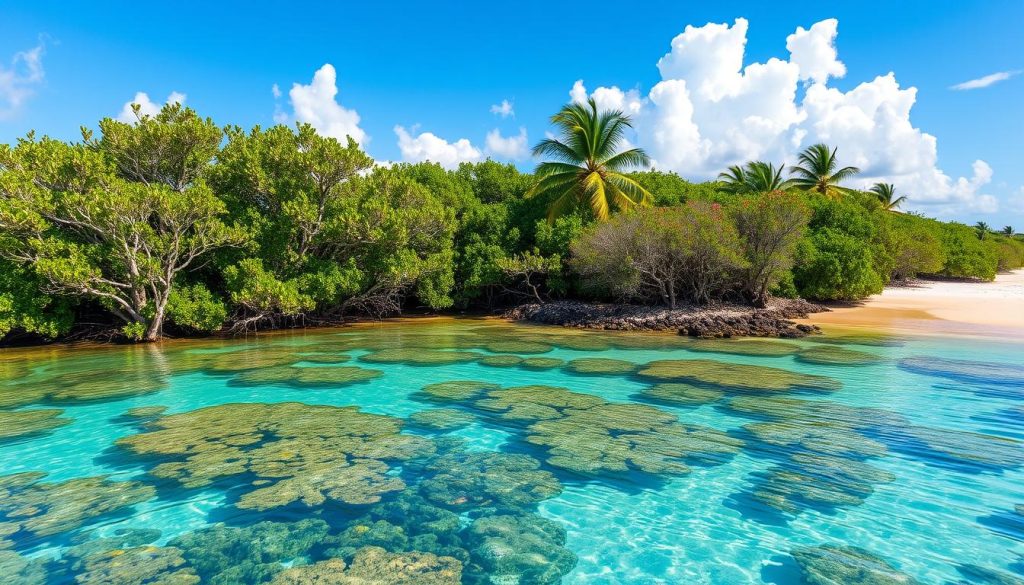
The islands rise about 10,000 feet from the Atlantic Ocean underwater plateau, creating beautiful but shallow Caicos Banks waters. The land is mostly low-lying, with Blue Mountain and Flamingo Hill being the highest at around 156 feet. This coastal landscape adds to the ecological diversity, with mangrove wetlands across all main islands serving as essential nurseries for marine life.
Despite their natural beauty, challenges exist. Tourism and development put pressure on these ecological reserves, threatening the conservation of threatened species. For example, overfishing has led to significant declines in conch and lobster populations, raising alarms among conservation groups. Illegal activities like flora theft and bulldozing in essential habitats also threaten these vital ecosystems.
The ongoing conservation efforts in Turks and Caicos aim to address these issues. They focus on protecting endangered species like the Turks and Caicos Islands rock iguana and the curly-tailed lizard. Community awareness and active involvement are key to preserving these unique ecosystems. This ensures that future generations can appreciate the beauty and biodiversity of this enchanting destination.
| Island Feature | Details |
|---|---|
| Geographical Elevation | Highest points: Blue Mountain & Flamingo Hill (156 feet) |
| Coastal Features | Mainly composed of broken-down shells and coral |
| Distance from Coast | Maximum 2 miles inland at Kew on North Caicos |
| Common Ecosystems | Mangrove wetlands, marine environments |
| Threats to Conservation | Overfishing, illegal land clearing, and development |
| Protected Species | Turks and Caicos Islands rock iguana, curly-tailed lizard |
Overview of National Parks and Nature Reserves
Turks and Caicos boasts three national parks and many nature reserves. These include Princess Alexandra National Park, Chalk Sound National Park, and Northwest Point National Park. Laws strictly protect these areas, banning fishing and shell collecting.
The parks and reserves cover 154,058 km² in the exclusive economic zone. This vast area supports a wide range of biodiversity. The islands receive varying amounts of rain, from 21 inches in the east to 40 inches in the west, fostering lush habitats for wildlife.
Over 1.3 million tourists visited in 2016, boosting the local economy. It’s crucial for tourism to respect conservation efforts to keep the islands beautiful. Coral reefs alone add about US$18 million to the GDP each year.
Despite efforts, challenges like habitat loss and illegal activities persist. Finding a balance between tourism and conservation is key. This balance will help preserve the beauty of Turks and Caicos for the future.
| National Park | Area (km²) | Key Features | Protection Level |
|---|---|---|---|
| Princess Alexandra National Park | Approx. 300 | Coral reefs, mangrove wetlands | High |
| Chalk Sound National Park | Approx. 1,300 | Secluded beaches, lagoon | High |
| Northwest Point National Park | Approx. 5,000 | Coastal cliffs, diverse wildlife | High |
Princess Alexandra National Park
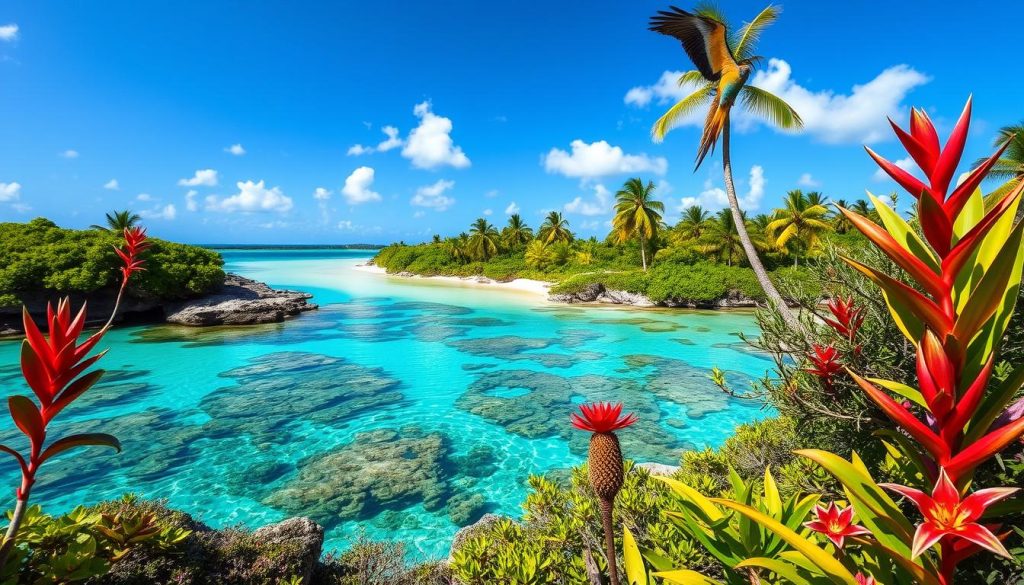
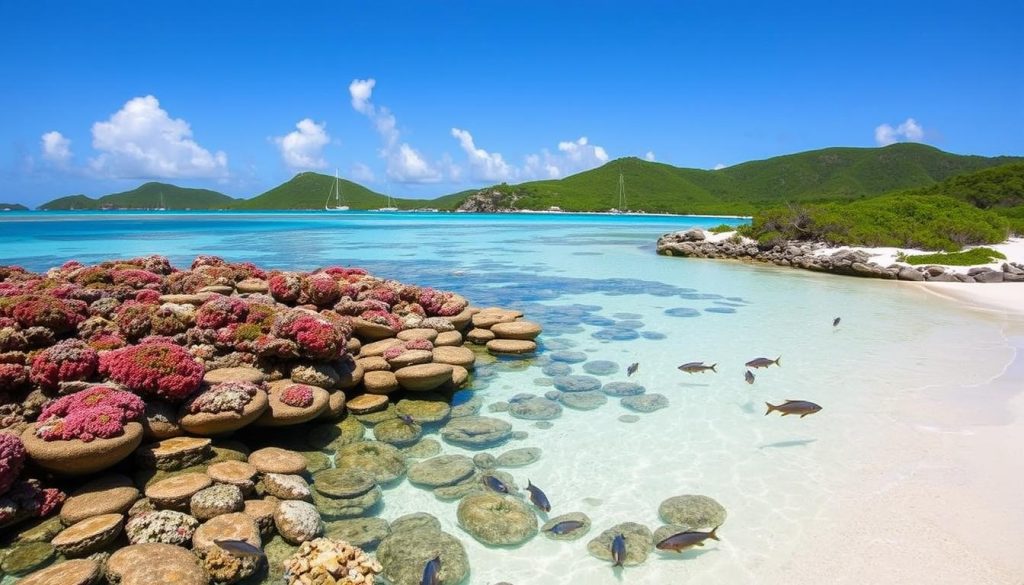
Princess Alexandra National Park was set up in 1992. It covers 6,532 acres along Providenciales’ northern coast. It boasts some of the best beaches, like Grace Bay Beach and Leeward Beach. These beaches are known for their clear waters and colorful coral reefs.
The park is a home for marine life, with over a dozen famous dive sites. It also protects the endangered Turks and Caicos Islands rock iguana on Little Water Cay. Its underwater world and beautiful shores make it a treasure in Turks and Caicos.
Highlights of the Park
The park’s highlights are amazing. Visitors can enjoy:
- Grace Bay Beach and Leeward Beach
- Bight Reef (Coral Gardens) for snorkeling enthusiasts
- The iguana sanctuary on Little Water Cay
- Extensive barrier reefs supporting marine biodiversity
It’s a place for outdoor enthusiasts to explore. It also shows the need to protect nature.
Ecological Importance
The park’s ecological role is vital. It supports many species and helps with marine conservation. Here’s why it matters:
- Habitat for endangered species, like the Turks and Caicos rock iguana
- Diverse marine ecosystems crucial for biodiversity
- A vital barrier reef system, supporting marine life abundance
- Regulated activities, including a strict speed limit for power vessels, protect the underwater environment from reckless behaviors
Despite challenges like declining conch populations and invasive lionfish, the park is key. It helps keep marine and coastal ecosystems safe. With its special features and protection, Princess Alexandra National Park is a vital part of Turks and Caicos’ marine protected areas.
Chalk Sound National Park
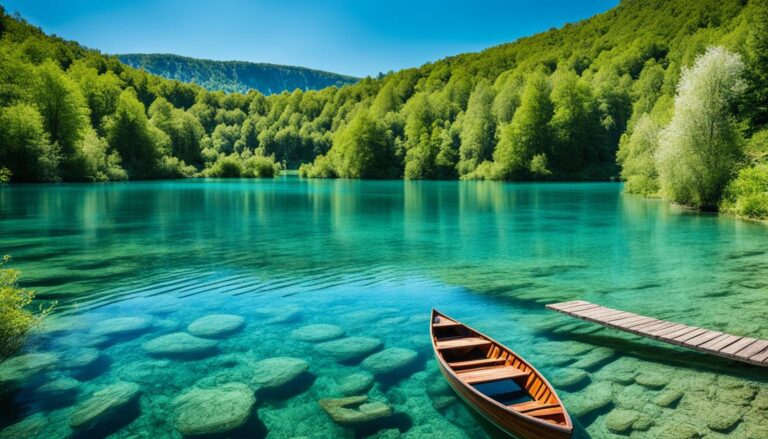
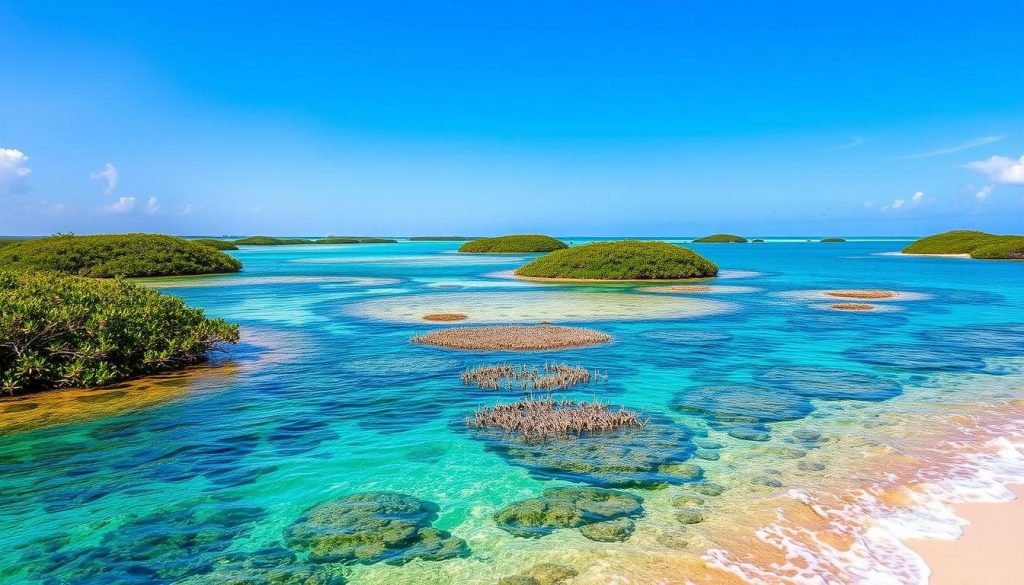
Chalk Sound National Park is a treasure in the Turks and Caicos Islands. It draws visitors with its breathtaking turquoise lagoon and beautiful scenery. Here, you can enjoy nature while taking part in various activities.
Recreational Activities
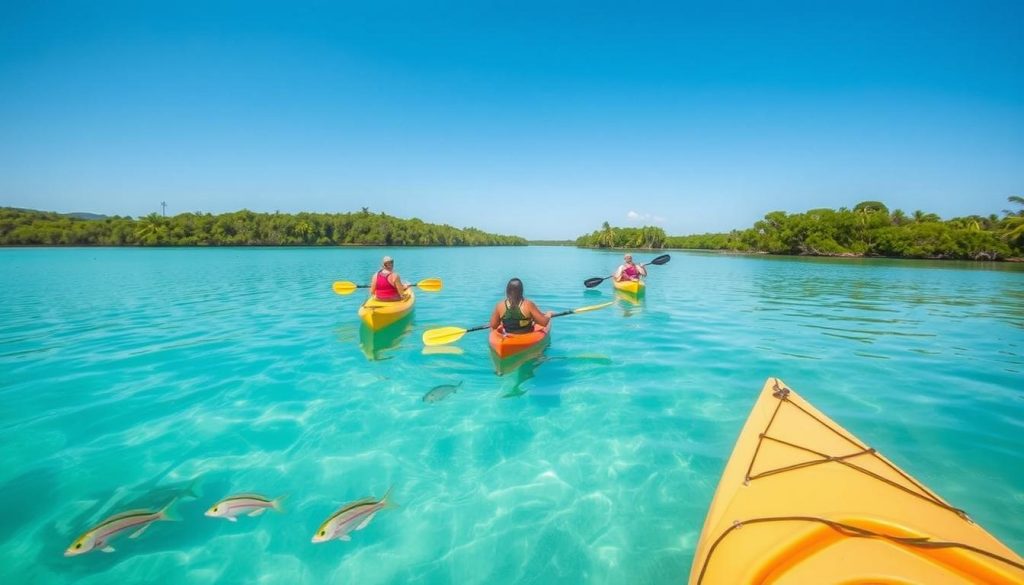
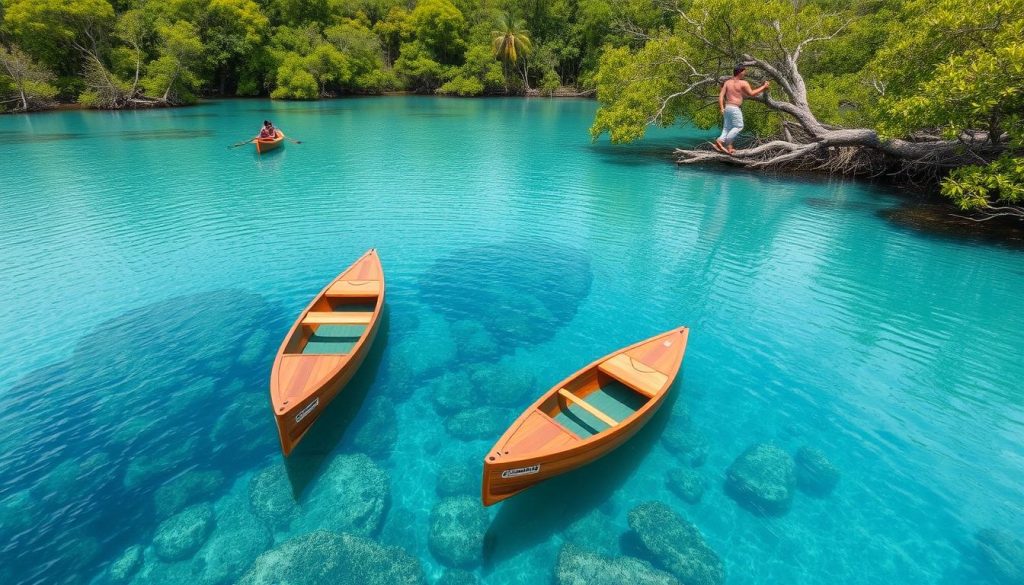
The park’s calm waters make it perfect for kayaking and paddleboarding. Many villas offer free kayak rentals. This lets you explore the lagoon smoothly, best on sunny days.
Las Brisas Restaurant, part of Neptune Villas, is the only place to rent kayaks. Since there’s no public transport, having a car is key to see everything.
Unique Features of the Lagoon
Chalk Sound’s lagoon is special, with ironshore coasts and marine limestone formations. These support salt-resistant plants. The shallow waters are home to vibrant marine life, great for snorkeling.
But, watch out for coral sumac trees. Their sap can cause skin irritation. The area’s beauty is at risk from uncontrolled development, so we must protect it.
It’s important to respect the wildlife here. Feeding rock iguanas is banned, with harsh penalties for offenders. This rule helps keep the park’s unique animals and plants safe.
Choosing eco-friendly tourism helps your visit and supports conservation. This way, Chalk Sound will remain a stunning place for years to come.
Northwest Point National Park
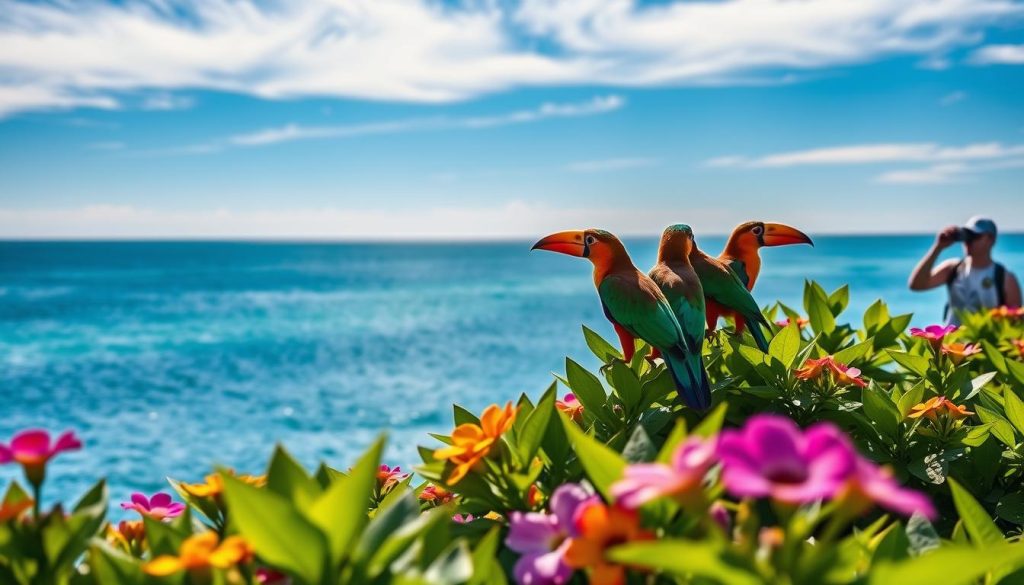
Northwest Point National Park is a top spot for birdwatching in Turks and Caicos. Its rugged coastline and secluded coves are perfect for birds. Birdwatchers can see many species here, from common to rare.
Best Birdwatching Spots
Northwest Point has many great places for birdwatching. You can see:
- Ospreys
- Brown Pelicans
- Terns
- American Oystercatchers
- Gulls
- Green Herons
- Yellow-crowned Night Herons
- Reddish Egrets
- Stilts
- Warblers
- Ducks
Rare birds like merlins and Caribbean flamingos can also be seen. This makes Northwest Point a true birdwatcher’s dream.
Geological Significance
The geology of Northwest Point is truly remarkable. Its limestone formations are shaped by nature over thousands of years. These formations and diverse ecosystems add to the Caribbean’s wetland biodiversity.
Visitors should be careful at Northwest Point. There are dangers like strong currents and sharp rocks. It’s also important to follow rules to protect the environment. Stay on paths and respect the wildlife and their home.
Frenchman’s Creek and Pigeon Pond Nature Reserve
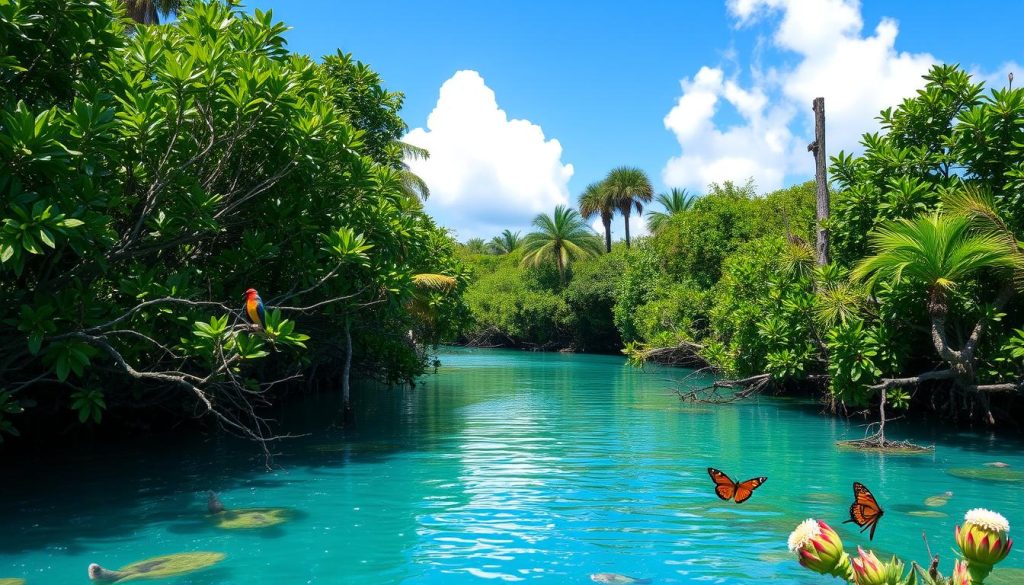
Frenchman’s Creek and Pigeon Pond Nature Reserve is the biggest protected area on Providenciales. It’s about 2 by 4 miles big. This place has mangrove wetlands, sea cliffs, and saline ponds. It’s home to a wide variety of life, important for the area’s health and conservation.
Diverse Ecosystems
The reserve has different ecosystems that support many animals. These areas are perfect for different species to live and thrive. You might see:
- Mangrove wetlands that protect and help marine life grow.
- Saline ponds that draw in birds and water creatures.
- Sea cliffs that are homes for many birds.
This mix of ecosystems is key to keeping the area’s biodiversity strong. It shows how important places like Caribbean wildlife sanctuaries are for saving the planet.
Protected Species
Many species live safely in this reserve, showing why conservation is so vital. Some of these include:
- The endangered roseate tern, known for its beautiful look.
- Sea turtles that come to nest on the untouched beaches.
- Migratory birds that use this place as a stop during their travels.
Thanks to rules that keep fishing and collecting marine life out, these animals are safe. This means future generations can also enjoy the beauty and variety of Frenchman’s Creek and Pigeon Pond Nature Reserve.
| Protected Area | Size (acres) | Key Features |
|---|---|---|
| Frenchman’s Creek and Pigeon Pond Nature Reserve | 5,948 | Mangrove wetlands, saline ponds, sea cliffs |
| Princess Alexandra National Park | 9,494 | Grace Bay Beach, diverse marine life |
| North, Middle, and East Caicos Nature Reserve | 144,747 | Lush greenery, rich wildlife |
Marine Protected Areas in Turks and Caicos
Marine protected areas in Turks and Caicos are crucial for the health of the underwater world. They cover about 679 square kilometers. This network of 23 MPAs helps protect marine life, including coral reefs and mangrove forests.
The Ramsar Nature Reserve is the largest area, covering 144,846 acres. It was created in the early 1990s. It’s a home for wildlife like green turtles and lemon sharks. The reserve has open flats and mangrove forests, important for many species.
Efforts in these areas aim to stop harmful activities like commercial fishing. Rules are in place to protect these ecosystems. This lets tourists enjoy activities like kayaking and catch-and-release fishing. They learn about the importance of marine life.
TCI has new rules to protect marine turtles. It’s now illegal to take certain sizes of turtles. This helps keep their populations stable. Researchers use satellite studies to track turtles, helping conservation.
The marine protected areas in Turks and Caicos show how to protect nature and support tourism. They connect visitors with the marine world. This aims to make people appreciate the beauty of these islands.
Wildlife Sanctuaries in the Caribbean
The Caribbean has many wildlife sanctuaries working to save its unique animals and plants. These places are key in helping endangered species. In Turks and Caicos, these sanctuaries are homes for many species, away from city life and destruction.
Endangered Species in the Reserves
The Turks and Caicos rock iguana is a special creature found in these sanctuaries. It faces threats from other animals and losing its home. The sanctuaries keep these iguanas safe and teach visitors about them.
It’s important not to feed them to keep their natural ways. This helps them survive and thrive.
Conservation Efforts and Challenges
Keeping wildlife safe is hard, with tourism and other animals being big problems. Turks and Caicos has 35 protected areas where harmful activities are banned. But, outside threats still harm native animals.
Working together, tour groups and local leaders try to make tourism better. They encourage using safe sunscreens and less waste. Keeping these places safe is key for the future.

| Conservation Challenges | Current Efforts |
|---|---|
| Invasive Species | Implementation of habitat management programs |
| Pollution from tourism | Promotion of eco-friendly tourism practices |
| Loss of Natural Habitat | Expansion of protected areas |
| Regulatory Enforcement | Increased penalties for illegal activities |
Eco-Friendly Tourism Experiences
Turks and Caicos is a great place for eco-friendly tourism. You can find many tours that support sustainable practices. These tours let you enjoy the islands’ beauty while helping the environment.
For example, mangrove kayaking in the Princess Alexandra Nature Reserve is a great choice. It shows how important it is to care for our planet. Local groups like the Big Blue Collective also offer unique experiences that respect the islands’ ecosystems.
With over 35 protected areas, every trip helps us learn about our environment. Whale watching tours with The Humpback Dive Shack are a great example. They follow eco-friendly rules to protect marine life.
Events like the weekly Island Fish Fry let you dive into local culture. They also support sustainable tourism. Animal lovers can walk dogs at Potcake Place K9 Rescue, making their trip meaningful.
Stay at places like Ocean Club West or Beach Enclave for a green stay. They use renewable energy and support local ecosystems. These resorts offer comfort and help the environment and economy.
Environmental Sustainability Practices
In Turks and Caicos, resorts focus on protecting the islands’ unique ecosystems. They use new policies and responsible operations. This helps keep the area beautiful and supports conservation.
Impact of Local Resorts
Beach Enclave is a great example. It’s the lowest density developer on Providenciales. Each villa is built to blend with the island, using natural elements like breezes and rainwater for irrigation. This shows how tourism can respect the environment.
They also care about landscaping. During building, they replanted local plants and used low-maintenance ones. This helps keep the area biodiverse and supports local ecosystems.
Energy saving is key for Beach Enclave. They use solar water heating and efficient air conditioning. They also have room-controlled systems and LED bulbs to cut down on energy use.
- Reduced single-use plastics through water coolers and reusable bottles
- EPA-certified, eco-friendly cleaning products for housekeeping
- Water conservation measures, such as linen changes every three days
- Reef-safe sunscreen products supporting marine conservation
They also teach about protecting marine life. They discourage harmful activities like shell collecting and littering in Marine Parks. This way, resorts offer responsible tourism and help with conservation in Turks and Caicos.
Exploring the Turks and Caicos Wetlands
The wetlands of Turks and Caicos are home to amazing biodiversity. They are key ecosystems for the islands. You’ll find vast mangrove networks on North, Middle, and East Caicos. Chalk Sound National Park in Providenciales has important mangrove habitats.
East Caicos is known for its colorful birdlife. This makes exploring the wetlands a thrilling adventure for nature lovers.
Wetlands are important worldwide, recognized by the Ramsar Convention. They filter water and are nurseries for marine life. But, they face threats from rising sea levels and stronger storms.
Tourism development has harmed mangroves and wetlands. This shows why we need to protect these areas.
The Turks and Caicos National Trust leads in wetland conservation. They work on restoring habitats and protecting key areas. They also monitor these places closely.
They team up with scientists and global groups for studies. Educational programs teach people about wetlands. Eco-friendly tours, like those in Little Water Cay, help people appreciate these ecosystems.
It’s important to know how pollution harms wetlands. The National Trust fights for better environmental policies. They work to protect wetlands and their mangroves, which help during storms.
Conclusion
Turks and Caicos ecological reserves are a true marvel. They show the beauty of nature and the need to protect it. These areas are home to many animals and plants, helping to keep our planet healthy.
When you visit these reserves, you learn to love and respect nature. You see how each part of the ecosystem is important. This helps us understand how to keep everything in balance.
Exploring places like coral reefs and limestone formations is amazing. You see the hard work to save these special places. Local and international groups work together to keep the environment safe.
Your support for eco-friendly tourism is crucial. It helps protect the natural beauty of Turks and Caicos. By caring for these places, we make sure future generations can enjoy them too.