Explore Traditional Burmese Cuisine in Yangon
Have you ever wondered what makes traditional Burmese cuisine so unique? It draws food lovers from around the world to Yangon.
Traditional Burmese cuisine in Yangon is a colorful canvas that shows Myanmar’s rich culture and history. It focuses on cooking techniques, not just ingredients. This endless improvisation of flavors offers a wide range of authentic Burmese dishes to try.
Burmese food is influenced by Thailand, India, and China. It combines different techniques, ingredients, and flavors. This creates meals that not only taste great but also engage your senses.
In this culinary journey, you’ll learn about the use of freshwater fish, a staple protein in Myanmar. The abundance of the Irrawaddy River makes it so. Every dish balances at least three of the five fundamental tastes.
Traditional Burmese dishes aim for a perfect balance of textures and flavors. This results in wholesome, nutritious meals that are key to local food in Myanmar. From street food to fine dining, Yangon’s vibrant tastes are waiting for you to discover.
Introduction to Burmese Cuisine
Traditional Burmese cuisine in Yangon is a mix of vibrant flavors, colors, and textures. It shows the country’s rich cultural diversity. Influenced by Thailand, India, and China, Burmese dishes have a unique taste that stands out in Southeast Asia.
Fresh, natural ingredients are key, with a focus on the cooking process. This allows for creativity and improvisation in every kitchen.
A key feature of authentic Burmese dishes is the balance of five tastes: salty, sweet, sour, bitter, and umami. This is seen in salads like thoke, which add various spices to a main ingredient. Fresh herbs and spices add to the vibrant flavors of these dishes.
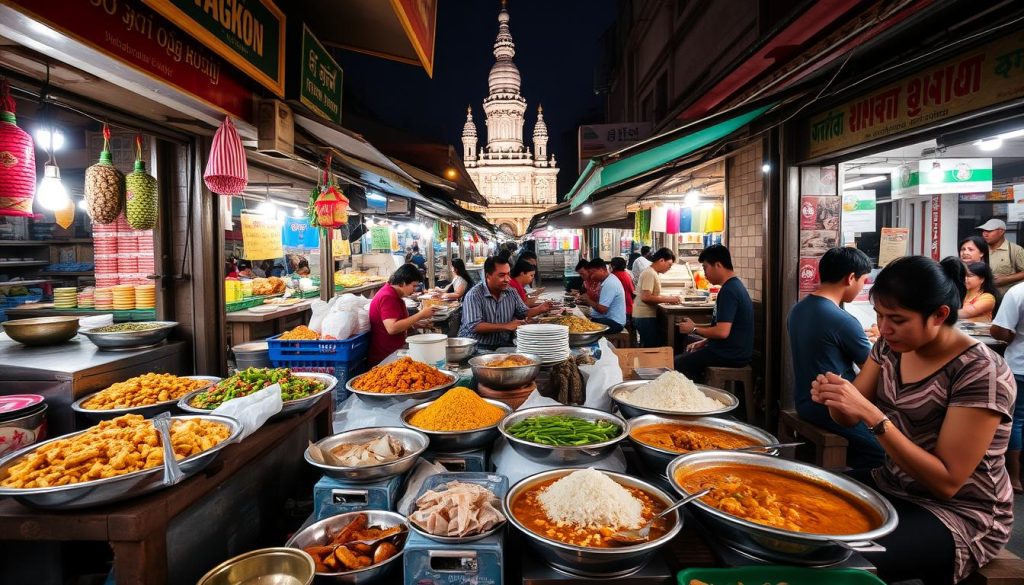
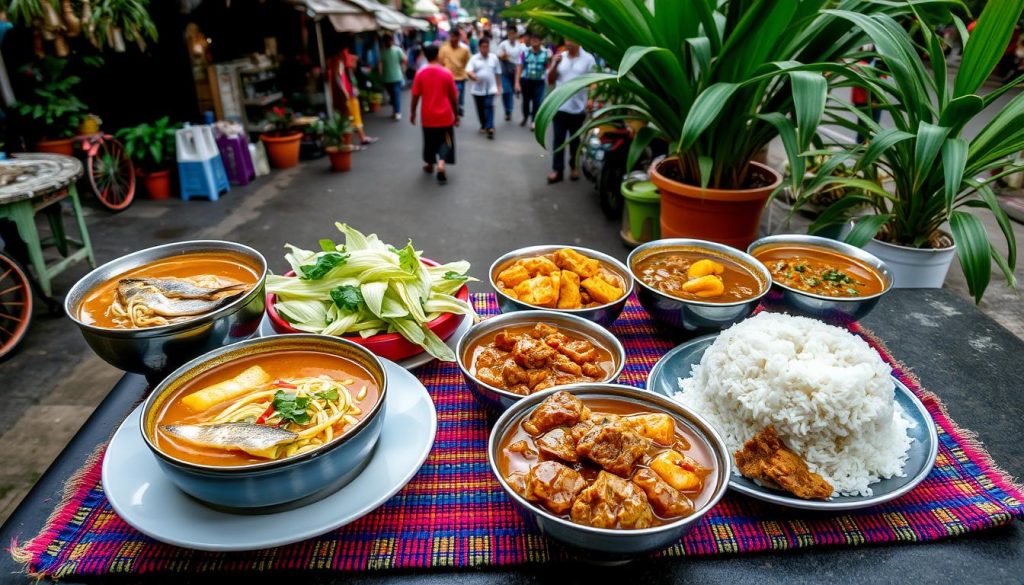
Mohinga, the unofficial national dish, is a favorite for breakfast. Nangyi Thoke, a dry noodle meal, is also loved for its thick rice noodles and toppings. Curries in Yangon are milder but full of flavor, using local meats, fish, and legumes.
The food scene in Yangon is growing, with more top-notch restaurants opening. While many dishes have a Sino-Burmese style, authentic Burmese cuisine offers a unique culinary journey. It’s a must-try for any food lover.
The Influence of Neighboring Countries
The local food in Myanmar is a mix of flavors from China, India, and Thailand. The Bamar people, who are the majority, blend these tastes with their own. The Shan and Chin peoples also add to the mix.
Indian spices make many dishes warm and deep. You can find samosas and biryani, showing this influence. Curries, spices, and breads add to the taste of Myanmar’s food.
China’s mark is seen in ingredients like bean curd and soy sauce. Stir-frying is a common cooking method. This shows how Chinese cooking has shaped Myanmar’s food.
Many people in Myanmar don’t eat beef because of their religion. Instead, they choose other proteins. Ngapi, made from fish or shrimp, is a key ingredient that adds flavor to many dishes.
The table below shows the main influences and dishes in Myanmar:
| Influence | Key Ingredients and Dishes |
|---|---|
| Indian | Samosas, Biryani, Various Curries |
| Chinese | Noodles, Bean Curd, Soy Sauce, Stir-Frying Techniques |
| Thai | Aromatic Herbs, Vibrant Flavors |
Lahpet, or fermented tea leaves, is a unique ingredient in Myanmar. It’s used in many dishes, adding flavor and cultural value. Fresh veggies, fruits, and condiments help cooks make a wide variety of tasty meals.
Key Ingredients in Traditional Burmese Dishes
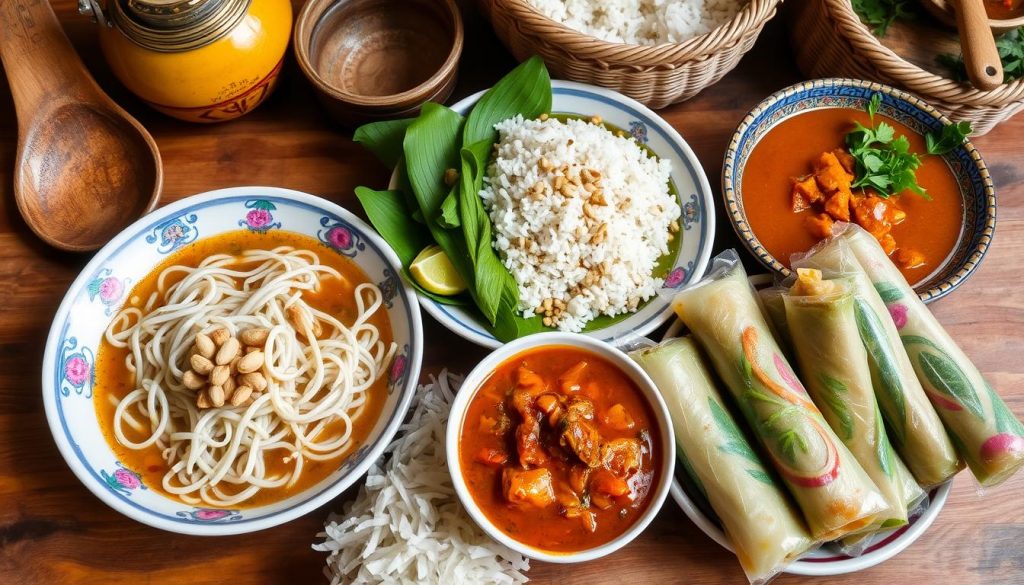
To enjoy the must-try Burmese food, you need to know the key ingredients. In Myanmar, rice is a staple, making it the sixth-largest rice producer in the world. It’s a main part of many meals, showing its importance.
Meat like chicken, pork, and beef are common in Burmese dishes. Freshwater fish and shrimp are big in inland areas. Coastal cities like Sittwe and Mawlamyaing love seafood, using it in many ways.
Ngapi, a fermented fish paste, is a key ingredient. It adds a deep flavor to many dishes. Fresh vegetables and herbs add nutrition and flavor. Lemongrass, ginger, and garlic make dishes aromatic.
Vegetarian dishes are common during Buddhist Lent and Uposatha sabbath days. Tropical fruits add texture and sweetness. This mix of ingredients makes Burmese dishes so diverse.
| Ingredient | Use | Flavor Profile |
|---|---|---|
| Rice | Staple in meals | Neutral |
| Ngapi | Flavor enhancer | Pungent, salty |
| Freshwater Fish | Primary protein in inland dishes | Delicate |
| Chilies | Heat and color | Spicy |
| Lemongrass | Aromatics and flavor | Citrusy |
| Tropical Fruits | Texture and sweetness | Varied |
Must-Try Dishes in Yangon
Exploring Yangon reveals a world of authentic Burmese dishes. These dishes showcase the country’s rich culinary heritage. Three dishes stand out, highlighting the vibrant flavors and unique ingredients of Burmese cuisine.
Mohinga: The National Dish
Mohinga is Myanmar’s national dish, a comforting fish-based soup. It features fine round rice noodles in a flavorful broth. The broth is seasoned with lemongrass and herbs.
Enjoyed mainly for breakfast, it’s available all day. It’s often garnished with crispy fritters and served with lime. This makes it a must-try in Yangon.
Nan Gyi Thoke: Hearty Salad
Nan Gyi Thoke, also known as Mandalay Mont Di, is a favorite. It’s a hearty salad with thick rice noodles, chicken or beef curry, and chili oil. It’s topped with shallots and chickpea powder.
This salad is a favorite among locals. It offers a filling and flavorful option in Yangon’s culinary scene.
Lahpet Thoke: Iconic Tea Leaf Salad
Lahpet Thoke, or tea leaf salad, is an iconic dish in Burmese cuisine. It’s made from fermented tea leaves mixed with fresh vegetables and nuts. This salad offers a unique savory flavor.
It’s often served at social gatherings. This dish is not just a delightful appetizer but also showcases the depth and richness of Burmese cuisine.
Burmese Street Food Experience
The street food in Yangon is vibrant and authentic. You can find many tasty options that suit different tastes. Fried snacks and salads are highlights, showing the culture of street dining in Myanmar.
Kyaw: Fried Snacks
Kyaw includes a variety of fried snacks found in Yangon’s street markets. These snacks are made from fresh veggies or seafood, offering a light and crunchy snack. Each bite is a taste of Burmese street food, making it a standout in Yangon.
Whether you like vegetable fritters or seafood, Kyaw has something for everyone. It’s a great way to satisfy your cravings.
Samosa Thoke: Street-Food Delight
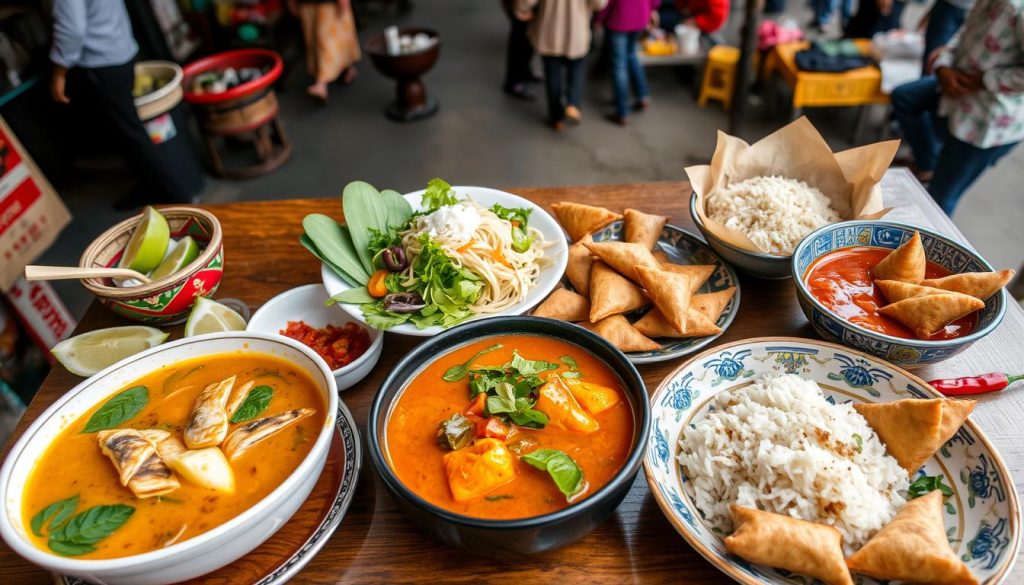
Samosa Thoke is another favorite street food. It features deep-fried samosas filled with potatoes and chickpeas. Served with curry sauce and fresh veggies, it’s a feast for your senses.
This dish captures the essence of Burmese cuisine. Enjoying Samosa Thoke with Kyaw is an unforgettable experience. It lets you explore the best of Yangon’s street food.

Your Guide to the Best Restaurants in Yangon
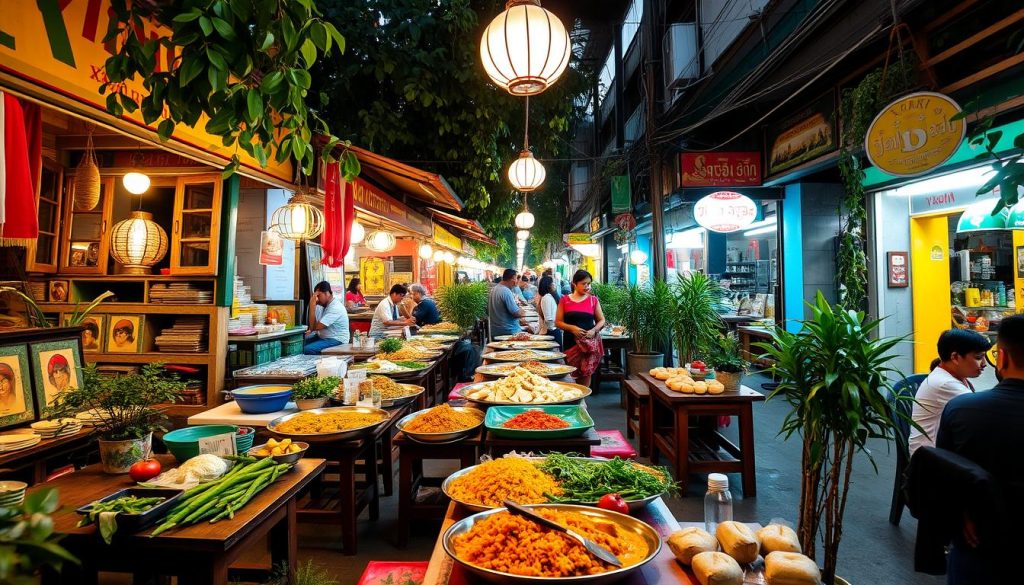
Yangon’s food scene is vibrant and full of local flavors. You’ll find everything from traditional dishes to modern twists. Here are some top places for unforgettable meals:
- Rangoon Tea House: A trendy spot with a bright downstairs and a secret upstairs. It’s perfect for a stylish meal.
- Sharky’s: Focuses on farm-to-table food, using almost all ingredients from its own farms. It’s about quality and sustainability.
- 999 Shan Noodle Shop: Known for the best Shan noodles outside Shan State. It has several locations in Yangon.
- Green Gallery: A small, peaceful place for Thai food away from the city’s noise.
- Pansuriya: A place for art and Burmese curries. It offers a unique cultural experience.
- 50th Street Bar and Grill: A sports bar with comedy and trivia nights. It draws a diverse crowd.
- Feel Myanmar Food: A chain serving traditional Burmese street food in a cozy setting.
- Root: A cafe and bar with fresh Wa food. It has a unique menu in Yangon.
- Win Star: In Sanchaung, it offers a taste of local dining near Chinatown.
Dining hours vary, so you can plan your visits easily. These restaurants stay true to their roots while pleasing both locals and tourists.
| Restaurant | Opening Hours |
|---|---|
| Rangoon Tea House | 07:00 AM – 10:00 PM |
| Sharky’s | Varies by location |
| 999 Shan Noodle Shop | 06:00 AM – 07:00 PM |
| Green Gallery | Varies |
| Pansuriya | Varies |
| 50th Street Bar and Grill | Varies |
| Feel Myanmar Food | Varies |
| Root | Varies |
| Win Star | Varies |
Looking for authentic flavors or the latest trends? Yangon’s restaurants offer a wide range of experiences. Don’t miss trying the local food that makes this city special.
Traditional Burmese Cuisine in Yangon: A Culinary Journey
Exploring Yangon’s food scene is like diving into a world of flavors. Every dish tells a story, showing the mix of cultures that make Myanmar’s food special. Influences from India, China, and Thailand blend together, creating a unique taste experience.
Mohinga is a favorite street food, known as Myanmar’s national dish. It’s a fish soup with noodles, enjoyed from breakfast to dinner. Other dishes like Laphet Thoke and Shan-style Noodles show the variety of Burmese food.
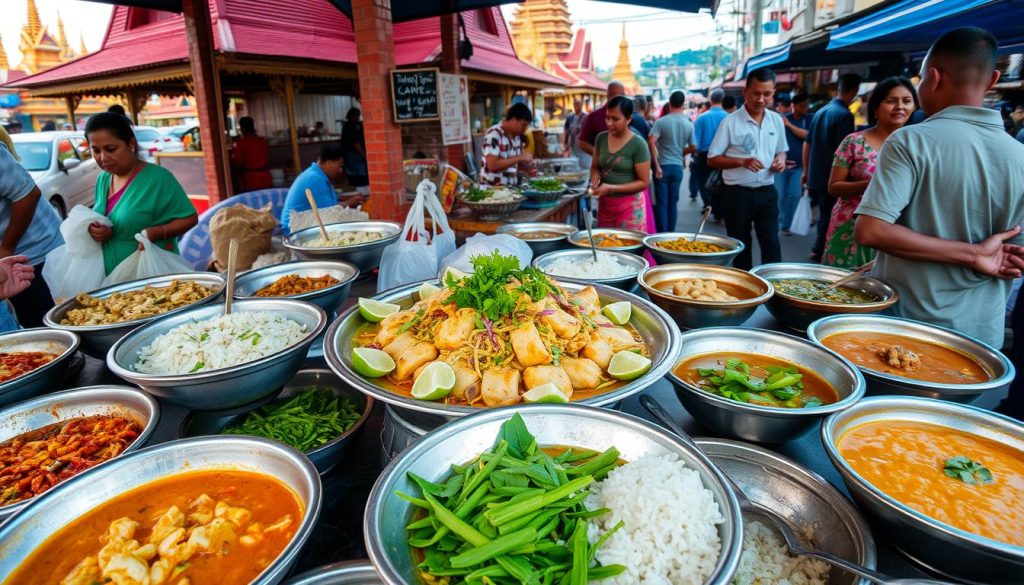
Places like WeTheChefs offer a true taste of Burmese food. It’s a place where locals and visitors can share in the rich flavors. Food is a big part of Burmese culture, bringing people together.
| Dishes | Main Ingredients | Description |
|---|---|---|
| Mohinga | Fish, vermicelli noodles, aromatic herbs | A fragrant soup, often considered the national dish. |
| Laphet Thoke | Tea leaves, peanuts, sesame, garlic | A beloved salad often served at ceremonies. |
| Ohn No Khao Swè | Coconut milk, egg noodles, chicken | A rich curried soup enjoyed with lemon and fish sauce. |
| Burmese Coconut Rice | Coconut milk, rice, onions | A sweet and savory traditional dish. |
Exploring Yangon’s food scene is more than just eating. It’s about celebrating Myanmar’s culture and flavors. Every bite connects you to the heart of this beautiful country.
Exploring Yangon’s Food Scene
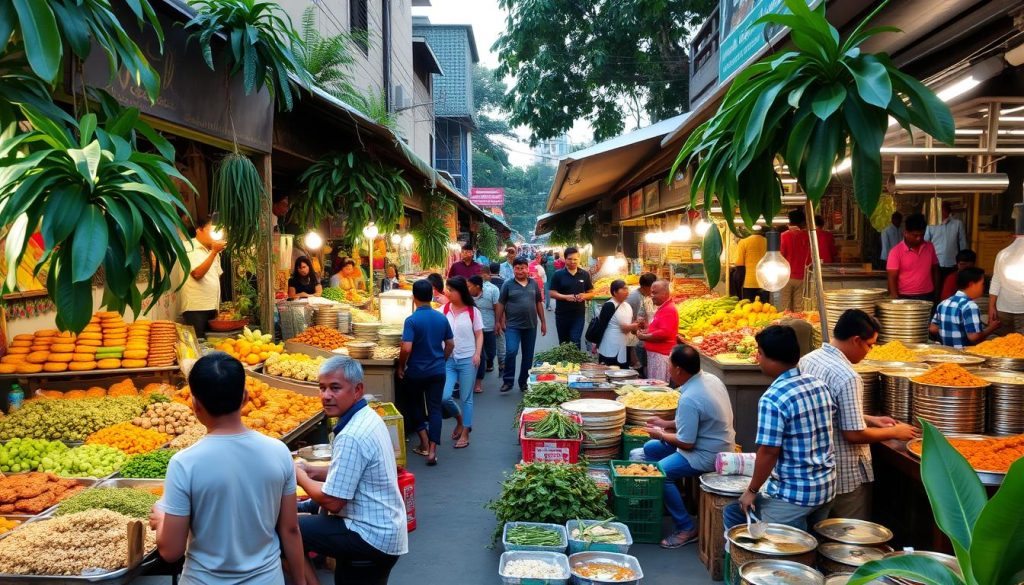
The Yangon food scene is a world of flavors and experiences. It invites you to explore Burmese cuisine. From bustling markets to elegant dining, there’s a lot to try.
Start at Lucky 7 Tea Shop, a 25-year-old spot famous for traditional teas. Here, you can enjoy a cup and soak in the local culture.
Theingyi market is Yangon’s largest traditional market. It’s a colorful place filled with local ingredients and delicacies. Bogyoke Market is another gem, offering shwe aye and traditional Burmese salads. For something different, try Maui Kachin Restaurant, known for Kachin cuisine from Myanmar’s north.
Rangoon Tea House combines Burmese food with tea shop traditions. Padonmar Restaurant offers fine dining in a historic building. Yangon Bakehouse is a social enterprise that provides jobs for local women while serving delicious treats.
19th Street Chinatown is lively, famous for Chinese barbecue and beer. Myaung Mya Daw Cho Family Restaurant serves authentic Burmese food. Pansodan, Yangon’s first Burmese brasserie, offers a modern take on traditional recipes.
Visit 999 Shan Noodle Shop for authentic Shan cuisine since 1978. Aung Thukha Restaurant is great for curry lovers. Botahtaung Harbour is a beautiful spot to watch the sunset on your last night.
Prices in Yangon are reasonable. Dishes like Nan Gyi at Rangoon Tea House cost 6500 ks (about $4.40 USD). Treats like Salted Caramel Brownie with Vanilla Ice Cream are 7500 ks (about $5 USD). This makes exploring the Yangon food scene affordable.
Conclusion
Exploring traditional Burmese cuisine in Yangon is a journey through a rich tapestry of flavors and cultures. Myanmar’s 135 different tribes add to this complex culinary landscape. You can taste influences from India, China, and Thailand in authentic Burmese dishes.
Each dish, from the iconic Mohinga to the beloved Lahpet Thoke, tells a story. It’s about community, tradition, and the connection of diverse ingredients.
As you explore Yangon’s vibrant food scene, you’ll find unique flavors and the importance of communal dining. Whether it’s a simple avocado salad or a hearty rice noodle soup, every meal is special. It invites you to appreciate the cultural richness of traditional Burmese cuisine.
To truly experience the awakening of your taste buds, join in shared meals that define this rich food culture. With each bite of Myanmar’s delicacies, you’re not just enjoying food. You’re embracing the essence of a nation, its people, and its history. Every visit to Yangon promises delicious discovery and lasting memories tied to its incredible culinary traditions.