Explore the Unique Dhaka Architecture Today
Have you ever thought about the stories hidden in the buildings around you? Dhaka’s architecture is a mix of history and culture, full of secrets and tales of strength. It’s a city where ancient forts meet modern wonders, creating a unique blend of styles.
Walking through Dhaka, you’ll see how buildings have been shaped by people and time. The National Parliament House, designed by Louis Kahn, and Baitul Mukarram Mosque, built in 1959, are just a few examples. Each one has a story to tell, waiting for you to explore.
A Glimpse into Dhaka’s Architectural Landscape
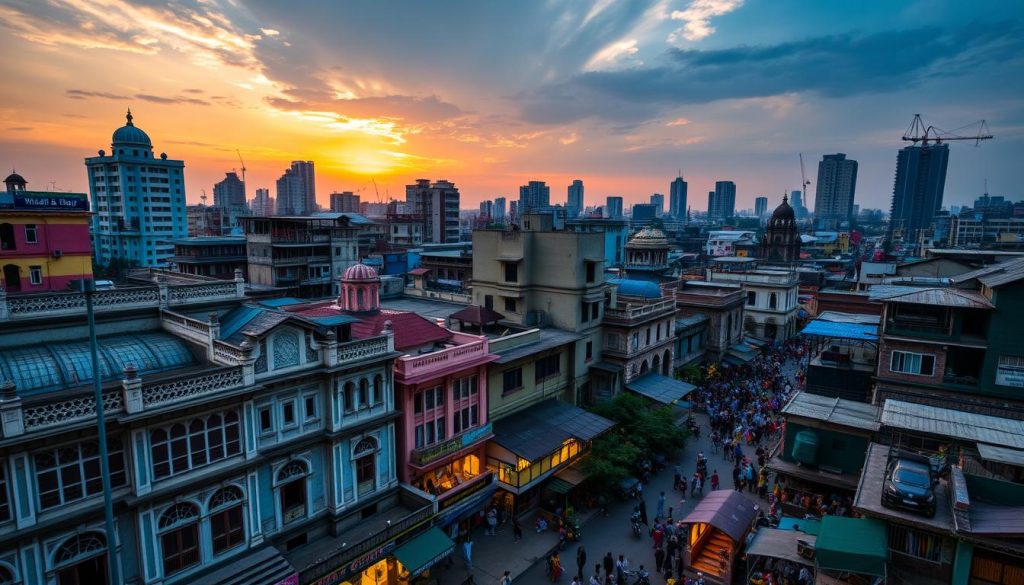
Dhaka’s architecture is a mix of different historical periods. You’ll see influences from Hindu, Muslim, and British times. The city’s buildings are both striking and harmonious.
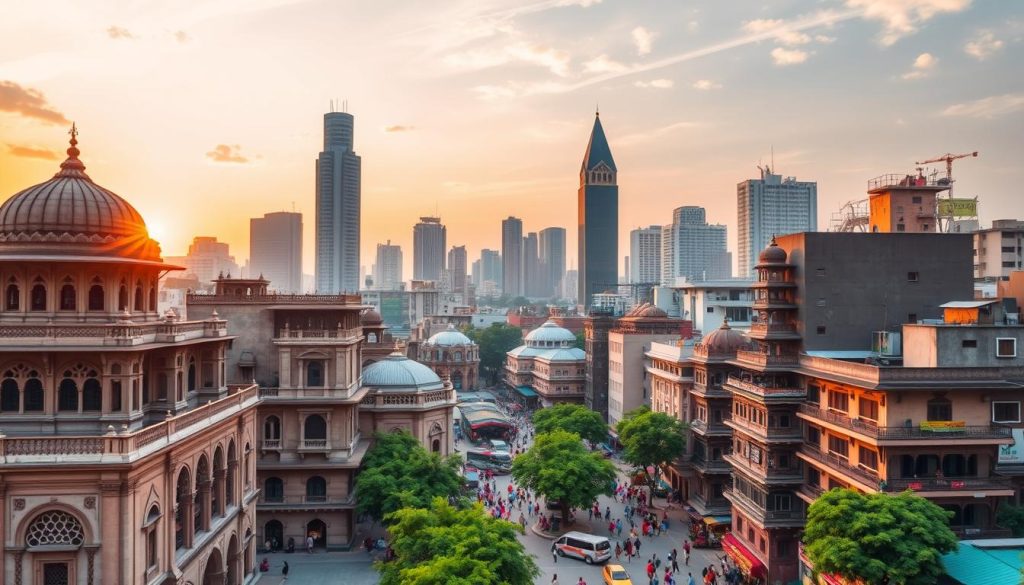
Places like the National Parliament House by Louis Kahn show Dhaka’s love for its past and future. The mix of old and new styles is truly unique. It shows the city’s rich history.
- The Faculty of Fine Arts is a modern marvel by Architect Mazharul Islam.
- Kamalapur Railway Station, designed by Robert Boughey, adds a special touch to the skyline.
- Bangladesh National Archives and Library has a seven-storey core supported by strong walls.
- The seven-story Gulshan Society Jame Masjid beautifully combines modern and Islamic designs.
- Mayor Mohammad Hanif Jame Mosque shows Rafiq Azam’s take on Mughal architecture.
- Bait Ur Rouf Mosque uses terracotta brick and has creative features like perforated ceilings.
Visiting Dhaka landmarks is a rewarding experience. Sites like Lalbagh Fort Complex and Bara Katra are must-sees. They showcase traditional Mughal architecture and layouts.
Walking through Dhaka, you’ll see its architectural history come alive. It’s a place where design and culture meet.
Historical Significance of Dhaka Architecture
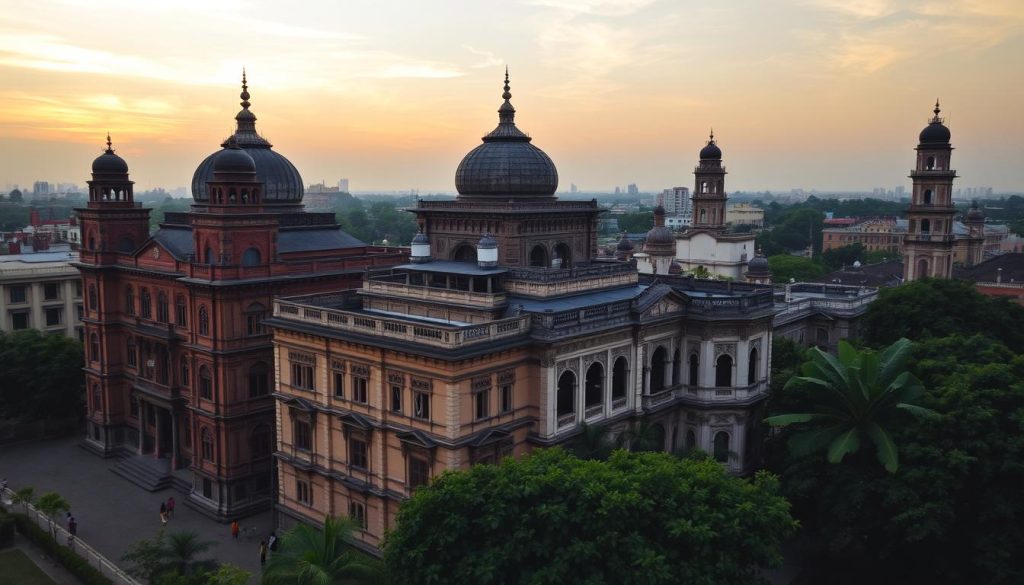
Dhaka’s architecture tells a story of history and culture. It shows how different times have left their mark on the city. From the Mughal Era to British colonial times, each era adds to Dhaka’s rich history.
The Mughal architecture, from the 16th and 17th centuries, is a mix of Islamic, Persian, and Indian styles. Lalbagh Fort is a prime example, reminding us of Dhaka’s imperial past.
In the late 19th century, a new style emerged: Indo-Saracenic. It blends local Indo-Islamic designs with Victorian Gothic and Neo-Classical styles. Curzon Hall and Ahsan Manzil are iconic examples of this diversity.
Other landmarks like the Star Mosque and Ruplal House show Dhaka’s cultural depth. Ruplal House, with its Greek Doric columns, is a testament to Dhaka’s eclectic architecture. The Dhakeshwari Temple and Bara Katra also highlight the city’s cultural influences.
Dhaka’s architecture is not just about these examples. It includes everything from ancient Sena temples to modern buildings. This variety reflects Dhaka’s changing society and politics, making it a cultural and historical center.
| Architectural Style | Era | Characteristics | Notable Examples |
|---|---|---|---|
| Mughal Architecture | 16th-17th Century | Islamic, Persian, and Indian influences | Lalbagh Fort, Bara Katra |
| Indo-Saracenic | Late 19th Century | Gothic and Neo-Classical features | Curzon Hall, Ahsan Manzil |
| Modern Architecture | Post-1971 | Innovative, skyline-defining designs | Grameenphone Building, National Assembly Building |
Exploring Iconic Dhaka Landmarks
Dhaka’s buildings show a mix of old and new. They tell the story of the city’s culture. These landmarks give us a peek into Dhaka’s past and present.
The National Parliament House by Louis Kahn
The National Parliament House is a marvel in Dhaka. Louis Kahn designed it, using shapes and light in a unique way. It opened in 1982, blending function and art.
Baitul Mukarram Mosque: A Symbol of Faith
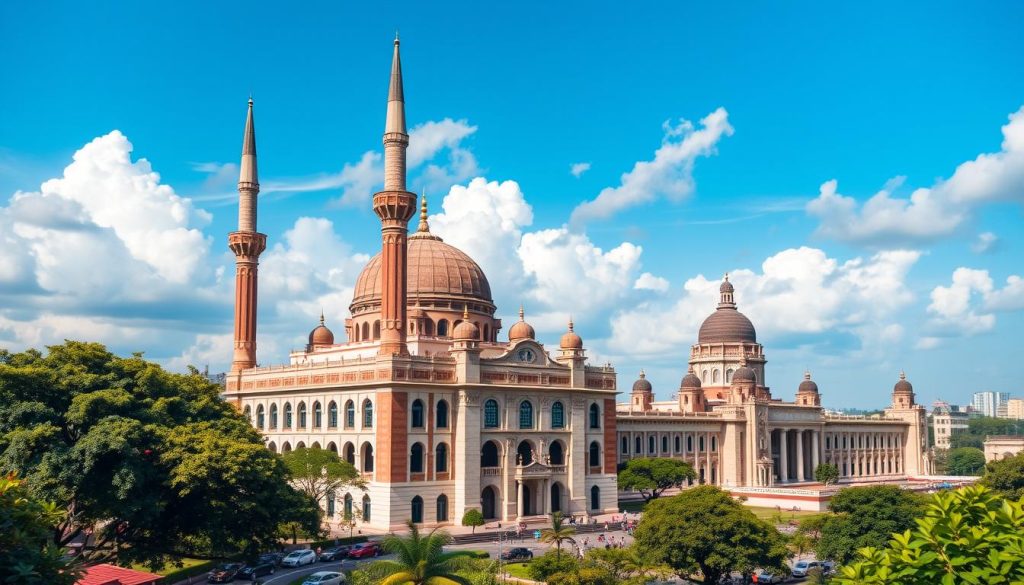
Baitul Mukarram Mosque is a key spiritual spot in Dhaka. It’s a prime example of Islamic design. Built big, it’s a place of worship for many, showing Bangladesh’s faith and culture.
| Landmark | Architect | Year Completed | Significance |
|---|---|---|---|
| National Parliament House | Louis Kahn | 1982 | Symbol of modernity in Dhaka |
| Baitul Mukarram Mosque | N/A | 1968 | Cultural and spiritual symbol |
| Chawkbazar Shahi Mosque | N/A | 1676 | Historical significance in Mughal architecture |
| Lalbagh Fort Mosque | N/A | N/A | Part of the Lalbagh Fort complex |
Dhaka’s landmarks show the city’s rich history and growth. From the National Parliament House to Baitul Mukarram Mosque, Dhaka’s architecture is a journey of wonder.
Unique Architectural Styles in Dhaka
Dhaka is a mix of old and new architecture. The city’s growth shows a blend of its past and present. This mix creates a lively urban scene that tells Dhaka’s story.
Modern vs. Traditional Architecture
In Dhaka, you’ll see intricate carvings and detailed designs in mosques and temples. These buildings show the cultural wealth of Bengal. They are a treat for those who love architecture.
But Dhaka also has modern buildings with clean lines and practical designs. The Dhaka Tower and the Bait Ur Rouf Mosque are examples. They show Dhaka’s shift towards modern, functional spaces.
The mix of old and new architecture in Dhaka is fascinating. Modern buildings stand alongside older, more ornate ones. This mix invites you to see Dhaka’s rich history and its modern side.
Famous Buildings in Dhaka: A Must-See List
Exploring Dhaka’s architecture reveals a wealth of famous buildings. Each one offers a unique view into the city’s history and culture. Here are two buildings you should definitely visit.
Discovering the Beauty of Lakshmi Villa
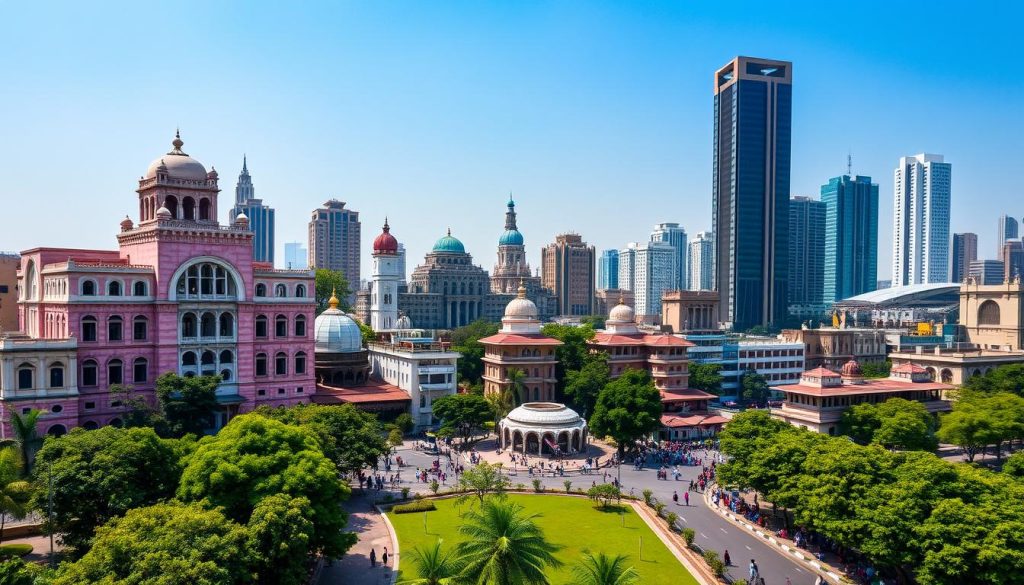
Lakshmi Villa was built in 1911 by Basanta Kumar Das. Its bright orange-and-blue facade and French balconies make it stand out. This building is a cultural treasure that shows off Dhaka’s ornate heritage.
The details and design of Lakshmi Villa are a tribute to its creator’s vision. It’s a must-see for anyone visiting Dhaka, locals and tourists alike.
Beauty Boarding: A Cultural Landmark
Beauty Boarding is another architectural gem in Dhaka. It reflects the city’s diverse cultural influences. This building is not just beautiful but also holds stories of Dhaka’s rich heritage.
It’s a symbol of the city’s cultural tapestry. Beauty Boarding is a famous building in Dhaka that touches the heart of its cultural landscape.
| Building Name | Year Built | Architectural Style | Cultural Significance |
|---|---|---|---|
| Lakshmi Villa | 1911 | Classical/French | Ornate heritage representation |
| Beauty Boarding | 1930s | Art Deco | Cultural integration |
Dhaka Architecture: Ancient Influences and Modern Innovations
Dhaka’s architecture shows a mix of old and new. Buildings from the Pala Empire, like those from the Pala School of Sculptural Art, show the city’s long history. The Somapura Mahavihara, the biggest Buddhist Vihara in the Indian subcontinent, is a UNESCO World Heritage Site. It links Dhaka’s architecture to global stories.
The Sultanate period brought grand buildings like the Shat Gombuj Masjid and the Kusumba Masjid. These show off detailed designs and strong structures. The Mughal era, with buildings like Lalbagh Fort, reached the peak of architectural creativity in Bangladesh. These buildings show how art and function came together.
The British brought the Bungalow style house, which is still seen in rural areas today. This history sets the stage for Dhaka’s modern architecture. Today’s architects mix old styles with new ideas, creating something unique.
Now, efforts to save Dhaka’s buildings involve both government and non-government groups. They make old buildings useful again, keeping the city’s history alive. These efforts help people understand and value Dhaka’s architectural story, blending old grandeur with new dreams.
Captivating Dhaka Architecture Photography Opportunities
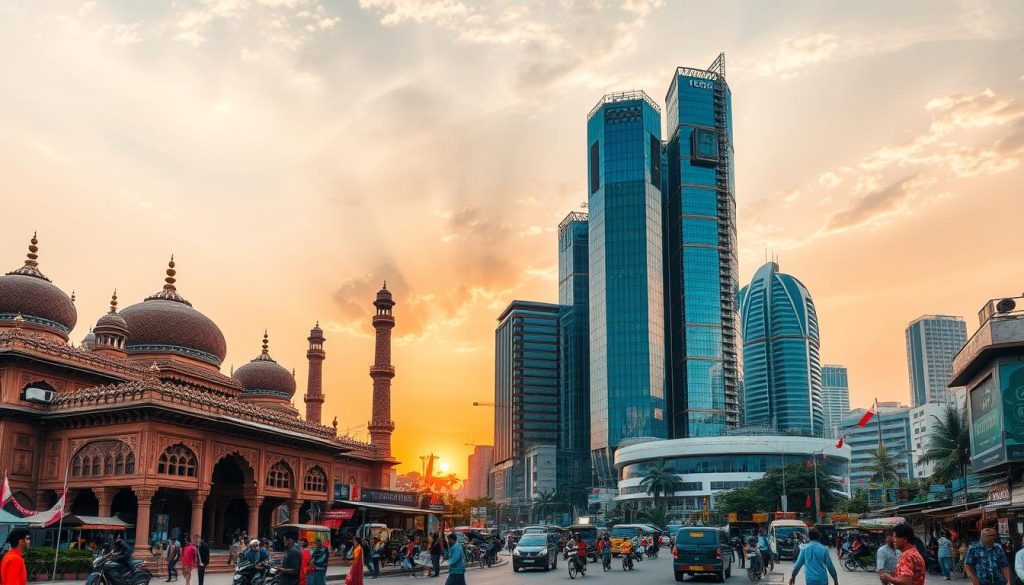
Dhaka is a treasure trove for photography lovers. It mixes modern and traditional styles, creating stunning images. The National Assembly Building by Louis Kahn and the detailed mosques are just a few highlights.
The Jatiya Sangsad Bhaban is a masterpiece by Kahn. It offers private tours and extended permissions for architecture buffs. Dhaka’s streets are alive with modern architecture, showing the city’s growth.
Kawran Bazar, Asia’s biggest market, is a feast for the eyes. Chawk Bazar’s narrow alleys are filled with color and life. Sadarghat’s launches and wooden boats add unique backdrops to your photos.
Joining Dhaka Photography Tours is a great idea. Guides like Zia share their knowledge and connect you with the local culture. These tours highlight the city’s architecture and culture.
For the best shots, visit markets like Moluvibazar for spices or Dholaikhal for auto parts. Each place is full of life and stories. Dhaka is perfect for photographers of all levels, offering endless inspiration.
Preserving Dhaka’s Architectural Heritage
Keeping Dhaka’s architecture safe is key to protecting the city’s rich culture. Projects like “Hidden Heritage: Homes in Dhaka” show how vital it is to save hidden historical spots. Despite challenges, five special projects in Dhaka were chosen for this effort.

The project showcases homes that reflect Dhaka’s architectural history. It used detailed drawings, photos, and personal stories to raise awareness. A team worked hard to make this happen.
Puran Dhaka, with its 3,000 historical buildings, is at risk of losing its heritage. This area is very crowded, with 700,000 people living in just 24 square miles. The Urban Study Group has been working to save these buildings since 2004.
Dhaka’s population has grown a lot, from 6.5 million in 1990 to nearly 15 million in 2010. This growth has put a lot of pressure on the city’s buildings. Over 20% of the buildings could collapse in an earthquake. Saving Dhaka’s architecture is crucial for its future and to honor its past.
Conclusion
Dhaka architecture is a journey through time, blending old and new. It tells the city’s rich story. Iconic buildings like the National Parliament House by Louis Kahn and the Baitul Mukarram Mosque show the city’s mix of tradition and innovation.
Every building in Dhaka adds to the city’s cultural and beauty. This creates a rich tapestry that enhances Dhaka’s appeal.
Exploring Dhaka’s architecture, you’ll see stunning designs and the need for better public spaces. The Dhaka City Neighborhood Upgrading Project aims to improve urban areas. It focuses on sustainability and making Dhaka livable for everyone.
These efforts aim to make Dhaka more attractive for its people and visitors. They integrate nature and improve livability.
In summary, Dhaka’s buildings are more than structures; they reflect the city’s history and future dreams. Exploring Dhaka’s architecture reveals its beauty and offers insights into its unique identity. Whether you love architecture or are just curious, exploring Dhaka will enrich and inspire you.