10 Days in Serbia: A Complete Itinerary from Belgrade to Subotica
Serbia packs more variety into a 10-day trip than most travelers expect. The country sits at the crossroads of Central and Southeast Europe, and that position shows: Ottoman-era fortresses, Habsburg architecture, Roman ruins, and postwar reinvention all coexist within a few hours’ drive of each other. Add in mountain scenery, one of Europe’s most underrated food cultures, and prices that feel stuck in 2015, and you get a destination that rewards slow, day-by-day exploration.
This itinerary covers Belgrade, Novi Sad, Zlatibor, Niš, Kopaonik, the Šumadija wine region, and Subotica. It balances cities, mountains, and small towns so you’re never doing the same thing two days in a row. Intercity travel is by bus or car. Trains exist but are slow and limited.
Day 1: Belgrade. Start in the Capital
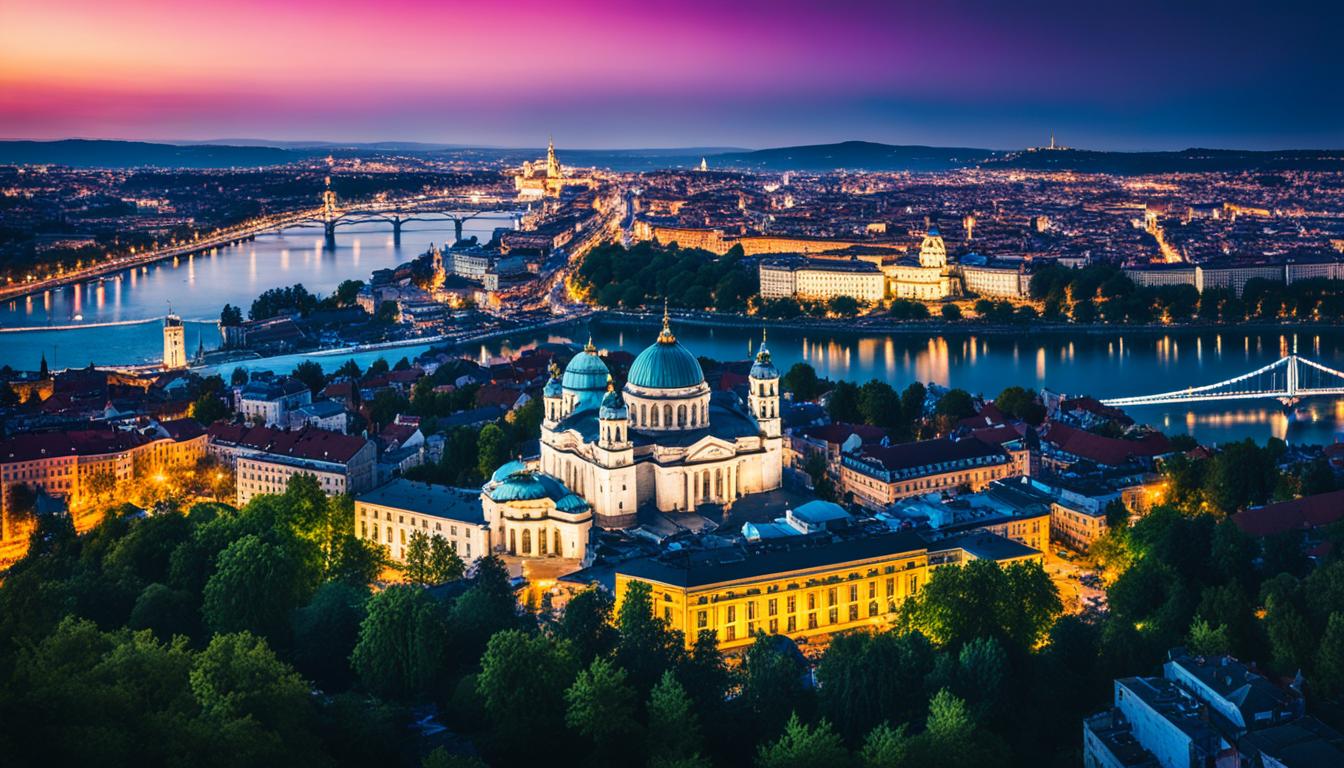
Belgrade is chaotic, warm, and impossible to see in a day, but one day gives you the essential framework. Start at Kalemegdan Fortress in the morning, when it’s less crowded. The fortress complex sits at the confluence of the Danube and Sava rivers, and the views from the upper terrace are the best in the city. The Military Museum inside the fortress is surprisingly well-curated and free to enter.
Walk south along Knez Mihailova, the main pedestrian street, toward Republic Square. This is the commercial center, lined with bookshops, international brands, and the National Museum of Serbia (reopened in 2018 after a 15-year closure, worth visiting for the Roman collection alone).
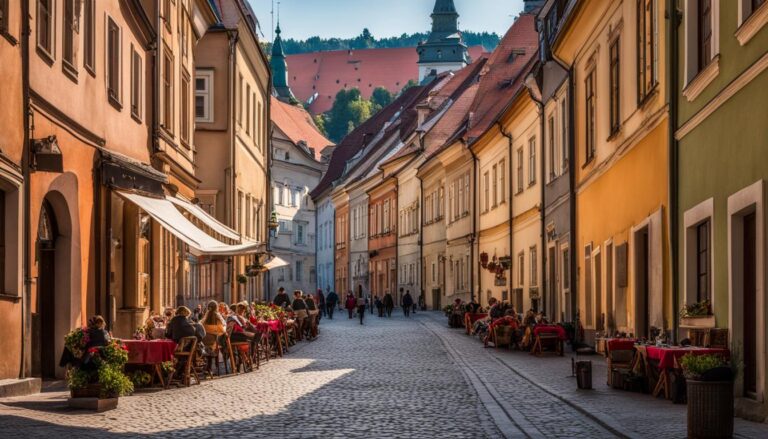
For lunch, head to Skadarlija, the old bohemian quarter. The cobblestone street is touristy but the food holds up. Dva Jelena and Tri Šešira are the traditional picks. Order ćevapi, kajmak, and a shopska salad. Expect to pay 1,500-2,500 RSD ($14-23 USD) per person for a full meal with drinks.
In the afternoon, cross to the New Belgrade side and visit the Museum of Yugoslavia, which includes Tito’s mausoleum (the House of Flowers). It gives essential context for understanding modern Serbia.
Belgrade’s nightlife is legendary, centered on river barges called splavovi along the Sava. Freestyler and 20/44 are well-known venues, but the scene changes constantly. Ask your hotel or hostel for current recommendations.
Day 2: Novi Sad. The Cultural Capital
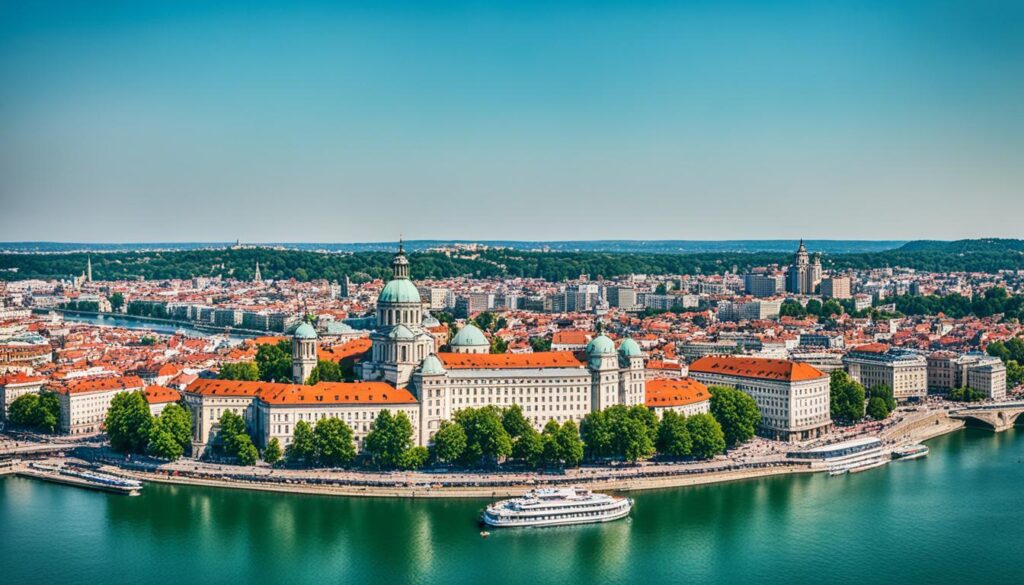
Novi Sad is 90 minutes north of Belgrade by bus (departures every 30-60 minutes from Belgrade’s main bus station, around 800 RSD one-way). The city earned the European Capital of Culture designation for 2022, and the arts infrastructure built for that distinction is still going strong.
Start at Petrovaradin Fortress on the south bank of the Danube. The fortress is massive. Walk the upper walls for river views, then explore the underground tunnels (guided tours run hourly, about 400 RSD). The clock tower here is famous: the minute and hour hands are swapped so fishermen on the Danube could read the time from a distance.
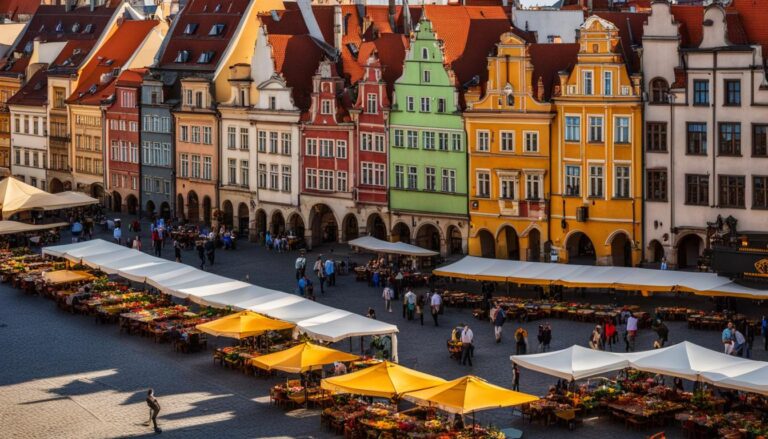
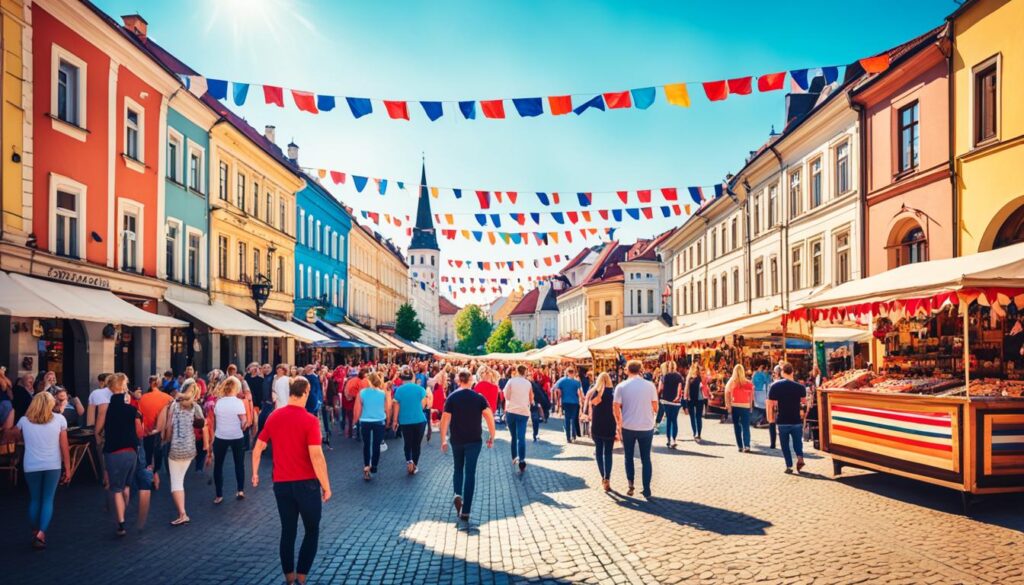
Cross back to the city center and walk through Dunavska Street and Zmaj Jovina Street, the two main pedestrian zones. The architecture is Habsburg-era, pastel-colored, and well-maintained. The Name of Mary Church on the main square has a neo-Gothic exterior worth pausing for.
For lunch, try Project 72 Wine & Deli or Toster Bar. Novi Sad’s food scene leans more modern and café-focused than Belgrade’s traditional kafanas. Budget around 1,200-2,000 RSD per person.
If you visit in July, the EXIT Music Festival takes over Petrovaradin Fortress and transforms the city completely. Book accommodation months ahead if your dates overlap.
Days 3-4: Zlatibor. Mountain Air and Gorges
From Novi Sad, the most practical route is to return to Belgrade and catch a bus to Zlatibor (about 4 hours from Belgrade, 1,500-1,800 RSD). Alternatively, rent a car for more flexibility on the mountain roads.
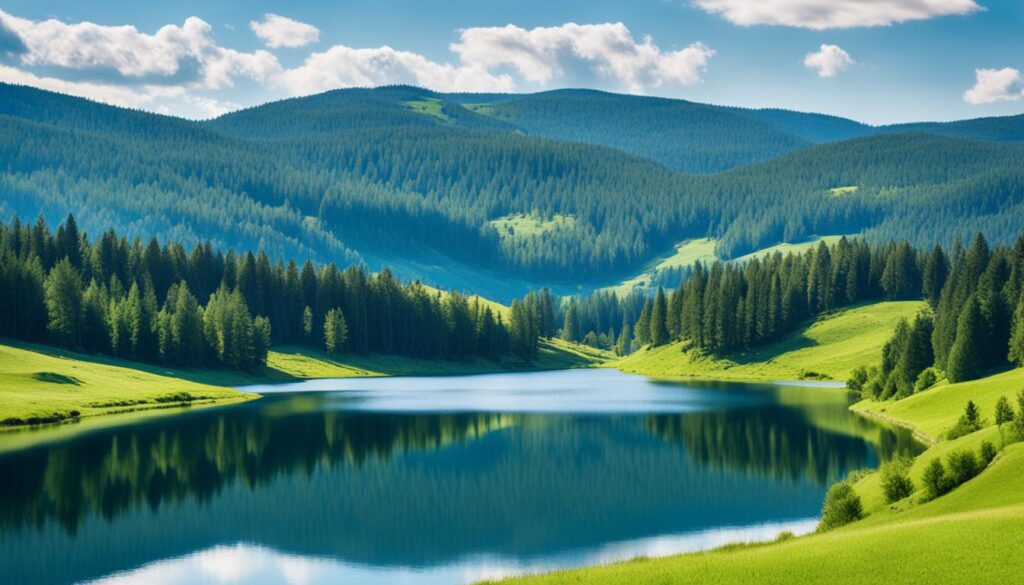
Zlatibor is a highland plateau at roughly 1,000 meters elevation. The air quality hits you immediately. The town center has been developed with a large artificial lake, walking paths, and a cluster of hotels and restaurants, but the real value is in the surrounding landscapes.
On your first day, take the Zlatibor Gold Gondola, one of the longest gondola rides in the world (9 km), connecting Zlatibor town to Tornik peak. The ride takes about 25 minutes each way and the views over the Čigota mountain range are exceptional. Round-trip tickets are approximately 1,500 RSD.
On day two, drive or arrange transport to Tara National Park (about 45 minutes west). The Drina River canyon here is one of the deepest in Europe, and the Banjska Stena viewpoint offers a dizzying perspective over the river bend. If you’re a confident hiker, the marked trails through the old-growth forest are well-maintained and mostly moderate difficulty.
For a detour, the Uvac Special Nature Reserve (about 1.5 hours south of Zlatibor) has some of the most dramatic river meanders in the Balkans and is one of the best places in Europe to see griffon vultures. Boat tours through the canyon run from Sjenica.
Days 5-6: Niš. Roman Ruins and Ottoman History
From Zlatibor, the drive to Niš takes about 4 hours via the E-75 motorway. Bus connections require a transfer in Belgrade, which adds time. If you’re driving, the route passes through pleasant central Serbian countryside.
Niš is the third-largest city in Serbia and one of the oldest continuously inhabited cities in the Balkans. It was the birthplace of Constantine the Great, and Roman heritage is visible everywhere.
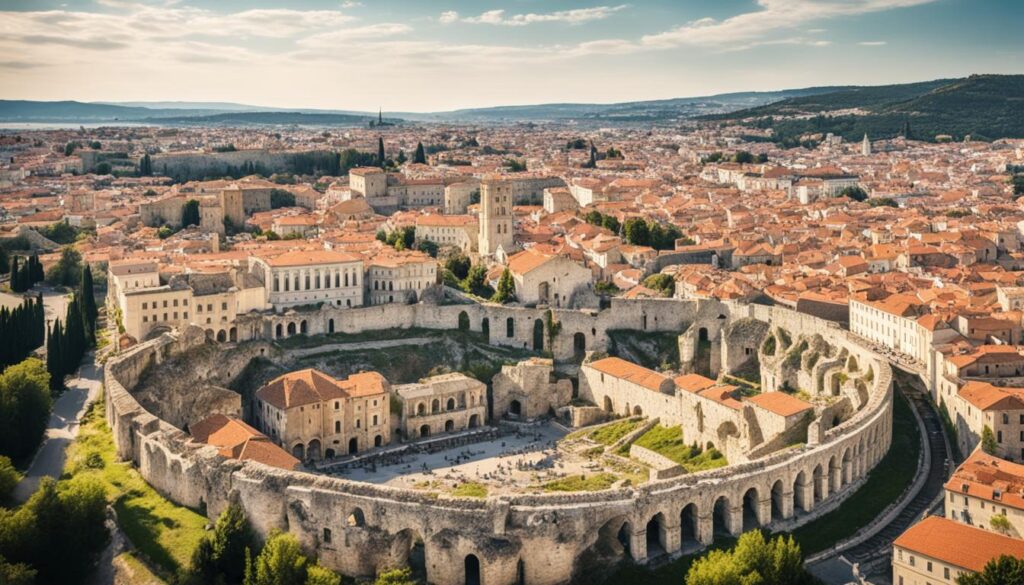
Start at Mediana, the Roman imperial residence about 3 km east of the city center. The floor mosaics here are remarkably well-preserved and date to the 4th century. Admission is around 300 RSD. Then visit the Niš Fortress, an Ottoman-era fortification in the city center that now functions as a park and event space. Entry is free.
The Skull Tower (Ćele Kula) is the most distinctive landmark. Built by the Ottomans in 1809 from the skulls of Serbian rebels after the Battle of Čegar, it was intended as a warning. About 58 of the original 952 skulls remain embedded in the structure. It’s a sobering and genuinely unusual historical site, located about 2 km from the center. Admission is around 200 RSD.
On day two, visit the Red Cross Concentration Camp (Crveni Krst), one of the best-preserved Nazi concentration camps in Europe and now a memorial museum. It’s an important and well-presented site. Afterward, explore the city’s café culture along Obrenovićeva Street and Kopitareva Street, where locals spend hours over Turkish coffee.
Food in Niš has its own character. The city is known for ćevapi served Niš-style (smaller, spicier, and served with diced onions and urnebes, a hot pepper-cheese spread). Stambolijski and Nišlijska Mehana are reliable options for traditional cuisine.
Days 7-8: Kopaonik. Ski Slopes or Summer Trails
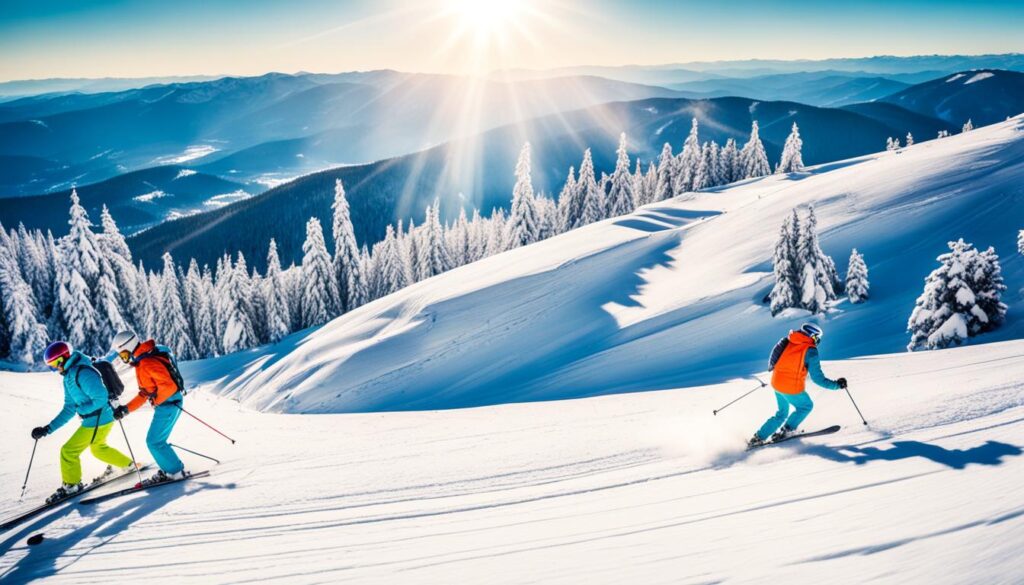
Kopaonik is Serbia’s premier mountain resort, about 2.5 hours south of Niš. In winter (December through March), it operates as a ski resort with 55 km of groomed runs, mostly suited to beginner and intermediate skiers. Lift passes run about 3,500-4,500 RSD per day. Equipment rental is widely available at the resort base.
In summer, the same mountain becomes a hiking and mountain biking destination. The Kopaonik National Park covers 120 square kilometers and includes Pančić’s Peak at 2,017 meters, the highest point in central Serbia. The Methodology Nature Trail is a well-marked loop that passes through alpine meadows and offers views across the surrounding valleys.
Accommodation at Kopaonik ranges from large resort hotels (MK Mountain Resort, Grand Hotel Kopaonik) to smaller guesthouses in the villages below the summit. Prices are significantly higher during peak ski season (late December through February) than the rest of the year.
One practical note: Kopaonik’s base area is a purpose-built resort, not a charming mountain village. The infrastructure is functional rather than scenic. The beauty is on the mountain itself.
Day 9: Topola and Oplenac. Wine Country and Royal History
From Kopaonik, drive north toward the Šumadija region (about 3 hours). This is Serbia’s heartland, rolling green hills covered in orchards and vineyards.
Stop first at Oplenac, specifically the Mausoleum of the Royal House of Karadjordjević on Oplenac Hill. The church is covered in over 40 million pieces of mosaic, reproducing scenes from medieval Serbian monastery frescoes. It is extraordinary and far less visited than it deserves. The surrounding park and royal complex include the old Royal Winery, which now operates as a wine-tasting venue.
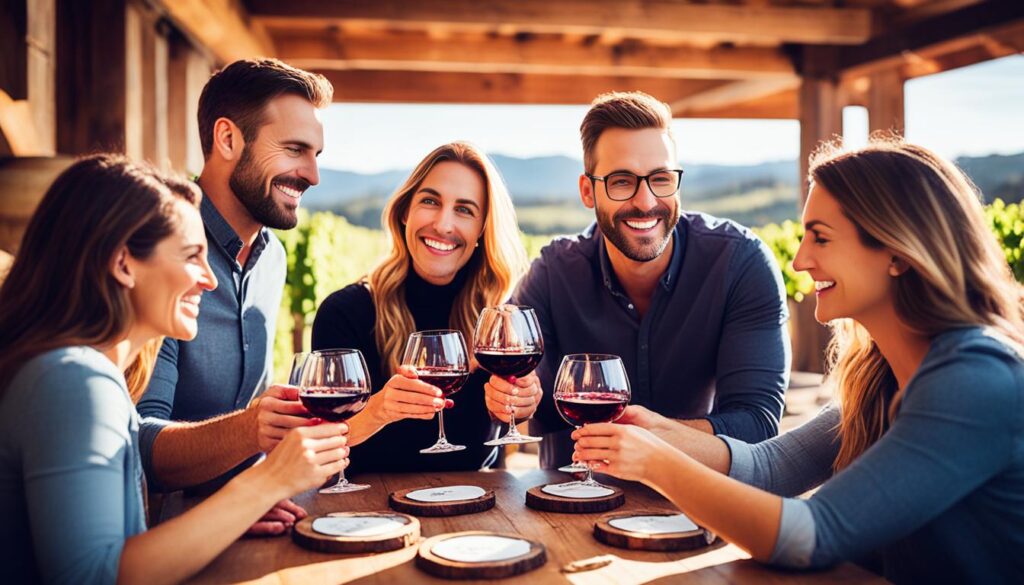
Continue to the town of Topola and the surrounding vineyards. The Šumadija wine region grows both international varieties (Chardonnay, Cabernet Sauvignon) and indigenous Serbian grapes like Prokupac and Tamjanika. Several small wineries offer tastings, including Aleksandrović Winery and Radovanović Winery, both within easy reach of Topola.
Serbian wine is undergoing a quiet revolution. Quality has improved dramatically since 2010, and prices remain far below comparable wines from Western Europe. A full tasting with cheese and charcuterie at a local winery runs about 1,500-2,500 RSD per person.
Day 10: Subotica. Art Nouveau and the Northern Plains
End your trip in Subotica, near the Hungarian border (about 3.5 hours north of Topola, or 2.5 hours from Belgrade). This is where Serbia’s character shifts again, into the flat Vojvodina plains with a distinctly Central European architectural feel.
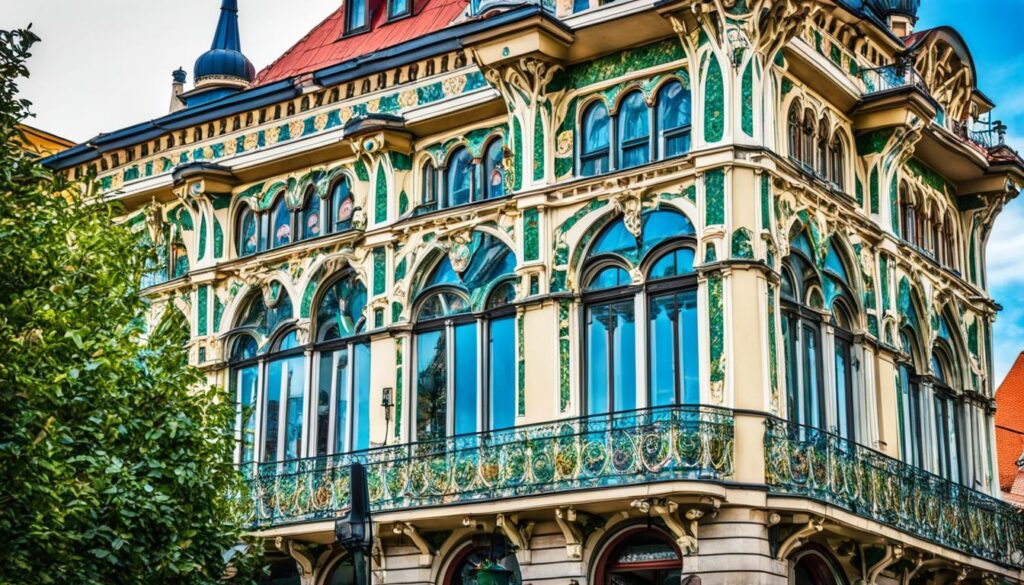
Subotica’s claim to fame is its concentration of Art Nouveau and Hungarian Secessionist architecture. The City Hall on the main square is the centerpiece, with a polychrome ceramic facade that is one of the finest Secessionist buildings outside of Budapest. The Raichle Palace (now the Modern Art Gallery) and the Synagogue (one of the largest in Europe, currently under restoration) are equally striking.
Take a 15-minute drive east to Palić Lake, a resort destination since the 19th century. The lakeside promenade has a faded grandeur that feels entirely different from Belgrade’s energy. The Water Tower, Grand Terrace, and Women’s Beach complex are all Art Nouveau landmarks. In summer, Palić hosts a European Film Festival that draws an international crowd.
Subotica has a significant Hungarian-speaking minority, and the food reflects this: expect to find lángos, gulyás, and strudel alongside Serbian staples. Boškov Bunar and Stara Pijaca are good restaurant options in the center.
Practical Tips for 10 Days in Serbia
Budget
Serbia is one of the most affordable countries in Europe for travelers. A mid-range daily budget of $50-70 USD covers accommodation (private room or 3-star hotel), meals, local transport, and attractions. Budget travelers staying in hostels and eating at bakeries can manage on $25-35 USD per day.
Getting around
Intercity buses are the backbone of domestic travel. The main operators (Lasta, Niš Ekspres, Severtrans) run frequent services between major cities. Buy tickets at the bus station or online through BusTicket4.me. Trains are cheaper but slower and less frequent. Renting a car gives the most flexibility, especially for Zlatibor, Kopaonik, and the Šumadija wine region. Roads are generally decent, though mountain sections can be narrow.
Currency
The Serbian Dinar (RSD) is the official currency. ATMs are everywhere. Credit cards are accepted in hotels, larger restaurants, and shops, but carry cash for smaller establishments, market vendors, and rural areas. Rough conversion: 100 RSD ≈ $0.93 USD (check current rates before your trip).
Language
Serbian is the official language, written in both Cyrillic and Latin scripts. In Belgrade and Novi Sad, English is widely spoken among younger people and in the tourism sector. In smaller cities and rural areas, a few phrases in Serbian go a long way. Google Translate handles Serbian well for real-time help.
Best time to visit
May through June and September through October offer the best balance of warm weather, manageable crowds, and lower prices. July and August are hot in the cities (35°C+ in Belgrade is common) but pleasant in the mountains. Winter is ideal if you want to ski Kopaonik.
Safety
Serbia is generally very safe for tourists. Petty crime rates are low, and violent crime affecting visitors is rare. Standard precautions apply in Belgrade’s crowded areas and nightlife districts. Solo travelers, including women, report feeling comfortable throughout the country.
Frequently Asked Questions
Is 10 days enough for Serbia?
Ten days is ideal for a first visit. It covers the essential cities (Belgrade, Novi Sad, Niš), one mountain region (Zlatibor or Kopaonik), and one or two specialized interests (wine, architecture, history). If you had two weeks, you could add Đavolja Varoš (Devil’s Town), the Đerdap Gorge on the Romanian border, or a deeper dive into the monasteries of Studenica and Žiča.
Do I need a visa to visit Serbia?
Citizens of the EU, US, Canada, Australia, and most other Western countries can enter Serbia visa-free for up to 90 days. Check the Serbian Ministry of Foreign Affairs website for the current list of eligible nationalities.
Is Serbia expensive?
No. Serbia is one of Europe’s best-value destinations. A sit-down meal at a good restaurant costs $8-15 USD. A beer is $1.50-2.50. Hotel rooms in the $30-60 range are comfortable and well-located. Taxis and buses are very affordable by European standards.
What is the best way to get from Belgrade to Novi Sad?
Buses depart every 30-60 minutes from Belgrade’s main bus station and take about 90 minutes. The fare is approximately 800 RSD ($7-8 USD) one-way. The train takes about 90 minutes as well but runs less frequently. Driving takes roughly 75 minutes via the E-75 motorway.
Is Serbia safe for solo travelers?
Yes. Serbia consistently ranks as one of the safer countries in Southeast Europe for solo travel. Locals are generally welcoming and curious about foreign visitors. Hostels in Belgrade and Novi Sad have active social scenes. Standard urban awareness applies in nightlife areas.
Can I use Euros in Serbia?
The official currency is the Serbian Dinar. Some hotels and tourist-oriented businesses accept Euros, but you will generally get a worse exchange rate. Use ATMs to withdraw Dinars for the best rates. Revolut, Wise, and similar travel-friendly bank cards work well in Serbia.