

Explore Tbilisi Public Transport Options Easily
Ever thought about how a city can be both charming and efficient in its transport? Tbilisi shows us how with its wide and cheap public transport. You can easily move around by metro, bus, or minibus.
The city has two metro lines, a bus network, and even a funicular. This makes every part of Tbilisi easy to reach. This guide will help you, from buying tickets to riding like a local. You’ll learn about the new Travel Card of 2022 too.
Overview of Tbilisi’s Public Transport System
Tbilisi has a well-organized public transport system. It offers many ways to get around the city. You can use the metro, buses, minibuses, taxis, and even a funicular and cable car. This variety makes it easy to get around and supports the city’s growth.
The Tbilisi Metro is very efficient. It covers 27.3 kilometers and carries almost 500,000 people daily. It has two lines and 23 stations, linking many areas. The city has also improved its bus network, adding 100 kilometers of rapid transit.
Now, Tbilisi is focusing on green transport. They plan to use electric buses and install charging stations. They want to increase public transport use by 7% in ten years. They’ve also removed over 4,000 parking spots to encourage biking and walking.

Tbilisi is working to improve its transport system. They make sure new buildings have plans for public transport. The city is merging its transport and urban development agencies. This effort will make the city more livable and improve travel options.
Types of Public Transport in Tbilisi
Tbilisi has many public transport options for everyone. Each one has its own benefits, making it easy to get around. Let’s explore the different ways to travel in the city:
Metro
The Tbilisi metro has two lines and 21 stations. It runs from 6:00 AM to midnight every day. It’s fast and reliable, costing just 0.5 GEL per ride.
For those who travel often, a “Metromoney” card is a good choice. It costs 2 GEL and makes traveling easier.
Buses
Buses in Tbilisi run from 7:00 AM to midnight. They cover many routes across the city. Each ride costs 0.5 GEL.
The buses are modern and air-conditioned. They make traveling comfortable. You can reach many parts of Tbilisi using the bus routes.
Minibuses (Marshrutkas)
Minibuses, or marshrutkas, are a cheap and efficient way to travel. They run from 7:00 AM to midnight. Fares are between 0.8 to 1 GEL.
You can pay with cash or your metro card. This makes them easy to use for all travelers.
Taxis
Taxis are easy to find in Tbilisi, great for late-night rides. A trip usually costs less than 7 GEL. You can book through apps like Bolt or Yandex for a reliable service.
While prices are fair, always check the app’s rates. This ensures you pay the right amount.
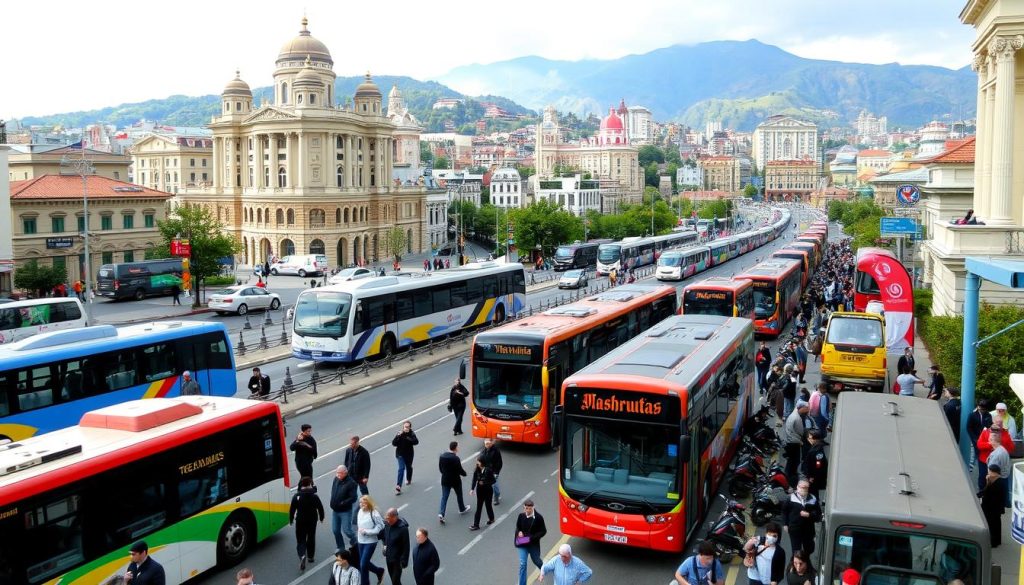
| Transport Type | Operating Hours | Cost per Ride | Notes |
|---|---|---|---|
| Metro | 6:00 AM – 12:00 AM | 0.5 GEL | 21 stations, flat fare |
| Buses | 7:00 AM – 12:00 AM | 0.5 GEL | Air-conditioned vehicles |
| Minibuses (Marshrutkas) | 7:00 AM – 12:00 AM | 0.8 – 1 GEL | Fixed routes, cash or Metro card |
| Taxis | 24/7 | Up to 7 GEL | Use apps like Bolt for convenience |
Understanding the Tbilisi Metro System
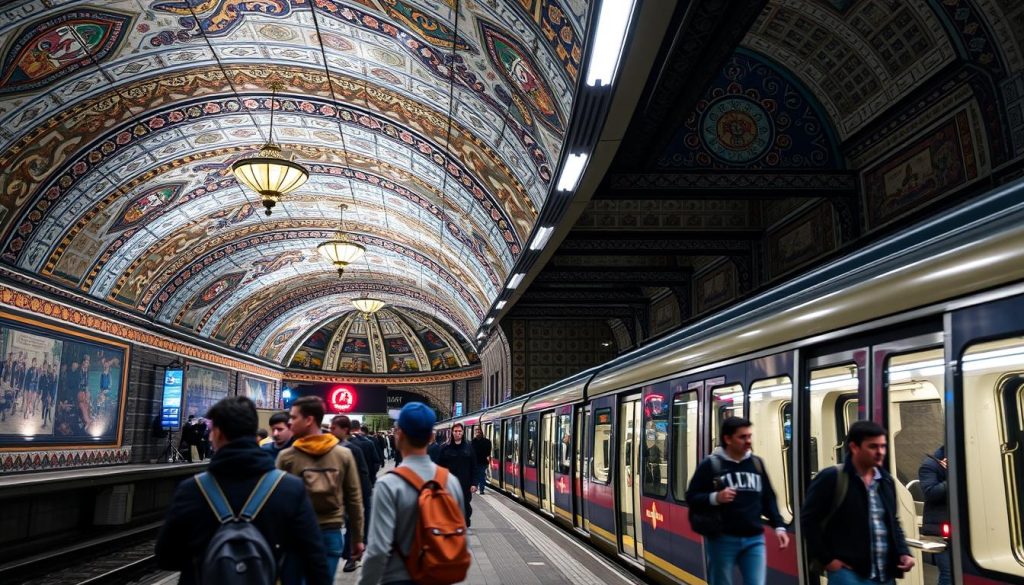
The Tbilisi metro system is key to getting around Georgia’s capital. It has two lines, Akhmeteli-Varketili and Saburtalo, covering 26.4 kilometers with 23 stations. Every day, it carries about 400,000 people, showing its vital role in the city.
Lines and Stations
The metro runs from 6:00 AM to midnight, offering flexible travel times. It’s very busy during peak hours, making it easy for commuters. Stations have restrooms and escalators for everyone’s use, including those with disabilities.
Buying Metro Cards
To use the metro, you need to buy a MetroMoney card for 2 GEL. Each ride costs 1 GEL. There are also cards for unlimited travel, from a day pass for 3 GEL to an annual pass for 250 GEL.
You can top up your card at stations or Bank of Georgia kiosks. This makes your daily travel easier. Understanding how to buy metro cards will improve your experience in Tbilisi. The metro system is a crucial part of the city’s transportation.
Tbilisi Bus Routes and Timetables
The bus system in Tbilisi covers a lot of ground, with 34 routes. These routes meet different needs, linking neighborhoods, suburbs, and key spots in the city. You can find short trips with just two stops or longer ones with over 15 stops.
Buses run from 7 AM to midnight. While most of the day has frequent service, early morning and late night hours might have less. You can check the bus schedules on Google Maps to stay updated.
Ticket prices are affordable, ranging from 5 to 30 GEL. A one-way ticket costs 1 GEL. You can pay with a Travel Card or cash, making it easy for everyone to use public transport.
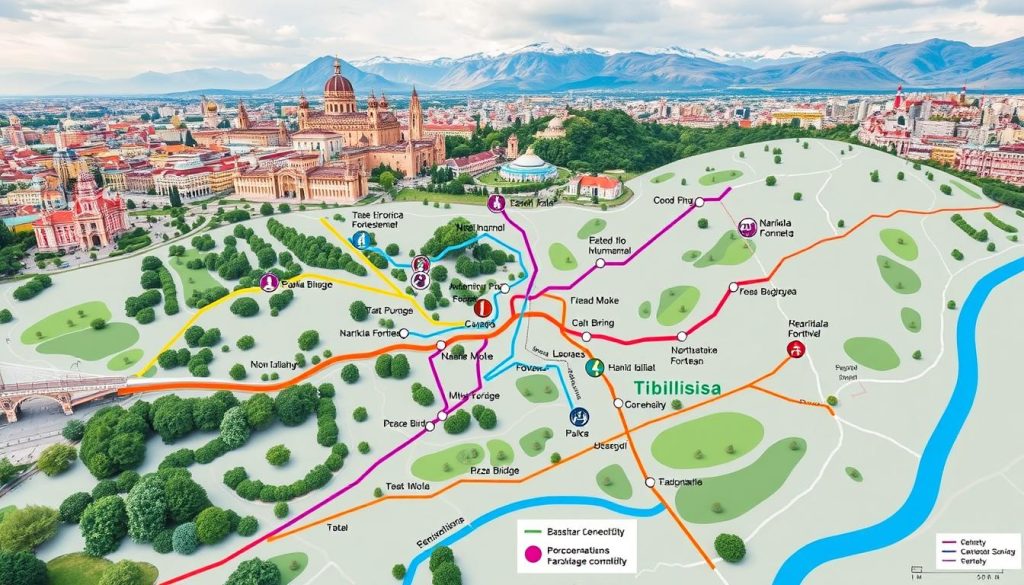
Many buses go to major spots like Liberty Square, Mtatsminda, Didube, and Saburtalo. Key spots like Isani and Didube make switching between lines easy. This makes getting around the city simple, whether you’re visiting attractions or going to work.
If you are looking to explore various parts of Tbilisi, understanding the bus route network can significantly enhance your travel experience.
| Bus Route | Destination | Average Stops | Typical Travel Time |
|---|---|---|---|
| 1 | Liberty Square | 15 | 30 mins |
| 37 | Airport | 10 | 40 mins |
| 67 | Saburtalo | 12 | 25 mins |
| 88 | Mtatsminda | 9 | 20 mins |
Exploring Marshrutkas in Tbilisi
Tbilisi minibuses, or marshrutkas, are a key part of public transport in Tbilisi. They first appeared in Moscow in the 1930s. Now, they are popular in the Caucasus and Central Asia.
These small vans can carry up to 15 people, sometimes more. They are important for city transport but often lack modern features. You won’t find seat belts in the back, and air conditioning is rare.
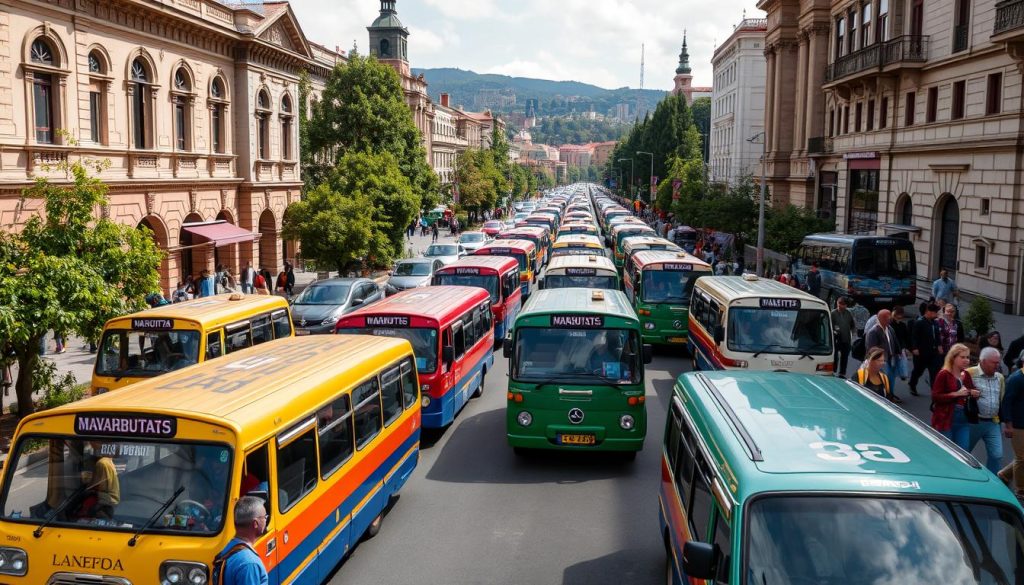
Marshrutkas don’t run on a fixed schedule. They follow a set timetable, with frequencies from one to three times a day. They run every day, except on some holidays. But, routes like Tbilisi to Mestia stop in winter.
It’s best to arrive 30-40 minutes early for your trip. This is crucial during busy times when vans fill up fast. Be ready for delays and early departures.
Tbilisi has four main marshrutka stations: Station Square, Didube, Ortachala, and Samgori. They serve different parts of Georgia and international routes. You pay the driver in cash, with prices varying by route, like 50 GEL to Yerevan.
In short, marshrutkas are a cheap and flexible way to travel in Tbilisi. Knowing their routes and schedules can make your journey better.
Tbilisi Public Transport Etiquette
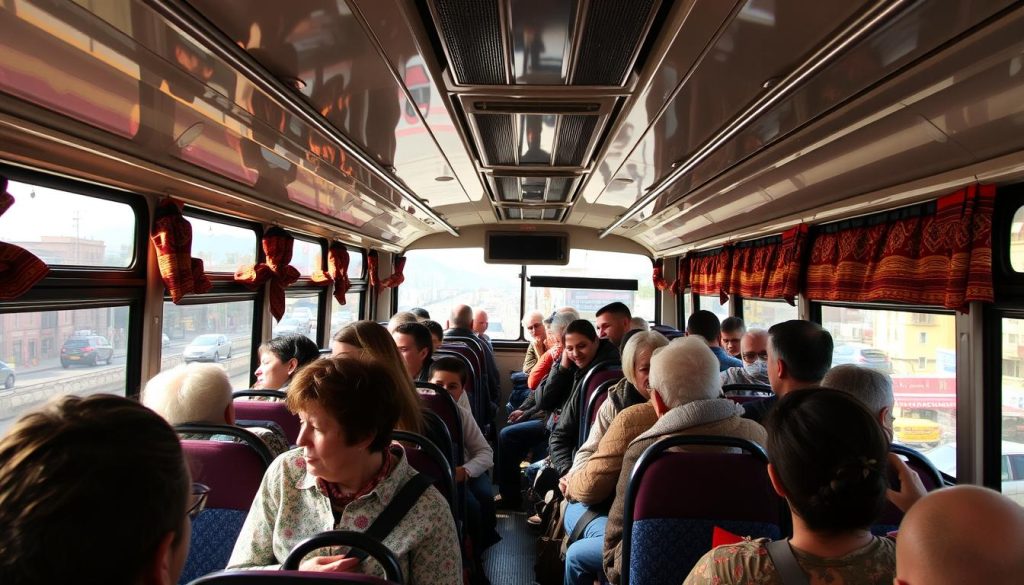
Using public transport in Tbilisi is key to enjoying the city. Knowing the etiquette makes your trip better for everyone. This guide will teach you how to be polite and safe on the city’s busy buses and metro.
Common Courtesy
Respecting others’ space is important on public transport. Here are some simple ways to be considerate:
- Offering your seat to those who need it more, like the elderly or pregnant women.
- Keeping noise levels down to keep the environment calm.
- Allowing others to exit before you board, making it easier for everyone.
By following these tips, you help make public transport in Tbilisi a better place for everyone.
Safety Tips
Your safety is the most important thing when using public transport in Tbilisi. Here are some key safety tips:
- Stay alert in crowded places to protect your belongings.
- Identify emergency exits in case of emergencies.
- Familiarize yourself with local commuter behavior to fit in and stay safe.
By following these safety tips, you can enjoy a safe and pleasant ride on Tbilisi’s buses, minibuses, and metro.
| Common Courtesy | Safety Tips |
|---|---|
| Offer your seat to those in need | Stay alert in crowded areas |
| Keep noise levels down | Identify emergency exits |
| Allow others to exit first | Familiarize yourself with local customs |
Practicing these habits makes your travel better and helps create a safe, respectful space for everyone in Tbilisi’s public transport.
Using the Travel Card for Tbilisi Transport Services
The Travel Card makes getting around Tbilisi easy. It lets you travel on the metro, buses, minibuses, and some cable cars without worrying about the cost of each ride. This way, you can explore the city freely.
The cost of the Travel Card varies. You can get a daily pass for 3 GEL or a yearly subscription for 250 GEL. It’s a great deal for those who travel a lot. The card itself is 2 GEL. You can buy it at metro stations or Bank of Georgia branches. For cards used by more than one person, tap it every 15 minutes to avoid any issues.
| Travel Card Duration | Cost (GEL) | Notes |
|---|---|---|
| Daily Pass | 3 | Unlimited travel for one day |
| Weekly Pass | 15 | Best for short stays |
| Monthly Pass | 50 | Ideal for extended visits |
| 3-Month Pass | 120 | Suitable for longer periods |
| 6-Month Pass | 180 | Heavy users will benefit |
| Yearly Pass | 250 | Ultimate savings for locals or frequent visitors |
With the Travel Card, each ride costs 1 GEL, no matter where you’re going. This is true for the metro, buses, and minibuses. Cable car rides are also the same price, making travel easy and affordable.
Choosing the Travel Card means you can easily see all Tbilisi has to offer. You’ll enjoy the city’s culture and attractions without worrying about transportation costs.

Conclusion
Using public transport in Tbilisi is easy and saves money. The city has a well-connected system with the metro, buses, and marshrutkas. This makes it simple to see all Tbilisi has to offer.
Recent surveys show more people are using private cars. But, Tbilisi’s public transport is designed to meet your needs. It’s affordable and has good routes. The metro runs well, and buses have digital boards for easy travel.
There are many ways to get around Tbilisi, like the metro, buses, or ride-hailing apps. These options show Tbilisi’s commitment to making your visit better and more sustainable. Use these ways to explore Tbilisi easily and enjoy its lively atmosphere.





