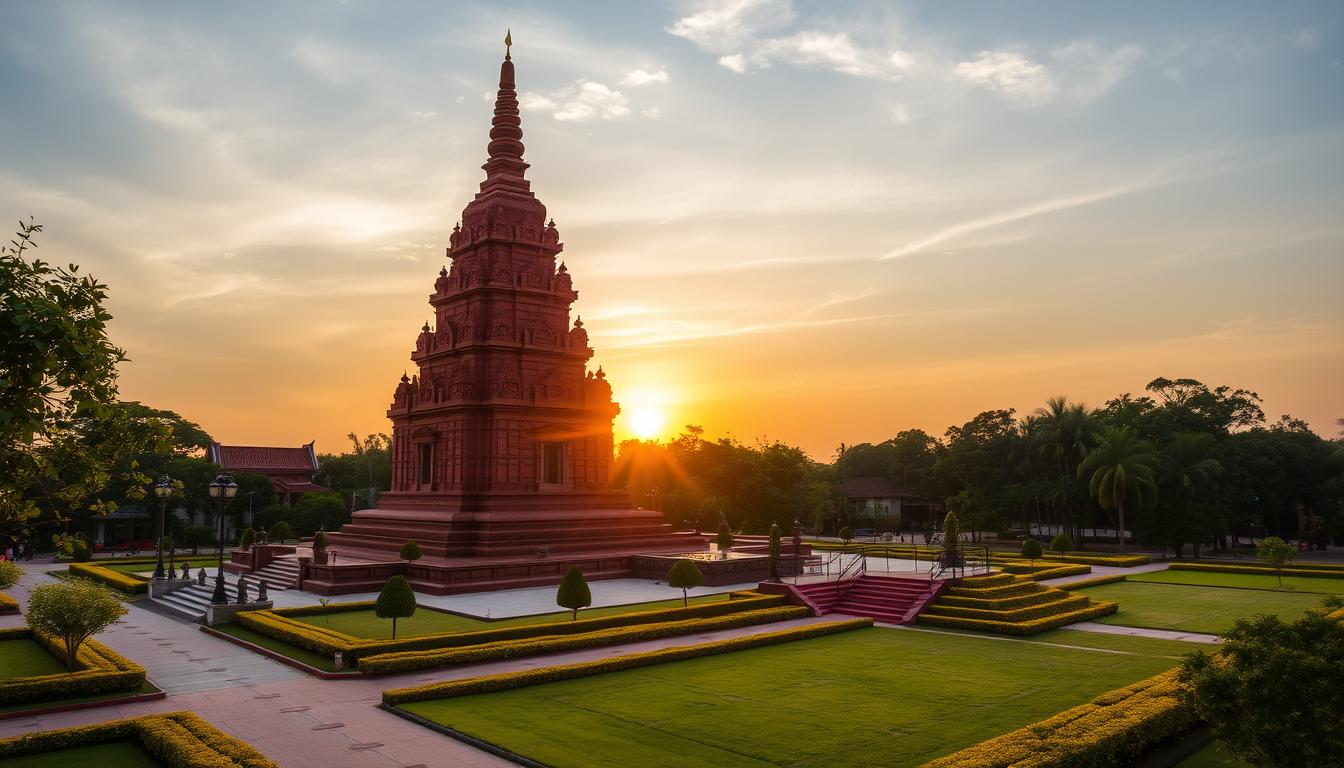
Explore Patuxai Vientiane Insights & History
Have you ever thought about how a monument can show a nation’s spirit and honor its heroes? The Patuxai Monument in Vientiane, Laos, is more than just a building. It symbolizes strength and the fight for freedom. Built from 1957 to 1968, it remembers those who died fighting against French rule.
This grand structure is 55 meters tall and has four sides, each 24 meters long. It attracts visitors with its rich Laotian culture and breathtaking views. Let’s dive into Patuxai Vientiane insights and history to see how it tells stories of courage, architecture, and Laos’s vibrant heritage.
Introduction to Patuxai Monument
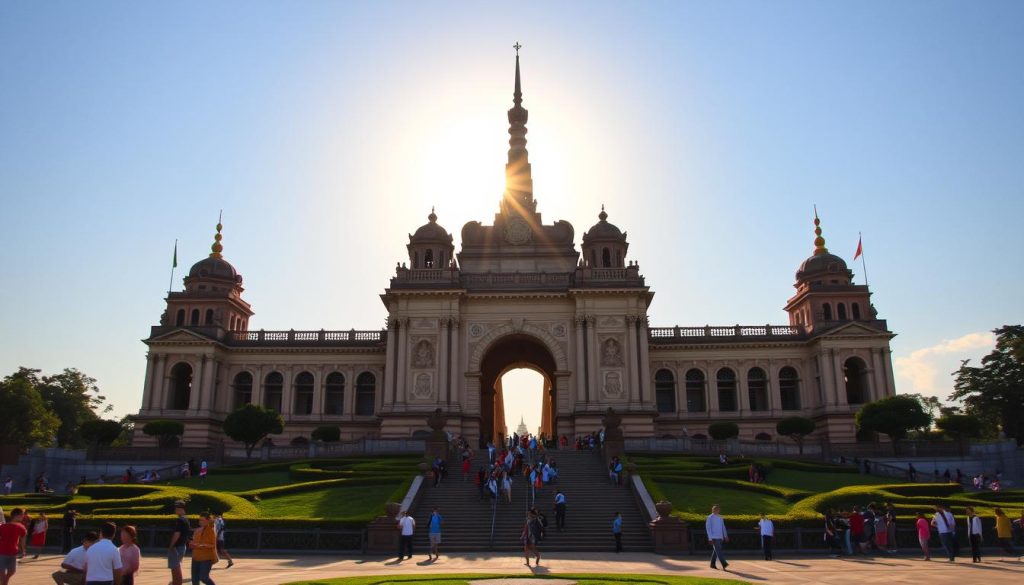
The Patuxai Monument stands proudly in the center of Vientiane. It’s a symbol of the Laotian people’s spirit and resilience. This structure, like Paris’s Arc de Triomphe, shows off Laos‘ unique culture.
It was built to honor those who fought for independence. Now, it’s a top Vientiane attraction. Visitors come to learn about its history and significance.
Visiting the Patuxai Monument tells you a lot about Laos’ past. In the 1960s, the U.S. gave concrete for an airport. Instead, it built this iconic monument, showing Laos’ fight for freedom.
The design includes Buddhist symbols. This mix of history and spirituality makes it culturally important in Vientiane and beyond.
When you get to the Patuxai Monument, notice the beautiful gardens and calm atmosphere. It’s not just a historical site. It’s also a place where locals and travelers meet, creating a lively community spirit.
At the top, the observation deck offers amazing views of the city. You can see the surrounding landscape and the lively vibe of Vientiane.
| Feature | Description |
|---|---|
| Location | Center of Vientiane, Laos |
| Height | Approximately 50 meters |
| Significance | Symbolizes independence and national pride |
| Architectural Style | Inspired by the Arc de Triomphe |
| Visitor Experience | Panoramic views from the observation deck |
| Cultural Elements | Buddhist symbols and decorations |
Exploring the Patuxai Monument deepens your understanding of Laos’ history. It shows the lasting spirit of its people. It’s a must-see in Vientiane.
Patuxai Monument History
The Patuxai Monument is a symbol of Laos’s long fight for freedom. Built from 1957 to 1968, it honors those who battled against French rule. This monument’s story is deeply tied to Laos’s journey to independence.
Construction Timeline and Purpose
The Patuxai Monument’s construction started in 1957 and ended in 1968. It faced many challenges, like funding and logistical problems. Despite these, it became a key part of Laos’s history, remembering those who fought for freedom.
Symbolism of the Monument
The Patuxai holds great cultural significance in Laos. It’s called the “Monument of the Unknown Soldier,” honoring those who died for independence. Its design reflects traditional Laotian architecture, symbolizing the country’s history and struggle for freedom.
Captivating Architecture of Patuxai
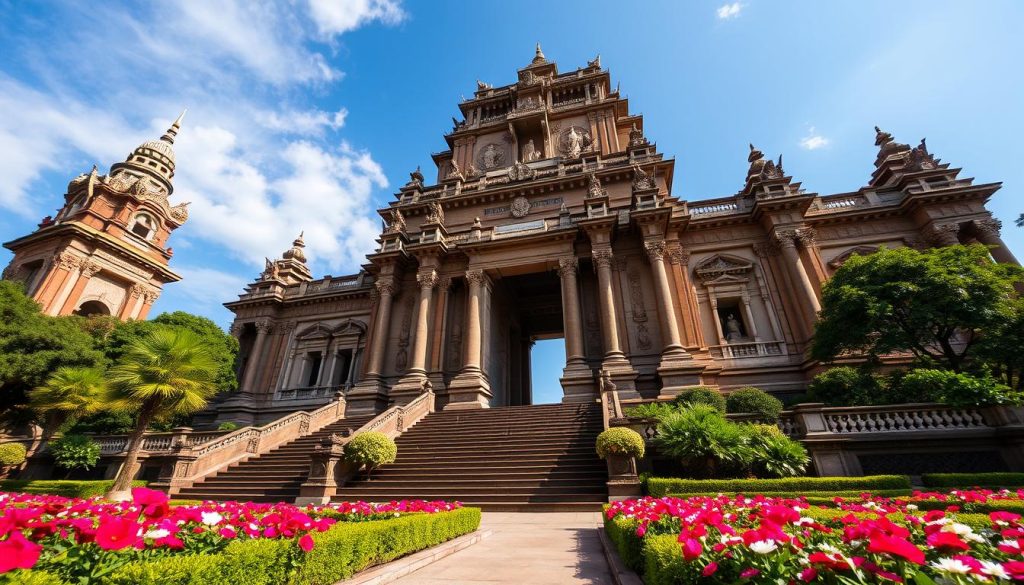
The Patuxai Monument is a stunning example of Laotian creativity and culture. It stands out with its unique design, blending local art with foreign influences. This blend makes Patuxai a fascinating study of both its design and cultural elements.
Design Inspirations and Cultural Elements
This monument, like the Arc de Triomphe in Paris, has its own Laotian touch. It’s 55 meters tall, with seven levels that show off intricate details. You’ll see Buddha-shaped windows and spiral staircases.
The upper levels celebrate Laos’ rich culture with mythological motifs. These motifs reflect the area’s deep cultural heritage.
Unique Features and Symbolic Statues
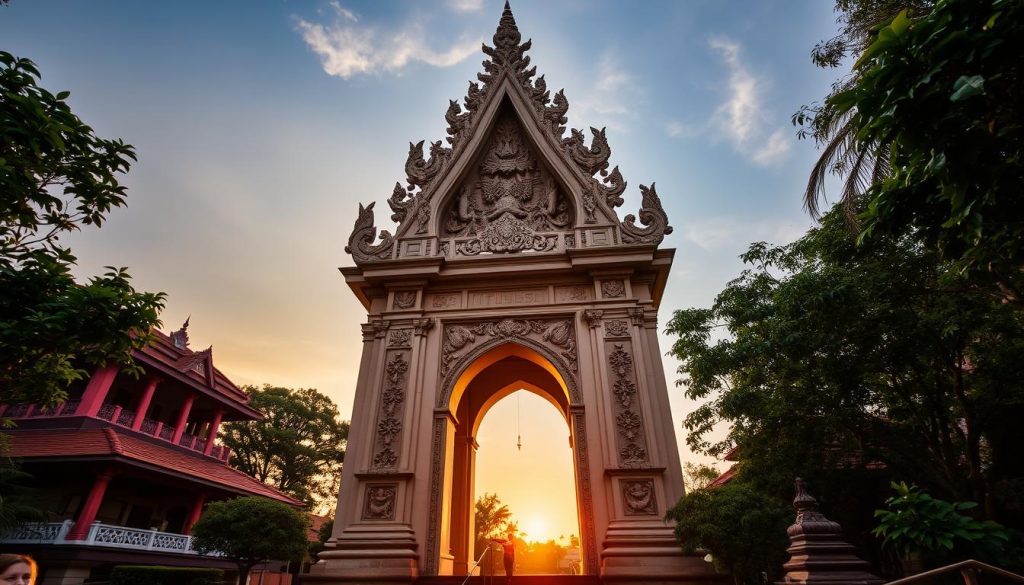
The Patuxai is known for its statues of the Kinnari and Naga King. These figures are key in Laotian mythology. Inside, you’ll find depictions of Hindu deities like Vishnu, Indra, and Brahma.
This mix of Buddhist and Hindu influences adds depth to understanding Laos’ cultural symbolism. It also sheds light on the stories behind its architecture.
| Feature | Description |
|---|---|
| Height | 55 meters |
| Levels | 7 levels with diverse architectural elements |
| Main Statues | Kinnari and Naga King |
| Interior Details | Depictions of Hindu deities |
| Mythological Motifs | Scenes from Laotian mythology and history |
Patuxai Vientiane Insights
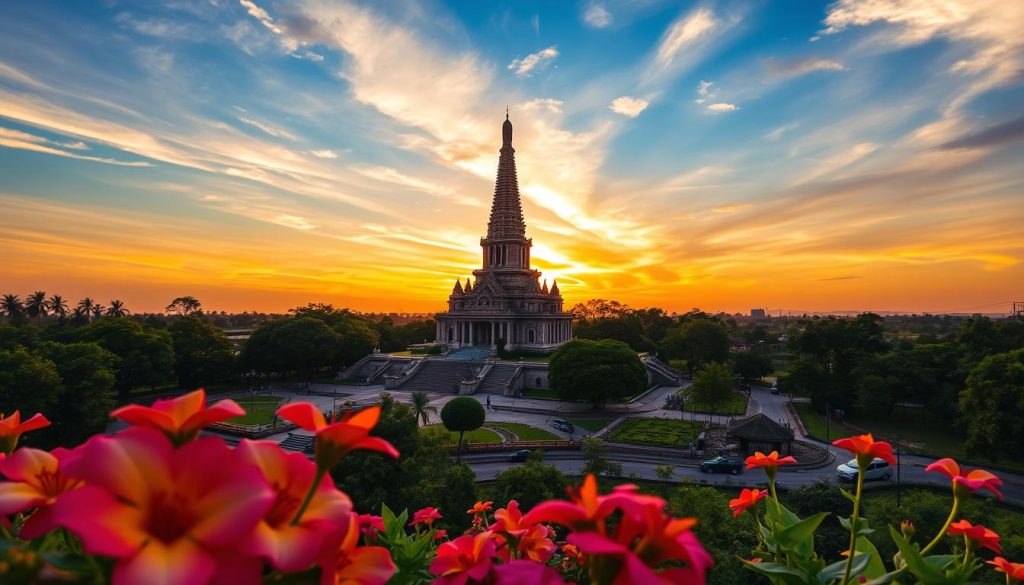
Patuxai is more than just a monument; it’s a cultural heart of Vientiane. It holds deep cultural significance for both locals and tourists. It’s where traditional ceremonies and celebrations take place, making it a key part of local life.
Vientiane has grown fast, with modern roads and over a million people. The new expressway to Vang Vieng, opened in 2020, makes visiting Patuxai easier. This shows how Vientiane blends old traditions with new developments.
Near Patuxai, landmarks like Pha That Luang add to the city’s story. This stupa, rebuilt in the early 1900s, shows Vientiane’s rich history. These sites are key to understanding the city’s cultural heritage.
Visiting Patuxai is more than seeing a beautiful building. It’s diving into the local culture. You’ll experience the lively atmosphere and gain a deeper understanding of Vientiane’s daily life.
| Aspect | Description |
|---|---|
| Population | Over 1 million inhabitants in Vientiane |
| Modern Infrastructure | Expressway to Vang Vieng significantly reduces travel time |
| Cultural Hub | Site for local traditions and celebrations |
| Historical Significance | Patuxai completed in 1969, reflecting a mix of modern and historical influences |
| Other Attractions | Pha That Luang and Wat That Khao nearby |
What to Experience at Patuxai Site
Exploring Patuxai is a journey into the heart of Laotian culture. This landmark is a key part of Vientiane’s attractions. It showcases traditional Laotian designs that tell the nation’s history.
Art and Cultural Significance
The art at Patuxai brings Laotian culture to life. Each design reflects Laos’s rich history and talent. You’ll find cultural exhibits and local art, deepening your connection to Laos.
Historical Context of the Symbolism
Patuxai is a symbol of Laos’s fight for freedom. It honors heroes who battled colonial powers. The monument’s details tell the story of Laos’s quest for independence.
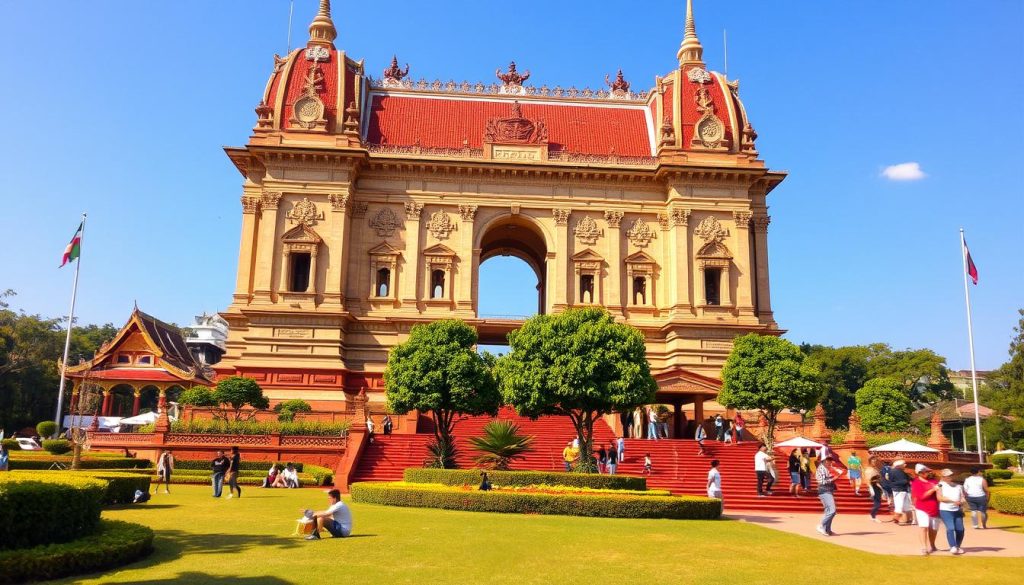
The Enchanting Beauty of Patuxai
The view from Patuxai’s top is among the best in Vientiane. As you climb, you see the Mekong River and the city’s hustle and bustle. It’s a perfect spot for photos, showing Laotian life in action.
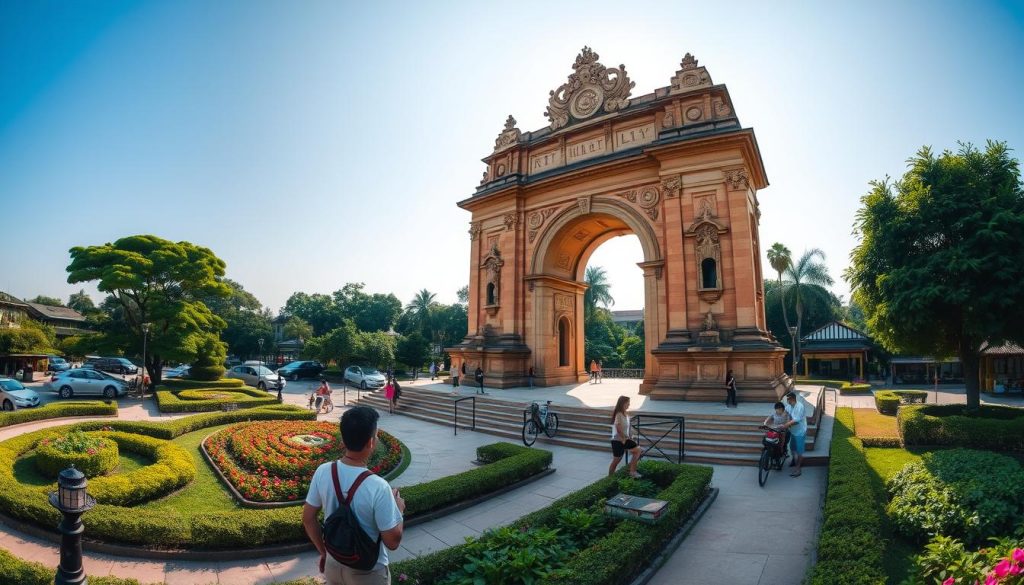
Views and Vantage Points
Exploring Patuxai’s observation points reveals new views. From the top, you see the monument, parks, and street life. Each level shows how Laos’ history meets modern architecture.
Evening Ambiance at Patuxai
At night, Patuxai changes. The monument lights up, making it a peaceful spot. You can walk in the parks or try street food. The evening’s calm and Patuxai’s beauty make it a top evening spot.
Travel Tips for Visiting Patuxai
Planning your trip to Patuxai in Vientiane? Knowing key Laos travel tips makes your visit better. The dry season, from November to February, is the best time to go. The weather is cool, and humidity is low, perfect for sightseeing.
Best Times to Visit
The best times to visit Patuxai are during the dry season. Expect sunny days with temperatures between 20°C to 30°C (68°F to 86°F). Visiting during festivals adds to the fun, with cultural events and local celebrations.
Getting There and Local Currency Tips
Getting to Patuxai is easy. You can take public buses, taxis, or rent scooters. Scooters are great for exploring the city. It’s wise to carry local currency Laos, like Lao Kip, for small buys. Many places don’t take credit cards.
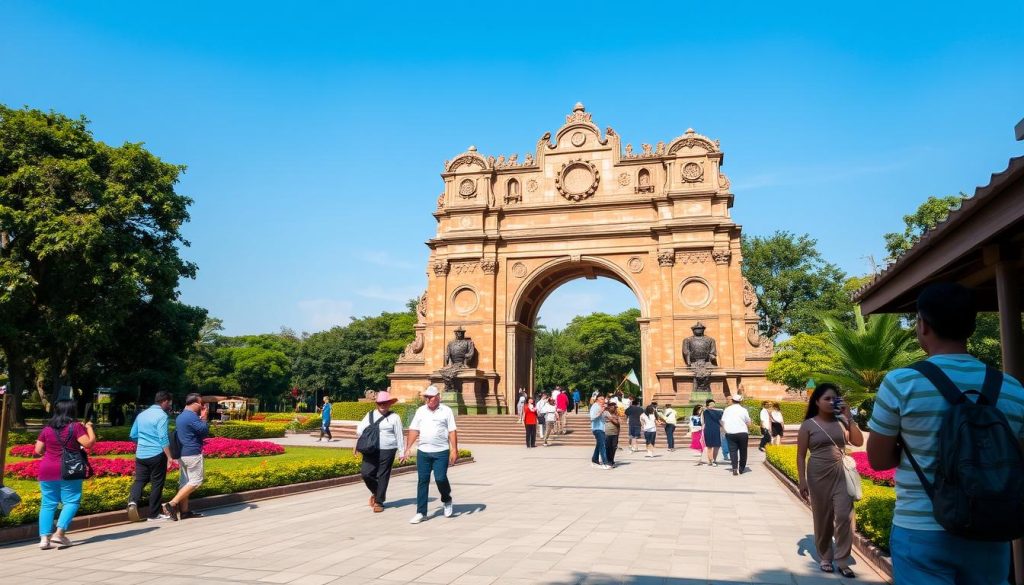
Exploring Other Vientiane Landmarks
Vientiane is a city full of history and spiritual sites. Exploring its landmarks lets you discover the city’s deep stories. Pha That Luang and Wat Si Saket are key places to visit, showing the city’s rich culture and history.
Pha That Luang: The Golden Stupa
Pha That Luang is a symbol of Laotian identity and faith. Its golden look is stunning. This stupa has a long history, starting in the 16th century.
It’s a place of faith and pride. It attracts both spiritual seekers and history lovers.
Wat Si Saket: The Oldest Temple
Wat Si Saket is the oldest temple in Vientiane. It was built in 1818. It mixes Lao and Thai architecture.
Inside, you’ll see over 2,000 Buddha statues. It’s a place for deep thought and appreciation. Its history is a window into Laos’ religious past.
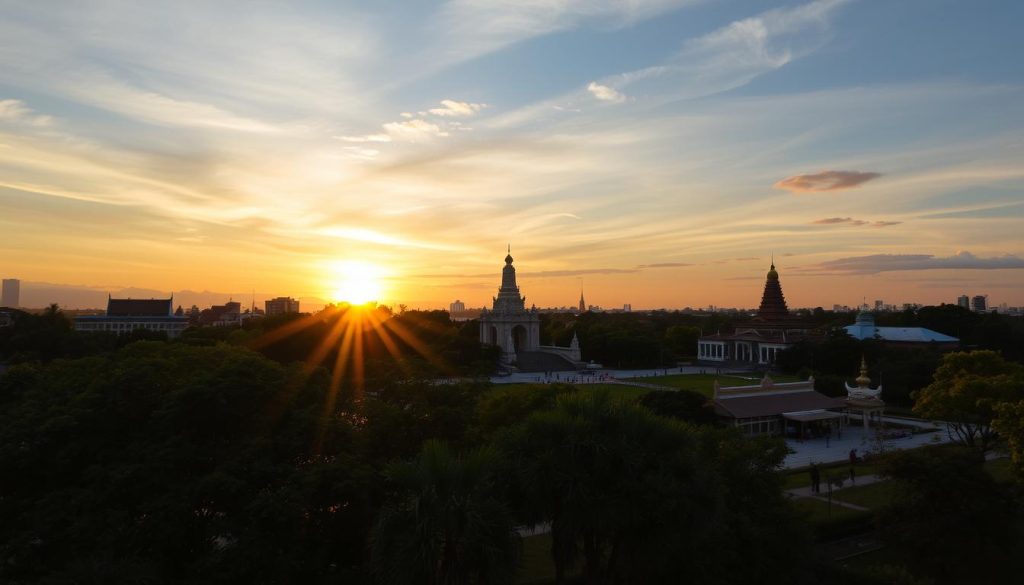
Cultural Experiences in Vientiane
Vientiane is a city full of cultural experiences that show the heart of Laotian customs. By diving into local traditions, you can make memories that last a lifetime. You’ll get to see the true essence of Lao heritage firsthand. From big festivals to traditional dances, there’s plenty to explore.
Engaging with Local Traditions
Joining in local celebrations opens a world of Vientiane cultural experiences. Watching traditional dances and ceremonies gives you a peek into Laotian customs. The Lao people’s warm welcome makes every moment special. You can also visit cultural sites to see local artisans at work, creating crafts that have been passed down for generations.
Food and Culinary Delights
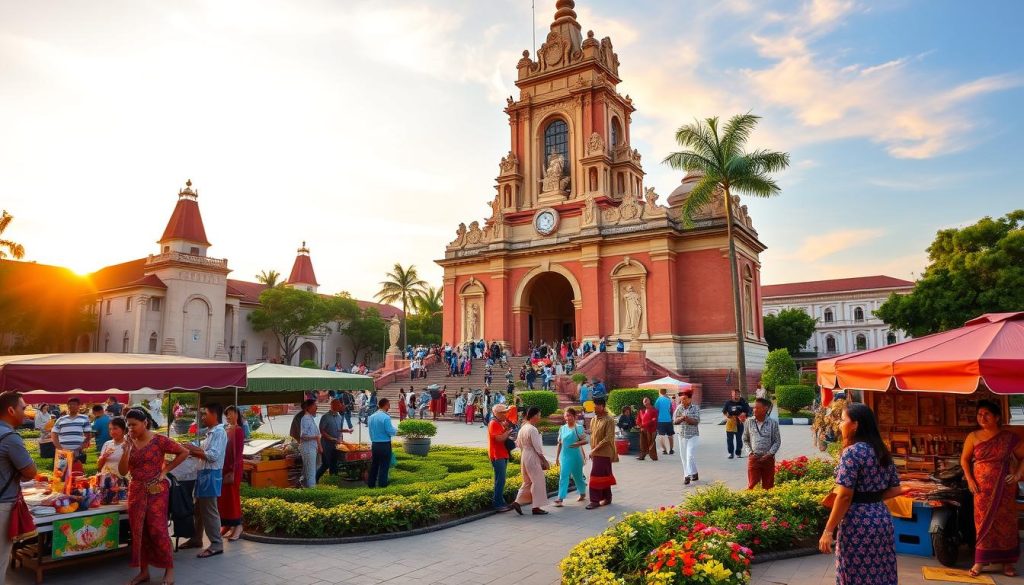
No trip is complete without trying Vientiane’s food, showcasing the best of Lao cuisine. Local markets overflow with fresh ingredients, perfect for trying dishes like Sticky Rice (Khao Niao) and Laap. Street vendors offer tasty snacks that are full of flavor. For a deeper dive into Lao food, join a food tour that takes you through the city’s culinary highlights.
The Vientiane Night Market is famous for its wide range of food. It offers everything from savory dishes to sweet treats that locals love.
Best Views in Vientiane
The Patuxai viewpoint is a top spot for stunning views in Vientiane. From the observation deck, you get amazing views of the city and the Mekong River. It’s perfect for photographers and anyone looking for a special moment.
Patuxai Observation Deck
The Patuxai observation deck gives you a great view of Vientiane. You can see the city’s design, green spaces, and historic sites. It’s a must-see for anyone exploring Vientiane, offering a mix of nature and architecture.
Other Scenic Spots to Explore
There are more Vientiane scenic locations to explore beyond Patuxai. The Mekong Riverside Park is great for walks by the river. It offers beautiful views, best at sunset. Each spot has its own charm, making them great places to visit in Vientiane.
Patuxai Sightseeing Guide
Planning your visit to Patuxai? Knowing how much time you need and your options for exploring is key. This guide will help you make the most of your trip.
Time Needed for a Visit
Visiting Patuxai usually takes about two hours. This time lets you climb to the top, see the detailed architecture, and enjoy the cultural feel around it.
Guided Tours vs. Self-Exploration
Deciding between a guided tour or exploring on your own changes your experience. Tours offer a deep dive into Patuxai’s history and nearby sights. Exploring by yourself lets you enjoy each part at your pace.
| Tour Option | Description | Duration |
|---|---|---|
| Patuxai Guided Tour | Includes a local guide who shares in-depth insights about the monument and nearby attractions. | Approximately 2-3 hours |
| Self-Exploration | Gives you the flexibility to explore at your own pace, taking breaks as needed. | 2 hours or more depending on interest |
Conclusion
Visiting Patuxai is a journey into Laos’s rich history and culture. This monument, like the Arc de Triomphe, shows the strength and hope of the Laotian people. From the top, you see stunning views of Vientiane, making you think about your trip.
But there’s more to see than just the monument. Places like Talat Sao and Wat Si Saket give you a closer look at Laos’s heritage. You can also enjoy the Mekong River or try local foods at Ban Anou Night Market. Each experience connects you more to Laotian culture.
Patuxai is more than a landmark; it’s a key to understanding Laos. With visits to Pha That Luang and Buddha Park, you’ll learn more about Vientiane. Every step in Vientiane makes you appreciate the land and its people more. It gives you a special view of Laos’s heart.