Explore Omani Frankincense Workshops & History
Ever wondered why Omani frankincense, or luban, was once more valuable than gold? This ancient resin has played a big role in global trade for centuries. It’s deeply connected to Oman’s culture and history.
Learning about Omani frankincense history shows its economic and cultural importance. It’s not just about its value but also its role in shaping modern society.
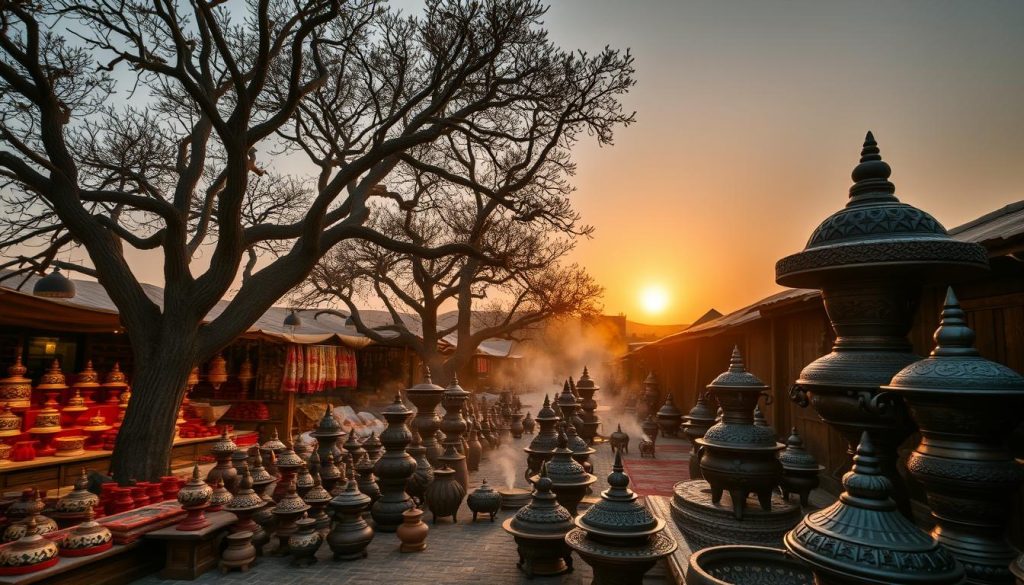
Visiting traditional Omani frankincense workshops is a unique experience. You’ll learn about frankincense production and get hands-on. These workshops show the old ways of tapping Boswellia Sacra trees. It takes eight to ten years for these trees to start producing sap, tapped twice a year for their resin.
Introduction to Omani Frankincense
Omani frankincense has a magical charm that draws people in. It’s made from the resin of the Boswellia sacra tree. This resin is key to the Omani frankincense culture.
In the Dhofar region, Salalah is where frankincense grows and is harvested. It’s a tradition that has lasted for centuries.
Frankincense is more than a smell; it’s woven into Omani life. It’s used in religious rituals and in making luxury perfumes. This adds deep cultural meaning to everyday life. You can find traditional Omani frankincense workshops that teach how to harvest and make frankincense.
Frankincense is important to the local economy. About 3,000 families in Dhofar tap frankincense trees. This practice has been around for centuries. But, these families face economic ups and downs due to environmental and social changes.
Visitors today can experience the rich culture of Omani frankincense. They can smell its amazing aroma and see the skill in making frankincense products. Efforts are being made to keep the number of gum trees stable. This shows a commitment to keeping this heritage alive for the future.
| Aspect | Details |
|---|---|
| Source Tree | Boswellia sacra |
| Main Region | Dhofar, particularlly Salalah |
| Households Involved | Approx. 3,000 for frankincense tapping |
| Cultural Significance | Used in religious practices and perfumes |
| Environmental Initiatives | 5,000 trees being germinated to enhance sustainability |
The Historical Significance of Frankincense in Oman
Frankincense is a key part of Frankincense history in Oman, going back to ancient times. It’s not just about money; it’s also tied to culture and religion. Arabian traders used the Incense Road to move frankincense, linking Asia and Europe. This made Oman a key spot in the trade of fragrances.
The resin from Boswellia sacra trees, found only in Oman, was once more valuable than gold. By the second century, over 3,000 tons of incense went to the Mediterranean each year. This shows how important frankincense was in old times.
Frankincense was used for more than just trade. It played a big role in traditional frankincense practices in many cultures. In ancient Egypt, it was used in perfumes, oils, and for embalming. Excavations in Dhofar showed old routes for moving this valuable item, highlighting its importance.
Today, Oman’s Amouage brand uses frankincense in about 60% of its products. Sadly, the number of these trees has dropped a lot because of climate change and over-harvesting. The government is working to save these trees, including starting a frankincense farm in Wadi Dawkah.
Visiting Oman, you’ll see how the frankincense history in Oman deeply influences the culture. It shows why we must keep this tradition alive for future generations.
| Time Period | Key Developments |
|---|---|
| 1500 BC | Introduction of frankincense trade linked to camel domestication |
| 4th Century BC | Frankincense became a crucial part of ancient trade routes |
| 15th Century BC | Queen Hatshepsut’s expedition for resins such as frankincense |
| 2nd Century AD | Over 3,000 tons of incense exported from southern Arabia |
| 1952-1962 | Excavations revealing ancient caravan routes in Dhofar |
Traditional Omani Frankincense Workshops and Learning Its History
Traditional Omani frankincense workshops offer a deep look into the history of frankincense. They are more than just shows; they are key places for discovering Omani frankincense traditions. Here, you can see how an old craft is still important today.
Overview of the Craft
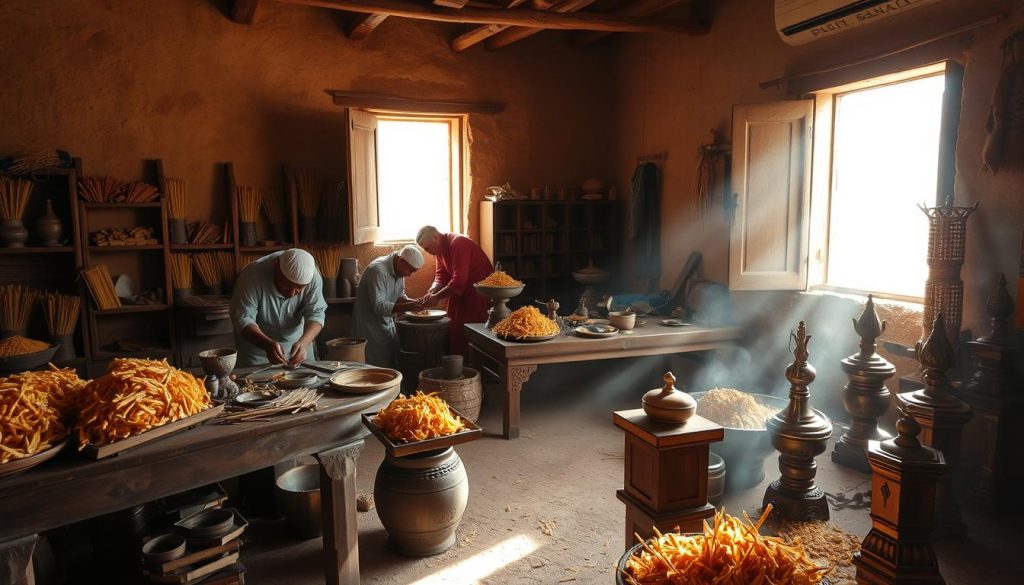
In these workshops, you’ll learn about the detailed steps of making frankincense. The methods used have been passed down through generations. You’ll get to see how the resin is tapped from trees.
This hands-on learning helps you understand the cultural value of frankincense. You’ll learn about different types like Thiki, Hojari, and more. This is great for anyone wanting a frankincense educational experience.
What to Expect at Workshops
At traditional Omani frankincense workshops, you’ll get a full experience. You’ll help make frankincense and learn about its history and myths. You might even get to try the resin.
Expect to learn a lot about Oman’s role in the frankincense trade. These workshops are a unique part of your journey.
Exploring the UNESCO World Heritage Sites
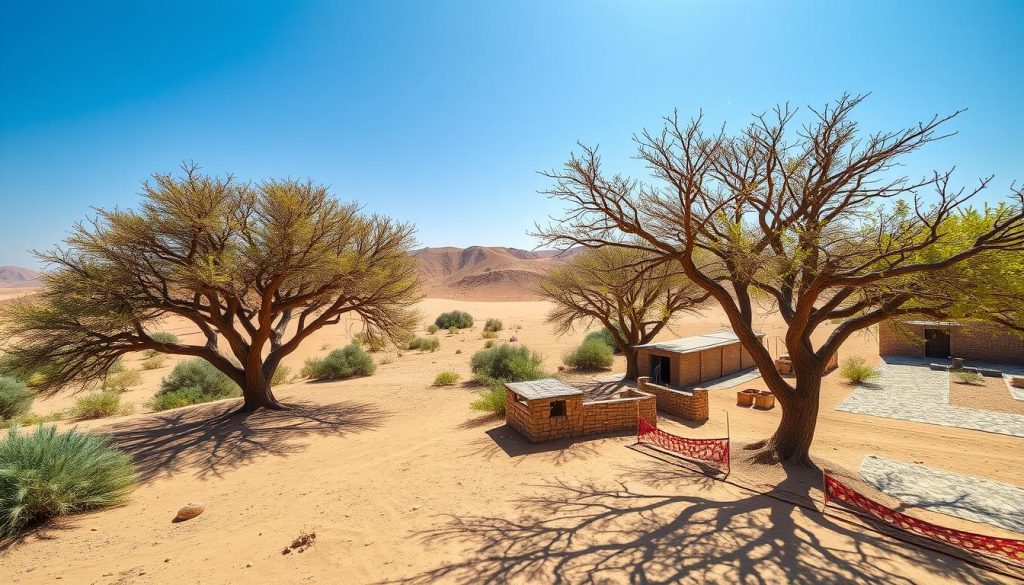
Omani frankincense history is deeply connected to UNESCO World Heritage Sites. These sites highlight the region’s rich past and its role in trade. Khor Rori and Wadi Dawkah are key places where frankincense history comes alive. Visiting these sites lets you see ancient trade paths and the Boswellia sacra tree’s ecological value.
Khor Rori (Sumhuram): The Ancient Port
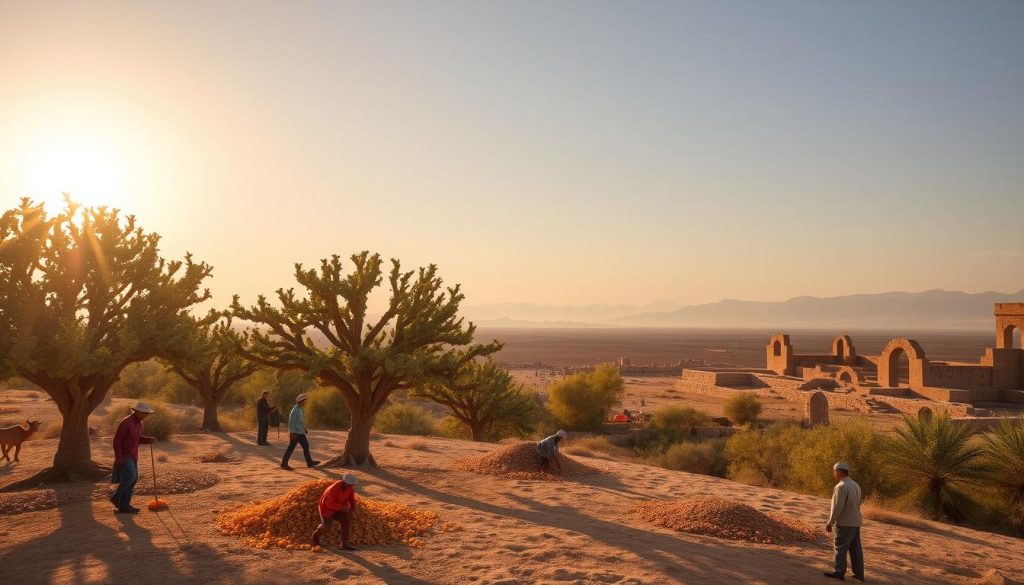
Khor Rori was a major port in the frankincense trade from the 4th century BC to the 5th century AD. This UNESCO site shows its commercial importance through archaeological finds. Incense burners found there highlight frankincense’s role in the region’s history. Exploring the ruins, you see how this luxury trade enriched the local economy.
Wadi Dawkah: The Tree Groves
Wadi Dawkah is a key area in the Land of Frankincense, with many Boswellia sacra trees. UNESCO sites in Oman stress the importance of saving this area from threats like climate change and overharvesting. Walking among these trees, you learn about the ecological importance and lasting impact of frankincense production on Oman’s culture.
Harvesting Frankincense: The Process Explained
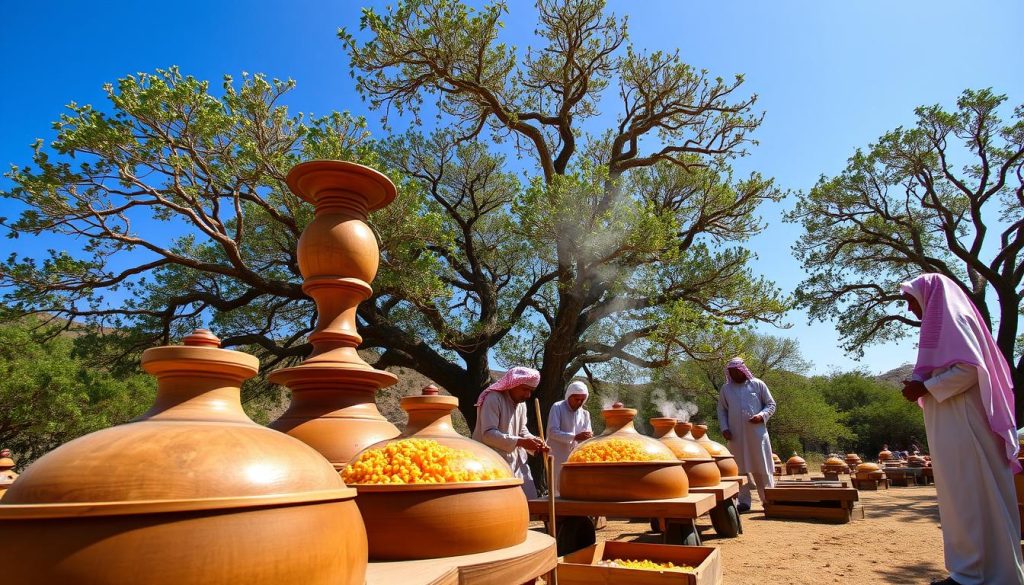
Harvesting frankincense is a careful and ancient practice in Oman and other places like Somalia and Ethiopia. A skilled harvester makes precise cuts in the Boswellia sacra tree’s bark. This lets the tree release a milky resin, called “tears.” After it hardens, the resin is carefully collected.
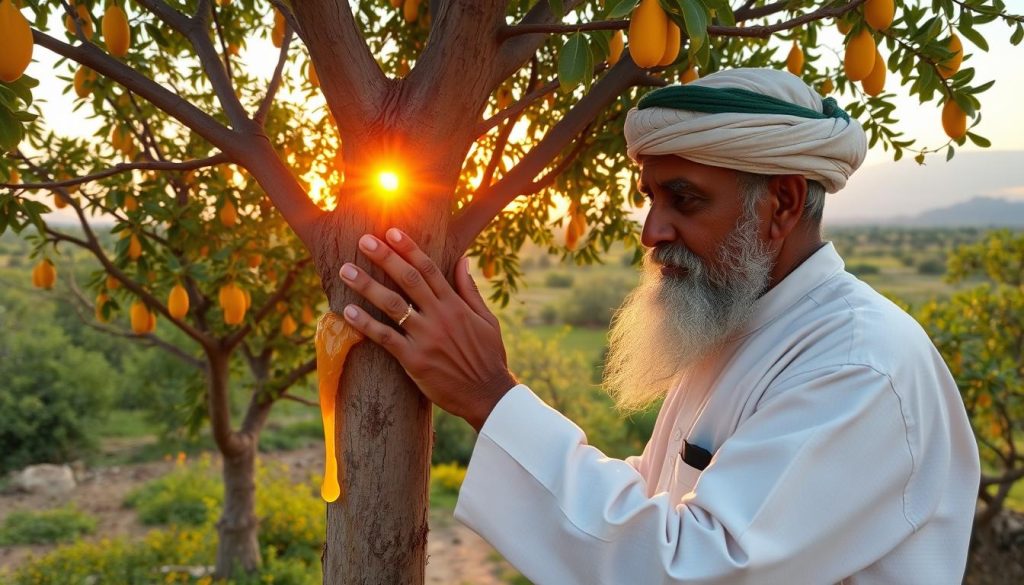
The best time to harvest frankincense greatly affects its quality. Harvesting is done in specific seasons to keep the trees healthy and ensure a good yield. If too much resin is taken, it can harm the trees, so sustainable methods are used.
This process requires patience and knowledge of the tree’s biology. Harvesters start collecting resin when the trees are about 30 years old. This way, the resin is of the best quality. Frankincense is known to help with many diseases, so harvesting it with care is crucial.
Families that care for frankincense trees often use sustainable harvesting. This approach protects the trees and the ecosystems they live in. It ensures that future generations can still enjoy the resin and its cultural value.
Modern Uses of Frankincense in Omani Culture
In Oman, old traditions meet new ways. Frankincense, a special resin, is used in cooking and medicine. It’s interesting to see how it’s used today in Oman.
Culinary Applications
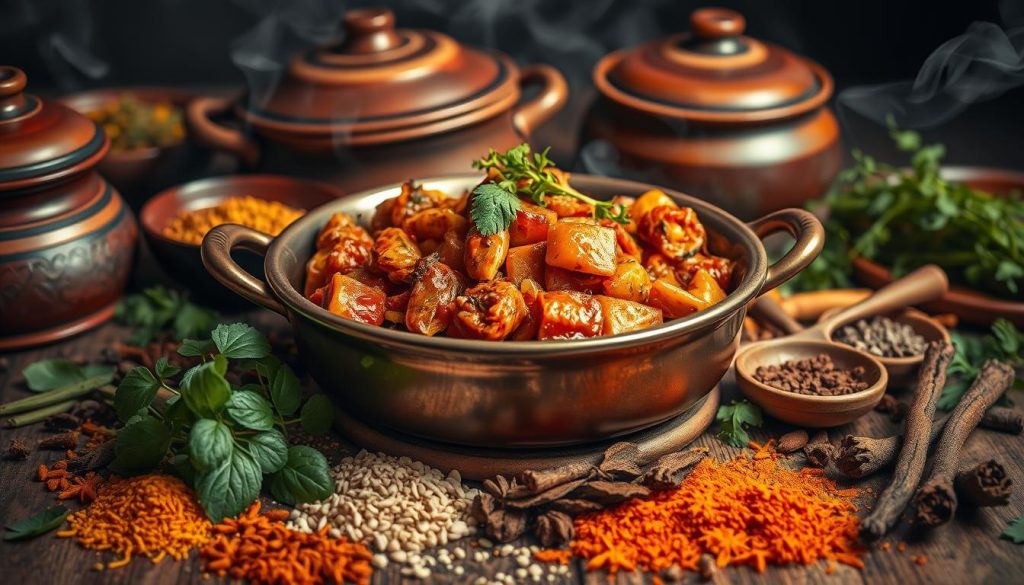
Chefs in Oman use frankincense in creative ways. They mix it into food to create unique tastes. It’s added to sweets or milk, making meals more enjoyable.
This shows how Omani food combines history and taste.
Medicinal Properties and Benefits
Frankincense is valued for its health benefits. Omanis use it to treat many health problems. Its boswellic acids help with inflammation, aiding conditions like arthritis and skin issues.
Studies back up its health benefits. Learning about frankincense in Oman reveals its importance in both food and medicine.
Visiting Frankincense Distillation Workshops
Visiting distillation workshops lets you dive into Omani frankincense history. You’ll see how aromatic resin turns into valuable oils. You’ll also learn about the equipment and quality checks that make these products top-notch.
These workshops are more than just a sight to see. They let you dive into the art of discovering Omani frankincense traditions. You’ll get to smell the frankincense oils yourself. This experience deepens your understanding of frankincense’s cultural importance.
| Aspect | Details |
|---|---|
| Location | Various workshops across Oman |
| Experience | Hands-on observation of distillation |
| Learning Focus | Quality control and wood source selection |
| Fragrance | Inhale the distinct aroma of pure frankincense |
Distilling frankincense is a big part of Omani culture. But, most of it is made elsewhere today. Knowing how it’s made helps you see why Omani frankincense is the best. Local suppliers make sure you get the real deal, keeping these traditions alive.
The Cultural Importance of Frankincense in Oman
Frankincense is deeply rooted in Oman’s culture, blending into spiritual and religious practices. Its aromatic scent makes it a key part of many rituals. It adds to the ceremony’s atmosphere and symbolizes connection to the divine.
Religious and Spiritual Uses
Frankincense has been crucial in religious ceremonies for thousands of years. It was seen as a sacred offering. In mosques, churches, and temples, its smoke is thought to lift prayers, creating a space for reflection.
Its cultural value goes beyond its smell. The ancient trade that made Dhofar rich is part of its history. This heritage shapes local traditions, making frankincense a symbol of Omani identity.
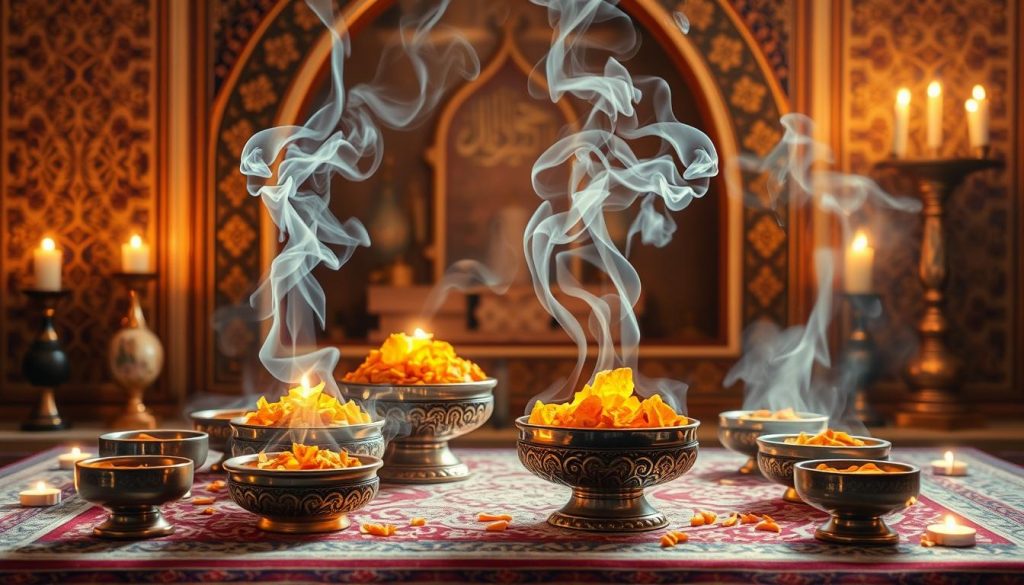
Today, frankincense remains important in personal and community rituals. People burn it to cleanse spaces or seek spiritual clarity. Its scent and healing properties have made it a favorite, showing its ongoing role in spiritual practices.
Conclusion
Omani frankincense culture shows a deep link between history, trade, and art. It has lasted for thousands of years. From the early trade routes in Ra’s al Jinz to today’s workshops, it’s a journey of discovery.
By joining traditional workshops, you get a hands-on look at frankincense’s history. You learn how it’s harvested and used, diving into its cultural stories. These workshops keep Omani frankincense alive, passing it down to future generations.
Frankincense’s history and importance draw you in for a closer look. It’s a journey that enriches you personally or professionally. Exploring Omani frankincense culture lets you see Oman’s rich heritage and its global impact. You become part of a story that honors its past while growing.