Explore Mombasa’s Vibrant Spice Markets
Ever wondered why Kenyan food tastes so unique? It’s all thanks to Mombasa’s spice markets. Here, the air is rich with exotic scents and the chatter is lively.
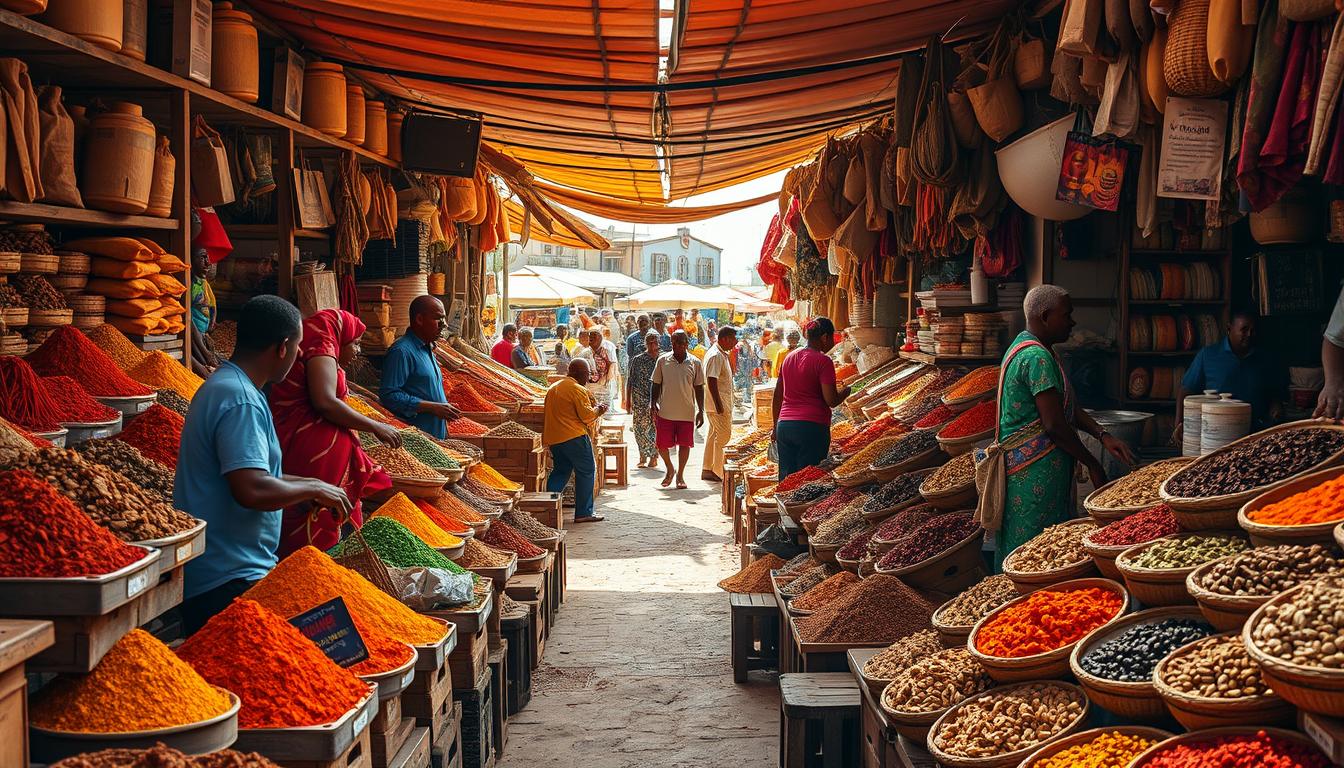
Walking into these markets, you’re hit with a burst of colors, smells, and tastes. People from everywhere come to find spices, herbs, and cooking ingredients. It’s a truly immersive experience.
As you wander through the stalls, you’ll learn about the markets’ rich history and cultural importance. You’ll see why they’re a big part of Mombasa’s identity.
The Rich History of Spice Trading in Mombasa
Walking through Mombasa’s spice markets, you follow in the steps of centuries-old traditions. The city’s spice trade history goes back to ancient times. It was shaped by Arab traders and later by colonial powers.
Ancient Trade Routes and Arab Influence
The ancient trade routes to the Middle East and beyond were key to Mombasa’s spice trade. Arab traders brought spices like cloves, cinnamon, and cardamom. These spices became a big part of local food and business. The legacy of this early trade is still seen in Mombasa’s markets today.
Colonial Impact on Mombasa’s Spice Trade
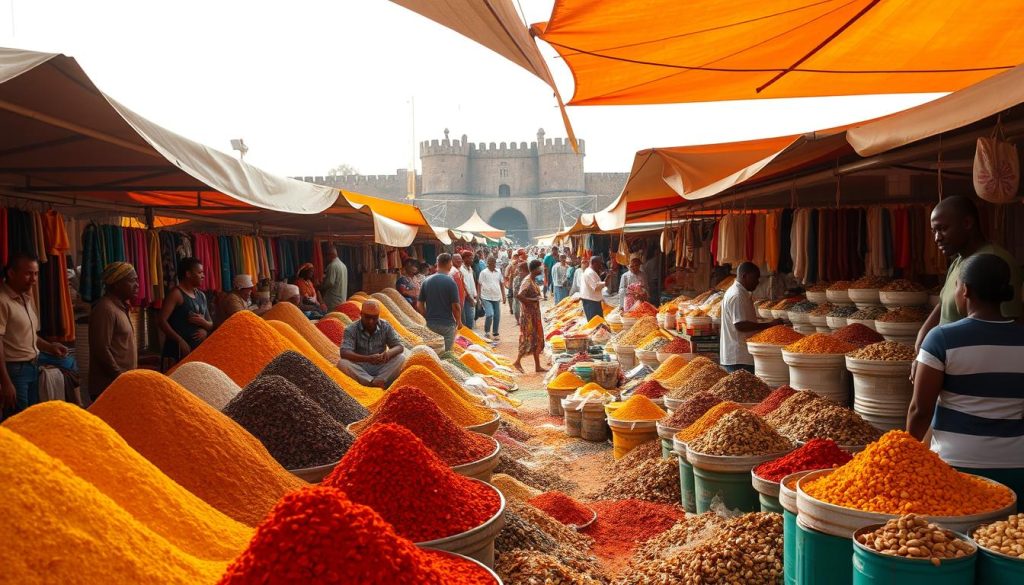
The colonial era changed Mombasa’s spice trade a lot. European powers took control, setting up big spice plantations. This made Mombasa a major spice trading center, a role it still holds today.
| Period | Influence on Spice Trade | Key Spices |
|---|---|---|
| Ancient Times | Arab traders introduced new spices | Cloves, Cinnamon, Cardamom |
| Colonial Era | European powers established plantations | Cloves, Nutmeg |
Knowing Mombasa’s spice trade history makes visiting the markets even more special. The mix of ancient traditions and colonial influences has made a unique spice culture. This culture is still alive and thriving today.
The Cultural Significance of Mombasa Spice Markets
In Mombasa, spice markets are key to the local culture and economy. They are more than just places to buy and sell. They show the city’s rich history and its diverse culture.
Role in Local Economy and Identity
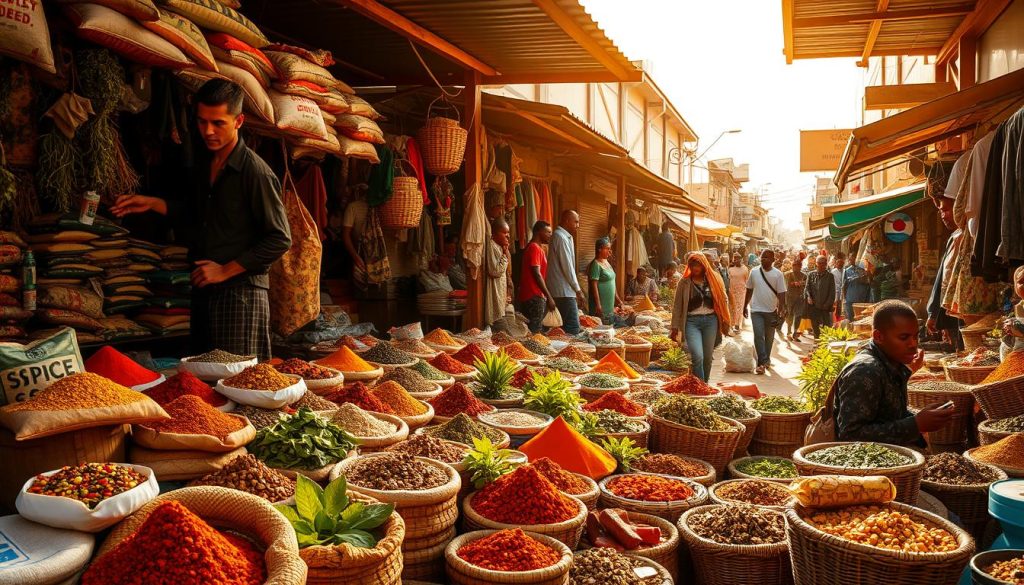
The spice markets in Mombasa are vital for the local economy. They give jobs to many traders and artisans. They sell spices, herbs, and other products that are important for local food and traditions.
These markets are also where locals meet. They help strengthen community bonds and keep cultural identity alive.
Key aspects of their role include:
- Employment opportunities for local residents
- Preservation of traditional spice trading practices
- Cultural exchange and community interaction
Spices as Cultural Exchange Points
Spices have long been a key part of cultural exchange in Mombasa. Influences from Arab, Portuguese, and Indian traders have shaped the spice trade. The markets are a mix of cultures, where traditions blend.
The exchange of spices and knowledge has enriched the local culture. It has brought new flavors and cooking methods. The variety of spices shows the cultural diversity. You can find traditional East African spices and exotic ones from around the world.
These markets are more than just economic and cultural centers. They connect Mombasa to its historical past. They show the city’s role as a major trading hub in the region.
Most Popular Mombasa Spice Markets to Visit
Exploring Mombasa reveals a world of scents in its lively spice markets. The city boasts several famous spice markets. Each offers a special experience that attracts visitors worldwide.
Old Town Market: The Historic Heart
The Old Town Market is filled with history, dating back to ancient trade routes. Here, exotic spices like cardamom, cinnamon, and cloves are found. These spices have supported the local economy for centuries.
Kongowea Market: The Largest Trading Hub
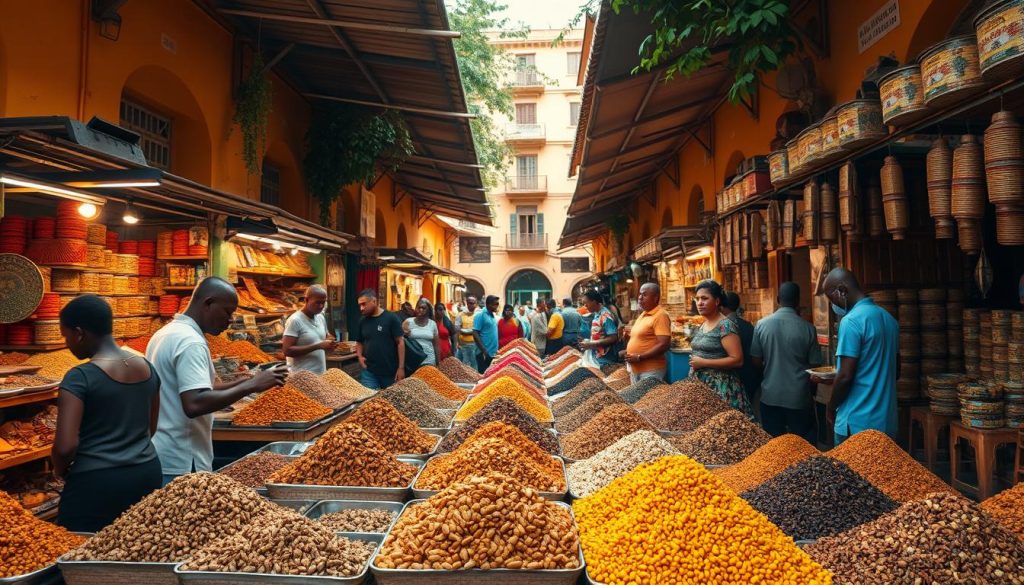
Kongowea Market is the biggest trading spot in the area. It draws both locals and tourists. The market is famous for its wide range of spices, from traditional to exotic. Visitors can wander the stalls, talk to vendors, and try local foods.
Mackinnon Market: A Local Favorite
Mackinnon Market is loved by locals for its lively vibe and spice variety. Shoppers can explore the busy aisles and find unique spices and herbs. The market also shows the daily life of the locals, enriching the experience.
| Market Name | Notable Features | Best Time to Visit |
|---|---|---|
| Old Town Market | Historic significance, variety of exotic spices | Morning |
| Kongowea Market | Largest trading hub, diverse crowd | Afternoon |
| Mackinnon Market | Vibrant atmosphere, wide selection of spices | Evening |
Each market offers a unique look into Mombasa’s spice culture. They let visitors explore exotic spices and see local traditions up close.
Essential Spices and Herbs Found in Mombasa’s Markets
Exploring Mombasa’s markets reveals a world of spices and herbs. These have been key to local trade for centuries. The city’s location along ancient trade routes has mixed different culinary traditions, seen in its spices and herbs.

Traditional East African Spices
In Mombasa’s markets, traditional East African spices are everywhere. You’ll find cardamom, cinnamon, and cloves, essential in local cooking. These spices are used in dishes like biryani and chai. Their quality is famous, drawing buyers from all over.
Cardamom is loved for flavoring tea and coffee. It comes in green or black pods, with green being more fragrant. Cinnamon sticks are also common, adding warmth to both sweet and savory dishes. Its sweet flavor is a key part of Swahili cooking.
Imported Exotic Varieties
Mombasa’s markets also offer exotic spices from afar. Spices like saffron from the Middle East and star anise from Asia bring new tastes to local dishes. These imports have enriched the local flavors, creating a unique blend.
The availability of these spices shows Mombasa’s long history in the spice trade. “The spice trade has been the lifeblood of our economy for centuries,” a vendor notes. This variety makes Mombasa a great place for food lovers to explore.
Medicinal Herbs and Their Uses
Mombasa’s markets also offer medicinal herbs. Herbs like aloevera and neem are used for health. They’re sold alongside spices, showing the link between food and medicine in local culture.
Aloevera is good for the skin and digestion. Neem is known for fighting bacteria. These herbs show the local people’s resourcefulness and traditional knowledge.
The Sensory Experience of Mombasa Spice Markets
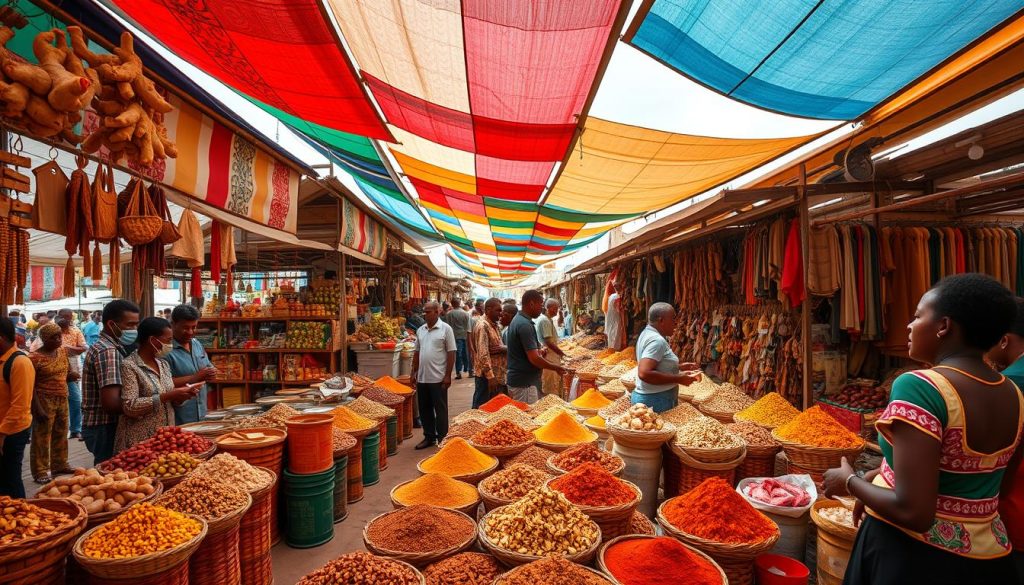
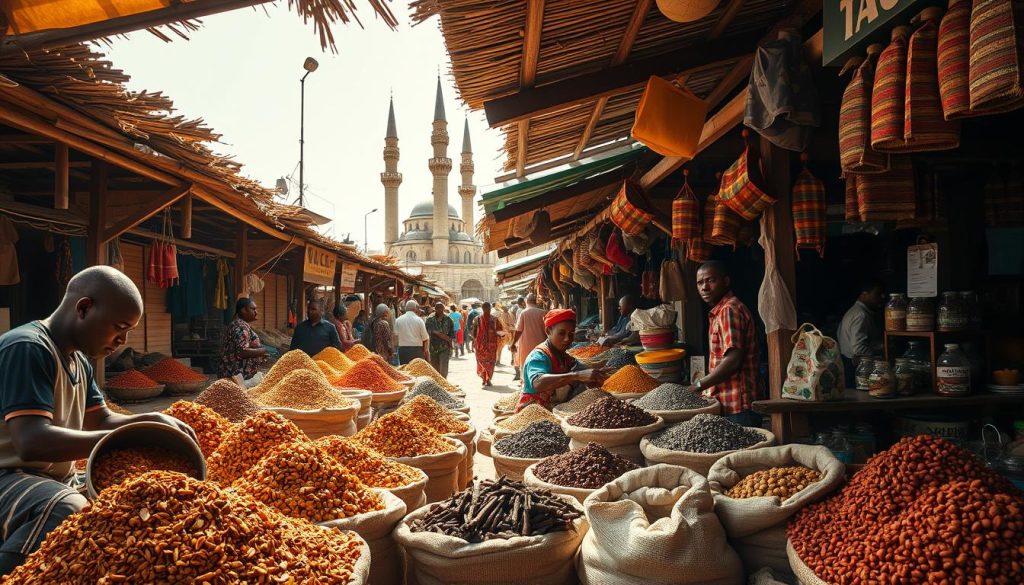
When you enter Mombasa’s spice markets, you’re surrounded by colors, smells, and tastes. The air is filled with the scent of exotic spices. The vibrant displays of spices create a colorful world that excites your senses.
Navigating the Colorful Displays
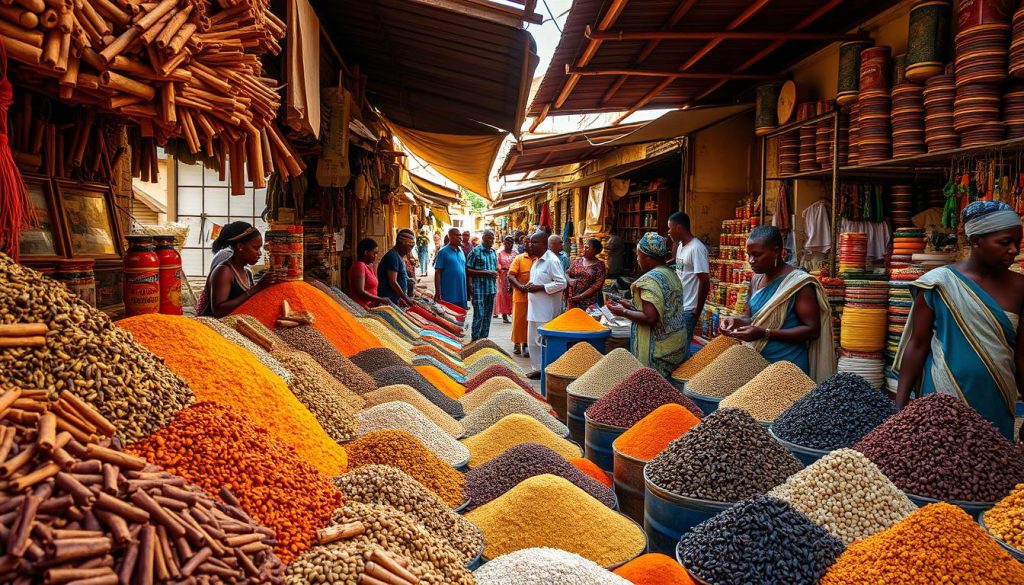
Exploring Mombasa’s spice markets is an exciting adventure. The markets are full of spices, each with its own color, texture, and smell. You’ll see bright red chili peppers, golden turmeric, and deep green cardamom pods.
The vendors are proud of their displays. They arrange the spices in beautiful patterns to show off their products.
Understanding the Aromas and Flavors
Discovering the smells and tastes of Mombasa’s spices is a journey for your senses. The markets have many spices, from the strong smell of cloves to the sweet taste of cardamom. You can try different spices and learn about their uses in local food.
The vendors love to share their knowledge. They tell you about the spices and how to use them in cooking.
| Spice | Aroma | Flavor |
|---|---|---|
| Cloves | Pungent, warm | Strong, slightly sweet |
| Cardamom | Sweet, floral | Unique, aromatic |
| Cinnamon | Warm, woody | Sweet, spicy |
Shopping Tips and Bargaining Etiquette
Mombasa’s spice markets are a feast for the senses. With some tips, you can shop wisely and with respect. Knowing the local customs will make your visit even better.
How to Identify Quality Spices
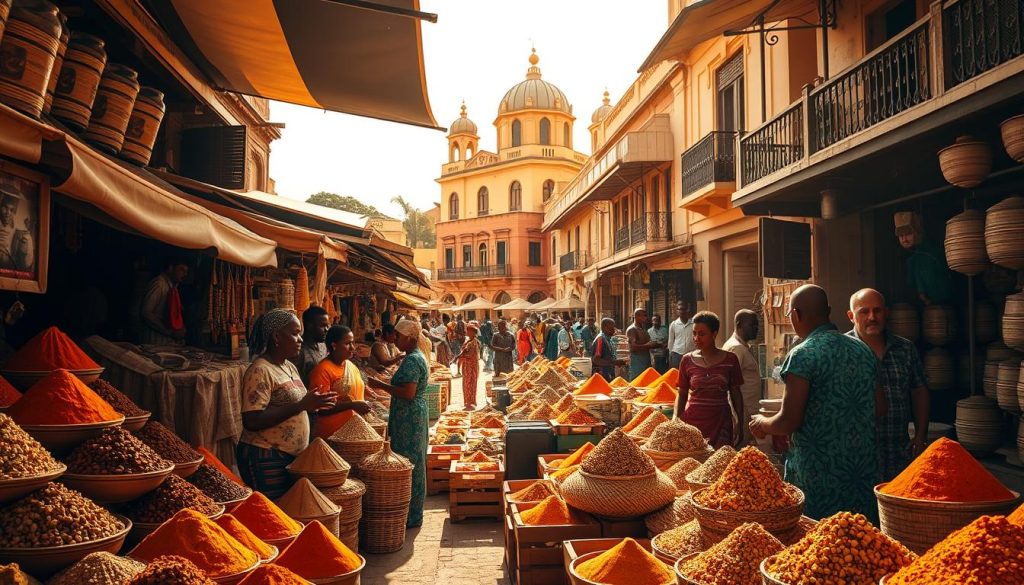
When shopping for spices in Mombasa, look for vibrant colors and a strong smell. For example, good saffron threads are deep red-orange and smell great. Freshness is key; check the packaging or ask when the spice was last replenished.
Negotiation Strategies and Cultural Considerations
Bargaining is a big part of the spice market experience in Mombasa. Start by knowing the average price of what you want. Be friendly and smile; it helps a lot. A local vendor once said,
“A good bargain is like a good spice – it adds flavor to both parties.”
The aim is to find a price both sides can agree on.
Packaging and Bringing Spices Home
After buying, think about how to carry your spices home. Use airtight containers to keep them fresh. Some vendors might offer packaging help; just ask. Keep your spices cool and dry when traveling. Enjoying your Mombasa spices will remind you of the rich history and culture behind them.
Guided Tours of Mombasa Spice Markets
A guided tour of Mombasa’s spice markets is a mix of history, culture, and sensory fun. You’ll walk through lively stalls and colorful displays. A guide will share interesting facts about the spices and their importance in local culture.
Popular Tour Options and What They Include
There are many tour options for Mombasa’s spice markets. These tours let you explore the market with a guide. You’ll learn about different spices, where they come from, and how they’re used.
Some tours also include cooking demos or visits to spice plantations. This adds more to your experience.
| Tour Type | Inclusions | Duration |
|---|---|---|
| Basic Market Tour | Guided walk, spice sampling | 2 hours |
| Premium Spice Experience | Cooking demo, plantation visit | 4 hours |
| Private Guided Tour | Personalized guide, flexible itinerary | Variable |
Benefits of Hiring a Local Guide
Getting a local guide can make your spice market tour better. They know a lot about the spices, their cultural value, and the trade’s history. They can also help you find the best deals and navigate the market.
Culinary Applications of Mombasa’s Exotic Spices
The spices in Mombasa’s markets are key to the area’s food culture. They mix African, Arab, and European tastes. These spices are found in traditional Swahili dishes and modern recipes, bringing a unique taste.
Traditional Swahili Dishes and Their Spice Profiles
Swahili food is known for its spice use, like cardamom, cinnamon, and cloves. Biryani and pilau get their special taste from these spices. Coconut milk, chilies, and herbs make these dishes even richer.
| Dish | Key Spices | Flavor Profile |
|---|---|---|
| Biryani | Cardamom, cinnamon, cloves | Aromatic, slightly sweet |
| Pilau | Cumin, coriander, cinnamon | Warm, earthy |
| Ugali | None or minimal | Simple, corn-flour based |
Modern Fusion Recipes Using Mombasa Spices
Modern chefs mix Mombasa’s spices with global cuisines. For instance, adding cardamom to Scandinavian pastries or cinnamon to Mexican sweets. This mix respects tradition while introducing new flavors.
Trying Mombasa’s spices can elevate your cooking. Whether making traditional dishes or modern recipes, these spices add a special touch.
Best Times to Visit Mombasa’s Vibrant Spice Markets
To enjoy your trip to Mombasa, knowing when to visit the spice markets is key. The best time depends on the season, weather, and when the markets are busiest.
Seasonal Considerations and Weather
Mombasa’s weather is warm and humid. It rains a lot from April to June and again from November to December. The dry seasons, from January to March and July to October, are the best times to visit. The weather is nicer then.
Avoiding the rainy seasons makes your visit better. The roads and markets get muddy and hard to walk in during heavy rain.
Market Days and Peak Hours
Most spice markets in Mombasa are open every day. But, Mondays and Fridays are the busiest and most fun days. The markets get really crowded during the peak tourist season too.
The best time to visit is between 9:00 AM and 12:00 PM. The markets are lively, and vendors are ready to show off their products.
Practical Information for Your Spice Market Adventure
To enjoy your trip to Mombasa’s spice markets, you’ll need some key info. This includes how to get there, safety tips for tourists, and where to stay near the markets.
Transportation and Accessibility
Mombasa’s spice markets are easy to reach by different transport. You can take matatus (minivans) or taxis. If you’re in the city center, some markets are walkable. Planning your trip ahead can make it smoother.
Safety Tips for Tourists
Keep an eye on your stuff to avoid pickpocketing. Remember to negotiate prices politely and respect local customs. Drinking water and wearing comfy shoes will make your visit better.
Accommodation Options Near the Markets
Mombasa has many places to stay, from cheap guesthouses to fancy hotels near the markets. It’s smart to book early, mainly during busy times. Hotels in the Old Town are close to the markets.
| Market Name | Nearest Accommodation | Transportation Options |
|---|---|---|
| Old Town Market | Old Town Guest House | Matatus, Taxis, Walking |
| Kongowea Market | Mombasa Beach Hotel | Matatus, Taxis |
| Mackinnon Market | Tudor Hotel | Taxis, Walking |
Conclusion: The Enduring Allure of Mombasa’s Spice Traditions
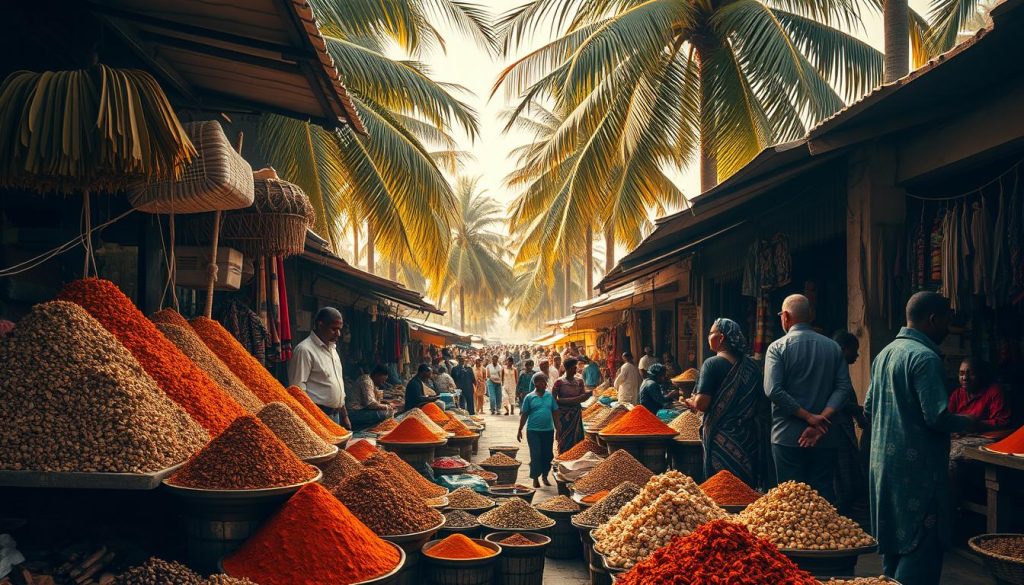
Exploring Mombasa’s spice markets is a journey through history, culture, and flavors. The spice trade has deeply shaped Mombasa’s identity. It has influenced its economy and cultural heritage.
The markets are more than just places to buy spices. They are cultural hubs, showing off the city’s rich history and diversity. Walking through, you learn how spices are woven into local life and food.
Visiting these markets lets you dive into Mombasa’s lively traditions. It’s a chance to bring a piece of its history home. Whether you love food, history, or just exploring, the spice markets are a highlight in this vibrant city.