Explore Local Fijian Experiences in the Mamanuca Islands
Are you ready to dive into Fiji’s rich heritage? The Mamanuca Islands mix authentic Fijian activities with stunning natural beauty. They’re perfect for travelers looking for a memorable trip.
When you arrive, you’ll feel the warmth of Fijian culture. You’ll see the traditions that make this island unique. You can join in on traditional ceremonies or explore the marine life.
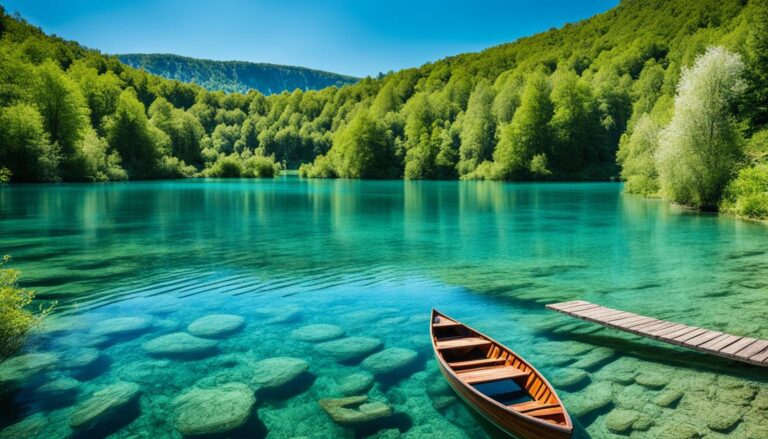
The Mamanuca Islands have beautiful beaches, clear waters, and green forests. They’re a paradise for those wanting a real Pacific Island adventure. Prepare for an unforgettable journey and make memories that last a lifetime.
The Mamanuca Islands: Fiji’s Cultural Paradise
When you arrive in the Mamanuca Islands, you dive into Fiji’s lively culture. The islands are famous for their beautiful views and deep cultural roots. They’re perfect for those who want to dive into local traditions.
Geography and Accessibility of the Mamanuca Archipelago
The Mamanuca Islands are off Viti Levu, Fiji’s main island. They’re known for their clear waters and coral reefs. Getting there is easy by ferry or plane, making it great for traditional Fijian village tours and cultural activities.
Island Hopping Options Between Cultural Sites
Traveling between islands in the Mamanucas is simple. You can visit cultural spots on day trips or stay in local villages. Activities include snorkeling, diving, and relaxing on beaches.
Cultural Significance of the Mamanucas in Fijian History
The Mamanuca Islands are key in Fijian history and culture. They have ancient villages and cultural sites. By joining Fijian cultural activities, you learn about local customs and traditions.
| Cultural Site | Location | Significance |
|---|---|---|
| Ancient Village | Island of Kadavu | Historical settlement |
| Ceremonial Grounds | Island of Malolo | Traditional gathering place |
Understanding Fijian Culture and Traditions
To truly experience Fiji, you must explore its local culture and customs. The Mamanuca Islands are special because of these traditions. Fijian culture is warm and welcoming, with “Bula” at its heart.
The Spirit of “Bula” and Fijian Hospitality
“Bula” is more than a greeting; it’s a way of life. It means warmth, friendliness, and welcoming visitors. When you say “Bula,” you’re joining the Fijian way of life.
Traditional Social Structure and Village Life
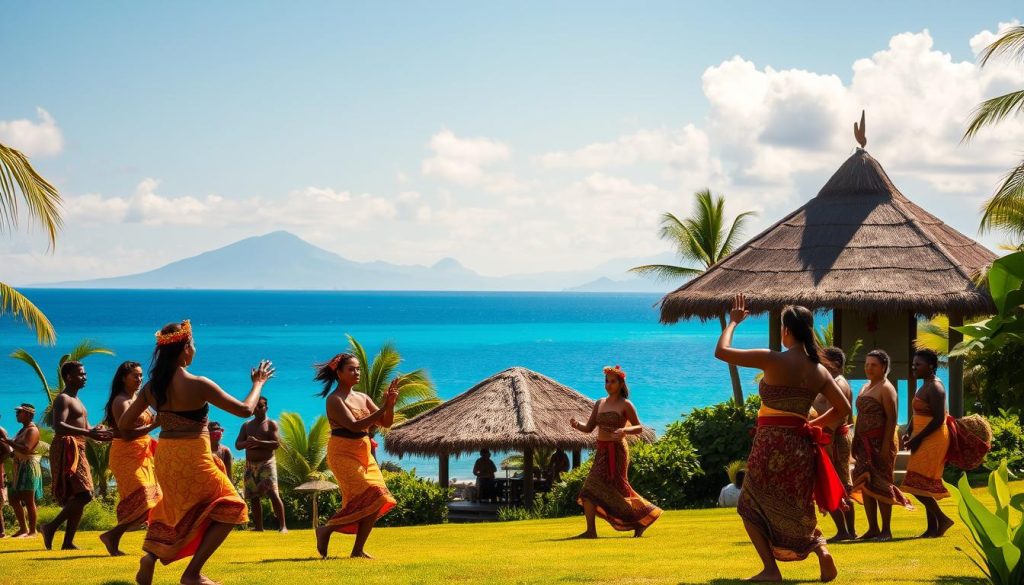
Fijian society is organized into villages, each with a chief and social hierarchy. Knowing this helps you understand the community and respect for tradition. Village life is all about community and working together.
The Role of Ceremonies in Everyday Fijian Life
Ceremonies are big in Fijian culture. They mark life events, seasons, and religious days. These ceremonies connect people, land, and ancestors.
Seasonal Ceremonies and Celebrations
Fijians celebrate many seasonal events, like harvest festivals and dances. These celebrations show off Fiji’s rich culture and heritage.
By diving into these traditions, you’ll learn more about Fijian life. You’ll also make lasting connections with the community.
Local Fijian Cultural Experiences in the Mamanuca Islands
In the Mamanuca Islands, you can dive into many cultural experiences. You can join in on traditional ceremonies or explore village life. These activities let you truly experience Fijian traditions.
Authentic Cultural Immersion Opportunities
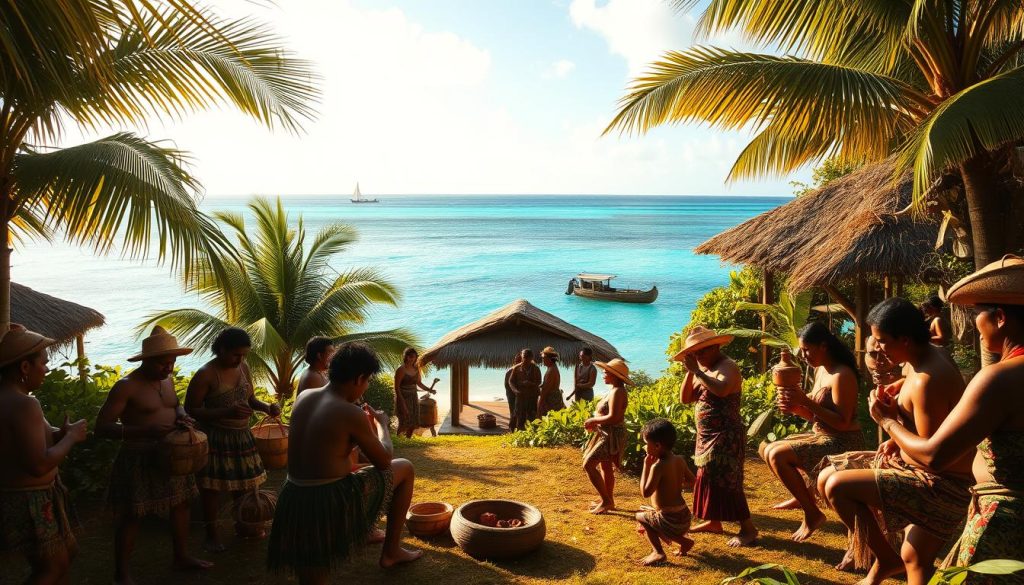
The Mamanuca Islands are full of real cultural experiences. You can take part in a Kava ceremony or visit local villages. These moments give you a deep look into Fiji’s rich culture.
Some of the authentic cultural immersion opportunities include:
- Participating in a traditional Kava ceremony
- Visiting local villages and interacting with the community
- Learning traditional Fijian dances and music
Cultural Calendar: Best Times to Visit for Festivals
Fiji’s cultural calendar is full of festivals all year. The best time to see these is from May to October. During this time, you can enjoy the Bula Festival, which celebrates Fijian culture.
“Fiji’s cultural festivals are a true reflection of the island’s spirit and hospitality.” – Fiji Tourism Board
Cultural Etiquette for American Visitors
When you visit Fijian villages, it’s key to respect local customs. American visitors should think about their clothes and actions, mainly during cultural events or village visits.
Appropriate Dress and Behavior in Villages
It’s best to wear modest clothes, covering your shoulders and knees. When meeting locals, say “Bula” (hello) and be ready to learn about their traditions.
Traditional Village Tours and Homestays
Traditional village tours and homestays in the Mamanuca Islands offer a real look at Fijian life. You’ll get to meet locals, join in on ceremonies, and learn about the area’s history and culture.

The Sevusevu Ceremony: Presenting Kava to the Chief
Visiting a traditional Fijian village is special, thanks to the Sevusevu ceremony. Here, you give a bundle of waka (dried kava roots) to the chief as a sign of respect. This ceremony is a big deal, welcoming visitors into the community.
“The Sevusevu ceremony is not just a formality; it’s a gesture of peace and respect,” says a local villager. The ceremony includes presenting the kava, a traditional prayer, and sharing kava among everyone.
Day Tours vs. Overnight Homestay Experiences
Planning your cultural adventure? You can pick between day tours and overnight homestays. Day tours give you a taste of village life, like traditional cooking and crafts. Overnight stays let you live with a local family, fully experiencing Fijian hospitality.
Overnight stays often include meals prepared by your host family, offering a taste of authentic Fijian cuisine.
Recommended Villages for Authentic Cultural Encounters
The Mamanuca Islands have many villages for authentic cultural experiences. Some top picks include:
- Navini Village: Known for its traditional Fijian architecture and warm hospitality.
- Malolo Island Village: Offers a mix of cultural activities and stunning natural beauty.
Navini and Malolo Island Village Experiences
Navini and Malolo Island villages are favorites for cultural tours. At Navini, you can join in on traditional ceremonies and learn about local crafts. Malolo Island has activities like snorkeling, diving, and village tours. Both villages give a unique look into Fijian culture and daily life.
Kava Ceremonies: Participating in Fiji’s Sacred Ritual
The kava ceremony is a key part of Fijian life. It offers a deep look into Fiji’s rich culture. By joining a kava ceremony, you’re taking part in a sacred tradition that has lasted for centuries.
The Cultural and Historical Significance of Yaqona (Kava)
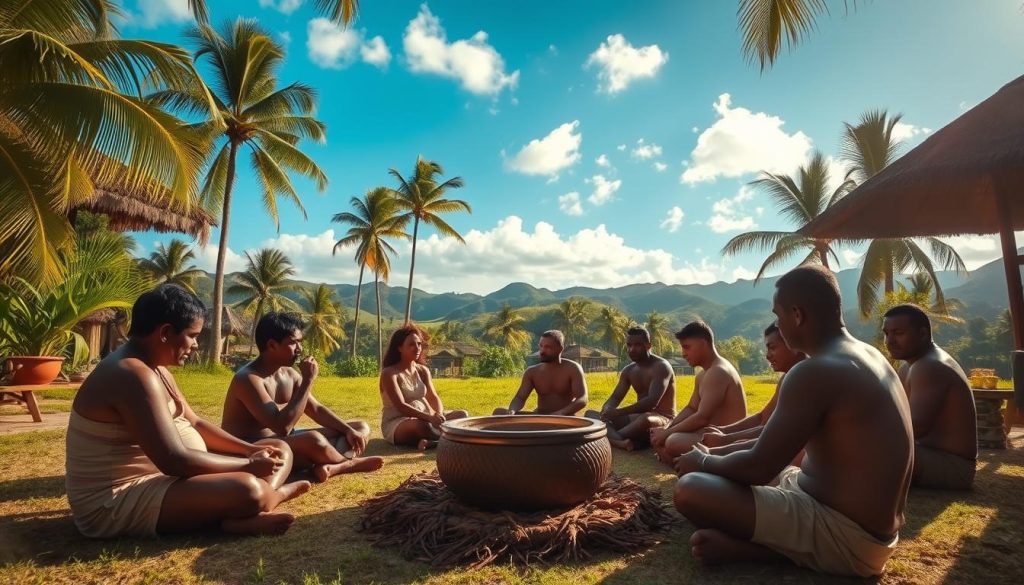
Kava, or yaqona, is very important in Fiji. It’s a drink made from a plant and is central to social and ceremonial events. Drinking kava shows respect, unity, and community bonding. Knowing its history adds to your appreciation of this ritual.
Ceremony Protocol and Participation Guidelines
When you join a kava ceremony, it’s important to follow local customs. You’ll sit on the floor, clap once, and say “Kerekere” (please) before getting your kava. Drink it all in one go and then return the cup with a clap. Following these steps shows respect and makes for a good experience.
What to Expect During Your First Kava Ceremony
Your first kava ceremony will be welcoming and community-focused. It starts with kava given to the chief or elder, then to everyone else. Be ready for a unique and possibly intense experience, as kava can relax you. Being open-minded lets you fully enjoy Fiji’s culture.
Traditional Fijian Cuisine and Cooking Classes
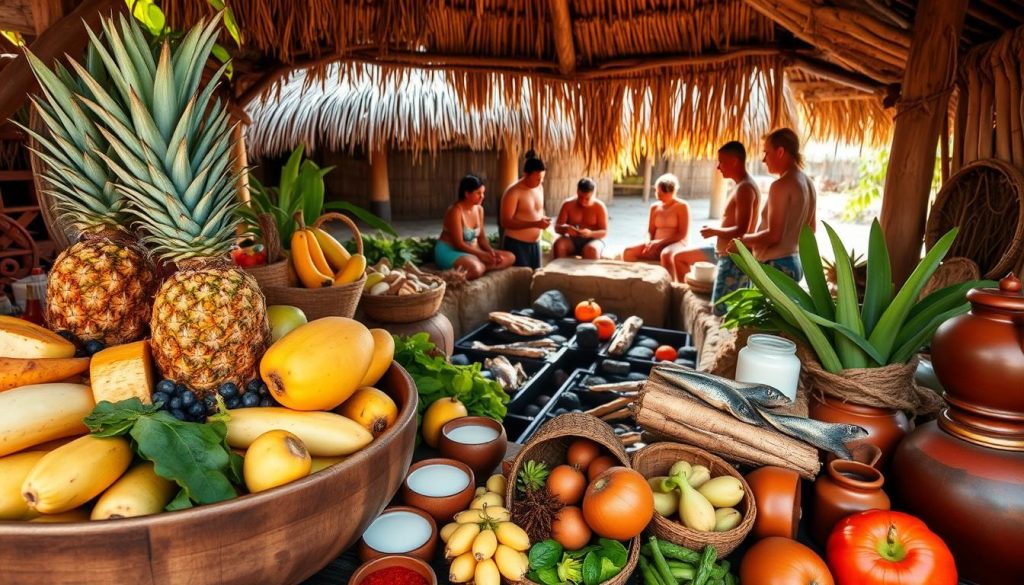
Fijian food is a mix of old ingredients and cooking ways. You can try it out in the Mamanucas. It uses things like coconut, taro, and fish. And it uses old cooking methods like the Lovo earth oven.
Essential Fijian Dishes and Indigenous Ingredients
Fijian food has many dishes that show off the country’s culture. You’ll find Kokoda (raw fish salad in coconut milk), Lovo-cooked meats, and Rourou (steamed taro leaves). Coconut milk, taro, and fresh seafood are key ingredients.
Experiencing a Traditional Lovo Earth Oven Feast
A Lovo feast is a big deal in Fiji. Foods are wrapped in banana leaves and cooked in an earth oven. This gives them a smoky taste. You can join a Lovo feast and learn about the cooking while enjoying the food.
Hands-on Cooking Classes in the Mamanucas
Cooking classes in the Mamanucas let you get hands-on. You’ll learn about Fijian food and cooking methods. You’ll make traditional dishes and learn about their cultural meaning.
Resort-Based vs. Village-Based Culinary Experiences
Resort cooking classes are structured and comfy. Village experiences are more real and deep. Both let you dive into local food, but choose based on your preference.
| Culinary Experience | Resort-Based | Village-Based |
|---|---|---|
| Environment | Structured and comfortable | Authentic and immersive |
| Interaction | Limited local interaction | Direct engagement with locals |
“Fijian cuisine is not just about the food; it’s about the culture, the people, and the tradition behind it.”
Meke Performances: Traditional Fijian Dance and Music
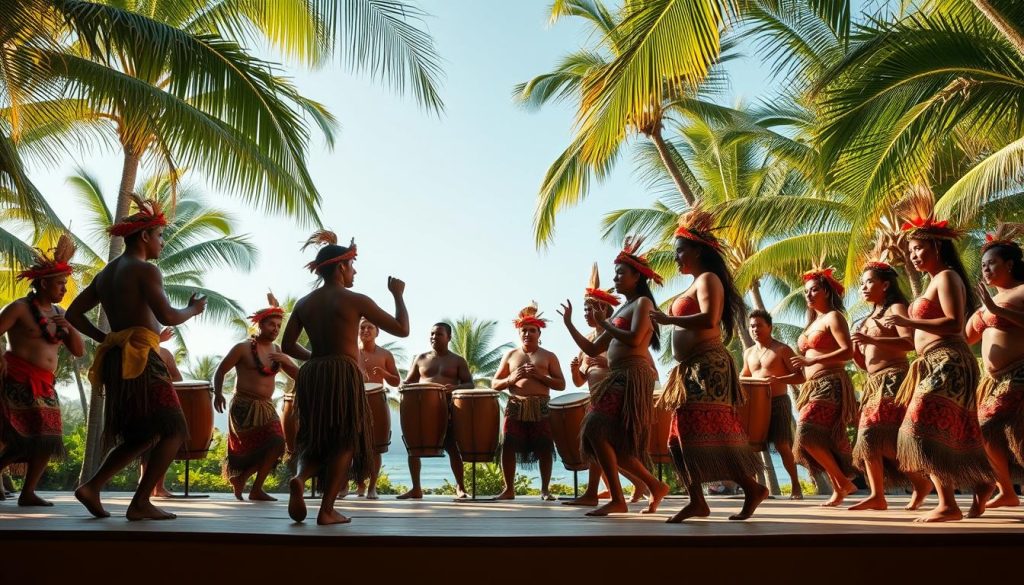
Meke performances in the Mamanuca Islands offer a deep dive into Fijian culture. You’ll see the lively dance and music that share stories from past generations.
Types of Meke and Their Cultural Storytelling
Meke is more than just entertainment; it’s a storytelling tradition. It tells of Fijian history, myths, and legends. Each Meke has its own dance, music, and costumes, sharing different stories. These performances show the rich variety of Fijian culture.
Traditional Instruments and Costumes
The real charm of Meke comes from traditional instruments like the lali (drums) and derua (Fijian flute). The costumes, made from tabua (whale’s tooth) and woven fibers, add to the authenticity. These details show the importance of Meke in Fijian culture.
Where to Experience Authentic Meke in the Mamanucas
You can find authentic Meke performances in Mamanuca Islands’ villages. Resorts and local tours often host cultural nights with Meke. These events let you connect with Fijian culture and support local communities.
Handicraft Workshops and Traditional Art
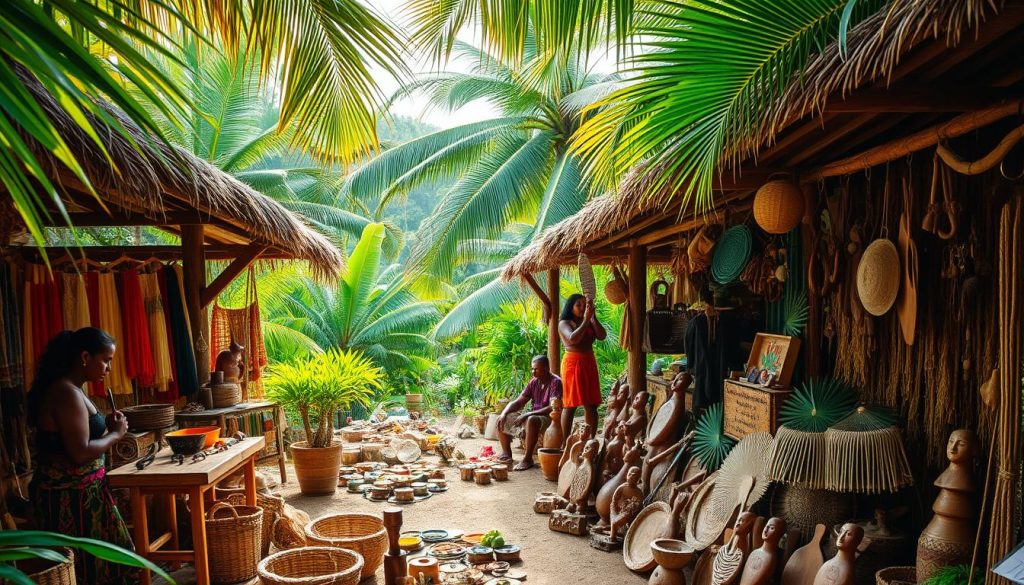
In the Mamanuca Islands, you can dive into traditional Fijian crafts. Handicraft workshops let you learn about Fijian culture and take home special souvenirs.
Learning Tapa Cloth Making and Pottery Techniques
Tapa cloth making and pottery are ancient crafts in Fiji. In these workshops, you’ll learn how to make Tapa cloth from mulberry bark and pottery the traditional way. You’ll get to try your hand at it and learn about its cultural importance.
- Learn Tapa cloth making from local artisans
- Understand the process of creating pottery using traditional Fijian techniques
- Create your own Tapa cloth or pottery piece to take home
Weaving and Basket Making Traditions
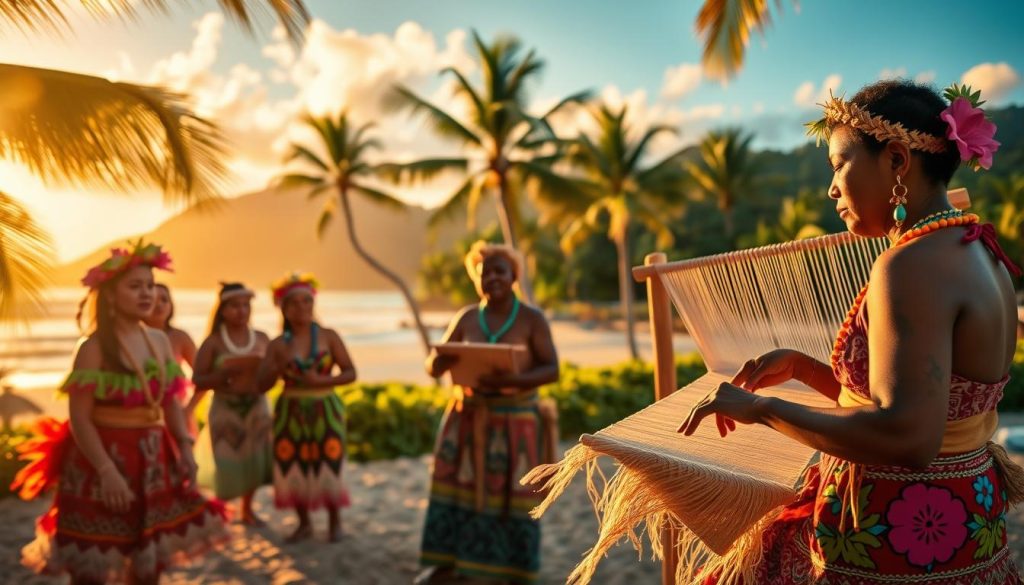
Fijian weaving and basket making are highly valued crafts. You can join workshops to learn these traditional methods. You’ll use natural materials like coconut leaves and fibers.
Key aspects of weaving and basket making include:
- Using natural materials sourced from the local environment
- Creating intricate designs that reflect Fijian culture
- Passing down techniques from one generation to the next
Supporting Local Artisans and Ethical Souvenir Shopping
By joining handicraft workshops, you support local artisans and help preserve Fijian culture. You’ll also learn about ethical souvenir shopping. This way, your purchases help the local community.
When shopping for souvenirs, consider the following:
- Buy directly from local artisans or community-run shops
- Choose items that are made using traditional techniques and materials
- Be mindful of the cultural significance and authenticity of the items you purchase
Marine-Based Cultural Activities
Fijian culture is deeply connected to the ocean. The sea has shaped their way of life in the Mamanucas. It provides food and influences their traditions.
Traditional Fishing Methods and Practices
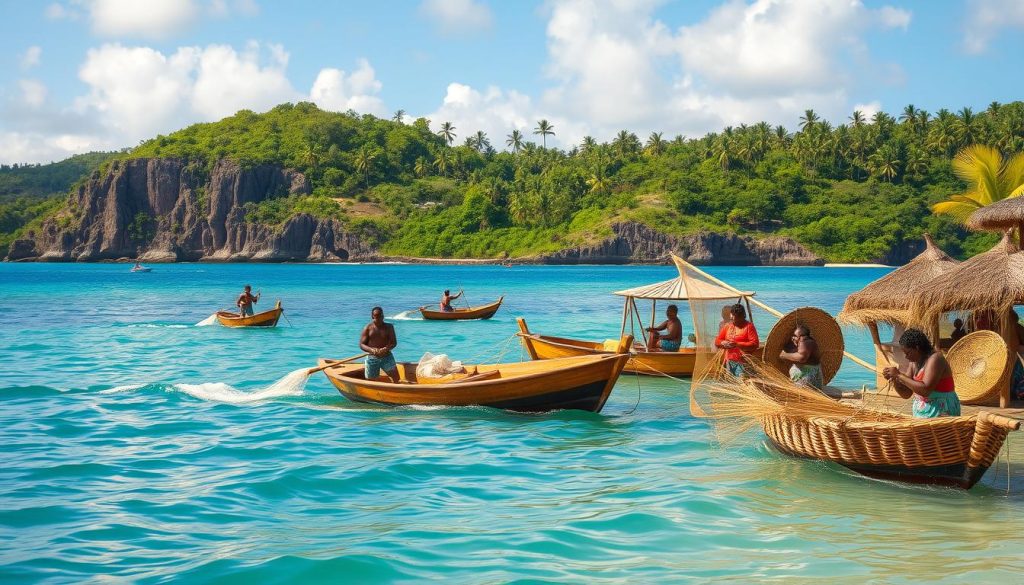
Fishing is a key part of Fijian culture. They use methods like net fishing and line fishing. These practices are important for food and cultural events.
Bilibili Rafting and Traditional Watercraft
Bilibili rafting uses rafts made from bamboo and coconut husks. It’s a traditional way to navigate the waters. Visitors can learn about Fijian maritime culture through it. Traditional watercraft, like canoes, are also used for fishing and ceremonies.
The Cultural Connection Between Fijians and the Ocean
The ocean is highly respected in Fijian culture. Many believe it provides for their spiritual and physical needs. This is shown in ceremonies to honor the sea.
Marine Conservation Through Cultural Practices
Traditional Fijian practices help protect the ocean. For example, tabu areas are set where fishing is not allowed. These practices preserve the marine environment and highlight the ocean’s cultural importance.
| Cultural Practice | Description | Significance |
|---|---|---|
| Traditional Fishing | Methods passed down through generations, including net and line fishing. | Sustenance and cultural ceremonies. |
| Bilibili Rafting | Traditional rafting using bamboo and coconut husks. | Maritime culture and navigation. |
| Tabu Areas | Areas where fishing is prohibited to conserve marine life. | Marine conservation and cultural preservation. |
Responsible Cultural Tourism in the Mamanuca Islands
Visiting the Mamanuca Islands can positively impact the local culture. This way, you get a better experience and help keep the islands’ culture alive.
Ethical Considerations When Visiting Villages
Exploring local villages is a trip highlight. To have a good time and respect the locals, follow their customs. Wear modest clothes, take off your shoes when asked, and don’t enter sacred places.
Supporting Sustainable Cultural Preservation Initiatives
Many groups in the Mamanucas work to save Fijian culture. You can help by joining in on real cultural activities and buying local crafts.
Community-Based Tourism Projects in the Mamanucas
Community tourism lets you connect with locals. These projects help the community grow and offer a peek into Fijian life.
| Initiative | Description | Benefits |
|---|---|---|
| Local Village Tours | Guided tours of Fijian villages | Supports local economy, cultural exchange |
| Traditional Craft Workshops | Hands-on experience with local crafts | Preserves traditional skills, supports artisans |
| Community Homestays | Live with local families | Cultural immersion, supports community development |
Planning Your Cultural Itinerary
To dive deep into Fijian culture, think about making a custom cultural plan. The Mamanuca Islands have many cultural experiences. You can pick what interests you the most.
Sample 3-Day Cultural Experience Itinerary
A 3-day plan could include visiting a traditional Fijian village. You could also join a Kava ceremony and learn about local crafts. Here’s a sample itinerary:
- Day 1: Arrive and visit a local village
- Day 2: Participate in a Kava ceremony and learn about traditional Fijian cooking
- Day 3: Engage in a handicraft workshop and enjoy a traditional Lovo feast
Combining Cultural Activities with Resort Stays
Many resorts in the Mamanucas offer cultural activities. You can combine relaxation with cultural immersion. Look for resorts with village tours, cooking classes, or local craft workshops.
Tour Operators Specializing in Cultural Experiences
Several tour operators focus on cultural experiences in the Mamanucas. They offer guided tours to villages, traditional fishing excursions, and cultural shows. Find operators that match your interests and values.
Budget Considerations for Cultural Activities
When planning your cultural itinerary, think about your budget. Some activities, like village tours, might cost money. Others, like a Kava ceremony, might be free if you’re staying at a resort. Budget wisely to enjoy your cultural experiences fully.
Conclusion: Embracing the Spirit of Fiji
Exploring the Mamanuca Islands lets you dive into local Fijian culture. You’ll see the islands’ rich heritage in every village tour, kava ceremony, and meke performance. These experiences help you understand Fiji’s history and way of life.
The Mamanuca Islands are a place to learn traditional Fijian practices. You can try fishing the way locals do and make handicrafts. You’ll also feel the warmth of Fijian hospitality through homestays and village visits. This lets you appreciate Fiji’s unique culture more.
Choosing to experience local Fijian culture in the Mamanuca Islands makes your trip richer. It also helps keep Fijian traditions alive. When you leave, you’ll remember a deep cultural experience in Fiji and a new respect for its spirit.