

Explore German History and Culture Basics
Welcome to this beginner’s guide to German history and culture! If you’re interested in understanding German history and exploring German culture, you’re in the right place. Whether you’re planning a trip to Germany or simply want to enrich your knowledge of this fascinating country, this guide is tailored for you.
In this section, we’ll cover German history and culture for beginners, providing you with a foundational understanding of what makes Germany unique. From the Roman Empire to the Berlin Wall, we’ll delve into the key events that have shaped German history and explore the rich cultural traditions that have endured to the present day.
So, whether you’re a history buff, a culture enthusiast, or just someone looking to broaden your horizons, let’s embark on a journey of discovery as we explore the essentials of German history and culture for beginners!
A Brief Overview of German History
Germany has a long and rich history that has shaped the country and its people. In this section, we will provide a brief overview of German history, highlighting essential events and periods that are crucial for beginners learning about German history and culture.
| Event/Period | Description |
|---|---|
| Roman Empire | The Romans conquered Germanic tribes in the first century, and the Roman Empire’s influence lasted until the fifth century when it fell. |
| Holy Roman Empire | The Holy Roman Empire was a complex political structure that existed from the 10th to the 19th century, featuring various kingdoms and regions. |
| The Reformation | The Reformation in the 16th century had a profound impact on Germany, leading to the establishment of Protestantism and a split from the Roman Catholic Church. |
| World War I and II | Germany played a central role in both World War I and II, which ultimately led to significant political, social, and cultural changes in the country. |
| The Division and Reunification of Germany | After World War II, Germany was divided into two parts – East and West – which existed as separate countries until reunification in 1990. This period was marked by significant political and social changes. |
Germany’s complex and fascinating history is worth exploring further to gain a better understanding of the country and its people. In the next section, we will delve into the influence of German culture, another essential aspect of understanding German history and culture for beginners.

The Influence of German Culture
Germany has a rich cultural heritage, and exploring German culture can provide great insights into the country’s history and traditions. From language to cuisine, here are some of the key aspects of German culture that every beginner should know:
Language
German is the official language of Germany, Austria, and Liechtenstein, and it is also spoken in parts of Switzerland, Belgium, and Luxembourg. The German language is known for its complex grammar and compound words, but it also has a rich literary tradition and has produced many influential writers and poets, such as Johann Wolfgang von Goethe and Friedrich Schiller.
Literature
German literature has a long and illustrious history, with some of the world’s most celebrated writers hailing from Germany, including Thomas Mann and Franz Kafka. The country has also been at the forefront of many literary movements, such as the Romantic era, and has produced many famous fairy tales, such as the Brothers Grimm’s “Cinderella” and “Little Red Riding Hood”.
Music
Germany has played a significant role in classical music, with famous composers like Johann Sebastian Bach, Ludwig van Beethoven, and Wolfgang Amadeus Mozart having lived and worked in the country. In addition to classical music, Germany has also contributed to other genres, such as electronic music and metal.
| German Classical Composers | German Electronic Music Artists | German Metal Bands |
|---|---|---|
| Johann Sebastian Bach | Kraftwerk | Rammstein |
| Ludwig van Beethoven | Paul Kalkbrenner | Blind Guardian |
| Johannes Brahms | Boys Noize | Helloween |
Art and Architecture
Germany has produced many famous artists and architects, such as Albrecht Dürer and Walter Gropius. The country is also home to many impressive architectural landmarks, such as the Brandenburg Gate, Neuschwanstein Castle, and the Cologne Cathedral.

Cuisine
German cuisine is hearty and flavorful, with many dishes featuring meat, potatoes, and sauerkraut. Some popular German dishes include schnitzel, sausages, and pretzels. Germany is also known for its beer, and the country has a rich beer culture, with many traditional festivals, such as Oktoberfest, celebrating this beloved beverage.
Germans’ Love for Beer and Festivals
When exploring German culture, it’s impossible to ignore the country’s longstanding love affair with beer. From pilsners to wheat beers, Germany offers a wide range of brews that are enjoyed both domestically and internationally. German beer is known for its distinct taste, which adheres to the Bavarian Purity law or Reinheitsgebot, which dates back to 1516.
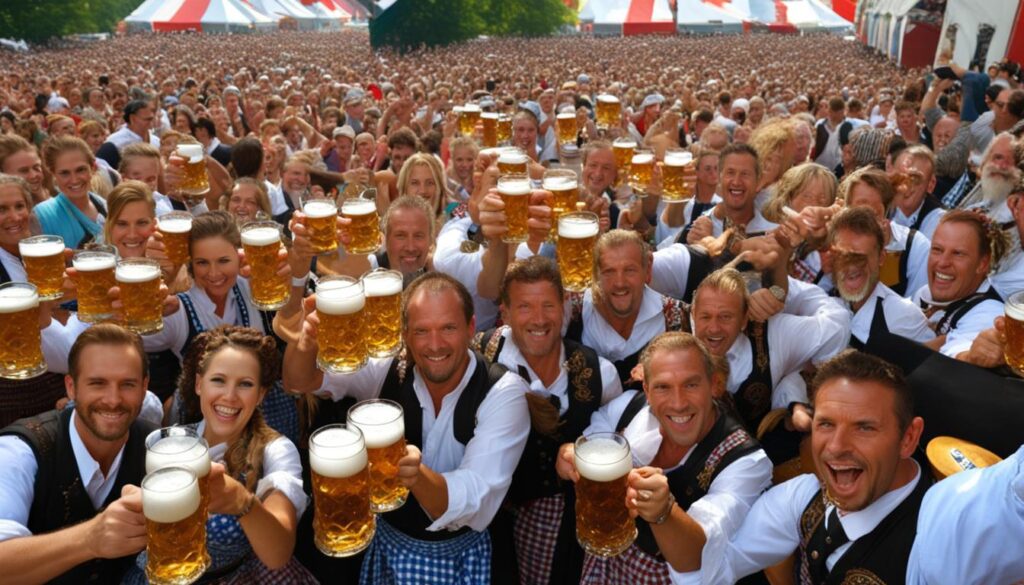
Beer festivals, or “Bierfestivals,” are a staple in the German cultural calendar, and none is more famous than Munich’s Oktoberfest, which attracts around 6 million visitors every year. Oktoberfest, which runs from mid-September to early October, is widely considered the world’s largest beer festival. Celebrations include traditional Bavarian cuisine, live music, and of course, an endless supply of beer.
The History of Oktoberfest
| Year | Theme | Number of Visitors |
|---|---|---|
| 1810 | First Oktoberfest | 40,000 |
| 1819 | Bavarian agriculture and industry | 120,000 |
| 1850 | Wedding of Crown Prince Ludwig and Princess Therese of Saxony-Hildburghausen | 120,000 |
| 1880 | Electricity | 300,000 |
| 1910 | 100th anniversary of Oktoberfest | 4.1 million |
While Oktoberfest may be the most famous beer festival in Germany, it’s not the only one. Other popular beer festivals include the Stuttgart Beer Festival, the Berlin Beer Week, and the Hamburg Alstervergnügen festival. In addition to beer festivals, many cities and towns in Germany also host their own wine festivals, known as “Weinfest.”
The popularity of beer festivals in Germany underscores the country’s dedication to its unique and diverse cultural heritage. Whether you’re a beer enthusiast or just looking to experience something new, a trip to Germany during festival season is an unforgettable way to explore its culture and traditions.
German Innovations and Contributions
Germany has been at the forefront of various fields, contributing to significant breakthroughs in science, technology, philosophy, literature, and music. Their innovative spirit has shaped the world we live in today, making it important to discuss some of their most notable contributions.
Science and Technology
Germany has produced some of the greatest minds in the world of science and technology. One of the most prominent scientists was Albert Einstein, who was born in Germany and developed the theory of relativity that transformed the field of physics. Another notable scientist whose innovations revolutionized the world of medicine was Robert Koch, who discovered the bacteria causing tuberculosis and cholera. Germany is also known for its contributions to the automobile industry; brands such as Mercedes-Benz, Volkswagen, BMW, Audi are all German-born brands.
Philosophy and Literature
German philosophy has had a significant impact on the history of ideas due to its complex and unique perspectives. Immanuel Kant, known for his work in metaphysics and ethics, is one of the most influential German philosophers. In the realm of literature, Germany has produced some of the world’s most notable authors, including Johann Wolfgang von Goethe and Friedrich Nietzsche. Germans have also made significant contributions to the world of music, particularly classical music. Some of the world’s greatest classical composers, including Ludwig van Beethoven, Johann Sebastian Bach, and Richard Wagner, were German-born.
Significant German Innovations and Contributions
| Field | Contributor | Contribution |
|---|---|---|
| Science and Technology | Albert Einstein | Theory of relativity |
| Science and Technology | Robert Koch | Discovered bacteria causing tuberculosis and cholera |
| Philosophy | Immanuel Kant | Developed theories in metaphysics and ethics |
| Literature | Johann Wolfgang von Goethe | Author of Faust and important contributor to the Sturm und Drang movement |
| Literature | Friedrich Nietzche | Developed theories in ethics and existentialism |
| Music | Ludwig van Beethoven | One of the greatest classical composers in history |

Germany’s significant innovations and contributions continue to shape our world today. Learning about German history and exploring German culture can deepen our appreciation for their unique perspectives and enrich our understanding of the world around us.
German Traditions and Customs
Germany is a country known for its unique traditions and customs that reflect its rich history and culture. Exploring German culture is incomplete without experiencing its customs and traditions. Here are some of the most popular ones that you can explore:
Christmas Markets
Christmas markets are an integral part of German Christmas tradition. During the holiday season, almost every town and city has its own Christmas market with festive lights, carol singers, and delicious food. You can find handcrafted decorations, ornaments, toys, souvenirs, and other gifts at the stalls. A visit to a German Christmas market is a must for anyone exploring German culture!
Easter Traditions
Easter is another important holiday in Germany with unique traditions. Germans decorate trees and bushes with Easter eggs, and children hunt for Easter eggs that the Easter Bunny has hidden. On Good Friday, the streets become solemn, and people attend church services. Easter Monday is celebrated with public egg races and picnics.
Punctuality
Punctuality is highly valued in German culture and is a sign of respect. It is essential to arrive on time for meetings, appointments, and events. Being late can be considered a sign of disorganization or lack of interest. Therefore, punctuality is a valuable character trait that you can adopt while exploring German culture.
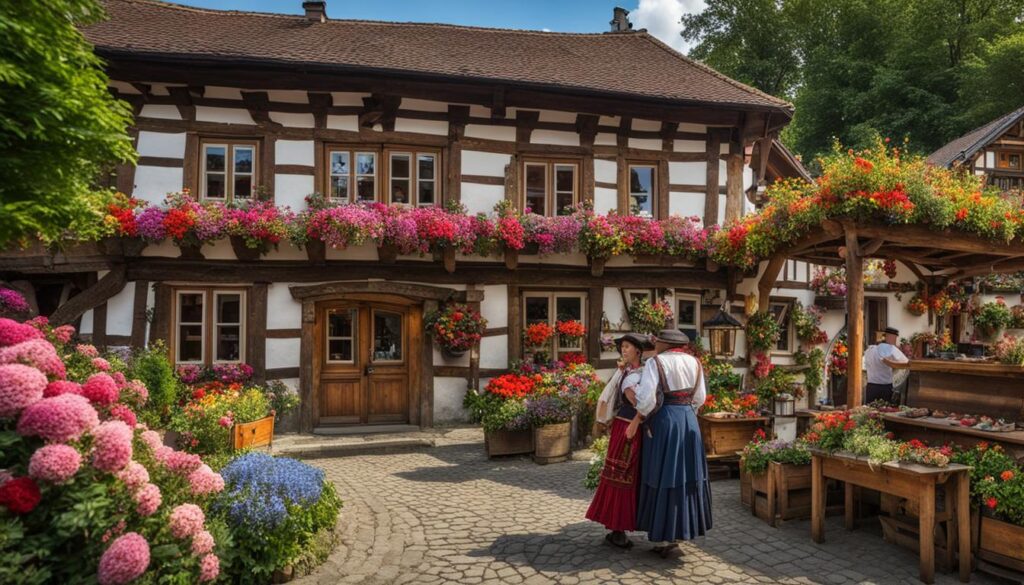
“Get the best from the culture of a country by exploring its traditions and customs that have made it unique.”
German Landmarks and Historical Sites
If you are interested in understanding German history and exploring German culture, visiting some of the country’s iconic landmarks and historical sites is a must. These sites provide a glimpse into the country’s past and showcase its architectural and historical significance.
Brandenburg Gate
The Brandenburg Gate is a quintessential German landmark that has come to symbolize the country’s reunification. This neoclassical monument, built in the 18th century, was once the backdrop for some of Europe’s most significant moments, including Napoleon’s occupation of the city and the fall of the Berlin Wall.
Neuschwanstein Castle
Neuschwanstein Castle, located in Bavaria, is a fairytale-like castle that inspires awe and wonder in tourists and Germans alike. This 19th-century castle was commissioned by King Ludwig II of Bavaria and built atop a hill, offering breathtaking views of the surrounding forests and mountains.
Berlin Wall
The Berlin Wall, which separated East and West Germany during the cold war, is a crucial part of German history. Today, parts of the wall still stand, serving as a poignant reminder of Germany’s turbulent past and its eventual reunification.
Cologne Cathedral
The Cologne Cathedral is a stunning example of Gothic architecture and is one of Germany’s most visited landmarks. Completed in the 19th century, this UNESCO World Heritage site features intricate stained glass windows, awe-inspiring spires, and a rich history that spanned seven centuries.
Exploring Germany’s iconic landmarks and historical sites is an essential part of understanding German history and culture. So make sure you add these sites to your itinerary when you visit Germany next time.
Germany Today: Modern Society and Current Trends
Germany is a country that has undergone significant transformations throughout its history and has emerged as one of the dominant players in the global scene. Today, the country boasts a robust and stable modern society that continues to set trends in various sectors both domestic and worldwide.
The Political System
Germany has a vibrant democracy, with federalism being the largest feature of its political system. It is composed of 16 states, each with significant decision-making power in various sectors. The President serves as the Head of State, while the Chancellor leads the government as the Head of Government. Germany also operates a multi-party system, with parties ranging from center-right, center-left, and far-right, challenging policies, and fueling competition in a conducive environment.
Education System and Healthcare
The German education system is renowned for its high-quality products, the promotion of research, and innovation. The system comprises primary, secondary, and vocational education, with the primary purpose of the education being to ensure that its citizens can fully participate in Germany’s socioeconomic life. Germany also provides free education from primary to tertiary levels, ensuring that citizens acquire knowledge and excel in various fields.
Healthcare in Germany is known as one of the best in the world, provided through various systems like statutory insurance and private insurance. The country focuses significantly on research to improve healthcare delivery, innovative treatments, and developing better diagnoses for various illnesses.
Social and Cultural Trends
In recent years, there has been a growing awareness of environmental issues and their impact on the world. Germany has been at the forefront of addressing these issues, implementing various sustainable practices, and raising awareness campaigns. The country is also home to several world-renowned festivals, including Oktoberfest, showcasing its beer culture, and Christmas markets, displaying its rich cultural heritage.
Conclusion
You have now gained a foundational understanding of German history and culture. By exploring the rich cultural traditions that have shaped the country, you can develop a deeper appreciation for the German people and their contributions to the world. Remember to continue your journey of discovery and uncover the endless wonders of Germany’s history and culture. Whether you’re interested in architecture, music, literature, or food, Germany has something to offer everyone. So, keep learning and exploring, and who knows, you may even discover something new and unexpected along the way!





