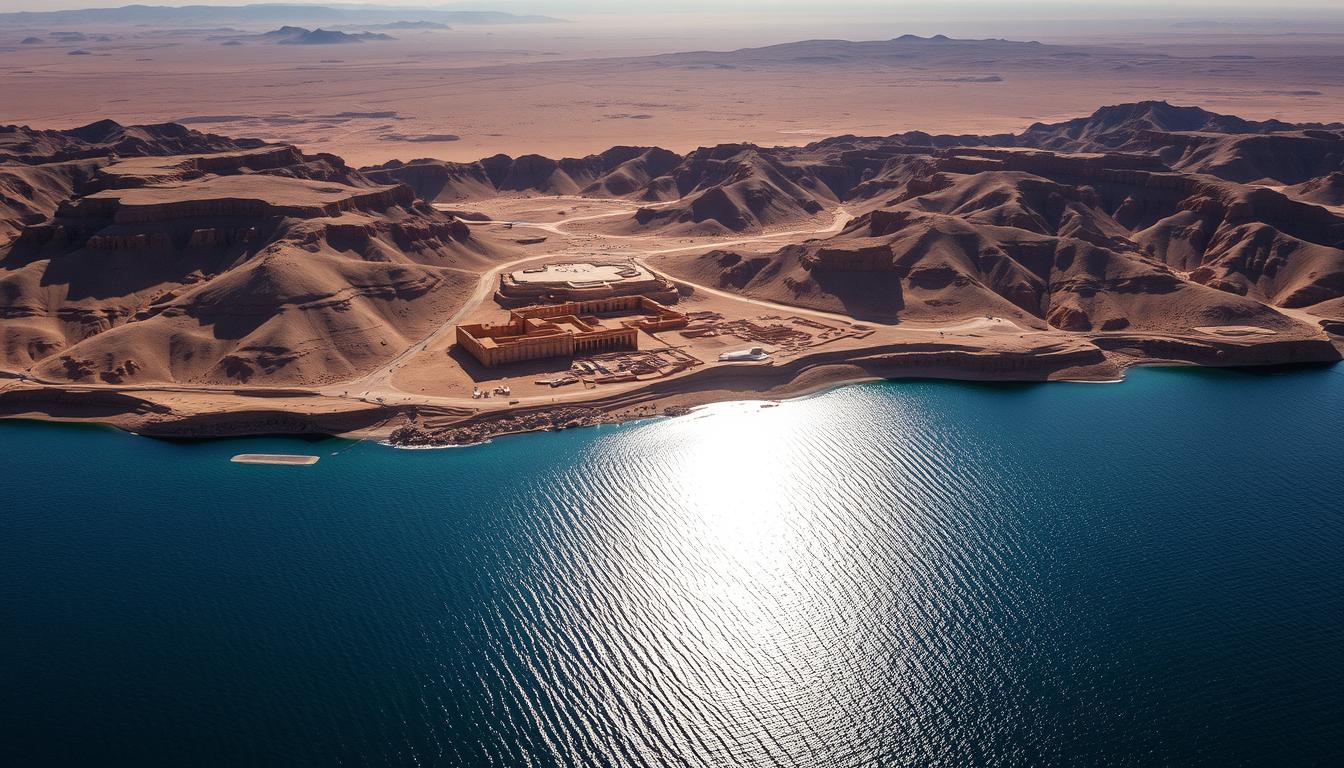
Explore Dead Sea Historical and Archaeological Sites
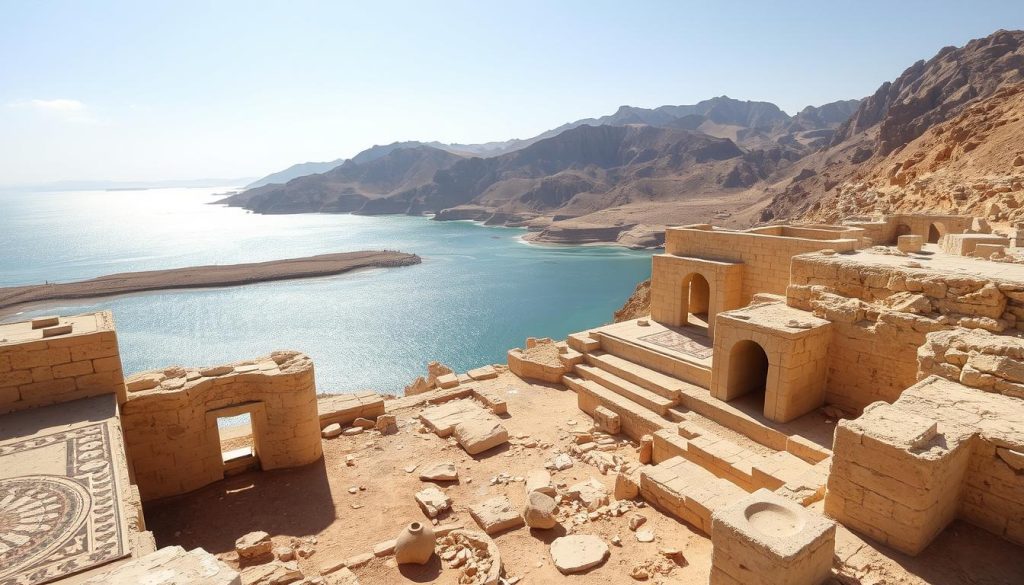
Have you ever wondered about the Dead Sea’s role in history? It’s nestled between Jordan and Israel, with many historical sites to explore. The Dead Sea is famous for its salty waters and healing properties. But it’s also home to ancient ruins that tell stories of old cultures.
In this article, we’ll take you on a journey through the Dead Sea’s history. We’ll visit ancient sites and see artifacts that show us about the past. Get ready to learn more about these sites and how they change our view of history.
Introduction to the Dead Sea Region
The Dead Sea region is a fascinating mix of geography and history. It’s the lowest point on Earth, sitting at about 1,320 feet below sea level. It’s surrounded by Jordan to the east and Israel and Palestine to the west.
This unique spot has very salty water, with salts and minerals making up 30% to 40% of its content. This is much saltier than the Mediterranean Sea. People from all over come to see this natural wonder and explore its Dead Sea history sites.
The climate here is dry, with high evaporation rates and low humidity. This helps keep historical artifacts well-preserved. The water level has dropped over 100 feet since the mid-20th century, losing about 3 feet each year.
This change has created interesting features like the peninsula of Al-Lisān. The region is also rich in archaeological finds. For example, the famous Dead Sea Scrolls were found in 1947 near Qumran.
These scrolls date back to the third century B.C.E. to 68 C.E. They show the area’s importance in biblical history. The Dead Sea’s geography is also shaped by tectonic activities. It sits in a graben influenced by transform faults along a major plate boundary.
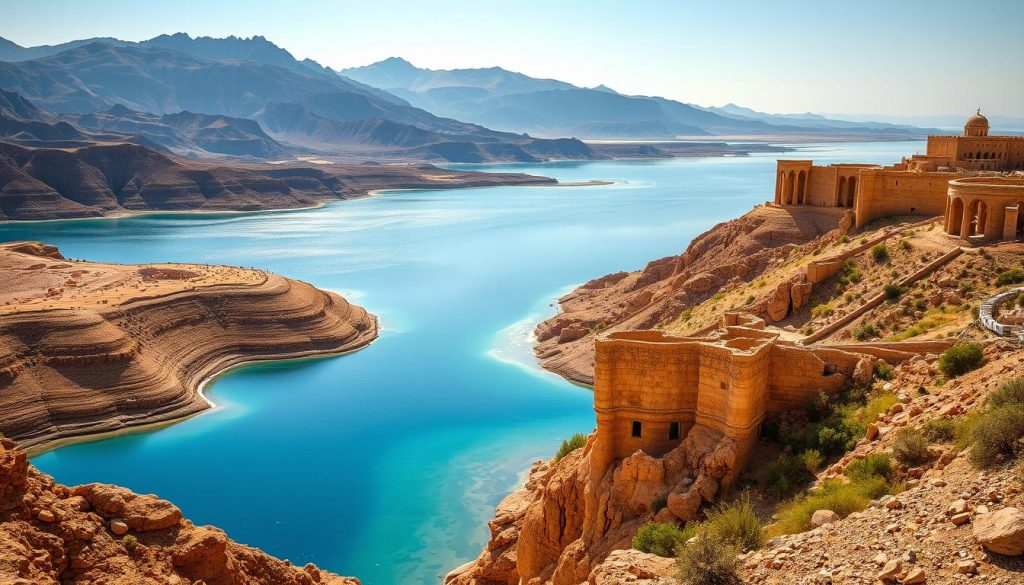
Exploring the history and archaeology of the Dead Sea reveals its significance. It’s not just a natural wonder but also a symbol of the connection between nature and humanity. The area’s diverse cultures and history make it a key spot for research and discovery.
The Significance of Dead Sea Historical and Archaeological Sites
Exploring the Dead Sea historical sites gives us deep insights into ancient civilizations. These sites connect us to the past, showing how people lived and interacted. They are key to understanding cultural and religious history.
The Dead Sea Scrolls, found between 1946 and 1947, are a major discovery. They date back to 150 BC to 70 AD. These scrolls give us a peek into the Jewish sect, the Essenes, and their beliefs.
The area’s unique features, like the Abyssal Fissure found in 2011, are also important. This discovery shows us life forms from ancient times. It helps us understand the environment of historical societies.
In summary, the Dead Sea historical sites and archaeological landmarks are crucial. They help us learn about human history. By exploring them, we gain a deeper appreciation for the region’s past.
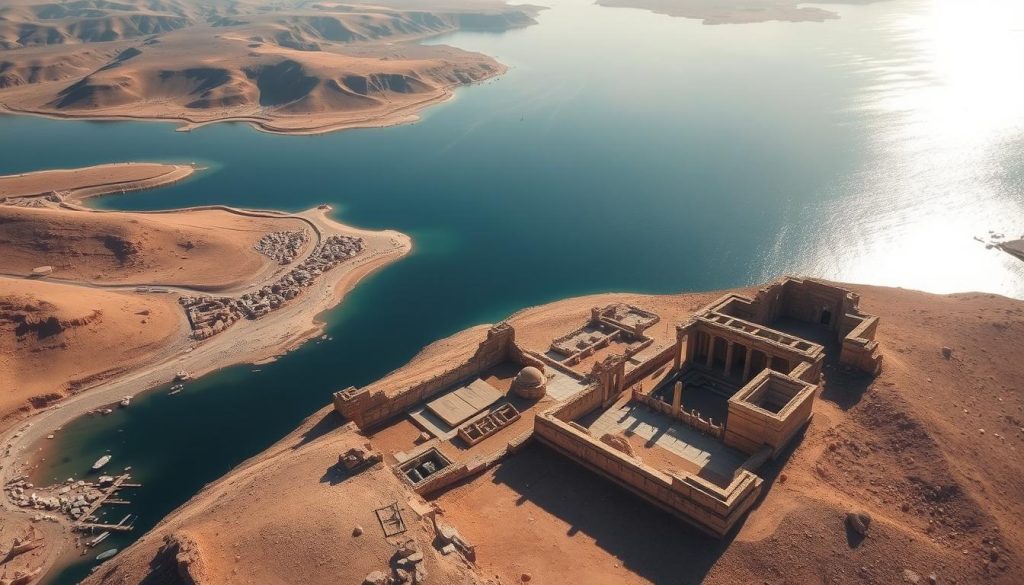
Overview of Dead Sea Ancient Ruins
The Dead Sea ancient ruins offer a peek into a region full of history. Sites like Jericho, one of the oldest cities, show a long human presence. This city has been home for thousands of years.
Masada, once a fortress, now shows off Hasmonean palaces. These buildings show great architecture and military design. They tell the story of the Jewish rebellion against Rome.
The Qumran settlement is famous for the Dead Sea Scrolls. It shows a community lifestyle from long ago. Scholars use these finds to understand history better. About 15,000 fragments of 800 to 900 original manuscripts have been found.
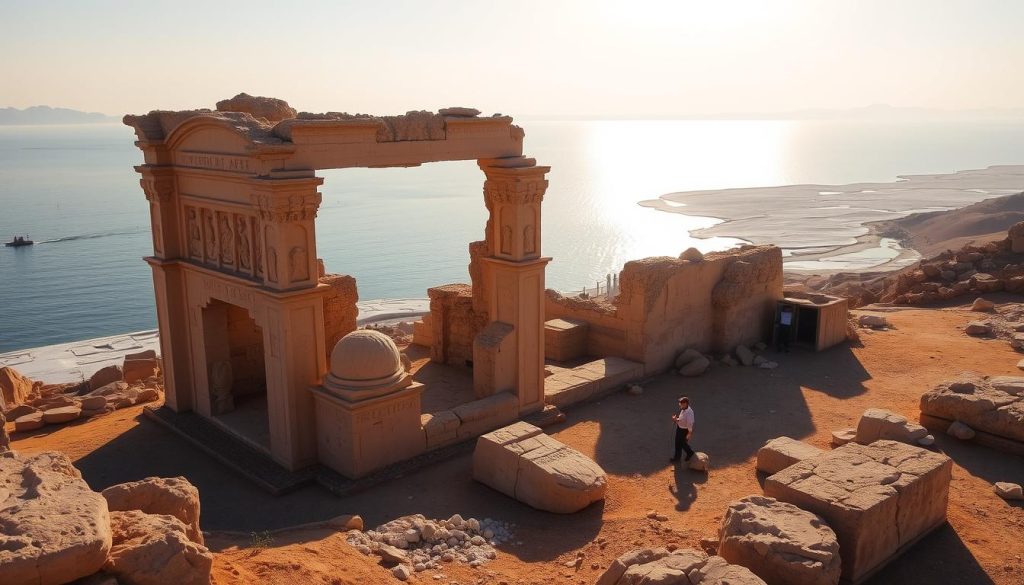
Exploring these sites reveals a mix of architectural styles from many cultures. Places like Ein Gedi were prosperous in the Hellenistic and Roman times. They had fortresses to protect trade routes. Each site adds to the story of human history in this unique place.
| Site | Description | Period |
|---|---|---|
| Jericho | One of the world’s oldest continuously inhabited cities | 7,000 BCE to Present |
| Masada | Fortress with Hasmonean palaces, key during Jewish rebellion | Hasmonean Period, 164-37 BCE |
| Qumran | Settlement linked to the Dead Sea Scrolls discoveries | Second Temple Period, 520 BCE – 70 CE |
| Ein Gedi | Ancient resort with fortifications, prosperous during Roman times | 7th century BCE to Roman Period |
Dead Sea Historical and Archaeological Sites
The Dead Sea region offers a captivating glimpse into ancient history. This is thanks to the insights from the Qumran community. They played a key role in early Jewish thought and helped us understand religious texts.
The Qumran Community and Its Impact
The Qumran community lived near the Dead Sea. They focused on asceticism and spiritual discipline. Their efforts to transcribe and protect sacred texts led to a major discovery: the Dead Sea Scrolls.
These texts give us valuable insights into Jewish beliefs and practices during the Second Temple period. They show the community’s deep commitment to their religious convictions.
Artifacts Found at Qumran
Archaeologists have found many artifacts at Qumran. These include:
- Scroll jars used for storing the Dead Sea Scrolls
- Cooking utensils and a sophisticated water system
- A library believed to house many of the community’s religious texts
- A large cemetery indicating burial practices
These artifacts, along with the architectural remains, show the communal and spiritual life of the Qumran community.
The Connection with the Dead Sea Scrolls
The Dead Sea Scrolls date from the second century BC to 68 AD. They are the earliest known manuscripts of the Bible. Their discovery in nearby caves has changed how scholars understand biblical texts.
The scrolls are not just sacred writings. They also connect us to the Qumran community’s legacy and its influence on later religious thought.
Exploring Dead Sea Archaeology Sites
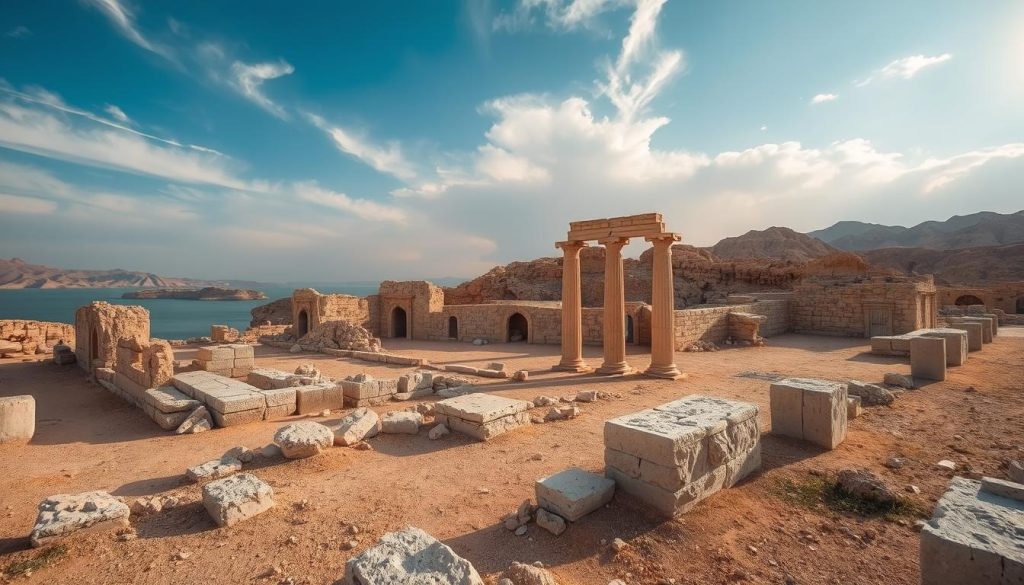
Exploring the Dead Sea region’s history lets you connect with its past. Sites like Qumran, Masada, and Ein Gedi have trails and tours for history lovers. They are easy to visit.
At Qumran, you see where the Dead Sea Scrolls were found. These scrolls give us a peek into an ancient Jewish community. The site shows a library with important texts.
Masada is a fortress on a high plateau. It offers stunning views and stories of bravery. It’s a must-see for history enthusiasts.
Visiting these sites with respect is key. They are culturally and historically important. Follow the rules to keep them safe for others to see in the future.
Here’s a table of famous Dead Sea sites and their significance:
| Site | Historical Significance | Key Attractions |
|---|---|---|
| Qumran | Location of the Dead Sea Scrolls discovery | Ancient ruins, caves |
| Masada | Symbol of Jewish heroism | Fortress, cable car rides, archaeological museum |
| Ein Gedi | Ancient Oasis, biblical references | Waterfalls, hiking trails |
Whether you love history or just want to learn, exploring these sites is rewarding. It deepens your understanding of the region’s cultural heritage.
Notable Dead Sea Archaeological Discoveries
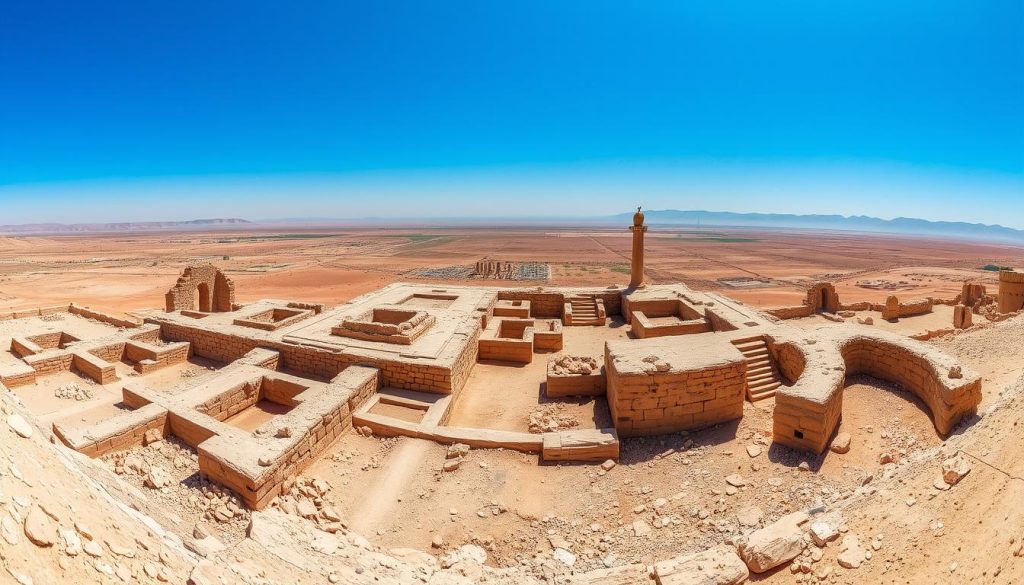
The Dead Sea region is a treasure trove of archaeological finds. These discoveries shed light on its rich history. Unique artifacts, like scrolls and pottery, give us a peek into ancient lives.
Scroll Jar and Its Importance
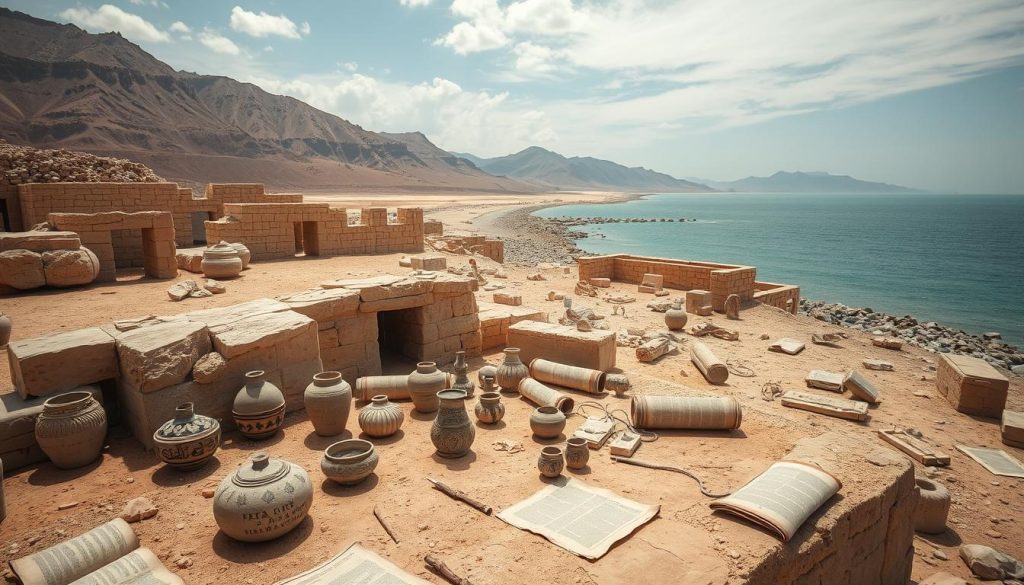
The Scroll Jar is a key find in the Dead Sea’s history. It was found in the Qumran Caves, where it held the Dead Sea Scrolls. These jars are more than storage; they link us to the Qumran community and their scholarly ways.
Leather Scroll Fastenings: An Insight into Ancient Practices
Leather scroll fastenings show how ancient texts were kept safe. These artifacts highlight the community’s dedication to their writings. They give us a closer look at their cultural and religious lives.
Unique Pottery from Ancient Qumran
Pottery from Qumran is another exciting find. It shows the skill of local artisans and what daily life was like. Different styles and techniques tell us about their social lives and routines.
Historical Landmarks Surrounding the Dead Sea
The area around the Dead Sea is filled with historical landmarks. These sites show the rich history of cultures and civilizations. Each place offers a chance to see ancient buildings and learn about their cultural importance.
Masada is a famous fortress built by Herod the Great. It sits high above the Dead Sea. Masada is known for the tragic Jewish rebellion against the Romans. This event has become a symbol of Jewish identity and the fight for freedom.
The Dead Sea is about 422 meters below sea level. Its high salt content makes it hard for life to exist. Nearby landmarks, like Sodom and Gomorrah, add to the area’s cultural value. They connect to biblical stories that span centuries.
The Qumran Caves are near the Dead Sea. They are famous for the Dead Sea Scrolls. These ancient texts give us a glimpse into Jewish history and traditions.
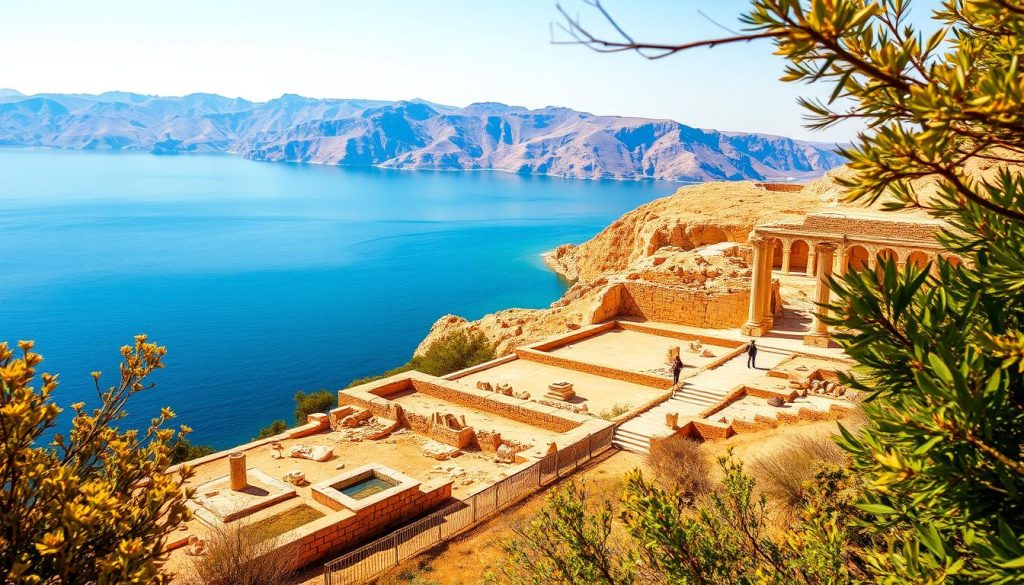
Here’s a quick look at some key landmarks around the Dead Sea:
| Landmark | Location | Cultural Significance |
|---|---|---|
| Masada | Overlooking the Dead Sea | Symbol of Jewish resistance and cultural identity |
| Sodom and Gomorrah | Near the southwestern shore | Biblical cities associated with historical narratives |
| Qumran Caves | Near the Dead Sea | Site of the Dead Sea Scrolls, crucial for understanding Jewish history |
| En Gedi | West of the Dead Sea | History of ancient settlement and biblical relevance |
| Jericho | Northwest of the Dead Sea | Considered one of the oldest inhabited cities in the world |
Visiting these sites shows how the past connects to today. It invites us to see the cultural value of the Dead Sea’s landmarks.
Visiting Dead Sea Ancient Artifacts Sites
Exploring the Dead Sea’s ancient artifacts is a must-do when you visit. These sites show a rich history, with discoveries from long ago. Guided tours help you understand and appreciate each artifact and location more.
Guided Tours of Archaeological Excavation Sites
Guided tours of archaeological sites around the Dead Sea are great for history buffs. These tours often include:
- Expert insights into excavation techniques.
- Visits to sites like Qumran, famous for the Dead Sea Scrolls.
- Chances to discuss the importance of the artifacts found.
- Interactive experiences with replicas of ancient items.
Places like Masada and Caesarea are filled with stories. Masada, for example, offers stunning views and insights into the Jewish-Roman War. The Western Wall Tunnels let you explore ancient structures from the Second Temple period.
| Site Name | Description | Highlights |
|---|---|---|
| Masada | Historical fortress in the Judean Desert. | Final stand of Jewish rebels, panoramic views. |
| Qumran | Ancient settlement linked to the Dead Sea Scrolls. | Excavations of important religious texts. |
| Caesarea | Ancient port city with Roman architecture. | Roman theater, advanced water system. |
| Beit She’an | Archaeological site of a Biblical city. | Byzantine ruins, vibrant historical narratives. |
| Beit Guvrin-Maresha | National park featuring ancient caves. | Tunnels, dovecotes, burial sites. |
Each guided tour turns your visit into a journey through time. Knowledgeable guides make your exploration of this historically rich area even more special.
Engagement and Activities for History Enthusiasts
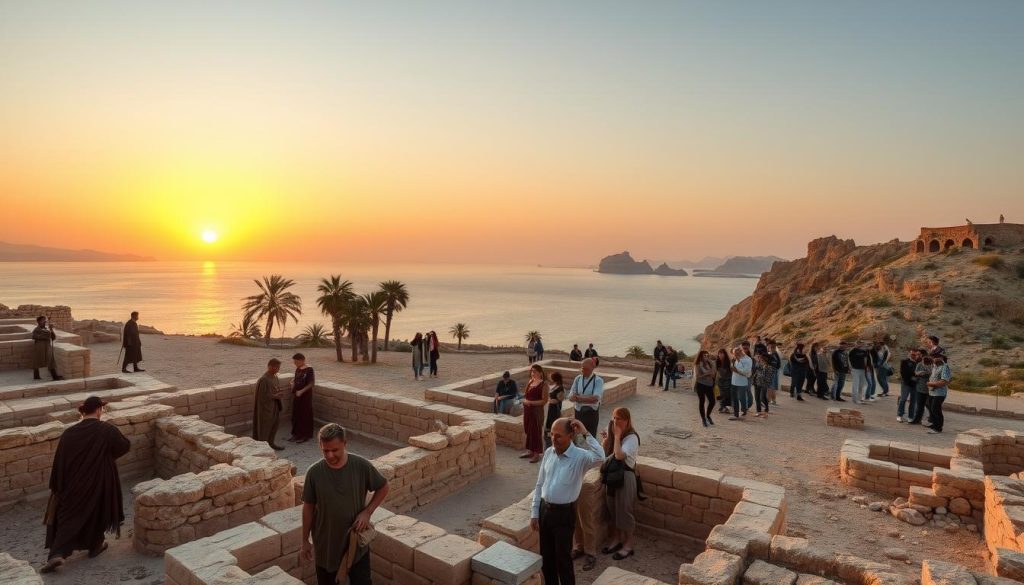
The Dead Sea region is full of chances for history lovers to dive into its deep past. You can join engagement activities like interactive workshops and guided tours at key historical sites. These activities help you connect with the stories of the Dead Sea history sites.
Some popular activities include:
- Workshops on ancient pottery techniques, where you can make your own pottery inspired by history.
- Archaeological digs for volunteers, giving you a chance to find artifacts like those at Qumran.
- Interactive exhibits that show how the region has changed over time, blending technology with history.
Getting involved in the archaeological process makes your learning more personal. It lets you feel connected to the stories of the past. You might want to join a conservation project at Qumran to help preserve the Dead Sea Scrolls for the future.
Conclusion
The Dead Sea is a place where nature meets history in a unique way. It invites you to see ancient ruins and artifacts that change how we see history. Walking around the Dead Sea, you’ll see beautiful views and learn about our shared past.
The Dead Sea is huge, covering over 600 square kilometers, and is very low, over 400 meters below sea level. It’s not just a beautiful place but also full of history. Sites like Qumran show us what life was like long ago, thanks to the Dead Sea Scrolls.
Going to the Dead Sea is more than just a trip. It’s a chance to connect with our history. By exploring this place, you’ll understand its beauty and the stories it holds. Make sure your visit is a time to relax and also think about the past.