

Explore Cox’s Bazar Cultural Experiences Await
Imagine seeing the world’s longest natural sea beach and diving into rich culture at once. Welcome to Cox’s Bazar, a coastal gem known for its stunning views and fun for families. Here, you can try exciting water sports or explore lively local markets. Cox’s Bazar offers a mix of experiences that will create lasting memories.
Exploring Cox’s Bazar, you’ll discover its community’s spirit through traditional activities. Try delicious street food at Sea Mount Beach Cafe or join in on local festivals. You can also go on nature walks, take boat rides on the Bakkhali River, or visit historic sites like the Cox’s Bazar Buddhist Temple. Your journey will be filled with discovery and joy.
Introduction to Cox’s Bazar
Cox’s Bazar is a top spot for both relaxation and adventure. It has over 120 kilometers of golden sandy beaches. This makes it the longest natural sea beach in the world.
This coastal town in Bangladesh is known for its stunning views. It also has a rich culture and tradition. This makes it a great choice for those traveling to Cox’s Bazar.
Getting to Cox’s Bazar is easy. You can fly into Cox’s Bazar Airport from Dhaka and Chittagong in about an hour. The best time to visit is from November to February. This is when the weather is nice and the humidity is low.
For those who love adventure, there are plenty of water sports. You can try jet skiing, banana boat rides, and parasailing. If you prefer something calm, you can go fishing. The local food is amazing, with dishes like panta bhat, hilsa, and chingri malai curry.
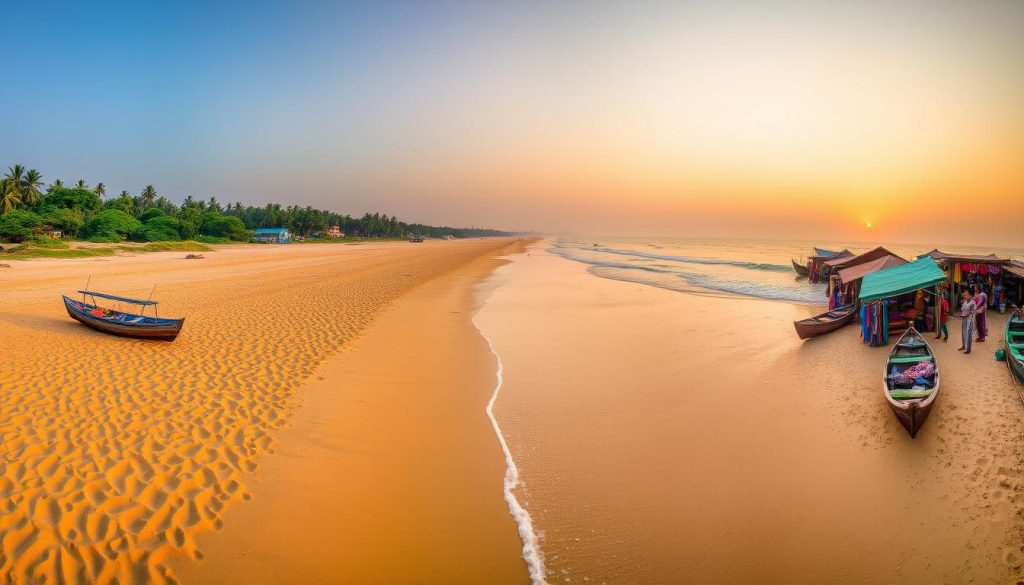
Cox’s Bazar Cultural Experiences
Explore the vibrant culture of Cox’s Bazar, filled with history, traditions, and diversity. The cultural heritage here is more than just beauty. It’s the heart of local community life.
Importance of Cultural Heritage
Preserving cultural heritage is key to Cox’s Bazar’s identity. Festivals like the Buddhist New Year and the Cox’s Bazar Beach Festival celebrate this. They show off traditional dance, music, and food.
Visitors can dive into local customs and admire the unique architecture. It’s influenced by Burmese, Thai, and Bengali styles.
Overview of Local Customs
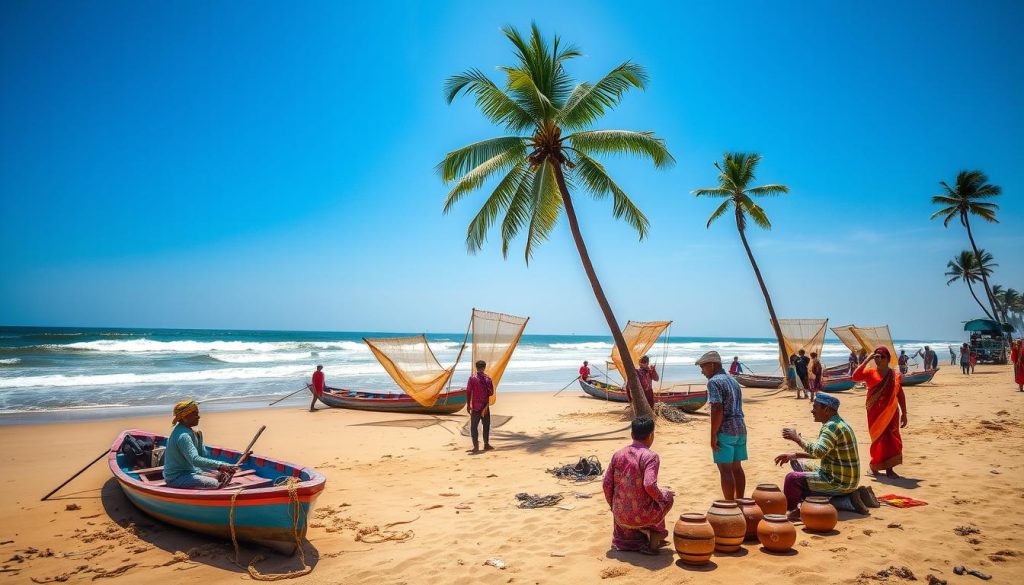
Getting to know local customs in Cox’s Bazar makes your trip better. The people here welcome you warmly, showing respect and generosity. You’ll see beautiful clothes like sarongs and kurtas.
Join in the Chakma community’s rituals. Watch their Ritual Dance and listen to their folk songs. The sound of indigenous instruments fills the air.
| Aspect | Description |
|---|---|
| Cultural Festivals | Buddhist New Year, Mountainous Cultural Festival, Beach Festival |
| Architectural Influences | Burmese, Thai, Bengali, Middle Eastern |
| Traditional Clothing | Sarongs, kurtas by Marma; lungis, sarees by Bengalis |
| Local Dances | Chakma Ritual Dance with traditional music |
| Culinary Diversity | Seafood dishes, traditional sweets, indigenous specialties |
Cox’s Bazar is a journey into rich traditions and community bonds. It’s a place where culture comes alive.
Exploring the Vibrant Markets of Cox’s Bazar
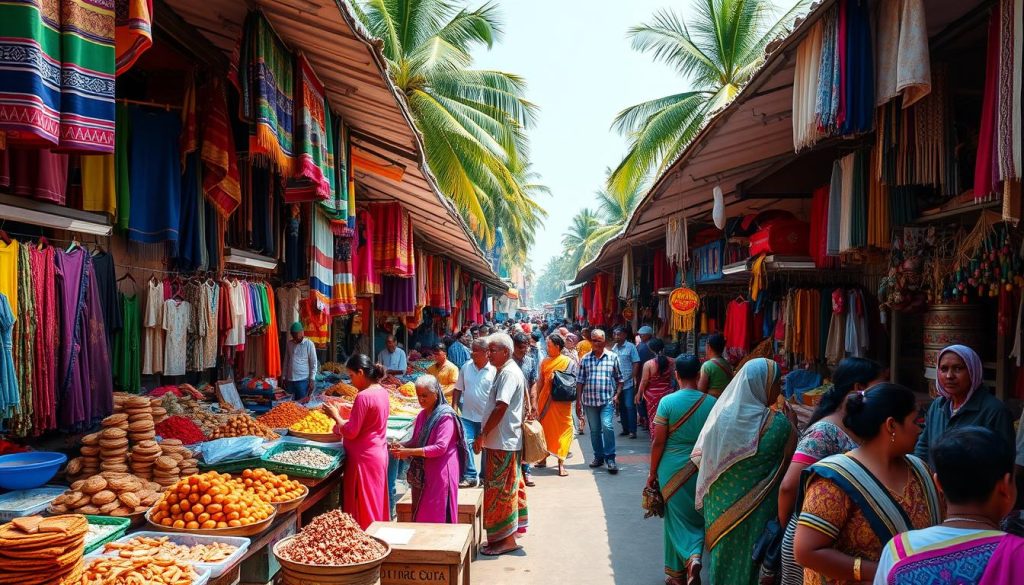
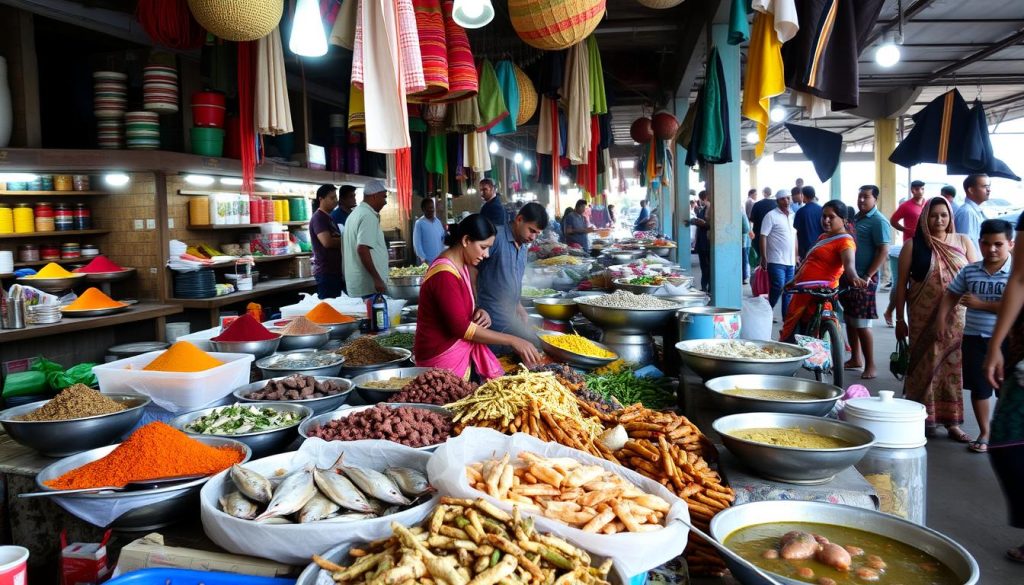
The markets in Cox’s Bazar are alive with local culture and commerce. Each market shows the richness of the region, offering a deep dive into local life. You can talk to sellers and find unique items, from crafts to seafood, that show the area’s diverse heritage.
Burmese Market Highlights
The Burmese Market is a top spot for shoppers and culture lovers. It’s famous for colorful handicrafts, aromatic spices, and traditional snacks. Here, you can find:
- Handmade textiles and apparel
- Exotic spices used in local cuisine
- Regional delicacies such as sweets and snacks
Every item tells a story of the area’s rich culture. The Burmese Market is more than shopping; it’s a trip through history and tradition.
What to Find at the Fish Market
Seafood fans should check out the fish market Cox’s Bazar. It gives a close look at the area’s seafood industry. You can find:
- Freshly caught fish from the Bay of Bengal
- Exotic seafood varieties including prawns and crabs
- Seasonal catches that highlight the local fishing culture
Walking through the fish market is a treat for your taste buds. It also lets you see the daily work of local fishers and traders. Be sure to chat with the vendors, who love to share stories about their day and the importance of sustainable fishing.
Traditional Activities in Cox’s Bazar
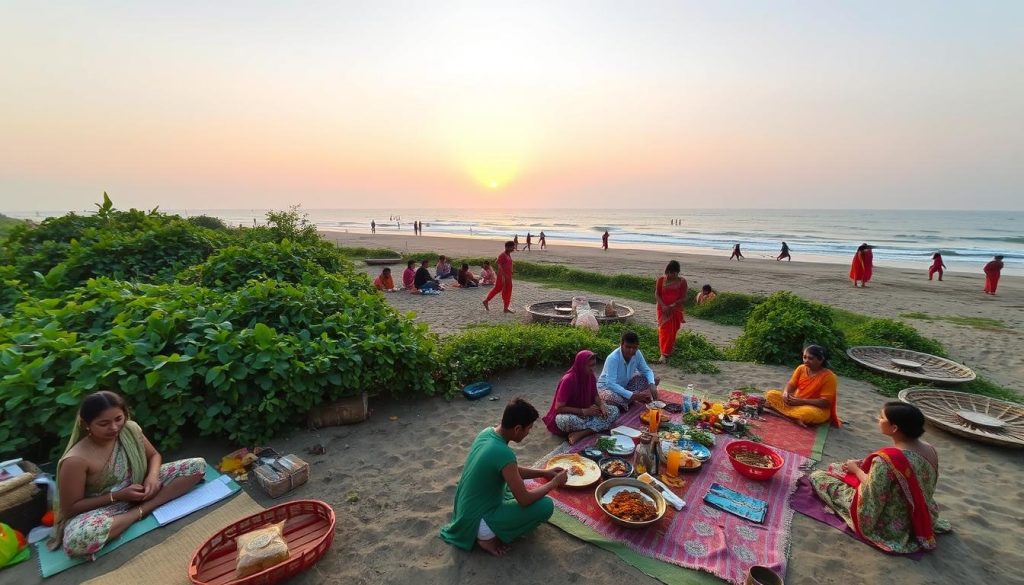
Exploring traditional activities in Cox’s Bazar is a rich experience that connects you to the area’s heritage. Whether you’re with family or friends, there’s something for everyone. The wide beaches are great for games like volleyball and frisbee. You can also join sand sculpture contests to show off your creativity.
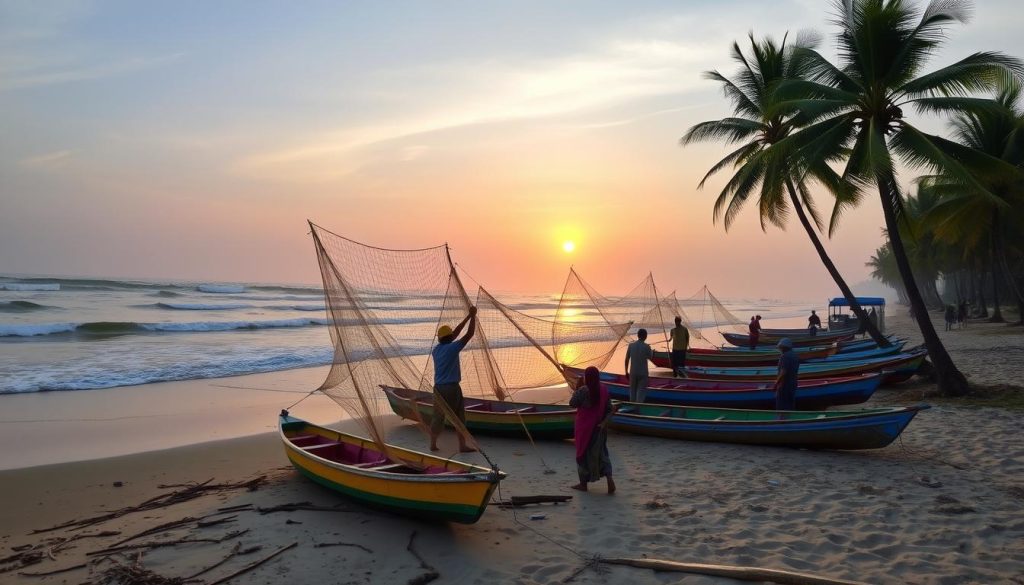
There’s more than just beach fun. You can learn about local crafts in artisans’ studios. These workshops let you see how traditional crafts are made and even make your own souvenirs. It’s a chance to really get into the local culture.
Families will find lots to do, from relaxing by the water to making crafts. These activities help you understand the traditions and way of life here. By taking part, you help keep local culture alive and make memories with your loved ones.
Indigenous Practices and their Importance
Indigenous practices in Cox’s Bazar show the area’s rich culture and traditions. These practices are key to keeping local identity alive. They also help the economy grow by attracting tourists.
Visitors can see the skills and knowledge passed down through generations by local artisans. This highlights the unique crafts of Cox’s Bazar.
Local Artisans and Crafts
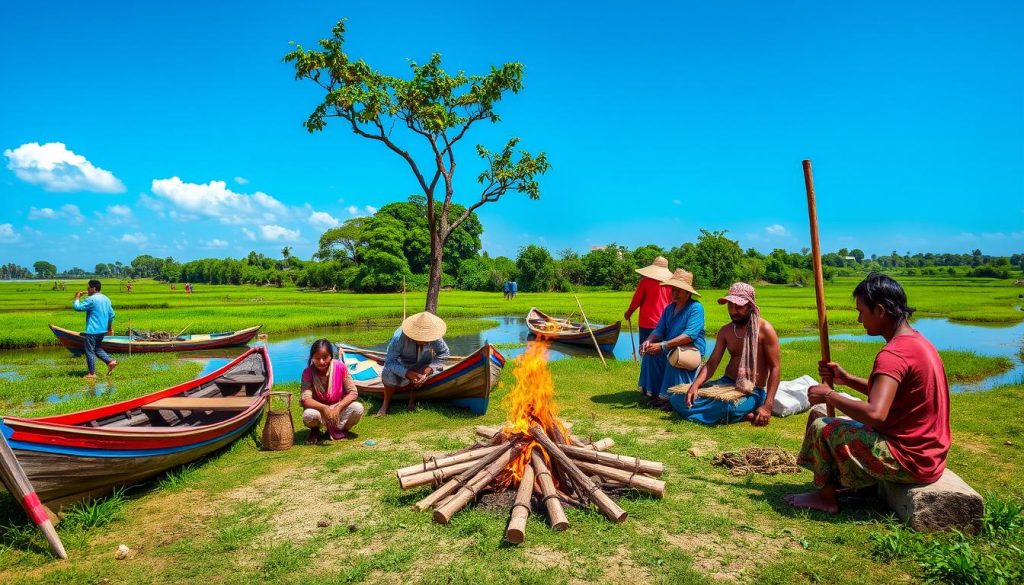
Local artisans are vital to the community. They use old techniques to make beautiful handicrafts. These crafts, from detailed textiles to amazing woodwork, show Cox’s Bazar’s creative side.
Buying from local artisans helps keep these practices alive. It also supports the local economy. Artisans use their craft sales to support their families.
Learning about their work gives you a deeper understanding of the cultural value of each piece. It makes your visit to Cox’s Bazar more meaningful.
| Artisan Craft | Materials Used | Significance |
|---|---|---|
| Handwoven Textiles | Natural fibers, dyes | Cultural storytelling through designs |
| Wood Carvings | Local wood species | Reflects indigenous beliefs and practices |
| Pottery | Clay | Functional art with aesthetic value |
| Jewelry Making | Shell, beads | Tradition and adornment in ceremonies |
Each craft item has its own story and importance. You can take a piece of Cox’s Bazar’s heritage home. If you can, join workshops to learn from artisans and dive into the area’s vibrant culture.
Supporting local artisans not only deepens your understanding of their practices. It also helps the local economy thrive.
Cultural Festivals of Cox’s Bazar
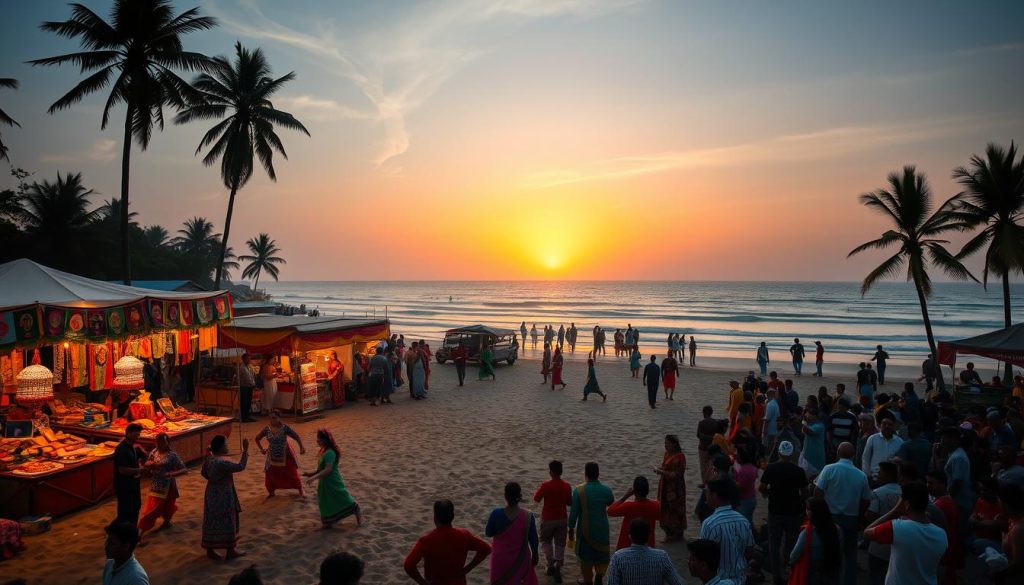
Cox’s Bazar is alive with cultural festivals that celebrate its rich heritage. These events attract both locals and tourists, showcasing the community’s unique traditions. Music, dance, and food make these festivals unforgettable.
Major Events You Shouldn’t Miss
The Cox’s Bazar Beach Festival is a highlight. It features traditional music and dance, showcasing local culture. Another key event is Pohela Boishakh, the Bengali New Year. It welcomes the new year and brings people together, strengthening community bonds.
These festivals draw big crowds, with over 2 million tourists visiting during peak seasons. They create a space for cultural exchange and celebration.
The Role of Festivals in Community Cohesion
The festivals in Cox’s Bazar are crucial for community unity. They unite people from various ethnic groups, like the Marma, Tripura, Chakma, and Rohingya. These celebrations promote cultural understanding and appreciation.
As tourism grows, with 15 million tourists expected by 2030, these festivals will be key. They help keep Cox’s Bazar’s cultural identity alive and boost local pride.
Cultural Tours to Experience
Exploring Cox’s Bazar through cultural tours opens a window to its rich heritage and lively traditions. These tours give you a close look at the lives and customs of the locals. Whether you like guided walks or nature trips, there’s something for everyone.
Guided Walking Tours through the Town
Guided walking tours in Cox’s Bazar let you dive into the local culture. You’ll see historical sites like the Burmese Temple and learn about important events and traditions. You might also visit markets full of colorful crafts and try delicious street food.
Meeting local artisans and tasting authentic food are unforgettable experiences.
Nature and Eco-Tourism Experiences
Cox’s Bazar is a paradise for nature lovers, with its green landscapes and varied ecosystems. You can visit Himchari National Park for stunning views and peaceful waterfalls. Eco-tourism packages here focus on being green, so you can enjoy nature while helping protect it.
Activities like snorkeling in Saint Martin’s Island’s clear waters or hiking through beautiful trails let you connect deeply with nature.
| Tour Package | Duration | Price (BDT) |
|---|---|---|
| Cox’s Bazar Beach Highlights | 3 days | 22,000 |
| Cox’s Bazar Adventure and Culture Tour | 5 days | 35,000 |
| Cox’s Bazar & St. Martin Island Tour | 7 days | 50,000 |
| Extended Cox’s Bazar Adventure | 9 days | 65,000 |
| Ultimate Cox’s Bazar Experience | 10 days | 75,000 |
Cox’s Bazar offers a wide range of tours, from beach fun to wildlife adventures. These tours not only show the area’s culture but also help local communities and protect the environment. They ensure this beautiful place stays beautiful for the future.
Exploring Local Cuisine and Food Culture
Cox’s Bazar is a paradise for food enthusiasts. It offers a wide range of dishes that show off the local food culture. From traditional Bengali snacks to family-friendly meals, there’s something for everyone.
Bengali Snacks to Try
While exploring local markets, don’t miss out on trying Bengali snacks. These snacks are a big part of the area’s food culture. Here are some must-try dishes:
- Pitha – Rice cakes filled with sweet or savory ingredients.
- Shutki Maach – Dried fish cooked with spices, a local favorite.
- Chitol Maach Bharta – A tasty dish made from clown featherback fish.
- Chakma Bamboo Chicken – Chicken marinated and cooked in bamboo shoots.
Family-Friendly Dining Options
For families visiting Cox’s Bazar, there are many dining spots to choose from. These restaurants offer cozy settings for families to enjoy meals together. Here are some top picks:
| Restaurant Name | Cuisine Type | Specialty Dishes |
|---|---|---|
| Tuptup Resto & Resort | Bengali, Seafood | Grilled fish, shrimp curry, lobster |
| Seafood Palace | Seafood | Betki Macher Paturi, crab curry |
| Bengal Spice | Bengali | Vegetarian thali, pitha |
Trying local foods is a great way to dive into the culture of Cox’s Bazar. It lets you enjoy the unique tastes that make this place special.
Historical Sites and Landmarks
Cox’s Bazar is filled with historical sites that show off its rich culture and beautiful buildings. The Cox’s Bazar Buddhist Temple is a key landmark. It gives visitors a peek into the region’s spiritual traditions.
This temple is not just beautiful; it’s also a peaceful place for reflection. The calm surroundings help you connect with the area’s cultural past. You’ll learn about Buddhism’s importance in this lively community.
Cox’s Bazar Buddhist Temple
The Buddhist Temple is a place of spiritual gatherings and community events. It shows how different religions live together in Cox’s Bazar. The temple’s detailed carvings and calm atmosphere make it a must-see for history lovers.
Discovering Himchari National Park
Himchari National Park is a short trip from the city. It’s perfect for those who love nature and history. The park has unique wildlife and beautiful views that make it a top spot in Cox’s Bazar.
Whether you enjoy birdwatching or scenic views, Himchari is great for outdoor fun. It’s a chance for families to enjoy nature and see the area’s ecological beauty.
Visiting these landmarks in Cox’s Bazar is a treat for history fans and families alike. The Buddhist Temple and Himchari National Park offer a mix of culture and nature. They make Cox’s Bazar a place of unforgettable experiences for all.





