Explore Bumthang’s Unique Local Festivals & Ceremonies
Imagine a community’s spirit woven into its festivals and ceremonies. In Bhutan’s heart, Bumthang is seen as the spiritual center. It’s where the rich local culture shines through many Bumthang traditional celebrations.
This district, with valleys like Ura, Chumey, Tang, and Choekhor, is a special place. It lets you dive into local festivals and ceremonies found only in Bumthang villages.
Bumthang has the most temples and dzongs in Bhutan. It offers a deep cultural experience that blends history and tradition. Each festival shows off colorful rituals and performances.
These events bring people together, creating a strong community spirit. They attract locals and visitors, making each celebration a special peek into Bhutanese culture.
Introduction to Bumthang’s Cultural Landscape
Bumthang’s cultural scene is alive with history and traditions. It’s home to many ancient monasteries and temples. These places are key to its unique culture. You can join in on the Bumthang community festivals all year round.
The festivals mix spirituality with creativity, letting you dive into Bhutanese culture. Places like Kurjey Lhakhang and Tamshing Lhakhang show sacred relics and murals. They give a glimpse into the region’s spiritual history.
Every festival celebrates the community’s traditions and values. You’ll feel the true spirit of Bhutanese life during these events. Activities like the Bumthang Cultural Trek let you connect with the community and its customs.
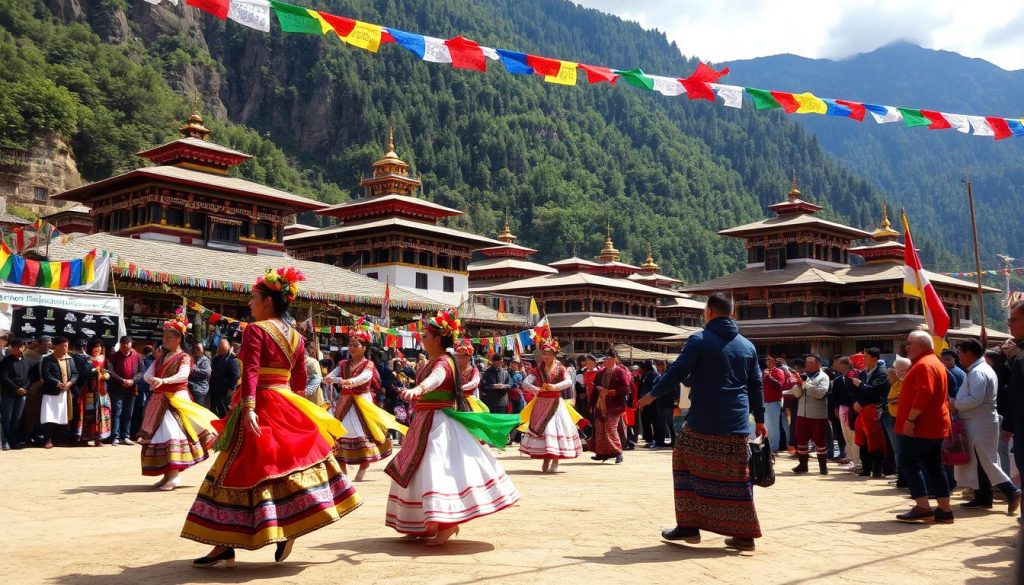
Exploring Bumthang is more than just seeing sights; it’s about experiencing local life. You can meet artisans, shop at B-COOP, and try local foods. The stunning landscapes of Bumthang make these celebrations even more special.
Historical Significance of Bumthang Festivals
The Bumthang region is known for its festivals that hold deep historical value. These celebrations go back centuries, honoring key moments in Bhutan’s history. They remember Guru Rinpoche, who brought Buddhism to Bhutan in the 8th century.
These festivals are more than just fun. They keep alive the spiritual stories of Bhutan’s past. They are a bridge to the past, connecting us to our heritage.
The Jakar Tsechu is a highlight, known for its grandeur. It draws people from all over every autumn. The festival showcases sacred dances that tell stories of history and spirituality.
Other festivals like Tamshing Phala Choepa and Thangbi Mani also show the region’s dedication to its heritage. They celebrate through vibrant performances and rituals.
Each festival honors important figures and events in Bhutanese culture. Locals come together to honor their ancestors. This strengthens community bonds and keeps cultural identities alive.
By participating in these festivals, you connect with Bumthang’s spiritual history. It ensures that the stories of the past remain alive.
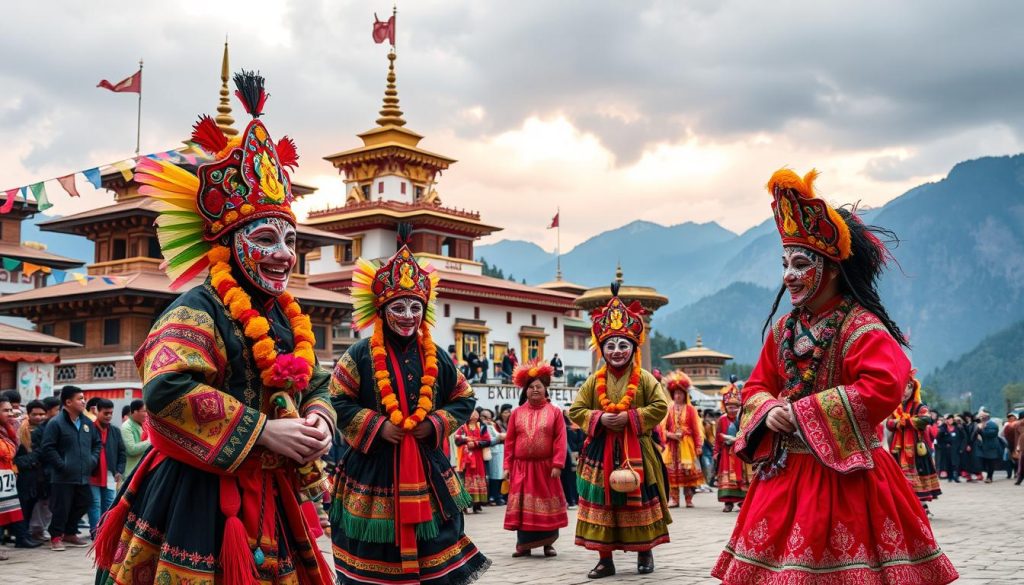
Local festivals and ceremonies unique to Bumthang villages
Bumthang is a lively region in Bhutan known for its vibrant festivals. These events bring villages to life with colors, sounds, and a strong community spirit. Festivals in Bumthang are more than celebrations; they are the heart of the community.
Events like the Jambay Lhakhang Drup and Ura Yakchoe show the joy and traditions of the locals. Every year, these ceremonies connect the past with the present, enriching the community.
Overview of Major Festivals
The Jambay Lhakhang Drup is a key festival in Bumthang, celebrated for its history and fun activities. It honors the Jambay Lhakhang Monastery’s founding, drawing visitors and locals. Ura Yakchoe is another beloved festival, showcasing local traditions and spiritual practices through grand rituals.
Both festivals are filled with community gatherings, strengthening bonds and cultural appreciation.
Significance in Community Life
Festivals are essential for community bonding. They offer a chance for family reunions, helping people reconnect. These celebrations are crucial for keeping cultural values alive, passing them down to the young.
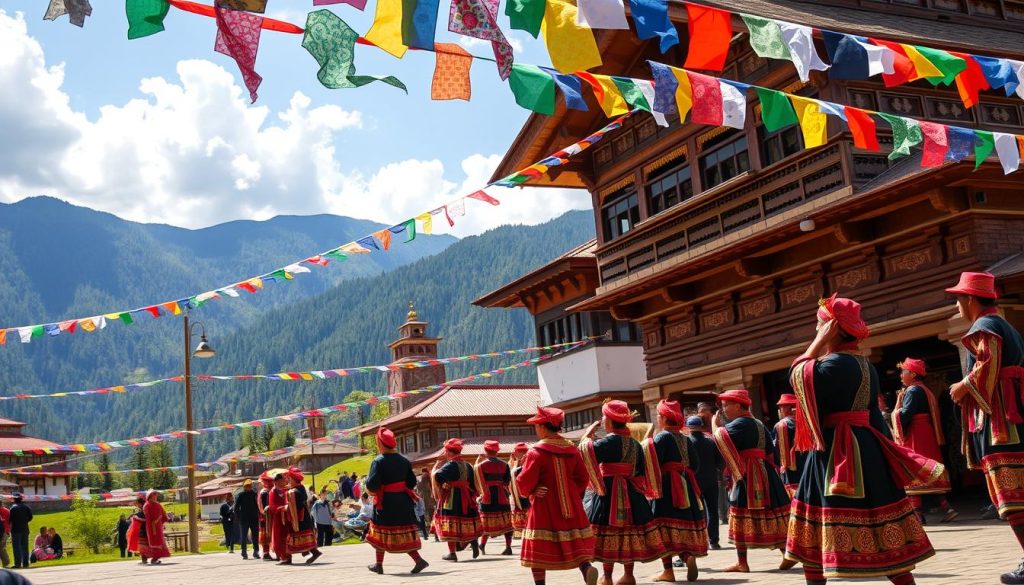
Traditional clothes add to the festivals’ beauty, showing off Bhutan’s rich culture.
| Festival Name | Duration | Key Features |
|---|---|---|
| Jambay Lhakhang Drup | Annual | Commemoration of the monastery’s foundation, traditional performances |
| Ura Yakchoe | Annual | Spiritual rituals, vibrant cultural displays |
| Domkhar Tsechu | Local | Mask dances, communal celebrations, honoring Guru Rinpoche |
Highlighting the Domkhar Tsechu
The Domkhar Tsechu is a key event in Bumthang’s culture. It happens every year on the 10th to 12th day of the third month of the Bhutanese calendar. This festival is a colorful celebration filled with religious rituals. It shows the deep roots of Buddhist traditions in Bumthang.
Religious Significance and Rituals
The Domkhar Tsechu honors Guru Rinpoche. It includes ceremonies to purify the community and seek blessings. The festival blends spiritual and cultural aspects, including the death anniversary of Zhabdrung Ngawang Namgyel. These rituals help overcome obstacles and enrich spiritual lives.
Masked Dances and Cultural Performances
The Domkhar Tsechu is famous for its Bumthang traditional dances. Dancers wear elaborate costumes and masks. They perform various dances, such as:
- Shinji Yab Yum Cham
- Dance of Ging with stick
- Dance of Ging with sword (Driging)
- Black Hat Dance
- Lord of the cremation ground dance (Durdag Cham)
- Dance of four stags
- Dance of Drums of Drametse
- Dance of Ging Tsholing
- Dance of Stag and the Hounds (Shawa Shachhi)
- Accompaniment Dance (Kyecham)
- Dance of Nobleman and the Ladies (Phole and Mole)
On the last day, a Small Maitreya Thangka is displayed from 6:30 am to 9:00 am. These cultural performances in Bumthang entertain and teach important Buddhist lessons. They symbolize the victory of good over evil, adding to the festival’s spiritual value.

| Aspect | Description |
|---|---|
| Festival Duration | 3 days |
| Location | Bumthang |
| Distance from Thimphu | Approximately 270 km |
| Significance | Honors Guru Rinpoche, showcases cultural heritage |
| Year Established | 16th Century by Lama Kuenkhen Longchen Rabjam |
Attending the Domkhar Tsechu gives a unique look into Bumthang’s traditions and spiritual practices. It’s a must-see for those interested in the religious significance of Bumthang festivals.
Ura Yakchoe: A Festival of Dance and Tradition
The Ura Yakchoe festival is a key part of Bumthang’s traditions. It happens every year in Ura Makrong Village from the 12th to the 16th days of the third lunar month. For five days, the community comes together to honor their deities and celebrate their culture.
During the festival, villagers stop their farming work. It’s a big time for them to connect and have fun together.
Traditional Rituals and Local Impact
The Ura Yakchoe festival started to honor Guru Rinpoche’s arrival. He came to help the locals during a hard time. The festival includes making sacred dough figures, called tormas, by temple caretakers on the 11th day before.
These acts show how faith and community spirit are connected. They highlight the strong traditions of Bumthang.
Community Gatherings and Social Aspects
The Ura Yakchoe festival is all about community. With about 300 people from sixty-five families, it brings everyone together. They share stories and enjoy dancing and traditional shows.
By doing this, they strengthen their local identity. The festival also helps young men learn sacred dances. This adds to the community’s rich culture.
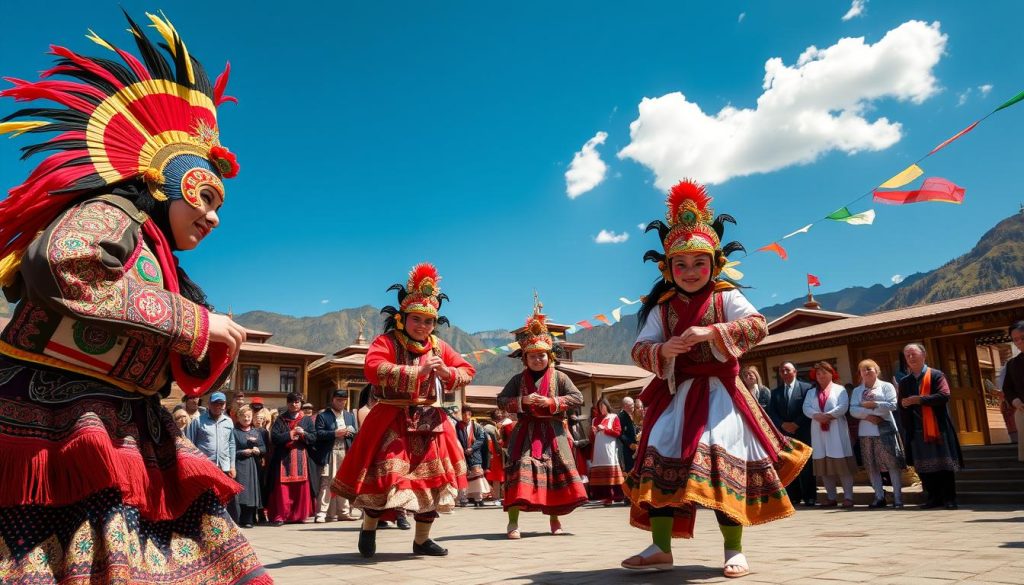
Jambay Lhakhang Drup: Mystical Celebrations
The Jambay Lhakhang Drup festival is a key event in Bumthang. It happens every year on the 15th day of the 9th Bhutanese lunar month. This usually falls between late October and early November.
For four days, people see vibrant ritual dances. These dances show the rich cultural heritage of the area.
The festival starts with a sacred fire ceremony on the first evening. It begins around 7 p.m. The Black Hat Dance and the Fire Dance are highlights. Each dance has its own special meaning, linking local traditions to Buddhist beliefs.
The next days feature traditional mask dances. You’ll see the Dance of Nyulema and Peling Ging Sum. These dances are full of color and spirituality. They carry deep symbolism tied to Buddhism.
On the third day, there’s a unique ‘barton’ or ‘middle day’. It includes the Atsara clown dance and the Stag Dance. These dances are both entertaining and meaningful.
Being part of the Jambay Lhakhang Drup festival is a special experience. It honors the Lhakhang’s history and offers a spiritual journey. Locals and visitors alike come to celebrate, adding to Bumthang’s cultural richness.
Exploring Bumthang’s Architectural Marvels
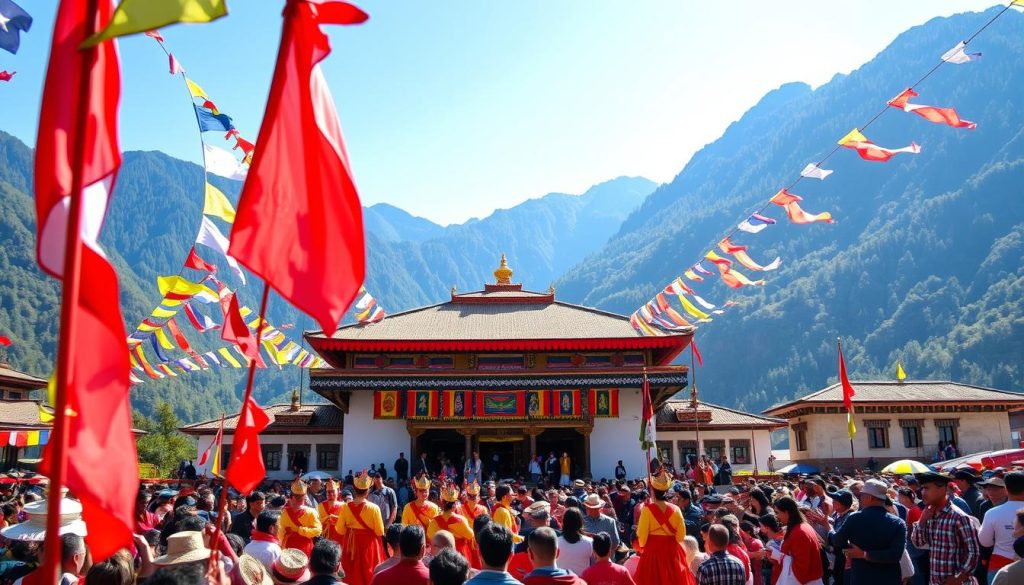
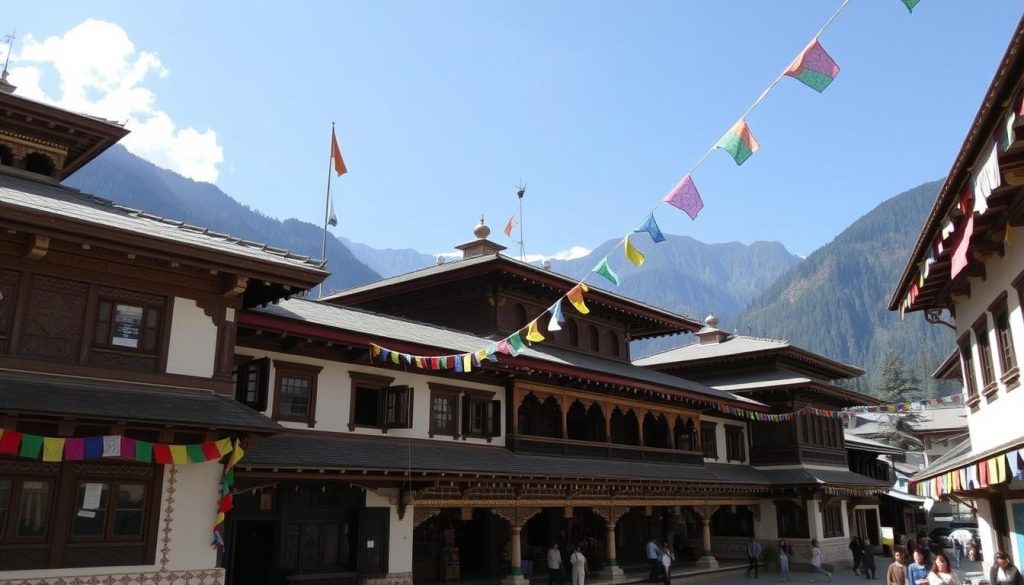
The architecture of Bumthang is filled with masterpieces that show the area’s rich heritage and culture. Temples like Jambay Lhakhang and Kurjey Lhakhang are key to many festivals. They connect the community with its spiritual roots.
These temples are not just landmarks but also places for important rituals. They capture the heart of local traditions.
Temples and Their Role in Festivals
In Bumthang, temples are central to festivals like the Jakar Tshechu. They add color and life to celebrations. Rituals inside these temples make the festivals even more special.
The design of these temples tells the story of the Bhutanese people’s spiritual journey. They show how architecture is key to tradition.
Cultural Preservation through Architecture
Preserving Bumthang’s temples and historic buildings is crucial. It lets future generations experience Bhutanese traditions. These structures hold historical value, giving us a peek into the past.
Keeping these marvels safe shows the community’s dedication to its culture and history. It’s a way to preserve their unique heritage.
Experiencing the Festivals: A Visitor’s Guide
Planning a trip to Bumthang to see its lively festivals means knowing when they happen and how to act. Learning the right time to visit and the proper etiquette shows respect for the area’s traditions.
When to Visit for Festivals
The festival calendar in Bumthang lists many events, like Jambay Lhakhang Drup in October or November. The Ura Yakchoe in June focuses on community with dances and feasts. A good time to visit lets you see these amazing events. Remember, the weather can change, so be ready for rain and high altitude.
Cultural Etiquette During Celebrations
When you join in the fun, knowing the local customs is key. Here are some important tips:
- Dress respectfully: Wear traditional clothes to show respect for Bumthang’s culture.
- Seek permission: Don’t take pictures in temples or during sacred rituals without asking.
- Mind your manners: Remove your shoes before entering sacred places.
- Engage respectfully: Join in but always be mindful of the locals and their traditions.
Knowing when to visit and how to behave makes your trip more meaningful and respectful.
Conclusion
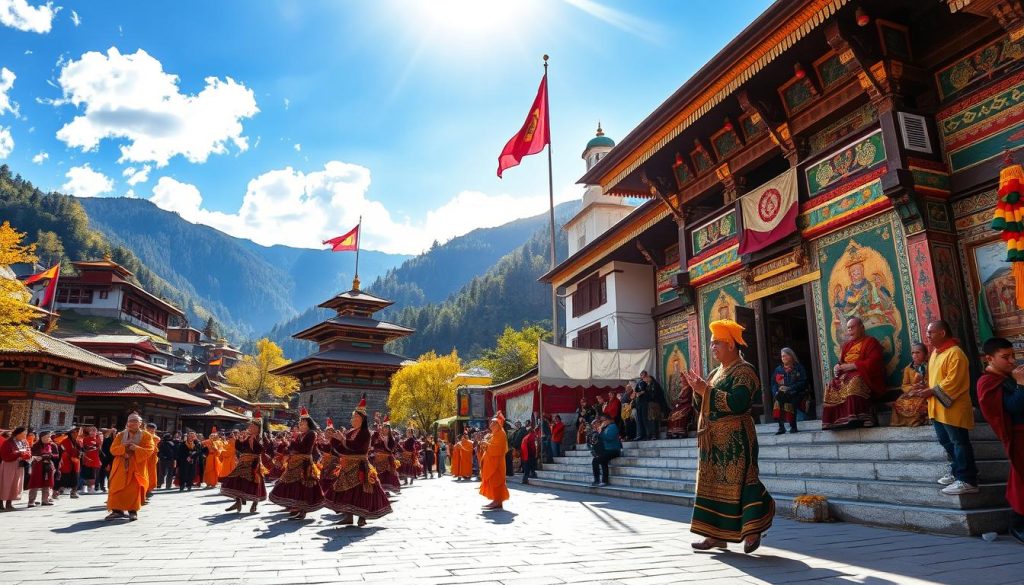
The Bumthang festivals summary shows the rich culture of this special region in Bhutan. Festivals like Jambay Lhakhang Drup and Ura Yakchoe are more than just events. They are key parts of the community’s identity and heritage.
These ceremonies connect the past and present. They let you see the traditions that have lasted for centuries.
Exploring Bumthang’s culture is truly special. These celebrations show off traditional music, masked dances, and rituals. They are what make the local ethos unique.
From the mystical mask dances at Jambay Lhakhang to the lively gatherings in the Ura Valley, each festival is special. Sites like Kurje Lhakhang and Tamshing Lhakhang make the experience even better.
In short, Bumthang is like a living museum. It shows how culture stays strong even as the world changes. With 14 major festivals, you can see the traditions that celebrate their shared history.
Visiting Bumthang is more than just seeing sights. It’s a chance to join in the lasting traditions of a remarkable culture.