

Explore Bagan’s Hidden Temples & Secluded Areas
Have you ever wondered what secrets lie beyond the well-trodden paths of Bagan? Many travelers visit famous temples, but there are many hidden temples and secret spots waiting to be found. In a vast area of 26 square miles, over 2,200 ancient structures stand, showing Myanmar’s history from the 9th to the 13th centuries.
Exploring off the beaten path, you’ll find peaceful spots where the noise disappears. Imagine watching a stunning sunrise with just a friendly vendor and a Chinese traveler. During the day, seek refuge in lesser-known temples with unique designs. In the cooler evening, you might find real experiences that show Bagan’s unmatched peace.
Let’s uncover the mysterious history and beauty of Bagan together. We’ll find hidden gems in Bagan for an adventure you’ll never forget.
The Enigmatic Appeal of Bagan
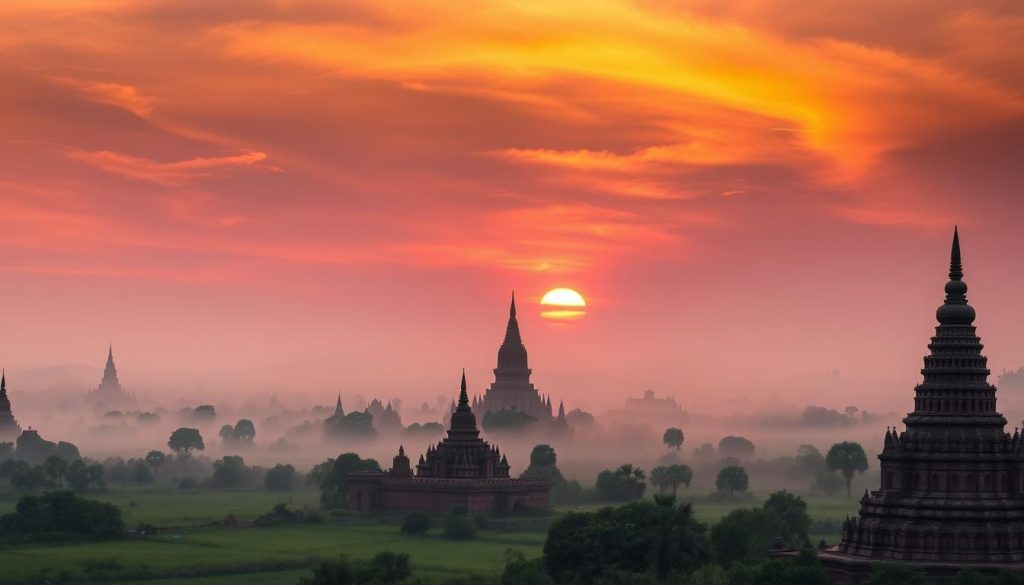
The enigmatic beauty of Bagan draws in travelers as they explore its vast plains. These plains are filled with ancient structures. Bagan was once the capital of the Pagan Kingdom, from the 9th to the 13th centuries.
During this time, an incredible 13,000 religious monuments were built. Today, about 3,500 of these monuments still stand. They tell the stories of a long-lost era.
Bagan’s temples are more than just buildings. They are windows into the past, revealing the kingdom’s history and spirituality. The Thatbyinnyu Temple, built in A.D 1144, is over 60 meters tall. The Gawdawpalin Temple, with its unique design, stands at 55 meters.
The Dhammayangyi Temple, the largest, showcases stunning brickwork. It gives a glimpse into the ancient artistry.
Bagan’s importance led to its recognition by UNESCO in 2019. While climbing the temples is now restricted, visitors can still explore. They can enjoy the peaceful atmosphere and learn about Bagan’s history. This experience encourages reflection on the site’s lasting legacy.
| Temple Name | Height (meters) | Year Constructed | Notable Features |
|---|---|---|---|
| Thatbyinnyu Temple | 60 | A.D 1144 | One of the loftiest monuments in Bagan |
| Gawdawpalin Temple | 55 | Over 800 years old | Unique architectural design |
| Dhammayangyi Temple | Varies | Historical significance | Elegant red brick structure |
The Ancient Kingdom of Pagan
The Kingdom of Pagan was a key part of the History of Bagan from the 9th to the 12th centuries. It united various regions of Myanmar. It also made Pagan era Buddhism a major force in religion and culture.
In its prime, from the 11th to the 13th centuries, the kingdom built over 10,000 religious sites. Today, more than 2,400 temples and pagodas remain in the Bagan Archaeological Zone. They cover 104 km² and show the kingdom’s spiritual and architectural achievements.
Between 1150 and 1200, building temples was booming. This created jobs in masonry, carpentry, and goldsmithing. A diverse population came, adding to the kingdom’s culture and religion.
But by the late 13th century, Bagan started to decline. Invasions and power shifts took their toll. Despite this, Bagan remained a key pilgrimage site. Renovations and earthquakes later changed many temples.
Exploring Bagan’s history lets you see its spirituality and craftsmanship. It deepens your understanding of the History of Bagan and Pagan era Buddhism.
Overview of Bagan’s Temple Landscape
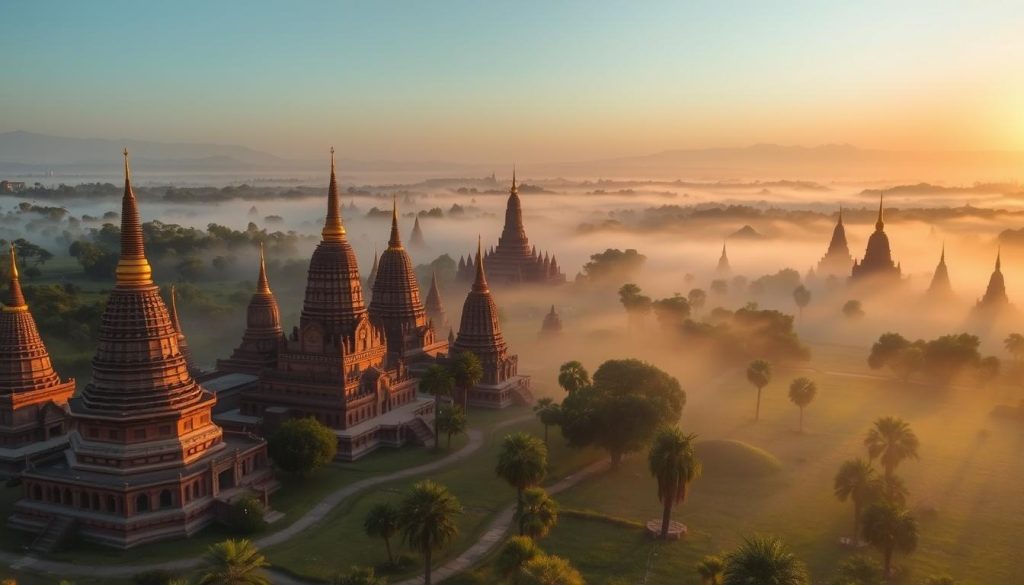
The Bagan temple landscape is a stunning canvas of history and architecture. It covers a 40-square-mile area and has over 2,200 temples from the 9th to 13th centuries. At its peak, the Pagan Empire built over 10,000 temples and 3,000 monasteries, showing its spiritual importance.
Unfortunately, earthquakes and natural wear have reduced the number of temples. The 1975 and 2016 earthquakes damaged hundreds of structures.
Exploring pagodas in Bagan is a unique experience. You can see the grand Ananda Temple and the Shwezigon Pagoda, both covered in gilded copper plates. These temples tell stories of devotion and artistry.
The remnants of frescoes and sculptures show Bagan’s civilization at its peak. You can see various architectural influences.
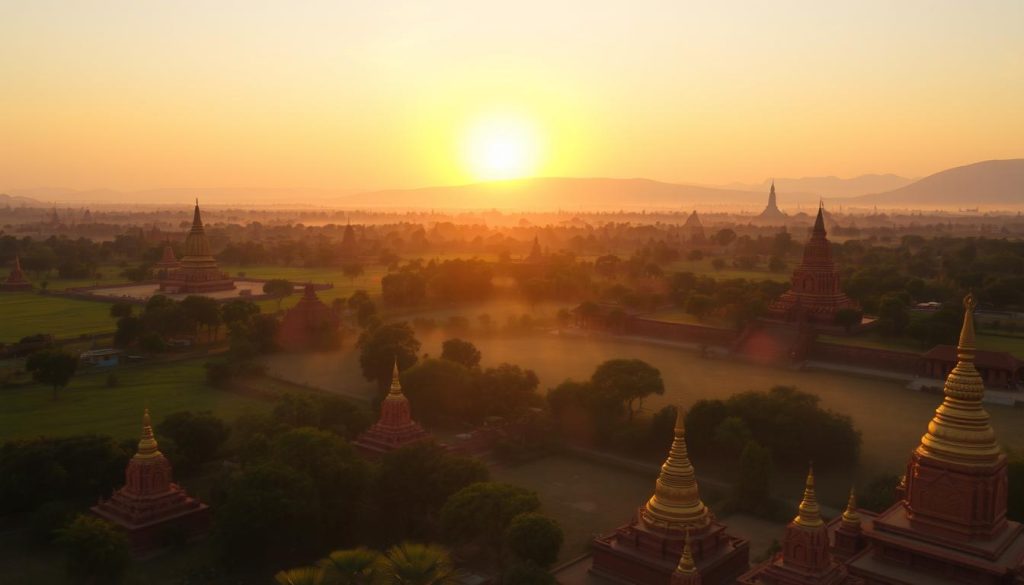
Walking through Bagan, you see the temples’ resilience. Many are still used for worship today. The post-monsoon environment adds to the beauty of this historic landscape.
A five-day pass to explore Bagan’s temples costs around 25,000 Kyat (about $18 USD). It’s a great way to dive into this cultural experience.
| Temple Name | Year Constructed | Noteworthy Features |
|---|---|---|
| Ananda Temple | 1105 AD | Strong Indian architectural influences, revered as a significant pilgrimage site. |
| Shwezigon Pagoda | 1102 AD | Gold-leaf gilded, believed to house relics of the Buddha. |
| Mingalazedi | 1270 AD | Impressive red-brick stupa located near the Irrawaddy River. |
| Sulamani Temple | 1183 AD | Red-bricked, multi-storeyed architecture providing unique light effects. |
| Windo Temple | Unknown | Overlooked temple offering a serene atmosphere beside the main road. |
Hidden temples and off-the-beaten-path areas in Bagan
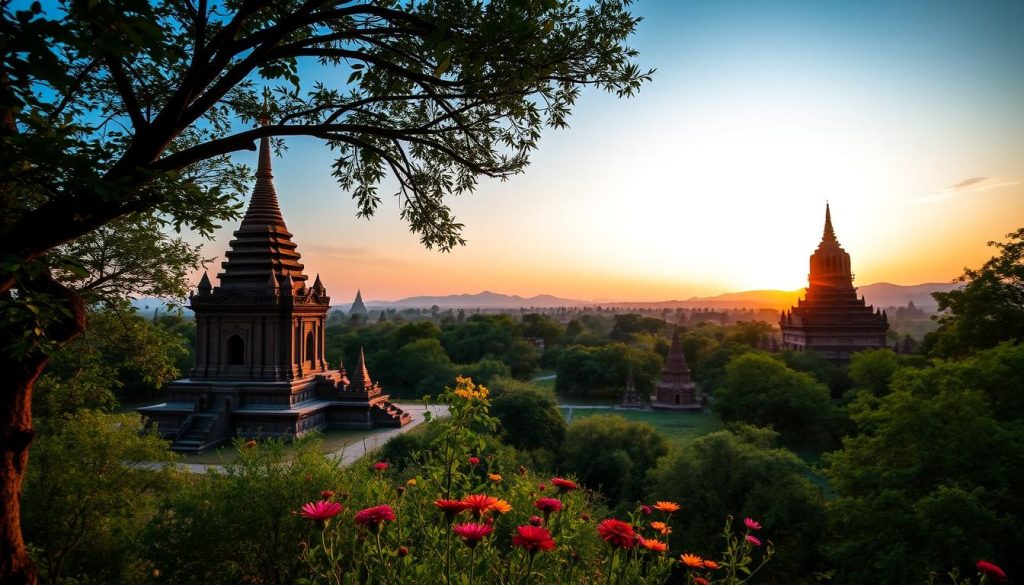
Bagan is a treasure trove of exploration, filled with lesser-known temples. These temples offer a unique look into the past. They are hidden among the famous sites, providing a peaceful view of ancient architecture without crowds.
These secret temples in Bagan are hard to find, but the journey is worth it. It makes the discovery even more special.
Discovering Lesser-Known Temples
Many tourists visit the popular sites, but Bagan’s hidden spots are truly special. These temples have intricate carvings and unique designs. They show the rich history of the region.
Talking to locals can make your journey even better. They can show you these hidden temples. This creates a deeper connection to the area’s culture and traditions.
Accessing Secluded Areas
Exploring Bagan’s hidden treasures requires an adventurous spirit. Some paths may be muddy or uneven. This makes the journey to these secret temples in Bagan an experience itself.
Renting an e-bike costs around $6-7 USD daily. It’s a great way to explore the landscape. Plan your explorations early in the morning or later in the afternoon. This avoids the midday heat and lets you enjoy the views.
| Exploration Aspect | Details |
|---|---|
| Number of Temples | Approximately 2,200 remaining from a former 10,000 |
| Entry Fee | $25 USD valid for 5 days |
| E-Bike Rental | $6-7 USD per day |
| Recommended Visit Duration | 3 days for thorough exploration |
| Best Times to Visit | Sunrise and sunset for optimal views |
Getting Started: Arriving in Bagan
Arriving in Bagan starts your journey into a world of ancient temples and rich culture. You can fly into Nyaung-U Airport, just 2-4 miles from town. Or, take an overnight bus from Yangon or Mandalay. The bus ride of about 630 km is a great way to see local culture.
Once in Bagan, you’ll find many ways to get around. You can use tuk-tuks, taxis, or rent electric bikes for about 5,000 MMK ($3.50) a day. This lets you explore at your own speed, with over 2,000 to 4,000 temples to see.
The best time to visit Bagan is from November to February. The weather is mild, around 80°F (27°C). But, from March to May, it gets very hot, over 100°F (38°C). So, plan your trip wisely.
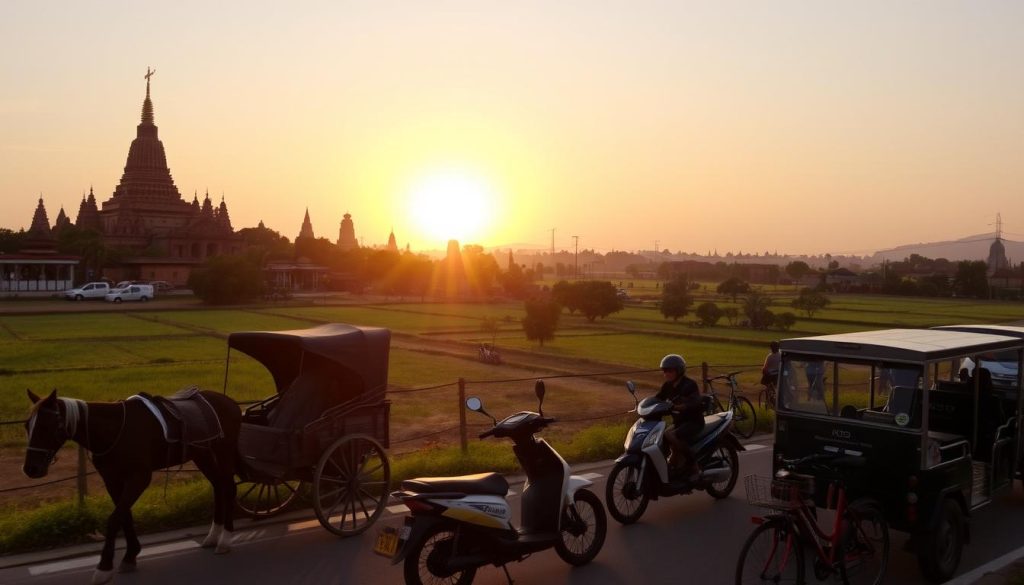
Your arrival in Bagan is easy, thanks to the friendly locals and many travel options to Bagan. You can choose a private transfer or take the local bus. Spending at least four days here lets you fully enjoy Bagan’s beauty and history.
Essential Tips for Exploring Bagan
Starting your Bagan temple adventure needs some key tips. Knowing the best times to visit and how to get around is crucial. E-bikes and bicycles are great for exploring the vast archaeological area.
Best Times to Visit the Temples
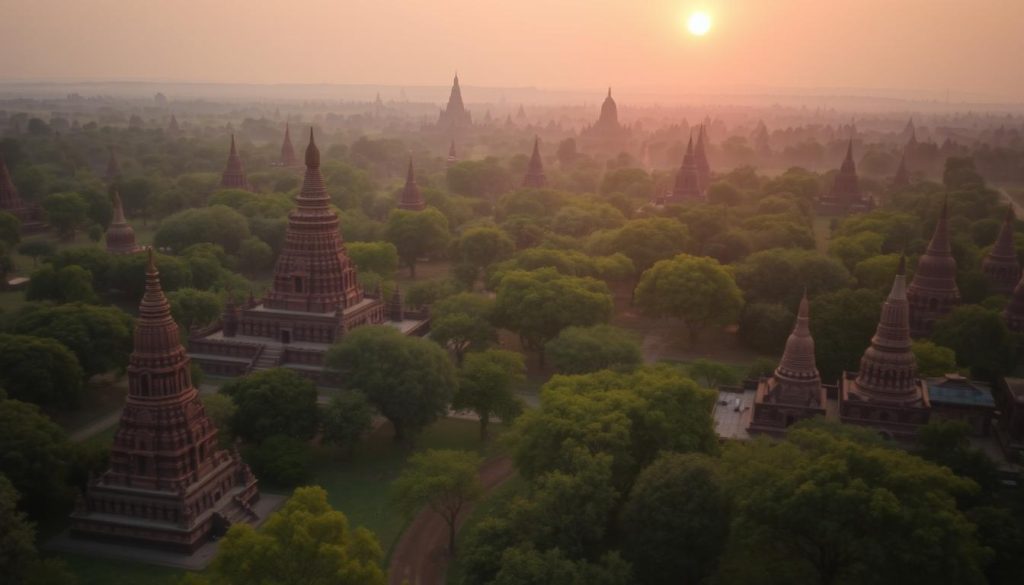
The best times to see Bagan’s temples are early morning and late afternoon. The weather is cooler, making it easier to walk. The light is also perfect for photos, showing off the temples’ beauty.
Modes of Transport: E-Bikes and Bicycles
E-bikes are a fun and fast way to see Bagan. You can rent them for 5,000-8,000 kyats ($5-6) a day. Bicycles are cheaper, costing $1 to $3 a day. Both options let you reach hidden temples and enjoy the scenery at your pace.
Top Experiences for an Authentic Bagan Adventure
Bagan is a treasure trove of history and beauty. Watching the sun rise or set over ancient pagodas is unforgettable. You can also dive into the local culture, making your trip even more special.
Sunrise and Sunset at Uncrowded Spots
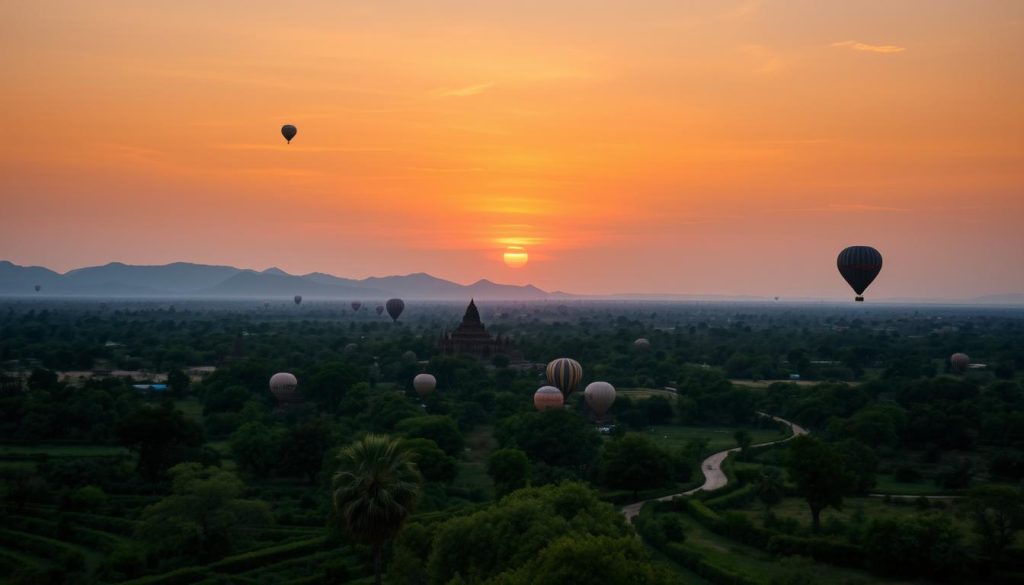
Exploring sunrise spots in Bagan that few know about can make your trip magical. The sky turns orange, pink, and purple, lighting up the temples. Here are some great places to see:
- The serene Shwesandaw Pagoda, known for its elevated views.
- The secluded Pyathadar Hpaya, where the tranquility enhances the experience.
- The smaller, often overlooked Windo temple, offering unique perspectives.
Experiencing Local Culture in Lesser-Trodden Temples
Immerse yourself in local culture Bagan to learn more about the area. Visiting less crowded temples lets you see daily rituals and local traditions. You can even try authentic food from vendors nearby. Some top spots include:
- The Gubyaukgyi Temple, which features intricate murals.
- The active rituals at Ananda Temple, where the four serene Buddha statues radiate peace.
- The Shwezigon Pagoda, vibrant during the Shwezigon Festival in December.
Exploring Bagan’s Historic Flavors
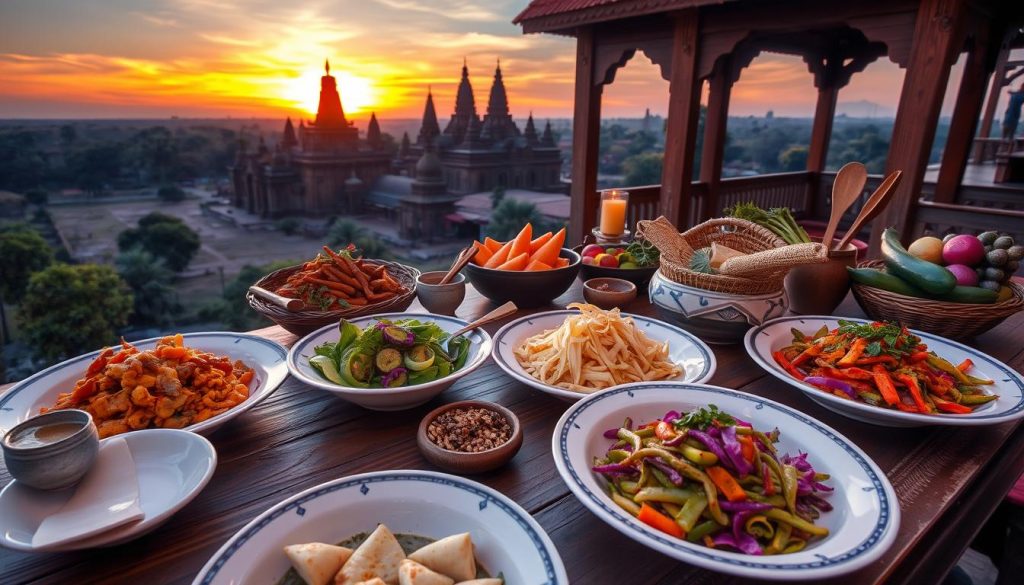
In Bagan, your food journey is a perfect match for its stunning temples. The local cuisine here is full of flavors that show off the area’s rich culture. You can try *Mohinga*, a famous fish soup, and *La Phet*, a unique tea leaf salad.
Local eateries in Nyaung-U and Old Bagan are where the magic happens. They serve tasty meals and let you meet the locals. You’ll find vegetarian dishes too, so everyone can enjoy. Don’t forget to try the sweet pastries for a taste of the region’s variety.
Enjoying Bagan’s food and sights together makes your trip even better. The area’s history, from the 11th to 13th centuries, is fascinating. Seeing the temples and tasting the local flavors makes your adventure richer.
What to Expect While Exploring the Temples
Exploring Bagan’s temples takes you back in time. You’ll see around 2,200 temples over sixteen square miles. It’s a sight to behold. Remember, removing your shoes shows respect when entering these sacred places.
Visiting temples in Bagan is a unique experience. Dawn or dusk visits are special, with natural sounds filling the air. The lack of electric lights lets you feel the history. Every corner tells a story of the past.
Getting around is easy and affordable. Bicycles cost just $1.00. You can also use horse carts and electric bikes. Spend at least three days to see it all, like the Thatbyinnyu Temple’s stunning views.
Don’t miss out on local culture. Try Thanaka, a traditional Burmese cosmetic. Visiting temples like the Sulamani Temple or watching the sunrise at the Shwesandaw Pagoda is unforgettable.
Conclusion
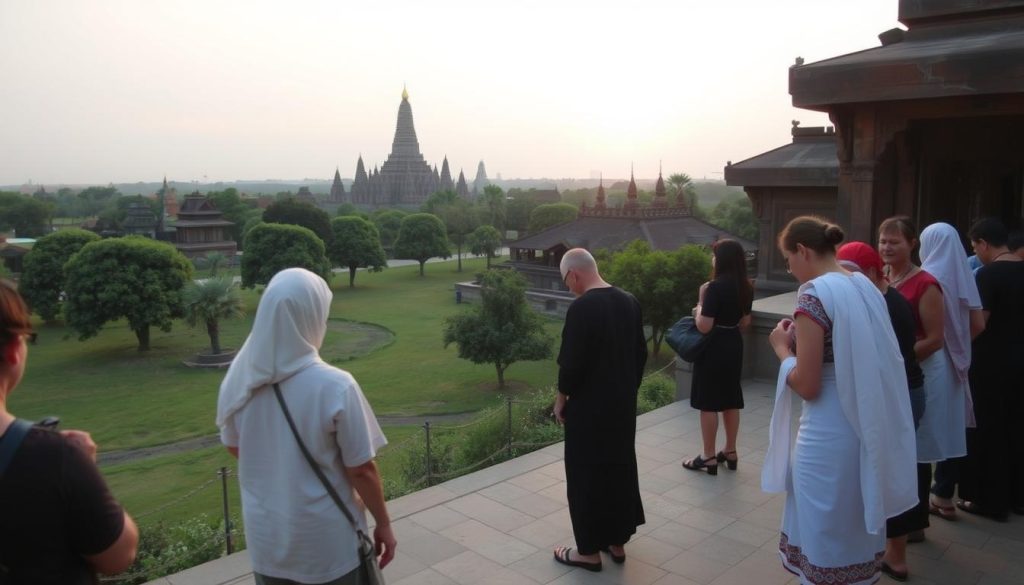
As your journey through Bagan comes to an end, think about all the hidden gems you found. You saw the Thatbyinnyu Temple and the Lawka Nanda Pagoda. Each place showed you Bagan’s deep history and lively culture.
You probably had exciting adventures in Bagan. Maybe you cycled through old ruins, met friendly locals, or tried local foods. These moments made your trip special.
Bagan still has many stories and secrets to share. It invites you to come back and enjoy its beauty again. Despite challenges, the local community’s warmth is strong, drawing travelers in.
Every visit to Bagan leaves a lasting impression. You might have seen the sunset at Ta Wet Hpaya or gone on a hot air balloon ride. Remember these moments and let Bagan’s spirit call you back for more adventures.





