Explore Authentic Thimphu Traditional Food Flavors
Ever wondered why Thimphu’s food is so special? It attracts food enthusiasts worldwide. The flavors of Bhutanese cuisine are a window into the nation’s culture and history. Thimphu is known for its bold use of chilies and cheese, offering a wide range of authentic dishes.
Thimphu, the capital, is a food lover’s paradise. Here, you can experience the culinary traditions passed down through generations. Each dish, like Ema Datshi, made with chilies and cheese, tells a story. You’ll also find Kewa Datshi and Shakam Paa, each with its own tale.
Introduction to Thimphu’s Culinary Landscape
Thimphu is a vibrant hub filled with flavors that show off the Thimphu food culture. It’s located between India and China, which greatly influences its food. This mix creates a unique Bhutanese food influence seen in the local dishes.
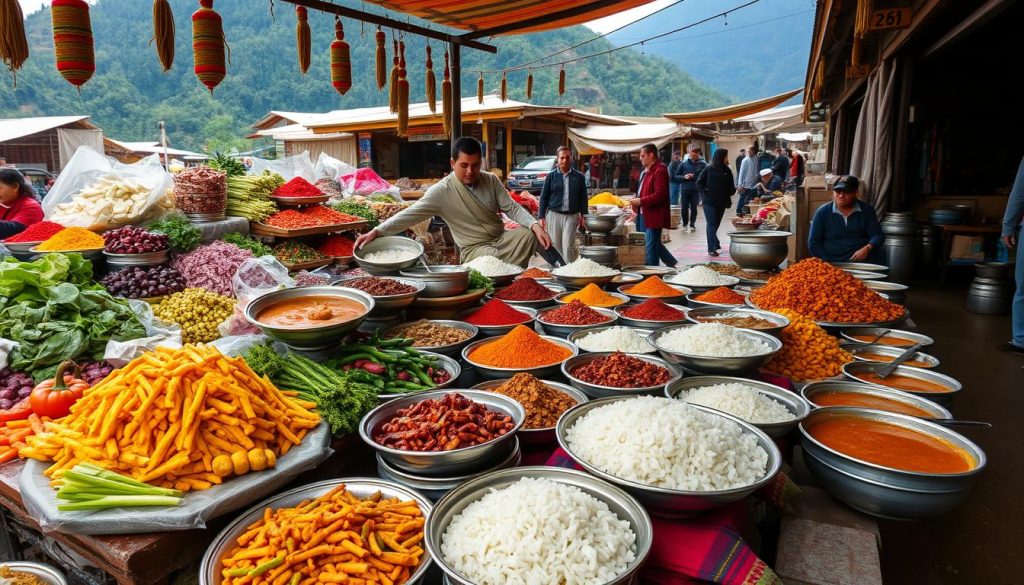
When you start exploring Thimphu, you’ll dive into a world where food is more than just food. The Centenary Farmers’ Weekend Market is a must-see. It has over 400 stalls with fresh produce. Here, families and friends gather for meals, strengthening their bonds.
Bhutanese cuisine is known for its bold flavors and spices, like chilies. These spices are key in many dishes, celebrating local ingredients. Exploring Thimphu’s food heritage lets you see how important food is in the culture.

Understanding Bhutanese Cuisine
Bhutanese cuisine is a mix of Indian, Tibetan, and Chinese flavors, with a twist from local ingredients. Rice, buckwheat, and maize are staples in Bhutanese meals. Chilies are used a lot, adding a bold taste to dishes.
Ema datshi, the national dish, is a favorite in Thimphu. It combines spicy chilies with local cheese. This dish shows the simplicity and richness of Bhutan’s food traditions. Younger people also enjoy kewa datshi, a milder version that highlights local ingredients.
Phaksha paa is another dish that balances spice and flavor. It uses pork and dried red chilies. Street food in Bhutan, like momos, offers a taste of cultural exchange.
Traditional dishes like puta, a buckwheat noodle, celebrate local harvests. Unique dishes like hoentay show the diversity of Bhutanese cuisine. These dishes are important for preserving Bhutan’s culture and traditions.
| Dishes | Main Ingredients | Notable Characteristics |
|---|---|---|
| Ema Datshi | Chilies, cheese | Spicy and savory, national dish |
| Kewa Datshi | Potatoes, cheese | Milder flavor, popular among youth |
| Momos | Wheat flour, various fillings | Widely enjoyed street food |
| Phaksha Paa | Pork, dried red chilies | Commonly served with rice |
| Puta | Buckwheat | Prepared on special occasions |
| Hoentay | Buckwheat, spinach, cheese | Local specialty with unique twist |
The Allure of Thimphu Traditional Food
Thimphu’s traditional food is a hit with food lovers worldwide. It’s a mix of bold flavors and fresh, local ingredients. In Thimphu, meals are more than just food; they share the stories of the land and its people.
Dining in Thimphu is special because of its bold flavors. Bhutanese food is known for its spicy dishes, packed with chilies. The unique tastes come from fresh herbs, fermented foods, and spices, showing off the country’s diverse flavors.
Eating out in Thimphu is a unique experience. It’s all about respect for food and eating together. In local spots, you can dive into the culture while enjoying delicious food. With more tourists trying Bhutanese food, its popularity keeps growing.
Social media and food blogs help spread the word about Thimphu’s food. Dishes like Bhutanese red rice and ema datshi are becoming famous worldwide. Thimphu’s food scene is a magical mix of old and new, a treat for any food enthusiast.
Must-Try Dishes in Thimphu
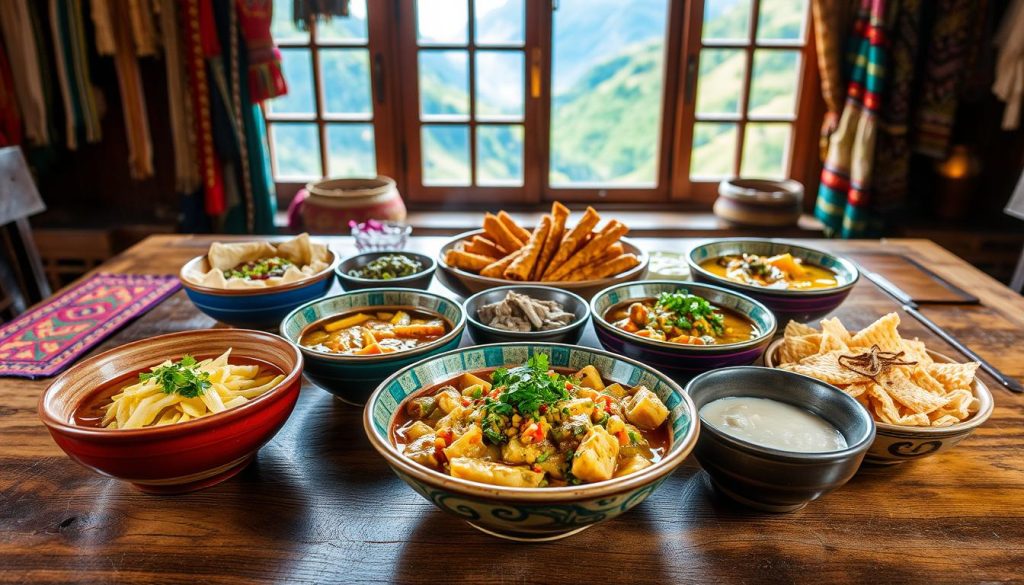
Exploring Thimphu’s food scene reveals some standout dishes. These popular choices show off the rich flavors and traditions of Bhutanese food. Tasting them gives you a glimpse into Bhutan’s unique culture and taste preferences.
Ema Datshi: The National Dish
Ema Datshi is Bhutan’s national dish. It’s a mix of chilies and yak cheese, offering a spicy, savory taste. It’s a favorite in every restaurant, showing Bhutan’s love for spicy and cheesy flavors.
Shakam Paa: A Flavorful Protein Option
Shakam Paa is a protein-packed dish with a unique texture. It’s dried beef cooked with chilies and radish, served with rice. Its bold taste makes it a great choice among Thimphu’s must-try dishes.
Jasha Maru: A Spicy Chicken Delight
Jasha Maru is perfect for those who love spice. It’s a spicy chicken stew with onions, chilies, and ginger. This dish showcases the variety of proteins in Bhutanese cuisine, adding a kick to your meal.
Top Traditional Food Spots in Thimphu
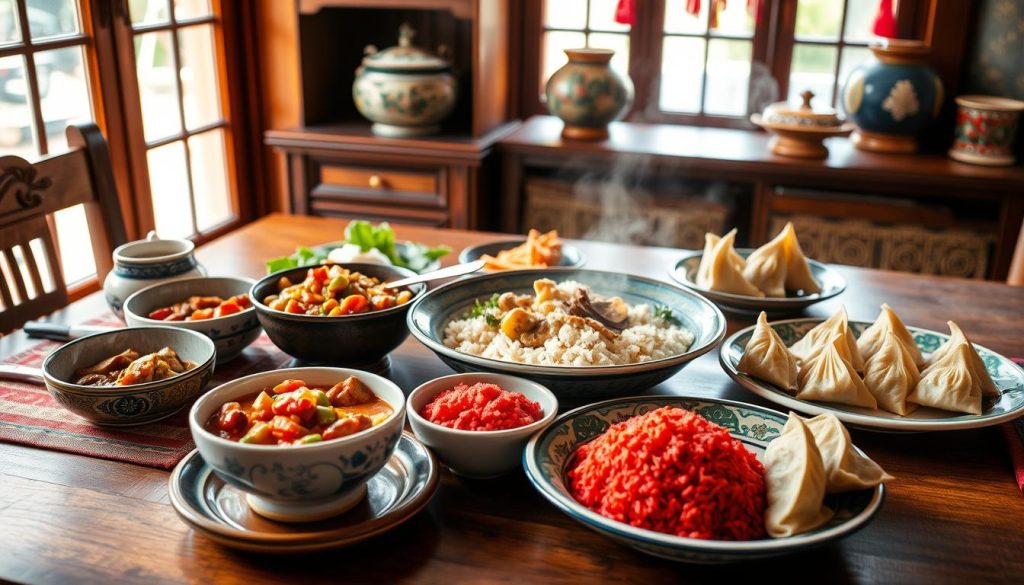
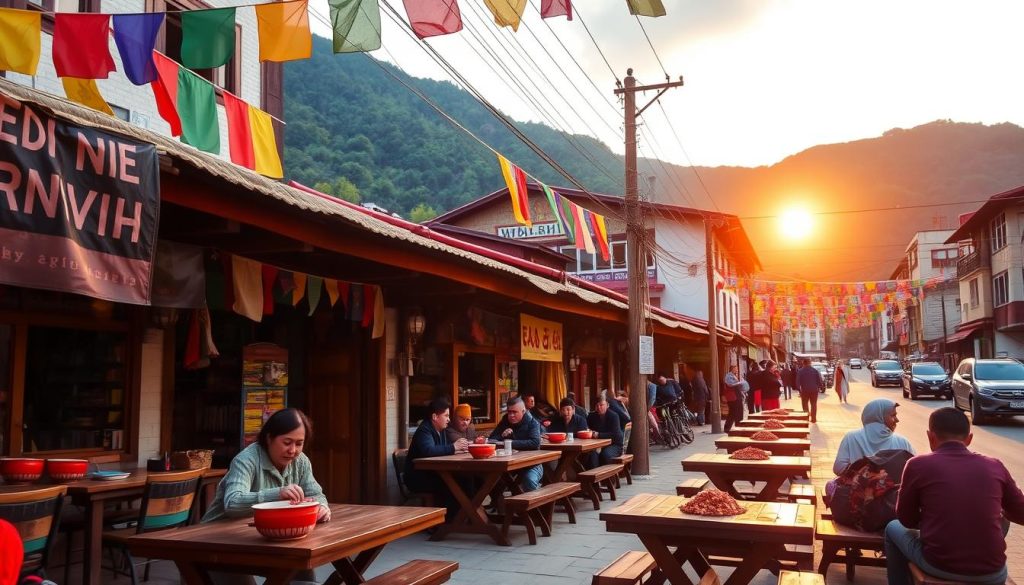
Food lovers in Thimphu will find a variety of traditional spots to eat. The city’s food scene is full of vibrant flavors that show off Bhutan’s rich culture. You can try cozy local places or well-known Bhutanese restaurants for a true taste of the place.
Local Eateries to Experience Authentic Flavors
Thimphu’s local eateries are all about serving real Bhutanese dishes. They offer a relaxed setting where you can enjoy a meal and dive into local traditions. Here are some favorites:
- The Place: Famous for its Ema Datshi, a spicy chili and cheese dish.
- Karma: A top pick for Tibetan food, known for its tasty momos and cozy vibe.
- The Folk Heritage Museum Restaurant: Great food and a peek into Bhutan’s heritage.
Best Bhutanese Restaurants in Thimphu
Looking for the best traditional food spots in Thimphu? You’ll find many Bhutanese restaurants with a wide range of dishes. They offer everything from Tibetan and Indian to Western flavors. Here are some highlights:
- The Indian Kitchen: Known for its spicy curries and naan bread.
- Dragon House: Offers a big all-you-can-eat buffet with Chinese dishes.
- café@thimphu: Great for Western food like sandwiches, salads, and desserts.
Local Delicacies of Thimphu
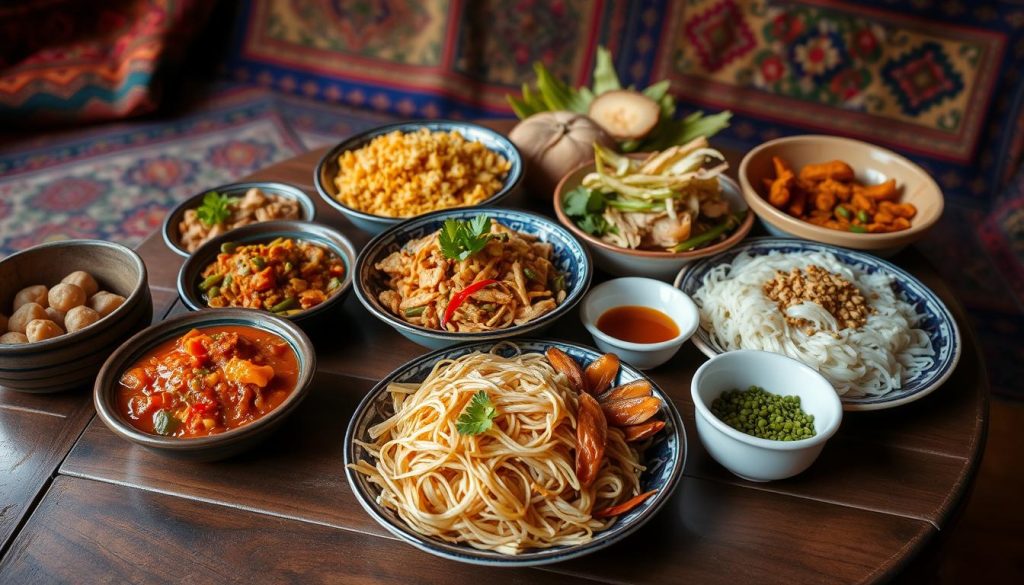
Thimphu is known for its rich local delicacies that show off Bhutan’s unique tastes. Puta and Goen Hogey are traditional snacks that represent healthy Bhutanese food. They let you dive into Thimphu’s lively food culture and see the creativity in its cooking.
Puta: Nutritious Buckwheat Noodles
Puta is a staple made from buckwheat, a healthier choice than rice. It’s not just tasty but also good for you. Puta is often stir-fried with fresh veggies, showing how traditional snacks can be versatile.
Its simple yet hearty nature makes it a hit with both locals and tourists.
Goen Hogey: A Refreshing Cucumber Salad
Goen Hogey is a cool cucumber salad that’s perfect with big meals. It’s dressed with chili flakes and datshi cheese, which are key in Bhutanese cooking. This mix of flavors not only makes the meal better but also supports a healthy lifestyle.
Pairing Goen Hogey with other dishes helps cool down the heat from spicy foods common in Thimphu.
| Dish | Main Ingredients | Health Benefits | Serving Style |
|---|---|---|---|
| Puta | Buckwheat, seasonal vegetables | Rich in fiber, gluten-free | Stir-fried, served warm |
| Goen Hogey | Cucumbers, chili flakes, datshi cheese | Low in calories, hydrating | Fresh, as a side dish |
The Role of Chilies and Cheese in Bhutanese Cuisine
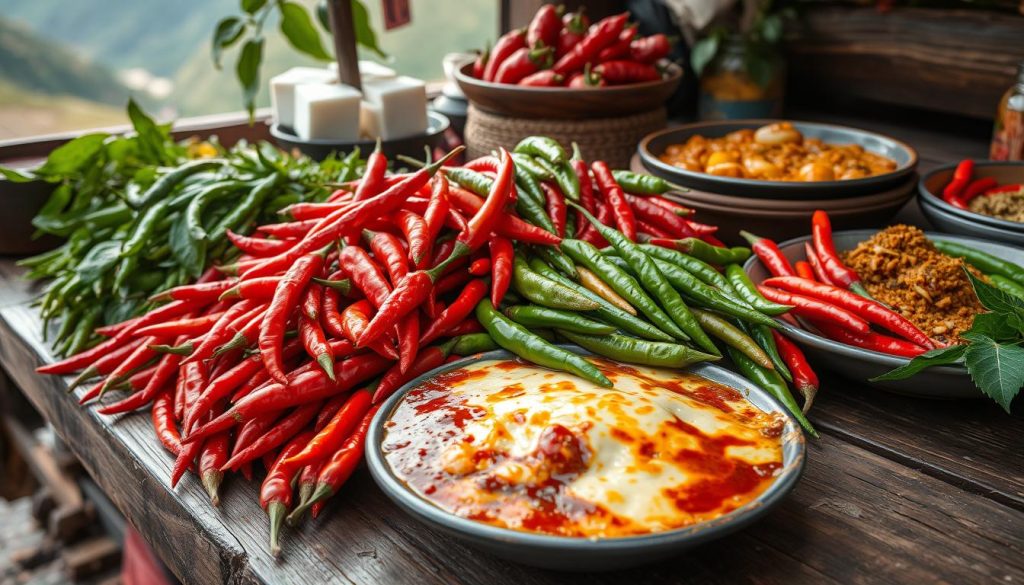
Chilies and cheese are key to Bhutanese food’s flavor. Chilies in Bhutanese food are everywhere, adding a fiery kick. They’re used fresh, stewed, dried, or as a spicy ezay.
Datshi cheese adds a creamy touch to dishes. Made from goat, cow, or yak milk, it’s a cultural treasure. In ema datshi, it melts into a sauce with green chilies, showing Bhutan’s love for spicy food.
The mix of chili heat and datshi creaminess is unique. They’re served with rice or in stews, showing Bhutan’s love for its land. Red rice is a staple, often with spicy dishes.
| Ingredient | Varieties/Uses | Cultural Significance |
|---|---|---|
| Chilies | Green, red, fresh, dried, stewed, pickled | Essential component in most dishes; showcases the love for spice |
| Datshi Cheese | Soft, melted in dishes, crumbled over salads | Cultural symbol; enhances the richness of meals |
Traditional Beverages to Accompany Your Meal
Enjoying Thimphu’s traditional food is even better with the right drink. Suja, a unique Bhutanese tea, is a favorite. It’s made from fermented yak butter and salt. This creamy tea is warm and comforting, perfect for cold evenings.
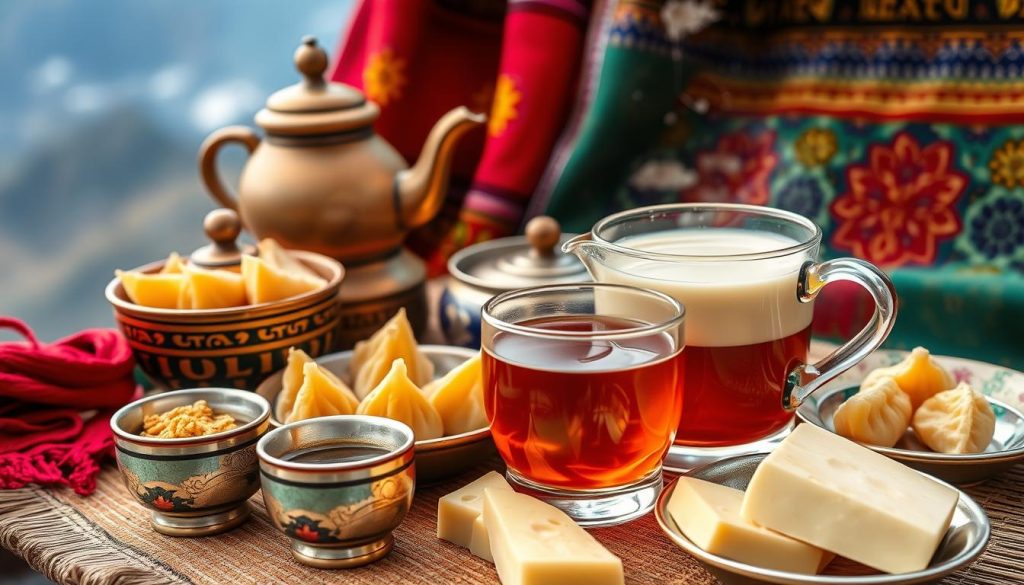
Other traditional drinks in Bhutan include Ngaja, a sweet milk tea, and ara, a strong alcohol made from grains like rice and maize. These drinks are great with meals, balancing the spiciness of Bhutanese dishes.
Drinking Suja with dishes like Ema Datshi makes the meal richer. It’s a way to experience Bhutan’s culture through every sip and bite. It connects you to Bhutan’s rich heritage.
Experiencing Thimphu Food Culture
Thimphu’s food culture is a mix of flavors, traditions, and community. Meals are more than food; they show how we connect. Family meals and gatherings highlight the value of relationships.
Traditional Bhutanese food shows this, using special ingredients and cooking methods. These are key to the culture.
How Food Brings Communities Together
In Thimphu, food brings people together. Sharing dishes like Ema Datshi, Bhutan’s national dish, starts conversations. Momos and Puta, buckwheat noodles, also bring people together.
Dining places, from homes to restaurants, focus on sharing. This shows the social side of Bhutanese food.
The cuisine has unique traditions, like:
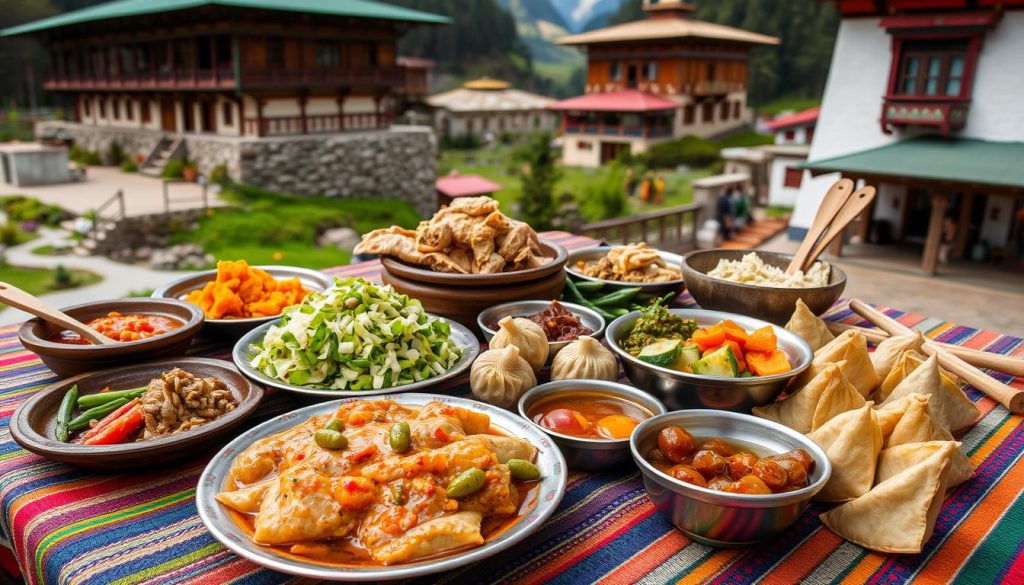
- Using traditional wooden bowls and bamboo containers that reflect the cultural heritage.
- Serving the head of the family first, a gesture steeped in respect and tradition.
- Offering a variety of spicy dishes like Jasha Maru, which highlight the popular use of chilies in Bhutanese meals.
Even as modern life changes, the joy of eating together remains. Sharing meals strengthens bonds, making every meal a celebration of friendship.
| Customs | Description |
|---|---|
| Group Dining | Eating together promotes strong social ties. |
| Food Presentation | Use of traditional containers is common. |
| Order of Service | Head of the family is served first. |
| Traditional Dishes | Ema Datshi, Jasha Maru, and Momos are typical communal dishes. |
Exploring Thimphu’s food culture lets you see into Bhutan’s heart. Every meal is a chance to connect with others.
Conclusion
Your journey into Bhutan’s food scene starts with exploring Bhutanese cuisine. Thimphu offers a world of traditional food experiences. Each meal is a celebration of Bhutan’s culture, filled with warmth and community.
Dishes like ema datshi and jasha maru are more than just food. They represent Bhutan’s way of life, rich in community and heritage. Every bite tells a story.
When you try local dishes in Thimphu’s markets and eateries, you learn about its unique cuisine. You’ll find a mix of spices, fresh ingredients, and old cooking methods. These Thimphu traditional food experiences will leave you with memories and a taste of Bhutan.
Exploring Thimphu’s food scene is a journey of flavors. It connects you with the food, people, and traditions of Bhutan. From vegetarian dishes to spicy meat dishes, it showcases Bhutan’s heritage and love for sharing meals together.