

Explore Amman’s Rich Cultural Heritage & History
Have you ever wondered how a modern city can blend centuries of culture with today’s life? Amman, Jordan’s capital, shows this perfectly. It has a history that goes back thousands of years, with influences from Romans, Byzantines, and Umayyads. You can see this rich heritage through Jordan’s historical sites.
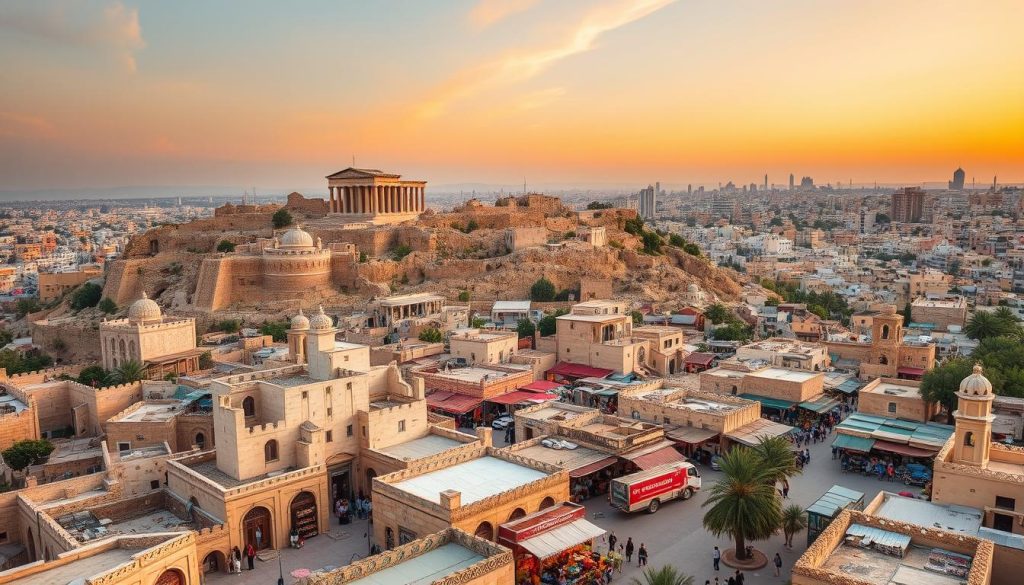
Walking through Amman’s streets, you’ll discover its vibrant markets. Here, spices and textiles fill the air. The Citadel, Roman Theater, and Temple of Hercules are just a few sights to see. Each place reveals more about Amman’s history.
From the Umayyad Palace to the Jordan Archaeological Museum, every step is a journey through time. Amman is a unique place where past and present meet. It’s a treasure trove for those interested in heritage tourism.
Introduction to Amman
Amman, the capital of Jordan, has a long history of over 7,000 years. It is home to more than four million people. This city is a mix of old traditions and new ways of life.
As you walk through Amman, you’ll see many cultural sights. These sights show the city’s rich past and lively present. You’ll find everything from ancient ruins to modern buildings.
The city’s buildings tell its story. The King Abdullah Mosque can hold 7,000 people. The Amman Rotana is the tallest building in Jordan, with 412 rooms.
The Jordan Museum has over 2,000 artifacts. These items highlight Amman’s cultural importance.
The city is also getting new, like The Boulevard. This US$300 million complex adds to the city’s beauty. It has cafes and shops where people meet and enjoy each other’s company.
Amman is also known for its sweets and music. Habibah Sweets is famous for its desserts. Maestro is where local and international musicians play together.
Amman is the center of Jordan’s culture. It celebrates its film and art scenes. The city also keeps its traditions alive, like dabke dance.
Historical Overview
Amman’s history goes back to the Neolithic period, around 6500 BC. It was an ancient settlement influenced by many cultures over time. It was the capital of the Ammonite Kingdom, known as Rabbath Ammon during the Iron Age.
It became Philadelphia under Ptolemy II Philadelphus and thrived as a key city during Roman rule. The Roman Theater, a stunning architectural wonder, is a must-see today.
In the 7th century AD, Amman became an Islamic center after the Islamic conquest. This brought a mix of religious and cultural diversity. Over the years, it was ruled by the Greeks, Byzantines, and Umayyads, each leaving their mark.
In the 20th century, Amman modernized and expanded, becoming a bustling metropolis. Today, it has a population over four million people.
Now, Amman is a center for government and commerce, blending old and new. The Jordan Folklore Museum, founded in 1975, showcases the region’s rich culture. The Jordan Archaeological Museum has artifacts from prehistoric times to the 15th century.
Outdoor heritage sites are a big draw, best visited in spring (March to May) and autumn (September to November). They offer a chance to dive into Jordan’s history and Amman’s past.
| Time Period | Historical Milestones |
|---|---|
| Neolithic Period (c. 6500 BC) | Settlement established; evidence of early habitation. |
| Iron Age | Capital of the Ammonite Kingdom as Rabbath Ammon. |
| Hellenistic Period | Renamed Philadelphia; significant urban development. |
| Roman Period | Construction of the Roman Theater; city flourishes. |
| 7th Century AD | Becomes an Islamic center; cultural shifts occur. |
| 20th Century | Modernization and urban expansion; emergence as a metropolis. |
Amman Cultural Heritage
Amman’s history goes back to ancient times. You can explore the city’s past through its rich cultural heritage. It was once the capital of the Ammonite Kingdom, shaped by many civilizations over the years.
Exploring Amman’s cultural heritage shows you ancient ruins and modern landmarks. It tells the story of a city at the crossroads of history.
Ancient Origins of Amman
The Neolithic period marked the beginning of Amman. Its location made it key for trade routes. Known as Rabbath Ammon, it was the heart of the Ammonite Kingdom.
The ancient structures here show remarkable art and architecture. Archaeological findings reveal influences from different cultures. They give us a peek into the lives of those who lived here.
Significant Historical Milestones
Amman’s history is filled with important milestones. The Roman period left a lasting mark, with buildings like the Roman Theater. The Islamic period brought simplicity and elegance in design.
Each phase in Amman’s history has added to its cultural identity. Visitors can see the diverse influences that have shaped this vibrant city.
Top Ancient Attractions in Amman
Exploring Amman’s ancient attractions gives a deep look into its history and culture. The city is packed with historical sites that show its past. Each site highlights the architectural skills and societal changes over time. Here are some key places to visit that show Amman’s cultural beauty.
The Citadel
The Citadel is a hilltop fortress with amazing views of the city. It has ruins from different times, showing human life here for 7,000 years. It’s a top spot in Amman, letting visitors feel Jordan’s history.
Roman Theater
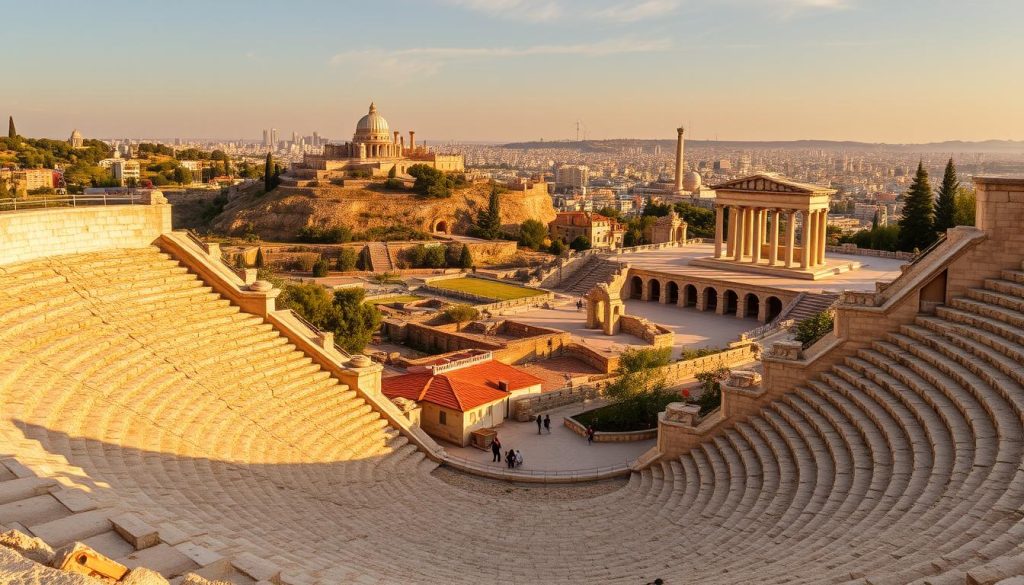
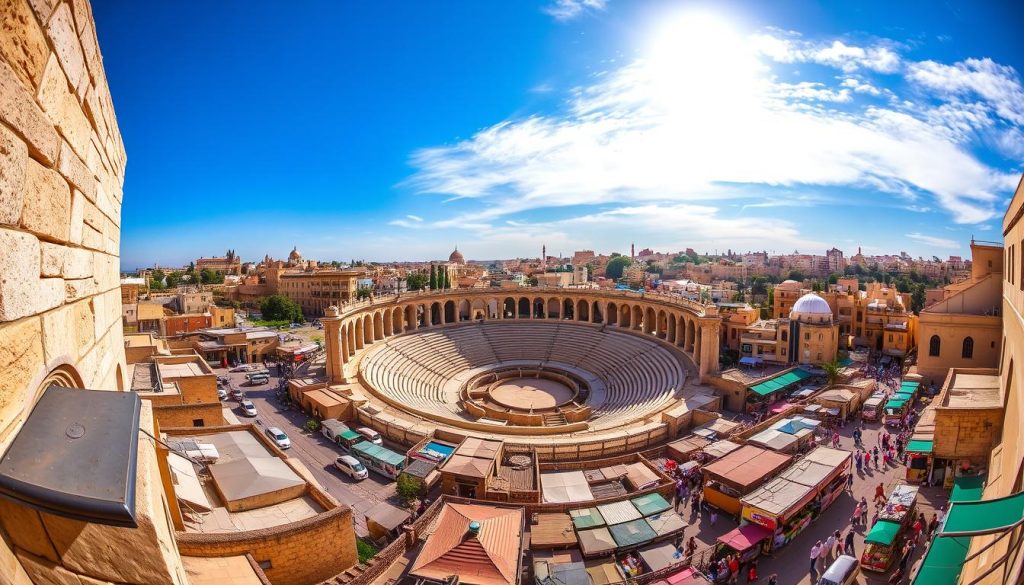
The Roman Theater dates back to the 2nd century AD. It can hold up to 6,000 people. This well-kept amphitheater shows off Roman design and hosts events today. It’s a key part of Amman’s history and culture.
Temple of Hercules
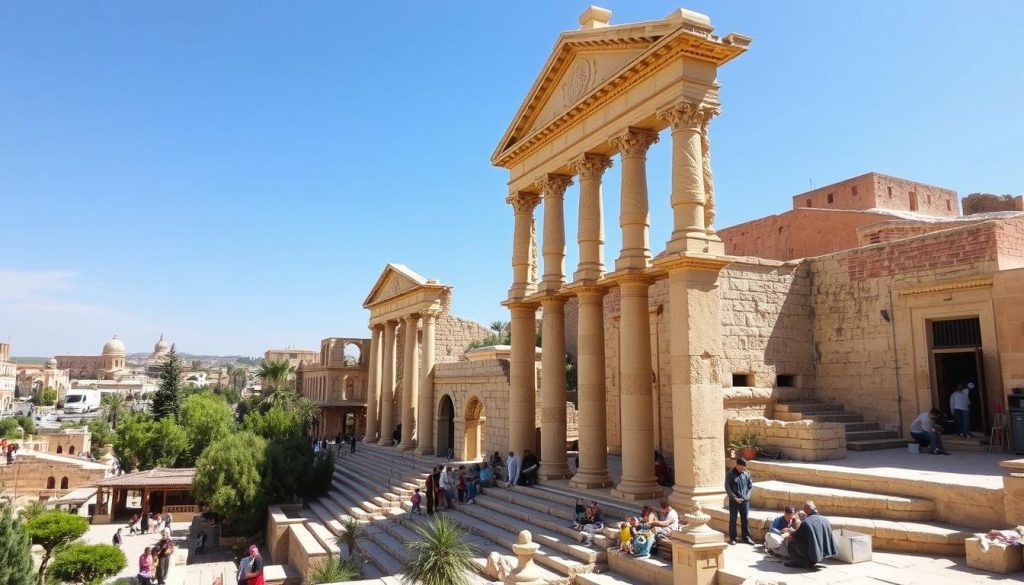
The Temple of Hercules is in the Citadel. It has huge columns that show Roman greatness. It makes you think about the people who worshipped here. It’s a highlight of Amman’s ancient sites.
Umayyad Palace
The Umayyad Palace shows off Islamic elegance. It’s a sign of the Umayyad dynasty’s glory. It’s seen as a major cultural landmark in Amman.
Jordan Archaeological Museum
The Jordan Archaeological Museum has a wide range of ancient items. It shows Jordan’s history from old times to Islamic art. It’s a must-see for history lovers in Amman.
Exploring Amman’s Historical Neighborhoods
Exploring Amman’s historical neighborhoods shows the city’s true charm. You’ll find areas where culture and history mix perfectly. This creates immersive experiences that show Amman’s unique character.
Downtown Amman
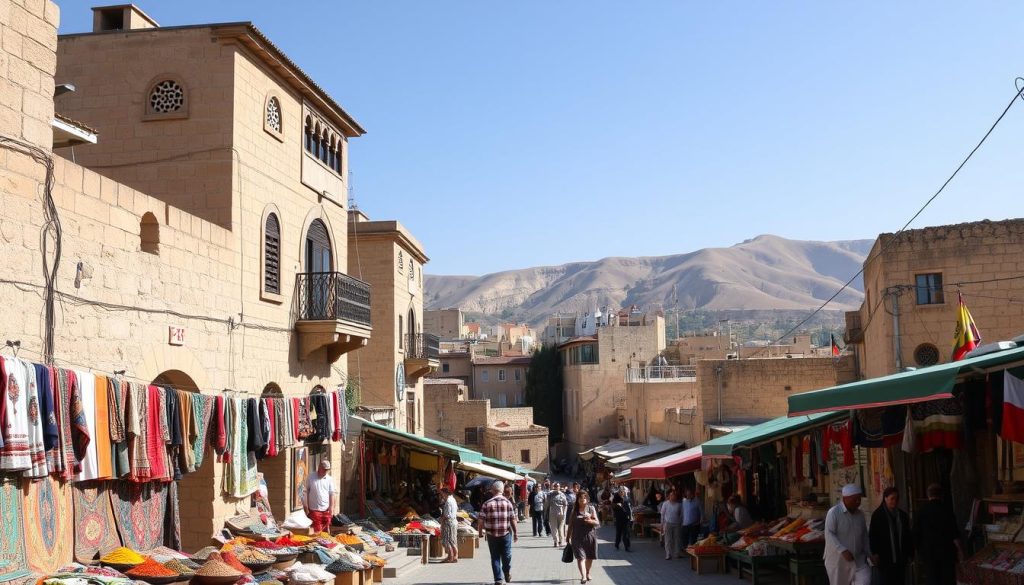
Downtown Amman, known as Al-Balad, is the city’s lively heart. It’s filled with bustling souks, aromatic spices, and local goods. You’ll see a blend of old and new buildings, making it a special place.
Interacting with local vendors and trying traditional foods is a must. It gives you a real taste of Jordanian life.
Jabal Al-Weibdeh
Jabal Al-Weibdeh offers a different feel, with a focus on art. Its streets are lined with galleries, shops, and cafes. It’s a place for art lovers and those wanting to feel the city’s creative spirit.
Cultural Experiences in Amman
Amman is a city full of cultural experiences. You can explore traditional markets and art galleries. These experiences will make your visit unforgettable.
Traditional Markets
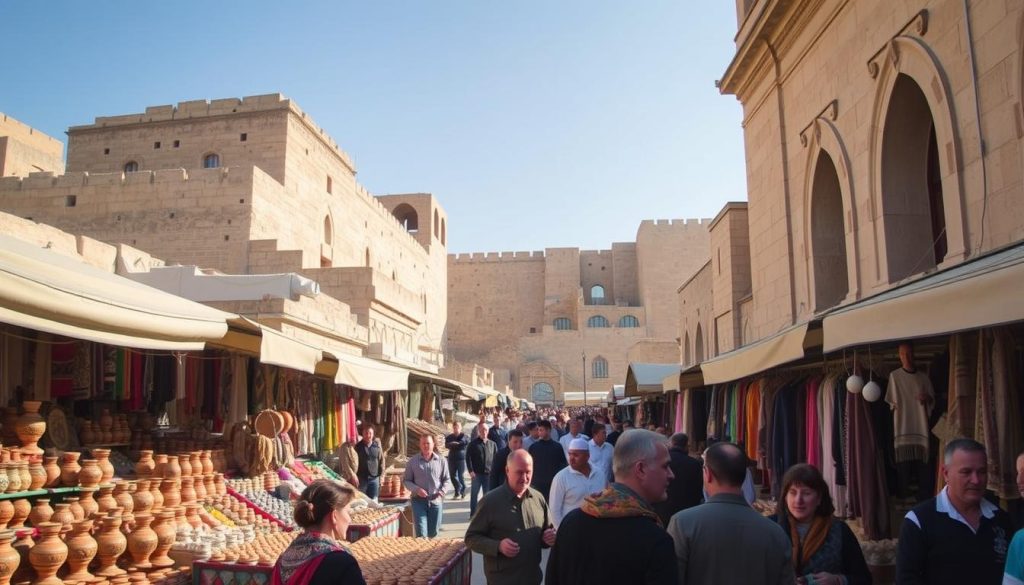
Walking through Amman’s traditional markets is like stepping into a colorful world. Souk Jara is a must-see, filled with textiles, ceramics, and spices. These markets are not just for shopping. They also give you a peek into local life and the economy.
Art Galleries and Cultural Centers
Art lovers will find plenty to enjoy in Amman. The city’s galleries and cultural centers showcase a wide range of art. From traditional Jordanian art to modern pieces, there’s something for everyone. Events like the Jerash Festival bring together artists from around the world.
Local Cuisine and Dining
Trying the local food in Amman is a must. You have to try Mansaf, the national dish. Street foods like falafel and shawarma offer a taste of Jordan. Dining here is more than just eating; it’s about experiencing the culture.
| Experience | Description | Location | Time of Year |
|---|---|---|---|
| Jerash Festival of Culture and Arts | Showcases music, dance, and visual arts from local and international talent. | Jerash | Annually |
| Amman Citadel Nights | A summer festival featuring music concerts and theatrical performances. | Amman Citadel | Summer |
| Arabian Horse Festival | Cultural events celebrating Jordan’s equestrian heritage. | Amman | Dates vary |
| Jordan Museum | Exhibits range from prehistoric artifacts to modern art. | Downtown Amman | Year-round |
Amman Cultural Landmarks
Exploring Amman’s history is like stepping into a rich tapestry. Its cultural landmarks show the city’s deep history and cultural heritage. Each landmark has its own story, helping us understand Jordan’s heritage.
Key Landmarks to Visit
- The Citadel
- Entrance fee: 3 JD / 4 USD for foreigners, free for Jordanian residents.
- Opening hours: 8:00 AM – 7:00 PM (summer), 8:00 AM – 4:00 PM (winter).
- Roman Theater
- Entrance fee: 2 JD / 3 USD for foreigners, free for Jordanian residents.
- Opening hours: 8:00 AM – 6:00 PM (summer), 8:00 AM – 4:00 PM (winter).
- Jordan Museum
- Entrance fee: 5 JD / 7 USD for foreigners, 1 JD for Jordanian residents.
- Opening hours: 9:00 AM – 5:00 PM (closed on Tuesdays).
- King Abdullah Mosque
- Entrance fee: 2 JD / 3 USD for foreigners, free for Jordanian residents.
- Opening hours: 8:00 AM – 2:00 PM (Saturday to Thursday, closed on Fridays).
- Royal Automobile Museum
- Entrance fee: 3 JD / 4 USD for foreigners, 1 JD for Jordanian residents.
- Free entry for children under 12 years old.
- Opening hours: 10:00 AM – 6:00 PM (Saturday to Thursday, closed on Fridays).
Heritage Preservation in Jordan
Heritage preservation in Jordan is key to keeping the nation’s rich history and culture alive. Conservation efforts are underway to protect and restore Amman’s cultural treasures. This way, future generations can enjoy these sites. Organizations like ICOMOS-Jordan are working together to save these treasures.
ICOMOS-Jordan started on June 20, 2019. It brings together experts in architecture, archaeology, and urban planning. They work to improve conservation practices and offer training. Princess Dana Firas leads the group, with a board of experts committed to protecting cultural heritage.
The Petra National Trust (PNT) is also key in preserving important sites. They run educational programs to teach people about heritage. They even have a Heritage Award to honor those who help save cultural sites. Working with governments and international groups, PNT shows the power of teamwork in preserving Jordan’s heritage.
The Jordan Heritage Consortium (JHC) helps professionals talk and work together. They tackle challenges and encourage cooperation. This leads to better training and a stronger commitment to protecting Jordan’s heritage.
Modern Amman: A Blend with Tradition
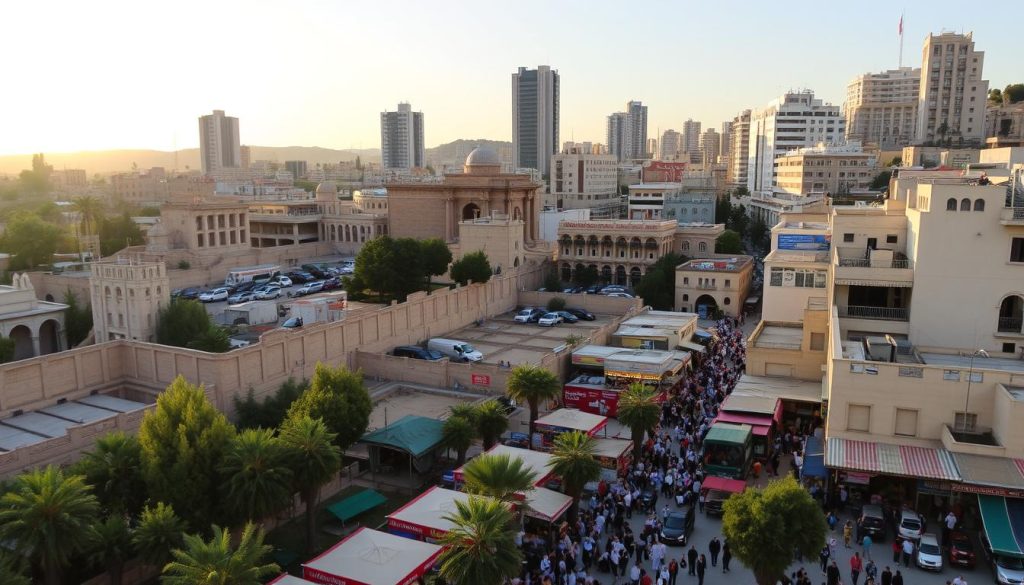
Modern Amman is a city where old meets new. As you explore, you’ll see the city’s history in its modern life. From tall buildings to lively shopping areas, history is woven into the fabric of the city.
Amman’s culture is rich and varied, with Arabs, Circassians, and Armenians all contributing. The city’s festivals, like the Jerash Festival, celebrate this diversity. They offer a chance to see art, music, and traditions that make Amman special.
Places like Abdali show off Amman’s modern side, with fancy malls and great food. Yet, the city’s traditional heart beats strong. Visit the souks to see spices and crafts that connect to the region’s heritage.
The city’s food scene is a perfect example of this mix. Try Mansaf and Falafel, dishes that blend old recipes with new tastes. This blend of past and present makes Amman a fascinating place to explore.
Day Trips and Excursions from Amman
Amman is a great starting point for many day trips. You can explore Jordan’s rich heritage by visiting sites like Roman ruins and natural wonders. Each place offers a unique experience.
Exploring Jerash and Its Ruins
Start your journey in Jerash, famous for its Roman ruins. This ancient city has theaters, temples, and colonnaded streets. Walking through, you’ll learn about Jordan’s history and the cultures that shaped it.
A Visit to the Dead Sea
The Dead Sea is another must-see. Here, you can float in its salty waters and enjoy the mud’s healing properties. The scenery makes your visit unforgettable and relaxing.
Historical Significance of Mount Nebo
Don’t miss Mount Nebo, a key spiritual site. It’s where Moses saw the Promised Land. The views and history here are awe-inspiring. Tours of Mount Nebo offer a deeper look into Jordan’s culture and faith.
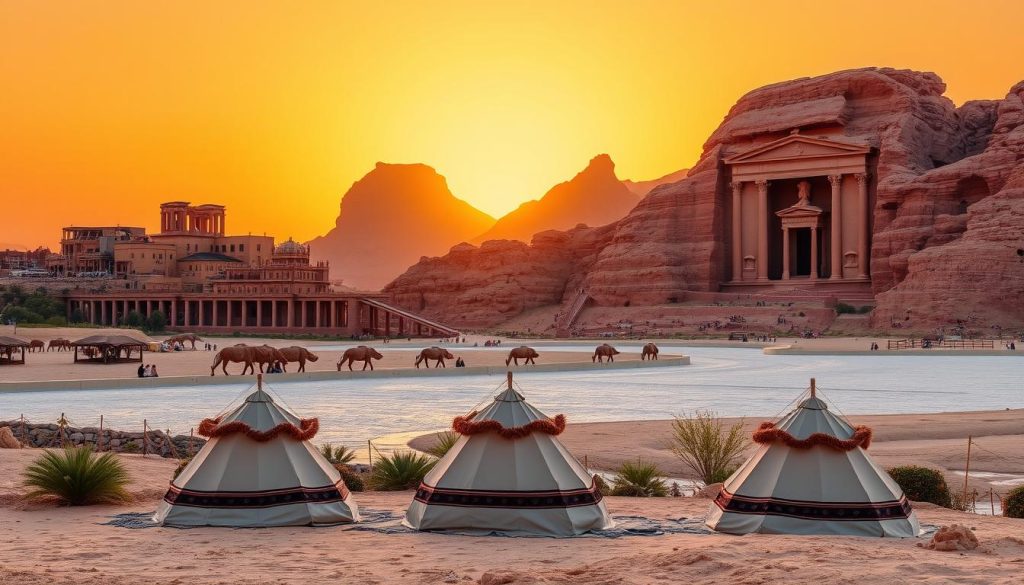
These day trips let you see Jordan’s beauty and learn about its heritage. You’ll appreciate the country’s rich history and stunning landscapes.
| Attraction | Description | Distance from Amman (km) |
|---|---|---|
| Jerash | Ancient Roman city with well-preserved ruins. | 48 |
| Dead Sea | Unique natural wonder known for its buoyancy and healing properties. | 60 |
| Mount Nebo | Historical site with spectacular views and religious significance. | 50 |
Travel Tips for Exploring Amman
When you plan your trip to Amman, knowing local customs and practical tips can make your visit better. The local money is the Jordanian Dinar. English is also widely spoken, making communication easy. Learning key travel tips for Amman will make your stay more fun.
Getting around the city is easy with taxis and Uber. These services help you reach top attractions and cultural spots. The best time to explore Amman’s culture is in spring and autumn. The weather is nice, and there are many local events.
Amman has many places to stay, from the Four Seasons Hotel to cozy boutiques. These options fit all budgets. Luxury hotels offer top-notch amenities and a taste of local charm.
Exploring Amman’s culture means trying traditional experiences. Join a cooking class at Beit Sitti. Local women teach you about Jordanian food, helping the community.
Don’t miss the outdoor concerts at the Roman Theater in summer. They draw tourists and locals alike. Interacting with locals deepens your cultural understanding and makes your trip unforgettable.
Culinary Delights: A Taste of Amman’s Heritage
Exploring Amman’s local cuisine is a flavorful journey through its cultural roots. This city is a culinary gem in Jordan, filled with traditional dishes. At its core is Mansaf, the national dish, symbolizing hospitality and community. It’s made with tender lamb, rice, and a special yogurt sauce called jameed, a must-try for visitors.
Kousa Mahshi is another favorite, with zucchini stuffed with rice and meat, seasoned with spices. It’s often served with yogurt for a comforting taste. Maqluba is a Jordanian classic, a layered dish of rice, meat, and vegetables cooked in one pot and flipped for serving, perfect for special occasions.
Zarb is a Bedouin dish, with marinated meat slow-cooked in a pit, creating unforgettable flavors. For lighter bites, try mezze, like hummus, baba ghanoush, and stuffed grape leaves, enjoyed with loved ones.
The street food in Amman is famous for Falafel, known for its crispy texture and unique spice blend. It’s often in wraps or mezze platters. Don’t forget to try traditional sweets like Knafeh, a cheese pastry that adds a sweet touch to your meal.
| Dish | Ingredients | Highlights |
|---|---|---|
| Mansaf | Lamb, rice, jameed | National dish, symbolizes hospitality |
| Kousa Mahshi | Zucchini, rice, minced meat, spices | Comfort food, served with yogurt |
| Maqluba | Rice, meat, vegetables | Layered presentation, special occasions |
| Zarb | Marinated meat, spices | Traditional Bedouin cooking style |
| Falafel | Chickpeas, spices | Popular street food with crispy texture |
| Knafeh | Cheese, pastry | Sweet dessert, crunchy and delicious |
Exploring Amman’s food scene deepens your understanding of Jordanian culture. These culinary experiences let you appreciate the stories and heritage behind each dish.
Conclusion
Exploring Amman is more than just visiting a city. It’s diving into a world where ancient history meets modern innovation. The city’s lively atmosphere shows Jordan’s skill in mixing old and new. Your trip will be filled with unforgettable moments, from the Citadel to bustling markets.
Amman has earned global recognition for its cultural heritage. UNESCO praises its work in saving traditions like the Bedouins’ in Petra and Wadi Rum. By experiencing local culture, you join a story that values preservation and tradition.
Your adventure in Amman is not just about seeing landmarks. It’s also about supporting local jobs and community growth. This focus on community adds depth to your visit. It makes your trip meaningful and helps preserve Amman’s rich heritage.





