Explore Amman Traditional Food Markets Gems
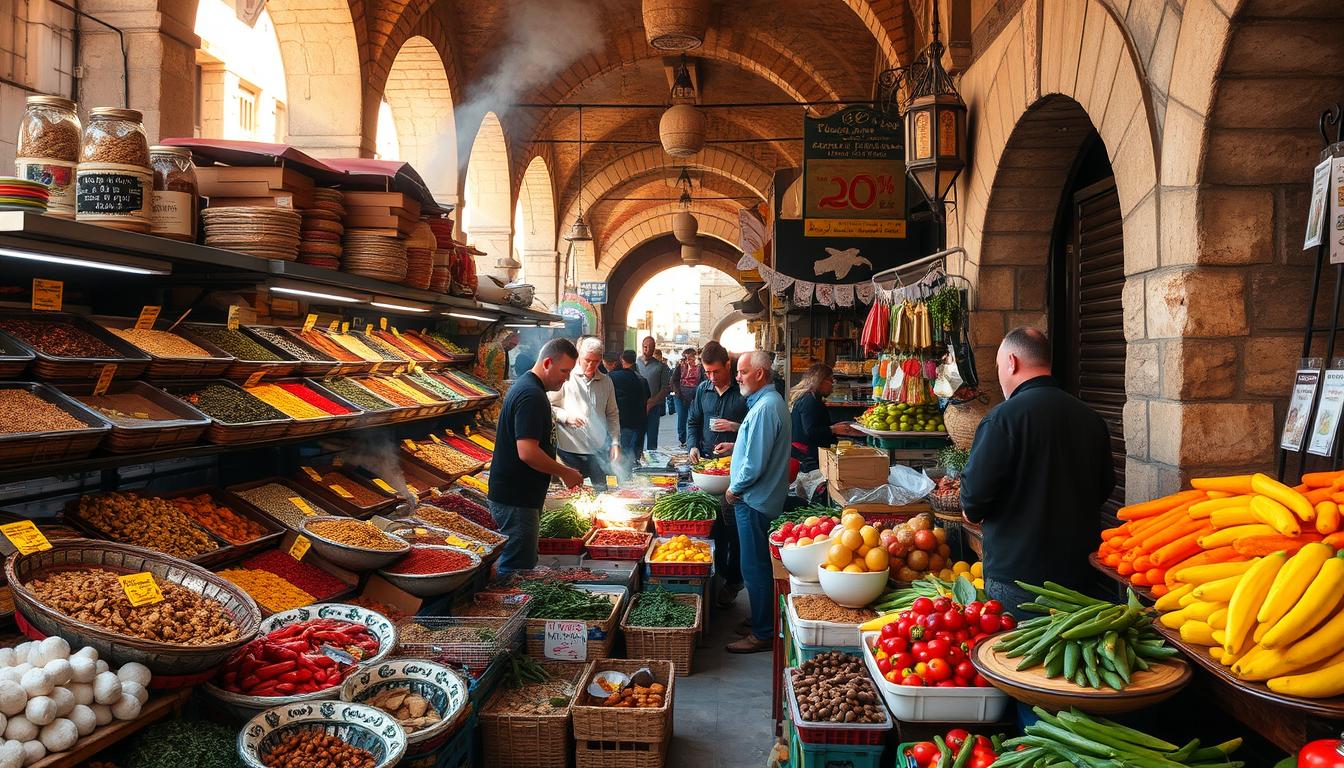
Ever thought about how Amman’s food culture shows its people and traditions? Visiting Amman’s traditional food markets gives you a special view into the city’s tastes, tales, and community. Places like Souk Al-Sukar and Souk Jara are more than just places to shop. They’re where locals come together, celebrating Amman’s varied and rich food scene.
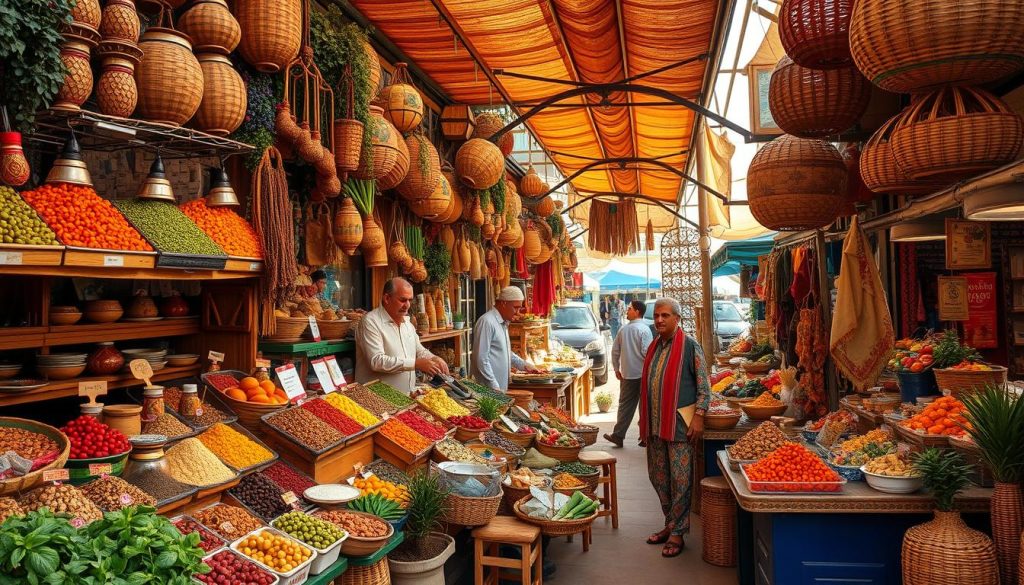
Walking through the markets, you’re greeted by a mix of sights, sounds, and smells. You’ll find everything from mansaf to falafel. It’s not just about the food; it’s about the stories and ingredients behind each dish. Are you ready to explore Amman’s delicious food markets?
Introduction to Amman’s Culinary Culture
Amman’s food scene is a mix of its long history and diverse people. With over four million residents, it’s a place where many cultures meet. The local markets are key, filled with fresh ingredients for traditional dishes.
Walking through Amman’s markets, you’ll smell spices and herbs everywhere. They invite you to try the local flavors. Mansaf, Jordan’s national dish, is a favorite. It’s made with goat meat and rice, and the markets have all you need to make it.
Street food is also big in Amman. Vendors on the busy streets offer tasty, quick meals. You’ll find knafeh, a sweet dessert, and pistachio ice cream. Talking to the vendors lets you connect with Amman’s food history.
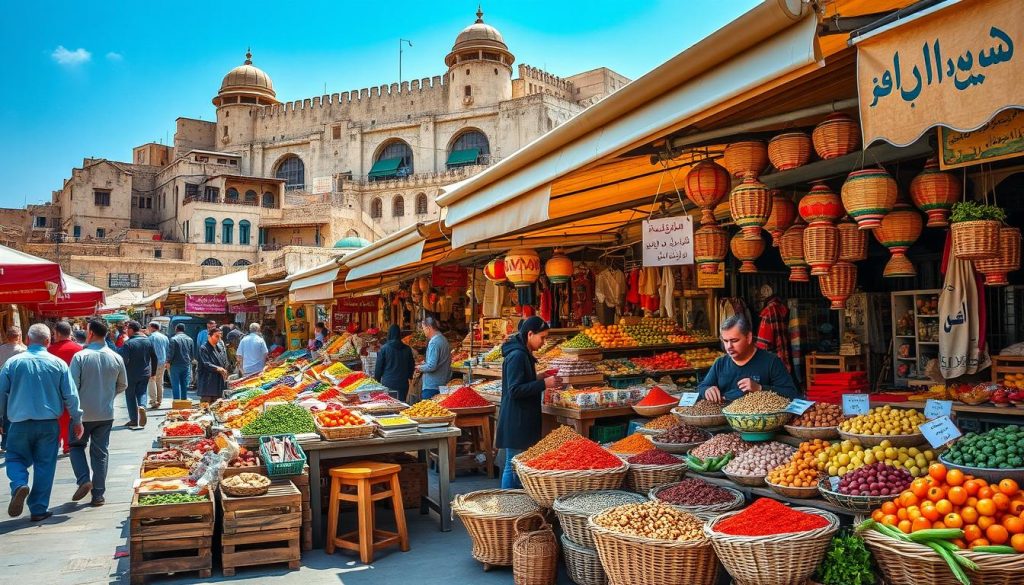
Exploring Amman’s food is more than just eating. It’s about the community. The city’s food scene is a blend of flavors and stories. By diving into this, you’ll get to know Amman’s special food culture.
What Are Amman Traditional Food Markets?
Amman traditional food markets are the heart of the city’s food culture. They show off Jordan’s rich heritage and meet today’s food tastes. Every visit brings fresh finds and local treats that are key to daily meals.
Understanding the Importance of Food Markets in Jordan
Food markets in Jordan are more than shopping spots. They keep Jordanian food traditions alive, like Mansaf, enjoyed together. You can try national dishes and sweets like Baklava with tea or coffee. They mix old traditions with new tastes.
The Role of Markets in Local Community Life
Amman’s historic food markets are hubs for community life. They buzz with activity, bringing people together. Events like the Circassian Women’s Association’s daily buffet strengthen neighborhood bonds.
These markets celebrate Jordan’s food heritage and its diverse cultures. They make Amman’s food scene vibrant and varied.
The Best Markets to Explore in Amman
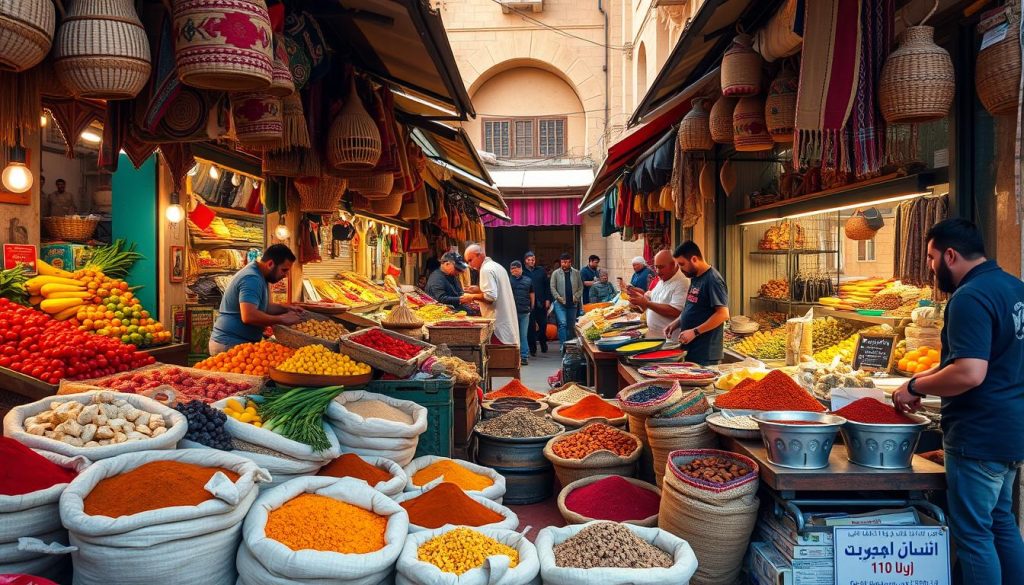
Exploring Amman’s markets is a journey filled with flavors and experiences. Each market has its own story, blending goods with vibrant culture. From lively souks to cozy stalls, every turn reveals something new about Amman’s local cuisine.
Pinnacle Souks: Engaging in the Heart of Amman
Visiting the pinnacle souks immerses you in Amman’s culinary heart. Al Balad, the Downtown Market, is open daily from 10 AM to 7 PM. Here, you’ll find spices, herbs, and local ingredients. The market’s lively vibe attracts both tourists and locals, fostering a sense of community around food.
Souk Jara, open Fridays from May to September, offers a mix of crafts and food. It turns Fridays into a sensory feast.
Market Highlights: From Spices to Sweets
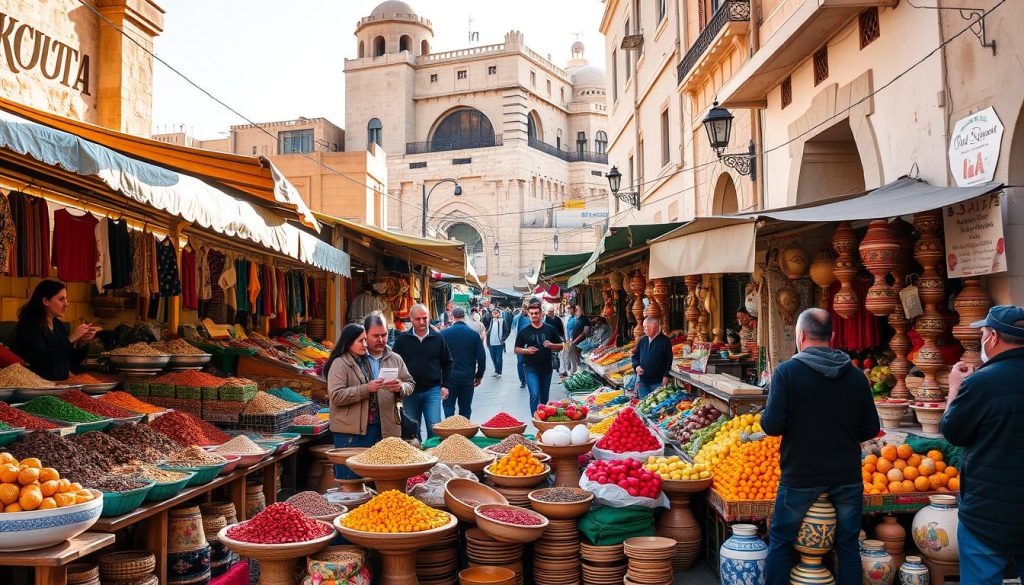
Amman’s traditional food markets offer a wide range of products. The Gold Souk, open daily from 9 AM to 7 PM, may draw you in with jewelry. But its culinary offerings are just as captivating.
The Friday Market, or Flea Market, is great for unique finds and street food. Wakalat Street welcomes visitors from 10 AM to 10 PM. Here, you can enjoy top-notch Falafel and sweets like kunafeh after a walk.
| Market Name | Operating Hours | Main Highlights |
|---|---|---|
| Al Balad | Daily, 10 AM – 7 PM | Spices, herbs, local specialties |
| Souk Jara | Fridays, May to September, 10 AM – 10 PM | Crafts, culinary delights |
| Friday Market | Fridays, early morning to afternoon | Flea market goods, street food |
| Wakalat Street | Daily, 10 AM – 10 PM | Street food, local shops |
| Gold Souk | Daily, 9 AM – 7 PM | Jewelry, gourmet specialties |
Al-Bukhari Market: A Flavorful Experience
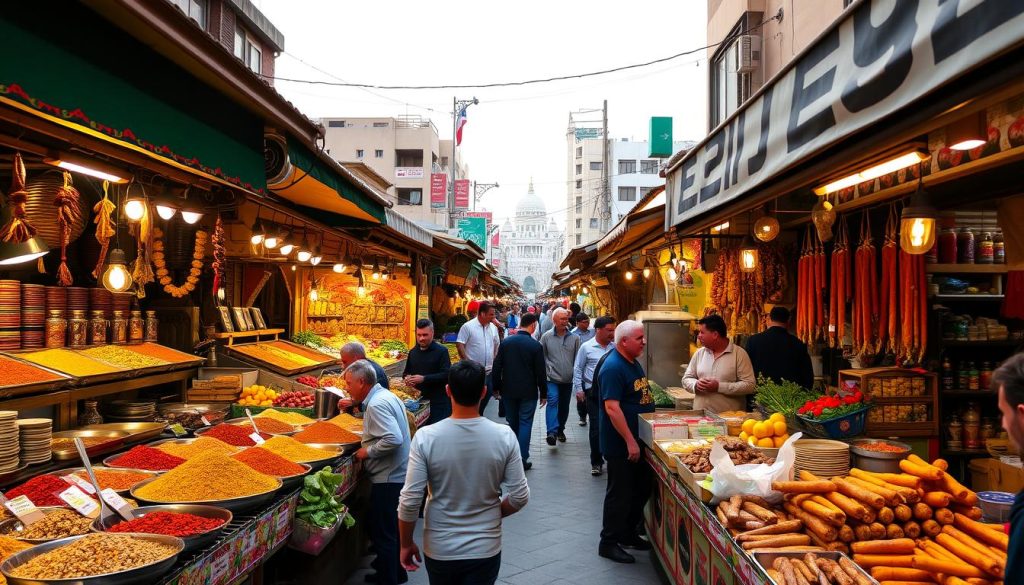
Exploring Amman, you’ll find the lively Al-Bukhari Market. It’s a place where Jordanian life comes alive. The market is a treasure trove of scents, from aromatic spices to fresh produce. It’s a window into traditional cooking and the ingredients of Jordanian street food.
Walking through, you’ll see vendors with vibrant spices, nuts, and dried fruits. Falafel, made from chickpea flour, is a must-try. The market’s warmth is matched by the friendly vendors, ready to share their love for food.
Here, you can see the herbs and spices that flavor Jordanian dishes. It’s a community hub, where you can dive into a real experience. The smells of mint and za’atar will guide you through the lively aisles.
Looking to try new tastes? Engage with the locals and enjoy the market’s offerings. The Al-Bukhari Market is the ideal spot to discover Jordan’s culinary heart.
| Food Item | Description | Average Price (JD) |
|---|---|---|
| Falafel | Fried chickpea balls, crispy outside, soft inside | 0.50 |
| Zaatar | Herb blend with sesame seeds, thyme, and sumac | 2.00 |
| Labneh | Creamy strained yogurt, often served with olive oil | 1.50 |
| Fresh Produce | Fruits and vegetables sourced from local farms | varies |
| Dried Fruits | Sweet and chewy snacks popular in Jordan | 3.00 |
Fruit and Vegetable Market: Freshness at Its Best
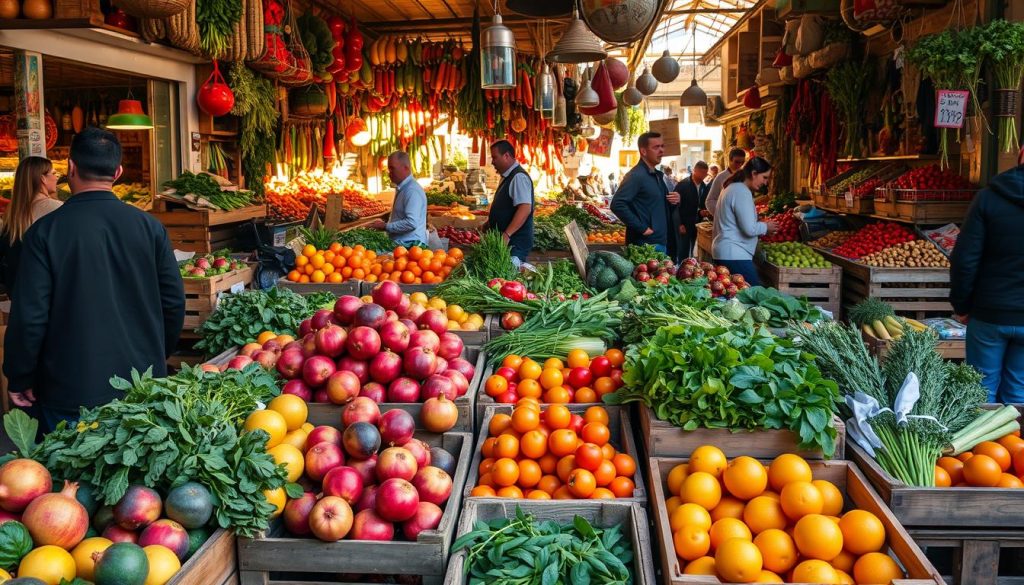
Exploring the Fruit and Vegetable Market lets you dive into the world of fresh produce. You’ll see vibrant colors and smells from local farms. It’s a place where you can find fruits and veggies that are key to Amman’s traditional dishes.
What to Expect from Local Produce
At the market, you’ll find a wide range of fresh ingredients. Here are some highlights:
- Tomatoes
- Peppers
- Cucumbers
- Eggplants
- Bananas
- Olives
- Beans
- Lettuce
- Za’atar
- Medjool dates
These ingredients are essential for making traditional dishes. You’ll see how farmers and markets work together. This creates a true culinary experience.
Popular Seasonal Delicacies
Seasons change, and so do the market’s offerings. Here are some favorites:
| Season | Delicacies |
|---|---|
| Spring | Fattoush salad with fresh greens |
| Summer | Hummus topped with summer vegetables |
| Fall | Maklouba featuring eggplants and potatoes |
| Winter | Warm roasted vegetables and mutabel |
Local cuisine in Amman celebrates seasonal freshness. This highlights the importance of food culture. It brings the community together with every delicious bite.
Historic Food Markets: A Journey Through Time
Amman’s historic food markets show the city’s deep *culinary culture*. Each market has its own story, with designs and layouts shaped over centuries. Walking through these lively places, you see how they keep their charm while meeting today’s needs.
Exploring the Designs and Layout of Traditional Markets
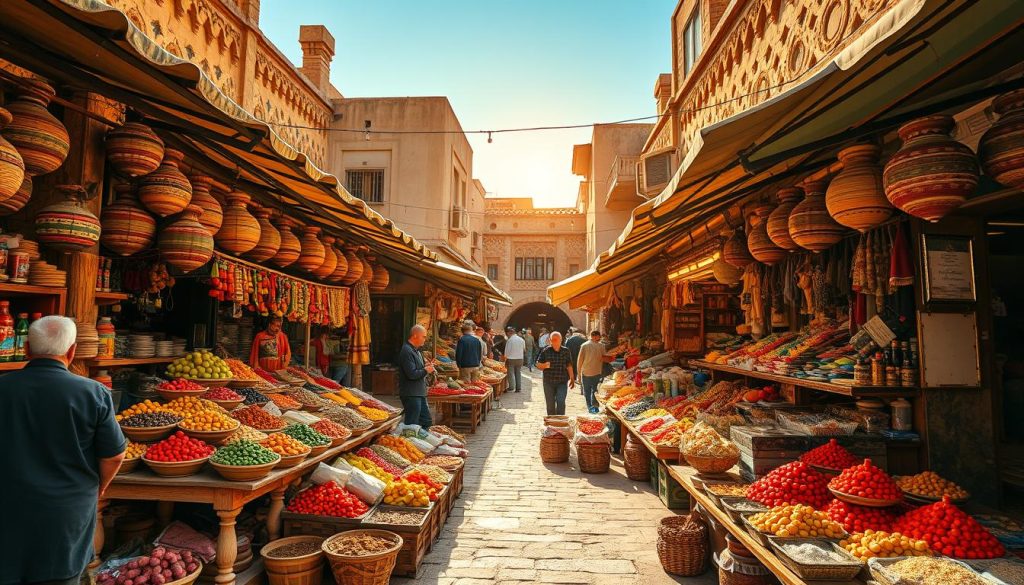
The layouts of Amman’s traditional food markets are more than just for trade. They create a lively atmosphere for everyone. Narrow alleys and busy stalls offer a wide range of goods, from spices to crafts. These markets are a mix of culture and commerce, showing their importance in local life.
Significance of Architectural Styles
The architecture of these markets is a mix of old and new. You’ll see beautiful tile work, arched doors, and detailed structures. This mix shows off Jordan’s architectural history. It makes the *historic food markets* even more special, with their sights and smells.
| Market Name | Architectural Style | Highlight Features | Significance |
|---|---|---|---|
| Al Bukaria Souk | Islamic Architecture | Elaborate tile work, vaulted ceilings | Historical trading hub |
| Downtown Market | Ottoman Influence | Open-air spaces, marketplace layout | Lively hub of community interaction |
| Rainbow Street Market | Modern with Traditional Elements | Cafes, artisanal shops | Blend of contemporary and cultural experiences |
Visiting Amman’s historic food markets is more than shopping. It’s a chance to connect with the city’s rich history and *culinary culture*. These markets capture Jordan’s spirit, inviting you on a journey of senses that honors tradition and change.
Authentic Jordanian Street Food: A Must-Try
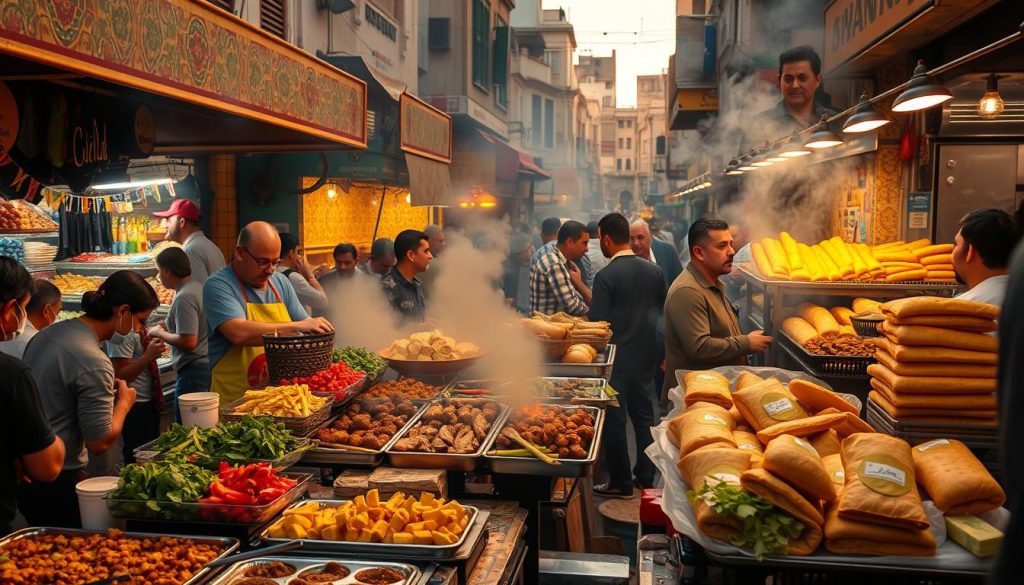
Exploring Amman’s street food scene is a must for anyone interested in Jordan’s culinary delights. The enticing smells and lively vibe in Amman invite you to try delicious dishes. These dishes show the true spirit of Jordanian culture. When looking for where to eat in Amman, you’ll find many street food spots that offer a tasty introduction to Jordan’s rich food scene.
Delights You Can’t Miss
Jordanian street food is filled with tasty dishes that showcase the country’s flavors. Some dishes you should try include:
- Shawarma: Thin slices of marinated meat cooked on a rotisserie and served in pita.
- Falafel: Fried chickpea balls, crispy on the outside, often paired with tahini sauce.
- Hummus: Creamy chickpea dip seasoned with lemon and garlic.
- Ful Medammas: A hearty fava bean dish popular as breakfast or a mezze item.
- Knafeh: A sweet dessert featuring cheese layered with semolina pastry, soaked in syrup.
- Labaneh: Thick yogurt served with pita or drizzled with olive oil.
- Ka’ak: Circular sesame bread served with za’atar for breakfast or as a snack.
Where to Find the Best Street Food Stalls
To fully enjoy Jordanian street food, visit bustling markets and dedicated stalls. Your search for where to eat in Amman will lead you to unforgettable flavors:
| Location | Specialty | Why Visit |
|---|---|---|
| Hashem Restaurant | Falafel & Hummus | Renowned for their fresh and delicious offerings. |
| Al-Mahatta | Shawarma | Offers a truly local experience with tender meat wrapped in warm pita. |
| Downtown Amman | Knafeh | A hotspot for extensive dessert options loved by locals and visitors alike. |
| Rainbow Street | Shrak & Labaneh | Perfect for savoring this combination in a relaxed atmosphere. |
Culinary Experiences Beyond the Markets
Exploring Amman shows a world of flavors beyond the markets. You can take cooking classes and go on food tours. These activities let you dive into Jordan’s rich food culture and traditions.
Cooking Classes: Hands-On Authenticity
Cooking classes are a hands-on way to learn about local food. Places like Beit Sitti teach you to make dishes like mansaf and ma’loubeh. You’ll learn about spices like za’atar and sumac, adding to your cooking skills.
Foodie Tours: Discovering Hidden Gems
Foodie tours in Amman take you on a taste adventure. Companies like Amman Food Tours guide you through neighborhoods, trying traditional foods and sweets. You’ll discover favorites like falafel, shawarma, and desserts like kanafeh and baklava. These tours highlight the best markets in Amman, showing you Jordan’s warm hospitality.
| Culinary Experience | Description | Popular Dishes |
|---|---|---|
| Cooking Classes | Hands-on workshops focusing on traditional dishes. | Mansaf, Ma’loubeh |
| Foodie Tours | Guided tours exploring local food culture. | Falafel, Shawarma, Kanafeh, Baklava |
Amman traditional food markets: A Food Lover’s Paradise
Amman’s traditional food markets are a vibrant paradise for food lovers. These lively hubs let you dive into the local cuisine of Amman. You’ll find a world filled with aromatic spices, fresh produce, and hearty meals.
About 50% of the traditional food items in these markets are unique to Amman. This variety makes your shopping experience special. It connects you with the unique culinary offerings from different neighborhoods. The best markets in Amman offer something for everyone, making them key stops on your food journey.
- Meat Dishes: In these markets, 70% of the dishes offered are meat-based, showing the rich flavors of Jordanian food.
- Mansaf: The national dish of Jordan, available at 1 out of 10 food establishments, is a must-try during your visit.
- Baklava: This beloved dessert has delighted taste buds in Amman for over 70 years, reflecting the city’s culinary heritage.
- Arak: A traditional spirit with an alcohol content ranging from 40-63%, typically served during special events.
- Arab Coffee: A cultural staple, this strong brew often infused with cardamom is a quintessential part of Jordanian hospitality.
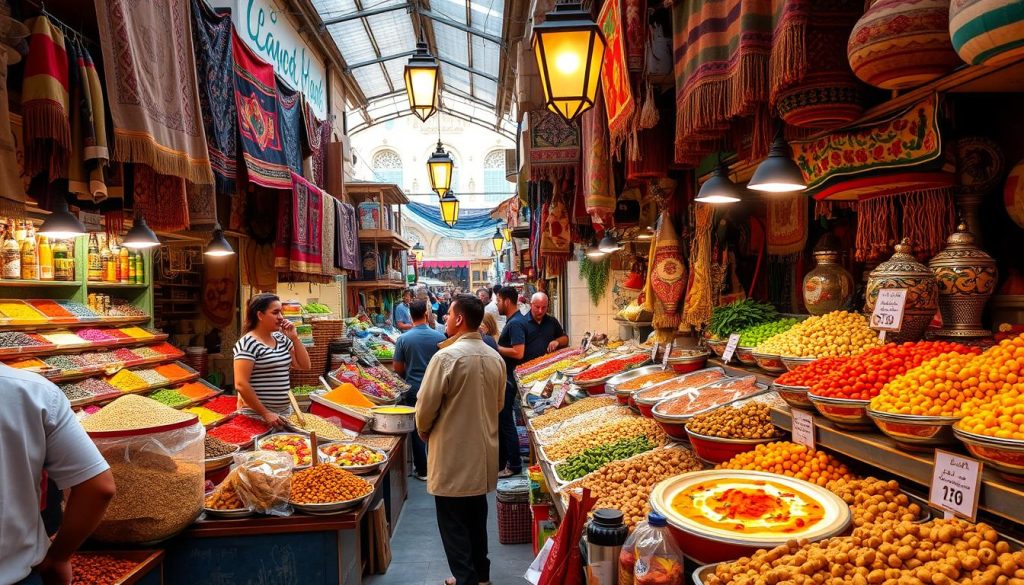
To explore the markets, check out places like Hashem Restaurant, open all day, or Fakhreldin Restaurant, serving exquisite dishes until midnight. Whether you’re looking for a day-long experience or a late-night snack, these spots will satisfy your cravings.
| Restaurant Name | Operating Hours | Location |
|---|---|---|
| Sufra Restaurant | 12 pm – 11 pm | Amman |
| Fakhreldin Restaurant | 1 pm – 12 am | Amman |
| Kan Zaman Restaurant | 12:30 pm – 12 am | Amman |
| Hashem Restaurant Downtown | 24 hours | Amman |
| Melograno | 1 pm – 11 pm | Amman |
| Tannoureen Restaurant | 12:30 pm – 12 am | Amman |
The markets offer a mix of flavors, a lively atmosphere, and warm welcomes. Amman, being a top visited city in the Arab world, offers culinary treasures that create lasting memories.
Conclusion
Exploring Amman’s traditional food markets is an adventure. It brings you close to the city’s rich culinary culture. These markets offer authentic flavors and a peek into Jordanian daily life.
Here, you’ll find aromatic spices, fresh produce, and tasty street food. It’s a world that showcases Jordan’s culinary heritage.
From hummus and labneh at breakfast to shawarma and kunafa, each bite has a story. These markets are not just for shopping. They offer a feast for the senses, attracting both locals and tourists.
Make sure to experience Jordanian hospitality and the excitement of Amman’s markets. They promise unforgettable moments and flavors. You’ll leave with beautiful memories of Amman’s treasures.