Experience Traditional Festivals in Dhaka
Have you ever wondered how a city of millions can unite in joy and celebration? In Dhaka, vibrant cultural events show the city’s rich heritage. Bengali festivals bring communities together, celebrating their shared joys.
From kite flying at Shakrain to the joy of Pohela Boishakh, each festival offers a unique glimpse into the customs and traditions of the people.
Dhaka celebrates many traditional festivals throughout the year. Each festival tells its own story and strengthens community bonds. You can join in the colorful festivities of Durga Puja, experience unity during Eid-ul-Fitr, or enjoy the traditions on Ekushey and Independence Day.
This article invites you to explore the captivating world of cultural events in Dhaka. Every celebration is a vivid tapestry woven from history and tradition.
Overview of the Cultural Significance of Festivals in Dhaka
Festivals in Dhaka are deeply rooted in the Bengali culture. They are woven into the social fabric of the Bengali people. These celebrations not only honor heritage but also bring people together. Each event is a chance to unite, showcasing the rich diversity of Dhaka’s cultural festivals.
Throughout the year, various traditional Bengali events reaffirm the values and beliefs of society. For example, Pohela Boishakh, celebrated on April 14, celebrates cultural unity among all ethnic Bengalis. It’s a day filled with colorful gatherings and vibrant festivities, where people visit friends and relatives, sharing special meals. This reflects the communal spirit deeply rooted in Bangladeshi culture.
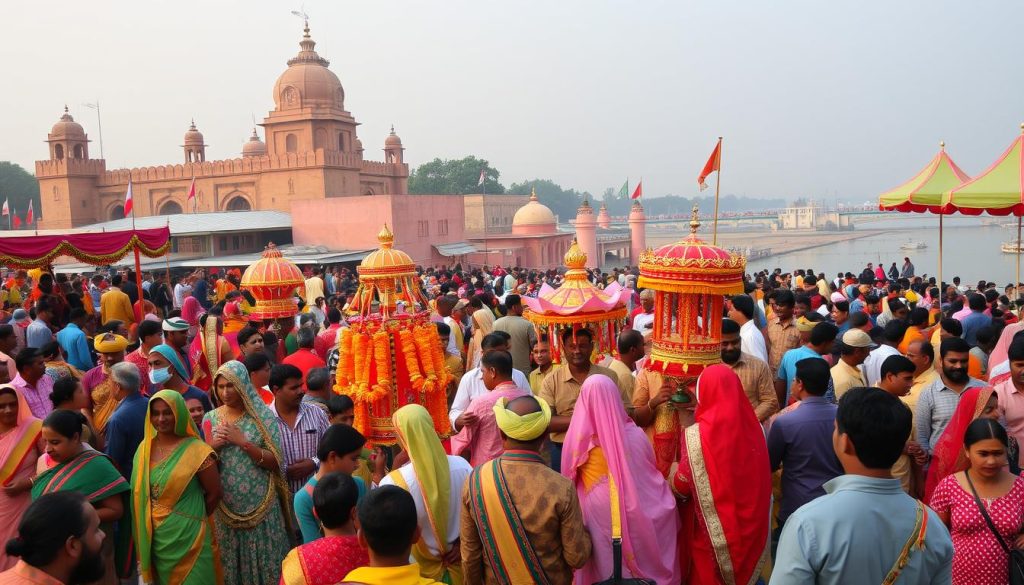
Other significant occasions include Eid-ul-Fitr and Eid-ul-Azha, drawing massive congregations in Dhaka. The observance of Independence Day on March 26 solidifies respect and remembrance for the nation’s history. Events like Muharram and Durga Puja show the diverse religious expressions and the importance of cultural identity.
Below is a comparative overview of some key traditional celebrations in Dhaka:
| Festival | Date | Significance |
|---|---|---|
| Pohela Boishakh | April 14 | Celebrates the Bengali New Year, highlighting cultural unity. |
| Eid-ul-Fitr | Post-Ramadan | The biggest Muslim festival, focusing on community gatherings. |
| Durga Puja | Varying Dates | Celebrated mainly by Hindus, known for arts and culture. |
| Independence Day | March 26 | Commemoration of Bangladesh’s independence. |
| Muharram | Varying Dates | Mourning of Imam Hussain, marked by processions and rituals. |
These traditional celebrations in Dhaka highlight the vibrant identity of the Bengali people. They promote unity across diverse cultural groups. Participating in these festivities deepens our understanding of heritage. It ensures that the rich traditions of Bangladesh continue to thrive in today’s society.
The Vibrant Celebration of Shakrain: Kite and Lighting Festival
Shakrain is a lively kite festival in Dhaka that welcomes spring and the harvest season. It’s celebrated on January 14 and has a history of over 400 years. This festival brings people together, filling the air with joy and color.
History and Origins of Shakrain
Shakrain has been a big event in Old Dhaka for about 250 years. It takes place on the last day of Paush, showcasing local traditions and kite flying art. Since 2021, the city corporation has helped make Shakrain even more special, giving out 15,000 kites to encourage everyone to join in.
Activities and Traditions during the Festival
The Shakrain festival is a sight to see. People do many fun things, like:
- Flying unique kites with names like Love Bird and Chokhdar.
- Attending rooftop parties with DJs playing Bollywood hits.
- Watching fireworks and lights that light up the sky at sunset.
- Trying seasonal foods from vendors, like cha wallahs and vegetable sellers.
Kite lovers, including those flying diamond-shaped kites, enjoy the festival. Despite rules against certain strings, the festival keeps growing, showing the community’s love for tradition. Stories of kite-flying adventures and new friendships make Shakrain unforgettable.
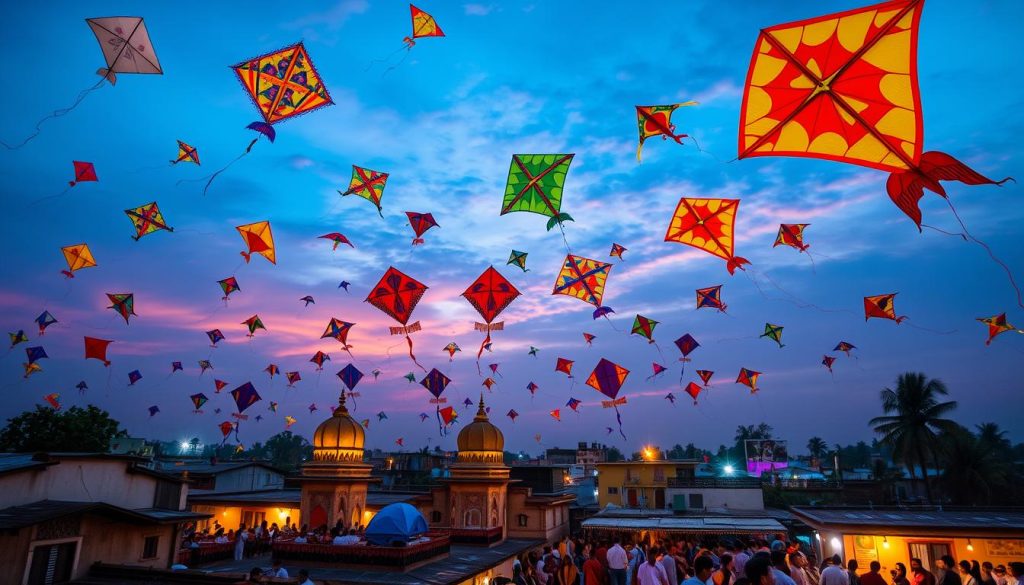
This celebration is all about community and keeping traditions alive. You can see the beauty of Shakrain yourself and feel the excitement of kite flying in Dhaka.
Pohela Boishakh: The Joyful Bengali New Year
Pohela Boishakh is the start of the Bengali New Year, celebrated on April 14th. It brings people together in Dhaka, making the city vibrant with culture and joy. The streets buzz with colorful parades, traditional music, and people in beautiful clothes.
Traditional dishes are a big part of the celebration. You can taste foods like panta bhat, a refreshing rice dish, with fried fish, lentils, and pickles. Local fairs, or Boishakhi Mela, offer traditional sweets and crafts, showing off Bengali heritage.
Traditional Food and Festivities
The food of Pohela Boishakh is a key part of the Bengali New Year. Panta bhat is a must-try, served with fried fish, lentils, and pickles. At Boishakhi Mela, you can find traditional sweets and crafts, celebrating Dhaka’s traditional holidays.
These fairs are not just for food. They also showcase Bengali craftsmanship, drawing visitors from everywhere.
Events and Activities to Experience
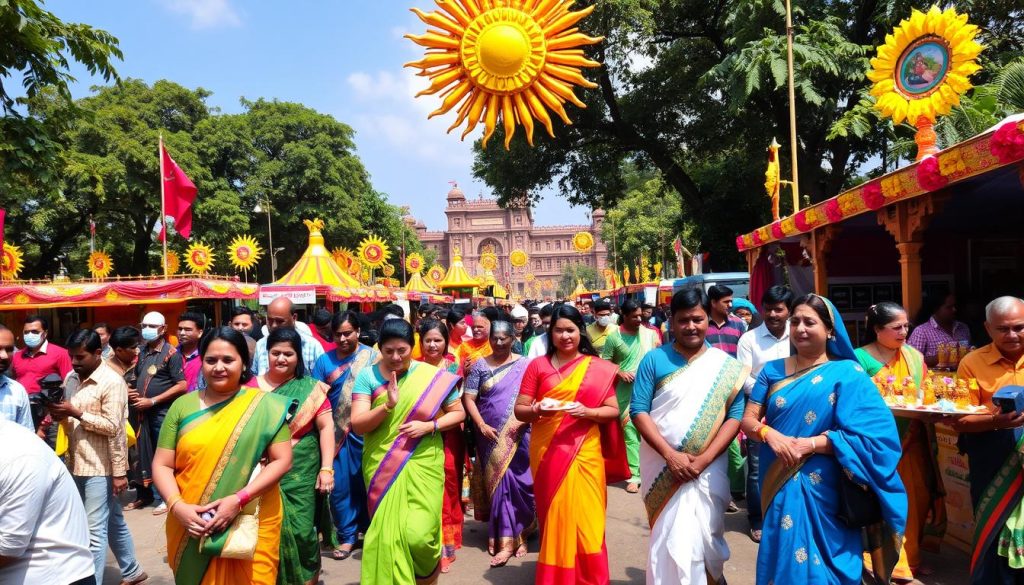
Pohela Boishakh is filled with events and activities. It starts with the greeting “Shubho Noboborsho”, or “Happy New Year.” People wear traditional clothes, like saris and kurtas, for street processions and cultural shows.
The Mangal Shobhajatra parade in Dhaka is a UNESCO cultural heritage event. It features decorations, music, and dance, filling the air with joy. The Haal Khata ritual is also a big part of the celebration, marking new beginnings for traders and business owners.
Colorful Durga Puja: A Spectacle of Culture and Devotion
Durga Puja in Dhaka is a cherished Bengali event. It’s deeply rooted in the community’s social and spiritual life. This festival celebrates goddess Durga’s victory over evil and good’s triumph.
It’s celebrated over ten days, bringing families and friends together. They come to celebrate with joy and respect during the month of Ashvin.
Understanding the Meaning and Importance
Durga Puja is more than a religious event. It showcases the Bengali people’s artistic and communal spirit. In Dhaka, people gather to see rituals, art, and unity.
This festival is a chance to dive into Dhaka’s cultural traditions. It’s a special time to connect with heritage.
Experiencing the Lavish Pandals and Celebrations
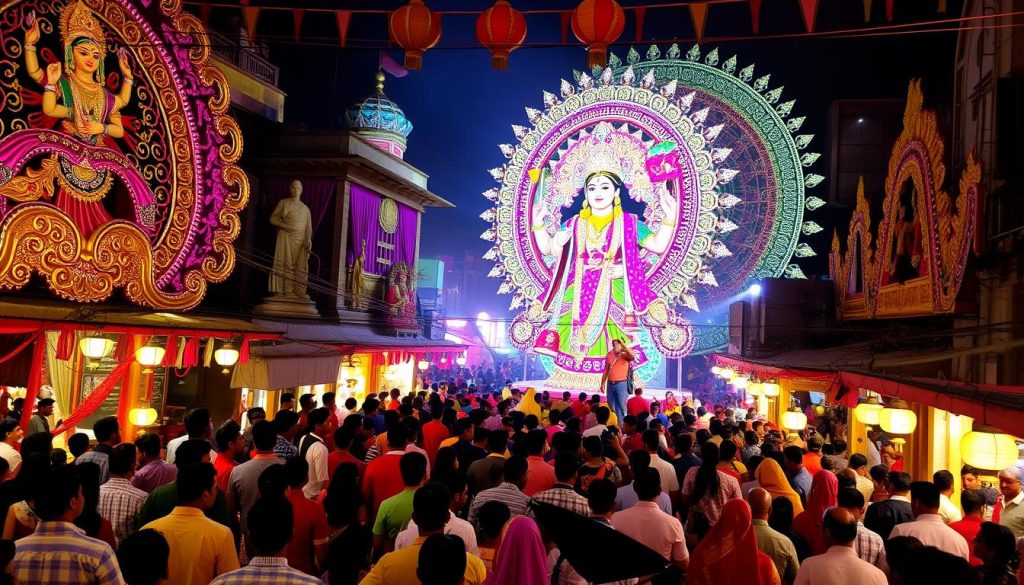
During Durga Puja, stunning pandals pop up across the city. They’re filled with decorations and themes. Each mandap displays creativity and tradition.
Celebrations reach their peak with colorful processions. There are songs, dances, and ‘bhog’, a food offering. Visitors from everywhere come, making Dhaka’s culture even more vibrant.
Eid-ul-Fitr: A Time for Community and Feast
Eid-ul-Fitr in Dhaka marks the end of Ramadan. It’s a time of thanks and kindness in the Bengali religious festival. Families come together for Eid prayers and enjoy big meals. The celebration starts with the first day of Shawwal, when the new moon is seen.
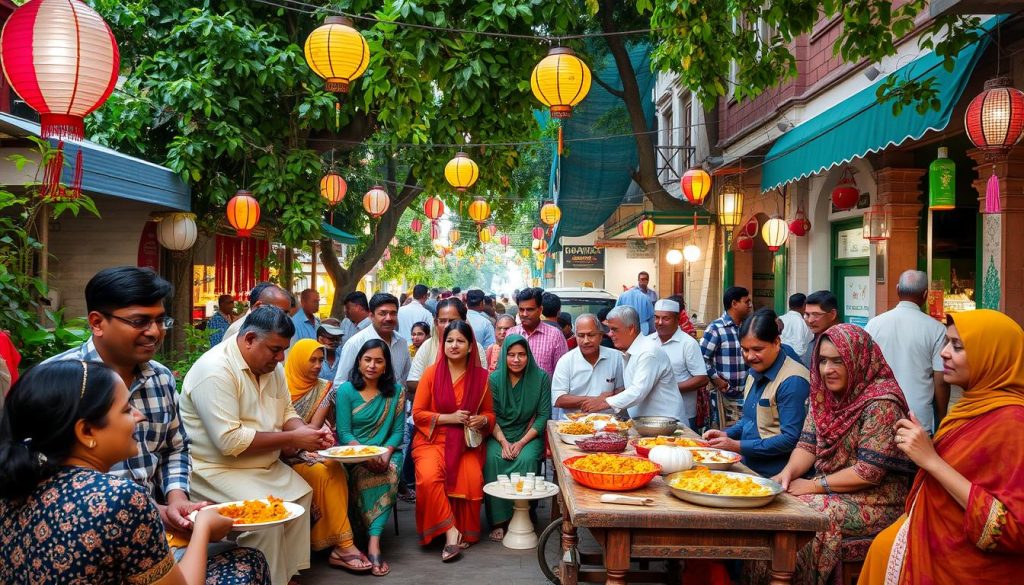
The festivities include lively social events with tasty food and gift-giving. Markets are full of life, with people buying new clothes for a fresh start. Everyone says ‘Eid Mubarak’ to each other, adding to the joy. Eid-ul-Fitr is more than just food; it’s about sharing, with zakat al-Fitr given to those in need before prayers.
The Eid prayer is very important in Muslim culture in Bangladesh. It’s performed together in open spaces. Everyone comes together for two rakats. Even though practices differ, the unity is clear. TV and radio broadcasts help connect people across the country during this time.
- Families gather for Eid prayers and festive meals
- New clothing symbolizes fresh beginnings
- ‘Eid Mubarak’ greetings foster community spirit
- Zakat al-Fitr supports the less fortunate
- Special broadcasts enhance communal celebrations
Rash Mela: A Festival of Harvest and Cultural Exchange
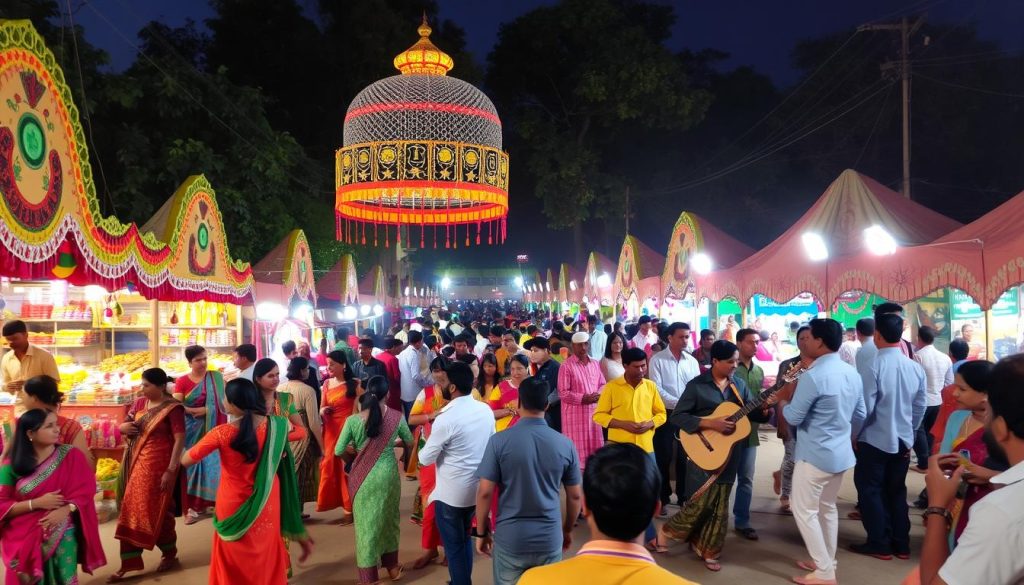
Rash Mela is a lively event that happens in November’s full moon. It marks the end of the harvest season in Bangladesh. In the Sreemangal region, it’s a big deal, showing off the Monipuri community’s rich culture. Art, music, and dance make Rash Mela a place where different groups in Dhaka come together.
The Significance of Monipuri Dance
The Monipuri dance is a key part of Rash Mela. It’s known for its beautiful movements and detailed gestures. These dances tell stories of love and loyalty, adding to the joy of the harvest season.
At Rash Mela, people make lasting memories. They join in the fun, surrounded by colors, sounds, and a sense of unity. It’s a time to celebrate the harvest and the beauty of cultural exchange, bringing everyone closer together.
| Aspects of Rash Mela | Description |
|---|---|
| Timing | Celebrated during the full moon in November |
| Location | Mainly in Sreemangal, Bangladesh |
| Main Attraction | Monipuri dance performances |
| Cultural Significance | Showcases harvesting traditions in Bangladesh and promotes cultural exchange |
| Community Impact | Brings families together and unites diverse communities |
Additional Popular Festivals in Dhaka
Dhaka is known for its many colorful celebrations. These events show the city’s rich culture. Two big festivals are Nabanno and Buddha Purnima.
Nabanno: Celebrations of New Harvest
Nabanno celebrates the start of the harvest season. It’s a big deal for many in Bangladesh. Families come together to make traditional rice dishes.
This festival is all about being thankful for the harvest. It brings people together, showing joy and unity.
- Communal feasting featuring new rice dishes
- Traditional songs and folk dances
- Colorful gatherings that promote unity and joy
Buddha Purnima: The Celebration of Enlightenment
Buddha Purnima is a key Buddhist festival in Dhaka. It’s a day of great respect for Buddhists. They celebrate the life of Gautama Buddha.
- Visiting temples for meditation and prayer
- Lighting candles and lamps to signify enlightenment
- Organizing fairs and cultural events

Traditional Festivals in Dhaka: A Diverse and Rich Heritage
Dhaka’s cultural heritage is a colorful mix of traditions. Each festival in Dhaka shows the city’s rich history and cultural variety. Music, food, and traditions come together, creating a lively atmosphere for everyone.
Pohela Boishakh is a big festival where people wear traditional clothes and celebrate the Bengali New Year. It’s a time of unity and secularism, with over 10,000 people joining the ‘Mangal Shobhajatra’ parade.
The Dhaka Art Summit and Dhaka International Film Festival bring international art to the city. They showcase art from different cultures. The Dhanmondi Lake Festival offers fun for families, with boat rides and cultural shows.
Durga Puja is a major festival that celebrates Hindu traditions in Dhaka. It’s filled with grand events and community spirit. Boshonto Utsob is another festival that highlights dance and seasonal clothes, showing the city’s cultural importance.
Dhaka’s markets add to the festive vibe, with local crafts and street foods. From Fuska to Chotpoti, each dish has a story. Visitors get to enjoy both food and culture, making unforgettable memories.
In Dhaka, festivals are a celebration of music, dance, and art. They are a big part of the city’s identity. By joining these festivals, you become part of Bangladesh’s rich cultural story.
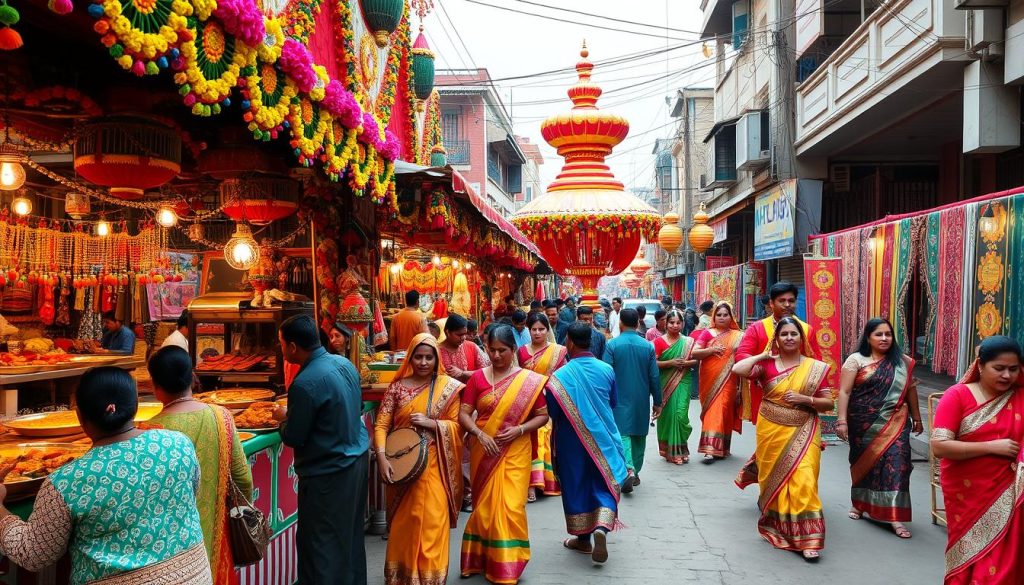
Dhaka Festival Calendar: Key Dates and Events to Remember
Knowing the Dhaka festival calendar is key for anyone wanting to dive into the city’s cultural events. Throughout the year, Dhaka’s festivals draw both locals and tourists. They offer a deep dive into traditional celebrations. Here’s a list of the major events:
| Festival | Date | Description |
|---|---|---|
| Shakrain | January 14 | A vibrant kite and lighting festival that marks the end of winter. |
| Pohela Boishakh | April 14 | The Bengali New Year festival that involves new beginnings and traditional celebrations. |
| Durga Puja | October (varied) | A grand celebration dedicated to the goddess Durga, filled with cultural performances and rituals. |
| Eid-ul-Fitr | Varies (based on lunar calendar) | A significant Islamic festival marking the end of Ramadan, characterized by feasting and community prayers. |
| Buddha Purnima | Varies (according to lunisolar calendar) | Celebration of the birth, enlightenment, and death of Buddha, featuring spiritual activities. |
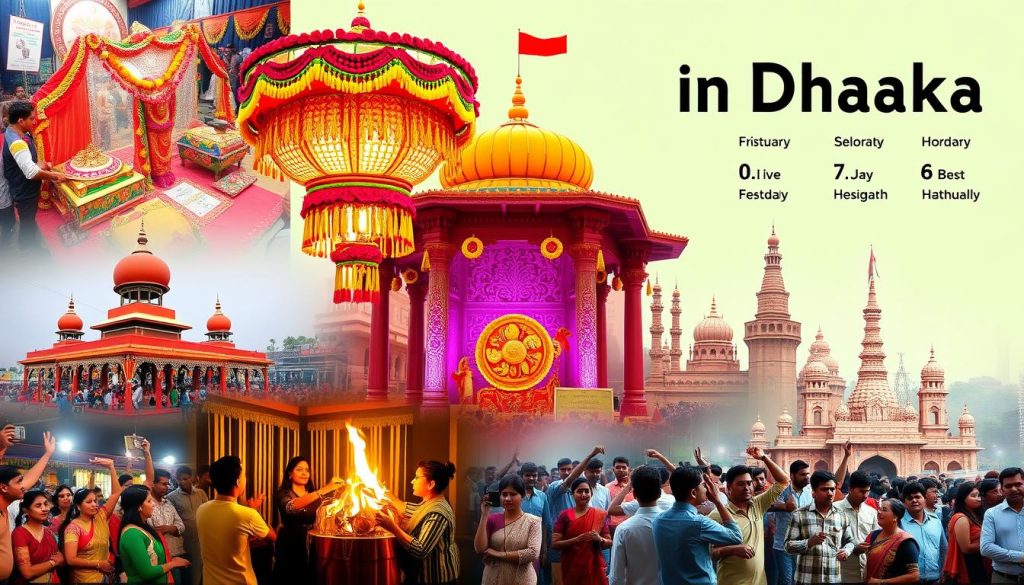
Using the traditional events timeline helps you plan visits perfectly. This way, you can join in on various festivities. Modern Dhaka, a bustling megacity, mixes ancient traditions with modern vibes. The Bangla calendar is key in cultural and artistic practices.
By marking these key dates, you become part of the excitement and heritage. You add your own story to the vibrant fabric of this dynamic city.
Conclusion
The traditional festivals in Dhaka are key to the city’s culture. They show the Bengali way of life, rich in history. Events like Shakrain and Pohela Boishakh celebrate the seasons and community unity.
By joining these celebrations, you dive into Bengali culture beyond daily life. It builds connections and deepens appreciation for its traditions.
Exploring Dhaka’s festivals, you’ll find each one holds deep meaning. From Eid-ul-Fitr’s feasts to Durga Puja’s colors, they all matter. They let you understand local customs and join a unique Bangladeshi story.
These events fill you with joy, color, and a sense of belonging. They make you feel part of something special.
Besides the big events, Dhaka’s textiles and food are also important. Crafts like Jamdani weaving and local dishes show Bangladesh’s cultural richness. Trying these foods and seeing the local dress leaves you with lasting memories of Dhaka’s vibrant spirit.