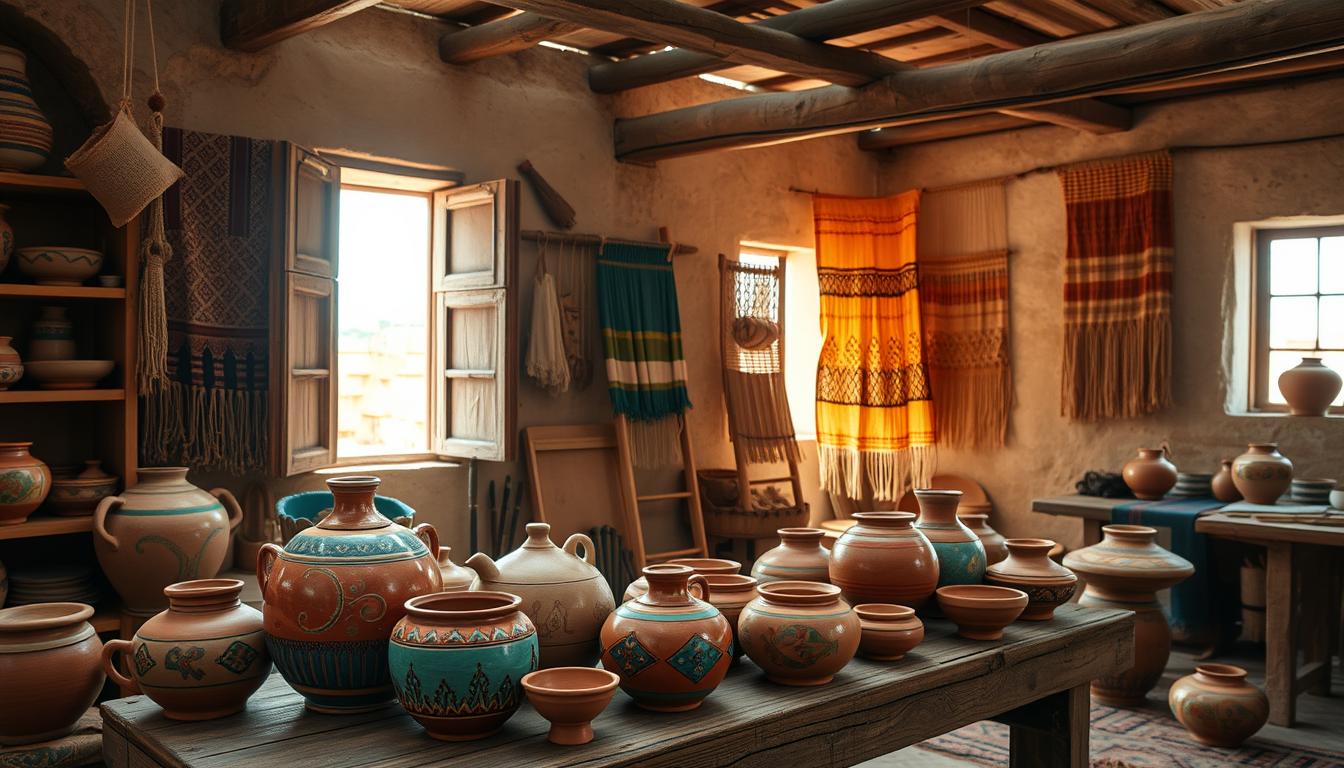
Experience Omani Crafts: Pottery & Weaving Workshops
Have you ever wondered how the ancient art of pottery and weaving continues to thrive in a modern world?
In Oman, a wealth of knowledge has been passed down through generations. By joining traditional Omani crafts workshops, you’ll learn valuable skills. You’ll also dive into the rich heritage that defines Omani identity.
These workshops let you make your own handmade Omani crafts. You’ll work alongside skilled artisans who are dedicated to keeping their cultural legacy alive.
As you learn these techniques, you’ll see that each piece tells a story. It reflects the local community and its traditions. Join us as we explore how these workshops are more than just educational. They are a bridge connecting you to the heart and soul of Omani craftsmanship.
The Rich Heritage of Omani Crafts
Omani crafts weave a rich tapestry of cultural heritage. Skilled artisans have honed their *artisan skills* over centuries. They keep *traditional practices* alive through pottery, silverware, and weaving.
These crafts are more than just beautiful pieces. They are living history, sharing stories of local lifestyles and beliefs.
Visiting Omani crafts offers a glimpse into the artistry behind each piece. Viator’s exclusive tours let you see artisans at work and even try making your own craft. This experience deepens your appreciation for the skills passed down through generations.
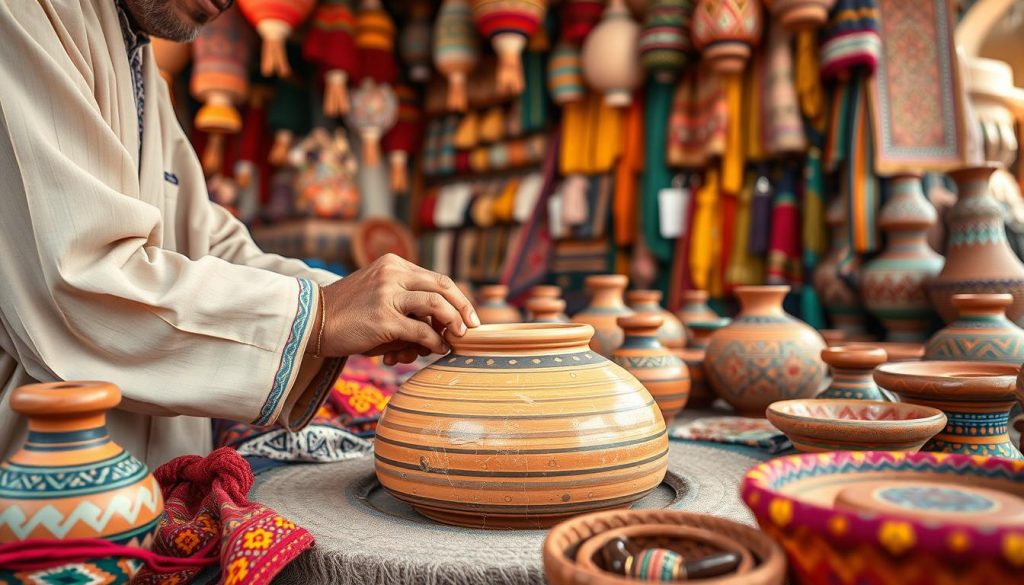
The cooler months in Oman, from October to April, are perfect for exploring crafts. Outdoor markets are bustling, and local cafes offer traditional hospitality. The Nizwa Souq is famous for its handmade crafts and traditional silver jewelry.
Here, you can find beautiful pottery, intricate silver jewelry, and fragrances made with frankincense. These make great souvenirs.
Engaging with Omani crafts reveals the country’s *cultural heritage*. Each item tells a story, showcasing the artisan’s skill and Oman’s essence. The dedication to preserving these *traditional practices* is evident in the thriving craft scene. It invites you to dive into this timeless artistry.
Understanding Pottery in Oman
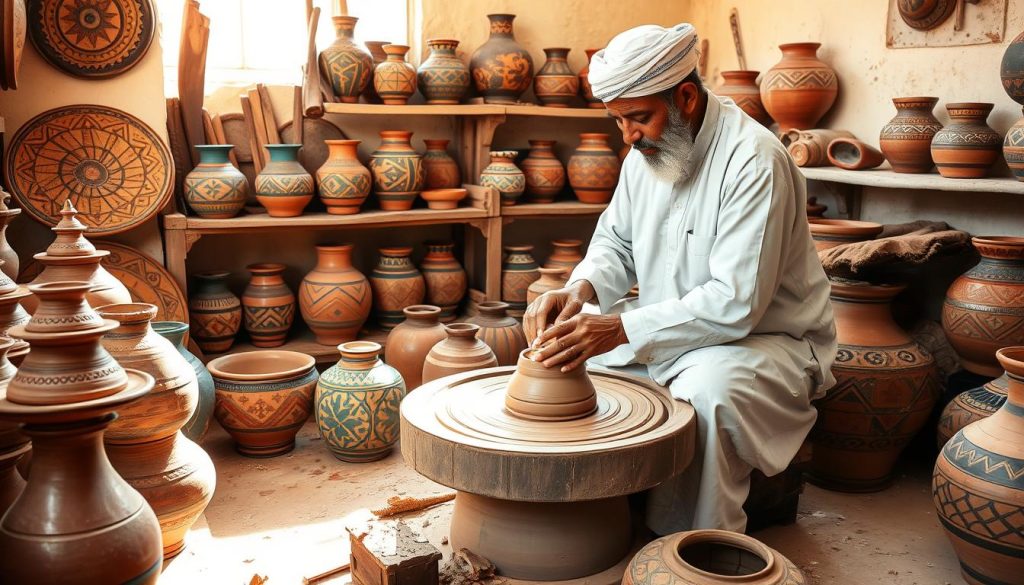
Omani pottery has a rich history that blends art with tradition. It goes back to ancient times, known for its detailed designs and bright colors. Skilled artisans use techniques passed down through generations, keeping traditional craftsmanship alive.
The clay for Omani pottery comes from local mountains, making each piece special. This clay’s quality changes, leading to different styles across the country. Artisans add decorative shapes and glazes, showing the cultural value of each piece.
Exploring Omani pottery lets you see the bond between artisans and the earth. Each piece tells a story of the land, turning simple materials into art that honors heritage and tradition.
Exploring Traditional Weaving Techniques
Traditional weaving in Oman is a mix of art and culture. It shows the rich heritage in Omani textiles. Each area in Oman has its own weaving style, telling local stories and customs.
Some towns are known for colorful rugs, while others for detailed shawls. This variety shows the skill of artisans and the stories of their communities.
Joining weaving courses is a great way to learn these traditional methods. Workshops use different looms and patterns. This hands-on learning helps you see the effort in making these fabrics.
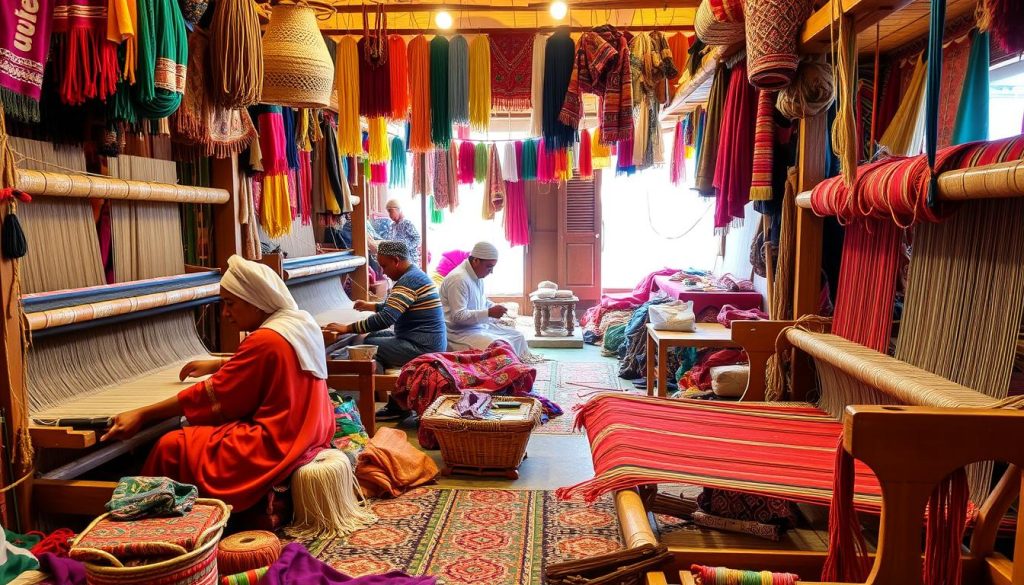
Omani textiles are key in the local economy and daily life. Artisans use old methods to make textiles that are both useful and tell stories. By learning traditional weaving, you connect with a craft that’s important to Omani culture.
Importance of Artisan Workshops in Oman
Artisan workshops are key in keeping Oman’s traditional crafts alive. They offer hands-on learning in pottery, weaving, and Arabic calligraphy. This way, the skills of experienced artisans are shared with the next generation.
In Salalah, you can find classes on pottery, herbal medicine, and weaving. Working with local artisans, you learn about pottery techniques and create your own art. These workshops connect you to Omani heritage through hands-on experiences.
For those interested in lettering, Arabic calligraphy workshops are perfect. You’ll learn about Diwani and Naskh styles with the help of skilled calligraphers. This experience deepens your respect for this ancient art form.
Textile workshops focus on traditional weaving. You’ll learn about different looms and the meaning behind regional fabrics. These discussions add to your understanding of the culture.
Here’s why these workshops are so important:
| Type of Workshop | Skills Learned | Cultural Significance |
|---|---|---|
| Pottery Making | Clay shaping, glazing, firing | Reflection of Omani identity |
| Arabic Calligraphy | Diwani, Naskh, Thuluth techniques | Historical documentation and beauty |
| Textile Weaving | Understanding looms, crafting fabrics | Significance of motifs, colors |
| Herbal Medicine | Preparing remedies, healing practices | Connections to ancient traditions |
These workshops teach practical skills and preserve Oman’s culture. By learning crafts, you join a community that values traditional art. This is crucial in today’s fast-changing world.
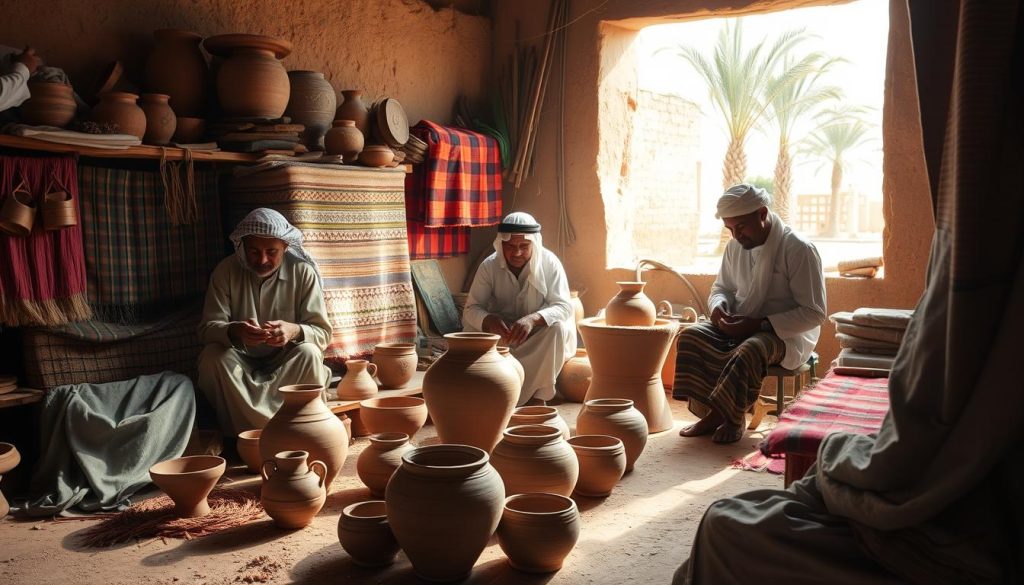
Your Guide to Pottery Workshops
Starting your journey in Omani pottery classes is a special chance to learn and love this old craft. In these workshops, you’ll do hands-on activities. These will teach you key skills needed to get good at pottery.
You’ll get help from skilled teachers. They will help you build a strong base in this art.
What You Will Learn in Pottery Classes
In Omani pottery classes, you’ll learn many skills. These skills will make you better at pottery. Here are some main things you’ll learn:
- Hand-building techniques that let you be creative and express yourself.
- Wheel-throwing methods for making symmetrical pieces.
- Glazing applications that show off your artistic vision.
- Knowledge about local clay types, like the special clay from Bahla.
Materials and Tools Used in Omani Pottery
Knowing about materials and tools is key to getting better at pottery. In your workshops, you’ll use:
- Local clay, known for its special qualities and use.
- Traditional pottery tools that make your crafting better.
- Glazing materials that add character to your finished pieces.
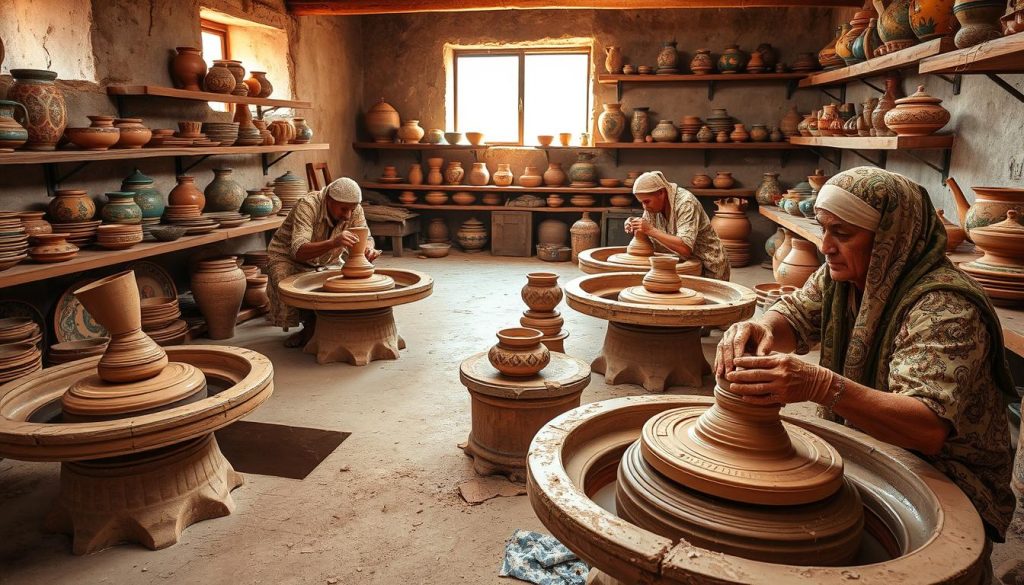
Your Journey into Weaving Courses
Starting weaving courses is a fun way to learn about making textiles the old way. You’ll get to learn the basics and discover the history of Omani crafts. You’ll also learn how to weave beautiful fabrics by hand.
Techniques You Will Master
In weaving classes, you’ll learn important skills like:
- Loom setup for managing threads well
- Tapestry weaving for detailed designs
- Color theory and its role in Omani culture
- Pattern creation that shows local traditions and symbols
Creating Unique Textile Pieces
At the end of each course, you’ll make your own textile. This lets you use all you’ve learned to create something special. It shows your own style and understanding of Oman’s weaving heritage. This project not only improves your skills but also deepens your respect for Omani weaving traditions.
Traditional Omani Crafts Workshops and Learning Pottery or Weaving
Omani culture shines through its traditional crafts workshops. These workshops offer a chance to learn hands-on. You can learn pottery or weaving from skilled artisans.
Learning pottery means mastering techniques like shaping, glazing, and firing. These classes are structured, giving you personal guidance in a team setting. Weaving workshops teach ancient methods, where you learn from experts.
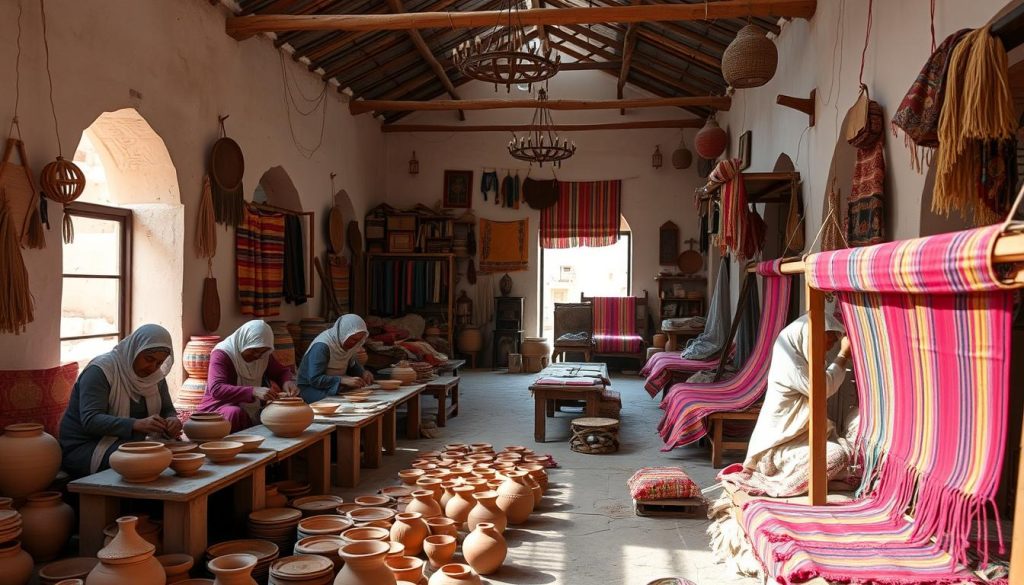
Demos and hands-on experiences are part of both workshops. You’ll make your own items and learn their cultural stories. You’ll leave with a deeper appreciation for the craft and maybe a new skill.
| Workshop Type | Focus Area | Duration | Skills Acquired |
|---|---|---|---|
| Pottery Making Class | Traditional techniques | 1-2 days | Shaping, glazing, firing |
| Traditional Weaving Workshop | Weaving techniques | 1 day | Pattern creation, loom usage |
| Cooking Class | Omani cuisine | 2-3 hours | Preparing Shuwa, Harees |
| Herbal Medicine Workshop | Health and wellness | 1 day | Identifying herbs and uses |
Traditional crafts workshops let you dive into Oman’s rich culture. You’ll learn pottery or weaving and make lasting memories. It’s a unique way to experience Oman’s beauty.
Visiting Local Souqs for Craft Inspiration
Local souqs are the heart of Omani crafts, offering a unique shopping experience. The famous Nizwa Souq, about 160 km from Muscat, is a must-see. It’s alive with traditional craftsmanship every day.
The souq opens early, closes briefly in the afternoon, and stays open late. This schedule gives you plenty of time to shop and soak in the culture.
On Fridays, the Nizwa Souq hosts a goat market. It’s a big draw for both locals and visitors. Admission is free, but the nearby Nizwa Fort has a small fee. It’s worth it for the views and history.
Visiting the souq for at least two hours is a good idea. You can talk to vendors and check out pottery, textiles, antiques, and more.
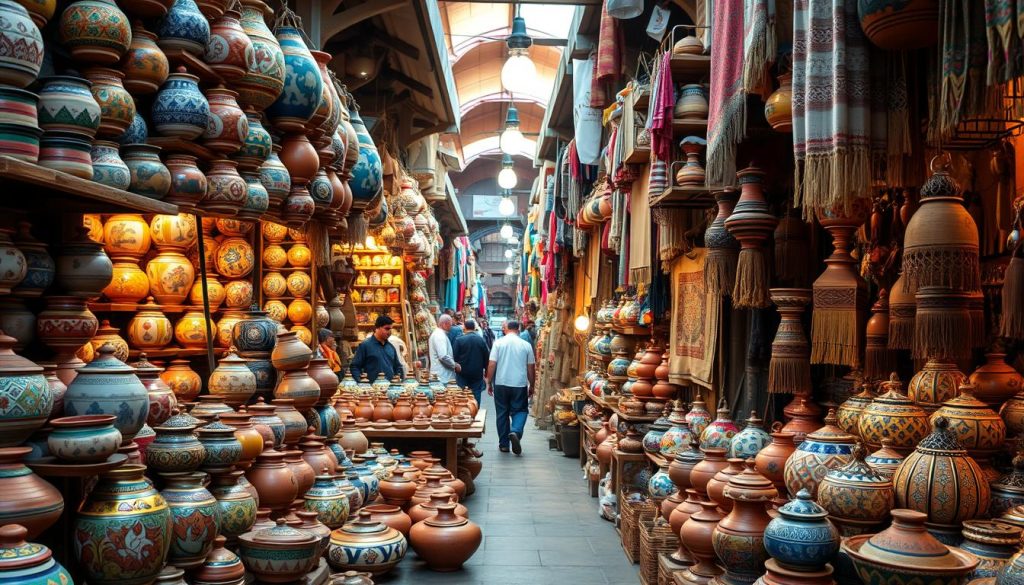
- Traditional Omani pottery
- Fresh dates
- Frankincense resin
- Woven mats and baskets
- Goat’s wool textiles
- Glass lamps
- Taqiyah skullcaps
- Omani antiques
- Fun knickknacks
If you love textiles, the Omani Heritage Gallery in the souq is a must-see. It focuses on authentic items. Plan to spend four to five hours here to fully experience Nizwa Souq and Nizwa Fort.
Talking to artisans at these souqs deepens your understanding of Omani crafts. It also sparks your own creativity.
The Role of Natural Materials in Omani Crafts
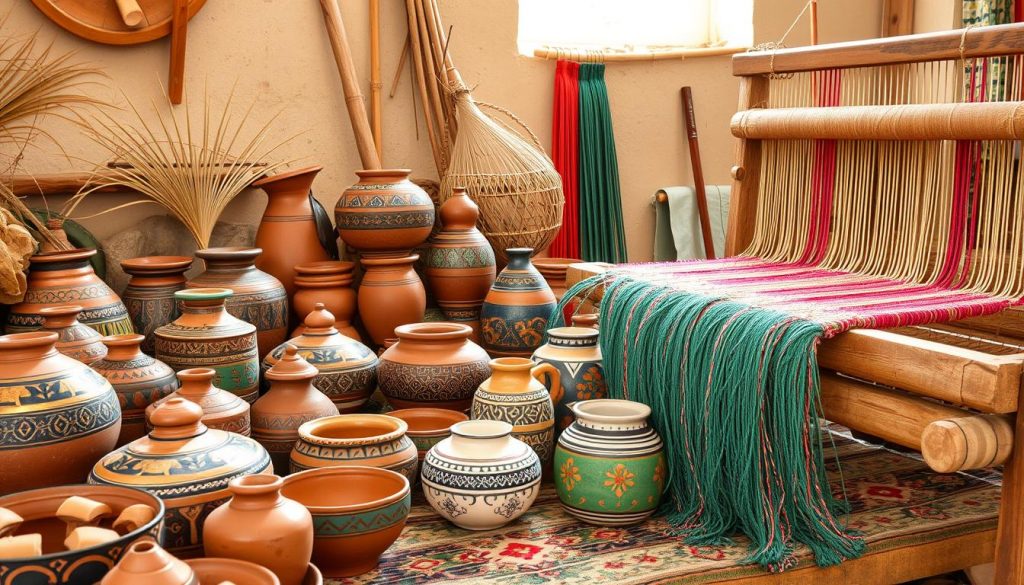
Natural materials are key in Omani crafts, like pottery and weaving. Local artisans use clay and fibers from Oman. This shows the country’s culture and art traditions.
Using local materials makes crafts more authentic. It also helps the environment. Learning about these materials shows the hard work of Omani artisans.
Types of Clay and Fabrics Used
Oman’s clay types make its pottery unique. Artisans pick clay for its texture, color, and how it fires. This affects the pottery’s look.
For textiles, local fibers like cotton and wool are used. These make beautiful carpets and wall hangings. Here’s a closer look:
| Material | Type | Usage | Characteristics |
|---|---|---|---|
| Clay | Earthenware | Pottery | Durable, can be decorated with glazes |
| Clay | Stoneware | Pottery | High firing temperature, dense |
| Cotton | Natural fiber | Textiles | Soft, breathable, dyeable |
| Wool | Natural fiber | Textiles | Warm, durable, resilient |
Environmental Impact and Sustainability
Using natural materials helps the environment. Workshops in Oman focus on this. It keeps the land healthy and supports local people.
By doing Omani crafts, you help the environment. You also keep old traditions alive. It’s a way to support sustainable art.
Where to Find Pottery and Weaving Classes
Exploring pottery classes and weaving courses in Oman can enrich your travel. You’ll find many local workshops across cities, suitable for all skill levels. From beginner to advanced, there’s something for everyone.
In Khasab, you can try pottery workshops that teach traditional Omani techniques. Don’t miss the weaving demo at Sohar Handicraft Souq. Here, artisans show off their skills in creating beautiful patterns.
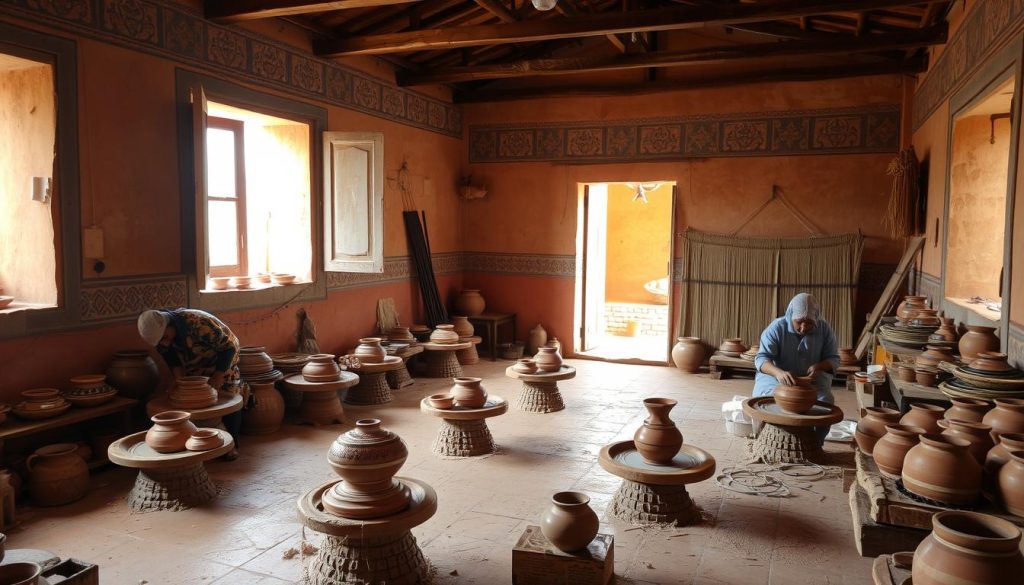
Pottery classes teach you the basics of making pottery, with expert guidance. Workshops usually include all materials and tools in the cost. This makes it easy for participants. Most classes are open to all ages.
Classes are often in English, but some offer translations in local languages. This helps everyone learn about Omani culture.
Whether you pick pottery or weaving, each workshop is a chance to learn and connect with Omani heritage.
Conclusion
Workshops on Omani crafts are a great way to dive into Oman’s culture. You can learn pottery or weaving, connecting with traditions that have lasted for generations. These activities improve your artistic skills and deepen your respect for Oman’s craftsmanship.
By doing hands-on activities, you get a close look at Omani culture. You also make your own unique pieces. This experience is a key part of visiting Oman, offering a chance to create lasting memories.
Exploring souqs and artisan communities is a must. Learning pottery or weaving lets you create pieces filled with Omani spirit. It’s a chance to be part of a world where culture, art, and tradition meet.