Essential Wadi Rum Safety Tips for Your Adventure
Are you ready to explore Wadi Rum’s stunning landscape? It’s a place where sandstone formations meet ancient history. Before you start, it’s important to know some key safety tips.
Wadi Rum is home to over 20,000 ancient inscriptions and rich Bedouin culture. Safety is crucial to make your visit unforgettable. This UNESCO World Heritage site demands your attention to safety.
Jordan’s climate is hot in summer and short in winter. Knowing how to travel in the desert is essential. This guide will help you with the right gear and precautions for a safe adventure.
So, what do you need to do to stay safe in this magical desert? Let’s find out.
Understanding the Wadi Rum Landscape
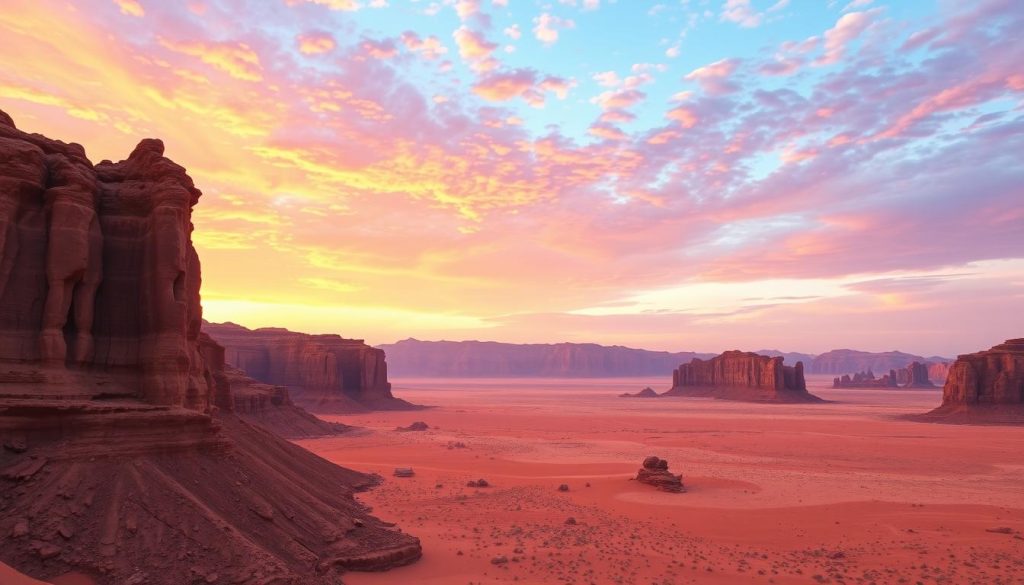
The Wadi Rum landscape is a canvas of natural beauty and geological wonders. It’s the largest wadi in Jordan, covering 720 square kilometers. Visitors are often amazed by the stunning sandstone mountains, vast valleys, and unique natural arches. Knowing these features helps you appreciate the landscape and stay safe while exploring.
Features of Wadi Rum
Wadi Rum is known for many highlights:
- Sandstone Formations: Spectacular cliffs rise from the desert floor.
- Natural Arches: Iconic structures formed by wind and erosion.
- Canyons and Gorges: Narrow passages that offer beauty and adventure.
- Inscriptions: Over 20,000 ancient carvings that show human history.
- Flora and Fauna: Unique ecosystems adapted to the harsh desert environment.
Unique Geographical Implications
The Wadi Rum landscape is not just beautiful. Its formations create stunning vistas and potential hazards. Navigating the rugged terrain requires awareness of your surroundings. Temperature fluctuations can exceed 40 degrees Celsius during summer days, making it vital to remain vigilant about desert travel safety. The high cliffs may entice climbers, but they also pose risks in varying weather conditions.
When planning your visit, consider the best times to experience Wadi Rum. March to May and mid-September to November offer optimal temperatures and conditions for exploration. This landscape, while mesmerizing, demands respect and cautious preparation. Enjoy the beauty responsibly and take necessary precautions to ensure your safety in this extraordinary natural setting.
Wadi Rum Safety Tips for Your Adventure
Getting ready for your trip to Wadi Rum is key. Knowing the desert’s challenges makes your visit safer and more fun. Look for trusted tour operators and safety gear to start your journey right.
Importance of Safety Preparation
Keeping safe is your main goal in Wadi Rum. The desert offers many adventures but also risks. Having travel insurance and talking to experienced guides are smart moves.
The Bedouins, with their deep knowledge, can guide you safely. They know the desert well and can avoid dangers.
Essential Gear for Safety
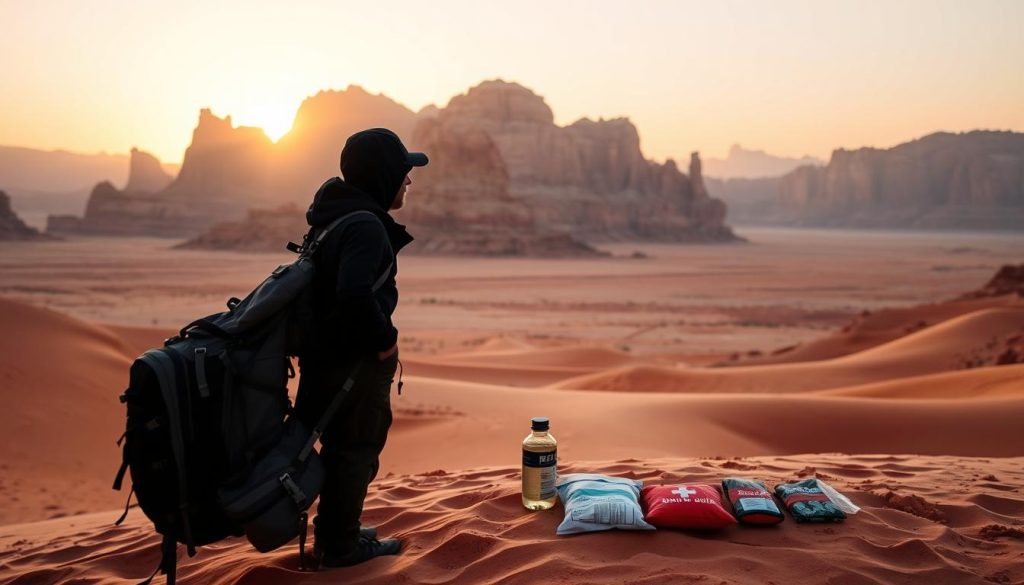
Bringing the right safety gear is important. Here are some must-haves:
- Plentiful water to stay hydrated in the desert heat
- Sun protection, such as high-SPF sunscreen, hats, and sunglasses
- Appropriate clothing, including lightweight, long-sleeved shirts and pants for sun protection
- A first-aid kit for treating minor injuries
With these items, you’re ready for anything. Wadi Rum’s beauty is worth the careful planning. It lets you enjoy the stunning views without worry.
| Essential Gear | Purpose |
|---|---|
| Water | Hydration |
| Sun Protection | Prevent sunburn and heat-related illnesses |
| Appropriate Clothing | Comfort and protection from harsh weather |
| First-Aid Kit | Address minor injuries or ailments |
Planning Your Visit According to Weather Conditions
Knowing the weather conditions in Wadi Rum is key for a great trip. Picking the right time to go lets you see the stunning views without getting too hot or cold.
Best Times to Visit Wadi Rum
The best months to see Wadi Rum’s beauty are March to May and September to November. The weather is mild and pleasant, making your visit enjoyable. Here’s a quick look at the temperature changes through the seasons:
| Season | Daytime Temperatures | Nighttime Temperatures |
|---|---|---|
| Spring (March – May) | 20-35°C (68-95°F) | 10-20°C (50-68°F) |
| Summer (June – August) | 40-45°C (104-113°F) | 20-25°C (68-77°F) |
| Autumn (September – November) | 15-35°C (59-95°F) | 0-10°C (32-50°F) |
| Winter (December – February) | 10-20°C (50-68°F) | 0-10°C (32-50°F) |
Weather Variability and Its Risks
Wadi Rum’s weather can change quickly, with big differences between day and night. It might be hot during the day but cool at night. Wearing layers helps you adjust to these changes.
Spring and autumn are the best times to visit Wadi Rum. Summer is too hot for outdoor activities like hiking and camel trekking. Winter is milder, but you’ll need warm clothes for the cold nights.

Staying updated on the weather conditions in Wadi Rum makes your trip better. Always check the forecast before you go. This way, you can enjoy your adventure safely and fully.
Emergency Communication Protocols in Wadi Rum
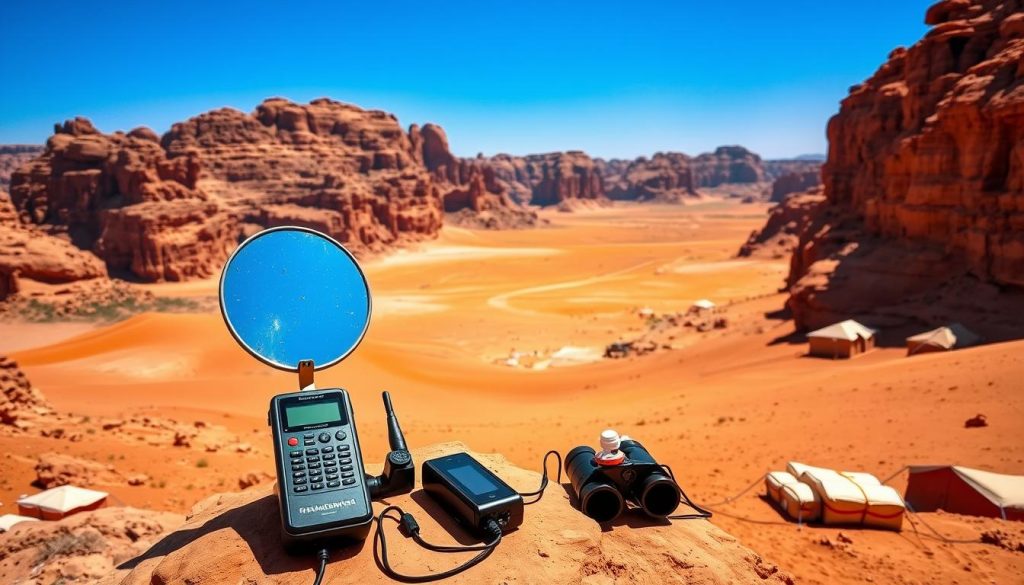
Exploring Wadi Rum means knowing how to stay in touch in case of an emergency. The vast desert can make it hard to get a signal. Having the right info can save you.
Cell Coverage Considerations
In Wadi Rum, cell service is better in some spots but not all. It’s smart to carry a list of emergency contacts. This list should include numbers for local guides or services.
Emergency Contact Information
Tell someone where you’re going and when you’ll be back. The Wadi Rum Visitor Centre is a great place to get help. Knowing who to call in an emergency can help you stay safe.
| Emergency Service | Contact Information |
|---|---|
| Wadi Rum Visitor Centre | +962 3 232 1915 |
| Local Police | +962 7 955 68805 |
| Medical Assistance | +962 7 9526 0120 |
| Local Guide Services | +962 7 9549 8573 |
Desert Travel Safety Guidelines
Traveling through Wadi Rum’s stunning landscapes requires a focus on safety. The desert’s harsh climate brings its own set of challenges. It’s important to stay hydrated and navigate the rough terrain safely.
Staying Hydrated
It’s vital to drink enough water in Wadi Rum’s hot temperatures. Here are some tips to keep you hydrated:
- Drink at least 2-3 liters of water each day.
- Carry a refillable water bottle to monitor your intake.
- Consume hydrating foods, such as fruits and vegetables, during meals.
- Take breaks in the shade to minimize the effects of the sun.
Navigating the Terrain Safely
Wadi Rum’s beauty is worth exploring, but safety comes first. Here’s how to stay safe:
- Utilize marked trails and paths designated by local authorities.
- Engage reputable local guides who understand the territory.
- Be aware of local wildlife; observe from a distance.
- Keep an updated map or GPS device to avoid disorientation.
Camping Safety Guidelines
Camping in Wadi Rum’s stunning desert requires following safety guidelines. This ensures a fun and safe trip. Picking the right campsite is key to avoid dangers and enjoy your stay. Setting up your tent correctly helps prevent accidents.
Setting Up Camp Correctly
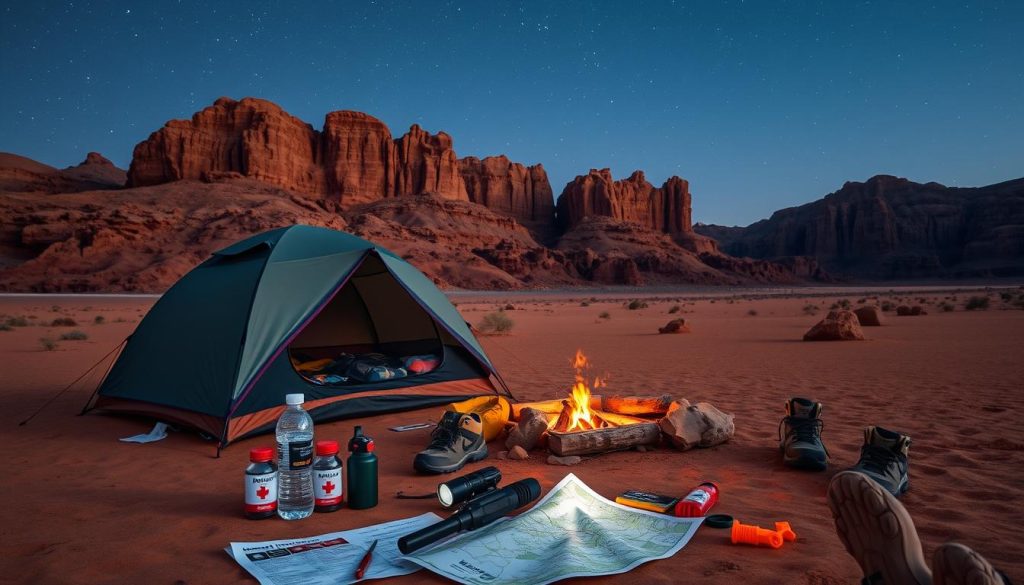
Choose a flat spot for your campsite to avoid accidents. Make sure your tent is securely tied down to withstand wind. Always check your surroundings for hazards like loose rocks or branches.
Fire Safety Precautions
Fire safety is crucial in Wadi Rum. Always follow local rules about fires. Keep a fire extinguisher or water bucket ready for emergencies. Never leave a fire alone. Cook safely to prevent wildfires and make sure to fully extinguish flames before leaving.
Wildlife Encounters Safety
Exploring Wadi Rum’s stunning landscapes means keeping safety in mind. Knowing about the local animals can make your trip better. It lets you enjoy the area’s rich wildlife while staying safe.
Identifying Common Wildlife
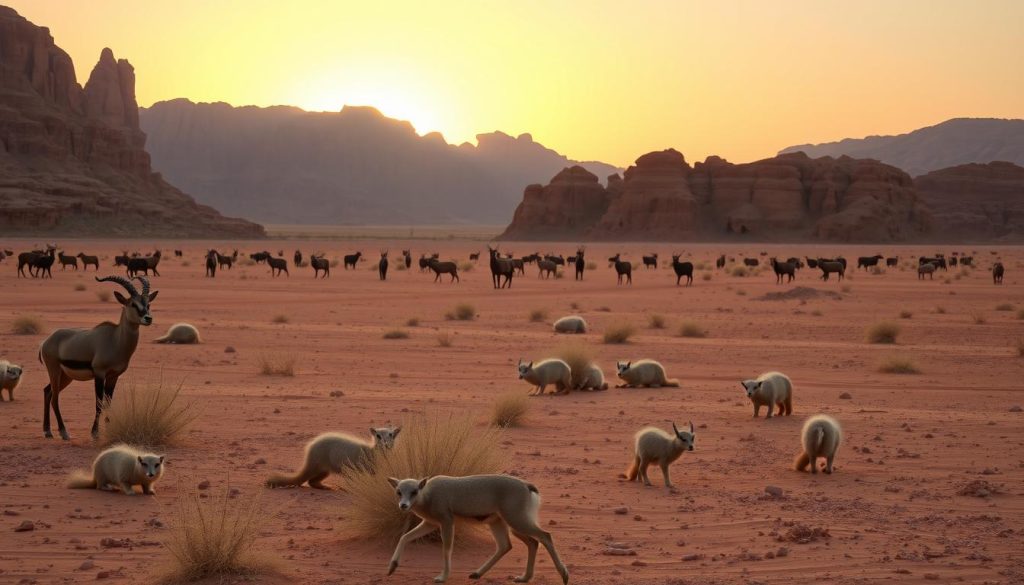
Wadi Rum is full of interesting animals. You’ll see snakes, scorpions, foxes, and birds. It’s important to know which ones are safe and which ones to avoid.
Carry a field guide or use an app to help you identify animals. This way, you can enjoy seeing them without worry.
Dealing with Animal Encounters
Keep a safe distance from animals. Never try to feed them. This can be dangerous.
Watch them from afar and respect their home. If an animal gets too close or acts aggressive, back away slowly. Don’t turn your back on it. This keeps you safe while you enjoy Wadi Rum’s wildlife.
Hiking in Arid Regions
Hiking in arid places like Wadi Rum is both challenging and rewarding. It’s important to choose safe trails for your safety and to enjoy the desert’s beauty. Wadi Rum, a top spot in Jordan, has trails for all skill levels.
Make sure to pick well-marked paths. It’s best to have a local guide who knows the area well.
Choosing Safe Trails
Look for established trails known for their safety. The Wadi Rum Trail, a 120-kilometer path, usually takes ten days to hike. It’s a favorite spot, but remember, water is scarce, with only one permanent spring at the end.
Also, help in emergencies might take time because phone signals are rare along the route.
Footwear and Clothing Recommendations
Choosing the right shoes is key for a safe and comfy hike in dry lands. Wear sturdy hiking boots or supportive sneakers for uneven terrain. Long-sleeve, breathable shirts and sun gloves protect against the sun.
Dressing in layers helps you adjust to changing temperatures. It keeps you comfortable and safe.
Guided Tours vs. Independent Exploration
Choosing between guided tours and exploring on your own in Wadi Rum shapes your adventure. Each option has its own benefits, letting you customize your experience. This depends on what you like and how comfortable you feel.
Benefits of Using a Local Guide
Using a local guide in Wadi Rum offers many advantages. You learn a lot about the area’s history and geography. Guides know the terrain well, making your journey safer.
They also arrange transportation and take you to places that need special permits. This makes exploring easier and more fun.
Guided tours are popular, like in Egypt, because they focus on safety. They help you navigate unfamiliar places and language barriers. This makes your journey more enjoyable.
Independent Exploration Tips
If you like exploring by yourself, preparation is key. Make sure you have maps and guidebooks. Also, tell someone you trust about your plans and where you’ll be.
- Carry important items like a flashlight, sturdy shoes, a hat, sunscreen, and a scarf for wind.
- Visit during the best times, from March to May or September to November, for good weather.
- Use public transport to get to places like Petra and Aqaba to Rum Village.
Knowing the local area makes exploring safer and more enjoyable. Use these tips to make unforgettable memories in Wadi Rum’s vast desert.

Precautions Against Natural Disasters
Knowing the desert’s challenges helps you prepare for natural disasters. Sandstorms, extreme heat, and sudden weather changes can happen in Wadi Rum. It’s important to take steps to stay safe while exploring this beautiful area.
Understanding the Desert’s Environment
Deserts have fast-changing temperatures, little vegetation, and unique rocks. These factors can lead to unexpected dangers. Learn about common threats like:
- Sandstorms: Wind can make it hard to see and you need to find shelter fast.
- Heat waves: High temperatures can cause heat stroke if you don’t drink enough water and take breaks.
- Wildlife encounters: Animals like snakes and scorpions can be dangerous if you don’t know they’re there.
Preparedness for Common Desert Hazards
Being ready can help avoid many desert dangers. Here are some tips for staying safe:
- Plan your trips carefully: Check the weather and seasons to avoid bad conditions.
- Stay informed: Watch the weather and be ready to find shelter when needed.
- Emergency supplies: Carry a first-aid kit, lots of water, and a charged phone.
- Know your surroundings: Learn the terrain to spot dangers quickly.

By following these steps, you can have a better time exploring Wadi Rum. Paying attention to your surroundings and being ready for surprises is key to a safe desert adventure.
| Hazard | Precaution | Emergency Action |
|---|---|---|
| Sandstorm | Seek shelter immediately | Stay put until it passes |
| Heat exhaustion | Stay hydrated, wear loose clothing | Rest in a shaded area and cool off |
| Wildlife encounters | Keep alert for snakes and scorpions | Back away slowly and avoid engagement |
Conclusion
Your trip to Wadi Rum can be very rewarding if you follow key safety tips. The desert’s beauty, with its stunning rocks and vast views, needs careful planning. Knowing the weather, taking outdoor safety steps, and watching your surroundings will make your trip better and safer.
By using local guides, understanding animal behavior, and being ready for emergencies, you can avoid dangers. Wadi Rum’s beauty is not just in its views but also in the experiences it offers. Enjoy this desert while keeping safety in mind.
Staying aware of your surroundings is key to overcoming outdoor challenges. With safety as your top priority, your Wadi Rum adventure will be unforgettable. It will be filled with discovery and wonder.